
COGNITIVE LEVELS OF ANALYSIS UNIT 2 LO 3










- Slides: 67
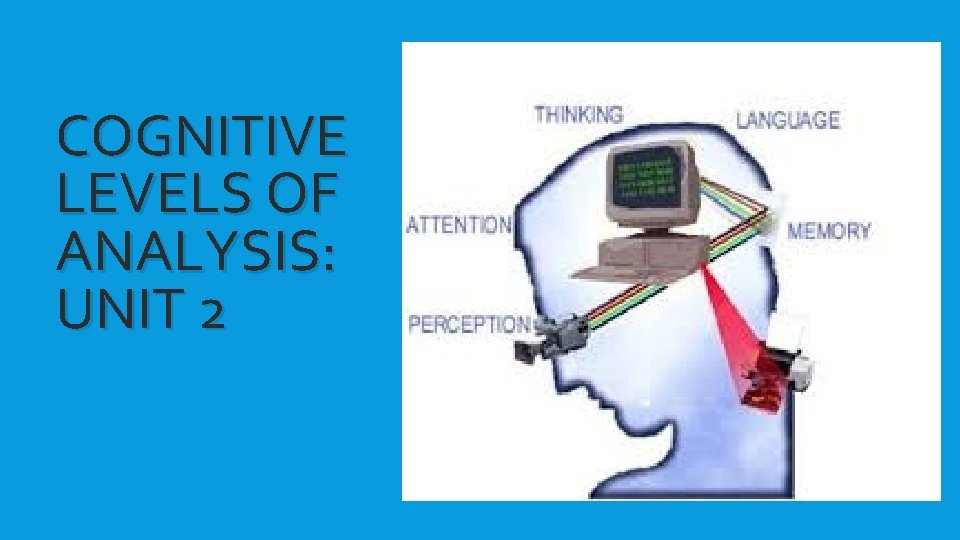
COGNITIVE LEVELS OF ANALYSIS: UNIT 2
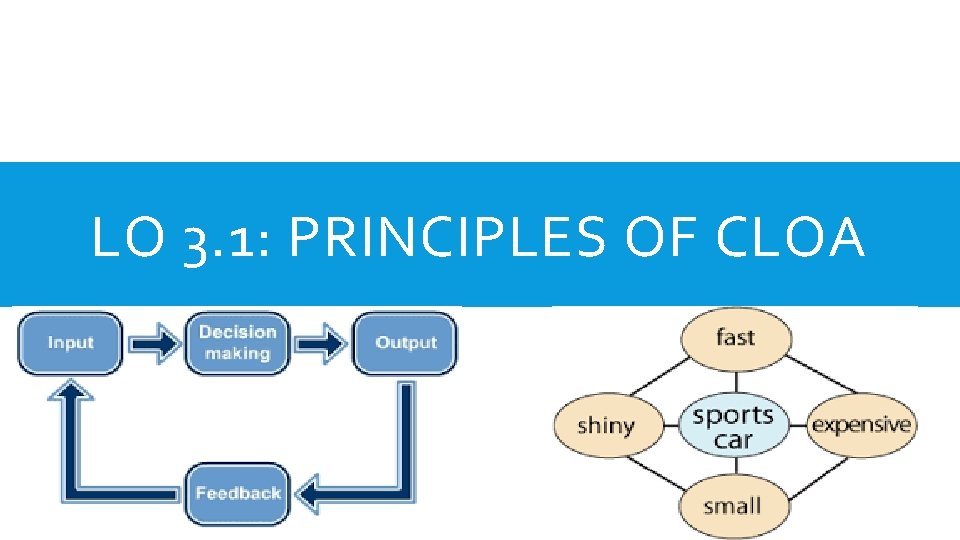
LO 3. 1: PRINCIPLES OF CLOA
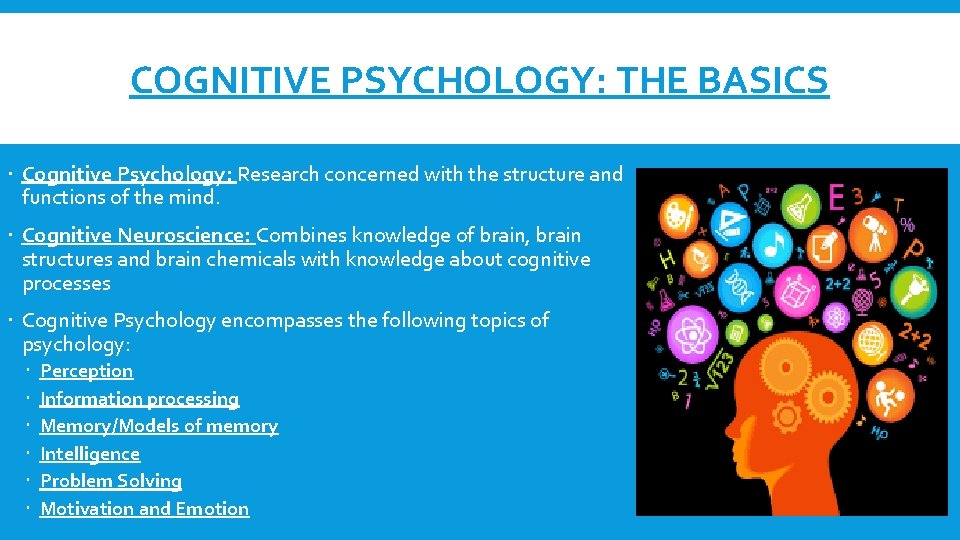
COGNITIVE PSYCHOLOGY: THE BASICS Cognitive Psychology: Research concerned with the structure and functions of the mind. Cognitive Neuroscience: Combines knowledge of brain, brain structures and brain chemicals with knowledge about cognitive processes Cognitive Psychology encompasses the following topics of psychology: Perception Information processing Memory/Models of memory Intelligence Problem Solving Motivation and Emotion
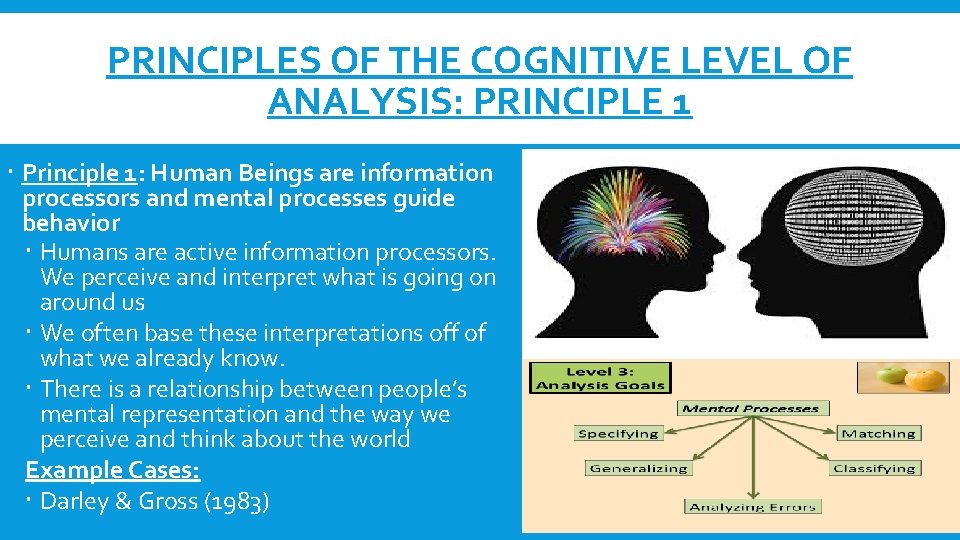
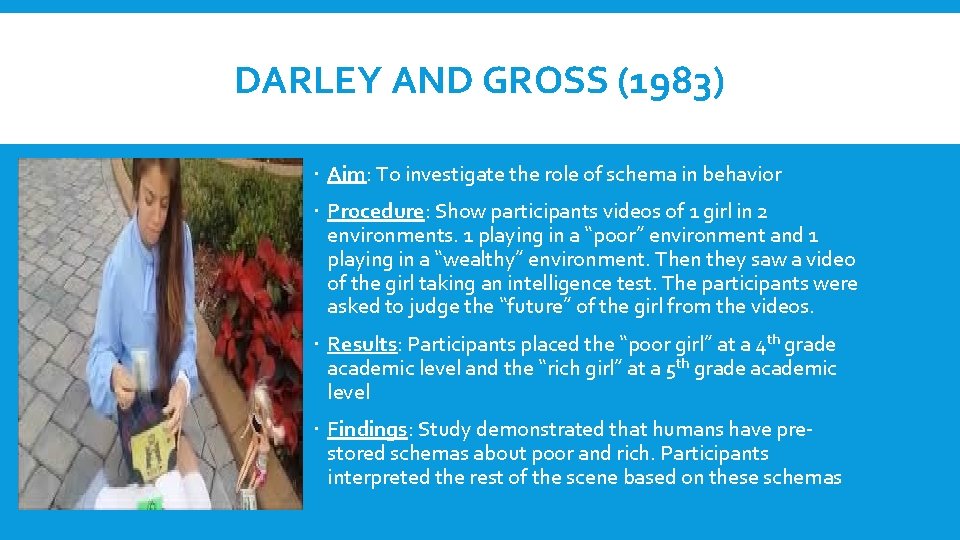
PRINCIPLES OF THE COGNITIVE LEVEL OF ANALYSIS: PRINCIPLE 1 Principle 1: Human Beings are information processors and mental processes guide behavior Humans are active information processors. We perceive and interpret what is going on around us We often base these interpretations off of what we already know. There is a relationship between people’s mental representation and the way we perceive and think about the world Example Cases: Darley & Gross (1983)
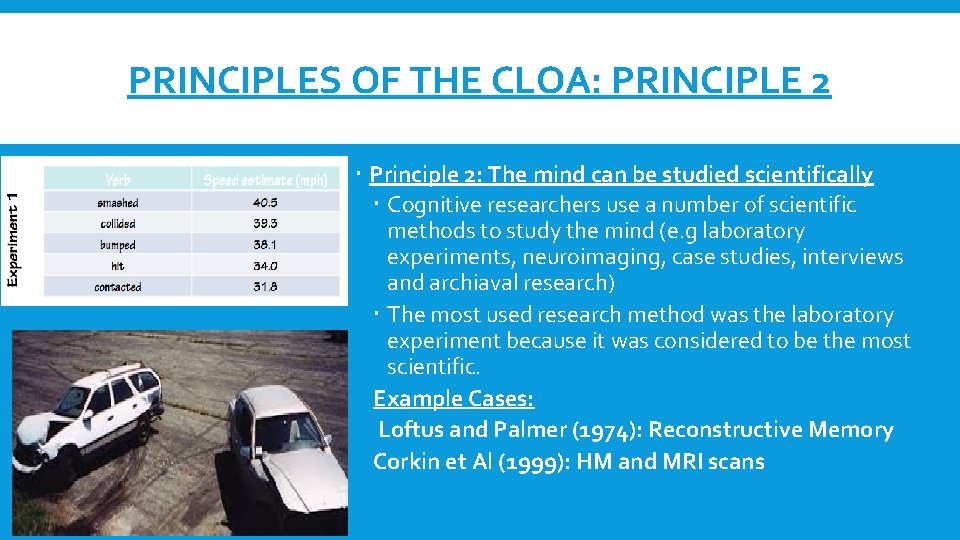
PRINCIPLES OF THE CLOA: PRINCIPLE 2 Principle 2: The mind can be studied scientifically Cognitive researchers use a number of scientific methods to study the mind (e. g laboratory experiments, neuroimaging, case studies, interviews and archiaval research) The most used research method was the laboratory experiment because it was considered to be the most scientific. Example Cases: Loftus and Palmer (1974): Reconstructive Memory Corkin et Al (1999): HM and MRI scans
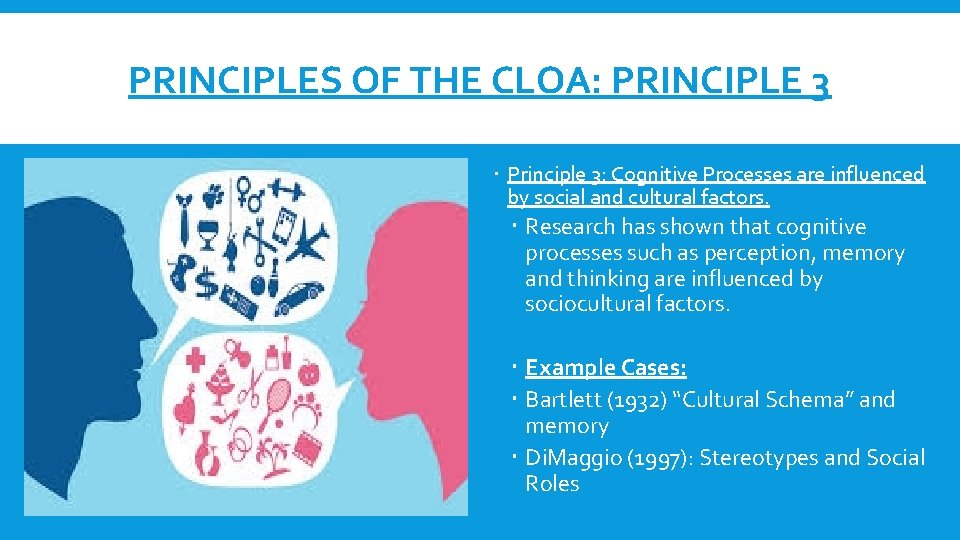
PRINCIPLES OF THE CLOA: PRINCIPLE 3 Principle 3: Cognitive Processes are influenced by social and cultural factors. Research has shown that cognitive processes such as perception, memory and thinking are influenced by sociocultural factors. Example Cases: Bartlett (1932) “Cultural Schema” and memory Di. Maggio (1997): Stereotypes and Social Roles
WORKING WITH PRINCIPLES In small groups we are going to watch a documentary that highlights cognitive psychology called “Memory Hackers” Your job is to identify how the different principles are represented throughout the video with respect to your assigned CLOA Principle
HOMEWORK
DO NOW: WHAT IS A SCHEMA?
3. 2 EVALUATE SCHEMA THEORY
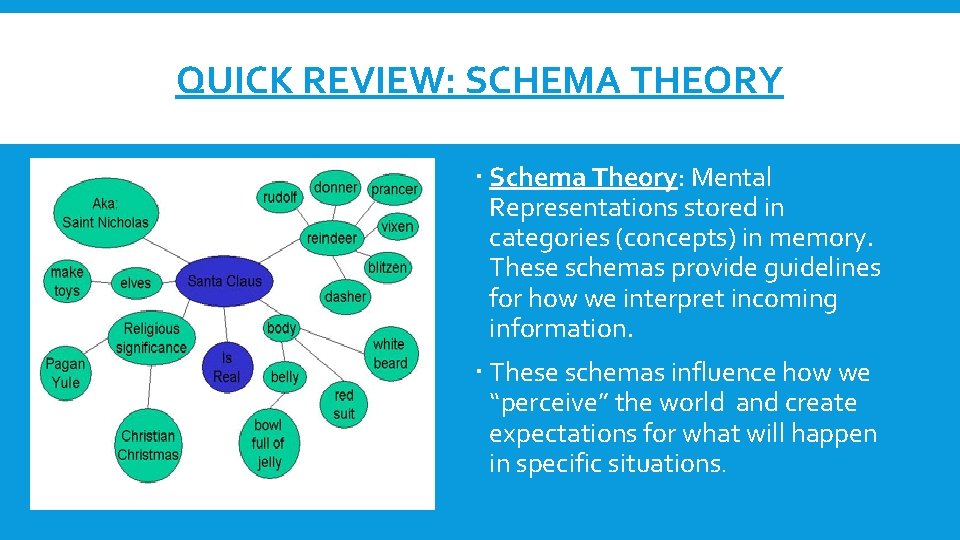
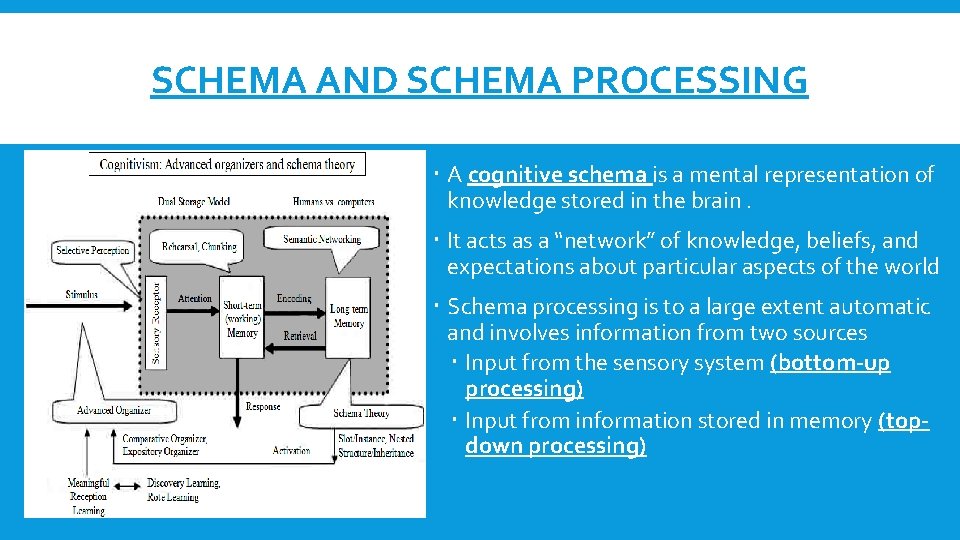
QUICK REVIEW: SCHEMA THEORY Schema Theory: Mental Representations stored in categories (concepts) in memory. These schemas provide guidelines for how we interpret incoming information. These schemas influence how we “perceive” the world and create expectations for what will happen in specific situations.
SCHEMA AND SCHEMA PROCESSING A cognitive schema is a mental representation of knowledge stored in the brain. It acts as a “network” of knowledge, beliefs, and expectations about particular aspects of the world Schema processing is to a large extent automatic and involves information from two sources Input from the sensory system (bottom-up processing) Input from information stored in memory (topdown processing)
DARLEY AND GROSS (1983) Aim: To investigate the role of schema in behavior Procedure: Show participants videos of 1 girl in 2 environments. 1 playing in a “poor” environment and 1 playing in a “wealthy” environment. Then they saw a video of the girl taking an intelligence test. The participants were asked to judge the “future” of the girl from the videos. Results: Participants placed the “poor girl” at a 4 th grade academic level and the “rich girl” at a 5 th grade academic level Findings: Study demonstrated that humans have prestored schemas about poor and rich. Participants interpreted the rest of the scene based on these schemas
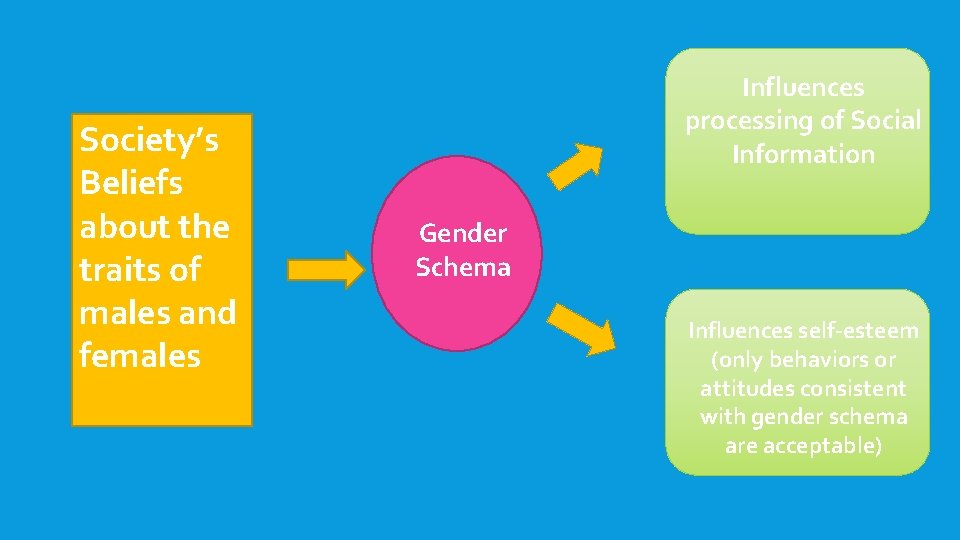
Society’s Beliefs about the traits of males and females Influences processing of Social Information Gender Schema Influences self-esteem (only behaviors or attitudes consistent with gender schema are acceptable)
Desk Phone Computer Office Schema Books Chair Stapler Papers
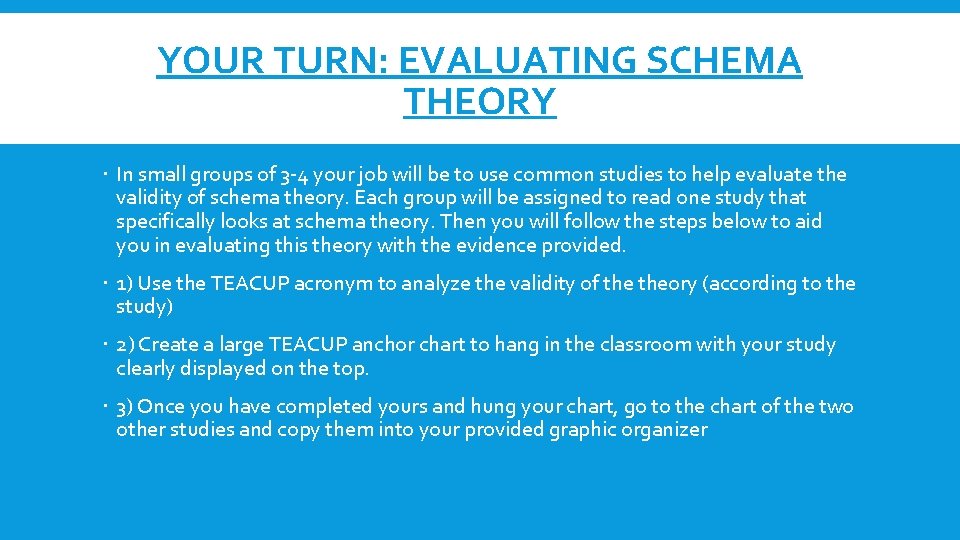
YOUR TURN: EVALUATING SCHEMA THEORY In small groups of 3 -4 your job will be to use common studies to help evaluate the validity of schema theory. Each group will be assigned to read one study that specifically looks at schema theory. Then you will follow the steps below to aid you in evaluating this theory with the evidence provided. 1) Use the TEACUP acronym to analyze the validity of theory (according to the study) 2) Create a large TEACUP anchor chart to hang in the classroom with your study clearly displayed on the top. 3) Once you have completed yours and hung your chart, go to the chart of the two other studies and copy them into your provided graphic organizer
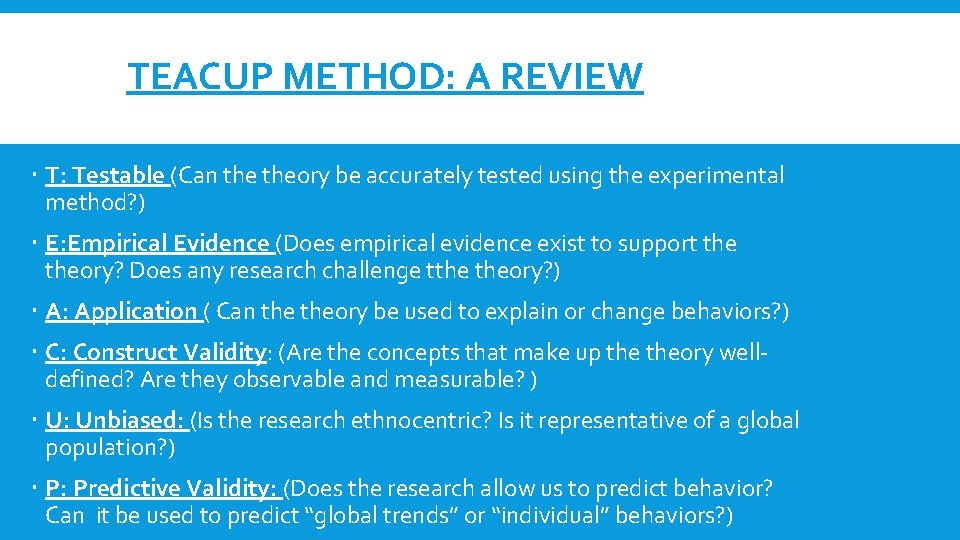
TEACUP METHOD: A REVIEW T: Testable (Can theory be accurately tested using the experimental method? ) E: Empirical Evidence (Does empirical evidence exist to support theory? Does any research challenge tthe theory? ) A: Application ( Can theory be used to explain or change behaviors? ) C: Construct Validity: (Are the concepts that make up theory welldefined? Are they observable and measurable? ) U: Unbiased: (Is the research ethnocentric? Is it representative of a global population? ) P: Predictive Validity: (Does the research allow us to predict behavior? Can it be used to predict “global trends” or “individual” behaviors? )
HOMEWORK Create a T-chart evaluating the strengths and weaknesses of schema theory (turn in Tuesday) Read the following articles/take notes in preparation for tomorrow’s seminar/writing assignment: Topic The impact of sociocultural factors on cognitive processes You must show notes/annotations to me on ALL articles to be eligible to participate in the seminar tomorrow. (Articles on website) NY Times Article: “Reading, Writing and Thinking” by Geoffrey Nurnberg Detroit Free Press Article: “Toxic Stress of Poverty, Violence and Pain Alter Kid’s Brains” The Daily Campus Article: “ Birth Weight’s Effect on Cognitive Development” US News & World Report Article: “ Survey: Student’s Face Challenges Outside the Classroom”
VIDEO QUESTIONS: TED TALKS RECONSTRUCTIVE MEMORY
MURDER ON A SUNDAY MORNING: DOCUMENTARY As we watch the following award winning documentary that deals with CLOA concepts such as reconstructive memory and memory models, you are to pay close attention to these concepts. The conclusion of the documentary will include a timed/graded discussion as well as a written assessment which will determine how you can tie the concepts from this chapter to the concepts from the movie.
WORKING MEMORY TED TALK QUESTIONS: HOW YOUR WORKING MEMORY MAKES SENSE OF THE WORLD 1) Describe “working memory” and “working memory capacity” 2) What are the benefits of having a High working memory capacity? 3) About how many things can we “hold” in our short term/working memory? 4) Describe Doolittles “strategies” for improving your working memory. 5) How can we apply this information in the field of psychology, education or elsewhere in the real world?
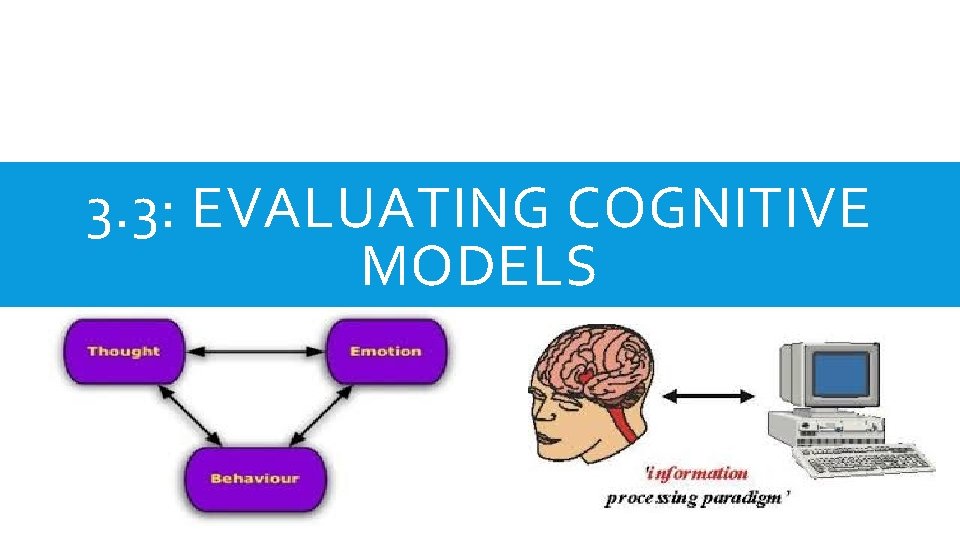
3. 3: EVALUATING COGNITIVE MODELS
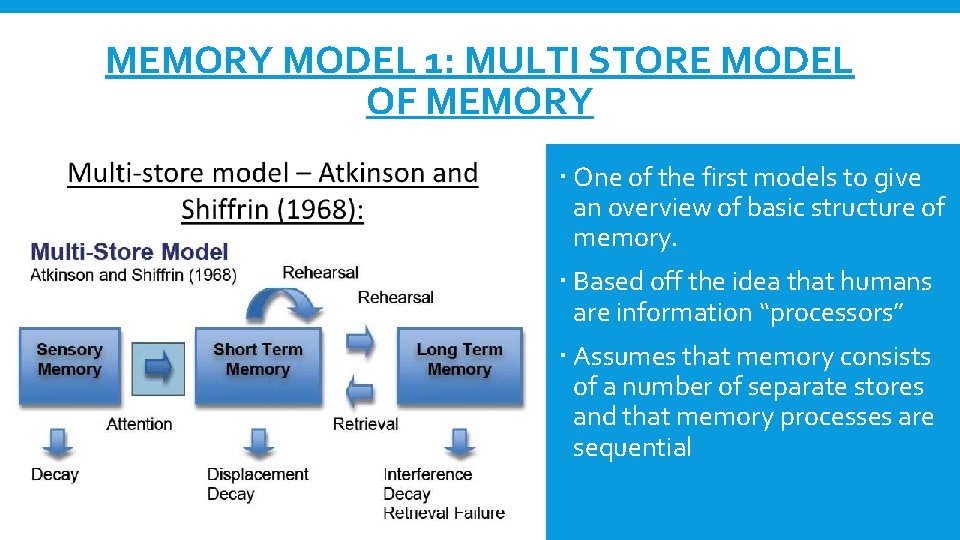
MEMORY MODEL 1: MULTI STORE MODEL OF MEMORY One of the first models to give an overview of basic structure of memory. Based off the idea that humans are information “processors” Assumes that memory consists of a number of separate stores and that memory processes are sequential
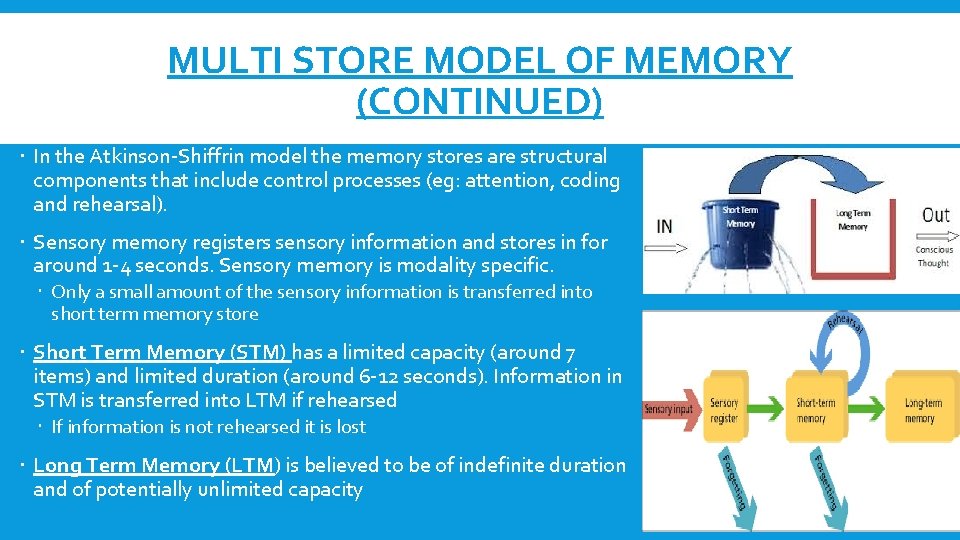
MULTI STORE MODEL OF MEMORY (CONTINUED) In the Atkinson-Shiffrin model the memory stores are structural components that include control processes (eg: attention, coding and rehearsal). Sensory memory registers sensory information and stores in for around 1 -4 seconds. Sensory memory is modality specific. Only a small amount of the sensory information is transferred into short term memory store Short Term Memory (STM) has a limited capacity (around 7 items) and limited duration (around 6 -12 seconds). Information in STM is transferred into LTM if rehearsed If information is not rehearsed it is lost Long Term Memory (LTM) is believed to be of indefinite duration and of potentially unlimited capacity
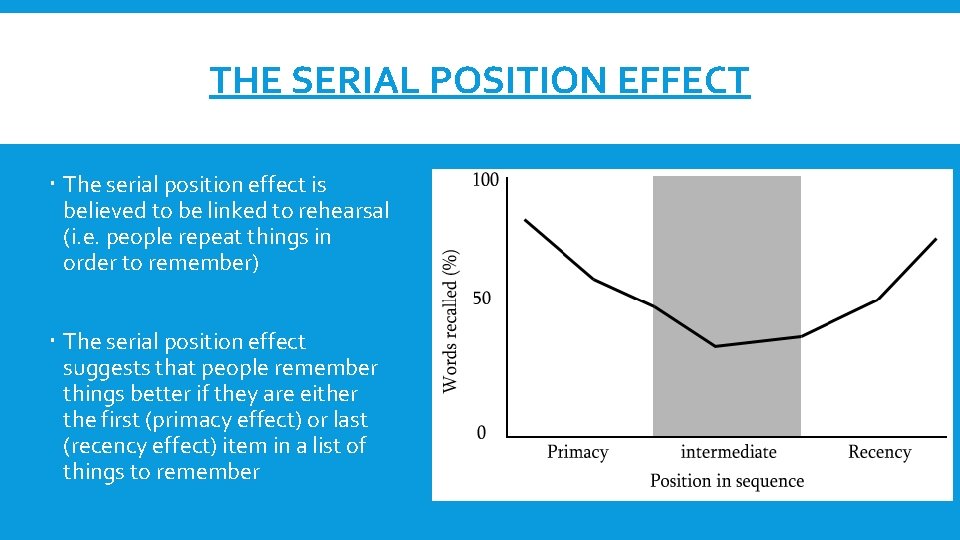
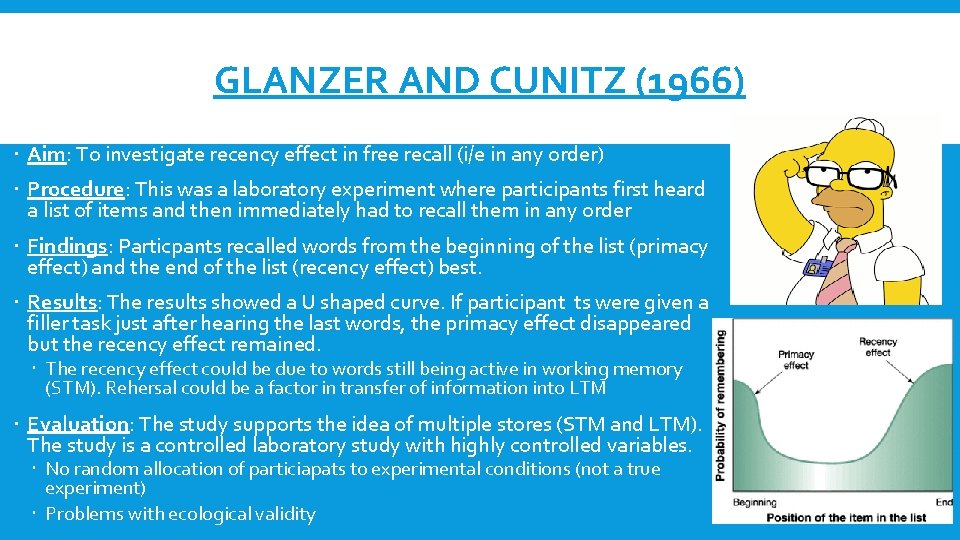
THE SERIAL POSITION EFFECT The serial position effect is believed to be linked to rehearsal (i. e. people repeat things in order to remember) The serial position effect suggests that people remember things better if they are either the first (primacy effect) or last (recency effect) item in a list of things to remember
GLANZER AND CUNITZ (1966) Aim: To investigate recency effect in free recall (i/e in any order) Procedure: This was a laboratory experiment where participants first heard a list of items and then immediately had to recall them in any order Findings: Particpants recalled words from the beginning of the list (primacy effect) and the end of the list (recency effect) best. Results: The results showed a U shaped curve. If participant ts were given a filler task just after hearing the last words, the primacy effect disappeared but the recency effect remained. The recency effect could be due to words still being active in working memory (STM). Rehersal could be a factor in transfer of information into LTM Evaluation: The study supports the idea of multiple stores (STM and LTM). The study is a controlled laboratory study with highly controlled variables. No random allocation of particiapats to experimental conditions (not a true experiment) Problems with ecological validity
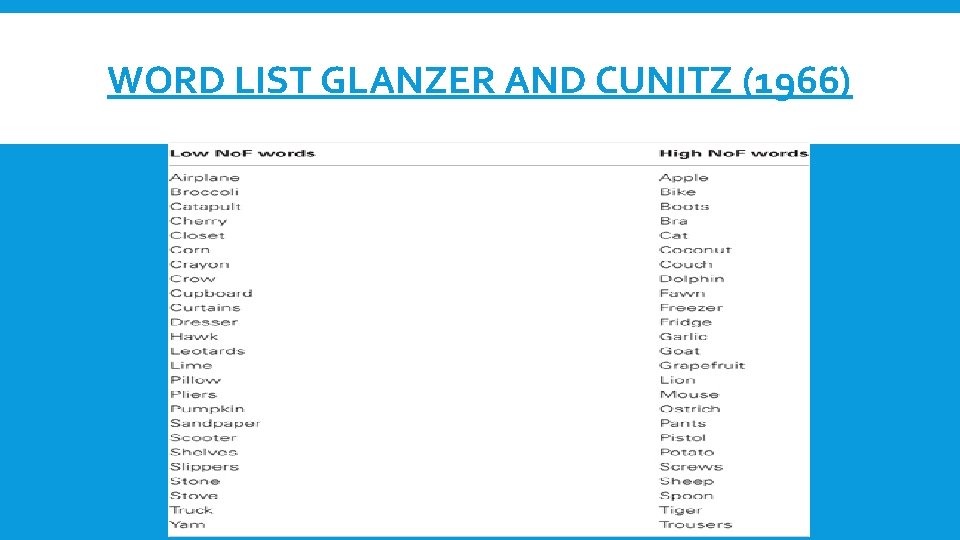
WORD LIST GLANZER AND CUNITZ (1966)
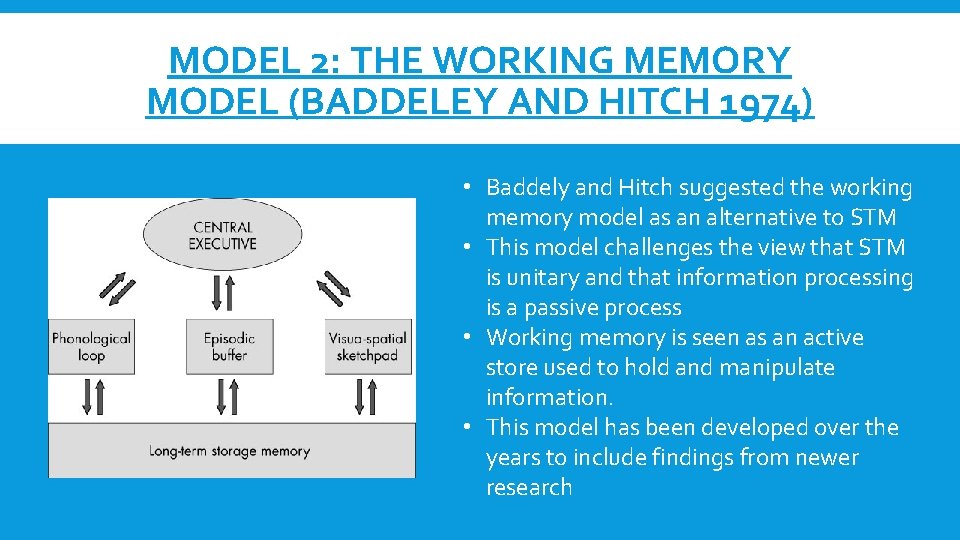
MODEL 2: THE WORKING MEMORY MODEL (BADDELEY AND HITCH 1974) • Baddely and Hitch suggested the working memory model as an alternative to STM • This model challenges the view that STM is unitary and that information processing is a passive process • Working memory is seen as an active store used to hold and manipulate information. • This model has been developed over the years to include findings from newer research
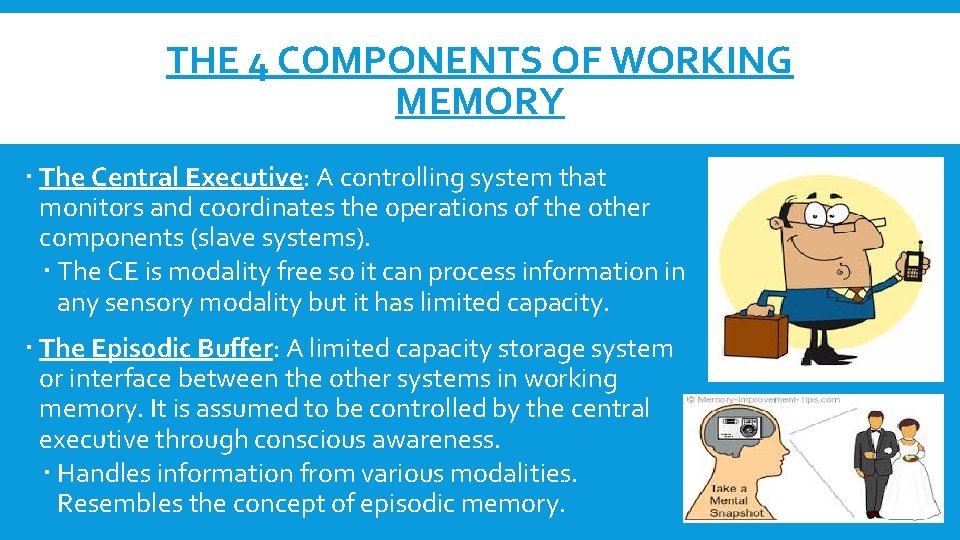
THE 4 COMPONENTS OF WORKING MEMORY The Central Executive: A controlling system that monitors and coordinates the operations of the other components (slave systems). The CE is modality free so it can process information in any sensory modality but it has limited capacity. The Episodic Buffer: A limited capacity storage system or interface between the other systems in working memory. It is assumed to be controlled by the central executive through conscious awareness. Handles information from various modalities. Resembles the concept of episodic memory.
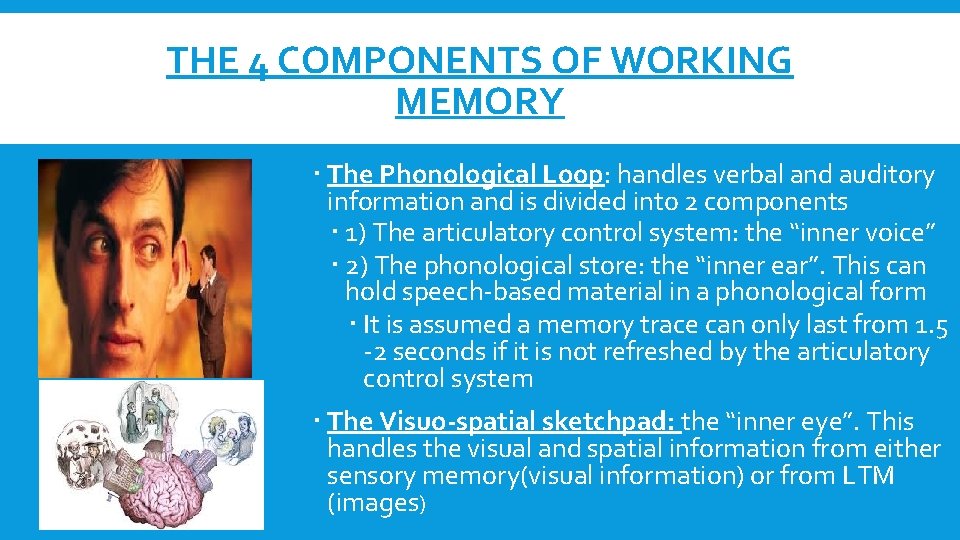
THE 4 COMPONENTS OF WORKING MEMORY The Phonological Loop: handles verbal and auditory information and is divided into 2 components 1) The articulatory control system: the “inner voice” 2) The phonological store: the “inner ear”. This can hold speech-based material in a phonological form It is assumed a memory trace can only last from 1. 5 -2 seconds if it is not refreshed by the articulatory control system The Visuo-spatial sketchpad: the “inner eye”. This handles the visual and spatial information from either sensory memory(visual information) or from LTM (images)
EVIDENCE OF THE WORKING MEMORY MODEL Evidence of this model can be found in dual tasks experiments which assumes there is a division of tasks between the different slave systems If two tasks are done simultaneously it is possible to perform well if separate systems are used. If concurrent tasks use the same system , it will affect performance negatively.
ASSIGNMENT: MEMORY MODEL ANCHOR CHART In groups of 4 you will be working on an assignment (begin today but will complete when I am out on Thursday) You will create a visual chart of one of the 2 memory models that we discussed in class today (Working Memory or Multi Store Model of Memory). This large visual will be created as a learning tool as if you were to use it to teach students (in a lower level psychology class) Your chart should include the following: __ A large colorful title __A large, colorful chart of your memory model ___Visuals/Examples to accompany each “step” of the memory model ___A strengths and limitations chart for your memory model (At least 2 -3 points for each side) ___ A summary of how your model works with at least one study/evidence included (on back of poster)
3. 4: BIOLOGICAL FACTORS AND THE COGNITIVE PROCESS
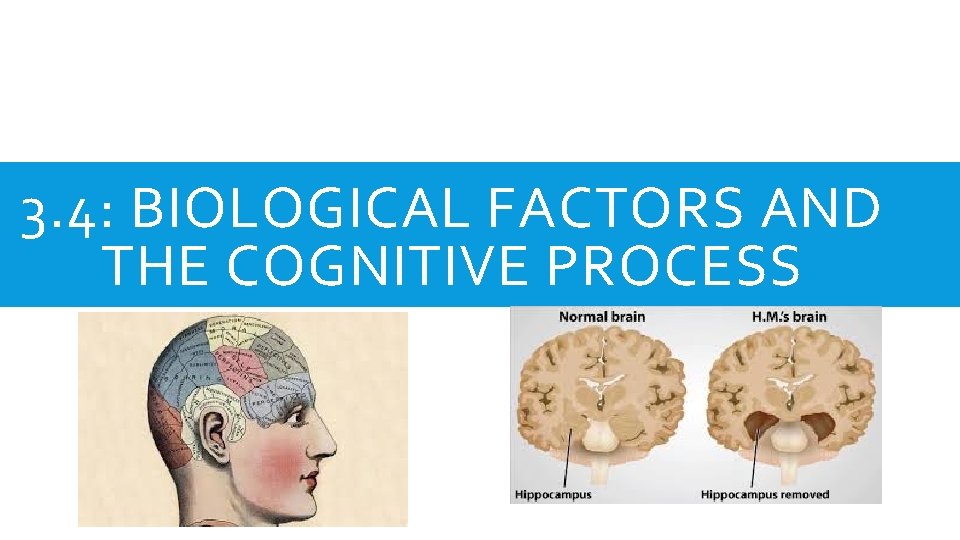
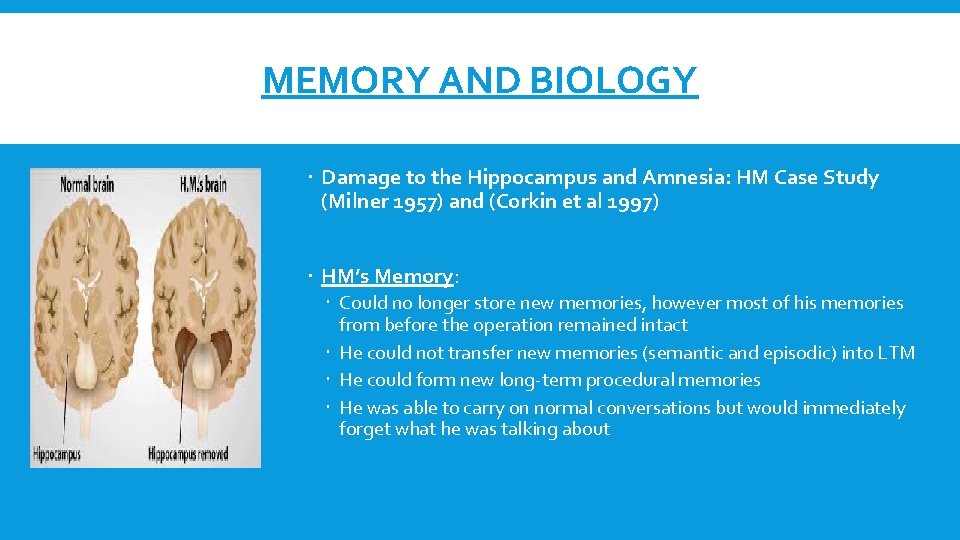
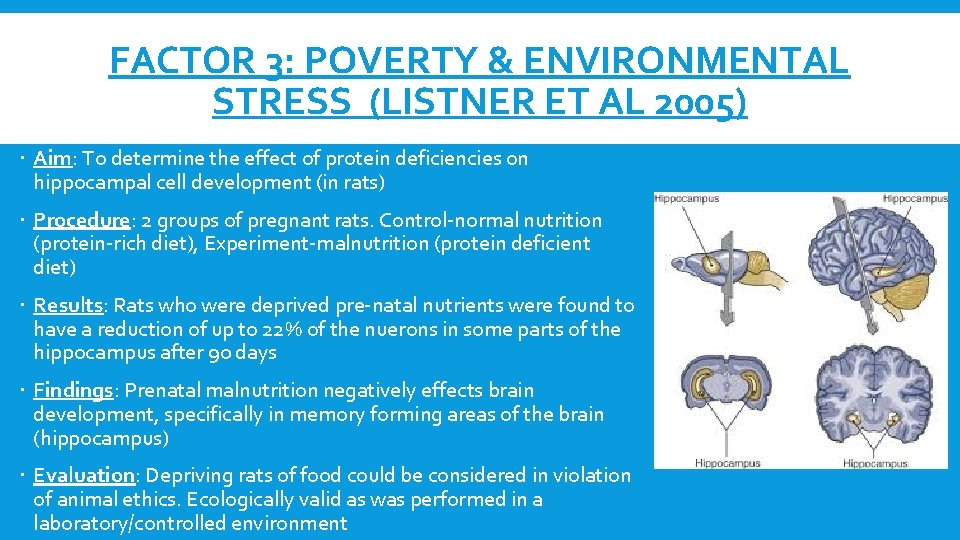
MEMORY AND BIOLOGY Damage to the Hippocampus and Amnesia: HM Case Study (Milner 1957) and (Corkin et al 1997) HM’s Memory: Could no longer store new memories, however most of his memories from before the operation remained intact He could not transfer new memories (semantic and episodic) into LTM He could form new long-term procedural memories He was able to carry on normal conversations but would immediately forget what he was talking about
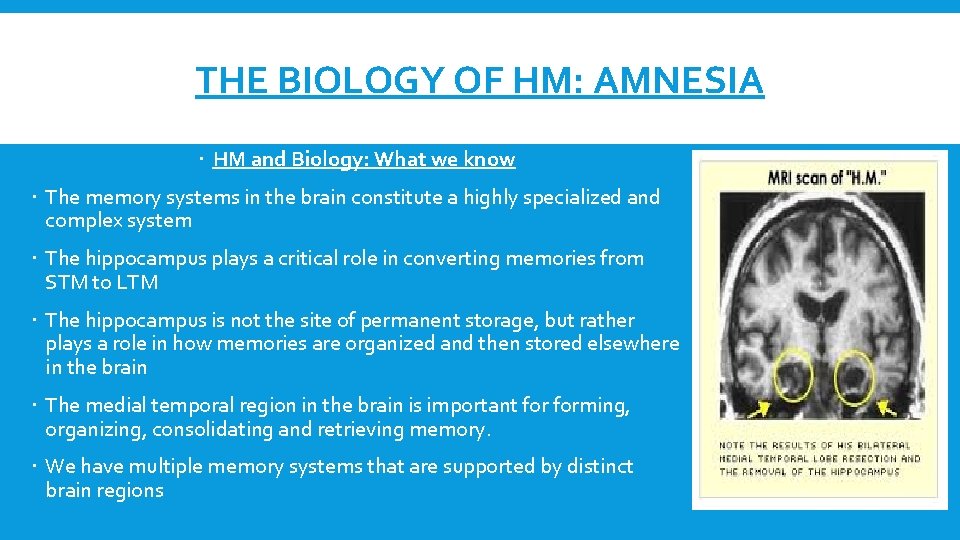
THE BIOLOGY OF HM: AMNESIA HM and Biology: What we know The memory systems in the brain constitute a highly specialized and complex system The hippocampus plays a critical role in converting memories from STM to LTM The hippocampus is not the site of permanent storage, but rather plays a role in how memories are organized and then stored elsewhere in the brain The medial temporal region in the brain is important forming, organizing, consolidating and retrieving memory. We have multiple memory systems that are supported by distinct brain regions
CORTISOL AND MEMORY Cortisol: A stress hormone secreted by the adrenal glands in response to physiological or psychological stress. During long term stress too much cortisol is released which affects immune functioning and memory processes Chronic oversecretion of cortisol may hinder the brain in forming new memories or accessing already existing memories
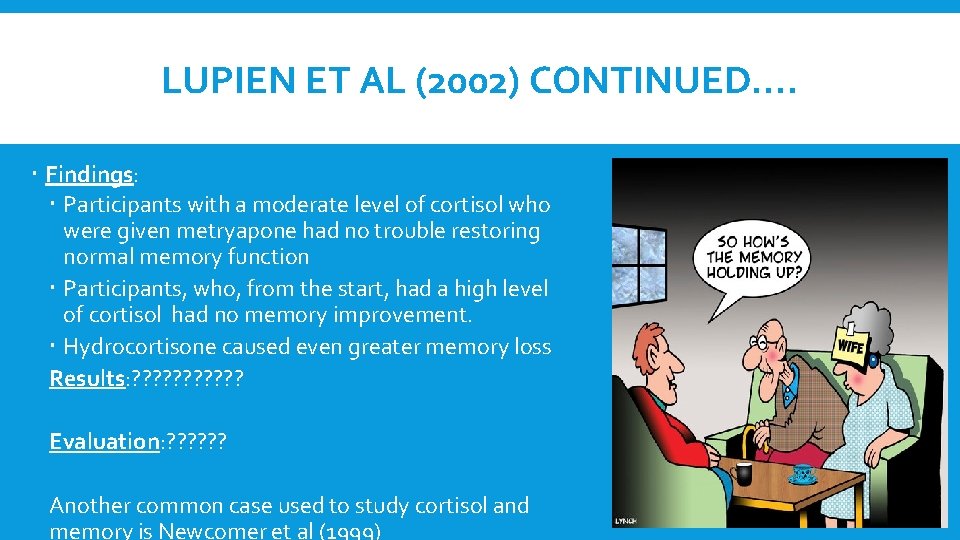
LUPIEN ET AL (2002): CORTISOL LEVELS AND MEMORY Aim: To see whether it was possible to reverse memory problems with a drug Procedure: Participants were divided into two groups: Group 1 had a moderate level of cortisol at baseline and Group 2 had a high level of cortisol and signs of impaired memory at baseline Both groups were first given a drug preventing secretion of cortisol (metyrapone). Then they were given a memory test. After this both groups were given another drug (hydrocortisone) to restore their levels of cortisol to previous levels. Results were compared with levels in a placebo group
LUPIEN ET AL (2002) CONTINUED…. Findings: Participants with a moderate level of cortisol who were given metryapone had no trouble restoring normal memory function Participants, who, from the start, had a high level of cortisol had no memory improvement. Hydrocortisone caused even greater memory loss Results: ? ? ? Evaluation: ? ? ? Another common case used to study cortisol and memory is Newcomer et al (1999)
TED TALK: STRESS AND THE BRAIN Explain how stress affects the brain: Biologically Socio-culturally Both: Create a chart or model to illustrate these concepts.
HOMEWORK IA Introductions due 12/9 Outlines 6 & 7
3. 5 SOCIAL/CULTURAL FACTORS AND COGNITIVE PROCESSES
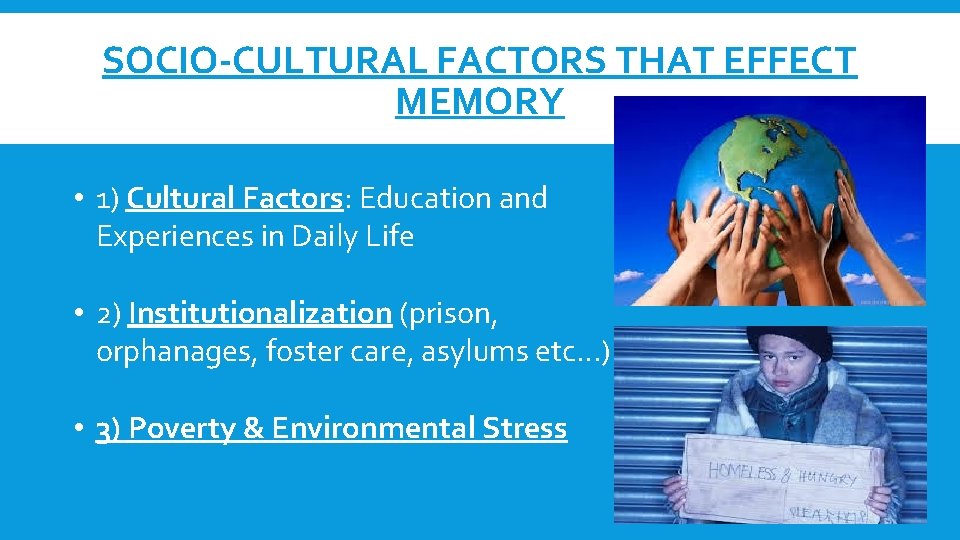
SOCIO-CULTURAL FACTORS THAT EFFECT MEMORY • 1) Cultural Factors: Education and Experiences in Daily Life • 2) Institutionalization (prison, orphanages, foster care, asylums etc…) • 3) Poverty & Environmental Stress
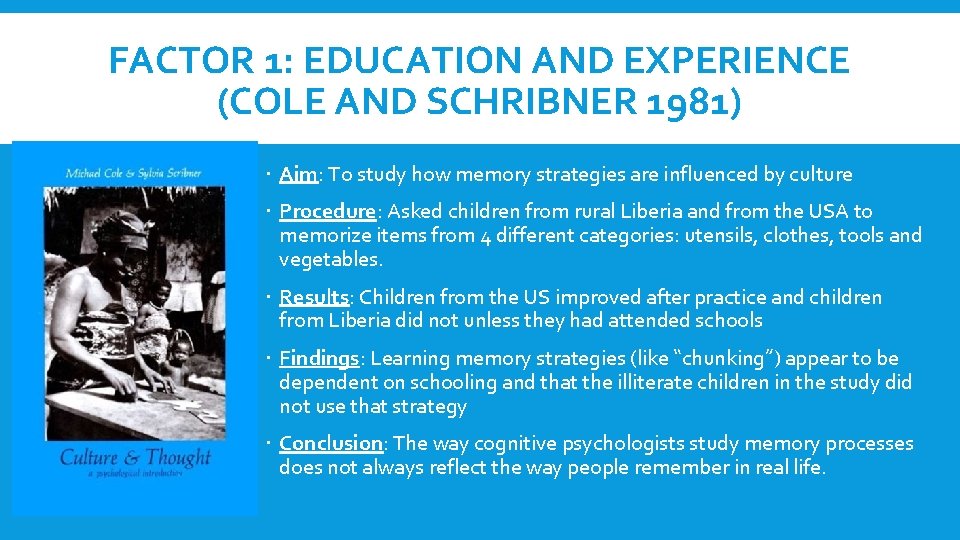
FACTOR 1: EDUCATION AND EXPERIENCE (COLE AND SCHRIBNER 1981) Aim: To study how memory strategies are influenced by culture Procedure: Asked children from rural Liberia and from the USA to memorize items from 4 different categories: utensils, clothes, tools and vegetables. Results: Children from the US improved after practice and children from Liberia did not unless they had attended schools Findings: Learning memory strategies (like “chunking”) appear to be dependent on schooling and that the illiterate children in the study did not use that strategy Conclusion: The way cognitive psychologists study memory processes does not always reflect the way people remember in real life.
FACTOR 2: INSTITUTIONALIZATION (RUTTER 2007) Aim: To study the effect of institutionalization on memory skills Procedure: Longitudal study Focused on children who had been adopted from Romanian orphanages after the fall of communism (deprived nutrition, parental care, etc…) Results: Those who spent a longer time in an institution were more likely to have persistant cognitive deficiencies Findings: For those who spent between 6 and 24 months in an institution, 12% of children demonstrated cognitive impairment at age 6. For those who were in the institution for more than 24 months, 36% demonstrated significant cognitive impairment. This cognitive impairment included free recall tasks as well as other cognitive tasks. The researchers also observed an “unusually high level of attentional difficulties. ” However, at the age of 4 the two groups of adopted children showed no significant differences in intellectual development from children adopted before the age of 6 months. However, a cognitive deficit remained in those children who had been adopted later. Conclusion: Institutionalization has a negative effect on cognitive abilities
FACTOR 3: POVERTY & ENVIRONMENTAL STRESS (LISTNER ET AL 2005) Aim: To determine the effect of protein deficiencies on hippocampal cell development (in rats) Procedure: 2 groups of pregnant rats. Control-normal nutrition (protein-rich diet), Experiment-malnutrition (protein deficient diet) Results: Rats who were deprived pre-natal nutrients were found to have a reduction of up to 22% of the nuerons in some parts of the hippocampus after 90 days Findings: Prenatal malnutrition negatively effects brain development, specifically in memory forming areas of the brain (hippocampus) Evaluation: Depriving rats of food could be considered in violation of animal ethics. Ecologically valid as was performed in a laboratory/controlled environment
TED TALK: THE EFFECTS OF DEPRIVATION AND TRAUMA Write down key points and ideas that you can use in tomorrow’s socratic seminar: The seminar will discuss the following questions: 1) To what extent do factors such as malnourishment and poverty effect cognition (memory, learning, intelligence) 2) What can we do in the fields of psychology, education, medicine and public policy to lessen these “achievement gaps” for children from high poverty/unenriched environments?
DO NOW 1) Show me your notes for Socratic Seminar (25 pts). Must have notes to be eligible to participate in seminar
SOCRATIC SEMINAR QUESTIONS( 60 MINUTES) 1) To what extent do factors such as malnourishment and poverty effect cognition (memory, learning, intelligence) 2) What can we do in the fields of psychology, education, medicine and public policy to lessen these “achievement gaps” for children from high poverty/unenriched environments?
WRITING PROMPT 1) To what extent do factors such as malnourishment and poverty effect cognition. Use specific arguments from the socratic seminar and the articles to answer the questions 2) Self Reflection: Grade yourself on your seminar performance: Base your grade on the following factors. Did you contribute meaningful, on-topic points and information? Were you polite and respectful of your classmates? Were your contributions accurate and text-based? Use a A-F grading scale (no point value) and explain why you feel that is the grade that you deserve
HOMEWORK IA Introductions due 12/9 (All individual, no group work) – See website for examples Outlines 7&8
3. 6: COGNITIVE RELIABILITY
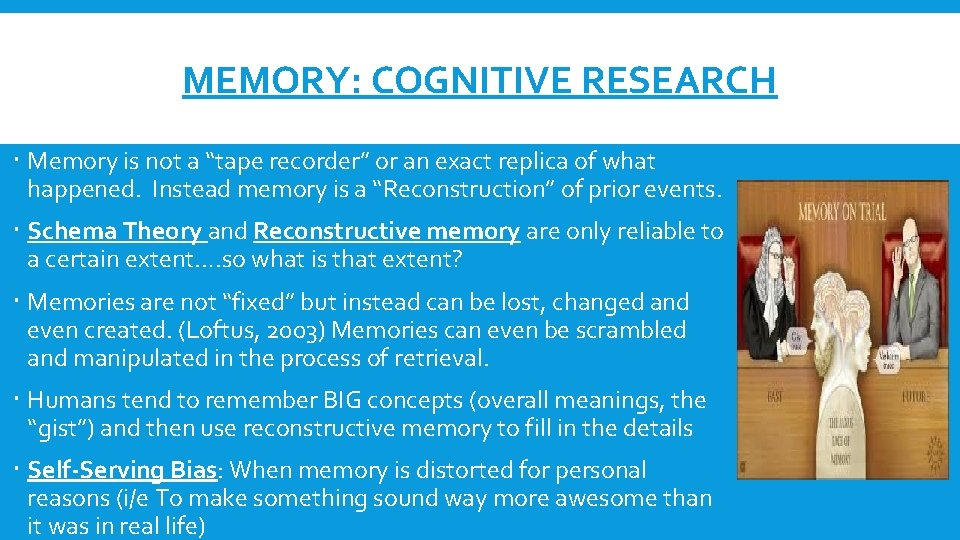
MEMORY: COGNITIVE RESEARCH Memory is not a “tape recorder” or an exact replica of what happened. Instead memory is a “Reconstruction” of prior events. Schema Theory and Reconstructive memory are only reliable to a certain extent…. so what is that extent? Memories are not “fixed” but instead can be lost, changed and even created. (Loftus, 2003) Memories can even be scrambled and manipulated in the process of retrieval. Humans tend to remember BIG concepts (overall meanings, the “gist”) and then use reconstructive memory to fill in the details Self-Serving Bias: When memory is distorted for personal reasons (i/e To make something sound way more awesome than it was in real life)
BRAIN GAMES: MEMORY How reliable is your memory? Can we “trick ourselves” into having better or worse memory? Apply these concepts to famous psychological studies from this unit.
IN CLASS: STRENGTHS AND LIMITATIONS In groups of 2 you will take 2 famous cases that we have studied in this unit that look at and evaluate 2 cognitive theories. In teams you will re-read the studies and create a short summary or chart (should already be in your notes) to use Your job is to evaluate each case as well as the concept of Reconstructive Memory as it is relavent to your case. You will need to make a large Strengths and Limitations Chart that you can present to the class. When not presenting you should take note of the other groups information and chart Group 1: Bartlett (1932) Schemas and Reconstructive Memory (War of Ghosts) Group 2: Loftus and Palmer (1974): Reconstructive Memory (Automobile Crash Experiment)
DO NOW 1) What do you already know about emotions? 2) Emotions and Biology? 3) Emotions and Cognition?
ACTIVITY: MRS EPLIN’S BRAIN GAMES IDENTIFYING EMOTIONS As a class we’re going to take a test/quiz to test how good we are at recognizing people’s emotions. If there is any discrepancy we will vote (I’ll serve as a tiebreaker) on which emotion. Discussion: 1) Discuss the results. Why were we good/bad at recognizing the emotions of the people when all we could see were the eyes. 2) How could we alter or skew the results of the test? 3) Do you think a group of older students would do better? Worse? What about younger students?
CRASH COURSE: #25 FEELING ALL THE FEELS What are the main concepts of emotion? 1) What concepts deal with BIOLOGY? 2) What concepts deal with COGNITION?
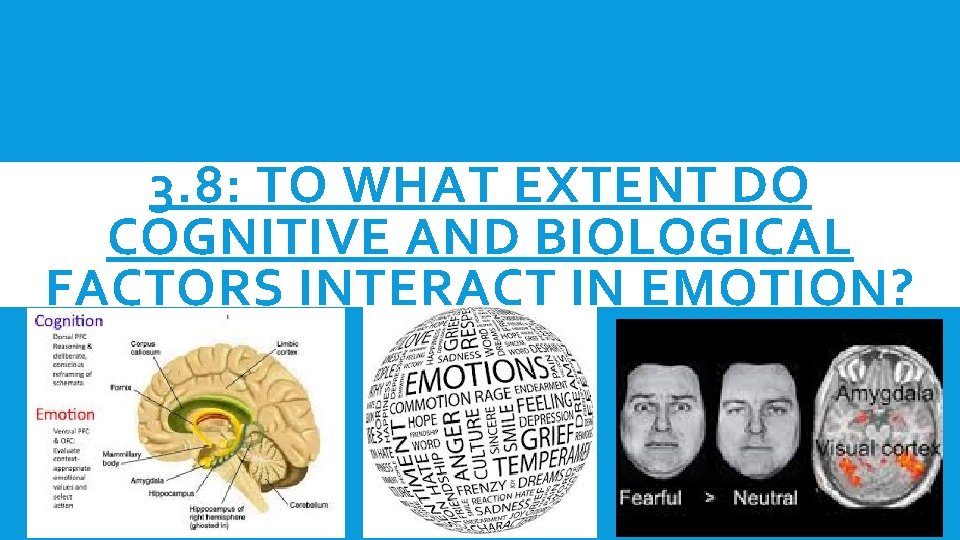
3. 8: TO WHAT EXTENT DO COGNITIVE AND BIOLOGICAL FACTORS INTERACT IN EMOTION?
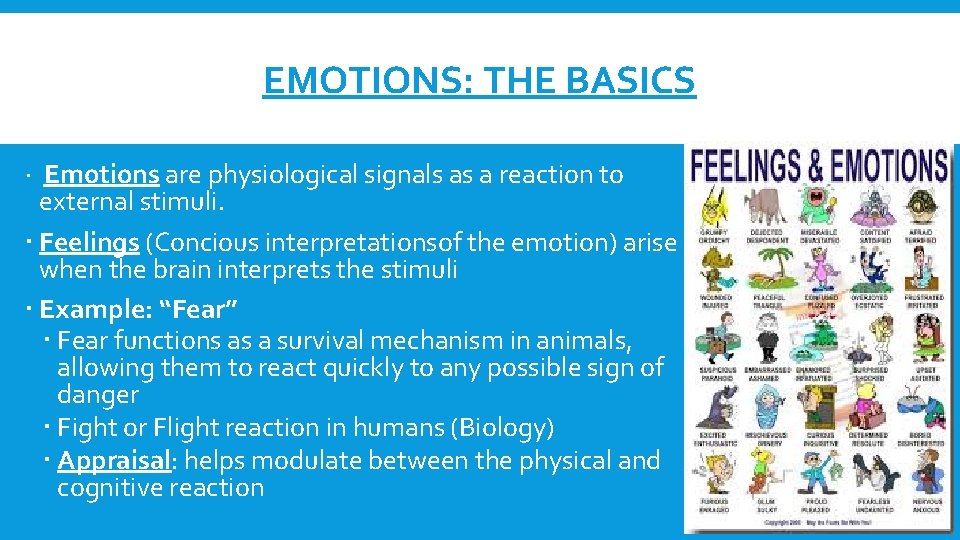
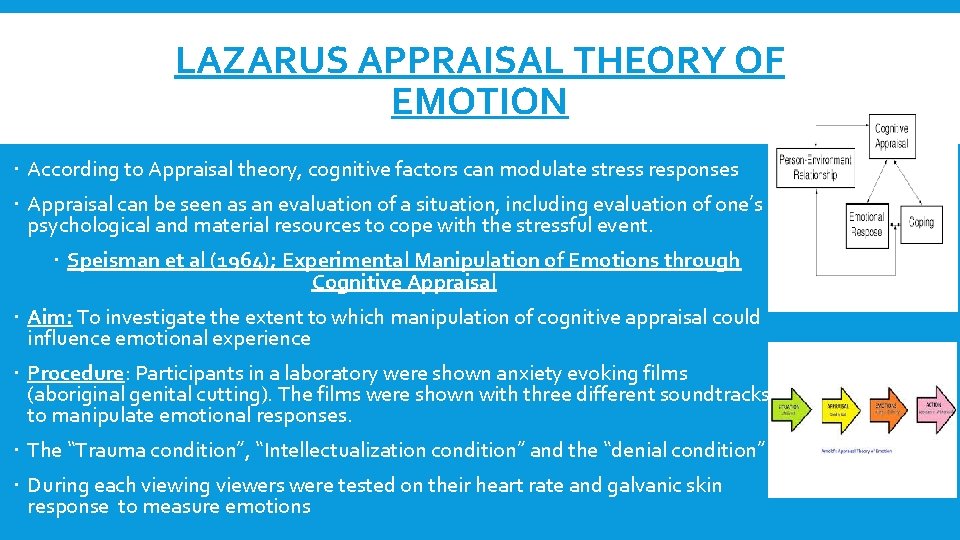
EMOTIONS: THE BASICS Emotions are physiological signals as a reaction to external stimuli. Feelings (Concious interpretationsof the emotion) arise when the brain interprets the stimuli Example: “Fear” Fear functions as a survival mechanism in animals, allowing them to react quickly to any possible sign of danger Fight or Flight reaction in humans (Biology) Appraisal: helps modulate between the physical and cognitive reaction
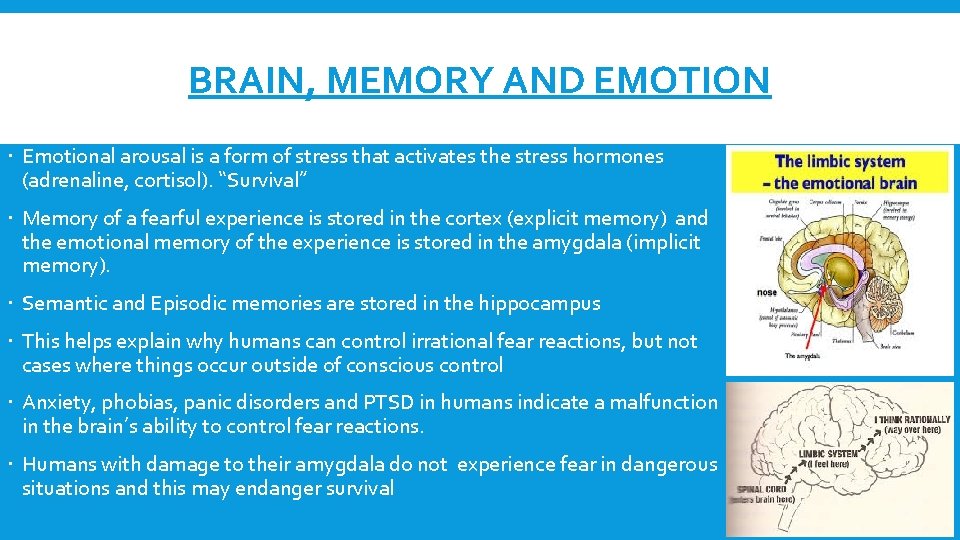
BRAIN, MEMORY AND EMOTION Emotional arousal is a form of stress that activates the stress hormones (adrenaline, cortisol). “Survival” Memory of a fearful experience is stored in the cortex (explicit memory) and the emotional memory of the experience is stored in the amygdala (implicit memory). Semantic and Episodic memories are stored in the hippocampus This helps explain why humans can control irrational fear reactions, but not cases where things occur outside of conscious control Anxiety, phobias, panic disorders and PTSD in humans indicate a malfunction in the brain’s ability to control fear reactions. Humans with damage to their amygdala do not experience fear in dangerous situations and this may endanger survival
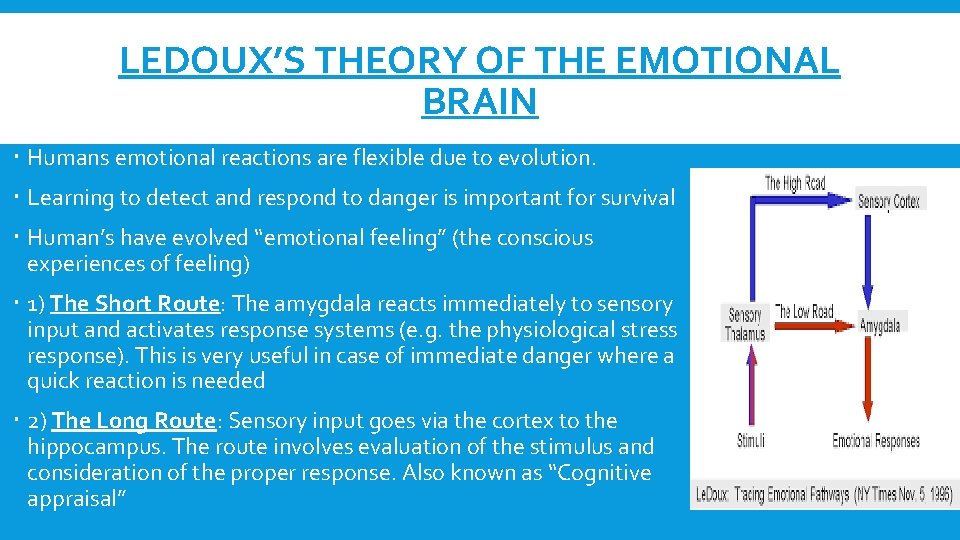
LEDOUX’S THEORY OF THE EMOTIONAL BRAIN Humans emotional reactions are flexible due to evolution. Learning to detect and respond to danger is important for survival Human’s have evolved “emotional feeling” (the conscious experiences of feeling) 1) The Short Route: The amygdala reacts immediately to sensory input and activates response systems (e. g. the physiological stress response). This is very useful in case of immediate danger where a quick reaction is needed 2) The Long Route: Sensory input goes via the cortex to the hippocampus. The route involves evaluation of the stimulus and consideration of the proper response. Also known as “Cognitive appraisal”
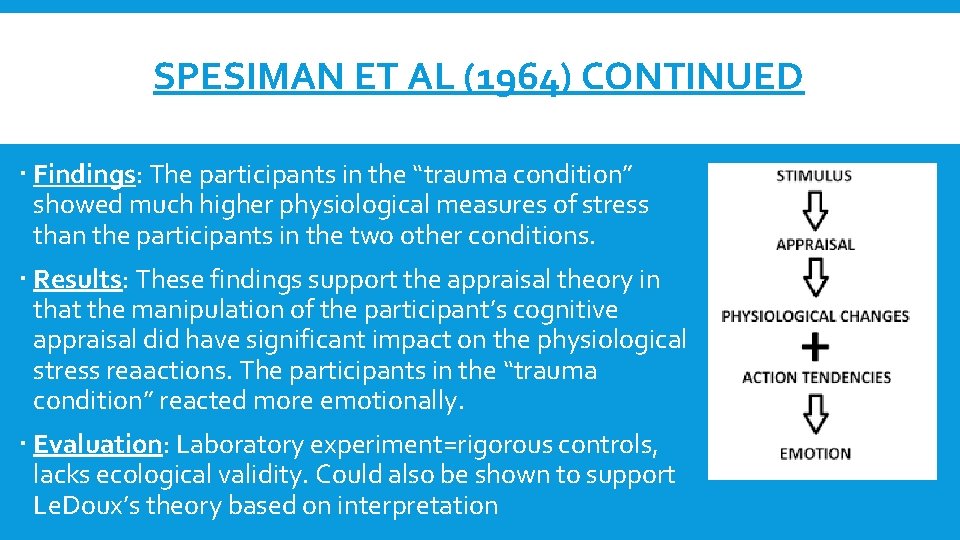
LAZARUS APPRAISAL THEORY OF EMOTION According to Appraisal theory, cognitive factors can modulate stress responses Appraisal can be seen as an evaluation of a situation, including evaluation of one’s psychological and material resources to cope with the stressful event. Speisman et al (1964); Experimental Manipulation of Emotions through Cognitive Appraisal Aim: To investigate the extent to which manipulation of cognitive appraisal could influence emotional experience Procedure: Participants in a laboratory were shown anxiety evoking films (aboriginal genital cutting). The films were shown with three different soundtracks to manipulate emotional responses. The “Trauma condition”, “Intellectualization condition” and the “denial condition” During each viewing viewers were tested on their heart rate and galvanic skin response to measure emotions
SPESIMAN ET AL (1964) CONTINUED Findings: The participants in the “trauma condition” showed much higher physiological measures of stress than the participants in the two other conditions. Results: These findings support the appraisal theory in that the manipulation of the participant’s cognitive appraisal did have significant impact on the physiological stress reaactions. The participants in the “trauma condition” reacted more emotionally. Evaluation: Laboratory experiment=rigorous controls, lacks ecological validity. Could also be shown to support Le. Doux’s theory based on interpretation
EASTERBROOK (1959) CUE UTILIZATION THEORY This theory predicts that in situations with high levels of emotional arousal, people will tend to pay more attention and to encode the details of the emotion arousing stimulus (central details) and not pay attention to the details that are not central to the emotional arousal (peripheral details) Rinolo et al (2003): On Accuracy of Eyewitness Statements Aim: To investigate the reliability of memory for a central detail of eye witnesses to the Titanic’s Final Plunge (i. e. whether the Titanic sank intact or broke in two before it went down). Procedure: The researchers used archival data (transcripts from hearings in 1912 in US and UK) and identified 20 cases from the total of 91 survivors who had explicitly addressed the state of the ship in it’s final plunge
RINOLO ET AL (2003) Findings: 75% of the eye witnesses said the Titanic was breaking apart during sinking and 25% said the Titanci was intact while going down. Results: Because the majority of the ship survivors recalled the ship breaking in two it can be concluded that the central traits of the event were recalled accurately, even though the memory was formed during high emotional arousal. It was later found that the ship in fact sunk intact and found that memories may have been impaired due to the traumatic event. Evaluation: Only investigated for one central detail and only used a subgroup of witnesses (Opportunity sample). May have been bias in the interrogations which could have influenced the testimony. Could not follow up, debrief, or test for trauma as all the studies used were dead at the time of the study.
ASSIGNMENT: INSIDE OUT AND EMOTION In groups of 3 (one group of 2) you will be assigned an emotional theory: Your job is to analyze the movie “Inside Out” and demonstrate how it relates to your emotional theory. Use clues and evidence from the movie (Events, characters, etc…. ) to create a chart that demonstrates the relationship between the two. The expectation is not that your theories match up perfectly (Remember the movie is a FICTIONAL representation) but that you can clarify the points where your theory overlaps and the points where your theory is different. At the conclusion you will be expected to share out your charts and information with your classmates
HOMEWORK Read pages 88 -92 (Quiz Tuesday) IA Introduction due tomorrow by 3 PM Outlines due 12/20, Final exam 12/20