
Cognitive Impairment What Not to Forget Bruce Margolis
Cognitive Impairment – What Not to Forget Bruce Margolis, DO, MBA April 25, 2017 17 -73
Pacific Life is a product provider. It is not a fiduciary and therefore does not give advice or make recommendations regarding insurance or investment products. Only a life insurance producer who is also a fiduciary is required to advise if the product purchase and any subsequent action taken with regard to the product are in their client’s best interest. The primary purpose of life insurance is protection against pre-mature death of the insured. Life insurance is subject to underwriting and approval of the application. Pacific Life Insurance Company (800) 800 -7681 Newport Beach, CA Pacific Life & Annuity Company (888) 595 -6996 Newport Beach, CA Pacific Life refers to Pacific Life Insurance Company and its affiliates, including Pacific Life & Annuity Company. Insurance products are issued by Pacific Life Insurance Company in all states except New York and in New York by Pacific Life & Annuity Company. Product availability and features may vary by state. Each insurance company is solely responsible for the financial obligations accruing under the products it issues. Insurance products and their guarantees, including optional benefits and any crediting rates, are backed by the financial strength and claims-paying ability of the issuing insurance company. Look to the strength of the life insurance company with regard to such guarantees as these guarantees are not backed by the broker-dealer, insurance agency or their affiliates from which products are purchased. Neither these entities nor their representatives make any representation or assurance regarding the claims-paying ability of the life insurance company. This presentation is distributed through Pacific Life, Lynchburg, VA (844) 276 -5759. 2 of 42
What We’re Going to Talk About v v v What is cognitive impairment The spectrum of cognitive disorders Epidemiology of cognitive disorders Mild Cognitive Impairment Risk factors for Alzheimer’s disease The mortality of cognitive impairment The morbidity of cognitive impairment Screening for cognitive impairment Cognitive screening and mortality Neuropsychological testing Underwriting approach 3 of 42
What is Cognitive Impairment v DSM-5* Criteria v. Decline in one or more cognitive domain based on v. Concern about decline, expressed by individual or reliable informant, or observed by clinician v. Documented by objective cognitive assessment v. That is v. Not exclusively during delirium v. Not better explained by another mental disorder Source adapted from: *American Psychiatric Association: Diagnostic and Statistical Manual of Mental Disorders, Fifth Edition, Arlington, VA, American Psychiatric Association; 2013 4 of 42
What is Cognitive Impairment v Mild Cognitive Impairment (MCI) Due to Alzheimer’s Disease (AD) v Establish clinical and cognitive criteria v Cognitive concern reflecting a change in cognition reported by patient, informant or clinician v Objective evidence of impairment in one or more domains, typically including memory (amnestic) v Examine etiology of MCI consistent with AD pathophysiological process v Rule out vascular, traumatic, medical causes of cognitive decline, where possible v Provide evidence of longitudinal decline in cognition when feasible v Report history consistent with AD genetic factors, where relevant Source: Albert MS, et al. Alzheimer’s & Dementia 2011; 7: 270 5 of 42
What is Cognitive Impairment v Dementia v Cognitive or behavioral symptoms that: v Interfere with ability to function at work or at usual activities v Represent a decline from previous levels of functioning v Are not explained by delirium or psychiatric disorder v Cognitive impairment detected by history and cognitive testing v The cognitive or behavioral impairment involves a minimum of two of the following domains: v Impaired ability to acquire and remember new information v Impaired reasoning and handling of complex tasks; poor judgment v Impaired visuospatial abilities v Impaired language functions (speaking, reading, writing) v Changes in personality or behavior Source: Mc. Khann GM, et al. Alzheimer’s & Dementia 2011; 7: 263 6 of 42
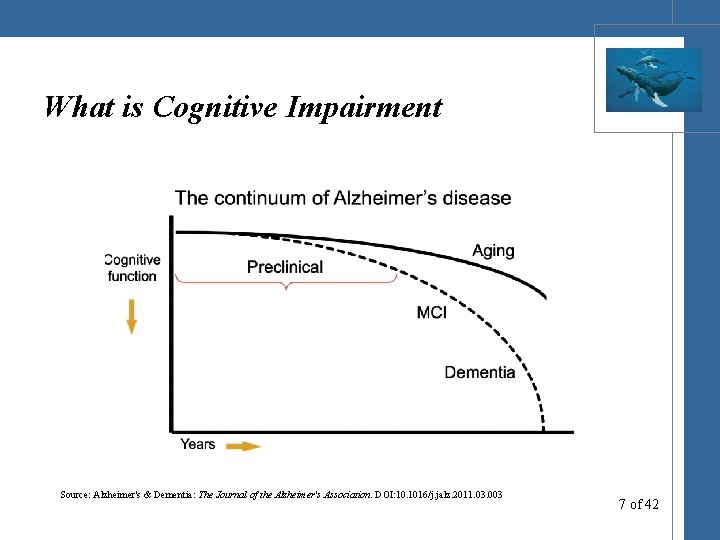
What is Cognitive Impairment Source: Alzheimer's & Dementia: The Journal of the Alzheimer's Association. DOI: 10. 1016/j. jalz. 2011. 03. 003 7 of 42
The Spectrum of Cognitive Disorders v Alzheimer’s disease – 60 -80% cases v Vascular/Multi-infarct dementia - ~10% cases – due to cerebrovascular disease – infarcts v Mixed – may be more common than appreciated v Dementia with Lewy bodies (DLB) – visual hallucinations, Parkinson-like features v Frontotemporal dementia (FTD) – personality and language changes v Parkinson’s disease v Creutzfeldt-Jakob disease – prior induced, rapidly advances v Huntington’s disease – inherited neurodegenerative disorder v Down’s syndrome – almost all develop AD Source: http: //www. alz. org/dementia/types-of-dementia. asp. Accessed 2/9/17 8 of 42
Epidemiology of Cognitive Disorders v Prevalence of MCI estimated to be from 16 -20% in adults 60 and older v 20 -40% of those with MCI will evolve to dementia over time at a rate of 10 -15%/year v Not all individuals with MCI will go on to develop dementia v Up to 20% will improve over time Source: Kelley RE. MCI/Alzheimer’s Disease. 2017 ACLI Medical Section Annual Meeting 9 of 42
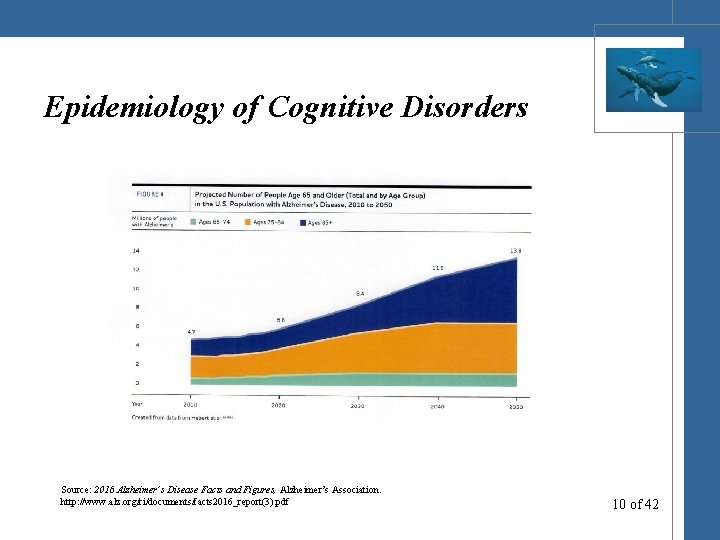
Epidemiology of Cognitive Disorders Source: 2016 Alzheimer’s Disease Facts and Figures, Alzheimer’s Association. http: //www. alz. org/ri/documents/facts 2016_report(3). pdf 10 of 42
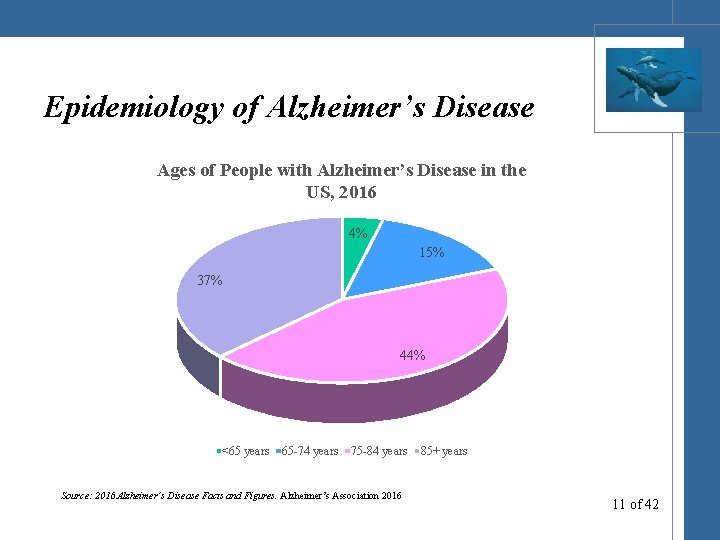
Epidemiology of Alzheimer’s Disease Ages of People with Alzheimer’s Disease in the US, 2016 4% 15% 37% 44% <65 years 65 -74 years 75 -84 years Source: 2016 Alzheimer’s Disease Facts and Figures. Alzheimer’s Association 2016 85+ years 11 of 42
Alzheimer’s Disease Risk Factors v Confirmed risk factors v Age v Genetics v Chromosomal disorder – Down Syndrome individuals at high risk to develop AD v Rare familial disorders – single gene mutations (APP*, PSEN**1, PSEN 2) – autosomal dominant pattern v Complex – most AD cases combination of genetic susceptibility (APOE***4) and environmental risk factors v Likely risk factors v Head trauma – traumatic brain injury (TBI) v Cardiovascular risk factors - hypertension, obesity, diabetes, high cholesterol, inflammatory markers v Cardiovascular disease – stroke, heart disease v Depression *APP = amyloid precursor protein; **PSEN = presenillin; ***APOE = apolipoprotein E Source: 2016 Alzheimer’s Disease Facts and Figures. Alzheimer’s Association 2016 12 of 42
Mortality of Cognitive Impairment v Cognitive Impairment and Mortality in the Cardiovascular Heart Study v Multi-center study of Medicare eligible individuals v 5888 persons from 1989 -1999 v Predominantly Caucasian v Cognitive impairment based on Mini Mental Sate Exam (MMSE) scores v Analyzed six groups v (1) All persons with/without cognitive impairment v (2) All persons based on severity of cognitive impairment v (3) All persons with co-morbids with/without cognitive impairment v (4) All persons with co-morbids based on the severity of cognitive impairment v (5) All persons otherwise healthy with/without cognitive impairment v (6) All persons otherwise healthy based on severity of cognitive impairment Source: Shavelle RM, et al. J Ins Med 2009; 41: 110 13 of 42
Mortality of Cognitive Impairment Shavelle Study Results Group 2 (RR)* Group 4 (RR) Group 6 (RR) Mild Cognitive Impairment 1. 31 1. 19 2. 01 Moderate Cognitive Impairment 1. 59 1. 5 5. 25 Severe Cognitive Impairment 2. 4 1. 98 No data *RR = Relative Risk of Death Source: Shavelle RM, et al. J Ins Med 2009; 41: 110 14 of 42
Mortality of Dementia v Survival After Initial Diagnosis of Alzheimer’s Disease v Base population 23, 000; age 60+; Seattle based health maintenance organization (HMO) v 521 newly diagnosed persons with Alzheimer’s; 1987 -1996 v Population predominantly Caucasian v Followed on average 5. 2 years v Median survival for men 4. 2 years v Median survival for women 5. 7 years Source: Larson EB, et al. Ann Intern Med 2004; 140: 501 15 of 42
Mortality of Dementia Source: Larson EB, et al. Ann Intern Med 2004; 140: 501 16 of 42
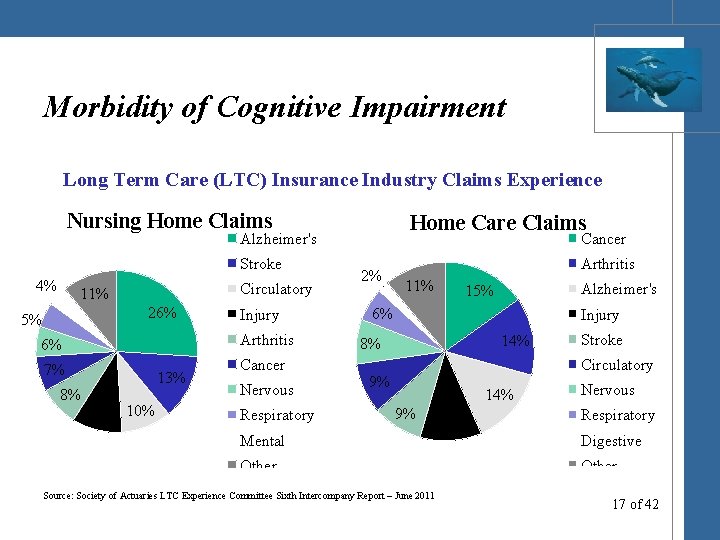
Morbidity of Cognitive Impairment Long Term Care (LTC) Insurance Industry Claims Experience Nursing Home Claims Home Care Claims Alzheimer's Stroke 4% Circulatory 11% 26% 5% Arthritis 6% 7% 8% Injury 13% 10% Cancer Nervous Respiratory Cancer 2% Arthritis 11% Alzheimer's 15% 6% Injury 14% 8% Stroke Circulatory 9% 14% 9% Mental Other Source: Society of Actuaries LTC Experience Committee Sixth Intercompany Report – June 2011 11% Nervous Respiratory Digestive Other 17 of 42
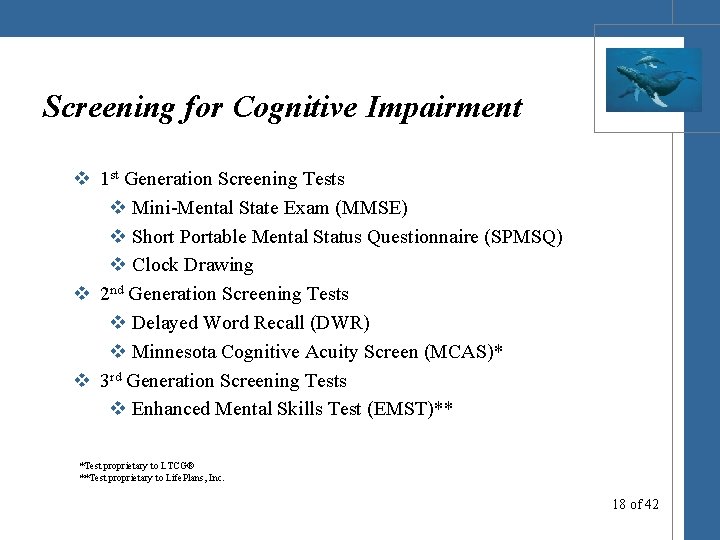
Screening for Cognitive Impairment v 1 st Generation Screening Tests v Mini-Mental State Exam (MMSE) v Short Portable Mental Status Questionnaire (SPMSQ) v Clock Drawing v 2 nd Generation Screening Tests v Delayed Word Recall (DWR) v Minnesota Cognitive Acuity Screen (MCAS)* v 3 rd Generation Screening Tests v Enhanced Mental Skills Test (EMST)** *Test proprietary to LTCG® **Test proprietary to Life. Plans, Inc. 18 of 42
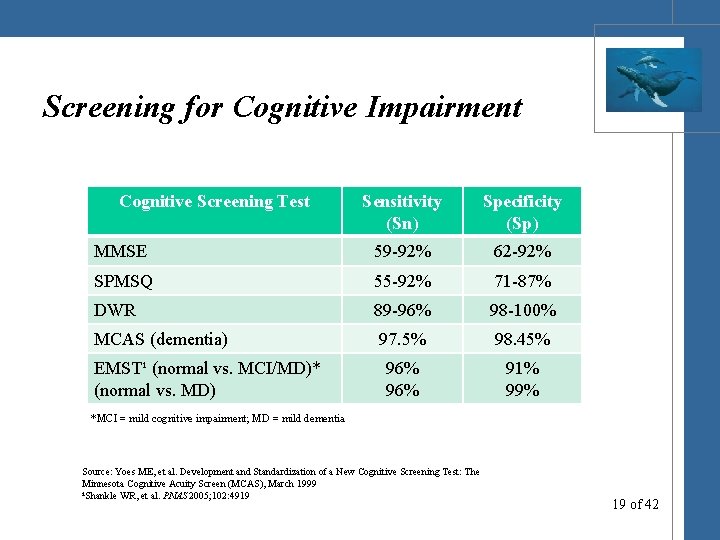
Screening for Cognitive Impairment Cognitive Screening Test Sensitivity (Sn) Specificity (Sp) MMSE 59 -92% 62 -92% SPMSQ 55 -92% 71 -87% DWR 89 -96% 98 -100% MCAS (dementia) 97. 5% 98. 45% EMST¹ (normal vs. MCI/MD)* (normal vs. MD) 96% 91% 99% *MCI = mild cognitive impairment; MD = mild dementia Source: Yoes ME, et al. Development and Standardization of a New Cognitive Screening Test: The Minnesota Cognitive Acuity Screen (MCAS), March 1999 ¹Shankle WR, et al. PNAS 2005; 102: 4919 19 of 42
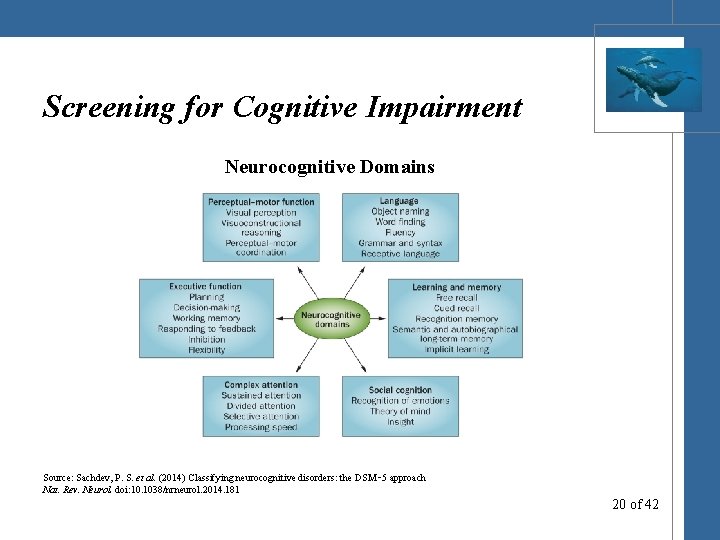
Screening for Cognitive Impairment Neurocognitive Domains Source: Sachdev, P. S. et al. (2014) Classifying neurocognitive disorders: the DSM‑ 5 approach Nat. Rev. Neurol. doi: 10. 1038/nrneurol. 2014. 181 20 of 42
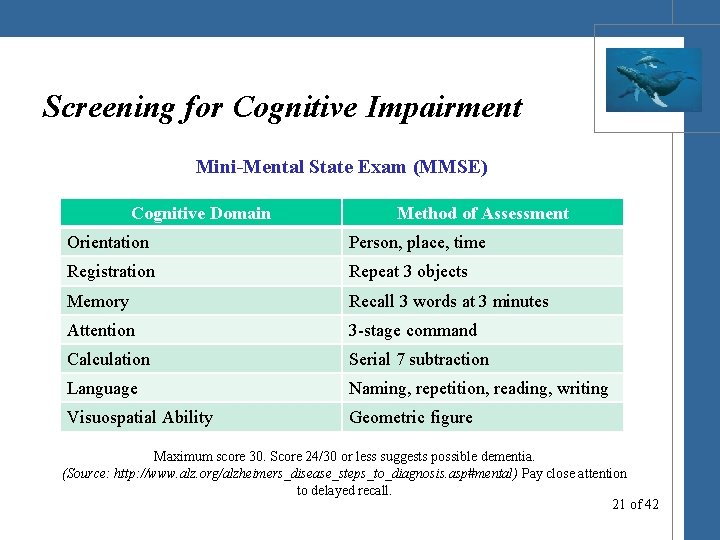
Screening for Cognitive Impairment Mini-Mental State Exam (MMSE) Cognitive Domain Method of Assessment Orientation Person, place, time Registration Repeat 3 objects Memory Recall 3 words at 3 minutes Attention 3 -stage command Calculation Serial 7 subtraction Language Naming, repetition, reading, writing Visuospatial Ability Geometric figure Maximum score 30. Score 24/30 or less suggests possible dementia. (Source: http: //www. alz. org/alzheimers_disease_steps_to_diagnosis. asp#mental) Pay close attention to delayed recall. 21 of 42
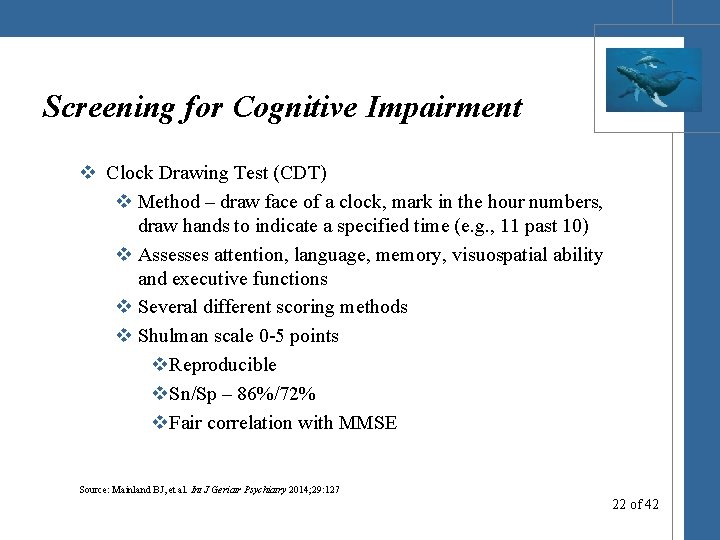
Screening for Cognitive Impairment v Clock Drawing Test (CDT) v Method – draw face of a clock, mark in the hour numbers, draw hands to indicate a specified time (e. g. , 11 past 10) v Assesses attention, language, memory, visuospatial ability and executive functions v Several different scoring methods v Shulman scale 0 -5 points v. Reproducible v. Sn/Sp – 86%/72% v. Fair correlation with MMSE Source: Mainland BJ, et al. Int J Geriatr Psychiatry 2014; 29: 127 22 of 42
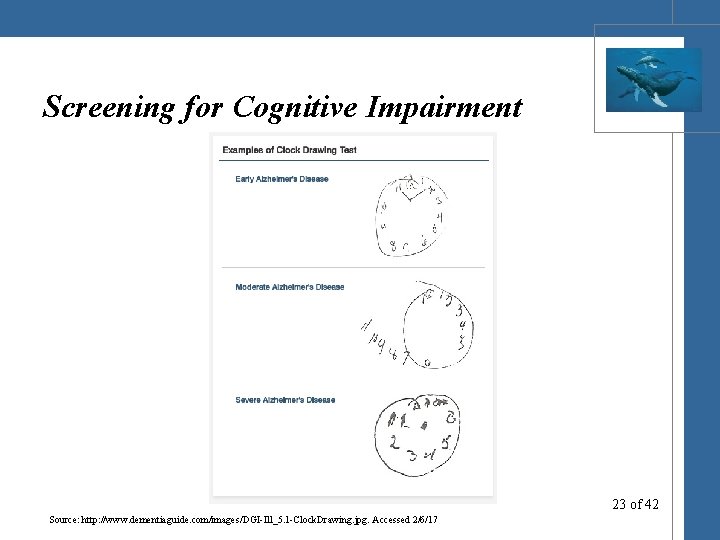
Screening for Cognitive Impairment 23 of 42 Source: http: //www. dementiaguide. com/images/DGI-Ill_5. 1 -Clock. Drawing. jpg. Accessed 2/6/17
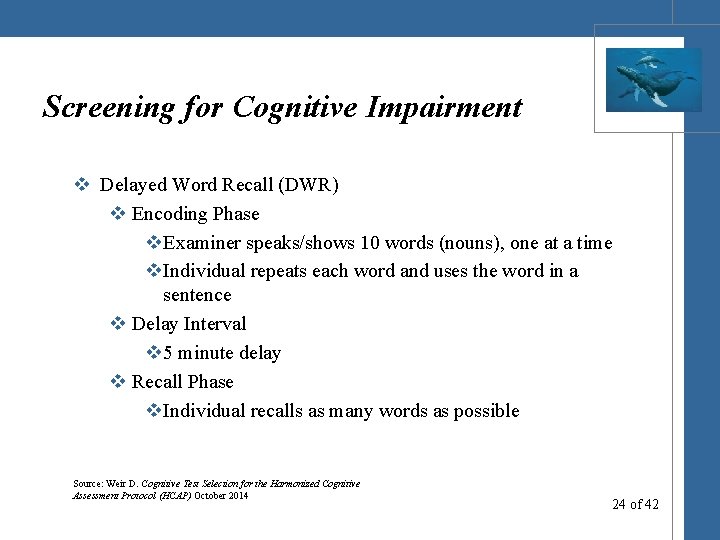
Screening for Cognitive Impairment v Delayed Word Recall (DWR) v Encoding Phase v. Examiner speaks/shows 10 words (nouns), one at a time v. Individual repeats each word and uses the word in a sentence v Delay Interval v 5 minute delay v Recall Phase v. Individual recalls as many words as possible Source: Weir D. Cognitive Test Selection for the Harmonized Cognitive Assessment Protocol (HCAP) October 2014 24 of 42
Screening for Cognitive Impairment v Delayed Word Recall v Early stage Alzheimer’s patients have rapid rate of forgetting within first 5 -10 minutes v Elaborative encoding provides benefit to normal subjects but not to those with Alzheimer’s v Overall predictive accuracy 95% in identifying Alzheimer’s patients from normal controls (Knopman & Ryberg. Arch Neur 1989; 46: 141) v May be difficult to differentiate depression from Alzheimer’s disease (O’Carroll, at al. Psych Med 1997; 27: 967) v Can be administered via phone or in person, though risk of cheating significant when done via phone 25 of 42
Screening for Cognitive Impairment v Minnesota Cognitive Acuity Screen (MCAS) v Developed for telephonic use v Tests 9 domains v Published research v. Impaired group – 210 elderly nursing home residents with dementia (avg. age 82. 4 yrs) v. Unimpaired group – 129 community dwelling seniors without dementia (avg. age 73. 8 yrs) v. Weighted analysis of each domain score used to discriminate impaired from unimpaired v. Reported Sn 97. 5%; Sp 98. 5% Source: Knopman, DS, et al. Neuropsychiatry, Neuropsychology, and Behav Neuro 2000; 13 -286 26 of 42
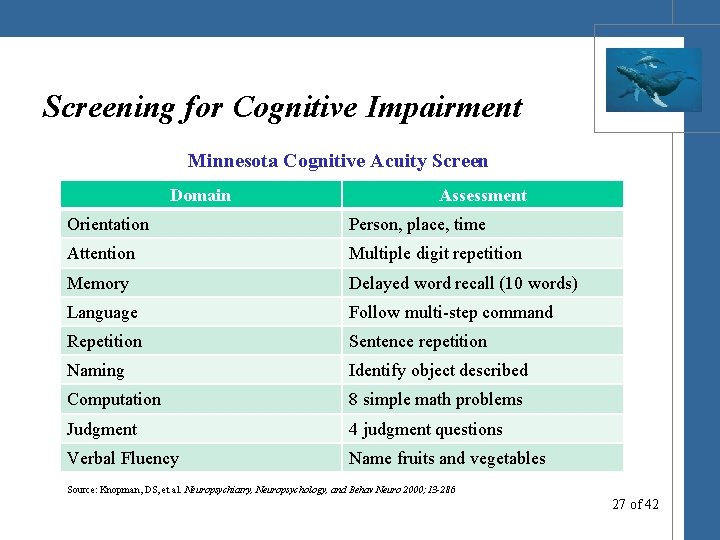
Screening for Cognitive Impairment Minnesota Cognitive Acuity Screen Domain Assessment Orientation Person, place, time Attention Multiple digit repetition Memory Delayed word recall (10 words) Language Follow multi-step command Repetition Sentence repetition Naming Identify object described Computation 8 simple math problems Judgment 4 judgment questions Verbal Fluency Name fruits and vegetables Source: Knopman, DS, et al. Neuropsychiatry, Neuropsychology, and Behav Neuro 2000; 13 -286 27 of 42
Screening for Cognitive Impairment v Minnesota Cognitive Acuity Screen v High Sensitivity/Specificity v Incremental improvement over MMSE and DWR v Can be used telephonic or face-to-face v Convenience sample used in study – could impact discriminating ability of test v Not validated against mild dementia or mild cognitive impairment v Potential for cheating exists as with any telephonic tool Source: Knopman, DS, et al. Neuropsychiatry, Neuropsychology, and Behav Neuro 2000; 13 -286 28 of 42
Screening for Cognitive Impairment v Enhanced Mental Skills Test (EMST) v Developed by Medical Care Corporation v Based on Consortium to Establish a Registry for Alzheimer’s Disease (CERAD) word battery and validated in study published in 2005 v High sensitivity for detecting MCI v Multiple domains v 9 balanced word lists v No reliance on a single cut-off score v Can be administered via phone or face-to-face Source: Shankle WR, et al. PNAS 2005; 102: 4919 Source: Life. Plans, Inc. 29 of 42
Screening for Cognitive Impairment v EMST Test Components v Comprehension v Applicant must respond to simple, clear directions v Three Learning Trails of 10 Words Each v Repetition and Encoding: applicant repeats each word to assure correct encoding v Working Memory: applicant immediately recalls as many words as possible v Metamemory/Judgment and Insight v Applicant is asked to estimate the number of words she/he will recall in the delayed word recall v Abstract Reasoning: Distraction Phase: Triadic Animal Comparison v Applicant chooses which of three animals is least similar v 9 animals, 12 sets of comparisons v Roughly 3 -5 minutes to complete v Task is largely independent of race, culture and individual differences Source: Shankle WR, et al. PNAS 2005; 102: 4919 Source: Life. Plans, Inc. 30 of 42
Screening for Cognitive Impairment v EMST Test Components v Immediate and Delayed Word Recall v. Applicant recalls as many of the original 10 words as possible v Delayed Cued Recognition: Item Cues v. Applicant is asked if specific words were included in original word list v Delayed Cued Recall: Category Cues v. Applicant recalls as many animals from triadic comparison as possible Source: Shankle WR, et al. PNAS 2005; 102: 4919 Source: Life. Plans, Inc. 31 of 42
But………. . does cognitive screening work? ? 32 of 42
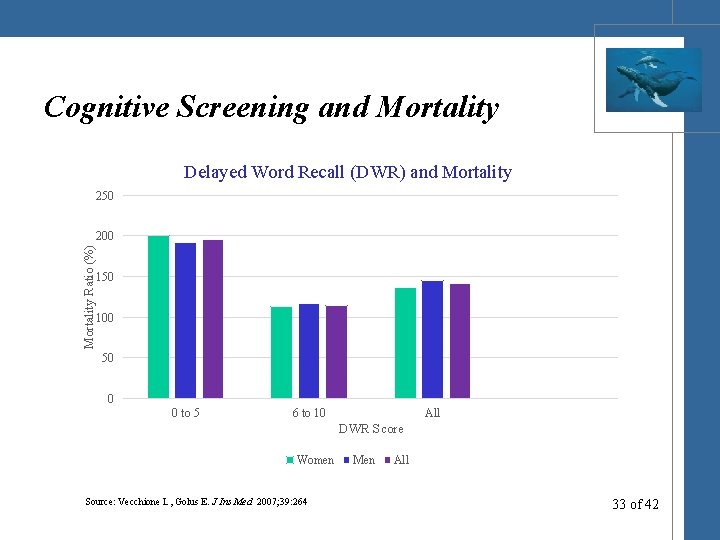
Cognitive Screening and Mortality Delayed Word Recall (DWR) and Mortality 250 Mortality Ratio (%) 200 150 100 50 0 0 to 5 6 to 10 All DWR Score Women Source: Vecchione L, Golus E. J Ins Med 2007; 39: 264 Men All 33 of 42
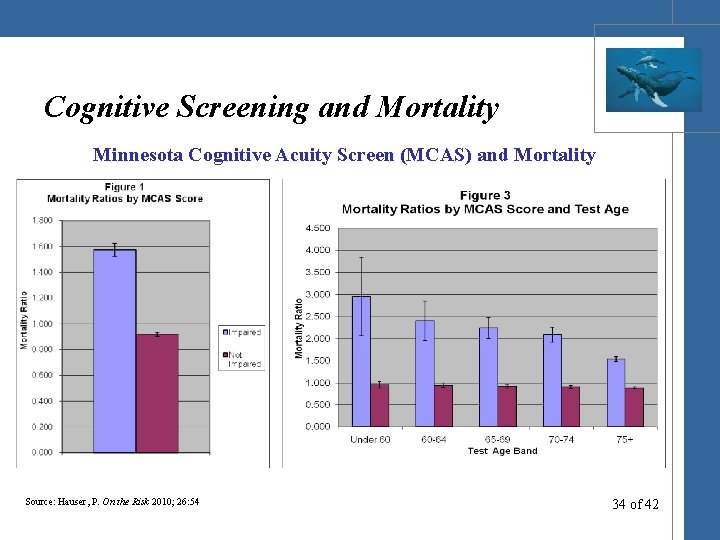
Cognitive Screening and Mortality Minnesota Cognitive Acuity Screen (MCAS) and Mortality Source: Hauser, P. On the Risk 2010; 26: 54 34 of 42
Cognitive Screening and Mortality v EMST and Mortality v The Relationship Between Cognitive Impairment and Mortality Among Long Term Care Insurance Applicants (Life. Plans Study) v Analyzed mortality data based on DWR and EMST results v Telephonic and in-person assessments from 1996 through 2008 v Mortality data from Social Security Death Master File v DWR v 764, 037 lives v 5. 8 million exposure years v 160, 255 deaths v EMST v 132, 719 lives v 376, 000 exposure years v 2, 263 deaths Source: Cohen MA, et al. Society of Actuaries 2011 35 of 42
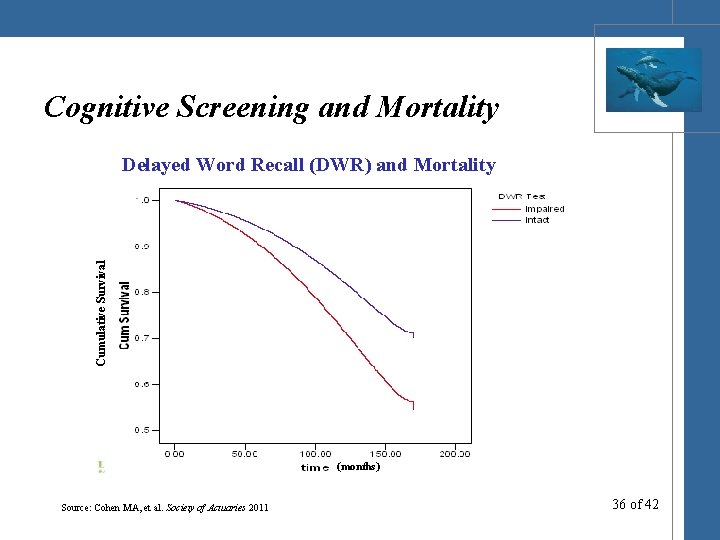
Cognitive Screening and Mortality Cumulative Survival Delayed Word Recall (DWR) and Mortality (months) Source: Cohen MA, et al. Society of Actuaries 2011 36 of 42
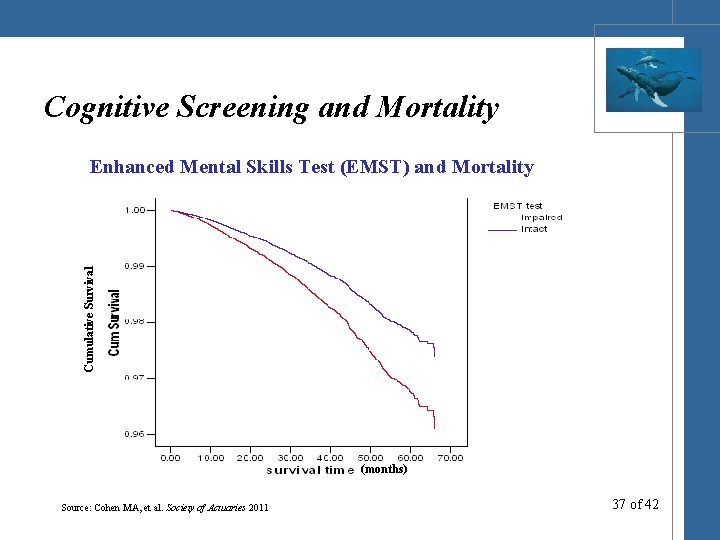
Cognitive Screening and Mortality Cumulative Survival Enhanced Mental Skills Test (EMST) and Mortality (months) Source: Cohen MA, et al. Society of Actuaries 2011 37 of 42
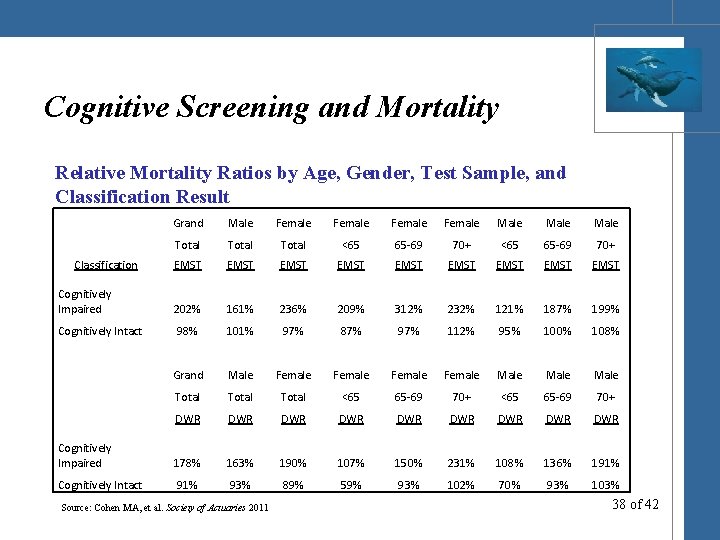
Cognitive Screening and Mortality Relative Mortality Ratios by Age, Gender, Test Sample, and Classification Result Grand Male Female Male Total <65 65 -69 70+ EMST EMST EMST Cognitively Impaired 202% 161% 236% 209% 312% 232% 121% 187% 199% Cognitively Intact 98% 101% 97% 87% 97% 112% 95% 100% 108% Grand Male Female Male Total <65 65 -69 70+ DWR DWR DWR Cognitively Impaired 178% 163% 190% 107% 150% 231% 108% 136% 191% Cognitively Intact 91% 93% 89% 59% 93% 102% 70% 93% 103% Classification Source: Cohen MA, et al. Society of Actuaries 2011 38 of 42
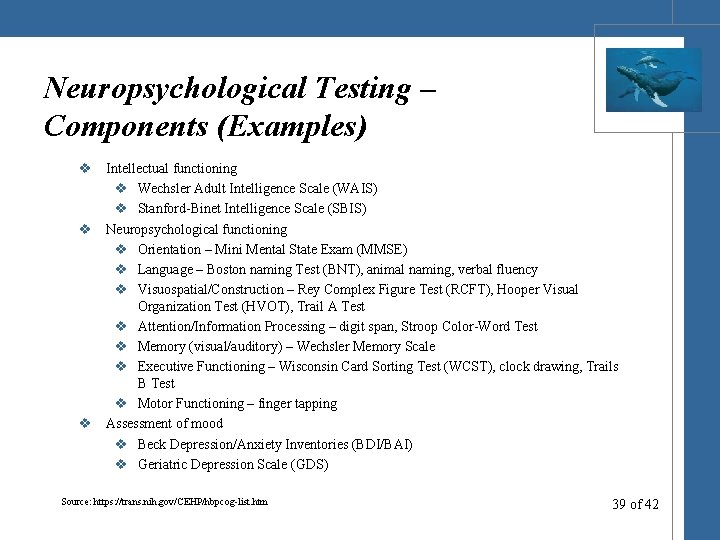
Neuropsychological Testing – Components (Examples) v Intellectual functioning v Wechsler Adult Intelligence Scale (WAIS) v Stanford-Binet Intelligence Scale (SBIS) v Neuropsychological functioning v Orientation – Mini Mental State Exam (MMSE) v Language – Boston naming Test (BNT), animal naming, verbal fluency v Visuospatial/Construction – Rey Complex Figure Test (RCFT), Hooper Visual Organization Test (HVOT), Trail A Test v Attention/Information Processing – digit span, Stroop Color-Word Test v Memory (visual/auditory) – Wechsler Memory Scale v Executive Functioning – Wisconsin Card Sorting Test (WCST), clock drawing, Trails B Test v Motor Functioning – finger tapping v Assessment of mood v Beck Depression/Anxiety Inventories (BDI/BAI) v Geriatric Depression Scale (GDS) Source: https: //trans. nih. gov/CEHP/hbpcog-list. htm 39 of 42
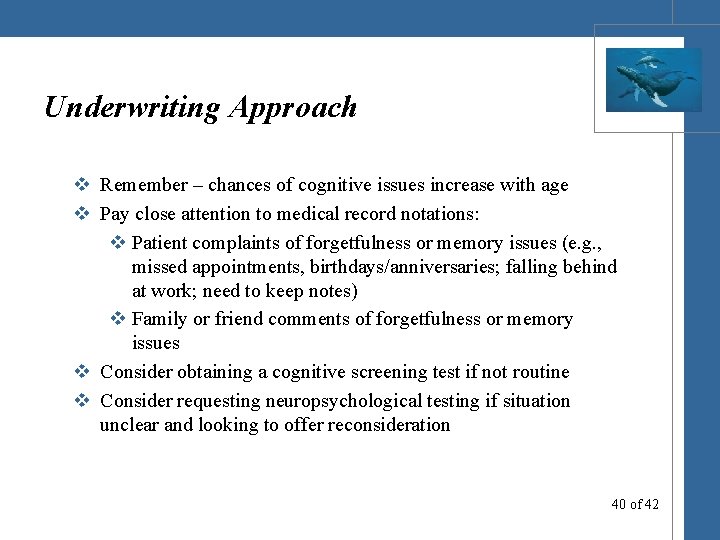
Underwriting Approach v Remember – chances of cognitive issues increase with age v Pay close attention to medical record notations: v Patient complaints of forgetfulness or memory issues (e. g. , missed appointments, birthdays/anniversaries; falling behind at work; need to keep notes) v Family or friend comments of forgetfulness or memory issues v Consider obtaining a cognitive screening test if not routine v Consider requesting neuropsychological testing if situation unclear and looking to offer reconsideration 40 of 42
What We Did Talk About v Cognitive impairment represents a decline in cognitive functioning v Cognitive impairment may be related to mild cognitive impairment (MCI), dementia, delirium or depression v Alzheimer’s disease (AD) is the most common form of dementia v The timeline from pathology to symptoms is insidious and can be decades v The primary risk factor for AD is age v Both MCI and AD are associated with excess mortality and morbidity v Several screening tests are available for use in underwriting v Screening tests have been shown to provide mortality risk protection v Beware of medical record comments of forgetfulness and memory loss 41 of 42

Contact Info: Bruce Margolis, DO, MBA AVP, Medical Director Pacific Life bruce. margolis@pacificlife. com 17 -73 42 of 42
- Slides: 42