
Cognitive Development through the Life Span Jean Piaget



- Slides: 24
Cognitive Development through the Life Span Jean Piaget -- understanding how the mind develops
What is Cognitive Development? Cognitive Development describes how our ability to think changes over time. Adults are able to think in more complex ways than children, but how much more complex? What do kids at different ages know?
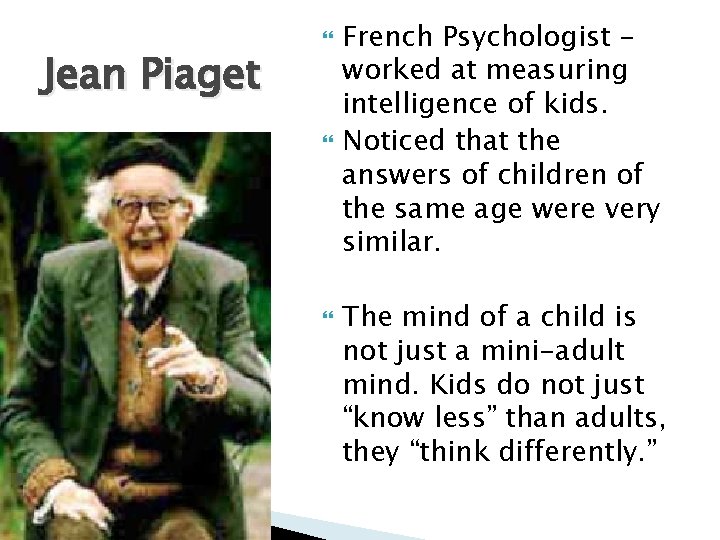
Jean Piaget French Psychologist worked at measuring intelligence of kids. Noticed that the answers of children of the same age were very similar. The mind of a child is not just a mini-adult mind. Kids do not just “know less” than adults, they “think differently. ”
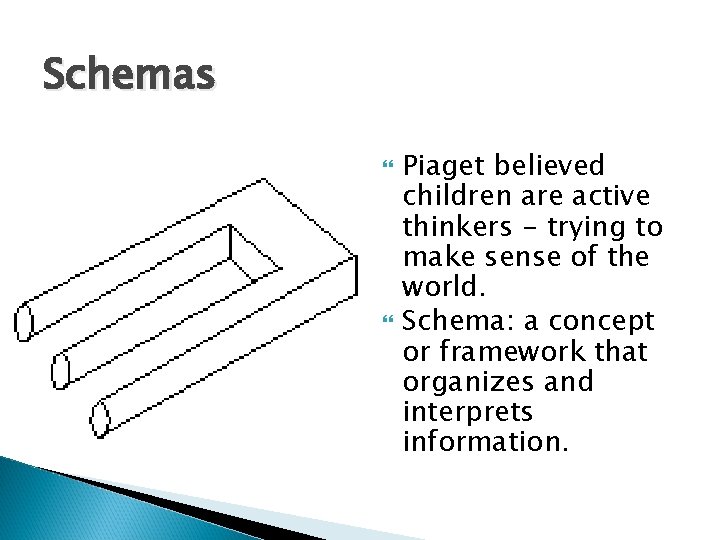
Schemas Piaget believed children are active thinkers - trying to make sense of the world. Schema: a concept or framework that organizes and interprets information.
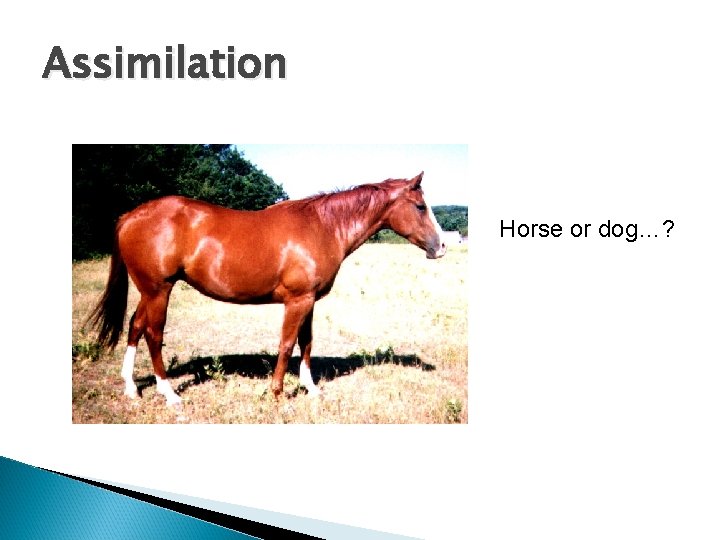
Assimilation Horse or dog…?
Accommodation
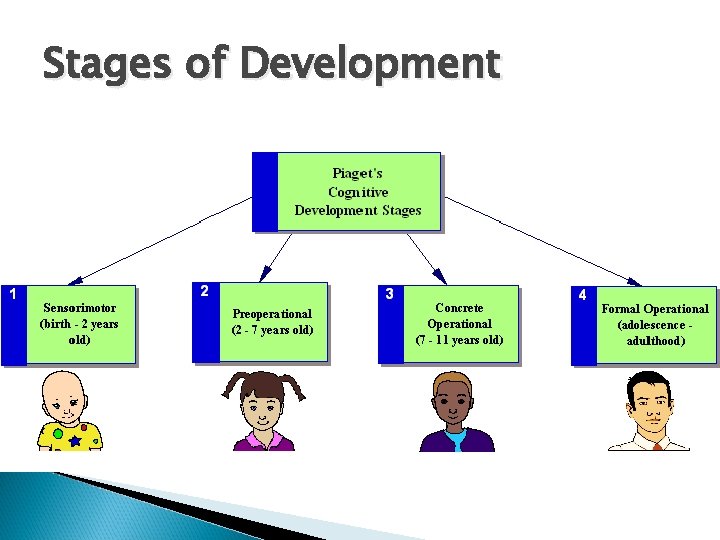
Stages of Development
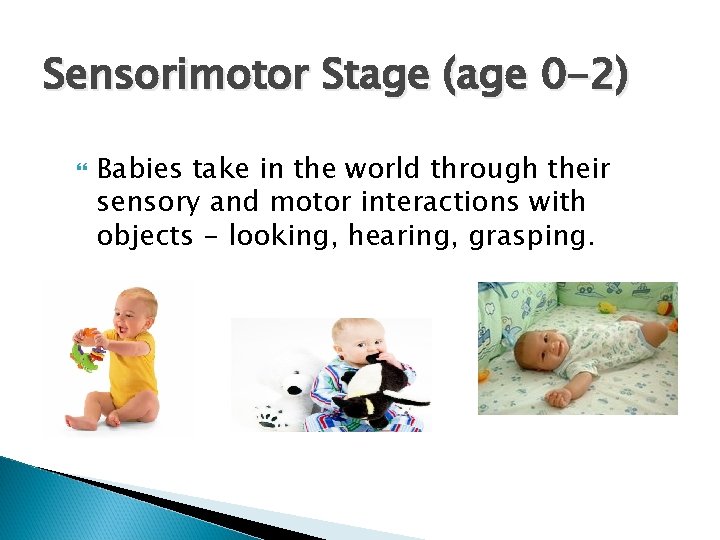
Sensorimotor Stage (age 0 -2) Babies take in the world through their sensory and motor interactions with objects - looking, hearing, grasping.
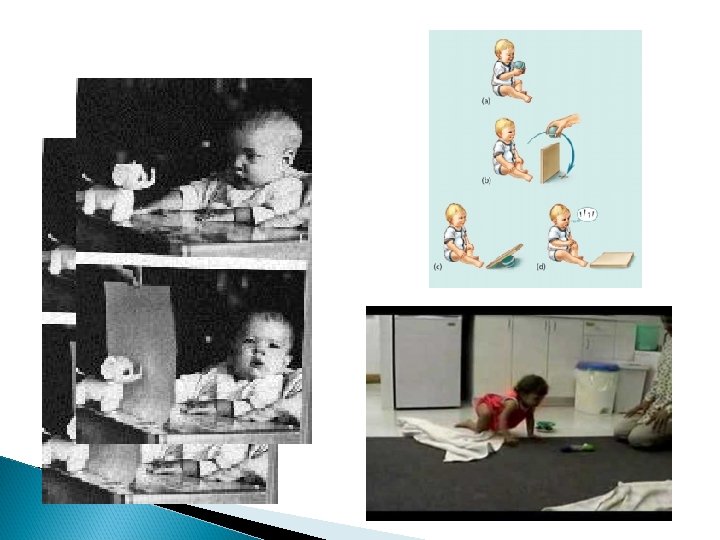
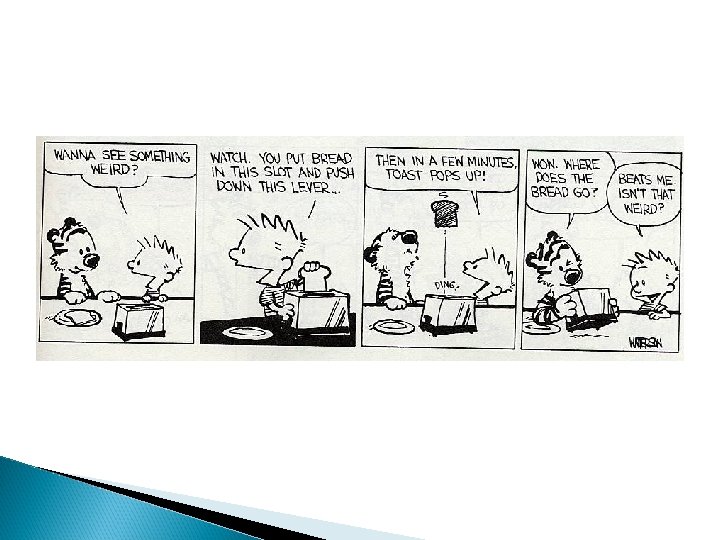
Sensorimotor Stage • Object permanence - the knowledge that an object exists even when it is not in sight.
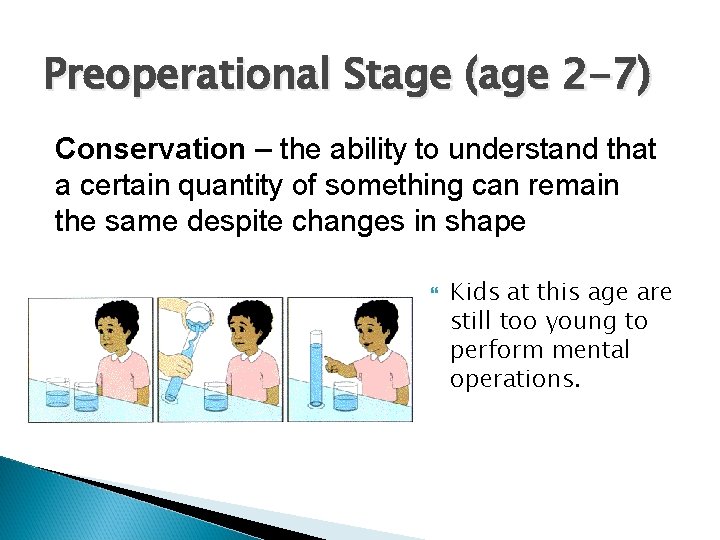
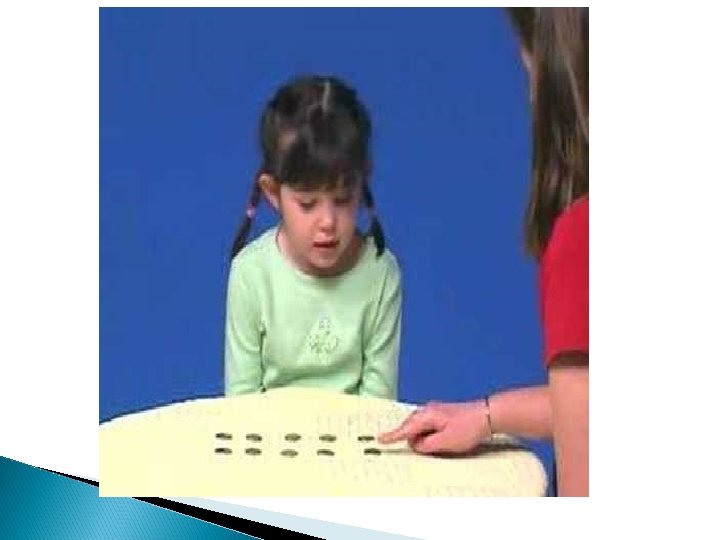
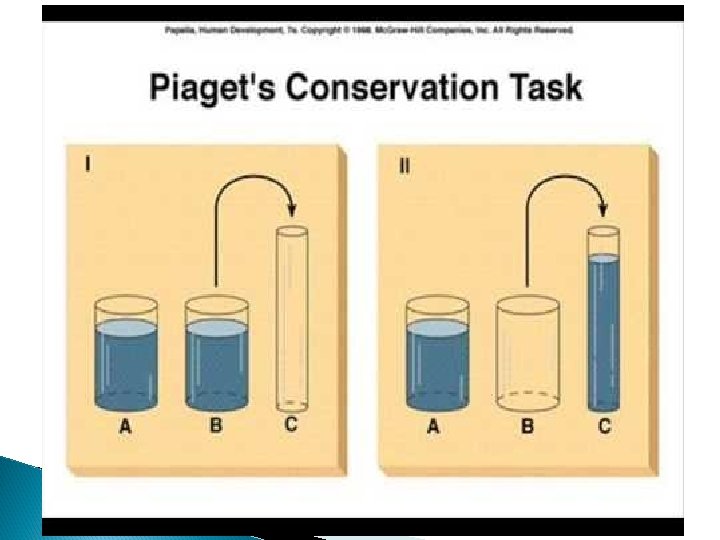
Preoperational Stage (age 2 -7) Conservation – the ability to understand that a certain quantity of something can remain the same despite changes in shape Kids at this age are still too young to perform mental operations.
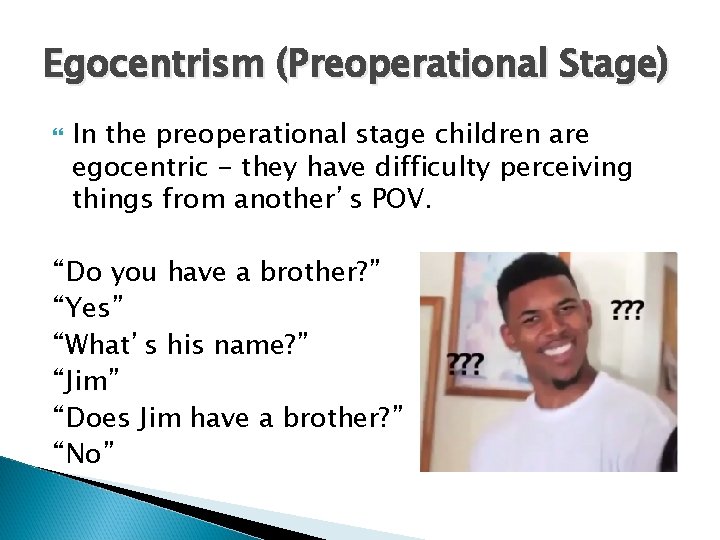
Egocentrism (Preoperational Stage) In the preoperational stage children are egocentric - they have difficulty perceiving things from another’s POV. “Do you have a brother? ” “Yes” “What’s his name? ” “Jim” “Does Jim have a brother? ” “No”
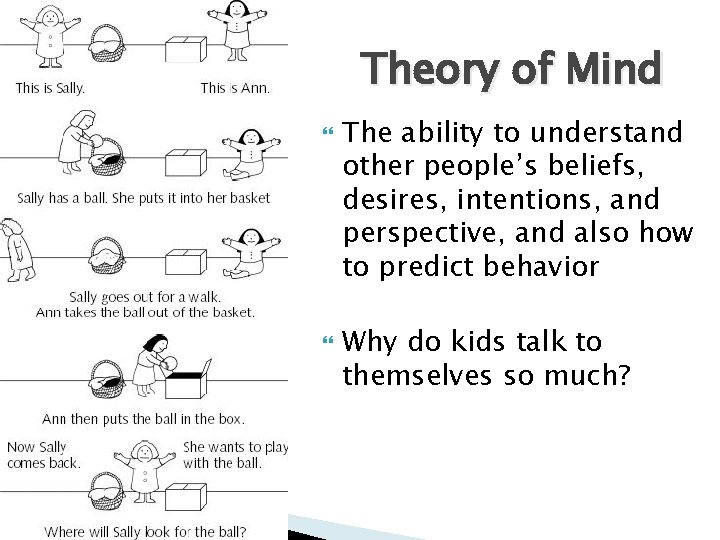
Theory of Mind The ability to understand other people’s beliefs, desires, intentions, and perspective, and also how to predict behavior Why do kids talk to themselves so much?
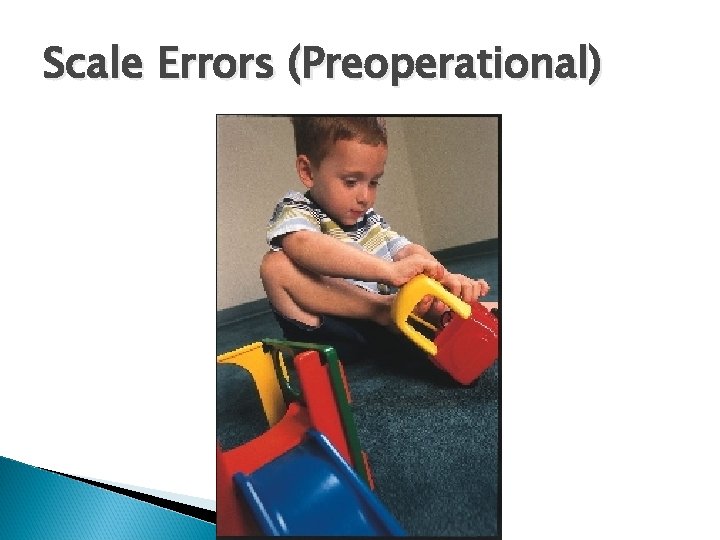
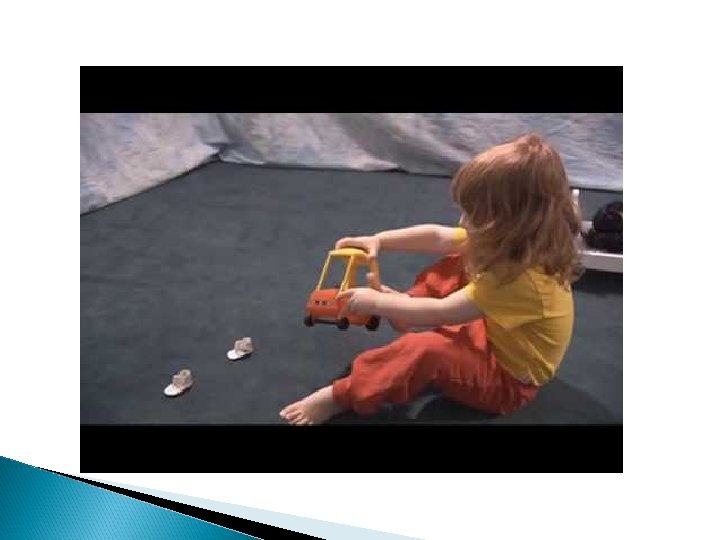
Scale Errors (Preoperational)
Concrete Operational (age 7 -11) vs. Formal Operational (age 11 and up) Concrete Operational Children are able to understand concrete concepts - like conservation. 8+4=? 12 - 4 = ? Formal Operational Reasoning expands beyond the concrete to encompass abstract reasoning. Hypotheticals and Deduction. LOGICAL ABSTRACT
Differences between concrete and formal “Friendship is when someone plays with me. ” “Friendship is mutual trust, loyalty, empathy, and shared beliefs. ”
Criticisms of Piaget • Stages too rigid • Age ranges are not correct • Used his own children as subjects
French divers recently found a large cave along the coast of the Mediterranean Sea. The cave is accessible only through an underwater tunnel. The interior of the cave is completely filled with seawater and contains numerous large stalagmites, which are stony pillars that form when drops of water fall repeatedly on a single spot on a cave floor, leaving behind mineral deposits that accumulate over time. The information above most strongly supports which one of the following? (A) The Mediterranean Sea was at a higher level in the past than it is now. (B) The water level within the cave is higher now than it once was. (C) The French divers were the first people who knew that the tunnel leading to the cave existed. (D) There was once an entrance to the cave besides the underwater tunnel. (E) Seawater in the Mediterranean has a lower mineral content now than it had when stalagmites were being formed.