
Cognitive development How childrens thinking changes as they
- Slides: 14
Cognitive development How children’s thinking changes as they grow older.
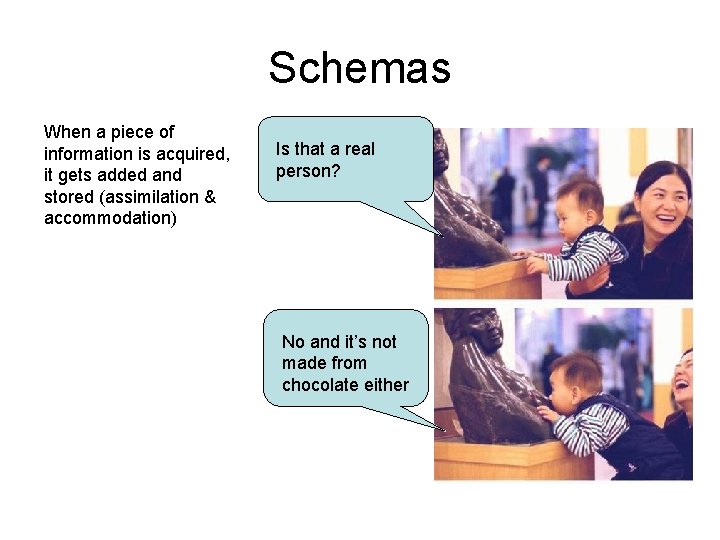
Schemas When a piece of information is acquired, it gets added and stored (assimilation & accommodation) Is that a real person? No and it’s not made from chocolate either
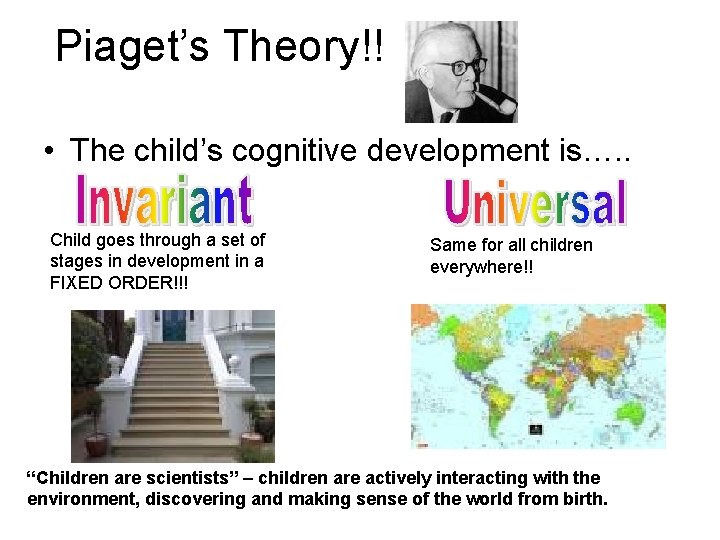
Piaget’s Theory!! • The child’s cognitive development is…. . Child goes through a set of stages in development in a FIXED ORDER!!! Same for all children everywhere!! “Children are scientists” – children are actively interacting with the environment, discovering and making sense of the world from birth.
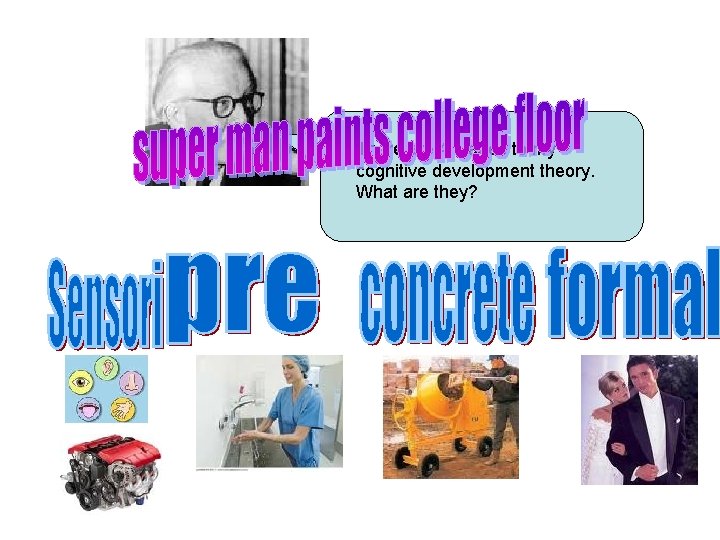
There are 4 stages to my cognitive development theory. What are they?
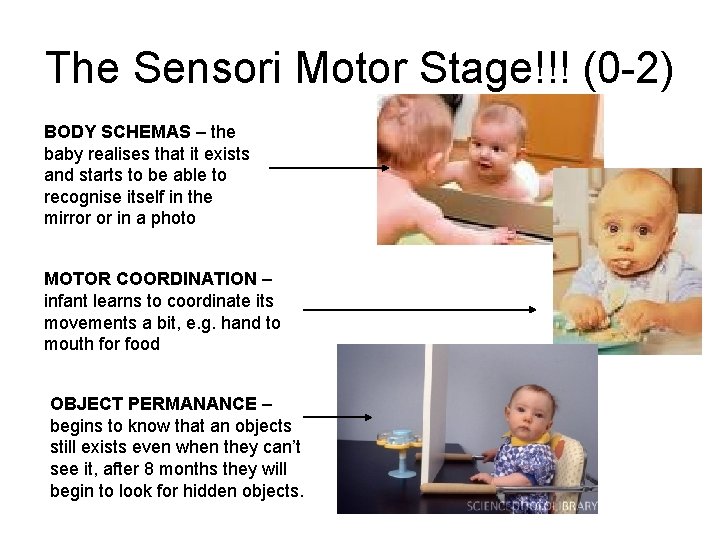
The Sensori Motor Stage!!! (0 -2) BODY SCHEMAS – the baby realises that it exists and starts to be able to recognise itself in the mirror or in a photo MOTOR COORDINATION – infant learns to coordinate its movements a bit, e. g. hand to mouth for food OBJECT PERMANANCE – begins to know that an objects still exists even when they can’t see it, after 8 months they will begin to look for hidden objects.
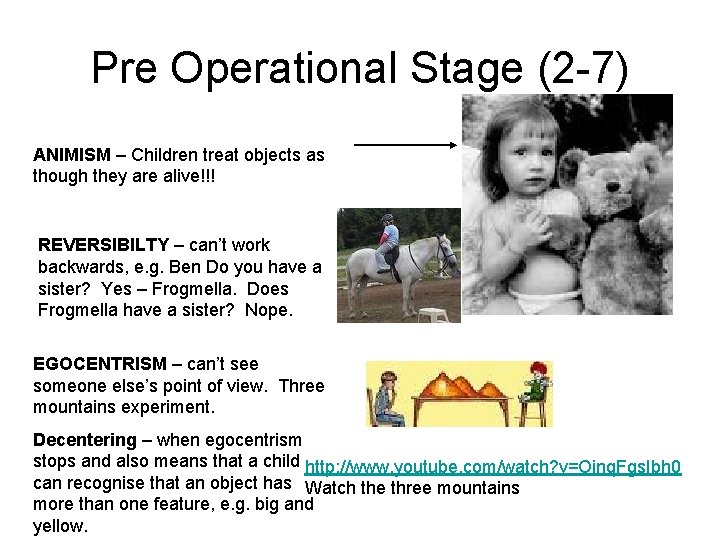
Pre Operational Stage (2 -7) ANIMISM – Children treat objects as though they are alive!!! REVERSIBILTY – can’t work backwards, e. g. Ben Do you have a sister? Yes – Frogmella. Does Frogmella have a sister? Nope. EGOCENTRISM – can’t see someone else’s point of view. Three mountains experiment. Decentering – when egocentrism stops and also means that a child http: //www. youtube. com/watch? v=Oinq. Fgs. Ibh 0 can recognise that an object has Watch the three mountains more than one feature, e. g. big and yellow.
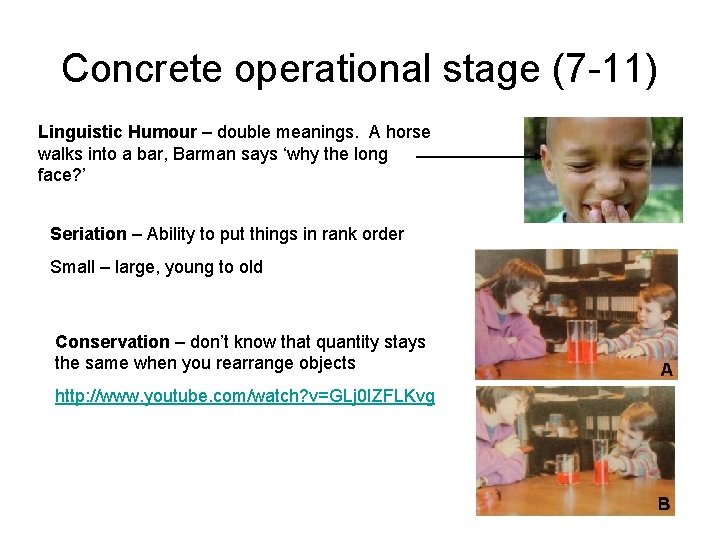
Concrete operational stage (7 -11) Linguistic Humour – double meanings. A horse walks into a bar, Barman says ‘why the long face? ’ Seriation – Ability to put things in rank order Small – large, young to old Conservation – don’t know that quantity stays the same when you rearrange objects http: //www. youtube. com/watch? v=GLj 0 IZFLKvg
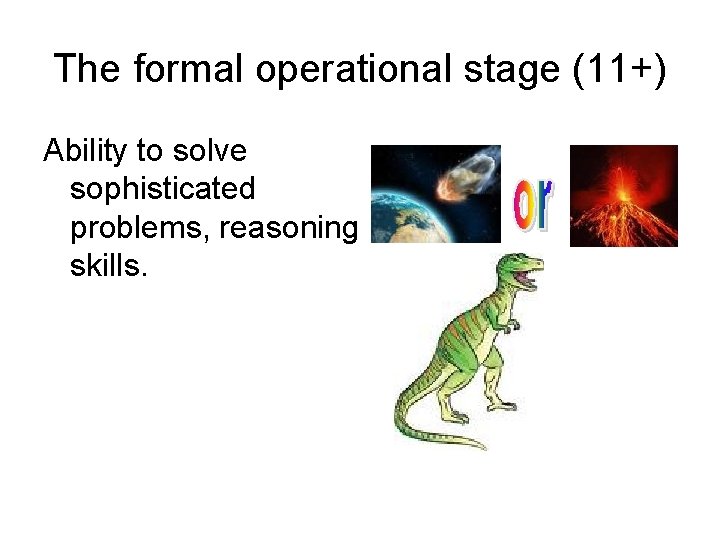
The formal operational stage (11+) Ability to solve sophisticated problems, reasoning skills.
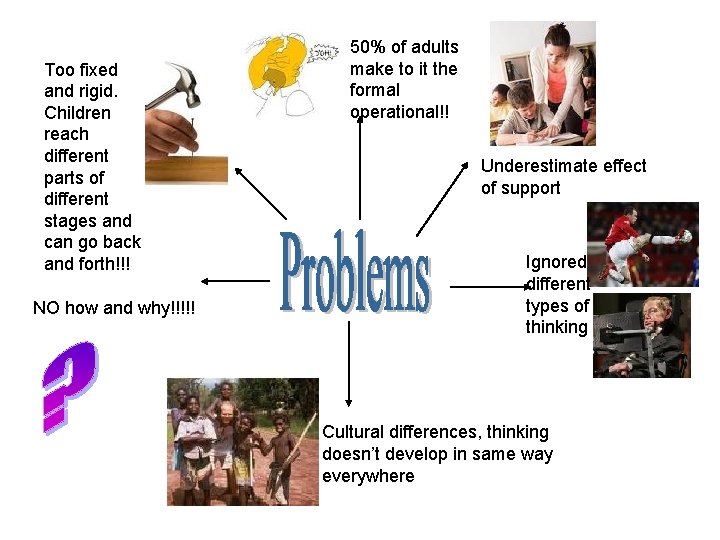
Too fixed and rigid. Children reach different parts of different stages and can go back and forth!!! NO how and why!!!!! 50% of adults make to it the formal operational!! Underestimate effect of support Ignored different types of thinking Cultural differences, thinking doesn’t develop in same way everywhere
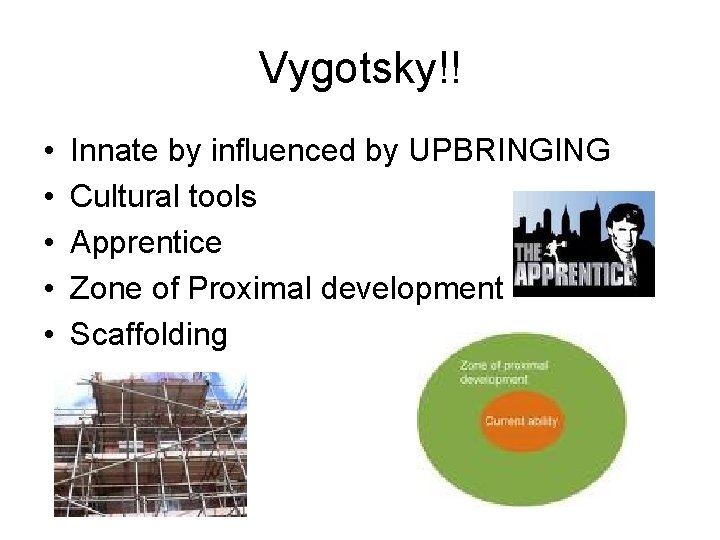
Vygotsky!! • • • Innate by influenced by UPBRINGING Cultural tools Apprentice Zone of Proximal development Scaffolding
Cognitive bingo • • Piaget Vygotsky ZPD apprentice Scientist cultural tools scaffolding Conservation egocentrism Linguistic humour seriation animism Preoperational concrete operational Formal operational sensori motor Invariant universal
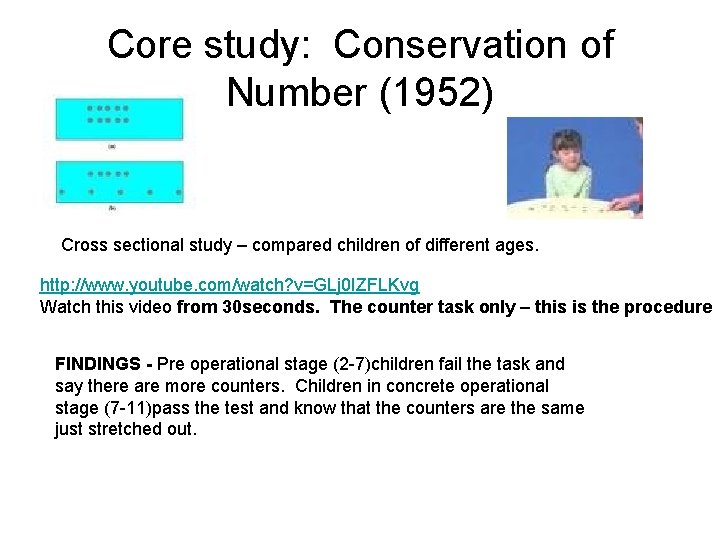
Core study: Conservation of Number (1952) Cross sectional study – compared children of different ages. http: //www. youtube. com/watch? v=GLj 0 IZFLKvg Watch this video from 30 seconds. The counter task only – this is the procedure FINDINGS - Pre operational stage (2 -7)children fail the task and say there are more counters. Children in concrete operational stage (7 -11)pass the test and know that the counters are the same just stretched out.
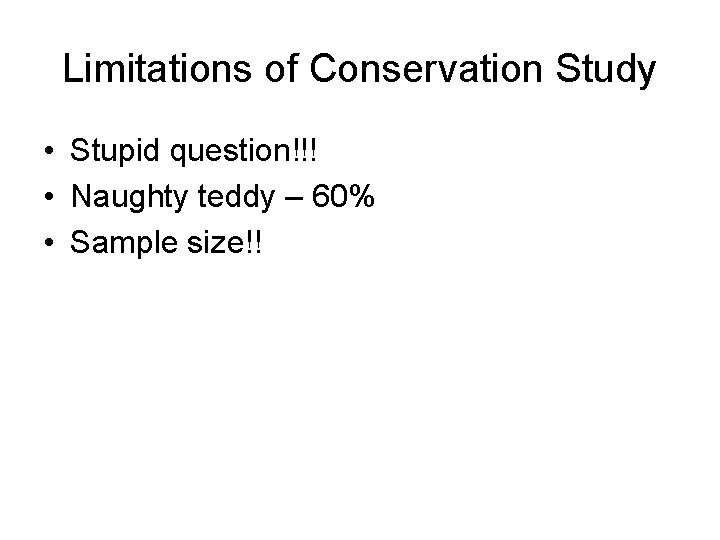
Limitations of Conservation Study • Stupid question!!! • Naughty teddy – 60% • Sample size!!
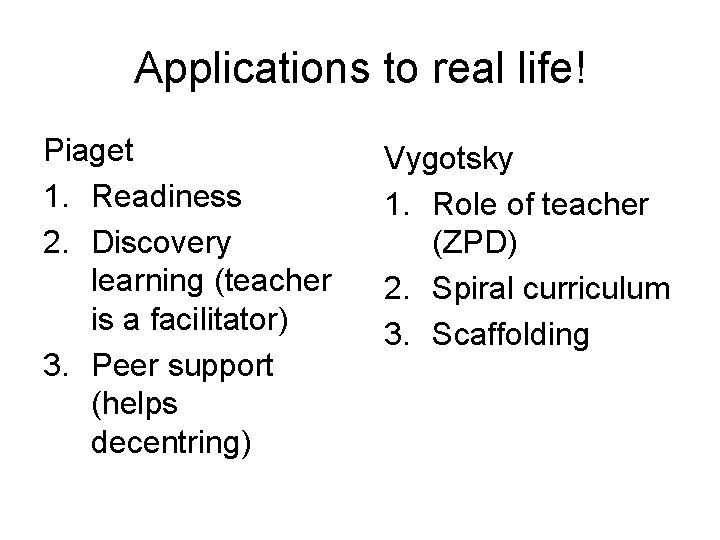
Applications to real life! Piaget 1. Readiness 2. Discovery learning (teacher is a facilitator) 3. Peer support (helps decentring) Vygotsky 1. Role of teacher (ZPD) 2. Spiral curriculum 3. Scaffolding