
Cognitive appraisal patterns the same for each emotion
- Slides: 28
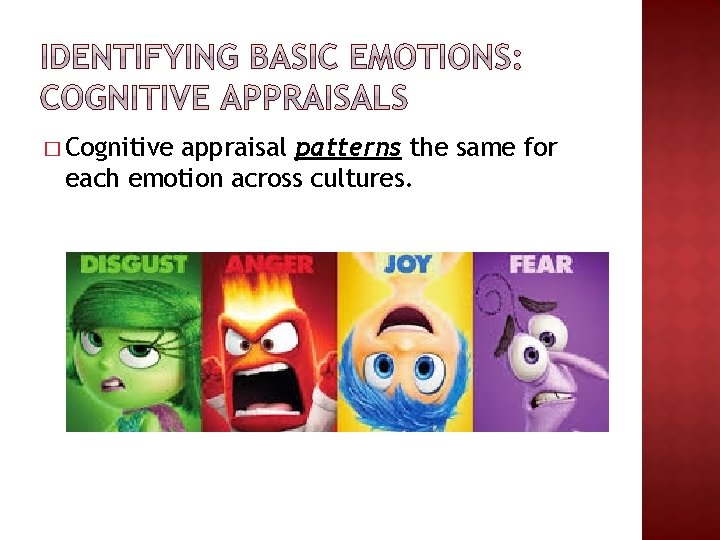
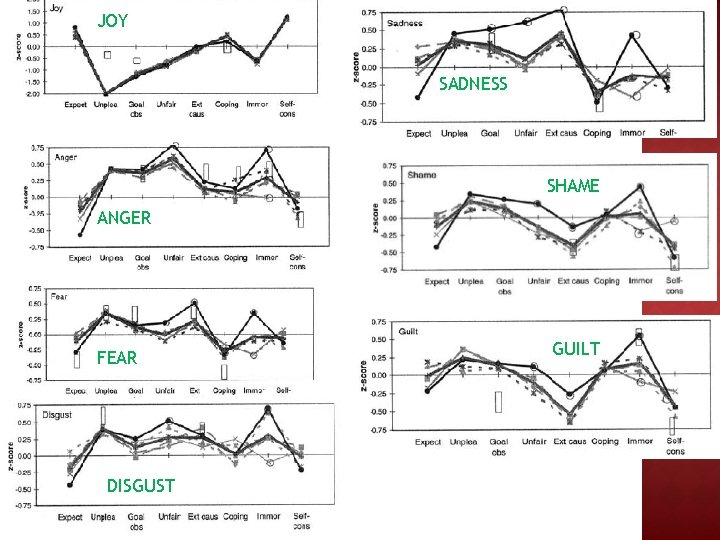
� Cognitive appraisal patterns the same for each emotion across cultures.
� Novelty/Expectedness: Expected or Unexpected? � Unpleasantness: Pleasant or Unpleasant? � Goal Obstruction: Goal blocked or facilitated? � Unfairness: Fair or unfair? � External causation: Event caused by someone else? self? � Coping ability: Able to cope? Unable to cope? � Immorality: Moral or immoral? � Self-consistency: Affected self-esteem negatively? Positively?
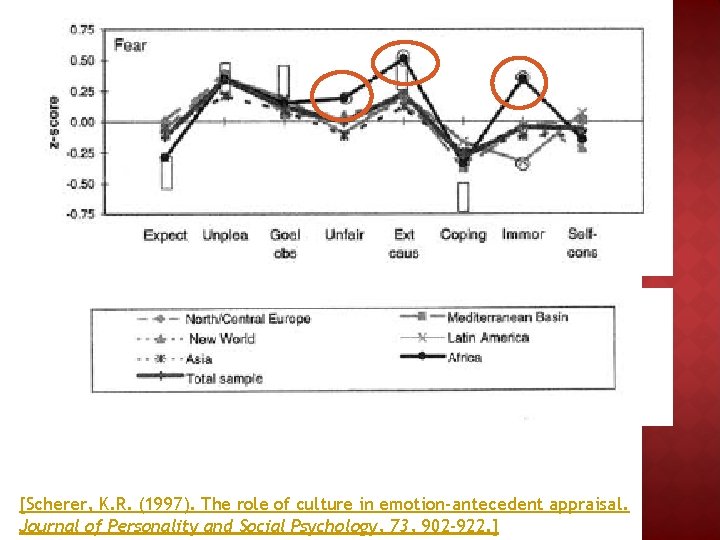
6 Regions • North/Central Europe • New World • Asia • Mediterranean Basin • Latin American • Africa • Total Sample 7 Emotions • • Joy Anger Fear Sadness Disgust Shame Guilt 8 Cognitive Appraisals • • • Novelty Unpleasantness Goal Obstruction Unfairness External Causation • Coping Ability • Immorality • Self-consistency [Scherer, K. R. (1997). The role of culture in emotion-antecedent appraisal. Journal of Personality and Social Psychology, 73, 902 -922. ]
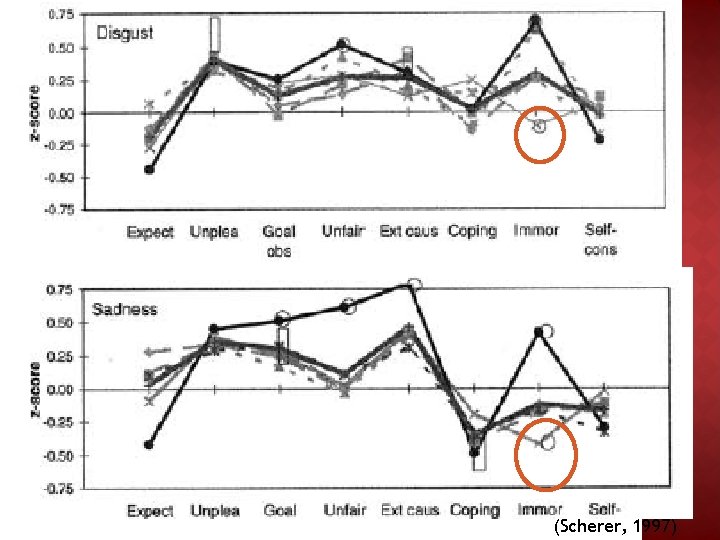
� Which emotion provides the BEST evidence for universal cognitive appraisals? � Which emotion/s show cross-cultural differences in cognitive appraisals? � Which cognitive appraisal shows the greatest cross-cultural differences? � Which two emotions have the most similar pattern in cognitive appraisals?
JOY SADNESS SHAME ANGER FEAR DISGUST GUILT
[Scherer, K. R. (1997). The role of culture in emotion-antecedent appraisal. Journal of Personality and Social Psychology, 73, 902 -922. ]
(Scherer, 1997)
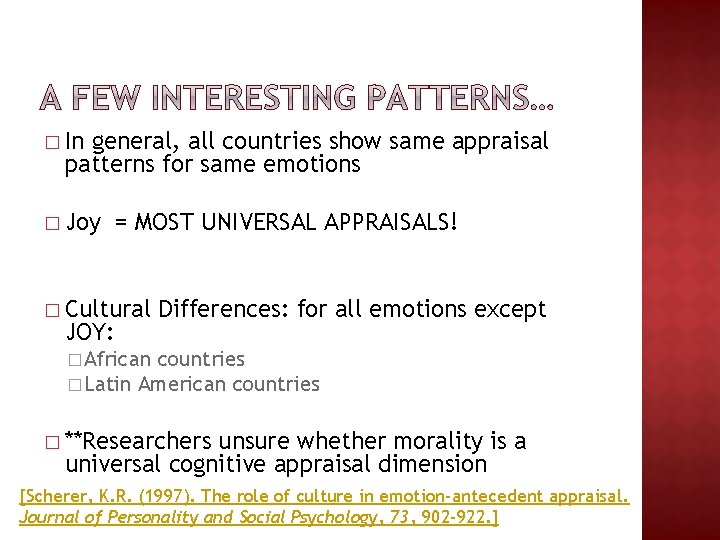
� In general, all countries show same appraisal patterns for same emotions � Joy = MOST UNIVERSAL APPRAISALS! � Cultural JOY: Differences: for all emotions except � African countries � Latin American countries � **Researchers unsure whether morality is a universal cognitive appraisal dimension [Scherer, K. R. (1997). The role of culture in emotion-antecedent appraisal. Journal of Personality and Social Psychology, 73, 902 -922. ]
� Agreement on 5: joy, sadness, anger, disgust, and fear � Ekman says 7: anger, fear, surprise, sadness, disgust, contempt, happiness � Disagreement �Contempt? �Surprise? �Love? on whether more than 5 exist.
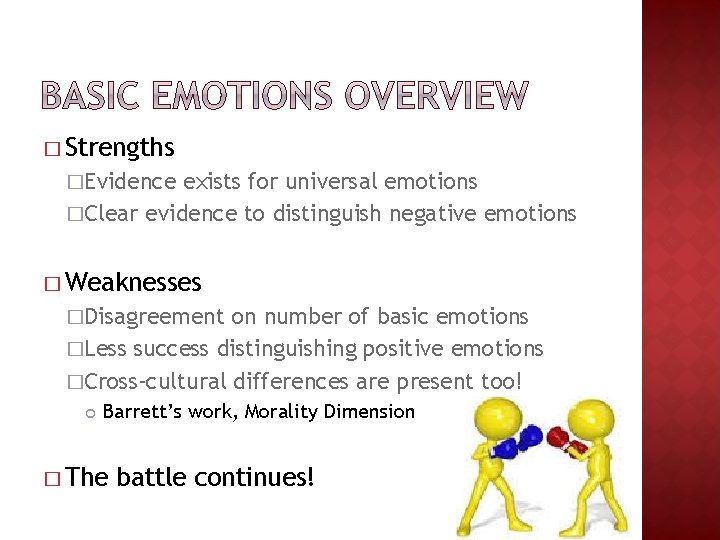
� Strengths �Evidence exists for universal emotions �Clear evidence to distinguish negative emotions � Weaknesses �Disagreement on number of basic emotions �Less success distinguishing positive emotions �Cross-cultural differences are present too! Barrett’s work, Morality Dimension � The battle continues!
� View #1: Appraisals cause emotion � View #2: Emotions cause appraisals � May be universal (i. e. , basic emotions) � May be culturally-specific (i. e. , social constructionist) [Schirmer, A. (2014). What is an emotion? Modern thoughts and concepts. Emotion (Chapter 3, pp. 42 -69). Los Angeles, CA: Sage. ]
� Some are older and more primitive �Pleasantness �Goal Significance �Coping Potential �Novelty/Familiarity � Some are younger and more complex �Immorality �Responsibility � We consciously and unconsciously assess
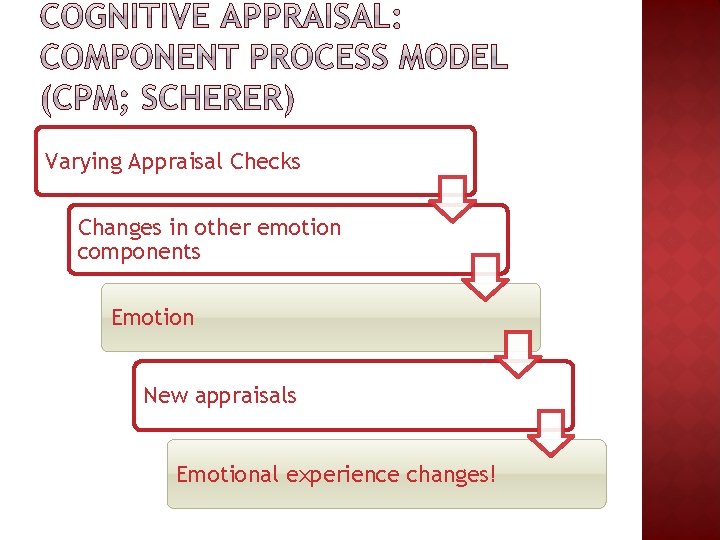
Varying Appraisal Checks Changes in other emotion components Emotion New appraisals Emotional experience changes!
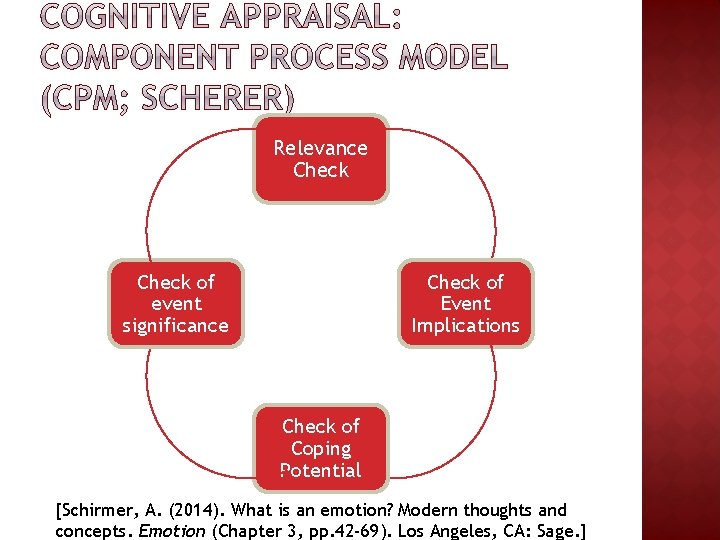
Relevance Check of event significance Check of Event Implications Check of Coping Potential [Schirmer, A. (2014). What is an emotion? Modern thoughts and concepts. Emotion (Chapter 3, pp. 42 -69). Los Angeles, CA: Sage. ]
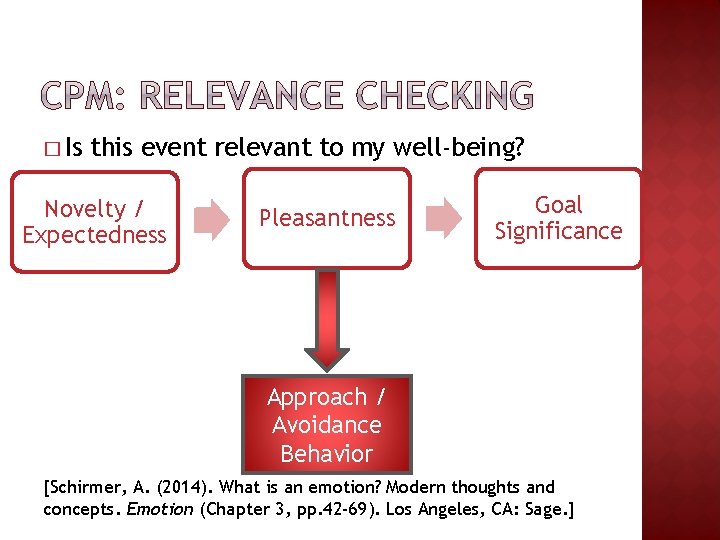
� Is this event relevant to my well-being? Novelty / Expectedness Pleasantness Goal Significance Approach / Avoidance Behavior [Schirmer, A. (2014). What is an emotion? Modern thoughts and concepts. Emotion (Chapter 3, pp. 42 -69). Los Angeles, CA: Sage. ]
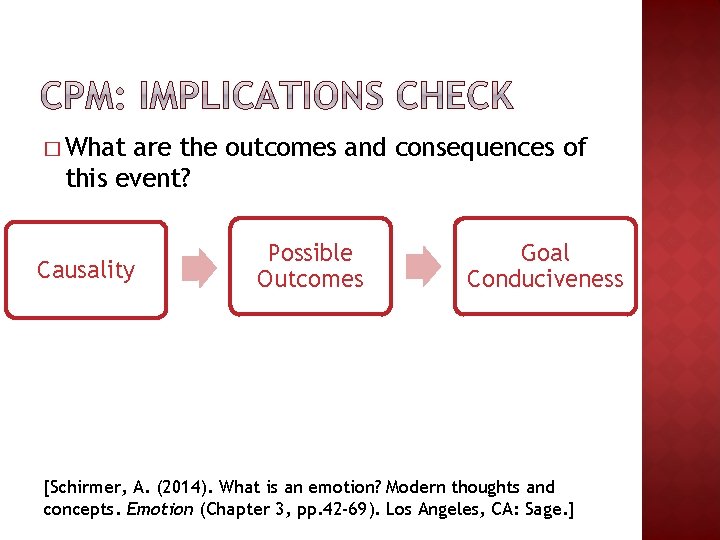
� What are the outcomes and consequences of this event? Causality Possible Outcomes Goal Conduciveness [Schirmer, A. (2014). What is an emotion? Modern thoughts and concepts. Emotion (Chapter 3, pp. 42 -69). Los Angeles, CA: Sage. ]
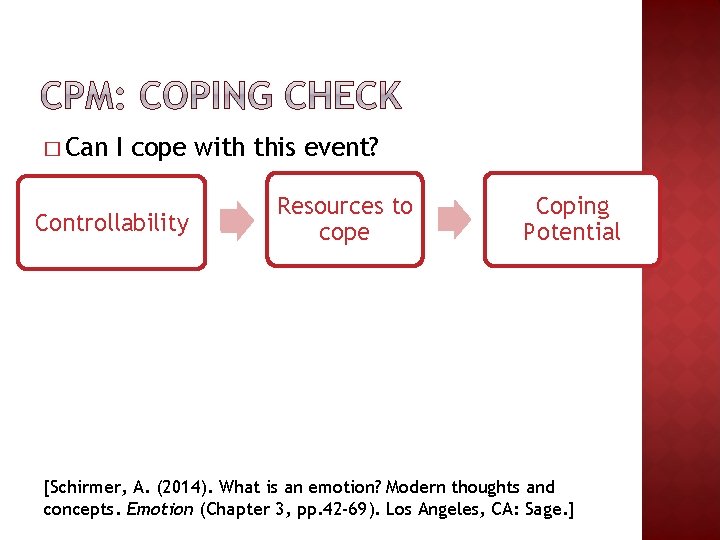
� Can I cope with this event? Controllability Resources to cope Coping Potential [Schirmer, A. (2014). What is an emotion? Modern thoughts and concepts. Emotion (Chapter 3, pp. 42 -69). Los Angeles, CA: Sage. ]
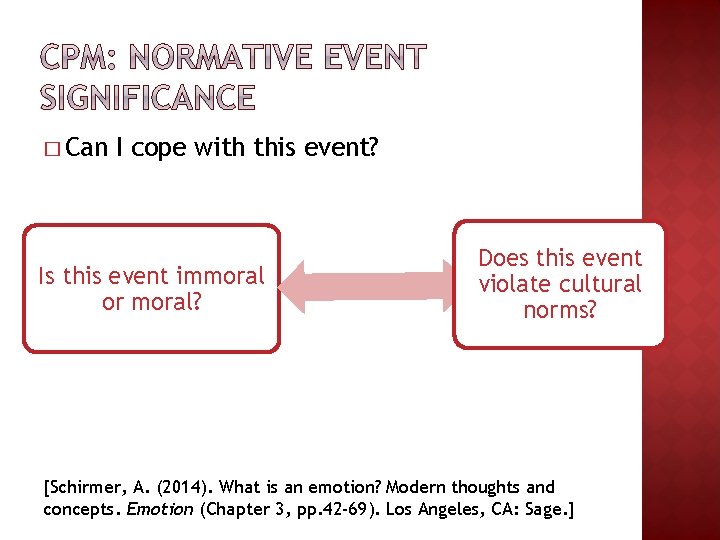
� Can I cope with this event? Is this event immoral or moral? Does this event violate cultural norms? [Schirmer, A. (2014). What is an emotion? Modern thoughts and concepts. Emotion (Chapter 3, pp. 42 -69). Los Angeles, CA: Sage. ]
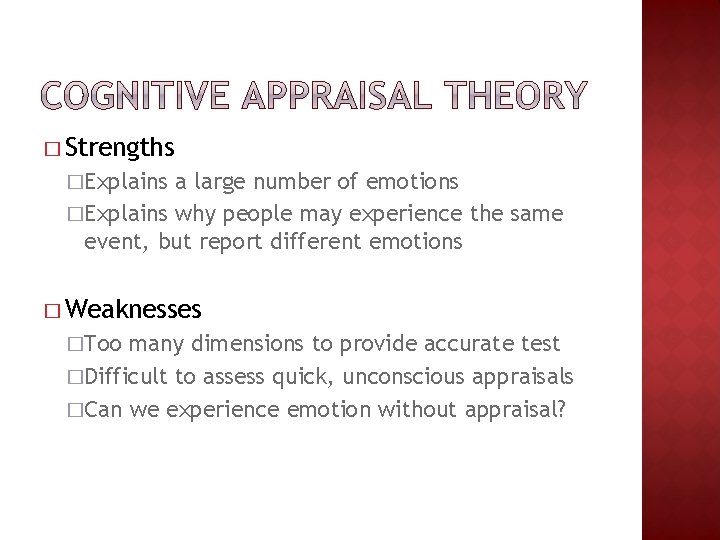
� Strengths �Explains a large number of emotions �Explains why people may experience the same event, but report different emotions � Weaknesses �Too many dimensions to provide accurate test �Difficult to assess quick, unconscious appraisals �Can we experience emotion without appraisal?
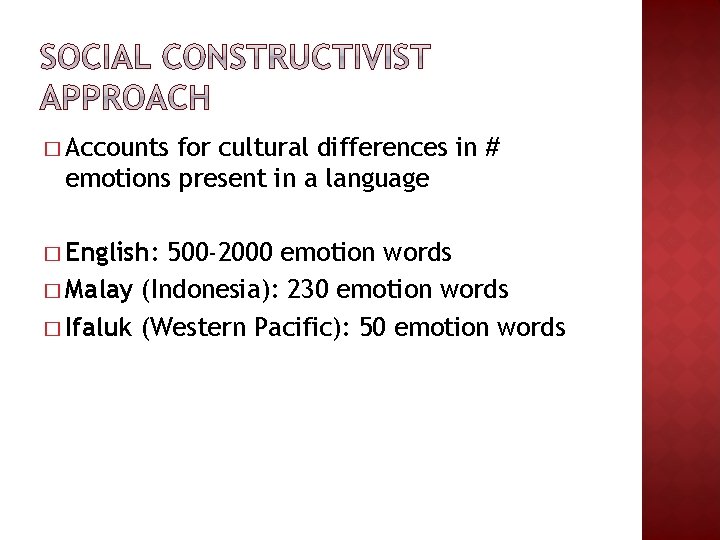
� Accounts for cultural differences in # emotions present in a language � English: 500 -2000 emotion words � Malay (Indonesia): 230 emotion words � Ifaluk (Western Pacific): 50 emotion words
� Culture constructs our emotions �Emotions are learned from society’s values, norms, and practices �We cannot experience an emotion until we learn to interpret events according to society’s standards � Rejects evolutionary idea of biologically preprogrammed emotions
� Begins with analysis of emotional language � Suppression by culture � Ex: or expression of the emotion varies Shame (Japan) vs. Guilt (US) � Experience of the same emotion as severe or mild varies by culture � Ex: Shame � Over time, emotions have dropped out of language altogether � Ex: “accidie” in Middle Ages
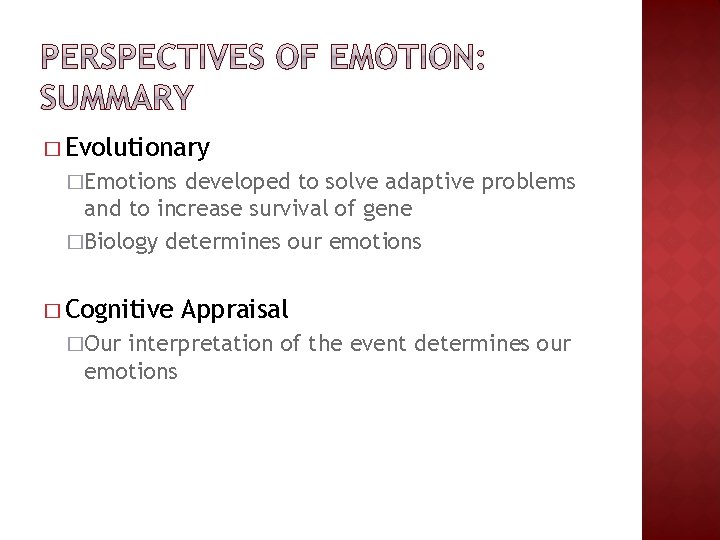
� Evolutionary �Emotions developed to solve adaptive problems and to increase survival of gene �Biology determines our emotions
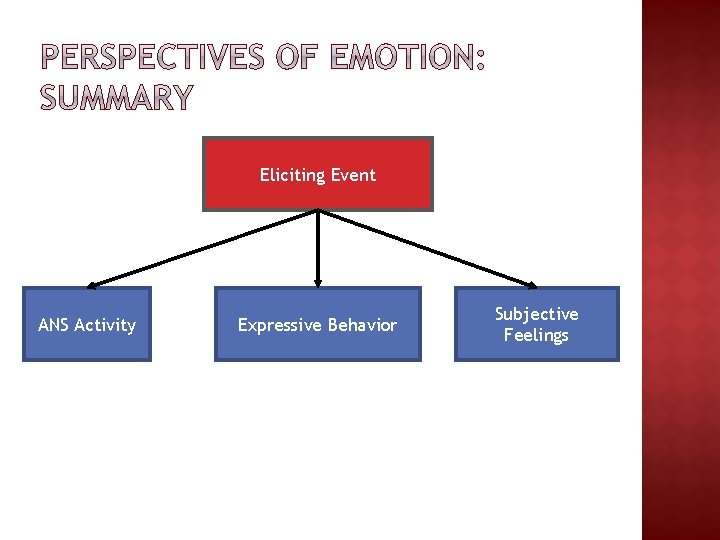
Eliciting Event ANS Activity Expressive Behavior Subjective Feelings
� Evolutionary �Emotions developed to solve adaptive problems and to increase survival of gene �Biology determines our emotions � Cognitive �Our Appraisal interpretation of the event determines our emotions
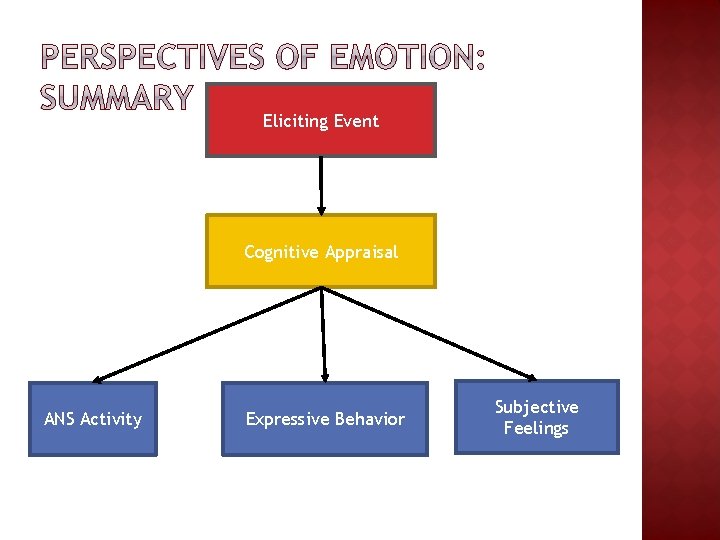
Eliciting Event Cognitive Appraisal ANS Activity Expressive Behavior Subjective Feelings
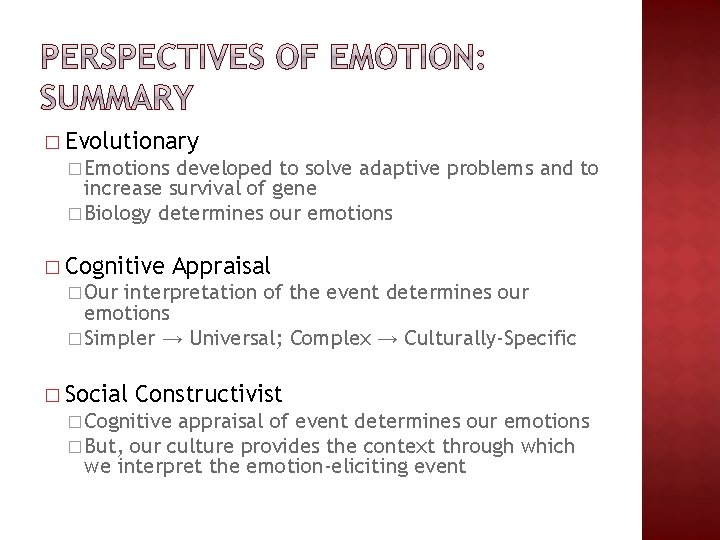
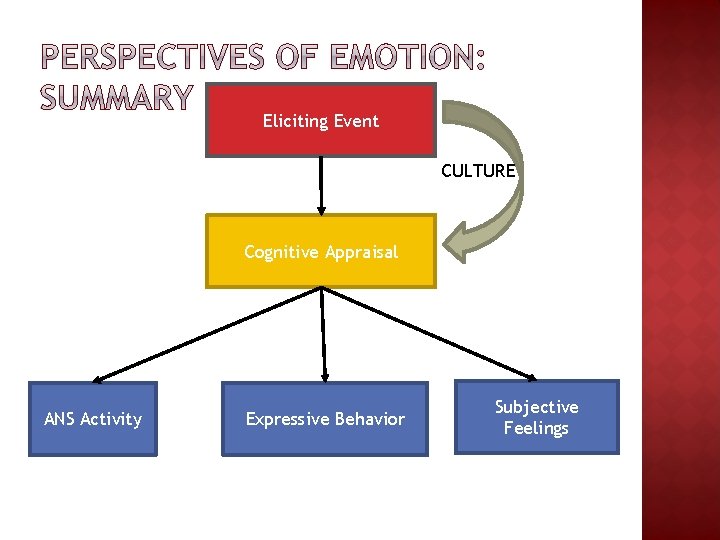
� Evolutionary � Emotions developed to solve adaptive problems and to increase survival of gene � Biology determines our emotions � Cognitive Appraisal � Our interpretation of the event determines our emotions � Simpler → Universal; Complex → Culturally-Specific � Social Constructivist � Cognitive appraisal of event determines our emotions � But, our culture provides the context through which we interpret the emotion-eliciting event
Eliciting Event CULTURE Cognitive Appraisal ANS Activity Expressive Behavior Subjective Feelings