
Cognition Social Learning Mechanisms Social Learning Mechanisms Stimulus
- Slides: 21
Cognition
Social Learning Mechanisms
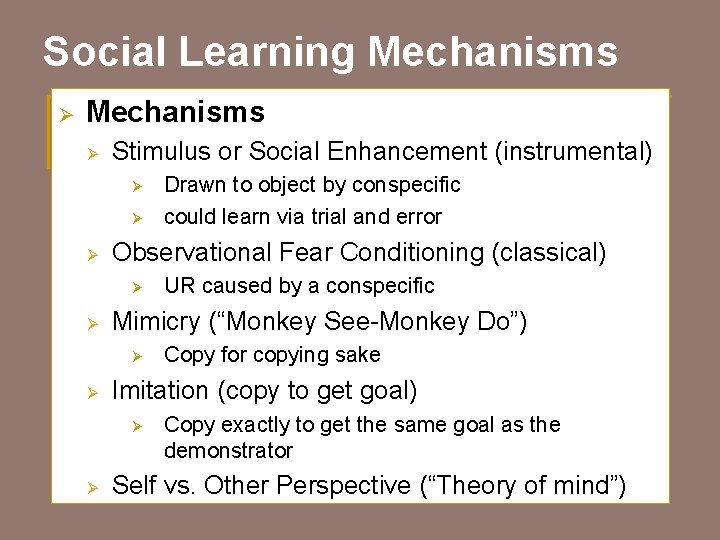
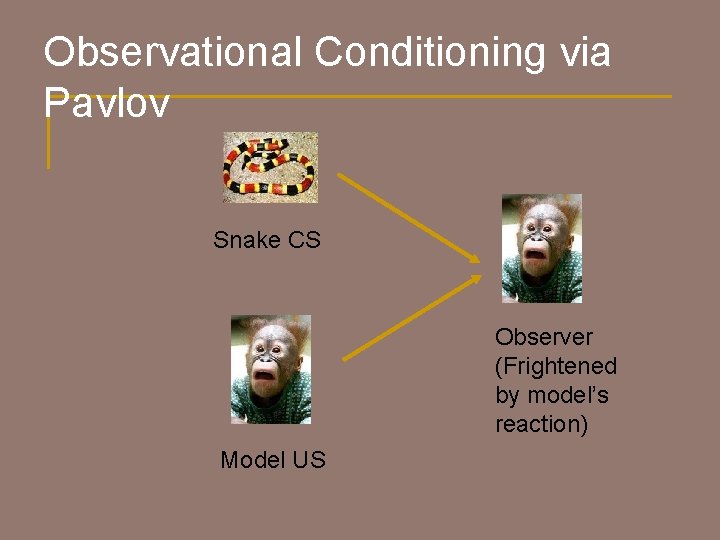
Social Learning Mechanisms Ø Stimulus or Social Enhancement (instrumental) Ø Ø Ø Observational Fear Conditioning (classical) Ø Ø Copy for copying sake Imitation (copy to get goal) Ø Ø UR caused by a conspecific Mimicry (“Monkey See-Monkey Do”) Ø Ø Drawn to object by conspecific could learn via trial and error Copy exactly to get the same goal as the demonstrator Self vs. Other Perspective (“Theory of mind”)
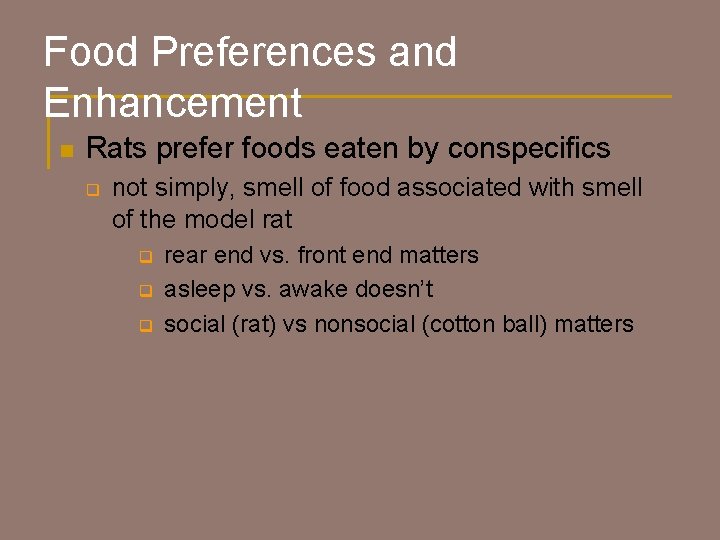
Food Preferences and Enhancement n Rats prefer foods eaten by conspecifics q not simply, smell of food associated with smell of the model rat q q q rear end vs. front end matters asleep vs. awake doesn’t social (rat) vs nonsocial (cotton ball) matters
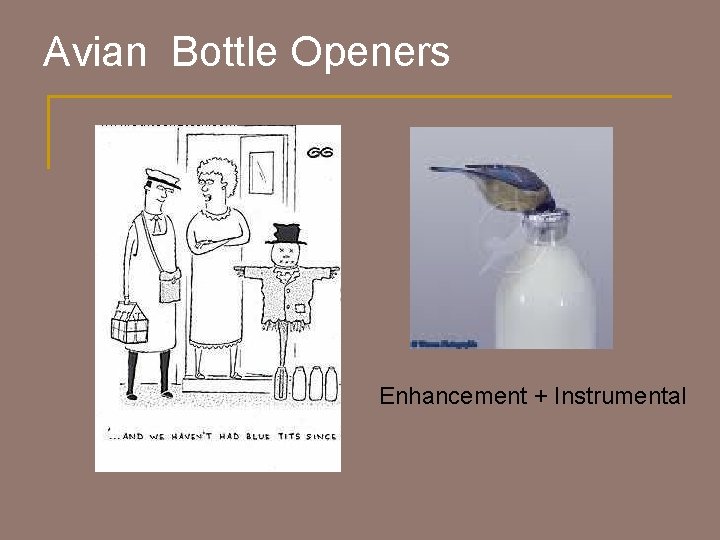
Avian Bottle Openers Enhancement + Instrumental
Observational Conditioning via Pavlov Snake CS Observer (Frightened by model’s reaction) Model US
Mimicry, Imitation, Emulation n Mimicry q n Not intentional Imitation q q Imitation, slavish copying with a goal Emulation, non-slavish copying with a goal (could be “copying of goal” + “trial and error”, or problem solving)
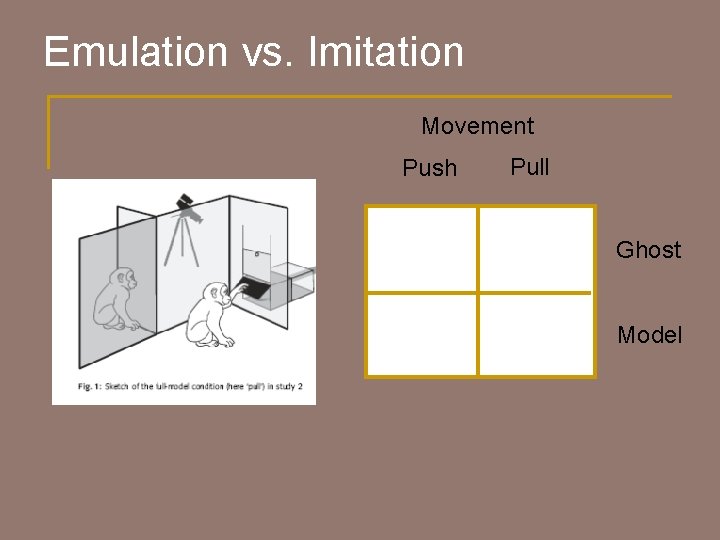
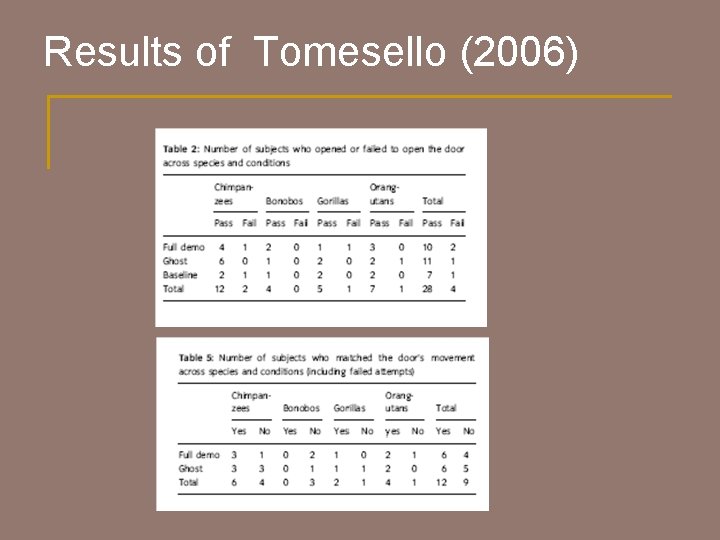
Emulation vs. Imitation Movement Push Pull Ghost Model
Results of Tomesello (2006)
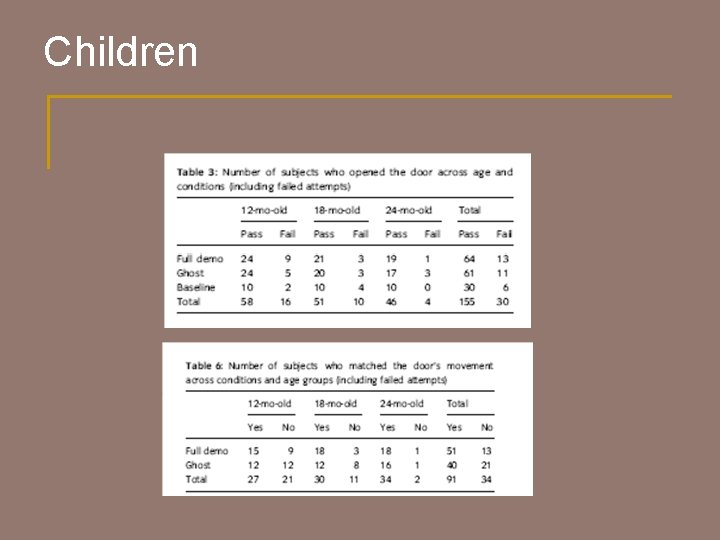
Children
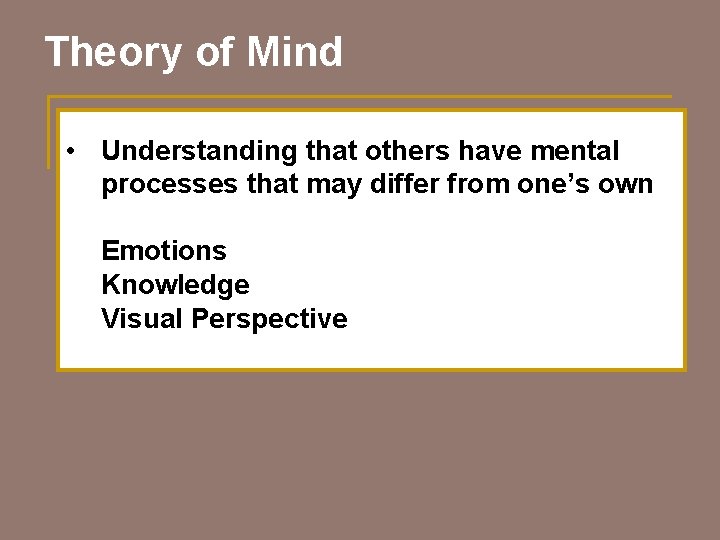
Theory of Mind • Understanding that others have mental processes that may differ from one’s own Emotions Knowledge Visual Perspective
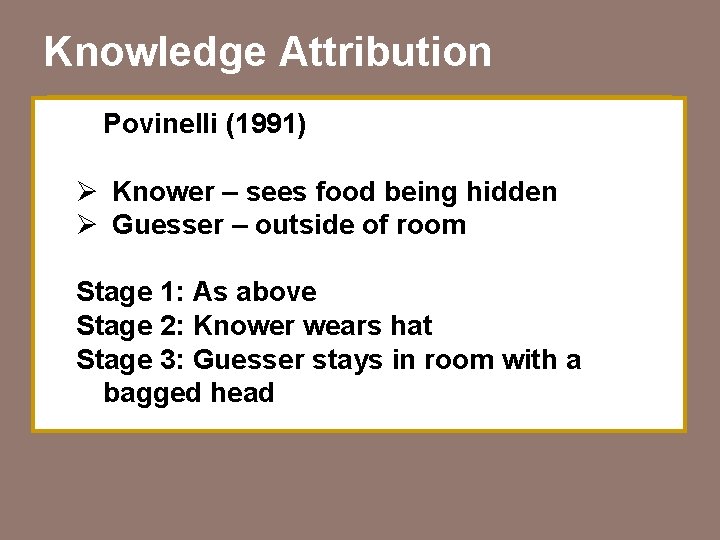
Knowledge Attribution Povinelli (1991) Ø Knower – sees food being hidden Ø Guesser – outside of room Stage 1: As above Stage 2: Knower wears hat Stage 3: Guesser stays in room with a bagged head
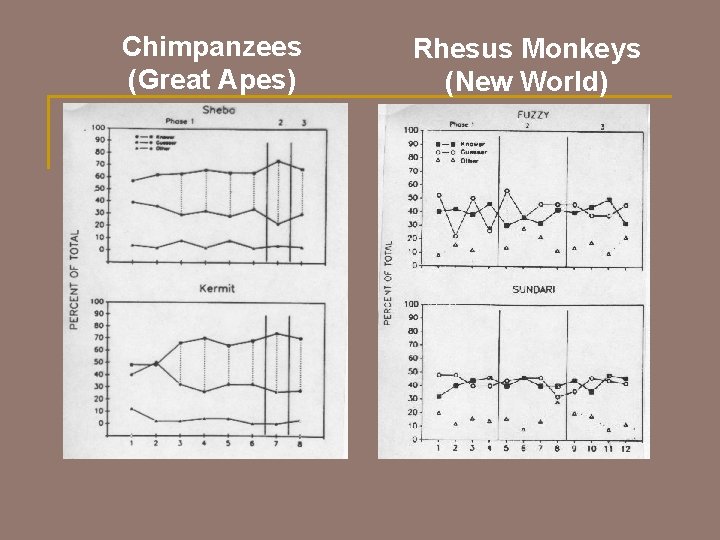
Chimpanzees (Great Apes) Rhesus Monkeys (New World)
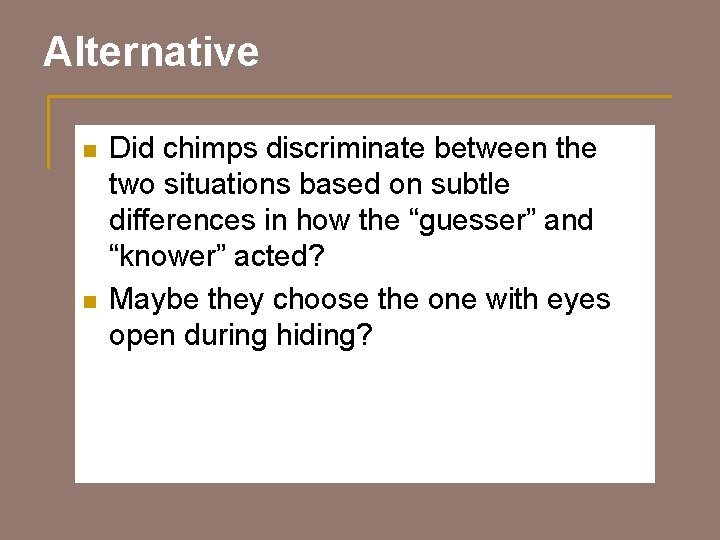
Alternative n n Did chimps discriminate between the two situations based on subtle differences in how the “guesser” and “knower” acted? Maybe they choose the one with eyes open during hiding?
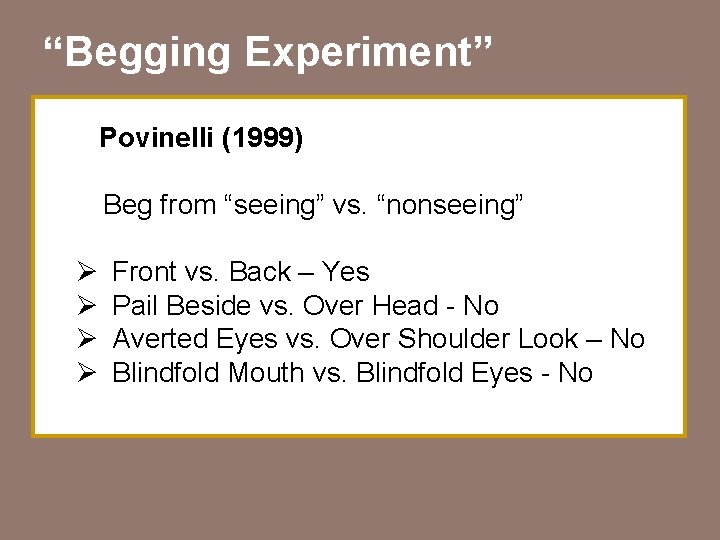
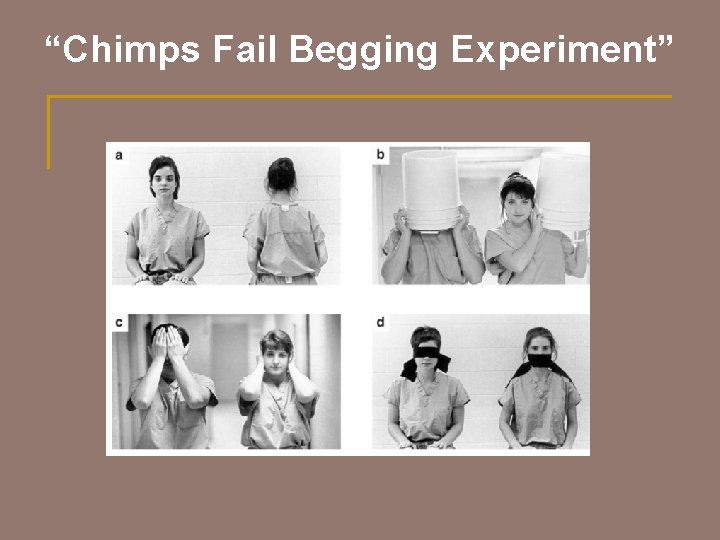
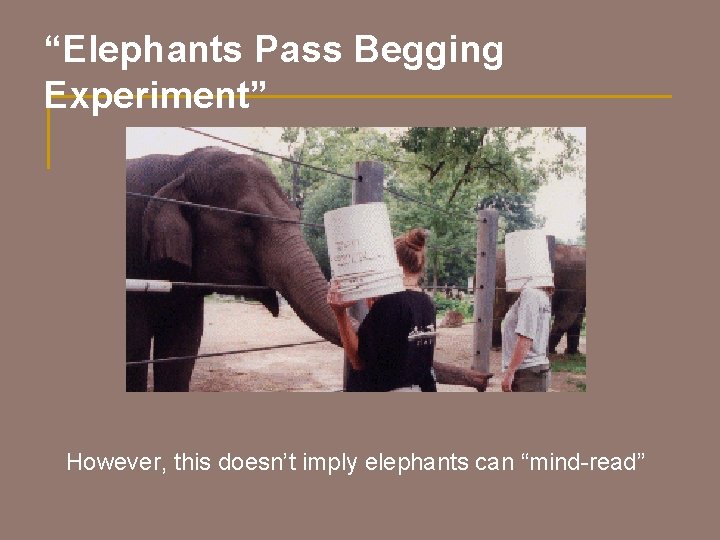
“Begging Experiment” Povinelli (1999) Beg from “seeing” vs. “nonseeing” Ø Ø Front vs. Back – Yes Pail Beside vs. Over Head - No Averted Eyes vs. Over Shoulder Look – No Blindfold Mouth vs. Blindfold Eyes - No
“Chimps Fail Begging Experiment”
“Elephants Pass Begging Experiment” However, this doesn’t imply elephants can “mind-read”
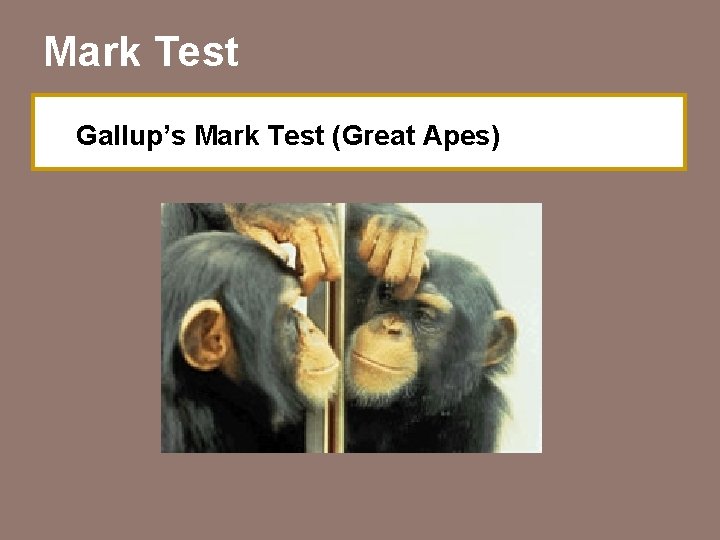
Mark Test Gallup’s Mark Test (Great Apes)
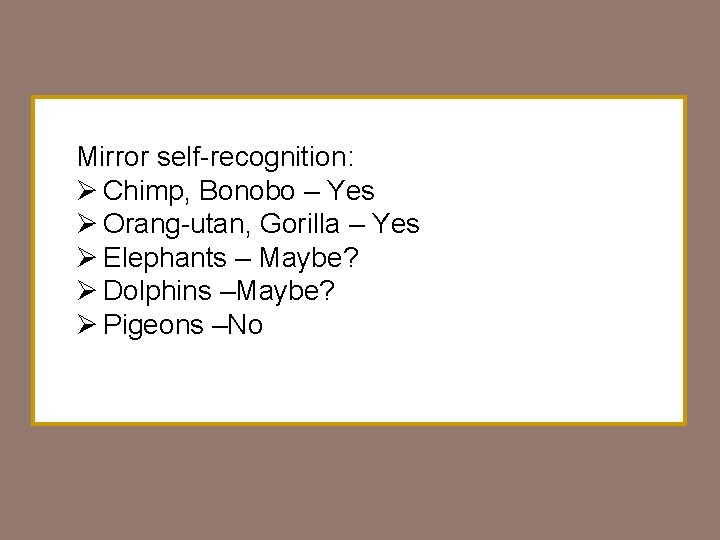
Mirror self-recognition: Ø Chimp, Bonobo – Yes Ø Orang-utan, Gorilla – Yes Ø Elephants – Maybe? Ø Dolphins –Maybe? Ø Pigeons –No
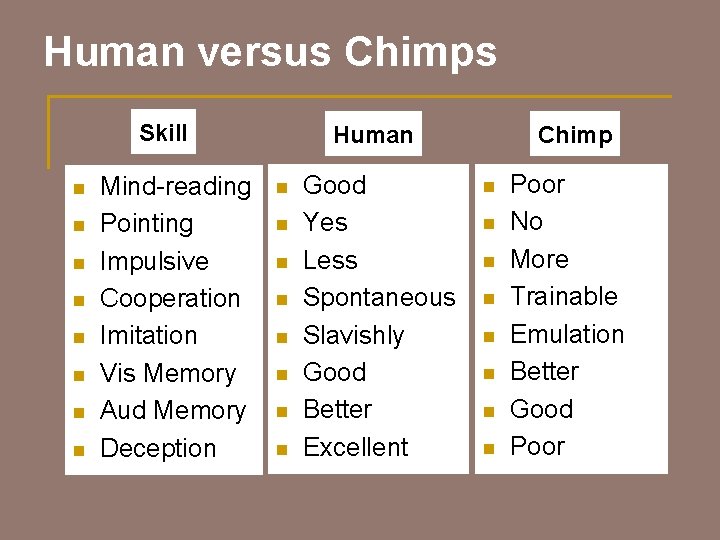
Human versus Chimps Skill n n n n Mind-reading Pointing Impulsive Cooperation Imitation Vis Memory Aud Memory Deception Human n n n n Good Yes Less Spontaneous Slavishly Good Better Excellent Chimp n n n n Poor No More Trainable Emulation Better Good Poor