
Coding regions DNA replication takes place at the
- Slides: 11
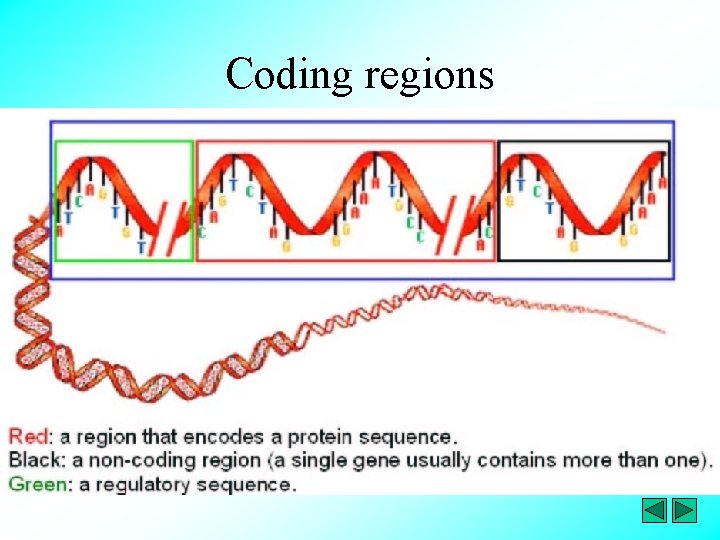
Coding regions
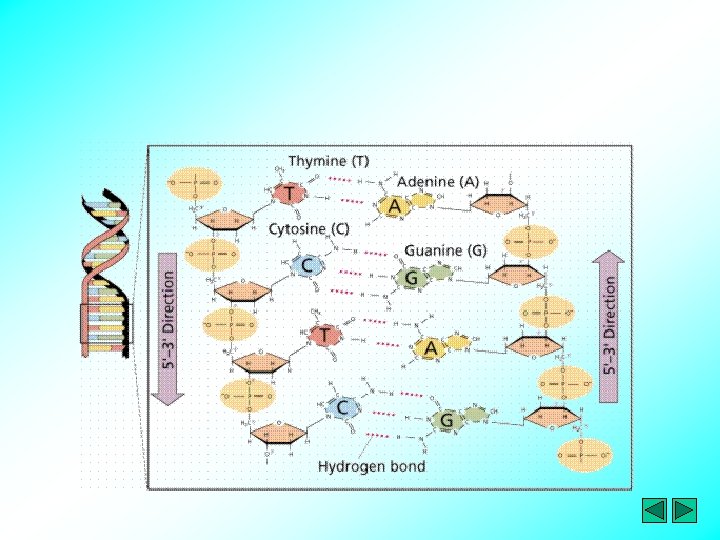
• DNA replication takes place at the rate of 50 nucleotides per second in eukaryotes and 500 per second in prokaryotes • The DNA strands are anti-parallel
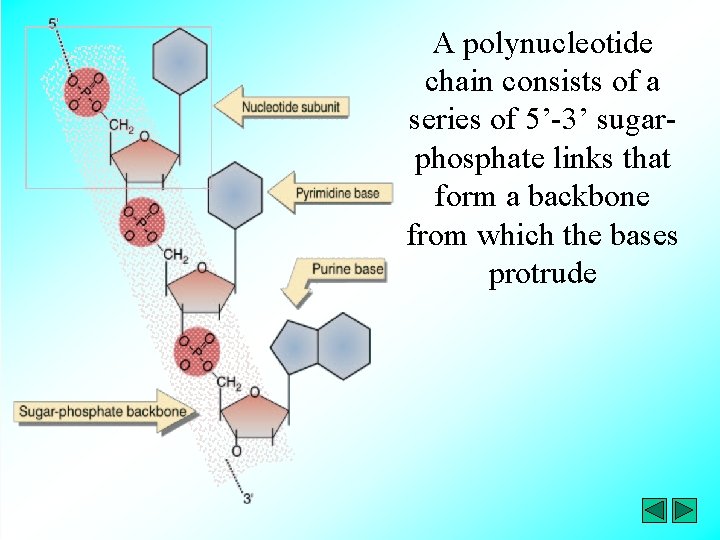
A polynucleotide chain consists of a series of 5’-3’ sugarphosphate links that form a backbone from which the bases protrude
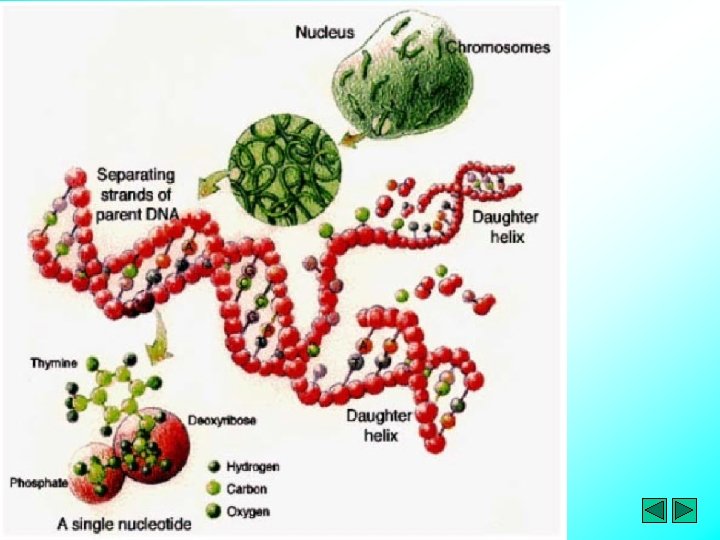
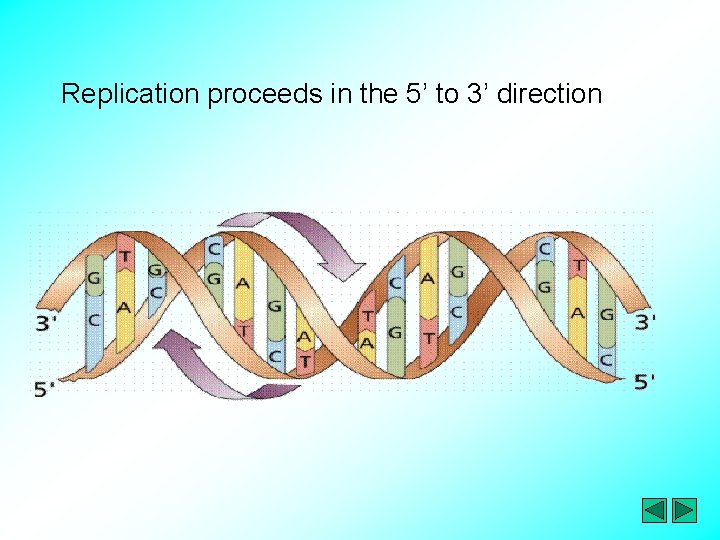
Replication proceeds in the 5’ to 3’ direction
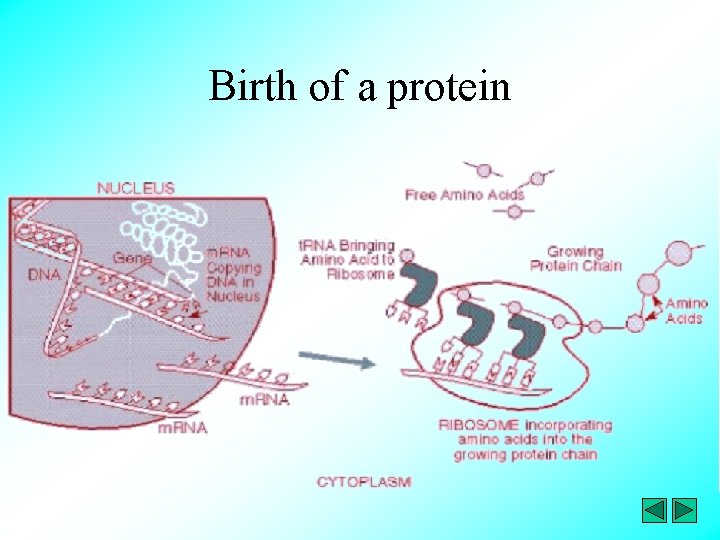
Birth of a protein
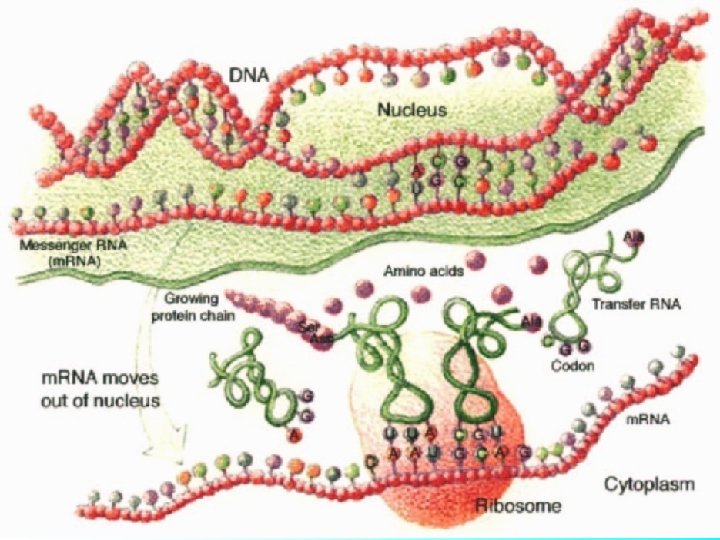
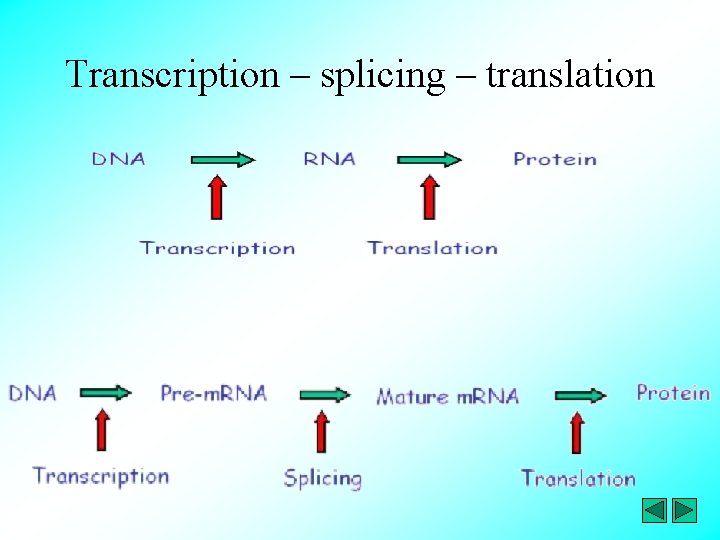
Transcription – splicing – translation
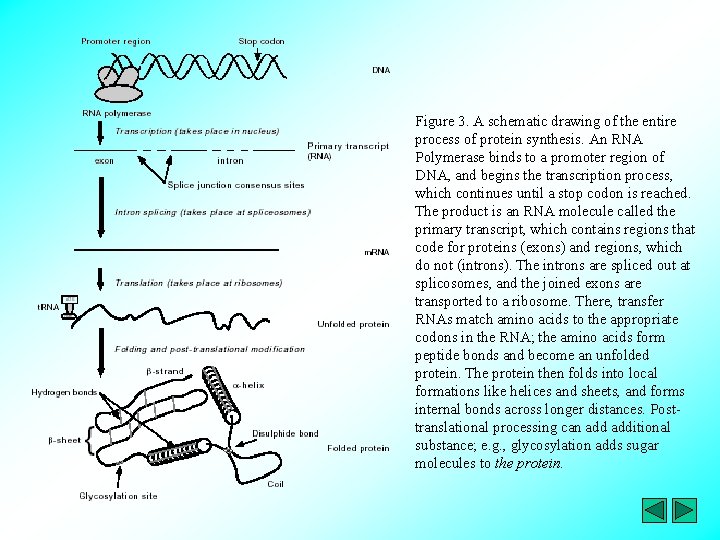
Figure 3. A schematic drawing of the entire process of protein synthesis. An RNA Polymerase binds to a promoter region of DNA, and begins the transcription process, which continues until a stop codon is reached. The product is an RNA molecule called the primary transcript, which contains regions that code for proteins (exons) and regions, which do not (introns). The introns are spliced out at splicosomes, and the joined exons are transported to a ribosome. There, transfer RNAs match amino acids to the appropriate codons in the RNA; the amino acids form peptide bonds and become an unfolded protein. The protein then folds into local formations like helices and sheets, and forms internal bonds across longer distances. Posttranslational processing can additional substance; e. g. , glycosylation adds sugar molecules to the protein.
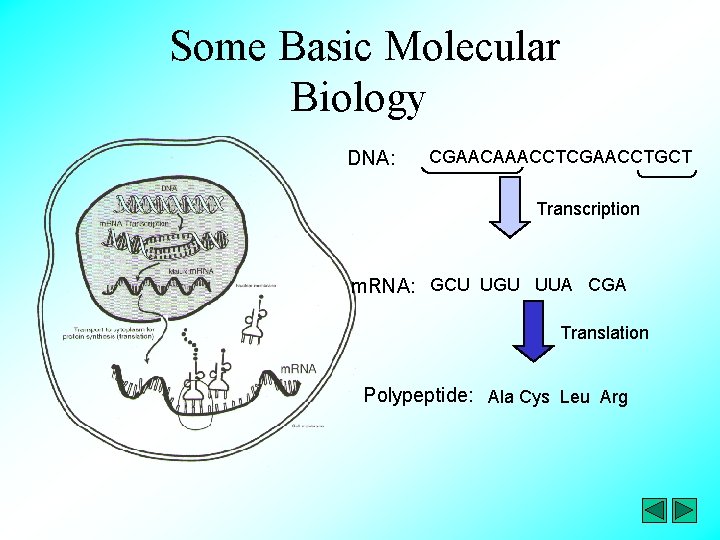
Some Basic Molecular Biology DNA: CGAACAAACCTCGAACCTGCT Transcription m. RNA: GCU UGU UUA CGA Translation Polypeptide: Ala Cys Leu Arg