
Codex Alimentarius The Codex Alimentarius Latin for Food
- Slides: 8
Codex Alimentarius • The Codex Alimentarius (Latin for "Food Code") is a collection of internationally recognized standards, codes of practice, guidelines, and other recommendations relating to foods, food production, and food safety • Its name is derived from the Codex Alimentarius Austriacus. • Its texts are developed and maintained by the Codex Alimentarius Commission, a body that was established in early November 1961 by the Food and Agriculture Organization of the United Nations (FAO), was joined by the World Health Organization (WHO) in June 1962, and held its first session in Rome in October 1963.
Goals Codex • The Commission's main goals are to protect the health of consumers and ensure fair practices in the international food trade. • The Codex Alimentarius is recognized by the World Trade Organization as an international reference point for the resolution of disputes concerning food safety and consumer protection
Member s of codex Alimentarius As of 2012, there were 186 members of the Codex Alimentarius Commission: 186 member countries and one member organization, the European Union (EU) There were 215 Codex observers: 49 intergovernmental organizations, 150 non-governmental organizations, and 16 United Nations organizations
Scope • The Codex Alimentarius covers all foods, whether processed, semiprocessed or raw. • In addition to standards for specific foods, the Codex Alimentarius contains general standards covering matters such as food labeling, food hygiene, food additives and pesticide residues, and procedures for assessing the safety of foods derived from modern biotechnology • It also contains guidelines for the management of official i. e. governmental import and export inspection and certification systems for foods. • The Codex Alimentarius is published in the six official languages of the United Nations: Arabic, Chinese, English, French, Spanish and Russian
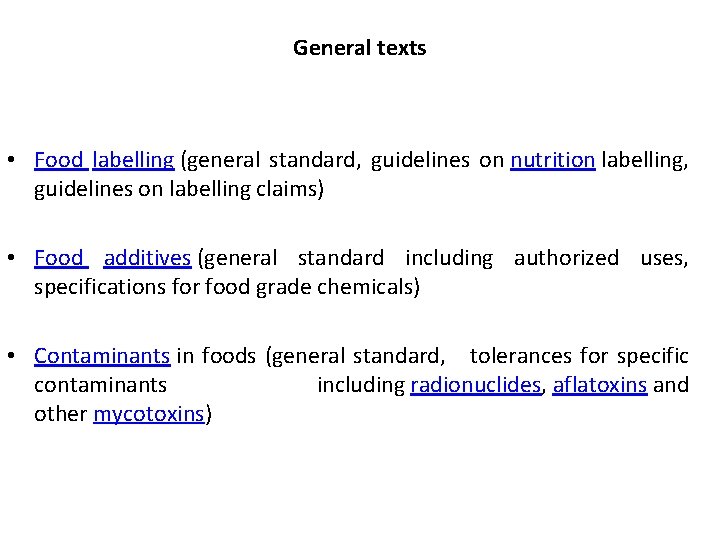
General texts • Food labelling (general standard, guidelines on nutrition labelling, guidelines on labelling claims) • Food additives (general standard including authorized uses, specifications for food grade chemicals) • Contaminants in foods (general standard, tolerances for specific contaminants including radionuclides, aflatoxins and other mycotoxins)
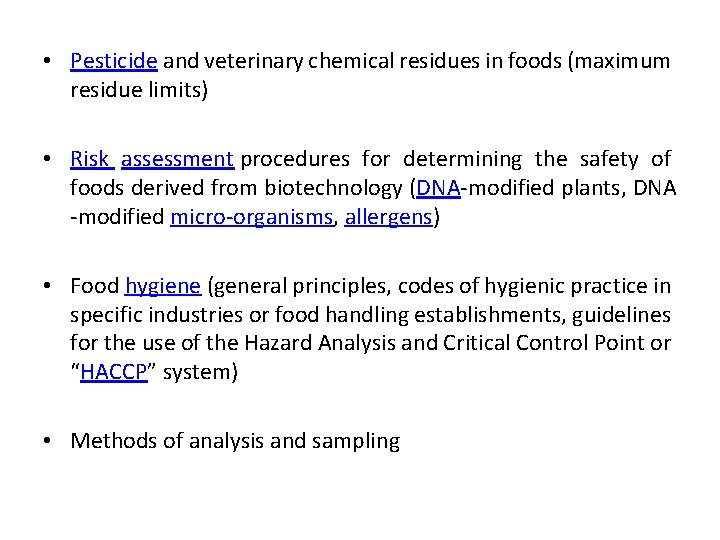
• Pesticide and veterinary chemical residues in foods (maximum residue limits) • Risk assessment procedures for determining the safety of foods derived from biotechnology (DNA-modified plants, DNA -modified micro-organisms, allergens) • Food hygiene (general principles, codes of hygienic practice in specific industries or food handling establishments, guidelines for the use of the Hazard Analysis and Critical Control Point or “HACCP” system) • Methods of analysis and sampling
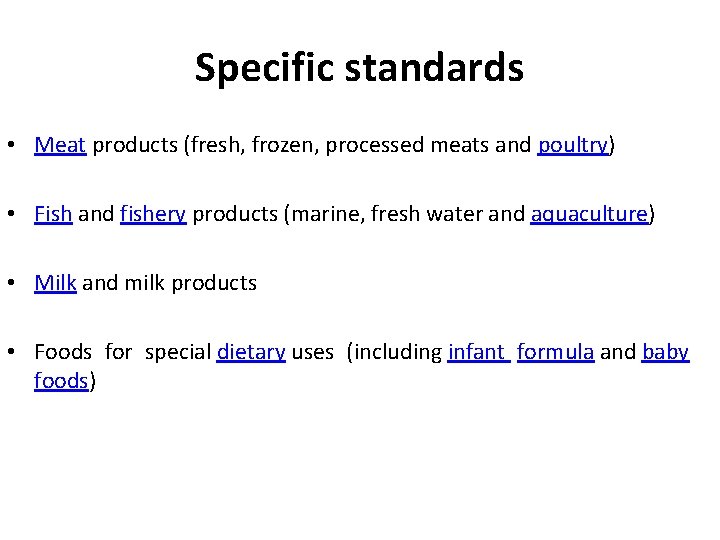
Specific standards • Meat products (fresh, frozen, processed meats and poultry) • Fish and fishery products (marine, fresh water and aquaculture) • Milk and milk products • Foods for special dietary uses (including infant formula and baby foods)
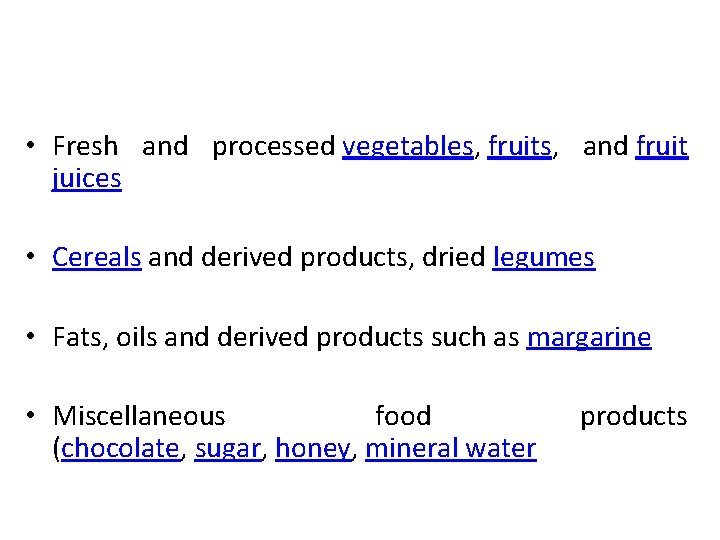
• Fresh and processed vegetables, fruits, and fruit juices • Cereals and derived products, dried legumes • Fats, oils and derived products such as margarine • Miscellaneous food (chocolate, sugar, honey, mineral water products