
CODESWITCHING THE GENERATION GAP Ronald E Mc Nair
- Slides: 27
CODE-SWITCHING & THE GENERATION GAP Ronald E. Mc. Nair Post-Baccalaureate Achievement Program Scholar: Erika K. Durán Mentor: Dr. Patricia Mac. Gregor-Mendoza
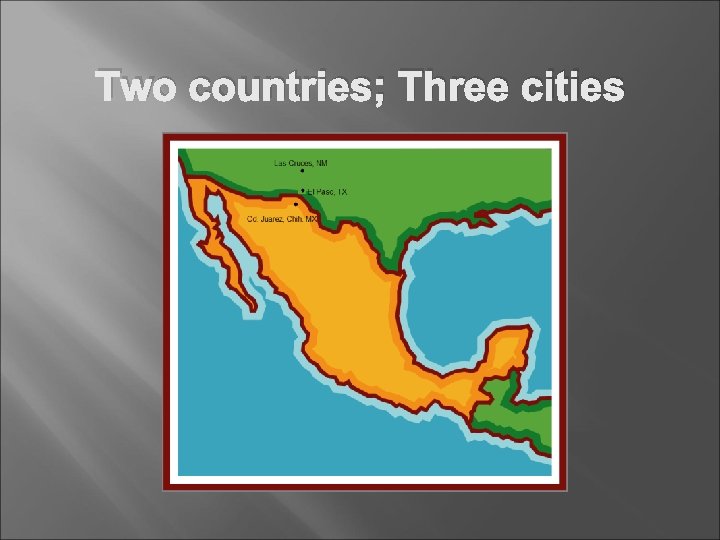
Two countries; Three cities
¿What is Code-Switching? The transitioning back and forth between two languages for convenience, emphasis, humor, etc.
. . . Continued Code-Switching is not a linguistic phenomenon, but rather a psychological one (Haugen 1954: 368). Haugen also refers to ‘the code-switching which occurs when a bilingual introduces a completely unassimilated word from another language into his speech (1956: 40). ’
History of Code-Switching Started in the early 1950’s. It was not Haugen who used the term first, rather Hans Vogt in an article in 1954. *According to Peter Auer’s book Code. Switching in Conversation
…Continued In 1952 Roman Jakobson established the term’s success by drawing parallels between language switching, co-existent phonological systems in borrowing, and information theory. * *According to Peter Auer’s book Code. Switching in Conversation
Different types of Code-Switching o Pidgin-Creoles o Diglossia o Borrowing o Calques
Pidgin-Creoles People of lower status learn some words of those in power; their children expand these words into a language.
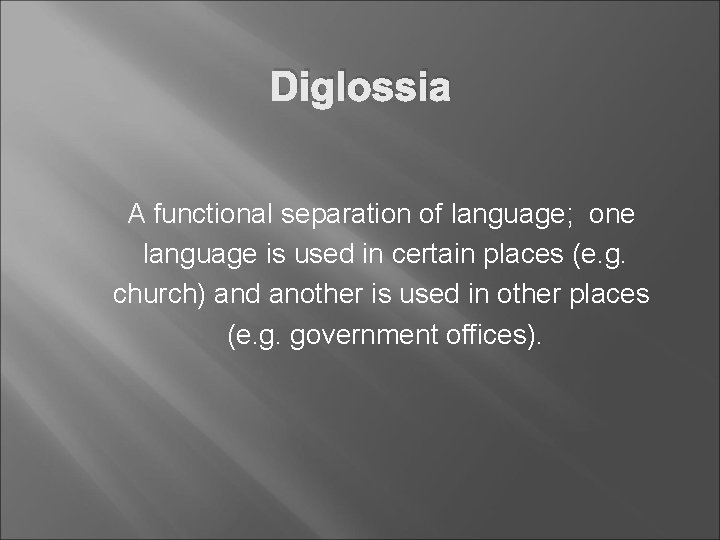
Diglossia A functional separation of language; one language is used in certain places (e. g. church) and another is used in other places (e. g. government offices).
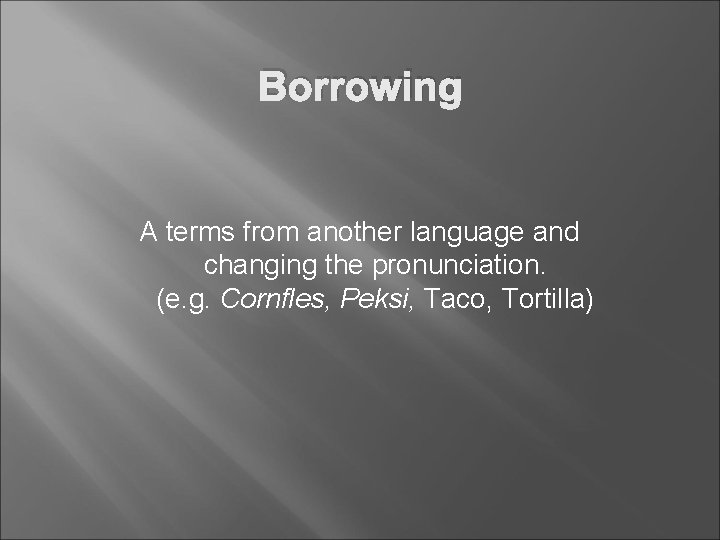
Borrowing A terms from another language and changing the pronunciation. (e. g. Cornfles, Peksi, Taco, Tortilla)
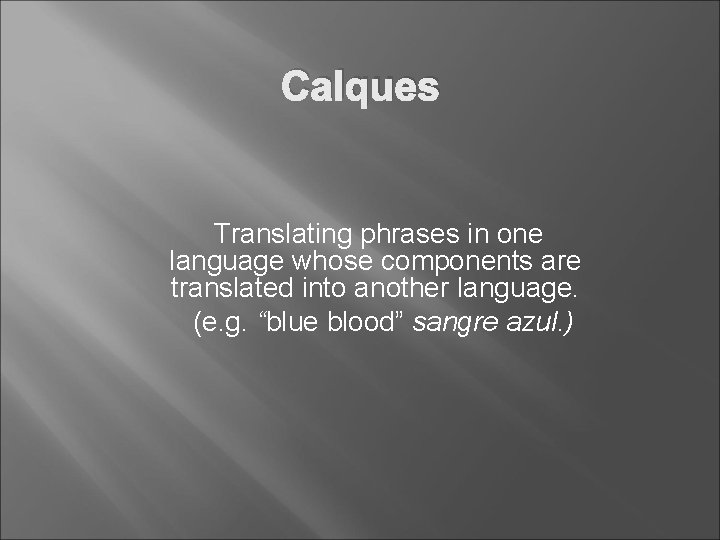
Calques Translating phrases in one language whose components are translated into another language. (e. g. “blue blood” sangre azul. )
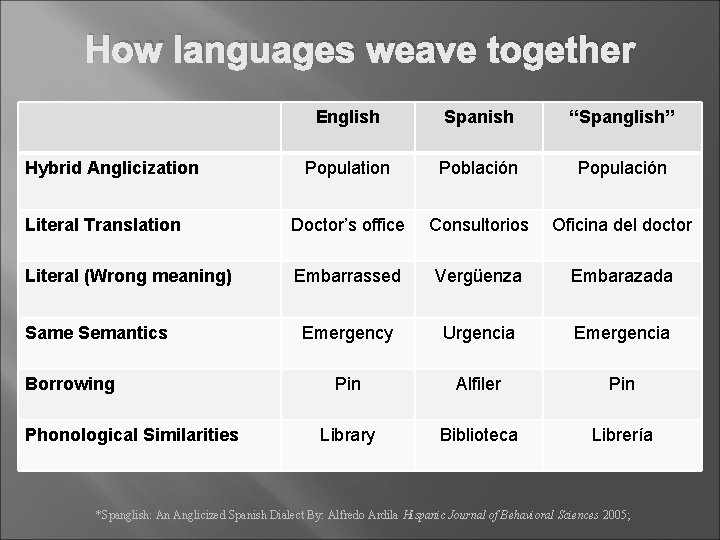
How languages weave together English Spanish “Spanglish” Population Población Populación Literal Translation Doctor’s office Consultorios Oficina del doctor Literal (Wrong meaning) Embarrassed Vergüenza Embarazada Emergency Urgencia Emergencia Pin Alfiler Pin Library Biblioteca Librería Hybrid Anglicization Same Semantics Borrowing Phonological Similarities *Spanglish: An Anglicized Spanish Dialect By: Alfredo Ardila Hispanic Journal of Behavioral Sciences 2005;
Research I conducted a quantitative study on how people of different ages and genders weave together Spanish and English.
¿Who? The research consisted of 5 females and 5 males from each of two age groups; (20 – 30 years old & 70 and above).
¿Why these ages? The reasoning behind why these age groups were chosen was to compare college age students vs. their grandparent’s age. Seeing if the generation gap effects their way of speaking.
¿What? Each informant was asked to sign a consent form allowing me to digitally record them. They were also informed that they will remain anonymous and no one but myself will listen to the recordings.
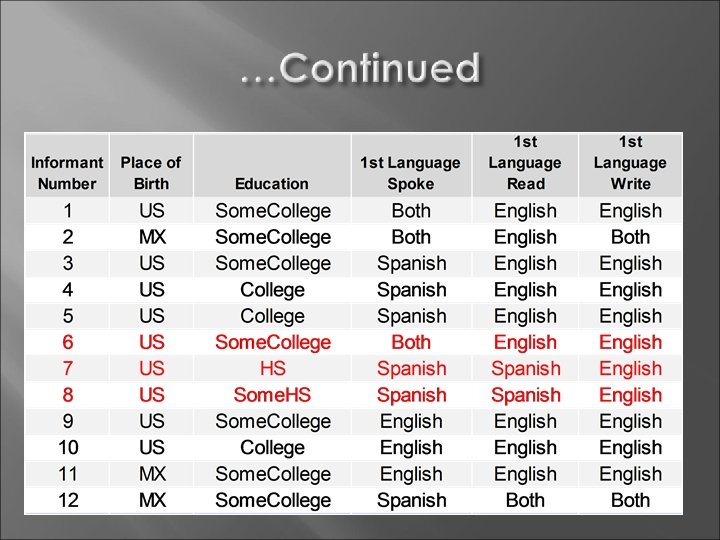
…Continued Each informant provided a brief history on their English/Spanish language acquisition, proficiency, and use.
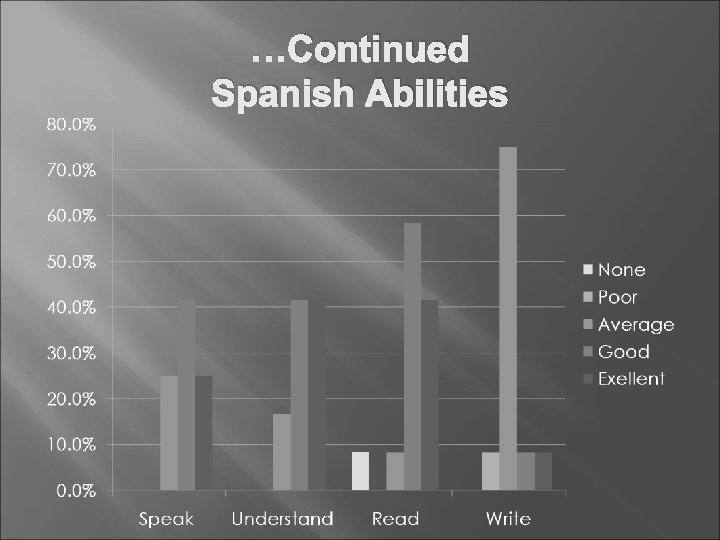
…Continued Spanish Abilities
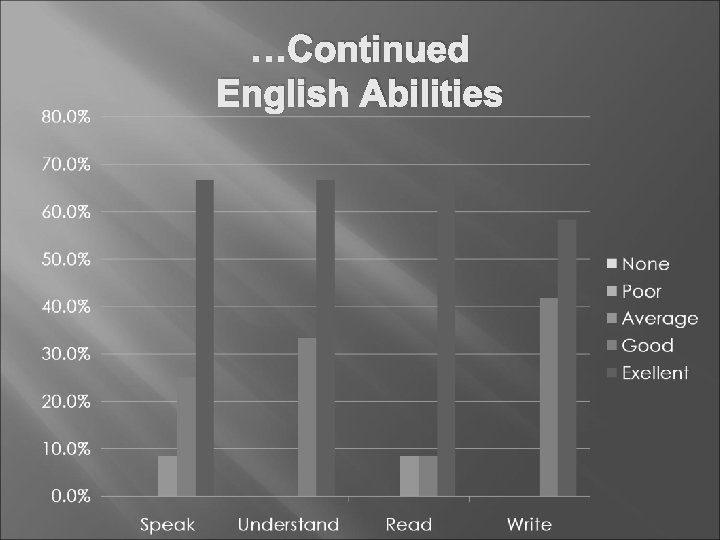
…Continued English Abilities
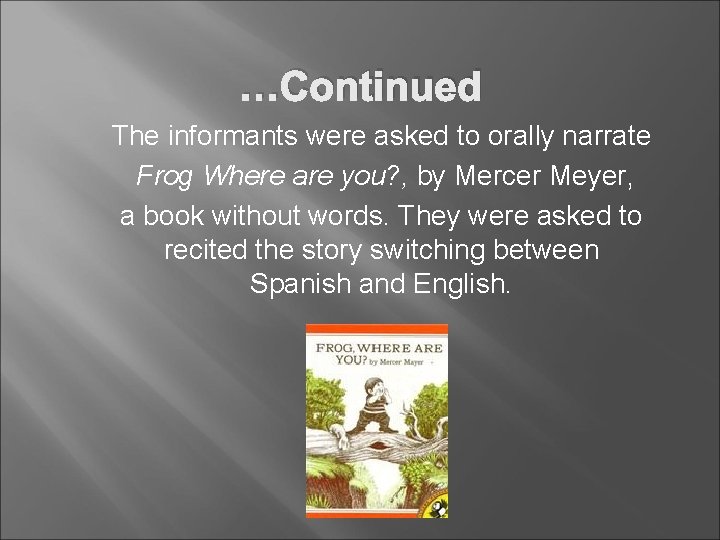
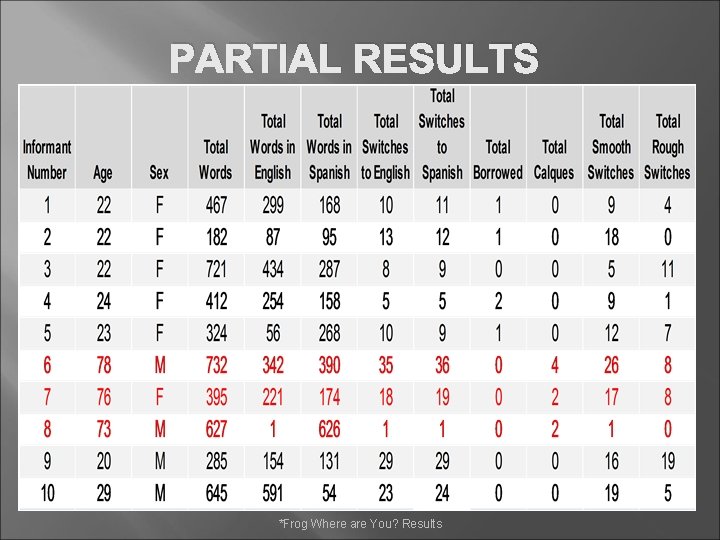
…Continued The informants were asked to orally narrate Frog Where are you? , by Mercer Meyer, a book without words. They were asked to recited the story switching between Spanish and English.
PARTIAL RESULTS *Frog Where are You? Results
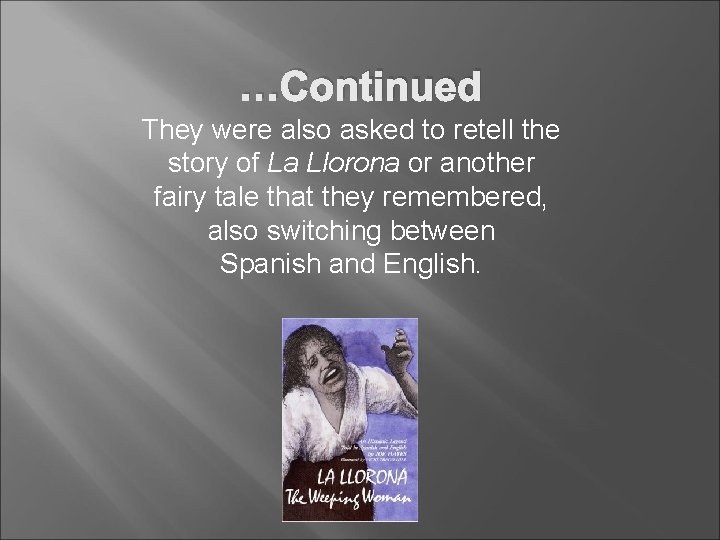
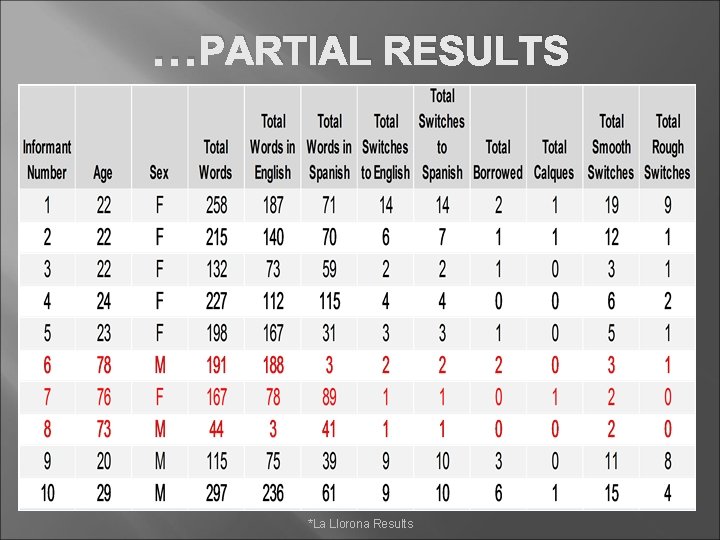
…Continued They were also asked to retell the story of La Llorona or another fairy tale that they remembered, also switching between Spanish and English.
…PARTIAL RESULTS *La Llorona Results
Goals o o Seek patterns of their linguistic behaviors, exploring different informants’ use of codeswitching, borrowing, and calques. Examine the patterns to see if there any similarities or differences between how, where, and what elements of their speech are used in Spanish or English and if these speech patterns are the same or different between genders and across age groups.
"Our language is the reflection of ourselves. A language is an exact reflection of the character and growth of its speakers. “ ~Cesar Chávez
¿Questions?