
COCKCROFT INSTITUTE DARESBURY JULY 2010 SUPERCONDUCTIVITY OVERVIEW OF
COCKCROFT INSTITUTE, DARESBURY JULY 2010 SUPERCONDUCTIVITY OVERVIEW OF EXPERIMENTAL FACTS EARLY MODELS GINZBURG-LANDAU THEORY BCS THEORY Jean Delayen Center for Accelerator Science Old Dominion University and Thomas Jefferson National Accelerator Facility Page 1
Historical Overview Page 2
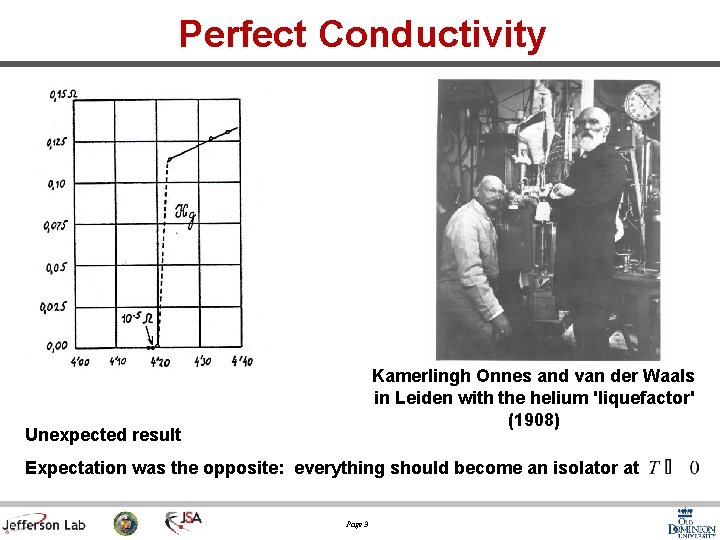
Perfect Conductivity Kamerlingh Onnes and van der Waals in Leiden with the helium 'liquefactor' (1908) Unexpected result Expectation was the opposite: everything should become an isolator at Page 3
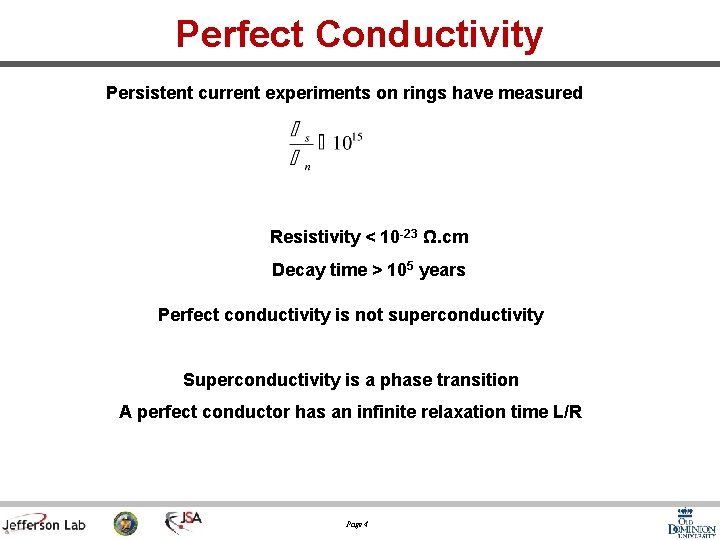
Perfect Conductivity Persistent current experiments on rings have measured Resistivity < 10 -23 Ω. cm Decay time > 105 years Perfect conductivity is not superconductivity Superconductivity is a phase transition A perfect conductor has an infinite relaxation time L/R Page 4
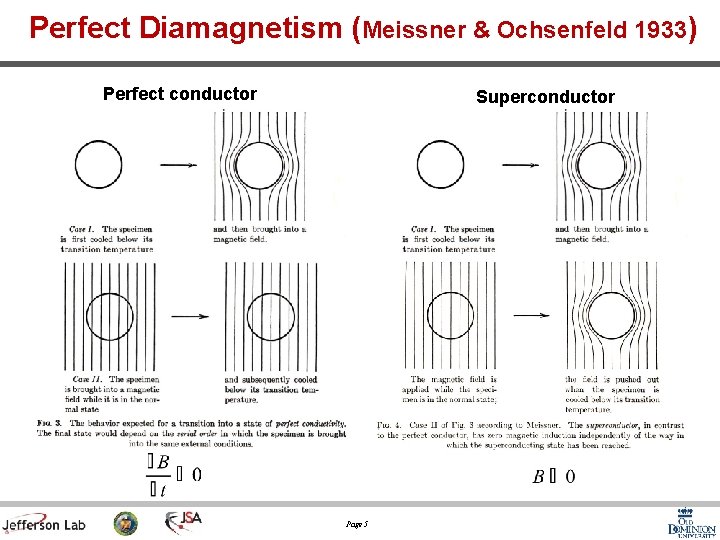
Perfect Diamagnetism (Meissner & Ochsenfeld 1933) Perfect conductor Superconductor Page 5
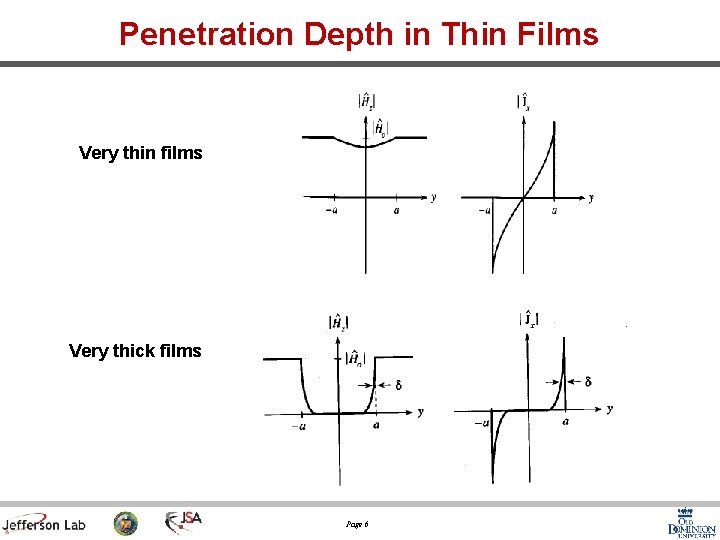
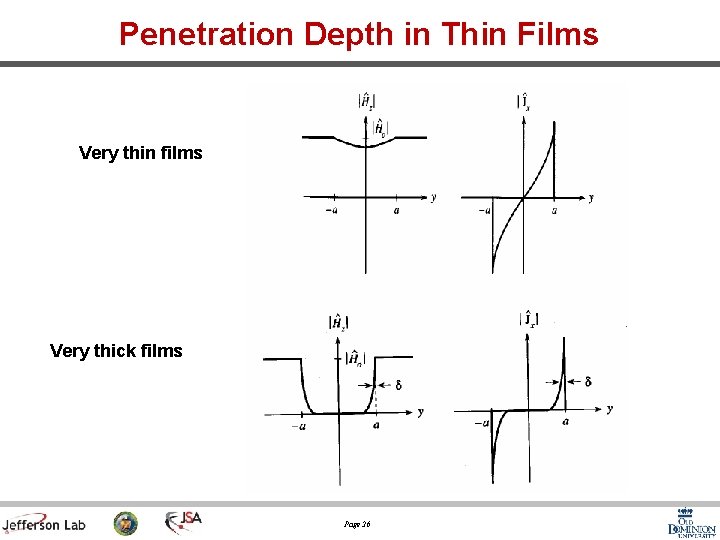
Penetration Depth in Thin Films Very thin films Very thick films Page 6
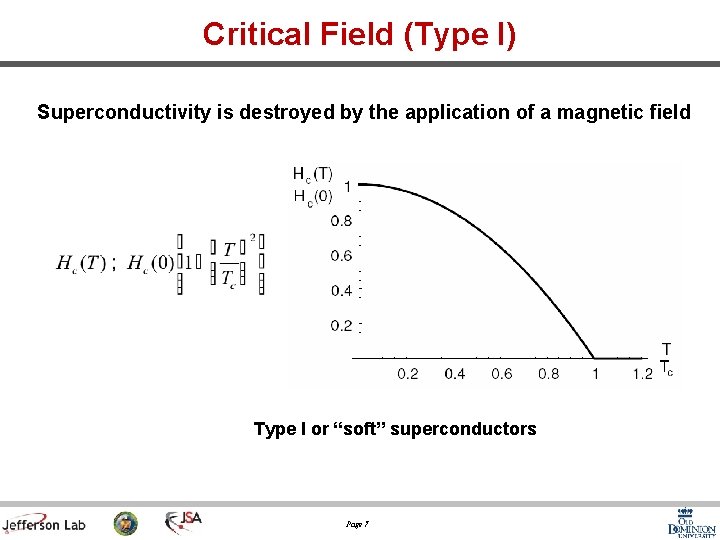
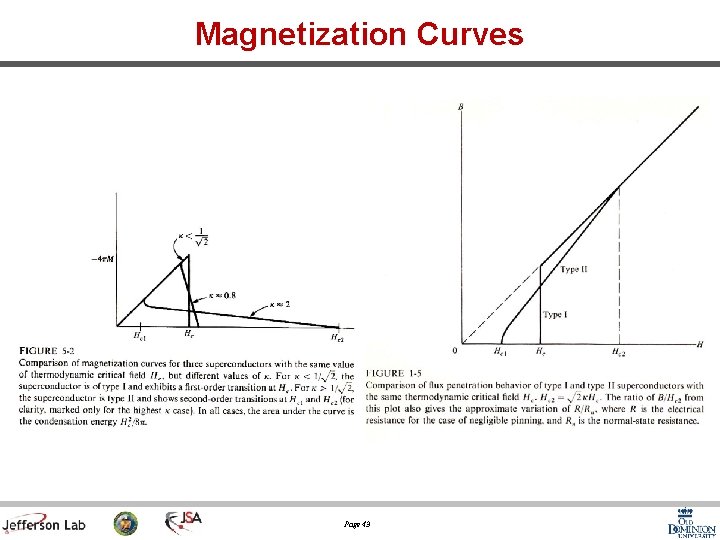
Critical Field (Type I) Superconductivity is destroyed by the application of a magnetic field Type I or “soft” superconductors Page 7
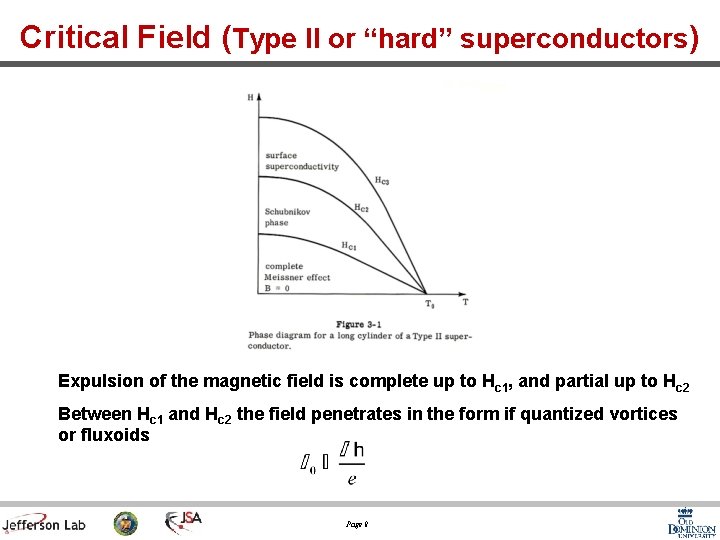
Critical Field (Type II or “hard” superconductors) Expulsion of the magnetic field is complete up to Hc 1, and partial up to Hc 2 Between Hc 1 and Hc 2 the field penetrates in the form if quantized vortices or fluxoids Page 8
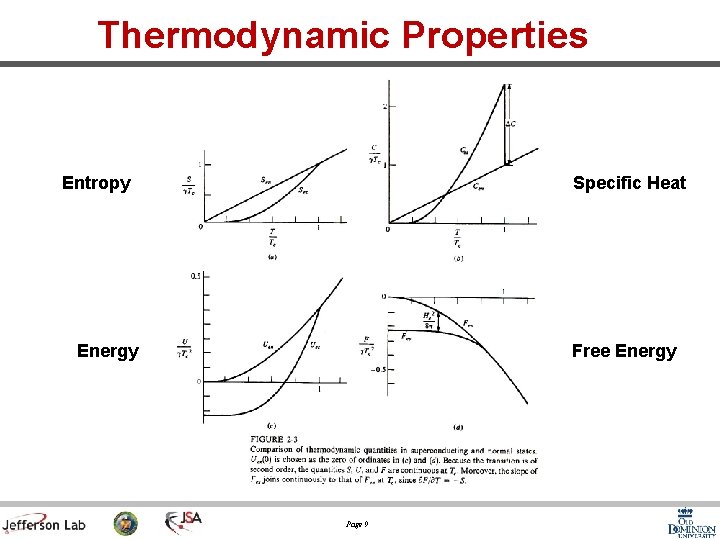
Thermodynamic Properties Entropy Specific Heat Energy Free Energy Page 9
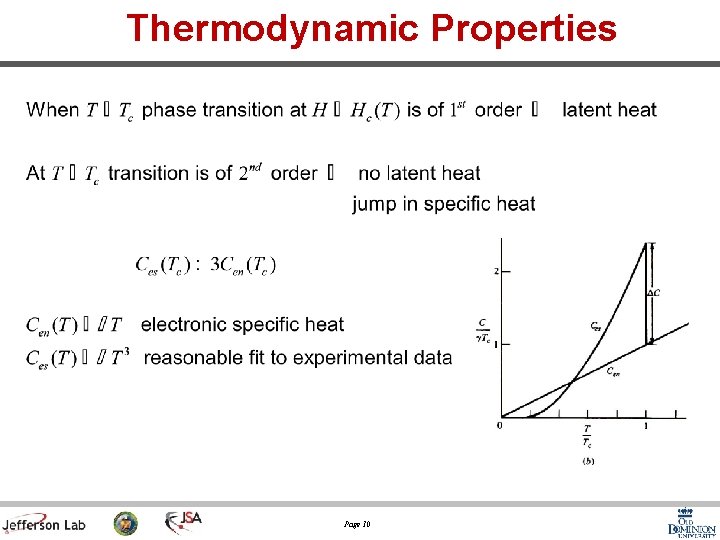
Thermodynamic Properties Page 10
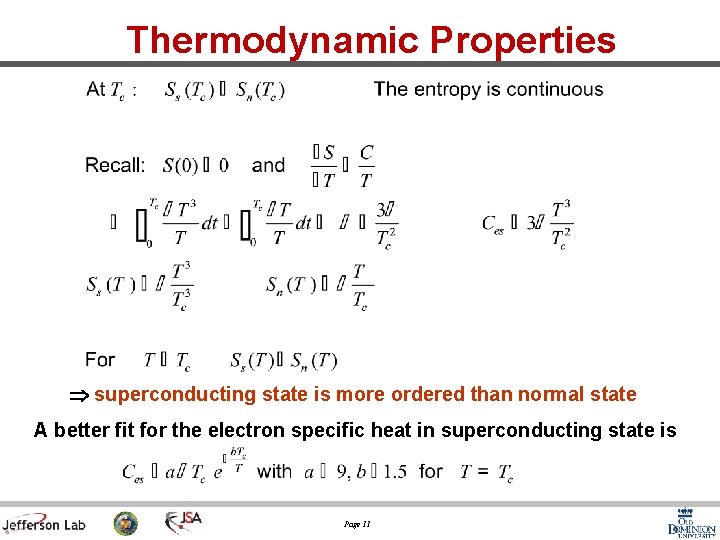
Thermodynamic Properties Þ superconducting state is more ordered than normal state A better fit for the electron specific heat in superconducting state is Page 11
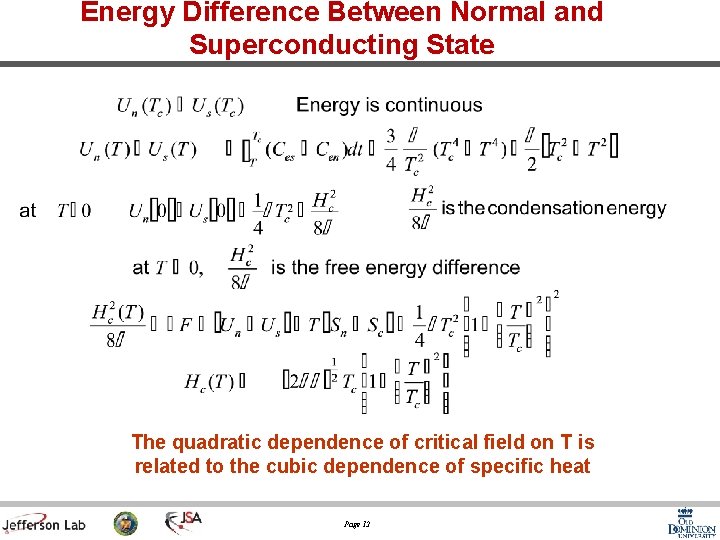
Energy Difference Between Normal and Superconducting State The quadratic dependence of critical field on T is related to the cubic dependence of specific heat Page 12
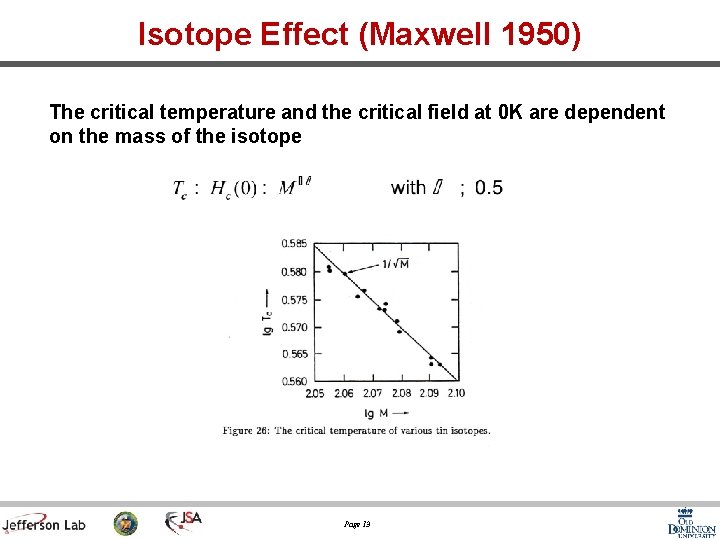
Isotope Effect (Maxwell 1950) The critical temperature and the critical field at 0 K are dependent on the mass of the isotope Page 13
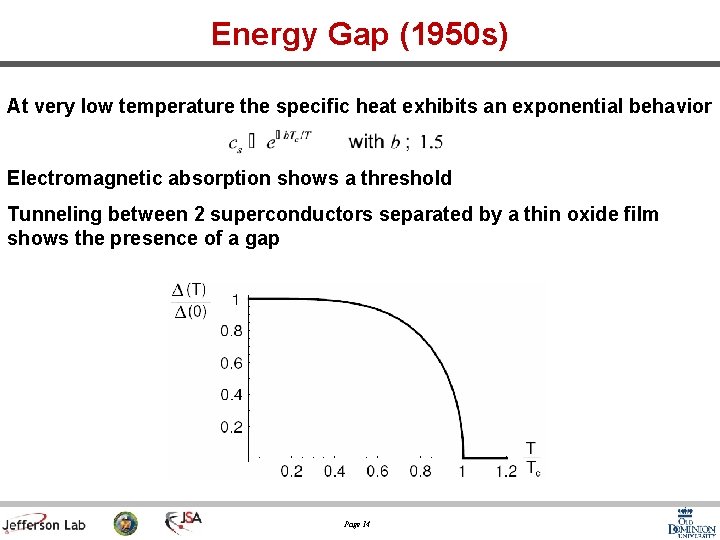
Energy Gap (1950 s) At very low temperature the specific heat exhibits an exponential behavior Electromagnetic absorption shows a threshold Tunneling between 2 superconductors separated by a thin oxide film shows the presence of a gap Page 14
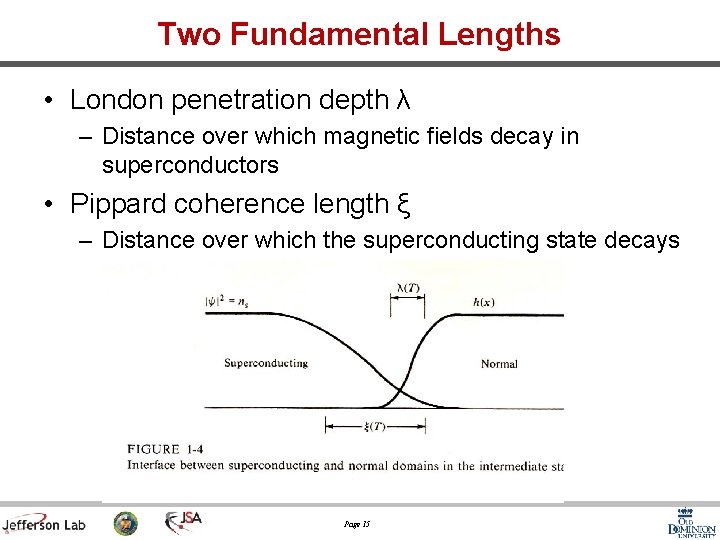
Two Fundamental Lengths • London penetration depth λ – Distance over which magnetic fields decay in superconductors • Pippard coherence length ξ – Distance over which the superconducting state decays Page 15
Two Types of Superconductors • London superconductors (Type II) – λ>> ξ – Impure metals – Alloys – Local electrodynamics • Pippard superconductors (Type I) – ξ >> λ – Pure metals – Nonlocal electrodynamics Page 16
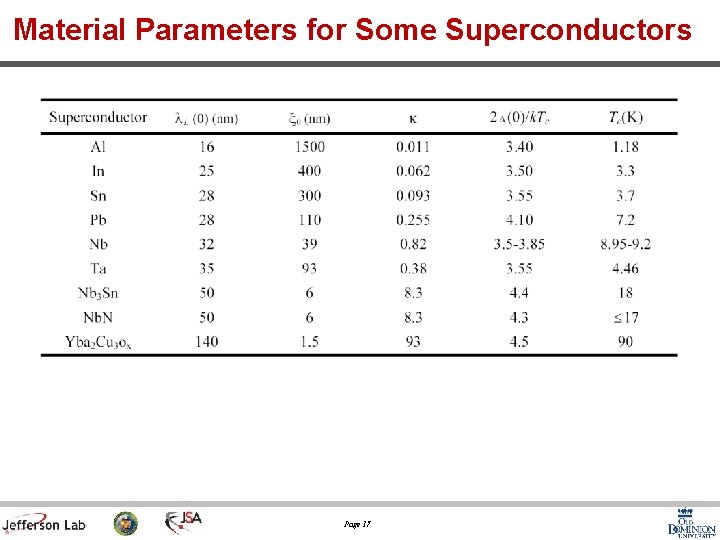
Material Parameters for Some Superconductors Page 17
Phenomenological Models (1930 s to 1950 s) Phenomenological model: Purely descriptive Everything behaves as though…. . A finite fraction of the electrons form some kind of condensate that behaves as a macroscopic system (similar to superfluidity) At 0 K, condensation is complete At Tc the condensate disappears Page 18
Two Fluid Model – Gorter and Casimir Page 19
Two Fluid Model – Gorter and Casimir The Gorter-Casimir model is an “ad hoc” model (there is no physical basis for the assumed expression for the free energy) but provides a fairly accurate representation of experimental results Page 20
Model of F & H London (1935) Proposed a 2 -fluid model with a normal fluid and superfluid components ns : density of the superfluid component of velocity vs nn : density of the normal component of velocity vn Page 21
Model of F & H London (1935) Page 22
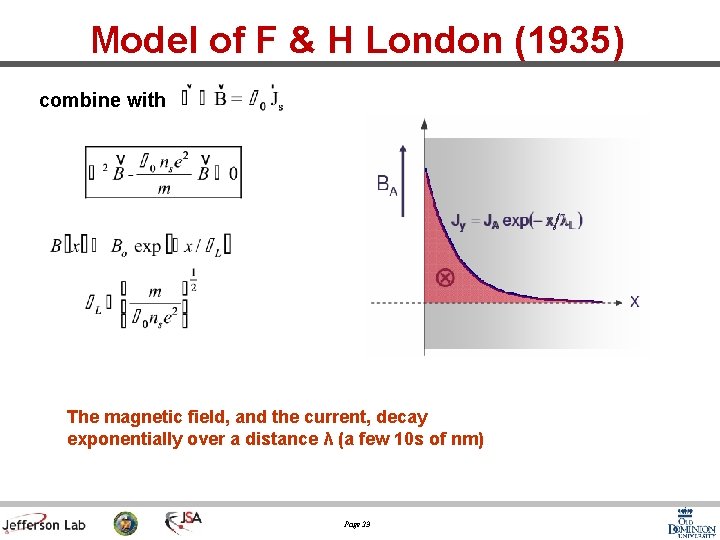
Model of F & H London (1935) combine with The magnetic field, and the current, decay exponentially over a distance λ (a few 10 s of nm) Page 23
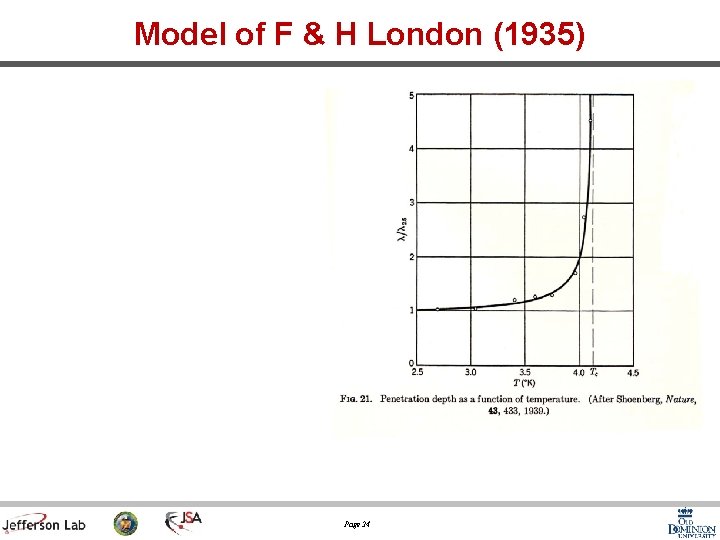
Model of F & H London (1935) Page 24
Model of F & H London (1935) Page 25
Penetration Depth in Thin Films Very thin films Very thick films Page 26
Quantum Mechanical Basis for London Equation Page 27
Pippard’s Extension of London’s Model Observations: -Penetration depth increased with reduced mean free path - Hc and Tc did not change - Need for a positive surface energy over 10 -4 cm to explain existence of normal and superconducting phase in intermediate state Non-local modification of London equation Page 28
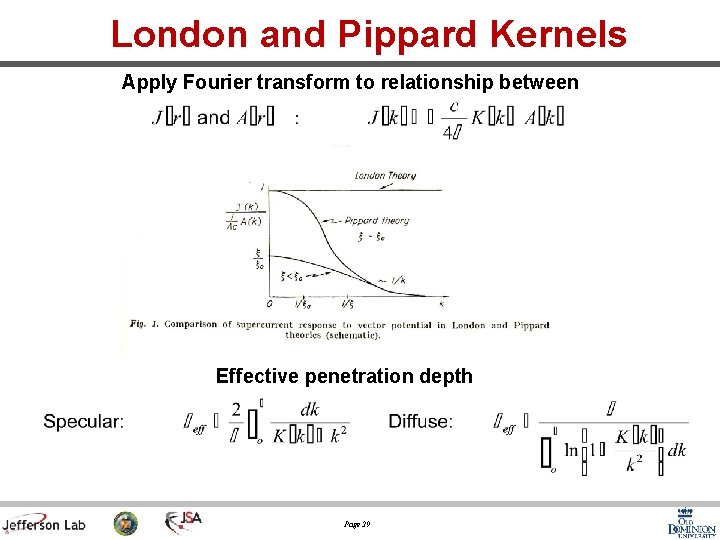
London and Pippard Kernels Apply Fourier transform to relationship between Effective penetration depth Page 29
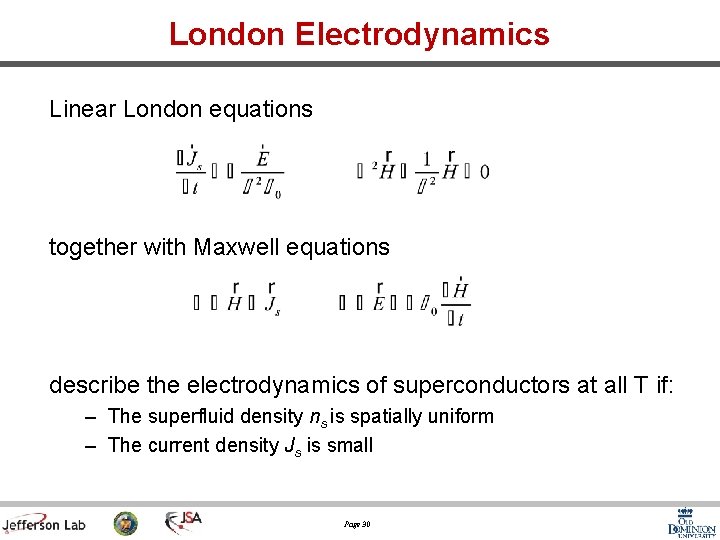
London Electrodynamics Linear London equations together with Maxwell equations describe the electrodynamics of superconductors at all T if: – The superfluid density ns is spatially uniform – The current density Js is small Page 30
Ginzburg-Landau Theory • Many important phenomena in superconductivity occur because ns is not uniform – Interfaces between normal and superconductors – Trapped flux – Intermediate state • London model does not provide an explanation for the surface energy (which can be positive or negative) • GL is a generalization of the London model but it still retain the local approximation of the electrodynamics Page 31
Ginzburg-Landau Theory • Ginzburg-Landau theory is a particular case of Landau’s theory of second order phase transition • Formulated in 1950, before BCS • Masterpiece of physical intuition • Grounded in thermodynamics • Even after BCS it still is very fruitful in analyzing the behavior of superconductors and is still one of the most widely used theory of superconductivity Page 32
Ginzburg-Landau Theory • Theory of second order phase transition is based on an order parameter which is zero above the transition temperature and non-zero below • For superconductors, GL use a complex order parameter Ψ(r) such that |Ψ(r)|2 represents the density of superelectrons • The Ginzburg-Landau theory is valid close to Tc Page 33
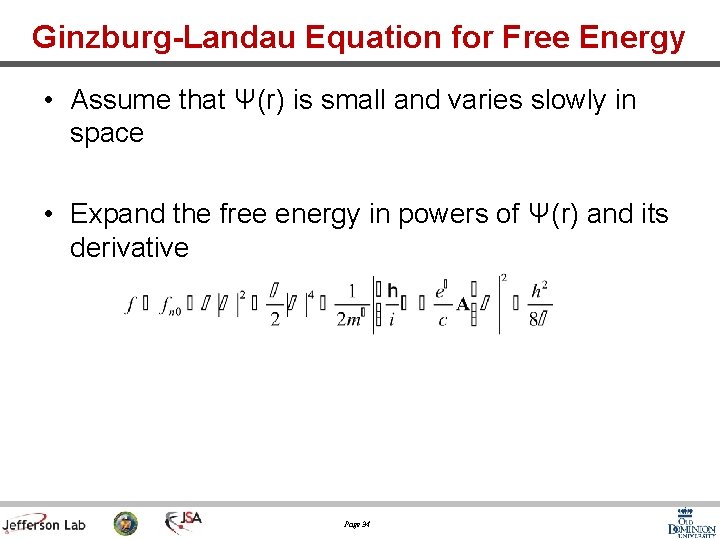
Ginzburg-Landau Equation for Free Energy • Assume that Ψ(r) is small and varies slowly in space • Expand the free energy in powers of Ψ(r) and its derivative Page 34
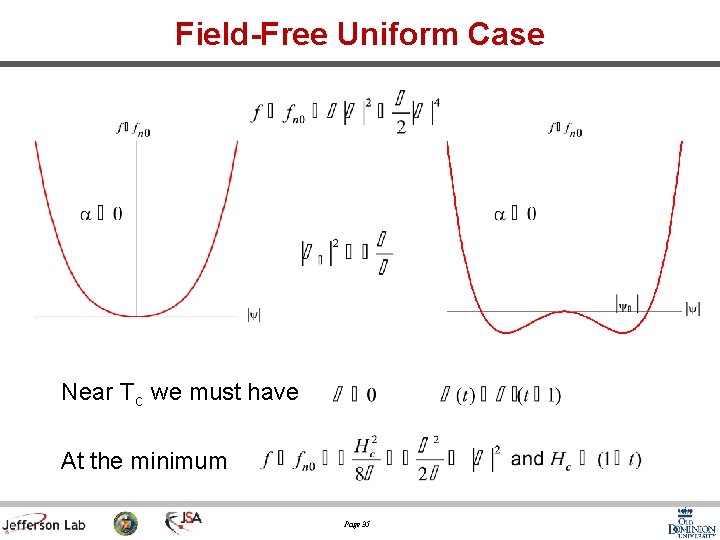
Field-Free Uniform Case Near Tc we must have At the minimum Page 35
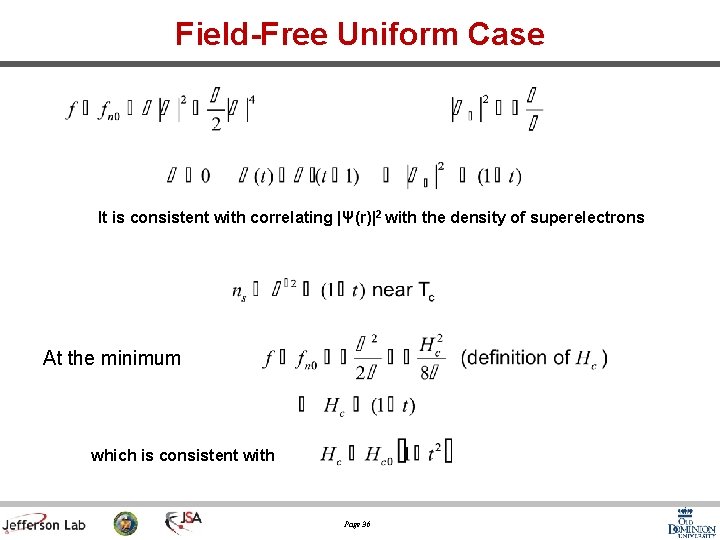
Field-Free Uniform Case It is consistent with correlating |Ψ(r)|2 with the density of superelectrons At the minimum which is consistent with Page 36
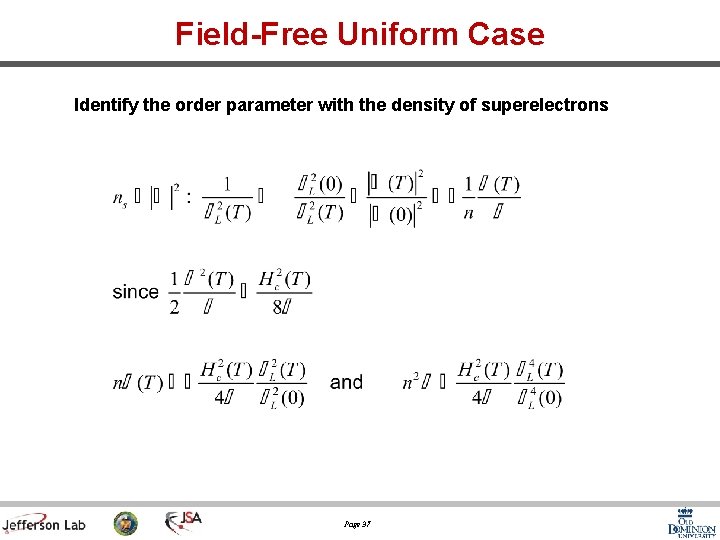
Field-Free Uniform Case Identify the order parameter with the density of superelectrons Page 37
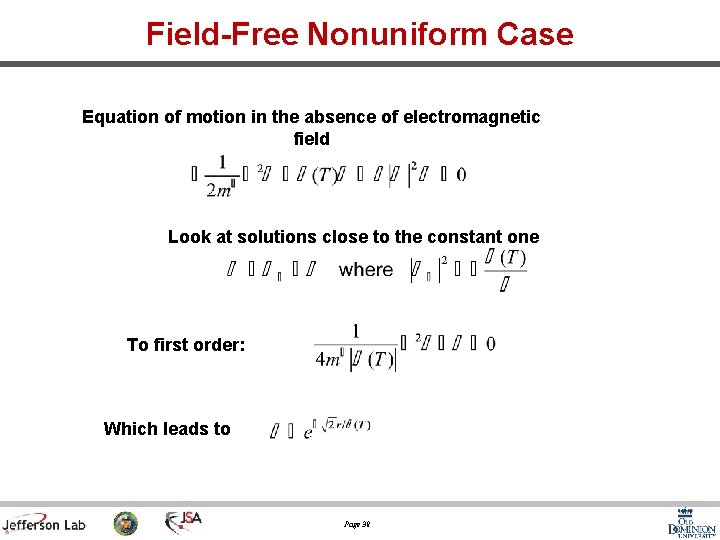
Field-Free Nonuniform Case Equation of motion in the absence of electromagnetic field Look at solutions close to the constant one To first order: Which leads to Page 38
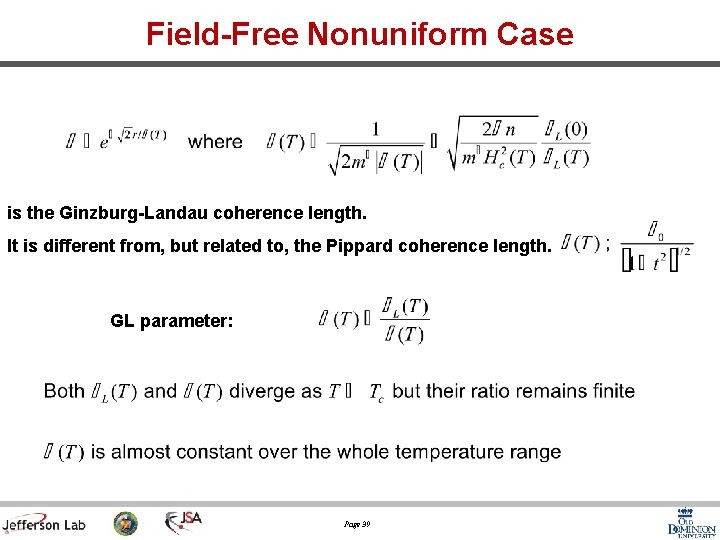
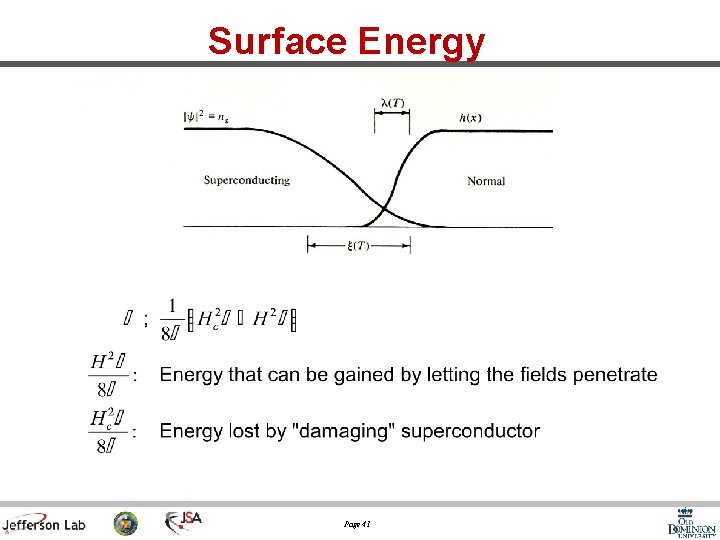
Field-Free Nonuniform Case is the Ginzburg-Landau coherence length. It is different from, but related to, the Pippard coherence length. GL parameter: Page 39
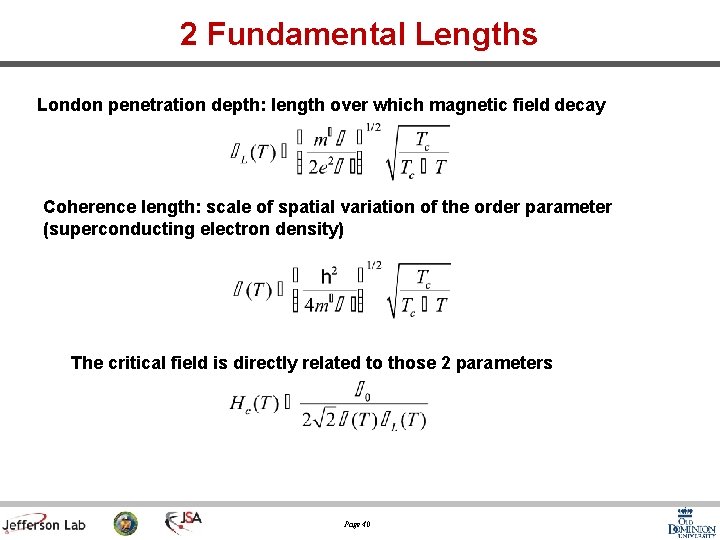
2 Fundamental Lengths London penetration depth: length over which magnetic field decay Coherence length: scale of spatial variation of the order parameter (superconducting electron density) The critical field is directly related to those 2 parameters Page 40
Surface Energy Page 41
Surface Energy Page 42
Magnetization Curves Page 43
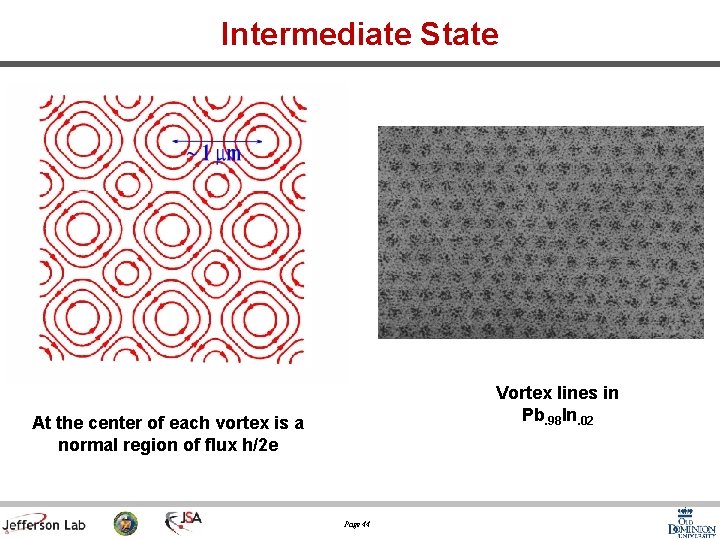
Intermediate State Vortex lines in Pb. 98 In. 02 At the center of each vortex is a normal region of flux h/2 e Page 44
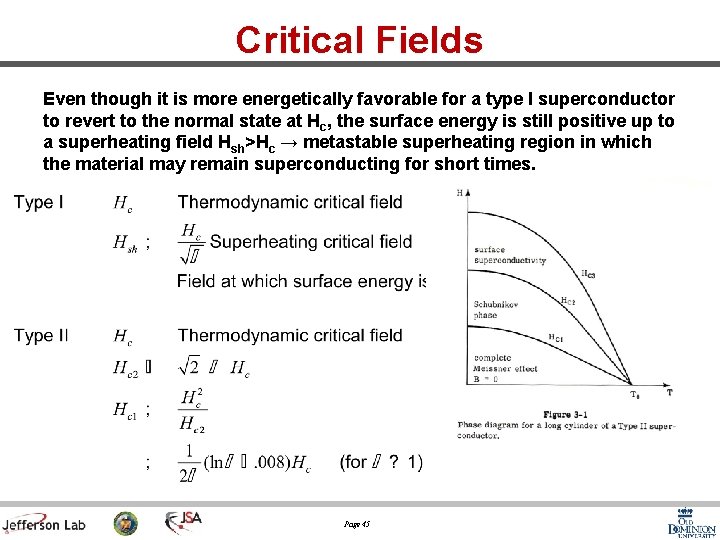
Critical Fields Even though it is more energetically favorable for a type I superconductor to revert to the normal state at Hc, the surface energy is still positive up to a superheating field Hsh>Hc → metastable superheating region in which the material may remain superconducting for short times. Page 45
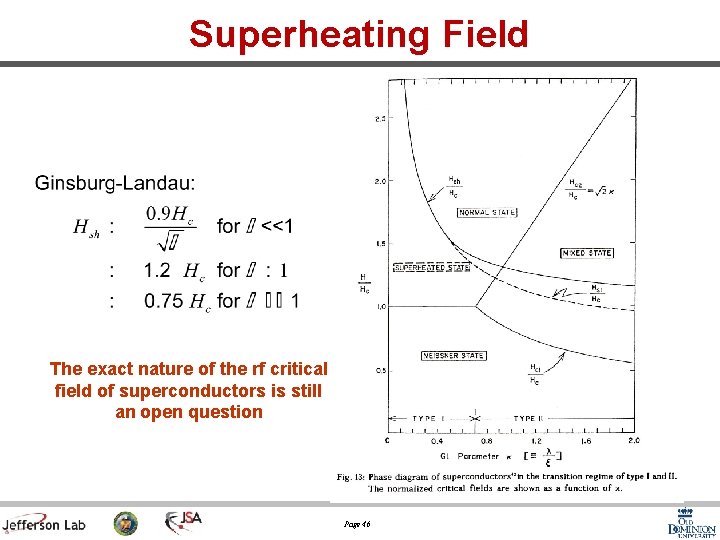
Superheating Field The exact nature of the rf critical field of superconductors is still an open question Page 46
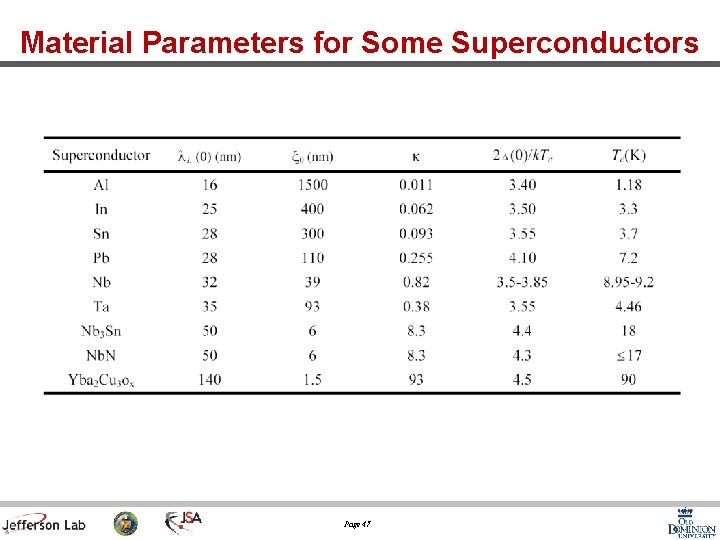
Material Parameters for Some Superconductors Page 47
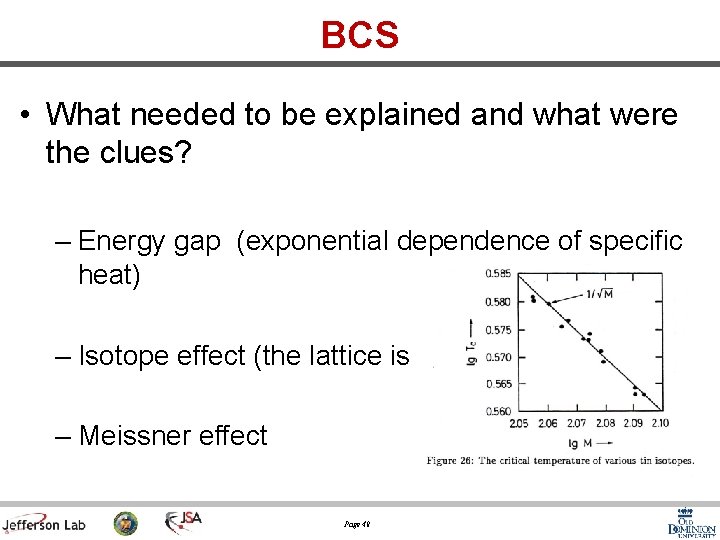
BCS • What needed to be explained and what were the clues? – Energy gap (exponential dependence of specific heat) – Isotope effect (the lattice is involved) – Meissner effect Page 48
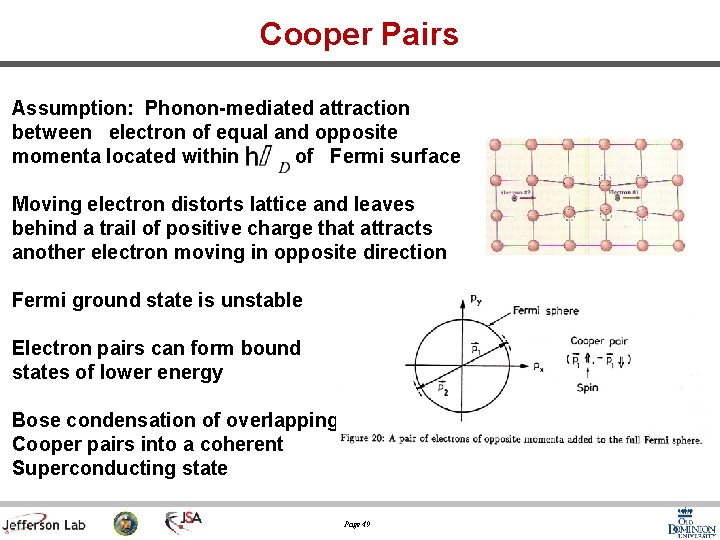
Cooper Pairs Assumption: Phonon-mediated attraction between electron of equal and opposite momenta located within of Fermi surface Moving electron distorts lattice and leaves behind a trail of positive charge that attracts another electron moving in opposite direction Fermi ground state is unstable Electron pairs can form bound states of lower energy Bose condensation of overlapping Cooper pairs into a coherent Superconducting state Page 49
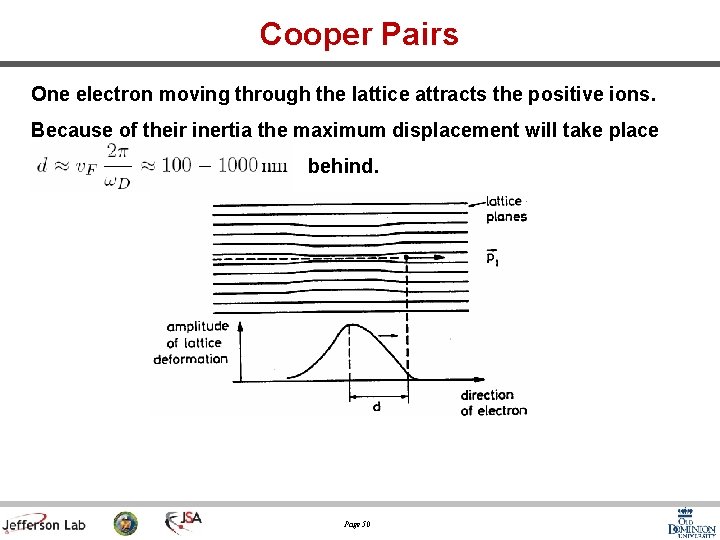
Cooper Pairs One electron moving through the lattice attracts the positive ions. Because of their inertia the maximum displacement will take place behind. Page 50
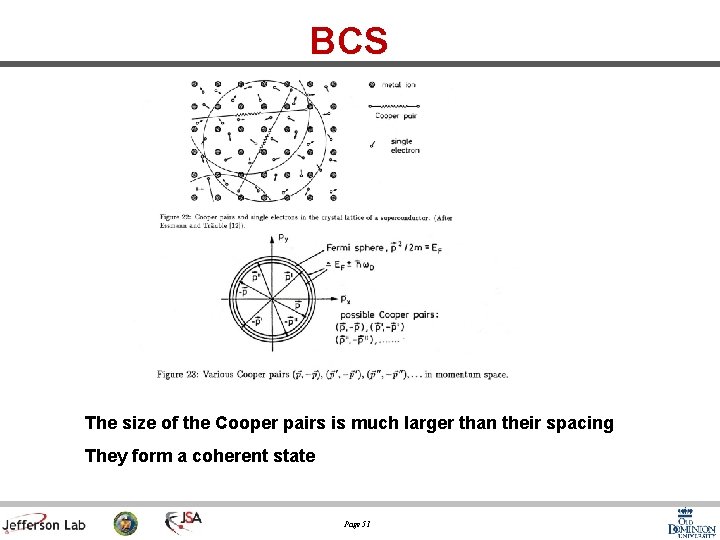
BCS The size of the Cooper pairs is much larger than their spacing They form a coherent state Page 51
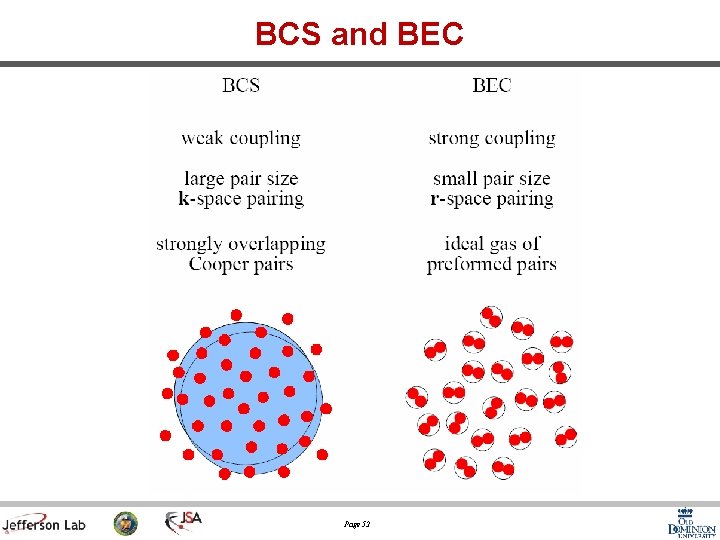
BCS and BEC Page 52
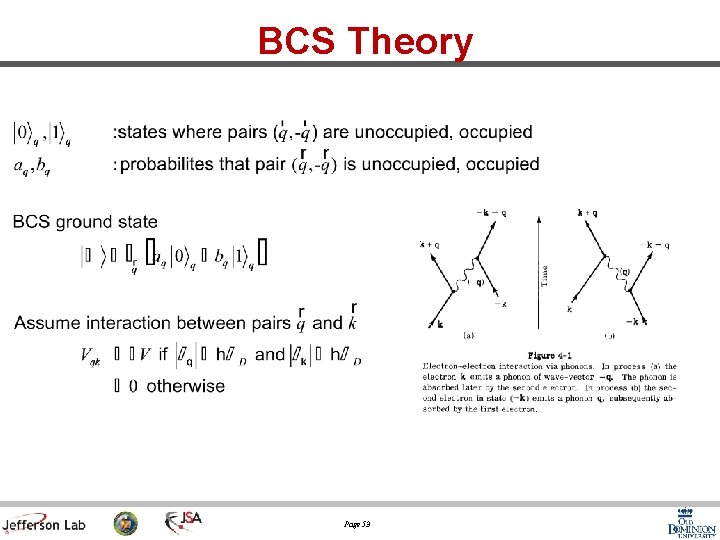
BCS Theory Page 53
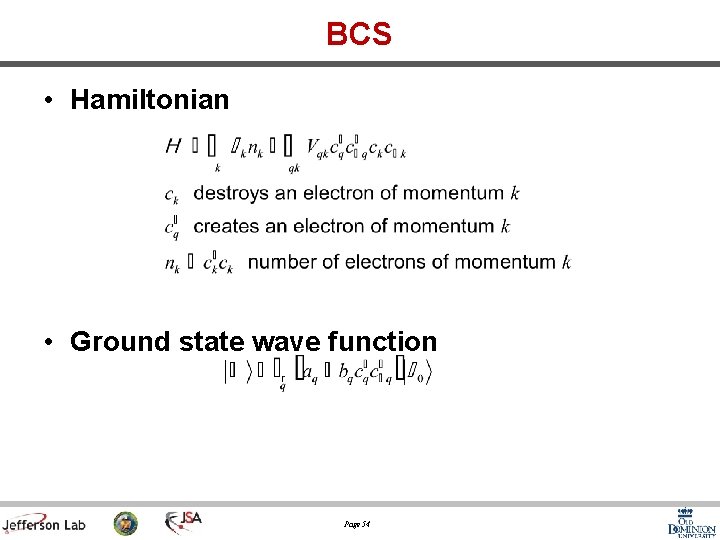
BCS • Hamiltonian • Ground state wave function Page 54
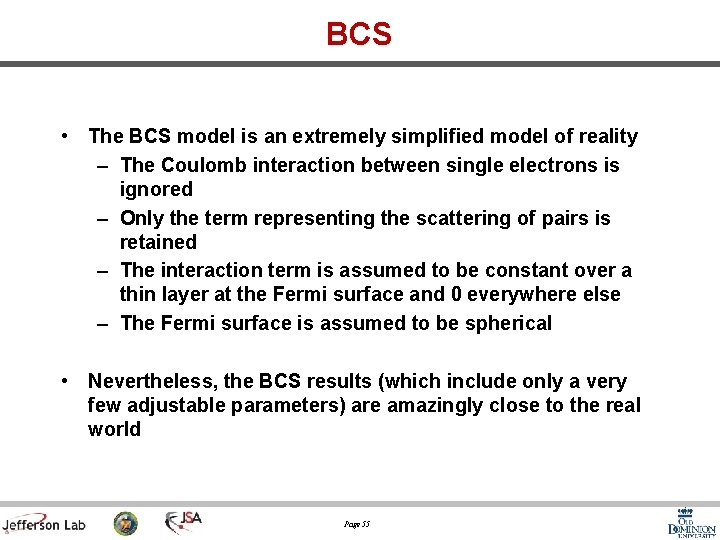
BCS • The BCS model is an extremely simplified model of reality – The Coulomb interaction between single electrons is ignored – Only the term representing the scattering of pairs is retained – The interaction term is assumed to be constant over a thin layer at the Fermi surface and 0 everywhere else – The Fermi surface is assumed to be spherical • Nevertheless, the BCS results (which include only a very few adjustable parameters) are amazingly close to the real world Page 55
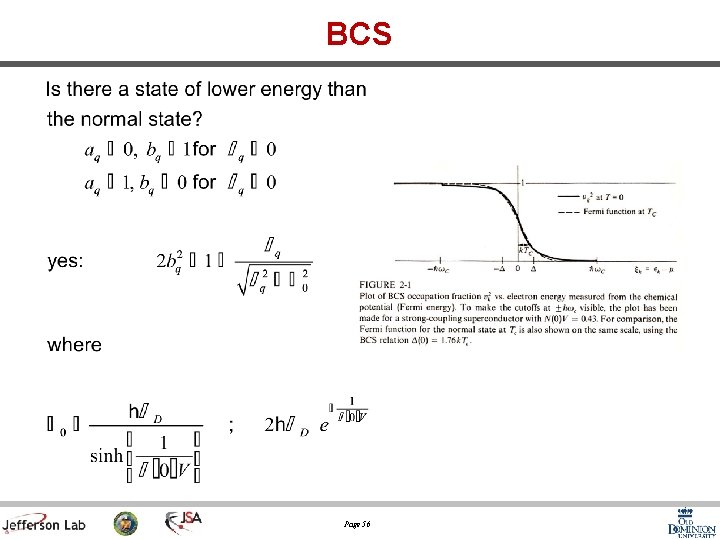
BCS Page 56
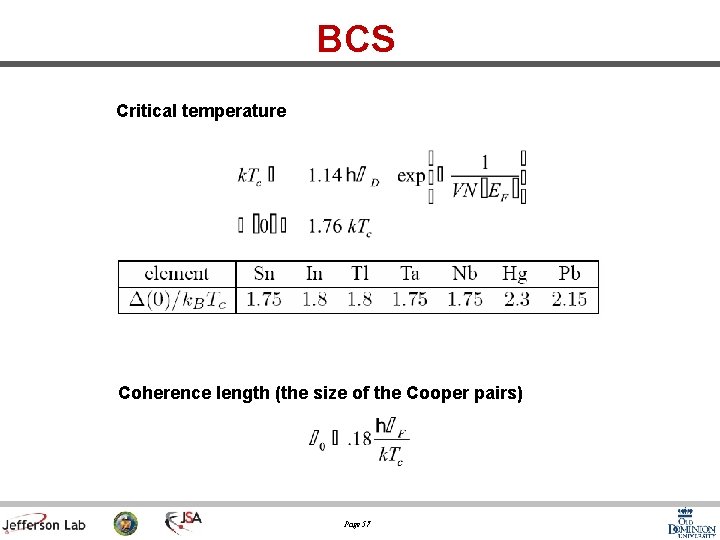
BCS Critical temperature Coherence length (the size of the Cooper pairs) Page 57
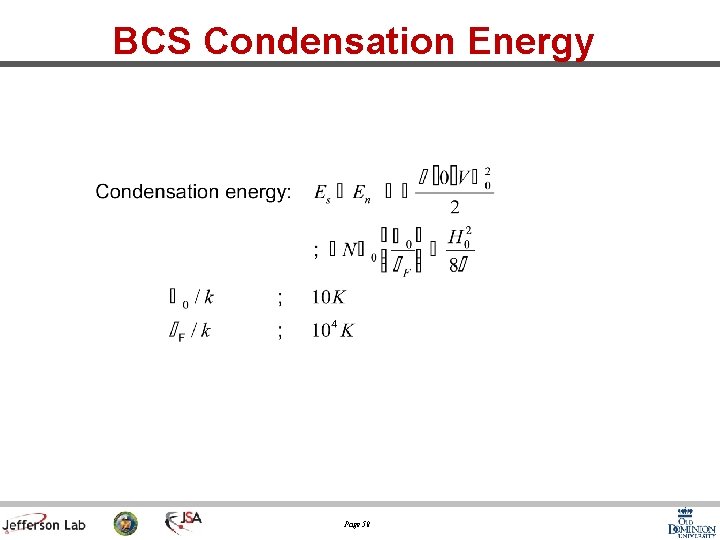
BCS Condensation Energy Page 58
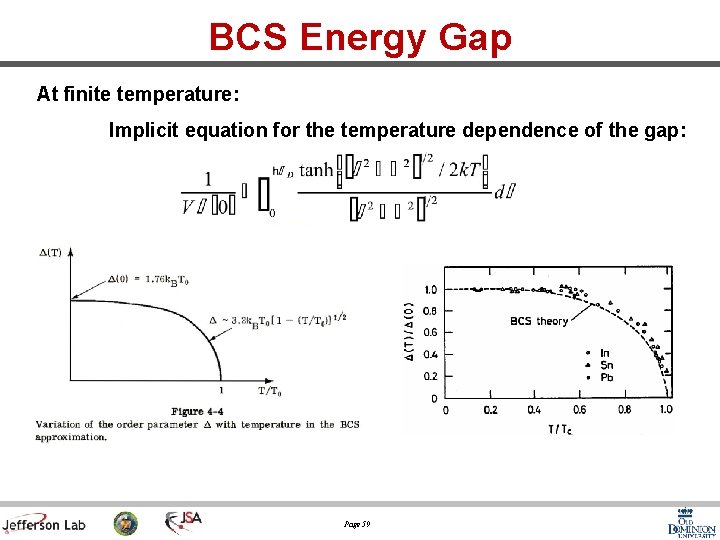
BCS Energy Gap At finite temperature: Implicit equation for the temperature dependence of the gap: Page 59
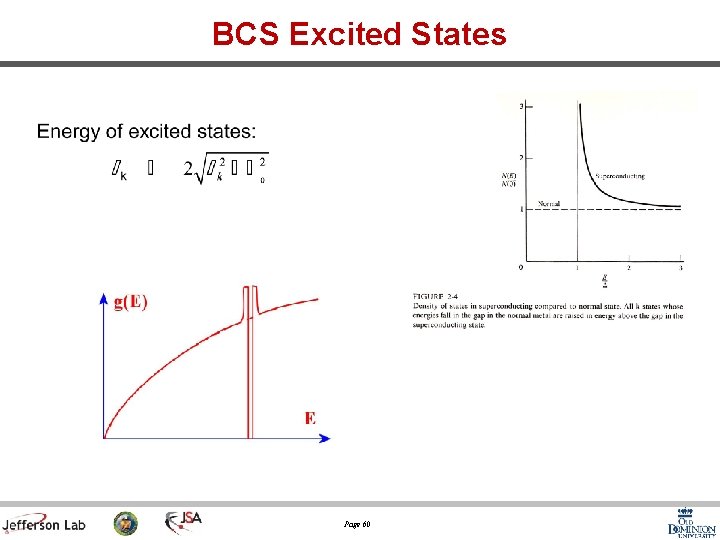
BCS Excited States Page 60
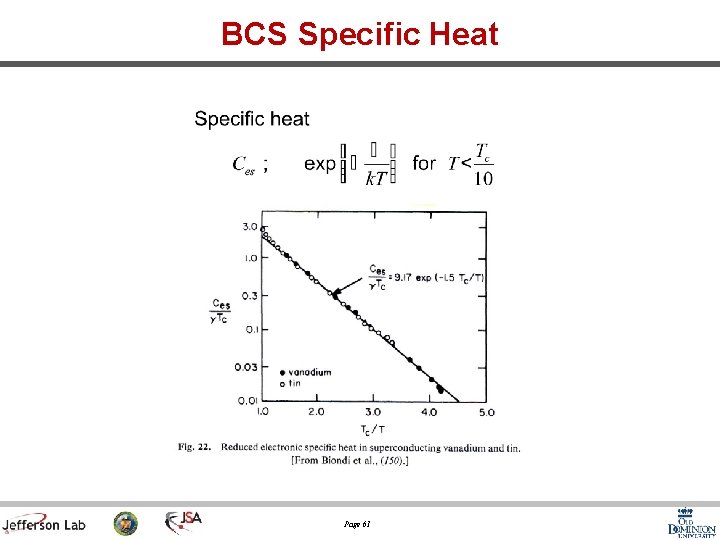
BCS Specific Heat Page 61
Electrodynamics and Surface Impedance in BCS Model Page 62
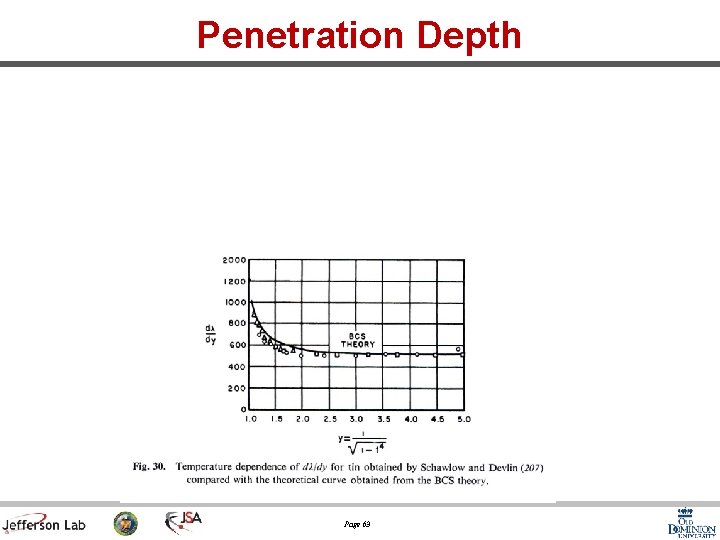
Penetration Depth Page 63
Surface Resistance Page 64
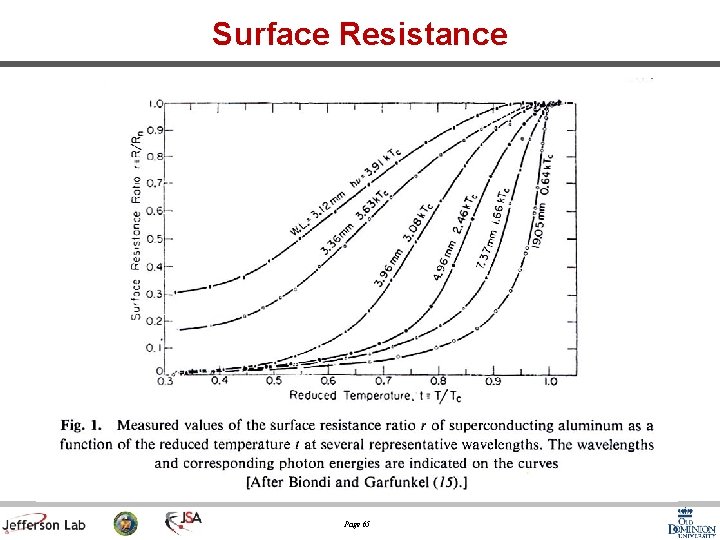
Surface Resistance Page 65
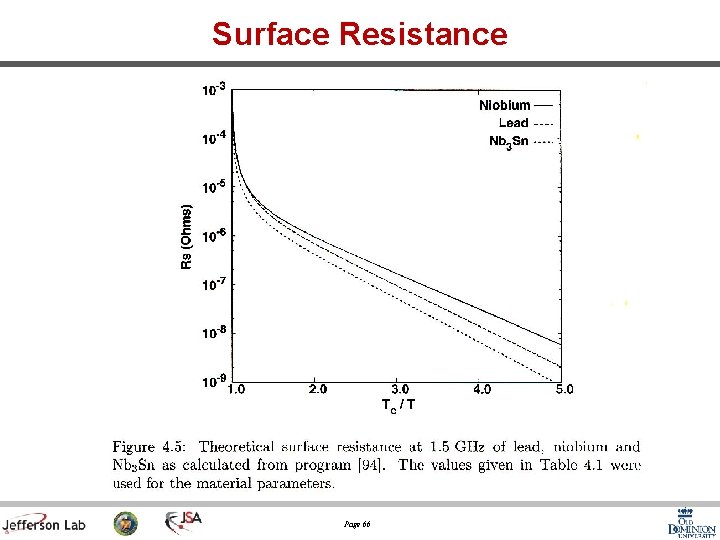
Surface Resistance Page 66
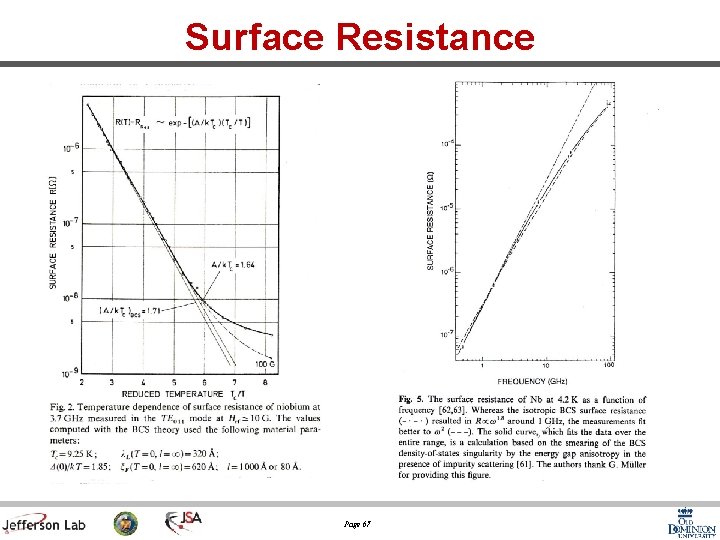
Surface Resistance Page 67
- Slides: 67