
Coccidia Part 1 intestinal apicomplexans Cryptosporidium parvum know

- Slides: 30
Coccidia Part 1 (intestinal apicomplexans) Cryptosporidium parvum
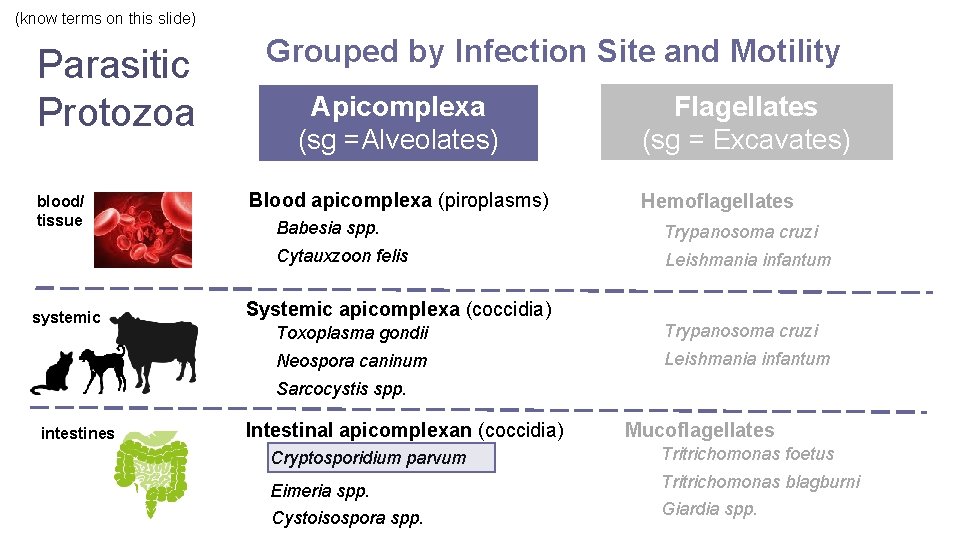
(know terms on this slide) Parasitic Protozoa blood/ tissue systemic Grouped by Infection Site and Motility Apicomplexa (sg =Alveolates) Blood apicomplexa (piroplasms) Flagellates (sg = Excavates) Hemoflagellates Babesia spp. Trypanosoma cruzi Cytauxzoon felis Leishmania infantum Systemic apicomplexa (coccidia) Toxoplasma gondii Trypanosoma cruzi Neospora caninum Leishmania infantum Sarcocystis spp. intestines Intestinal apicomplexan (coccidia) Mucoflagellates Cryptosporidium parvum Tritrichomonas foetus Eimeria spp. Tritrichomonas blagburni Cystoisospora spp. Giardia spp.
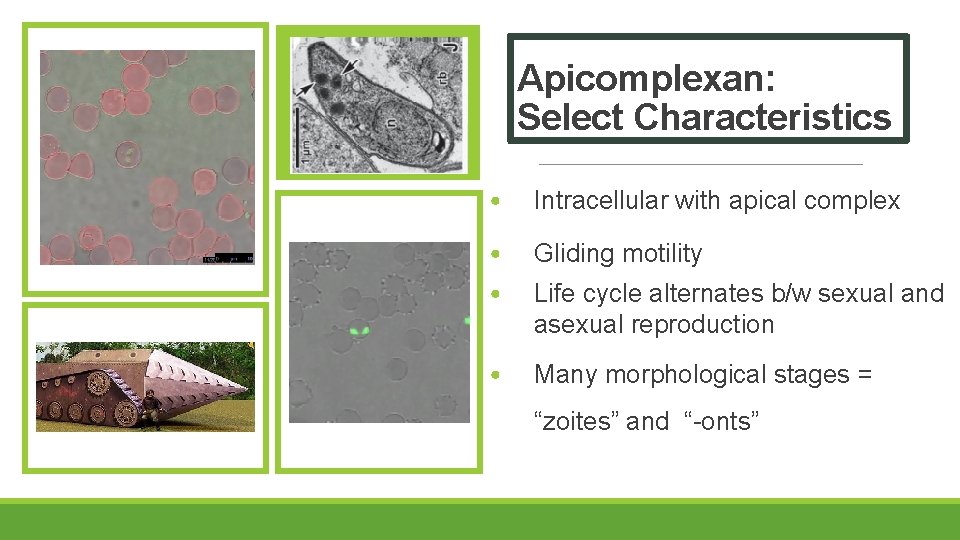
Apicomplexan: Select Characteristics • Intracellular with apical complex • Gliding motility • Life cycle alternates b/w sexual and asexual reproduction • Many morphological stages = “zoites” and “-onts”
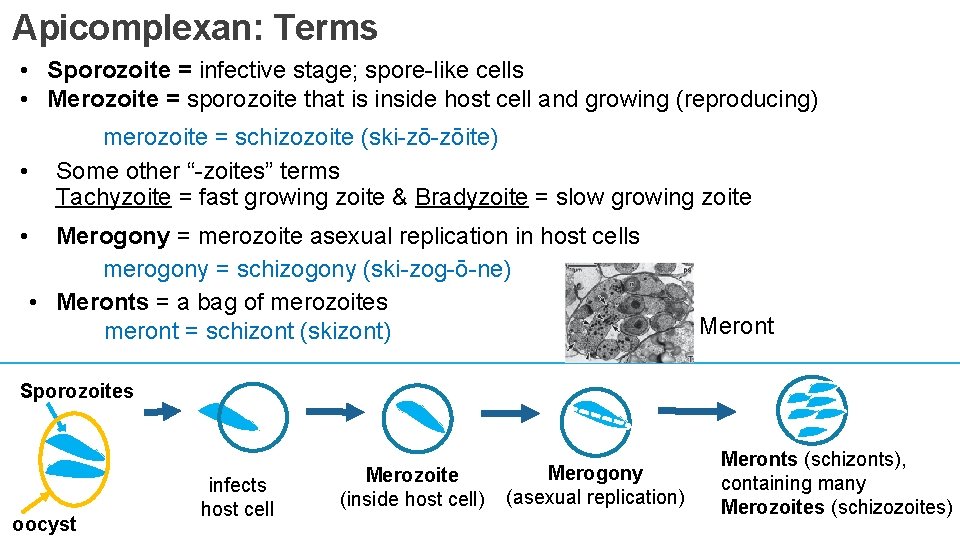
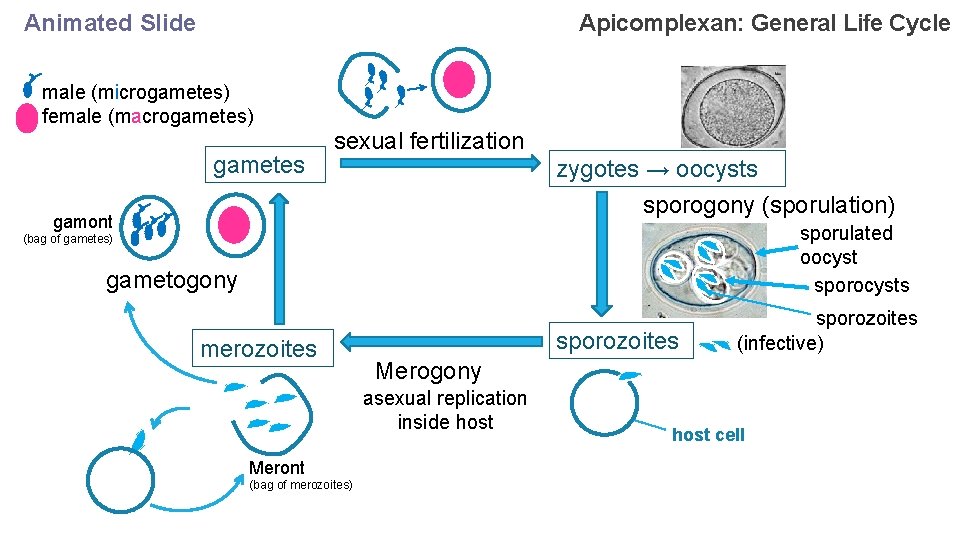
Apicomplexan: Terms • Sporozoite = infective stage; spore-like cells • Merozoite = sporozoite that is inside host cell and growing (reproducing) • • merozoite = schizozoite (ski-zō-zōite) Some other “-zoites” terms Tachyzoite = fast growing zoite & Bradyzoite = slow growing zoite Merogony = merozoite asexual replication in host cells merogony = schizogony (ski-zog-ō-ne) • Meronts = a bag of merozoites meront = schizont (skizont) Meront Sporozoites oocyst infects host cell Merozoite (inside host cell) Merogony (asexual replication) Meronts (schizonts), containing many Merozoites (schizozoites)
Apicomplexan: Replication Asexual replication (this is how the tissue damage in the host occurs) Merogony (schizogony) → replication of merozoites Sporogony (sporulation) → replication within the oocyst resulting in sporozoites Sexual replication (this is how oocysts are made) Gametogony→ merozoite develops into a gamete microgamete = male macrogamete = female Ferilization→ microgamete fertilizes a macrogamete, which develops into a zygote then an oocyst
Apicomplexan: General Life Cycle Animated Slide male (microgametes) female (macrogametes) gametes sexual fertilization zygotes → oocysts sporogony (sporulation) gamont sporulated oocyst sporocysts (bag of gametes) gametogony merozoites sporozoites Merogony asexual replication inside host Meront (bag of merozoites) sporozoites (infective) host cell
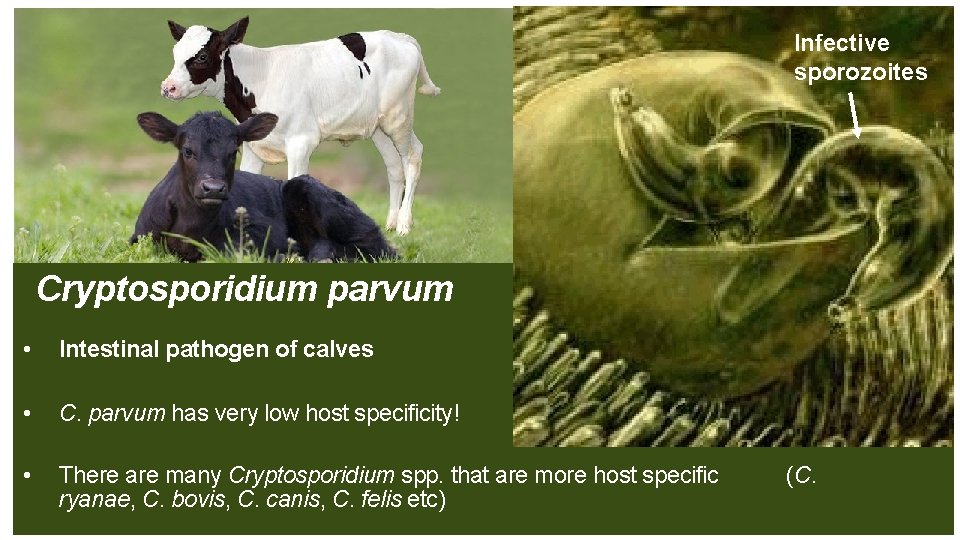
Infective sporozoites Cryptosporidium parvum • Intestinal pathogen of calves • C. parvum has very low host specificity! • There are many Cryptosporidium spp. that are more host specific ryanae, C. bovis, C. canis, C. felis etc) (C.
Learning Objectives: Cryptosporidium parvum 1. 2. Morphology: know that they are small, have 4 sporozoites Life cycle: know direct life cycle, fecal-oral, where sporulation occurs and why that is important 3. Transmission and Dissemination: sporulated oocysts are ingested; understand autoinfection and the implications of oocysts having a thin vs thick wall. 4. Pathogenesis: know the primary method of cell destruction and where it occurs. 5. Clinical signs: know the main clinical signs. 6. Diagnosis: know the main method of diagnosis. 7. Treatment: Understand the most effective and important way to treat diarrhea in calves 8. Control: Understand best way to control C. parvum and how long oocysts are viable for in the environment. 9. Epidemiology: Know the 3 most common risk factors for calves 10. Zoonosis: understand C. parvum is highly zoonotic and the primary way most people are infected.
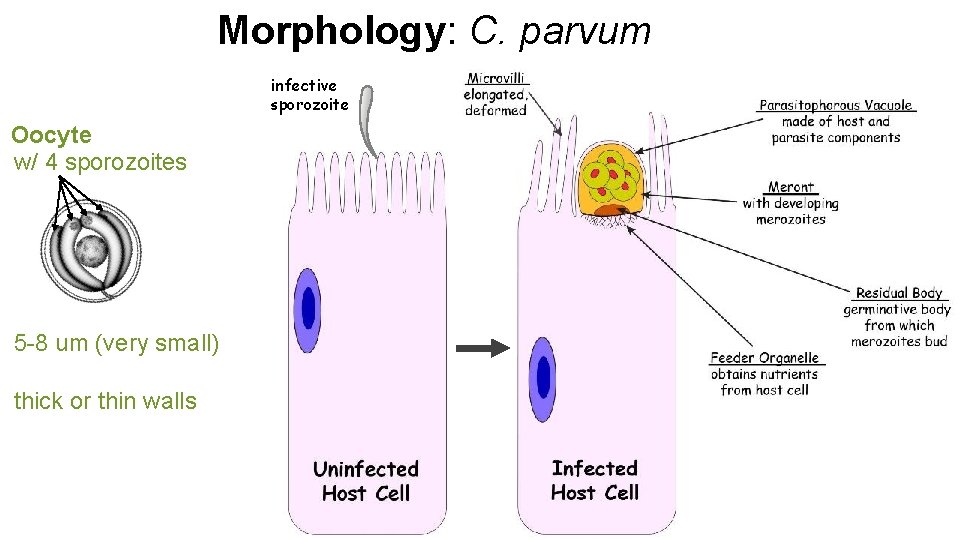
Morphology: C. parvum infective sporozoite Oocyte w/ 4 sporozoites “superficial” location in the enterocyte 5 -8 um (very small) thick or thin walls
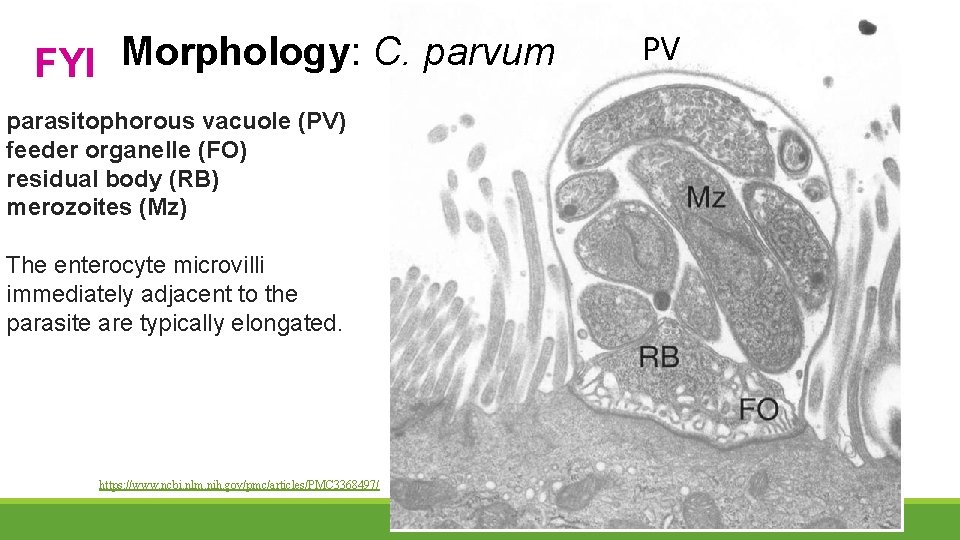
FYI Morphology: C. parvum parasitophorous vacuole (PV) feeder organelle (FO) residual body (RB) merozoites (Mz) The enterocyte microvilli immediately adjacent to the parasite are typically elongated. https: //www. ncbi. nlm. nih. gov/pmc/articles/PMC 3368497/ PV
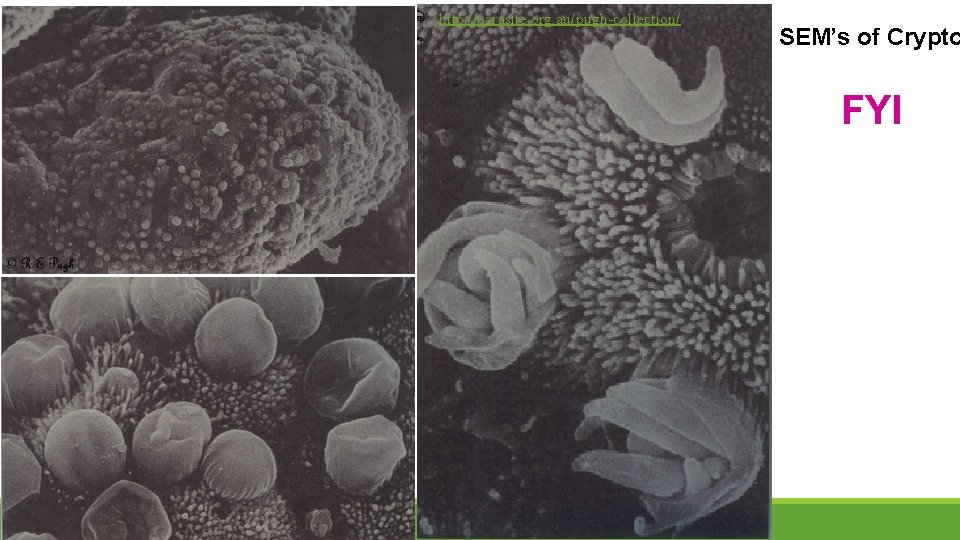
http: //parasite. org. au/pugh-collection/ SEM’s of Crypto FYI
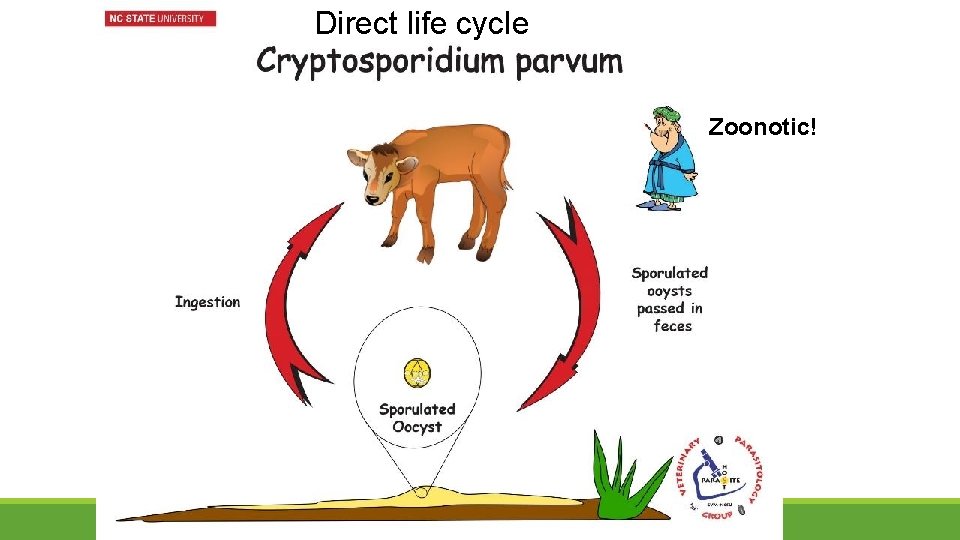
Direct life cycle Zoonotic!
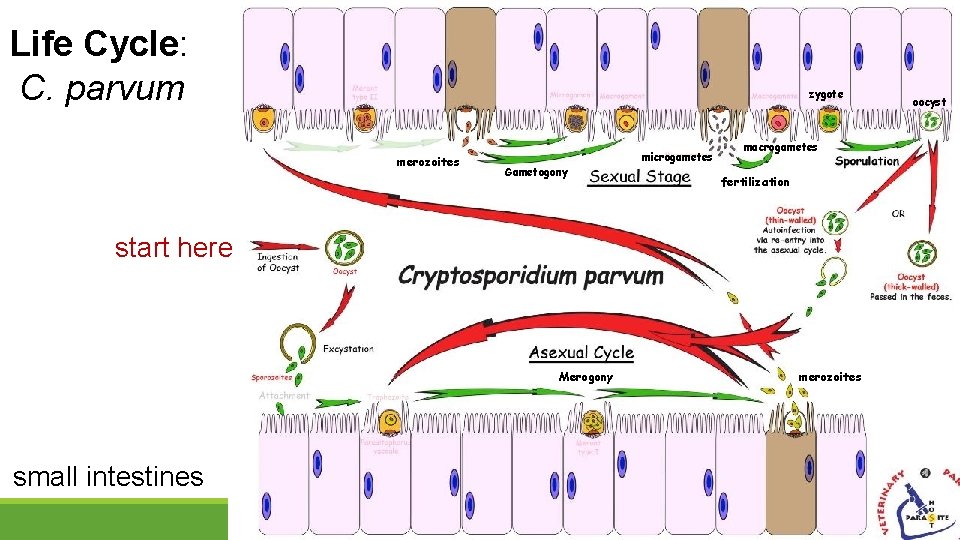
Life Cycle: C. parvum zygote merozoites Gametogony microgametes macrogametes fertilization start here Merogony small intestines merozoites oocyst
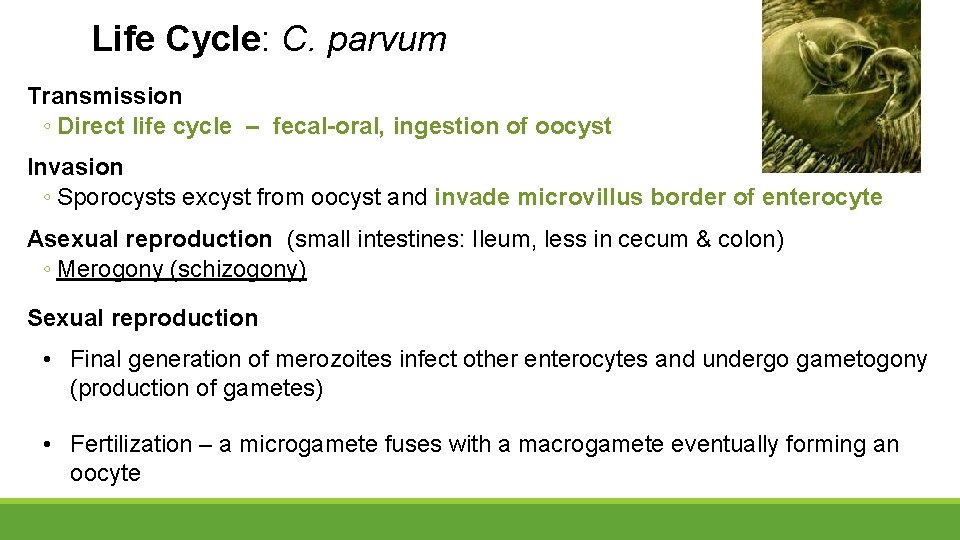
Life Cycle: C. parvum Transmission ◦ Direct life cycle – fecal-oral, ingestion of oocyst Invasion ◦ Sporocysts excyst from oocyst and invade microvillus border of enterocyte Asexual reproduction (small intestines: Ileum, less in cecum & colon) ◦ Merogony (schizogony) Sexual reproduction • Final generation of merozoites infect other enterocytes and undergo gametogony (production of gametes) • Fertilization – a microgamete fuses with a macrogamete eventually forming an oocyte
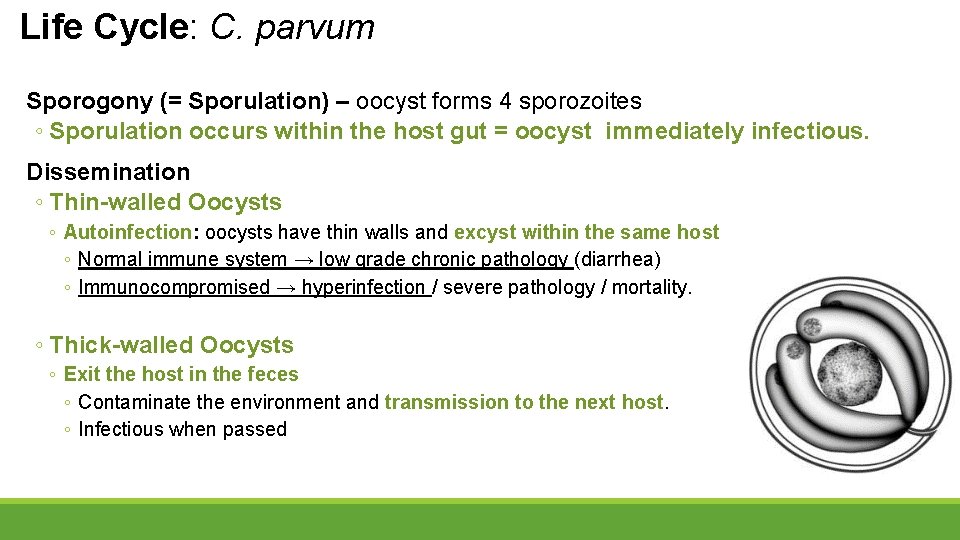
Life Cycle: C. parvum Sporogony (= Sporulation) – oocyst forms 4 sporozoites ◦ Sporulation occurs within the host gut = oocyst immediately infectious. Dissemination ◦ Thin-walled Oocysts ◦ Autoinfection: oocysts have thin walls and excyst within the same host ◦ Normal immune system → low grade chronic pathology (diarrhea) ◦ Immunocompromised → hyperinfection / severe pathology / mortality. ◦ Thick-walled Oocysts ◦ Exit the host in the feces ◦ Contaminate the environment and transmission to the next host. ◦ Infectious when passed
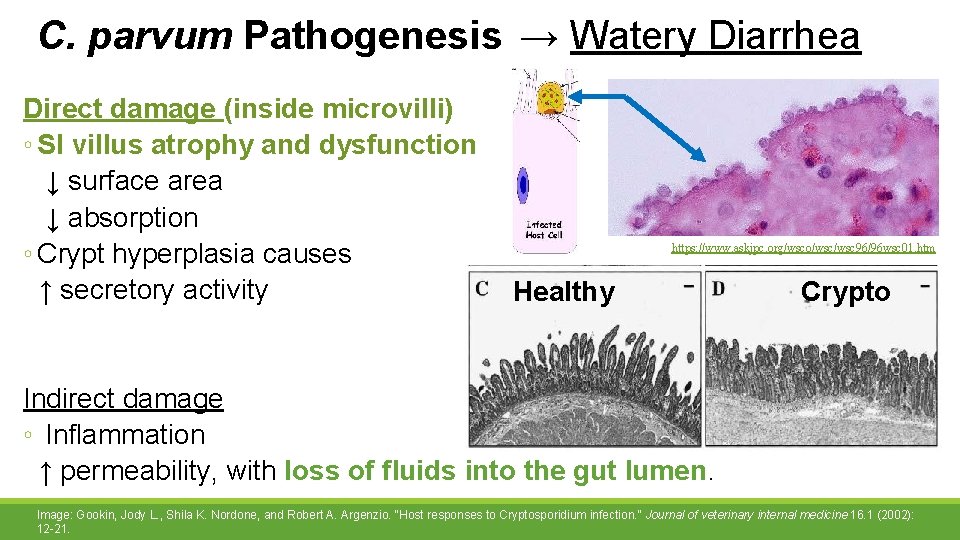
C. parvum Pathogenesis → Watery Diarrhea Direct damage (inside microvilli) ◦ SI villus atrophy and dysfunction ↓ surface area ↓ absorption ◦ Crypt hyperplasia causes ↑ secretory activity https: //www. askjpc. org/wsco/wsc 96/96 wsc 01. htm Healthy Crypto Indirect damage ◦ Inflammation ↑ permeability, with loss of fluids into the gut lumen. Image: Gookin, Jody L. , Shila K. Nordone, and Robert A. Argenzio. "Host responses to Cryptosporidium infection. " Journal of veterinary internal medicine 16. 1 (2002): 12 -21.
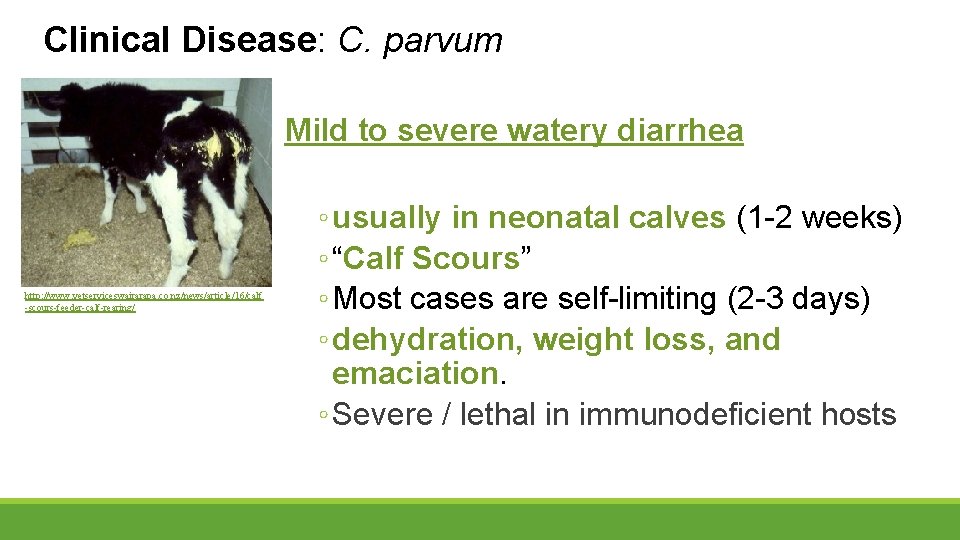
Clinical Disease: C. parvum Mild to severe watery diarrhea http: //www. vetserviceswairarapa. co. nz/news/article/16/calf -scours-feeder-calf-rearing/ ◦ usually in neonatal calves (1 -2 weeks) ◦ “Calf Scours” ◦ Most cases are self-limiting (2 -3 days) ◦ dehydration, weight loss, and emaciation. ◦ Severe / lethal in immunodeficient hosts
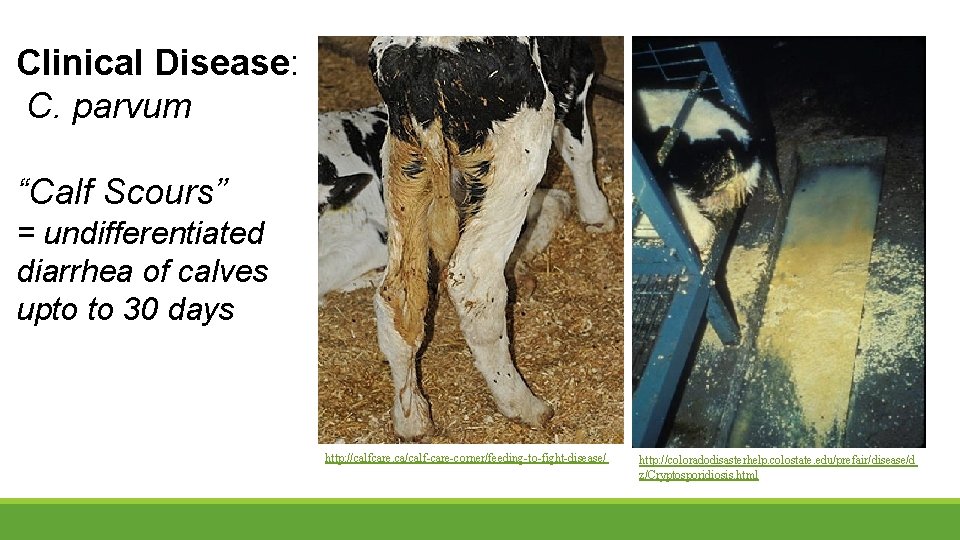
Clinical Disease: C. parvum “Calf Scours” = undifferentiated diarrhea of calves upto to 30 days http: //calfcare. ca/calf-care-corner/feeding-to-fight-disease/ http: //coloradodisasterhelp. colostate. edu/prefair/disease/d z/Cryptosporidiosis. html
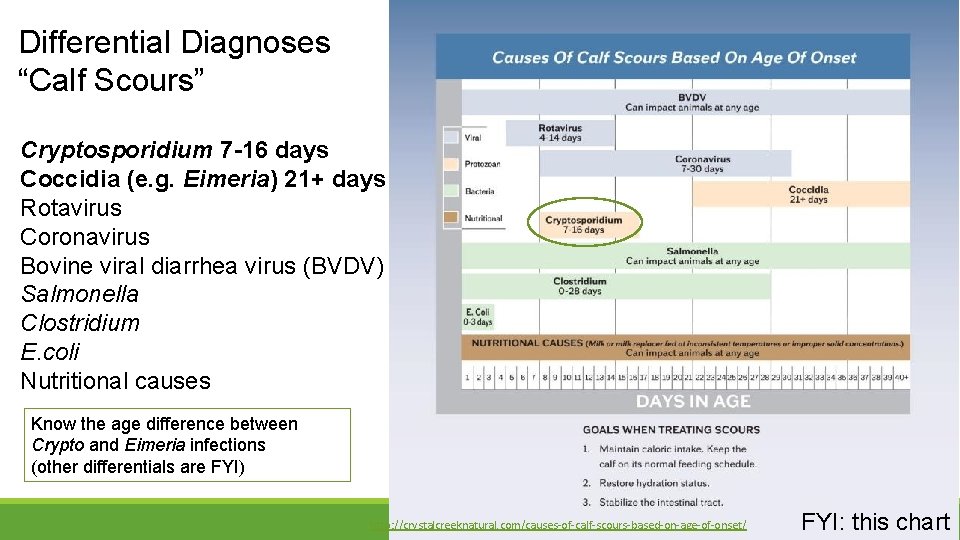
Differential Diagnoses “Calf Scours” Cryptosporidium 7 -16 days Coccidia (e. g. Eimeria) 21+ days Rotavirus Coronavirus Bovine viral diarrhea virus (BVDV) Salmonella Clostridium E. coli Nutritional causes Know the age difference between Crypto and Eimeria infections (other differentials are FYI) http: //crystalcreeknatural. com/causes-of-calf-scours-based-on-age-of-onset/ FYI: this chart
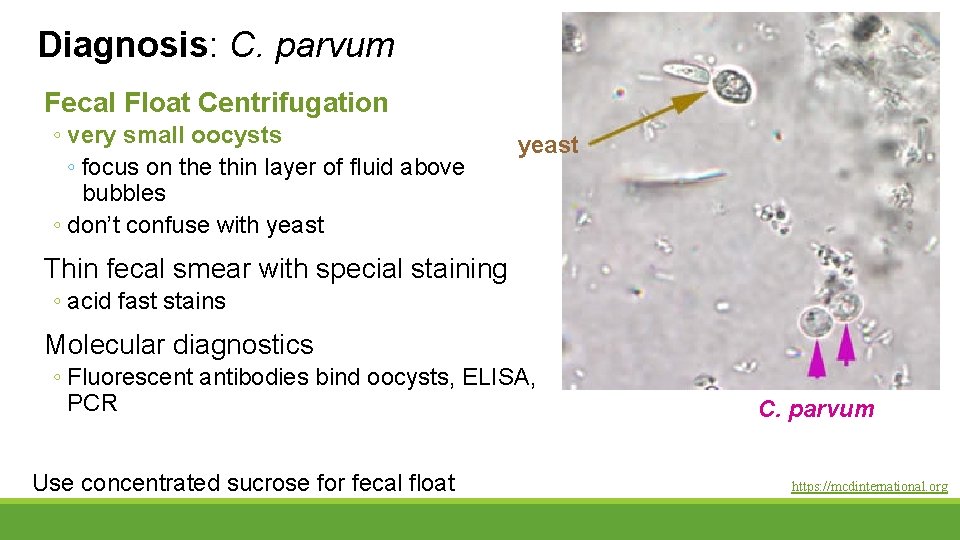
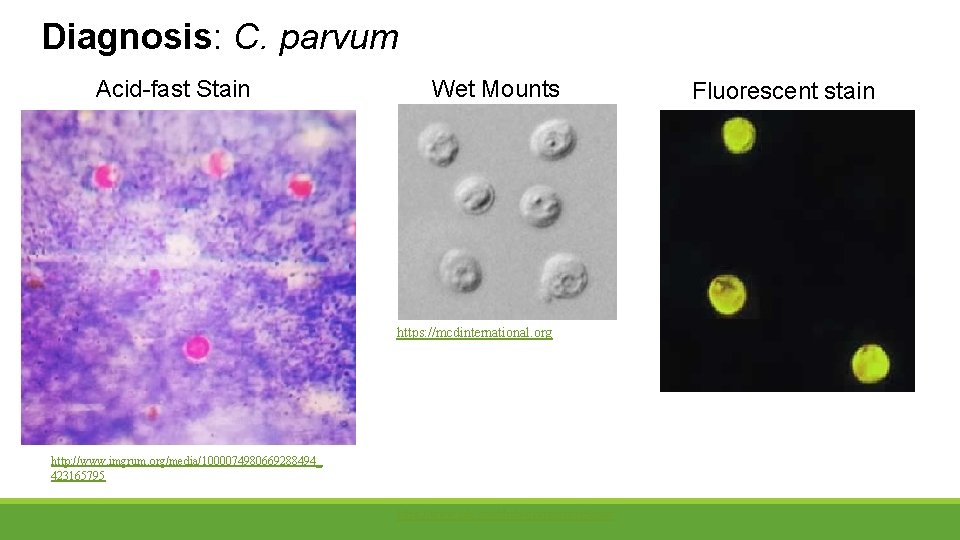
Diagnosis: C. parvum Fecal Float Centrifugation ◦ very small oocysts ◦ focus on the thin layer of fluid above bubbles ◦ don’t confuse with yeast Thin fecal smear with special staining ◦ acid fast stains Molecular diagnostics ◦ Fluorescent antibodies bind oocysts, ELISA, PCR Use concentrated sucrose for fecal float C. parvum https: //mcdinternational. org
Diagnosis: C. parvum Acid-fast Stain Wet Mounts https: //mcdinternational. org http: //www. imgrum. org/media/1000074980669288494_ 423165795 https: //www. cdc. gov/dpdx/cryptosporidiosis/ Fluorescent stain
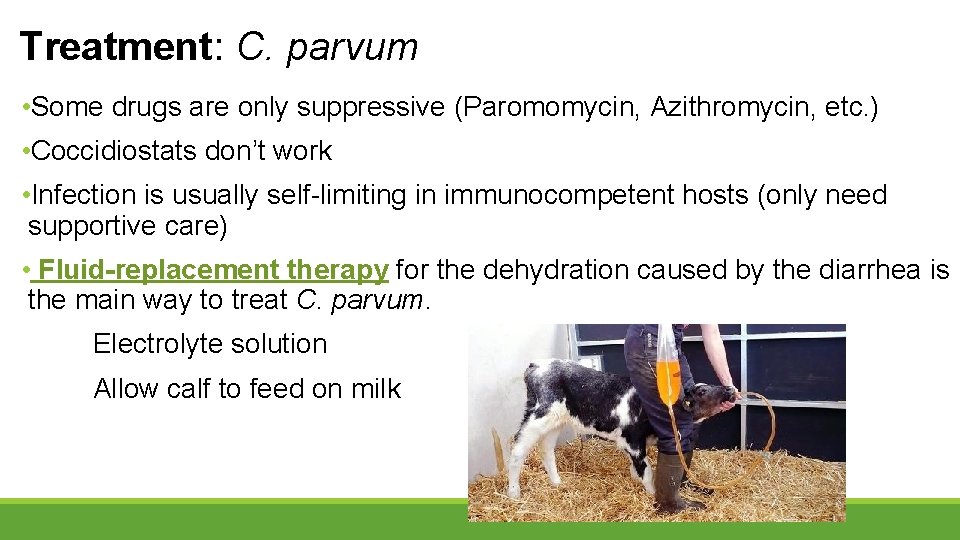
Treatment: C. parvum • Some drugs are only suppressive (Paromomycin, Azithromycin, etc. ) • Coccidiostats don’t work • Infection is usually self-limiting in immunocompetent hosts (only need supportive care) • Fluid-replacement therapy for the dehydration caused by the diarrhea is the main way to treat C. parvum. Electrolyte solution Allow calf to feed on milk
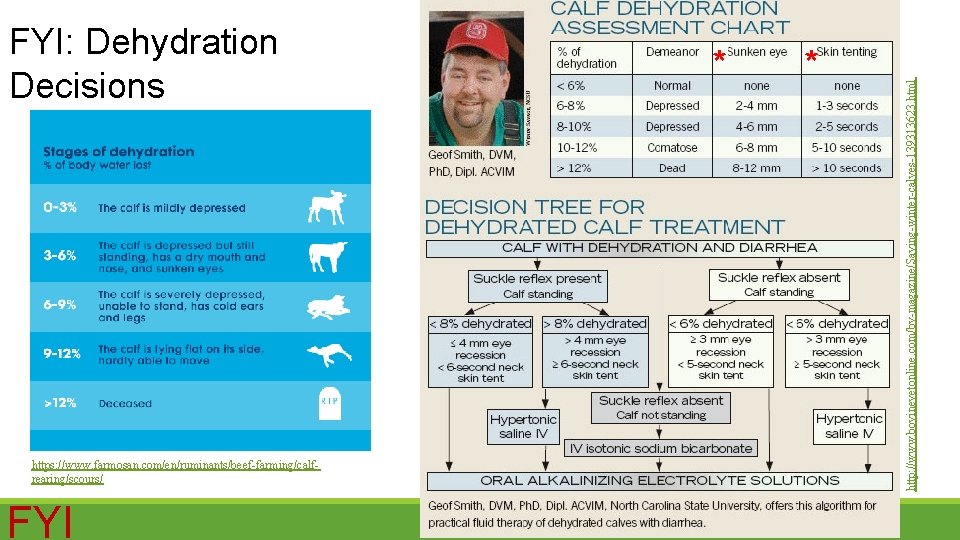
https: //www. farmosan. com/en/ruminants/beef-farming/calfrearing/scours/ FYI * * http: //www. bovinevetonline. com/bv-magazine/Saving-winter-calves-139313623. html FYI: Dehydration Decisions
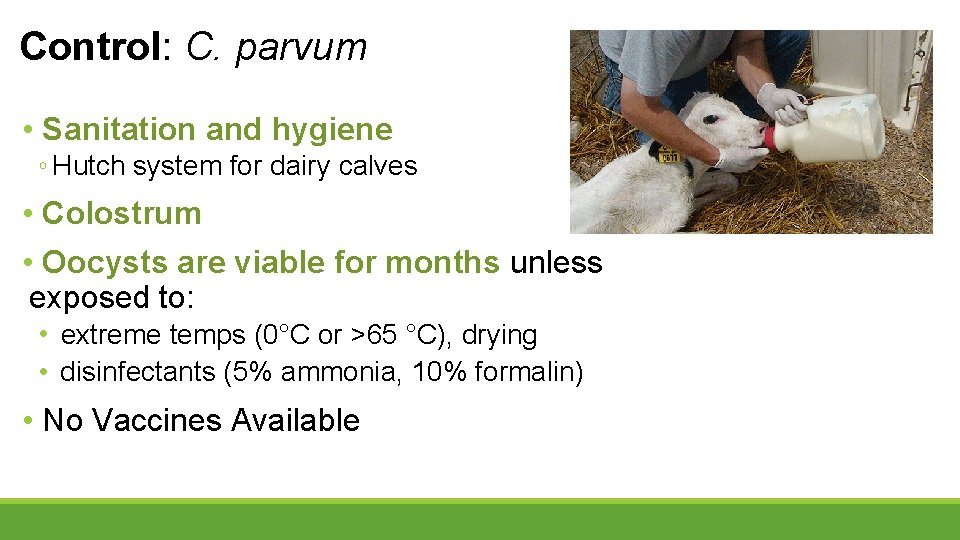
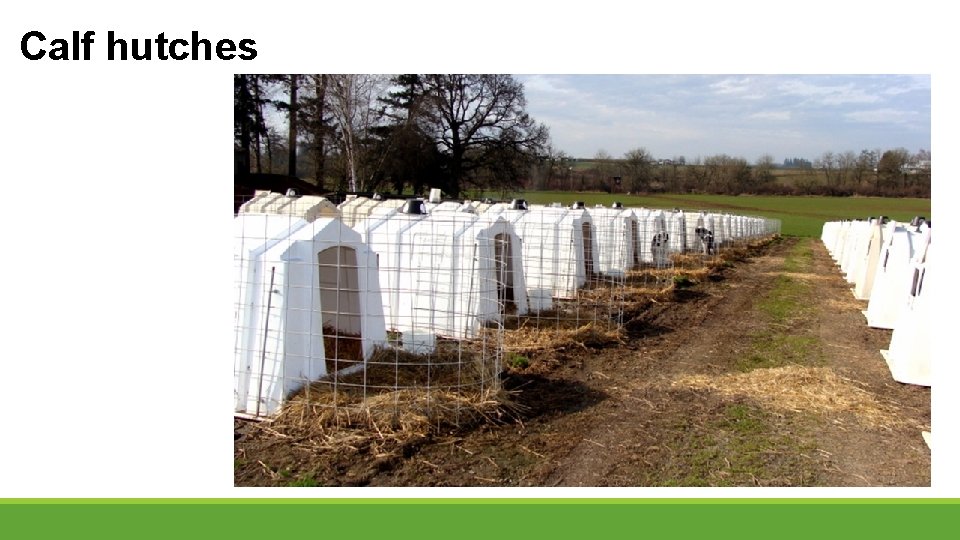
Control: C. parvum • Sanitation and hygiene ◦ Hutch system for dairy calves • Colostrum • Oocysts are viable for months unless exposed to: • extreme temps (0°C or >65 °C), drying • disinfectants (5% ammonia, 10% formalin) • No Vaccines Available
Calf hutches
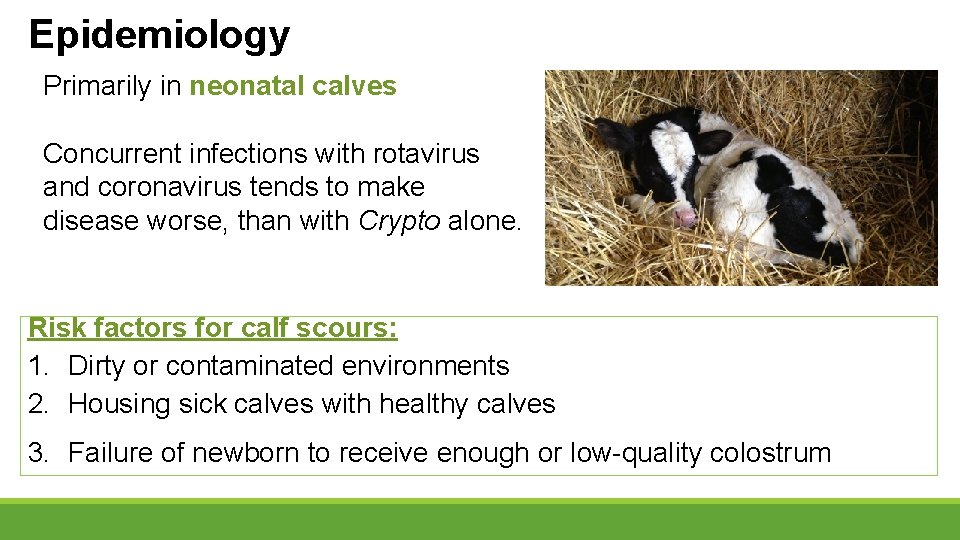
Epidemiology Primarily in neonatal calves Concurrent infections with rotavirus and coronavirus tends to make disease worse, than with Crypto alone. Risk factors for calf scours: 1. Dirty or contaminated environments 2. Housing sick calves with healthy calves 3. Failure of newborn to receive enough or low-quality colostrum
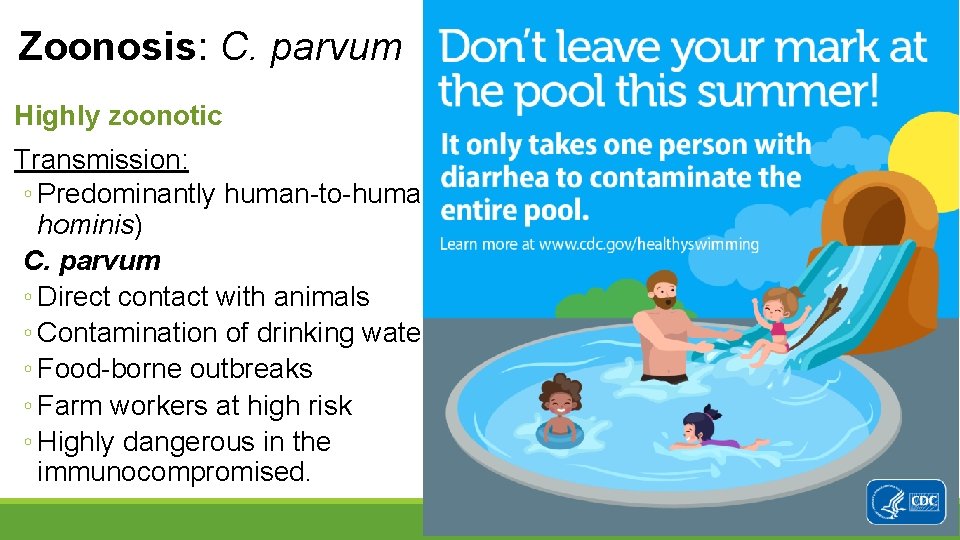
Zoonosis: C. parvum Highly zoonotic Transmission: ◦ Predominantly human-to-human (C. hominis) C. parvum ◦ Direct contact with animals ◦ Contamination of drinking water ◦ Food-borne outbreaks ◦ Farm workers at high risk ◦ Highly dangerous in the immunocompromised. Resistant to chlorine
Zoonosis: C. parvum Levine, Levy, Walker, Crittenden. 1988. Cryptosporidiosis in veterinary students. JAVMA. 193: 1413 -1414. Abstract: Cryptosporidiosis was diagnosed in 10 veterinary students. Exposure to the pathogen was associated with direct contact with infected calves and contact with contaminated materials. Affected students had fever (50%), headache (50%), nausea (70%), diarrhea (80%), and vomiting (40%). Clinical signs persisted for 30 hours to 16 days after the onset of clinical signs of disease. Although one student required hospitalization, the remaining students recovered without treatment. FYI
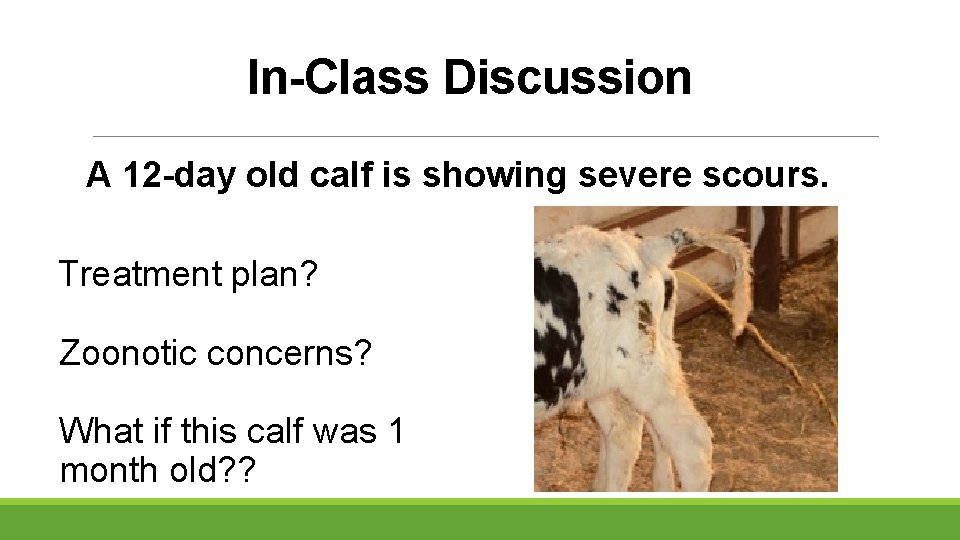
In-Class Discussion A 12 -day old calf is showing severe scours. Treatment plan? Zoonotic concerns? What if this calf was 1 month old? ?
Have Questions? barbara_qurollo@ncsu. edu Illustration by Allie Brosh, http: //hyperboleandahalf. blogspot. com/