
Cobb and Co Coaches Cobb and Co is
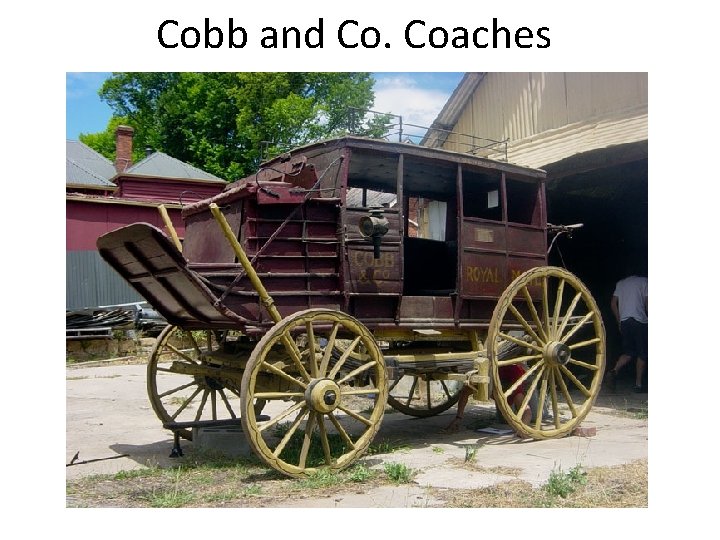
Cobb and Co. Coaches
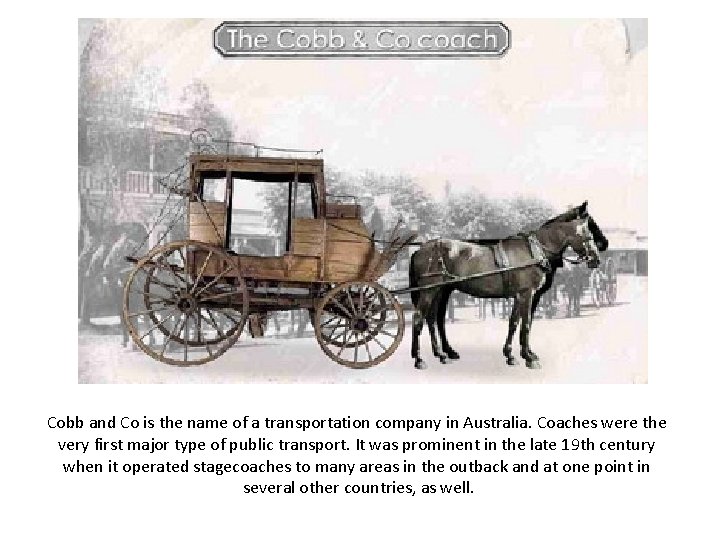
Cobb and Co is the name of a transportation company in Australia. Coaches were the very first major type of public transport. It was prominent in the late 19 th century when it operated stagecoaches to many areas in the outback and at one point in several other countries, as well.
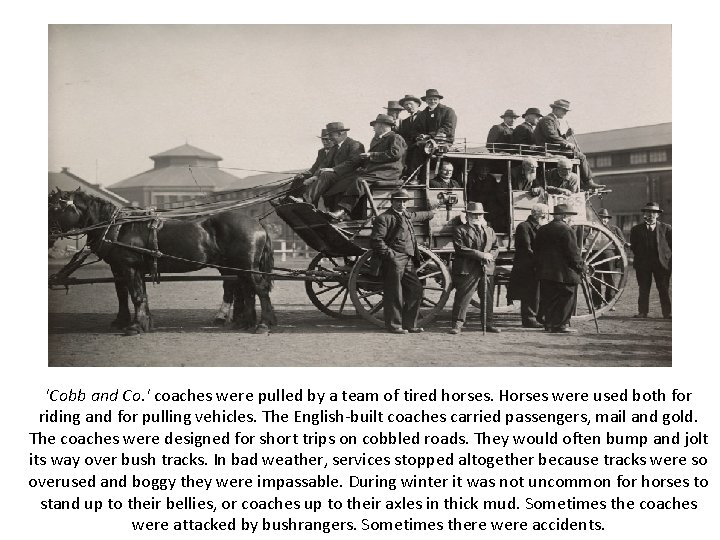
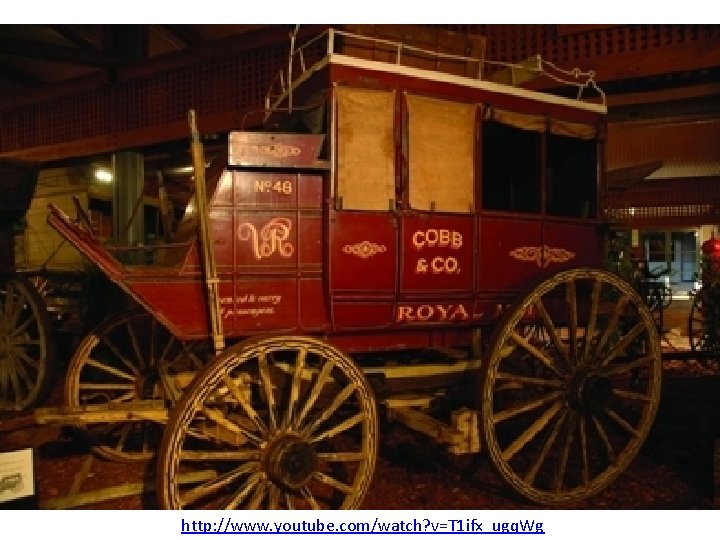
'Cobb and Co. ' coaches were pulled by a team of tired horses. Horses were used both for riding and for pulling vehicles. The English-built coaches carried passengers, mail and gold. The coaches were designed for short trips on cobbled roads. They would often bump and jolt its way over bush tracks. In bad weather, services stopped altogether because tracks were so overused and boggy they were impassable. During winter it was not uncommon for horses to stand up to their bellies, or coaches up to their axles in thick mud. Sometimes the coaches were attacked by bushrangers. Sometimes there were accidents.

For 70 years from the 1850 s to the 1920 s, Cobb & Co. coaches were the main transport in the colonies of Queensland: settlers moving inland, new immigrants hopeful of success on the gold fields, shearers, agents, squatters, children and their parents—everyone used Cobb & Co. stage coaches to move, as efficiently as was possible, around the colony. Coaches would typically wait until they were full (which would sometimes take several hours) and then depart.
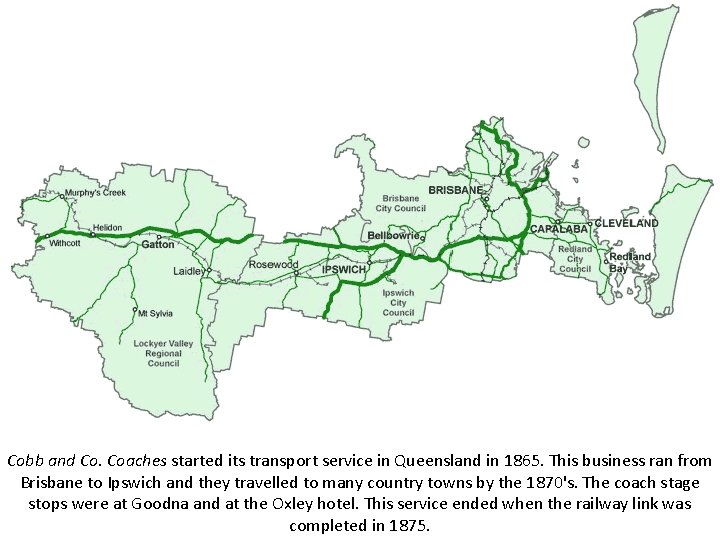
Cobb and Co. Coaches started its transport service in Queensland in 1865. This business ran from Brisbane to Ipswich and they travelled to many country towns by the 1870's. The coach stage stops were at Goodna and at the Oxley hotel. This service ended when the railway link was completed in 1875.
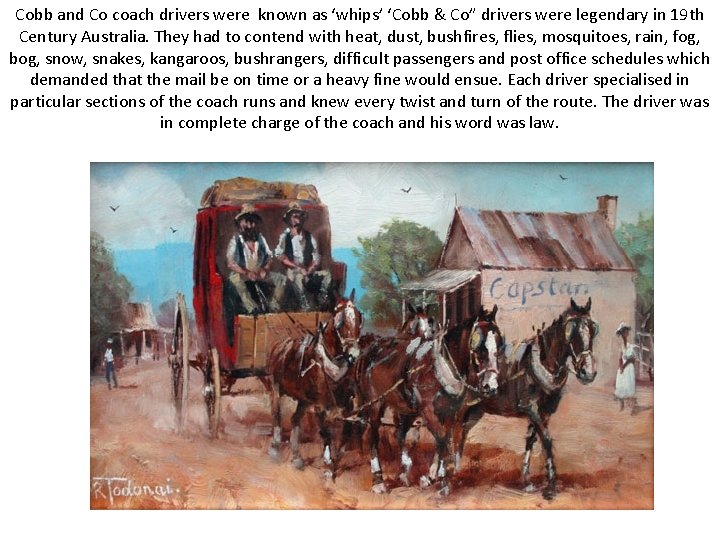
Cobb and Co coach drivers were known as ‘whips’ ‘Cobb & Co” drivers were legendary in 19 th Century Australia. They had to contend with heat, dust, bushfires, flies, mosquitoes, rain, fog, bog, snow, snakes, kangaroos, bushrangers, difficult passengers and post office schedules which demanded that the mail be on time or a heavy fine would ensue. Each driver specialised in particular sections of the coach runs and knew every twist and turn of the route. The driver was in complete charge of the coach and his word was law.
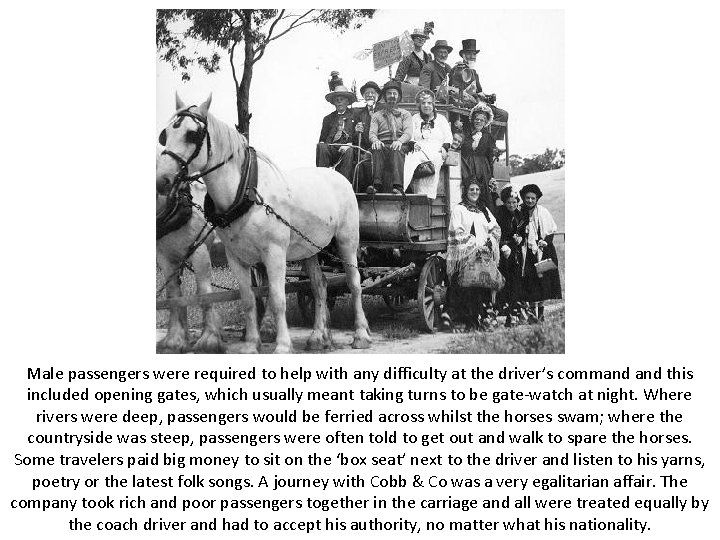
Male passengers were required to help with any difficulty at the driver’s command this included opening gates, which usually meant taking turns to be gate-watch at night. Where rivers were deep, passengers would be ferried across whilst the horses swam; where the countryside was steep, passengers were often told to get out and walk to spare the horses. Some travelers paid big money to sit on the ‘box seat’ next to the driver and listen to his yarns, poetry or the latest folk songs. A journey with Cobb & Co was a very egalitarian affair. The company took rich and poor passengers together in the carriage and all were treated equally by the coach driver and had to accept his authority, no matter what his nationality.
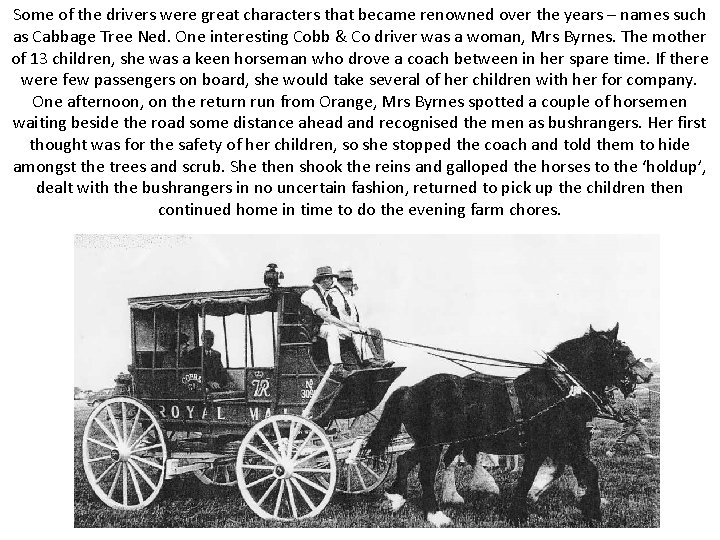
Some of the drivers were great characters that became renowned over the years – names such as Cabbage Tree Ned. One interesting Cobb & Co driver was a woman, Mrs Byrnes. The mother of 13 children, she was a keen horseman who drove a coach between in her spare time. If there were few passengers on board, she would take several of her children with her for company. One afternoon, on the return run from Orange, Mrs Byrnes spotted a couple of horsemen waiting beside the road some distance ahead and recognised the men as bushrangers. Her first thought was for the safety of her children, so she stopped the coach and told them to hide amongst the trees and scrub. She then shook the reins and galloped the horses to the ‘holdup’, dealt with the bushrangers in no uncertain fashion, returned to pick up the children then continued home in time to do the evening farm chores.
http: //www. youtube. com/watch? v=T 1 ifx_ugq. Wg
- Slides: 9