
Coating Defects and Failures Presented by Sarah Olthof
Coating Defects and Failures Presented by: Sarah Olthof
Topics • Consequences of coating failure • Role of coatings inspector in failure avoidance • Common coating failures and defects
Scope • This webinar describes the consequences of coating failures, field and laboratory investigative processes undertaken to diagnose coating failures, and reviews common coating defects and failures.
Learning Outcomes • At the end of this unit, the student will be able to: – Recognize the consequences of coating failures – Describe the coating inspector’s role in preventing failures – Identify common coating failures and defects seen in the field
Protective Coatings • Principal material used for corrosion protection • All coatings will breakdown over time • Service life can be extended by performing maintenance painting once deterioration is identified
Premature Coating Failure • Failures that occur before the anticipated service life ends can be caused by: – Improper surface preparation – Improper coating application procedures – Improper coating system selection – Improper formulation – Poor quality raw materials
Once Premature Failure Occurs… • The investigation begins……. – What was the cause of the premature coating failure? – What party was responsible for the failure? – What level of repair is required to ensure corrosion protection and integrity of the structure is acceptable?
Consequences of Coating Failures • • Financial impacts Litigation Substrate repair or replacement Costly rework and downtime
Substrate Repair or Replacement • When a failure occurs, the substrate is exposed to the environment until the defect is detected • Unprotected substrate is susceptible to corrosion and possible section loss • Integrity of structure could be compromised if coating failure is not detected for an extended period of time • Cost to repair substrate adds to the cost of the coating failure
Rework and Downtime • Remobilization, surface preparation, coating application, and inspection of the repair or rework can be time consuming and costly. • Hard to determine extent of rework needed. – Does the failure indicate total removal? – Can we get away with a spot repair?
Role of a Coating Inspector • The inspector can play a key role in helping to prevent premature coating failure. • Qualified inspection personnel can significantly reduce the opportunity for failure
Identification of a Non-Conformance • The inspector: – Identifies deficiencies as they arise – Will work with contractor for reaction plan once non-conformance is identified

Common Coating Defects and Failures
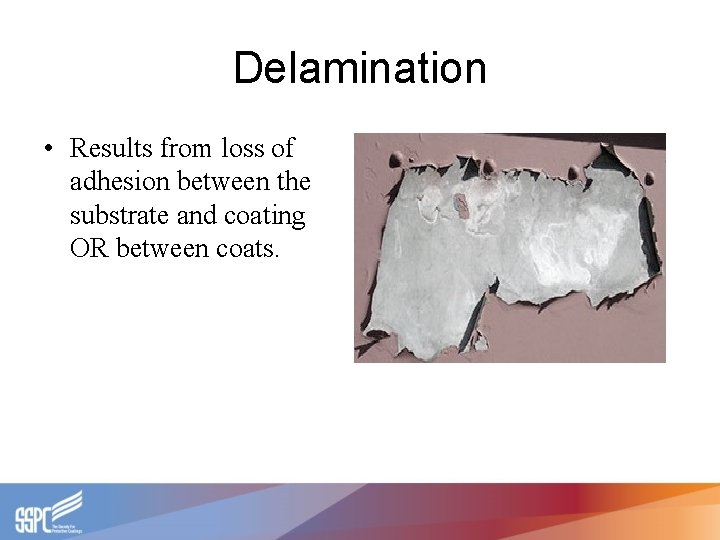
Delamination • Results from loss of adhesion between the substrate and coating OR between coats.
Delamination • Common Causes • Poor surface preparation • Intercoat cleanliness • Exceeding overcoating times • Incompatibility of topcoat and primer • Remediation • Area with poor adhesion must be completely removed and the cause should be evaluated before recoating.

Blistering • Coating lifting from the underlying substrate

Blistering • Common Causes • Contamination on the substrate • Oils and greases • Soluble Salts (osmotic blistering) • Solvent entrapment • Remediation • Ensure correct surface preparation and application • Soluble salt testing
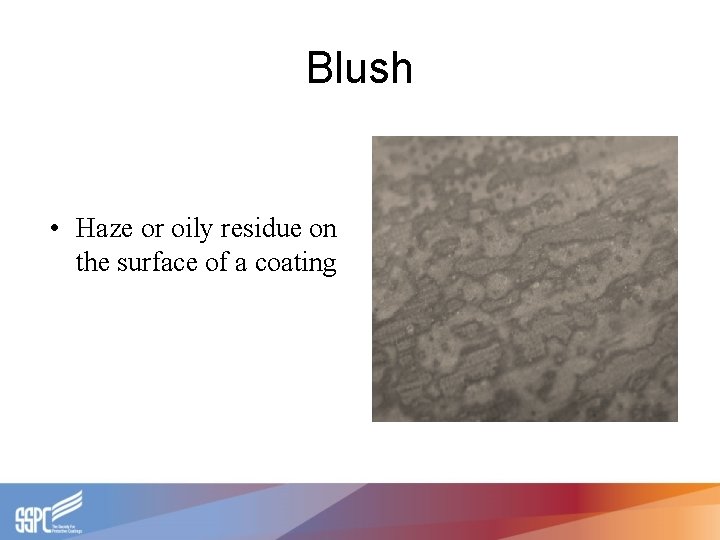
Blush • Haze or oily residue on the surface of a coating
Blush • Common Causes • High humidity or cold temperatures during application • Curing stages of an epoxy • Intensified by cool temperatures and increased coating thickness • Remediation • Blush will effect adhesion of topcoat • If blush is detected (not easy to detect) it is best practice to consult with product manufacturer on removal tactics
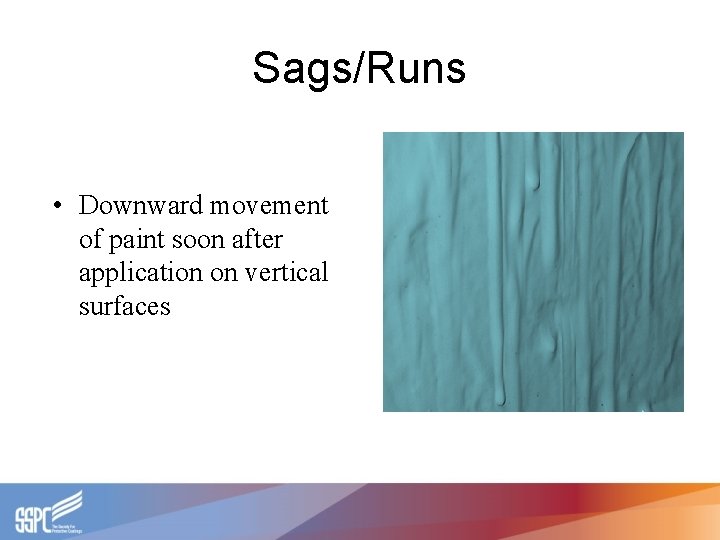
Sags/Runs • Downward movement of paint soon after application on vertical surfaces
Sags/Runs • Common Causes • Over application • Excessive thinning • Poor workmanship • Remediation • While wet, sags/runs should be smoothed with a paint brush • If dry, abrade, clean, and apply spot coat
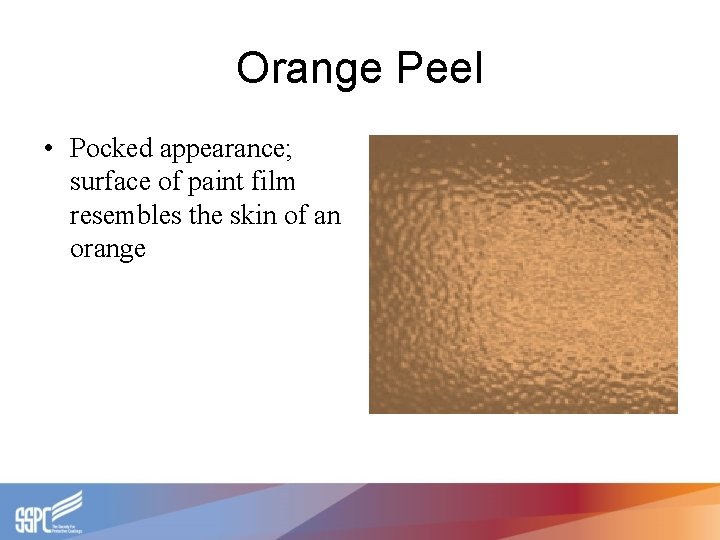
Orange Peel • Pocked appearance; surface of paint film resembles the skin of an orange
Orange Peel • Common Causes • Poor application techniques • Incorrect solvent blend • Remediation • Abrade • Clean • Recoat
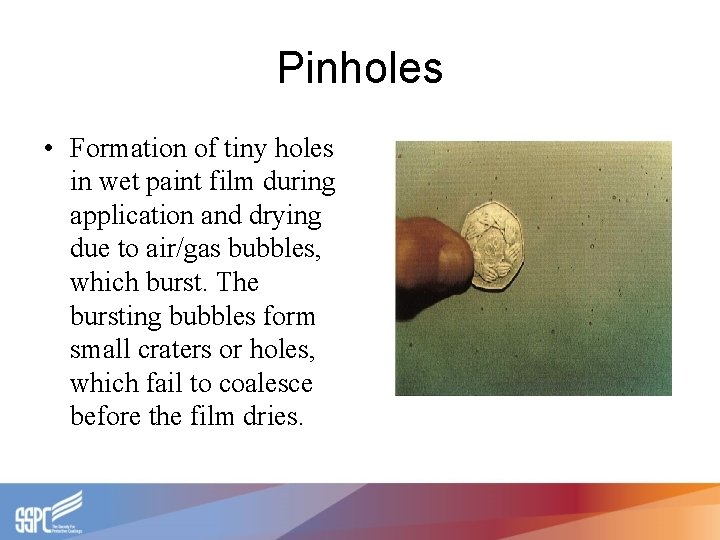
Pinholes • Formation of tiny holes in wet paint film during application and drying due to air/gas bubbles, which burst. The bursting bubbles form small craters or holes, which fail to coalesce before the film dries.
Pinholes • Common Causes • Solvent or air entrapment • Incorrect spray application • Incorrect solvent blend • Remediation • Abrade • Clean • Recoat
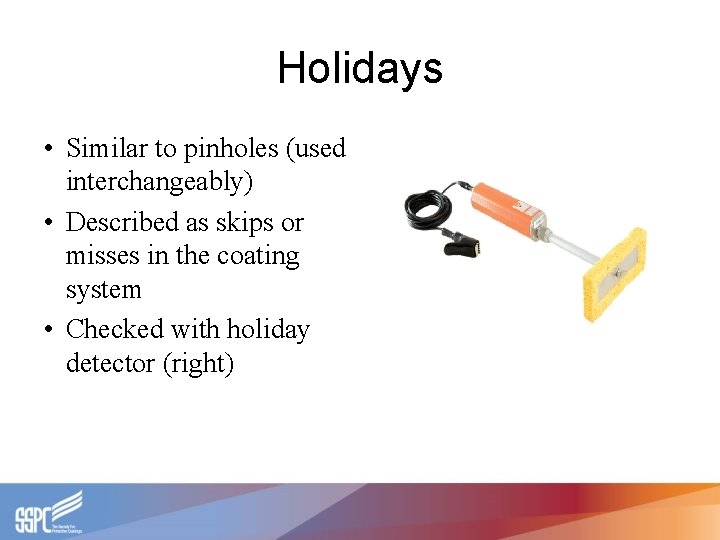
Holidays • Similar to pinholes (used interchangeably) • Described as skips or misses in the coating system • Checked with holiday detector (right)
Holidays • Common Causes • Difficult application due to equipment access • Poor workmanship • Remediation • Abrade • Clean • Recoat
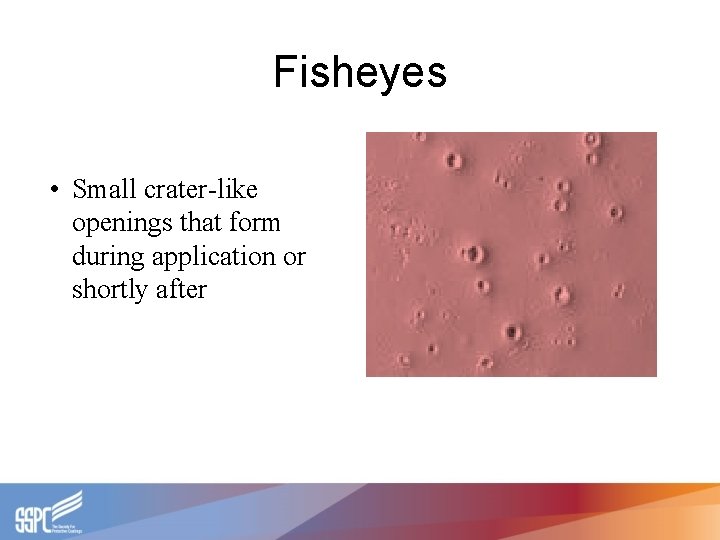
Fisheyes • Small crater-like openings that form during application or shortly after
Fisheyes • Common Causes • Poor surface preparation • Contamination • Use of a thinner instead of solvent cleaner • Remediation • • Abrade Clean Solvent cleaning Recoat
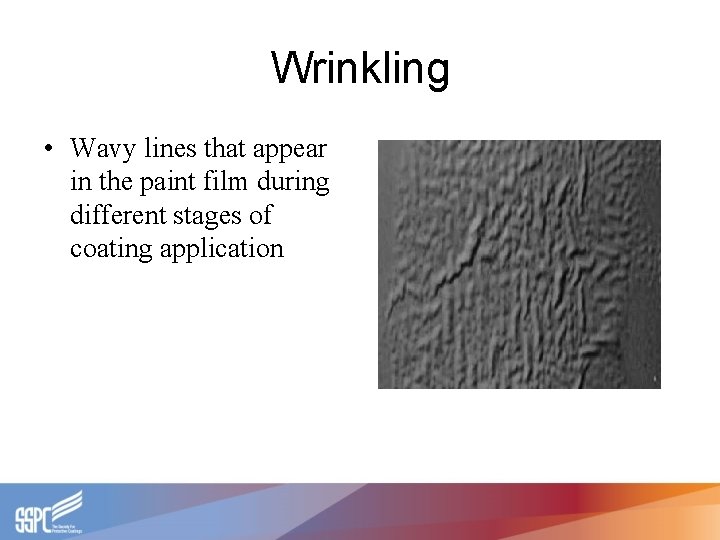
Wrinkling • Wavy lines that appear in the paint film during different stages of coating application
Wrinkling • Common Causes • Excessive application of paint • Actual temperatures exceeding or going below application range • Overcoating before previous coat has sufficiently hardened • Remediation • Abrade • Clean • Recoat
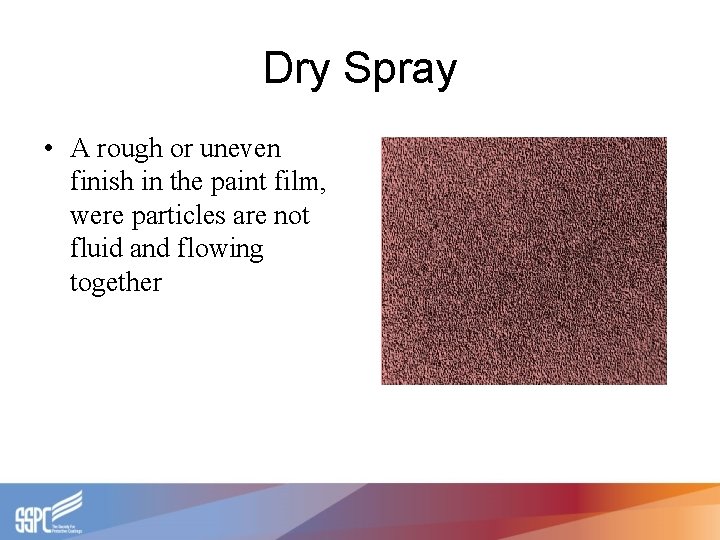
Dry Spray • A rough or uneven finish in the paint film, were particles are not fluid and flowing together
Dry Spray • Common Causes • Improper application technique • Actual temperatures exceeding application range • Remediation • Ensure proper distance of the spray gun to the substrate is being achieved
Summary • There are many reasons why coatings may fail. The inspector investigates and identifies the cause of coating failure so that it can be remediated

QUESTIONS? ? ?
- Slides: 36