
Coasts Session 3 1 Explain how subaerial processes
Coasts – Session 3 1) Explain how sub-aerial processes supply coastal sediment. “Sediment delivery to the shoreline can be intermittent, mostly occurring during floods. In some locations, as much as 80 per cent of coastal sediment comes from rivers. The origin of the sediment is the erosion of inland areas by water, wind and ice as well as sub-aerial processes of weathering and mass movement. ” • What factors will influence the source of coastal sediment for a particular coastline? • What other sources of sediment are there?
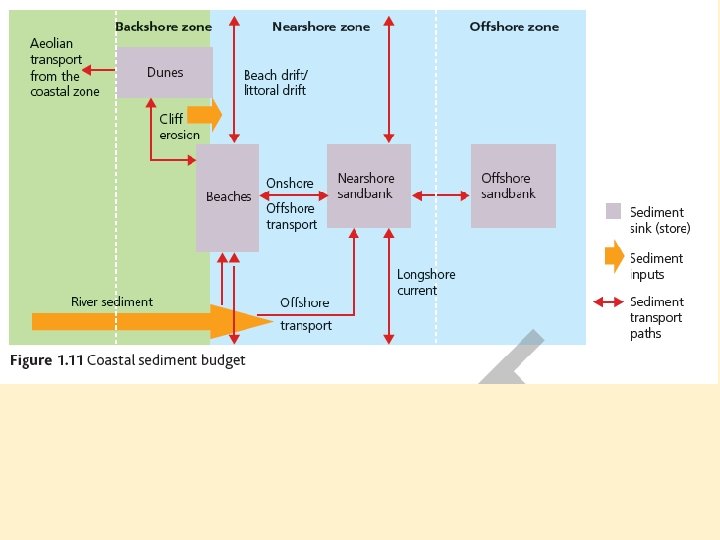
Coasts – Session 3 2) What are ‘aeolian’ processes? “Wind also blows sediment from other locations, including exposed sand bars, dunes and beaches elsewhere along the coast. This aeolian material is generally fine sand, as wind has less energy than water and so cannot transport very large particles. ” • How significant are aeolian processes in the East Sussex and North Egypt coastal systems?
Coasts – Session 3 3) How is sediment supplied to the coastal budget from offshore? “Constructive waves bring sediment to the shore from offshore locations and deposit it, adding to the sediment budget. Tides and currents do the same. ” • What do we mean by the ‘coastal budget’? • What problems would there be in calculating this budget accurately?
Coasts – Session 3 4) Identify a human source of sediment supply. “When a coastal sediment budget is in deficit, beach nourishment is one way in which a sediment equilibrium can be maintained. This type of management has been adopted all over the world in order to preserve and protect the coastal environment. ” • How does beach nourishment work? • What problems might it create? • Is beach nourishment a sustainable solution for coastal management?
- Slides: 5