
Coastal Ecosystems How do mangroves and coral reefs
- Slides: 20
Coastal Ecosystems How do mangroves and coral reefs develop and what characteristics do they have?
Lesson Objectives • Define the terms ‘ecosystem’ and ‘biodiversity. ’ • Describe the characteristics, distribution and biodiversity of coral reefs and mangroves • Explain the physical factors that affect the distribution of coastal ecosystems.
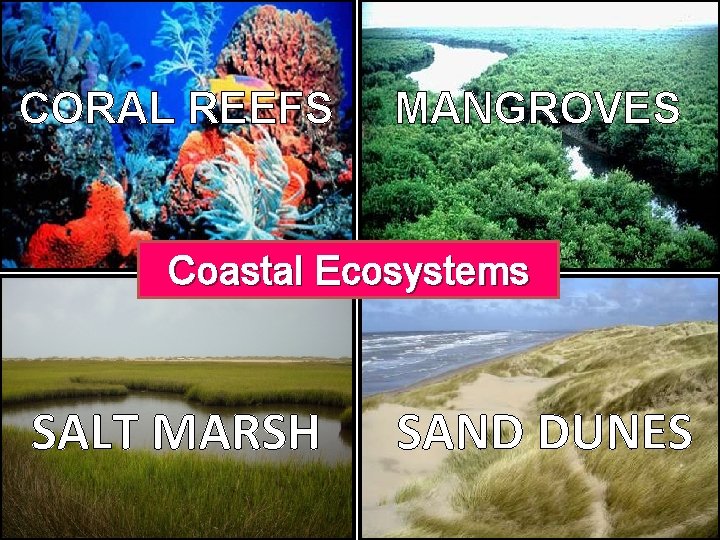
CORAL REEFS MANGROVES Coastal Ecosystems SALT MARSH SAND DUNES
Key Definitions Ecosystem – A living community of plants and animals sharing an environment with non-living elements such as climate and soil. Biodiversity - The number and variety of organisms found within a specified geographic region.
What you need to know Distribution of ecosystems Characteristics Formation
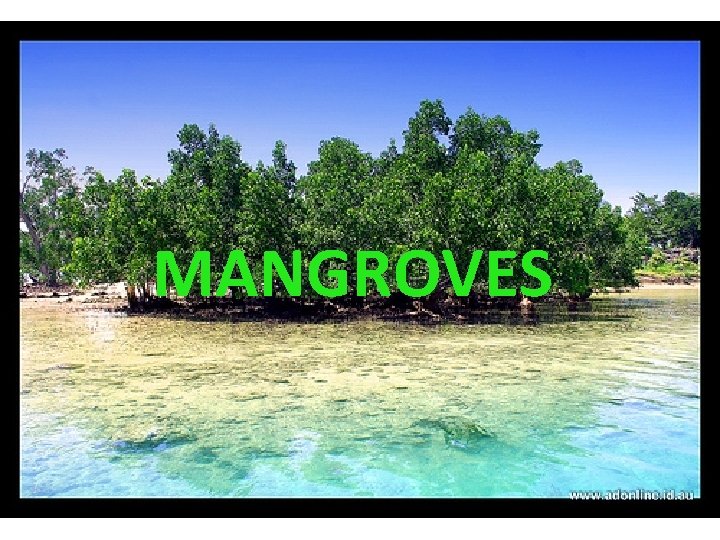
MANGROVES
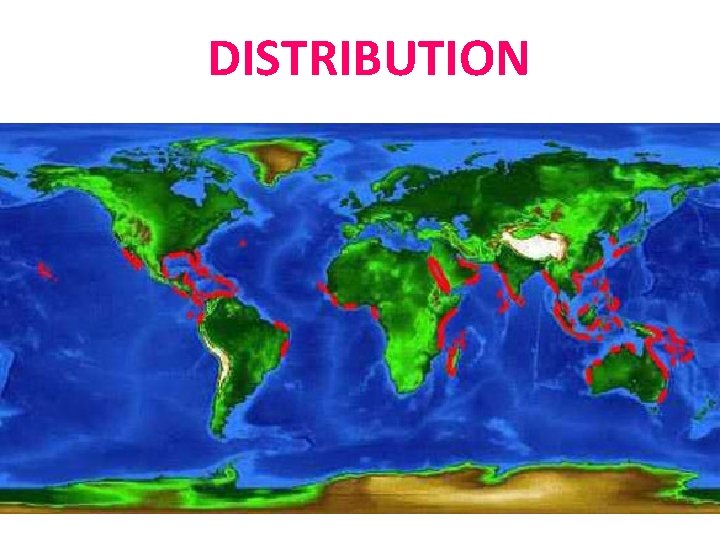
DISTRIBUTION
Distribution of Mangroves • They are most common in SE Asia and it is believed they originated here and spread around the world • They are virtually all found within 30º latitude of the equator • They are all found at the coast as they have one ‘foot’ on land the other in the sea. They grow in the intertidal zone.
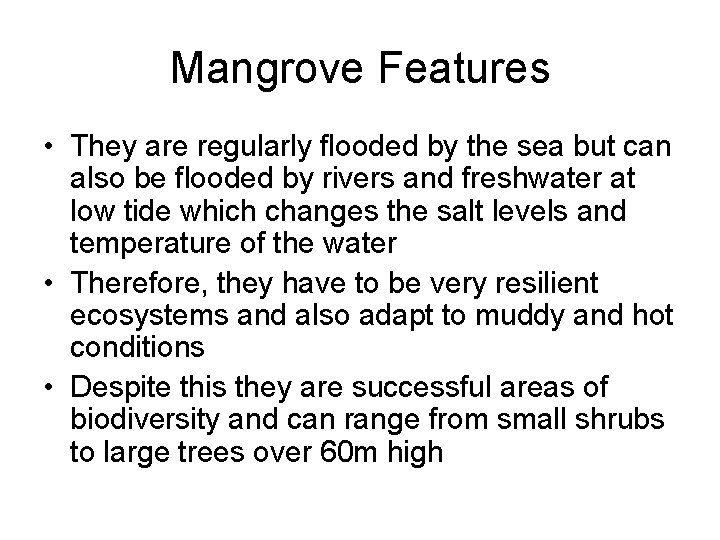
Mangrove Features • They are regularly flooded by the sea but can also be flooded by rivers and freshwater at low tide which changes the salt levels and temperature of the water • Therefore, they have to be very resilient ecosystems and also adapt to muddy and hot conditions • Despite this they are successful areas of biodiversity and can range from small shrubs to large trees over 60 m high
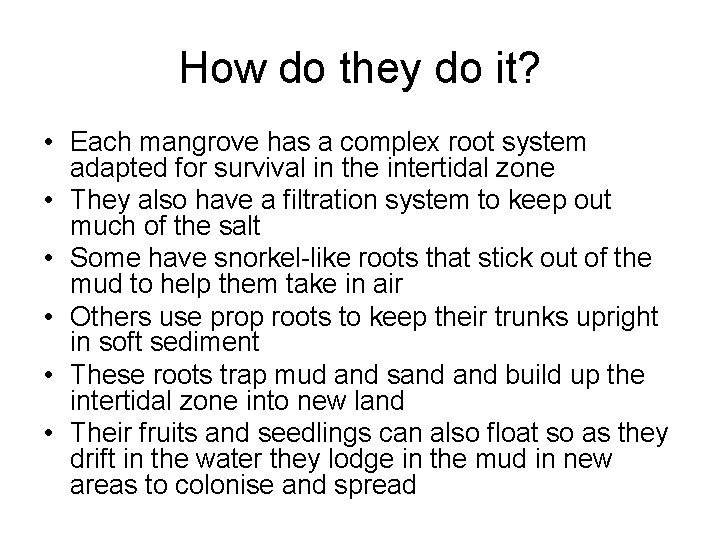
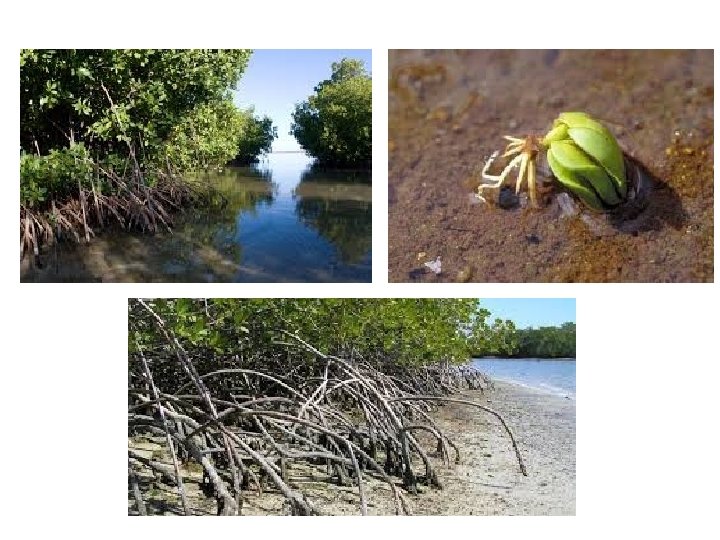
How do they do it? • Each mangrove has a complex root system adapted for survival in the intertidal zone • They also have a filtration system to keep out much of the salt • Some have snorkel-like roots that stick out of the mud to help them take in air • Others use prop roots to keep their trunks upright in soft sediment • These roots trap mud and sand build up the intertidal zone into new land • Their fruits and seedlings can also float so as they drift in the water they lodge in the mud in new areas to colonise and spread
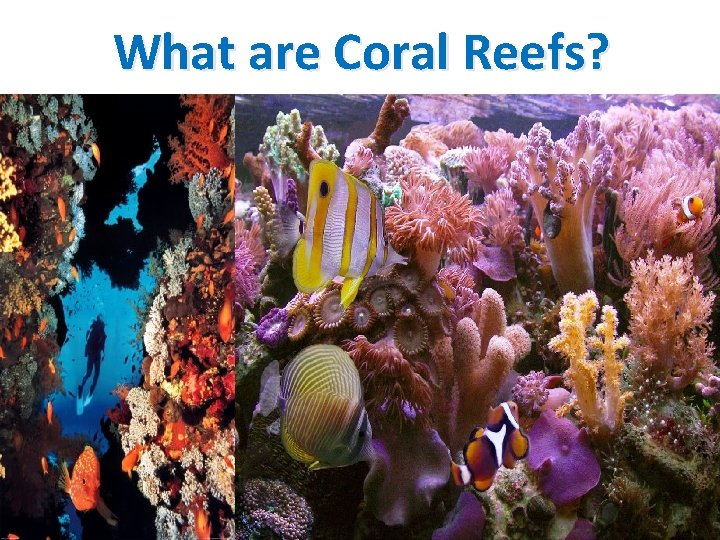
What are Coral Reefs?
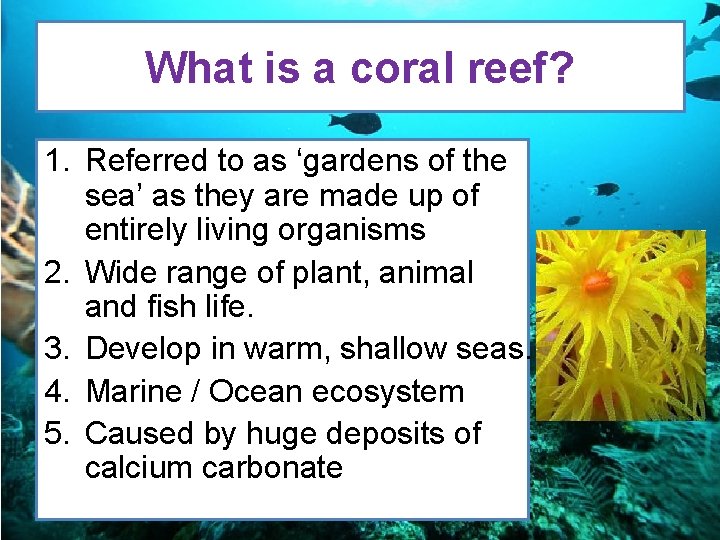
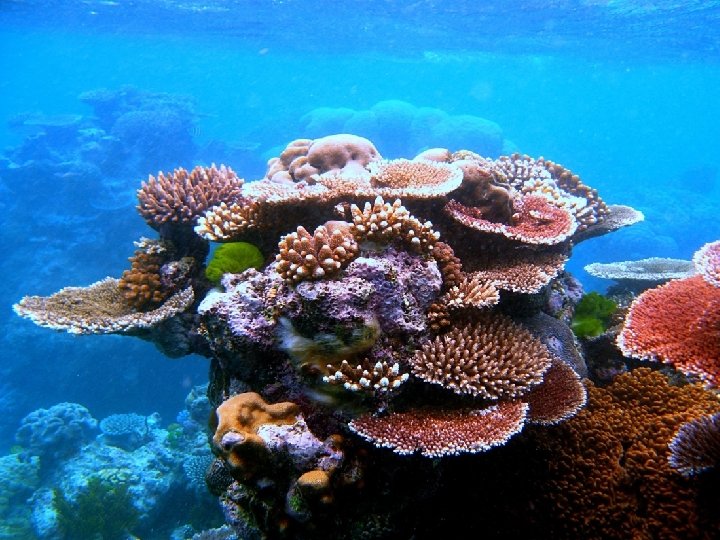
What is a coral reef? 1. Referred to as ‘gardens of the sea’ as they are made up of entirely living organisms 2. Wide range of plant, animal and fish life. 3. Develop in warm, shallow seas. 4. Marine / Ocean ecosystem 5. Caused by huge deposits of calcium carbonate
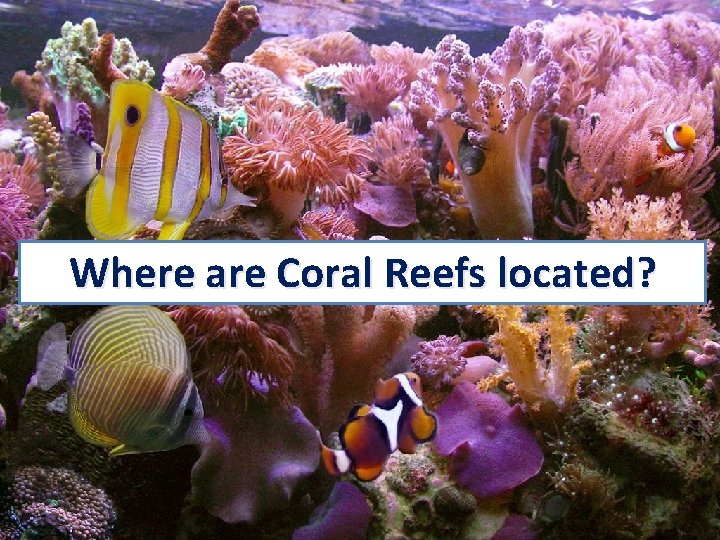
Where are Coral Reefs located?
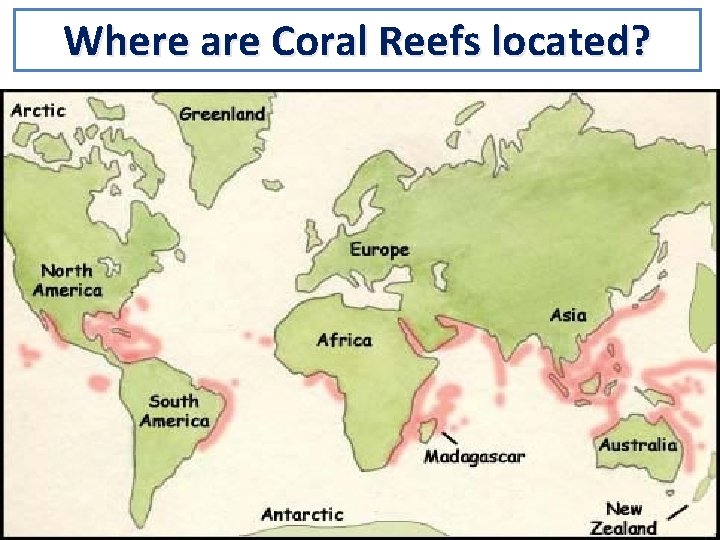
Where are Coral Reefs located?
• Look at the map • DESCRIBE the location of coral reefs in the world • “Coral reefs are mainly found near the. . ” • “Coral reefs are found between the. . ” Extension: Explain why you think coral reefs are located in these places.
Why are they located here? • They need water temperatures of at least 18 C degrees. They grow best between 23 25 C. • Light is needed so they only grow in shallow water (usually less than 25 m deep) • Corals are marine creatures so they only survive in oxygenated salt water
Coral Reef Hotspots • These are found in SE Asia and northern Australia (e. g. Indonesia or Great Barrier Reef) • This is because of the strong wave action creating well oxygenated salt water • There is less exposure to air as if this occurs for too long they will die • They also prefer clear, clean water as this provides maximum light and doesn’t block their feeding sources
Coral Reef Management • Dynamite fishing practices can be banned. It is important that this is enforced or the practices will carry on • Conservation zones where tourists aren’t allowed or their numbers are restricted can be created • Areas where coral reef cannot be farmed can be created • Fish stocks can be enhanced and quotas imposed on amount being caught • Sewage outlets can be moved downstream of coral reefs • Banning the dropping of anchors on coral reef • Reduce the use of fertilisers near coral reefs • Finally one of the most important is educating people about why coral reefs are important and how we can protect them