
Coastal Communities and Processes Beach and Dunes Introduction
Coastal Communities and Processes: Beach and Dunes Introduction to Coastal Management

Coastal Communities and Processes • • • Beach and Dunes Shrub Thicket and Maritime Forest Freshwater Wetlands Tidal Marsh Estuarine Waters/Sand Mud Flats
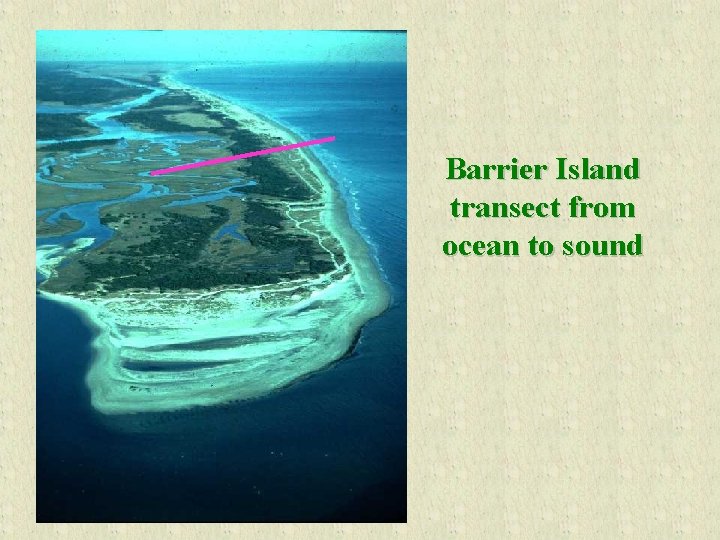
Barrier Island transect from ocean to sound
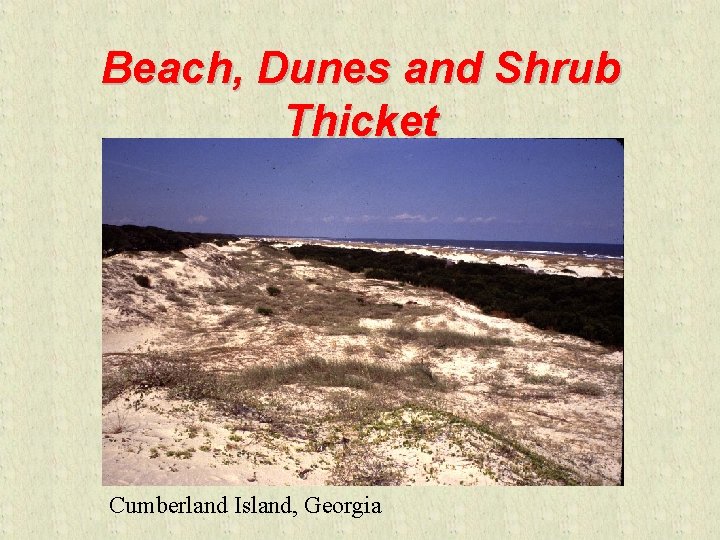
Beach, Dunes and Shrub Thicket Cumberland Island, Georgia
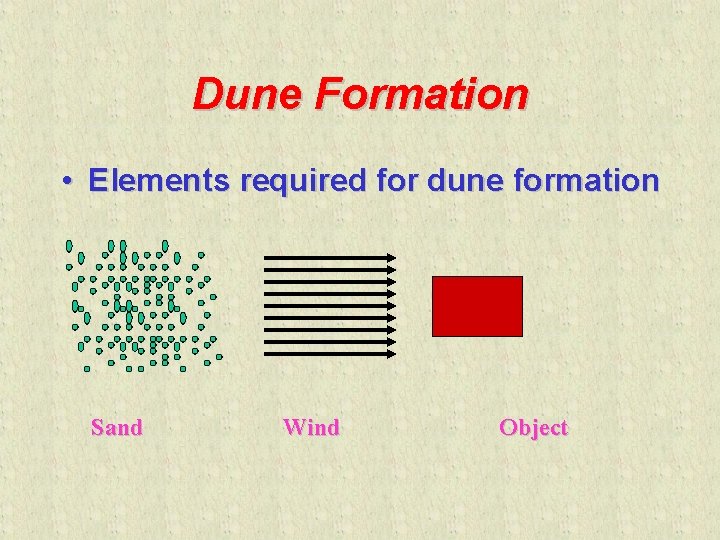
Dune Formation • Elements required for dune formation Sand Wind Object

Dune Formation Sand, moved by the process of saltation, accumulates around objects including vegetation and flotsam
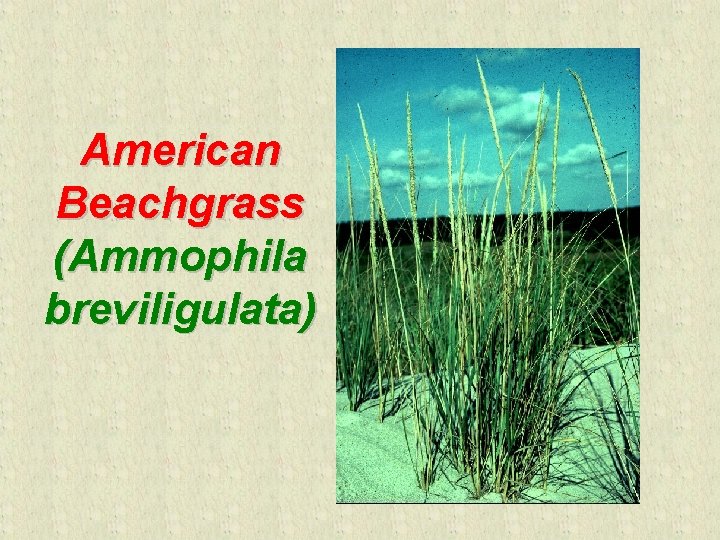
American Beachgrass (Ammophila breviligulata)
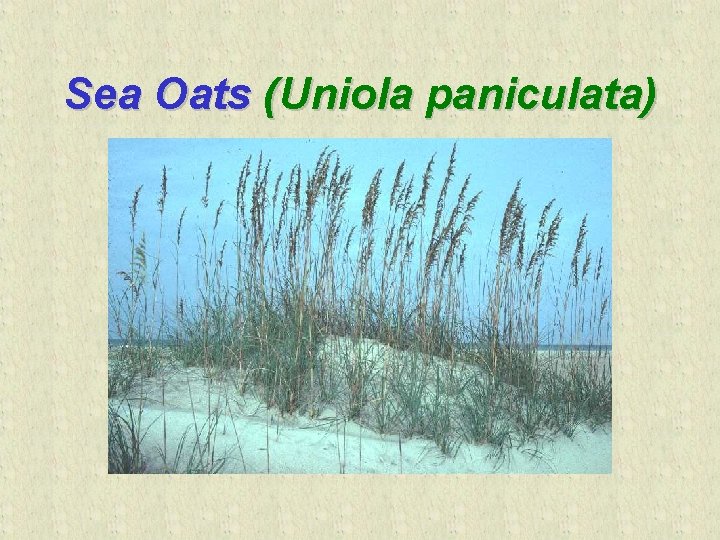
Sea Oats (Uniola paniculata)
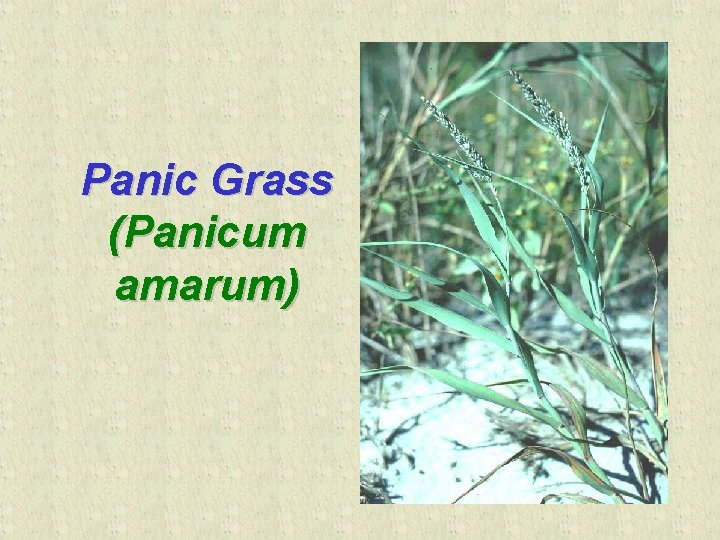
Panic Grass (Panicum amarum)
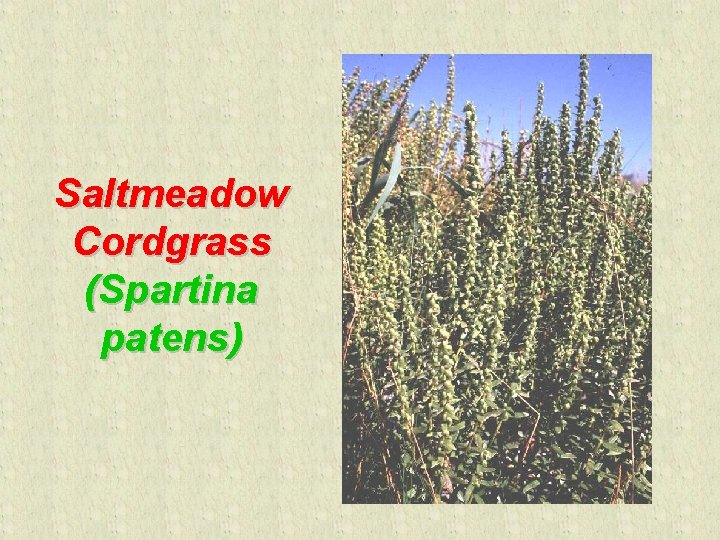
Saltmeadow Cordgrass (Spartina patens)
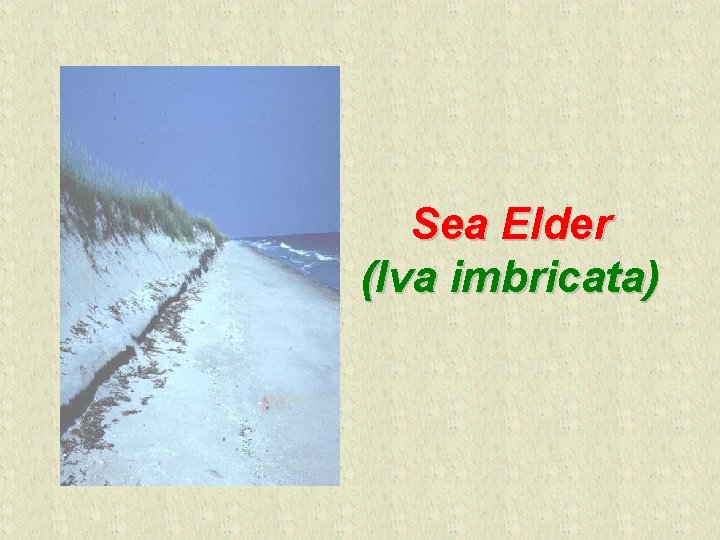
Sea Elder (Iva imbricata)
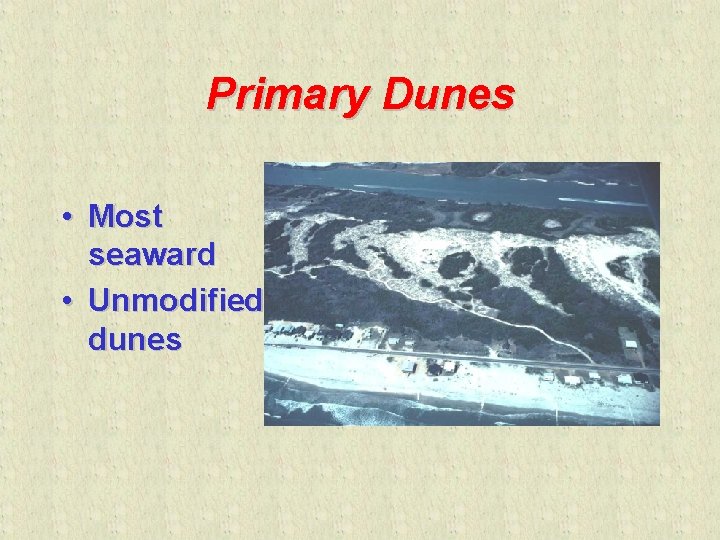
Primary Dunes • Most seaward • Unmodified dunes
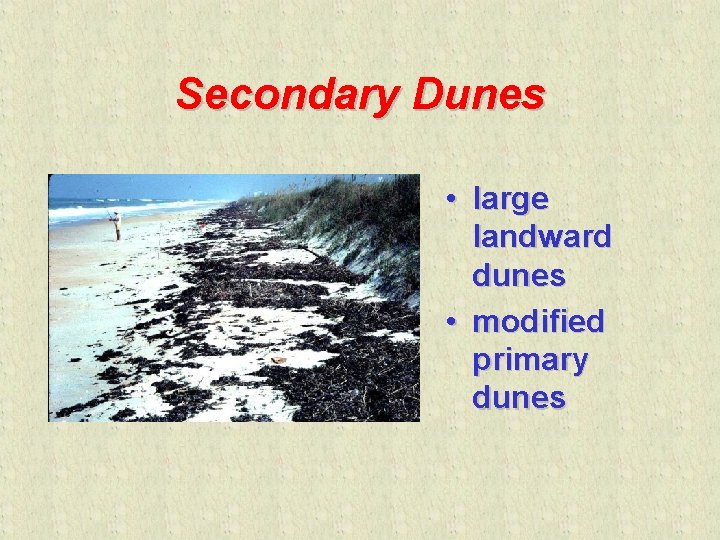
Secondary Dunes • large landward dunes • modified primary dunes
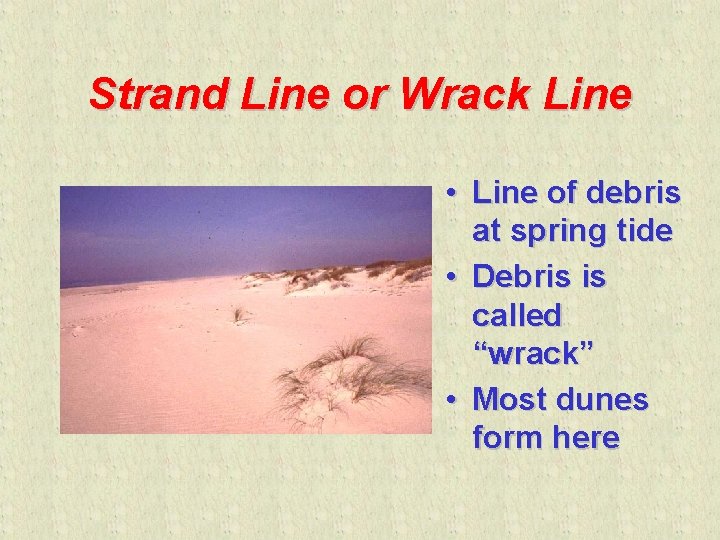
Strand Line or Wrack Line • Line of debris at spring tide • Debris is called “wrack” • Most dunes form here
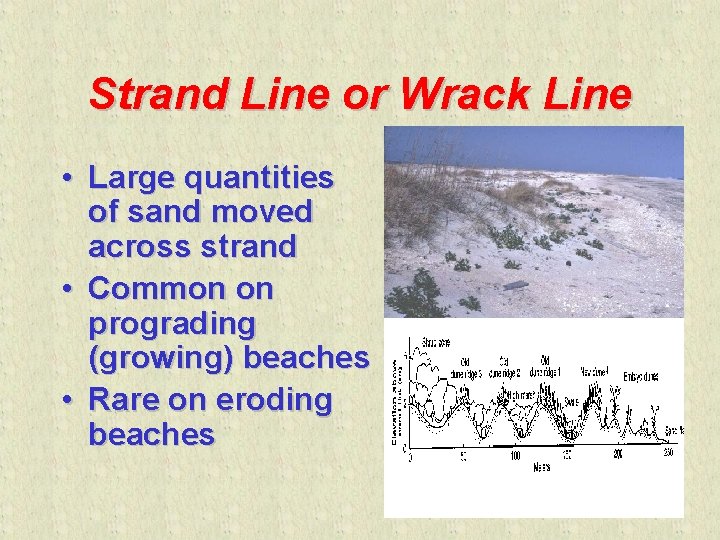
Strand Line or Wrack Line • Large quantities of sand moved across strand • Common on prograding (growing) beaches • Rare on eroding beaches
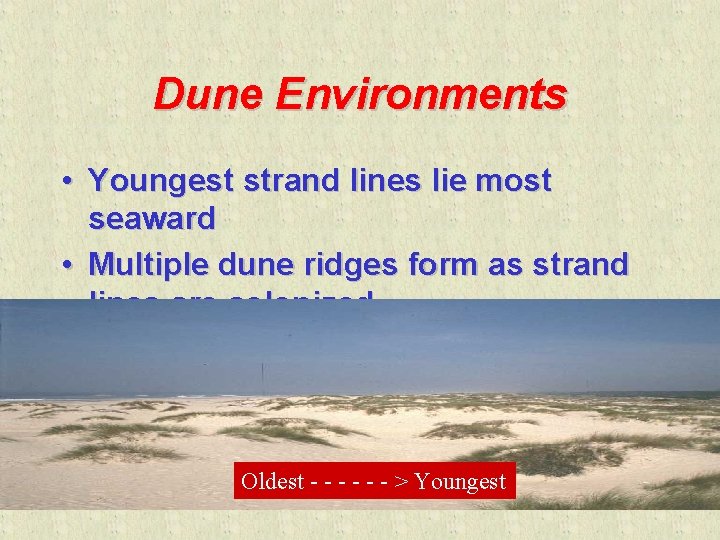
Dune Environments • Youngest strand lines lie most seaward • Multiple dune ridges form as strand lines are colonized Oldest - - - > Youngest
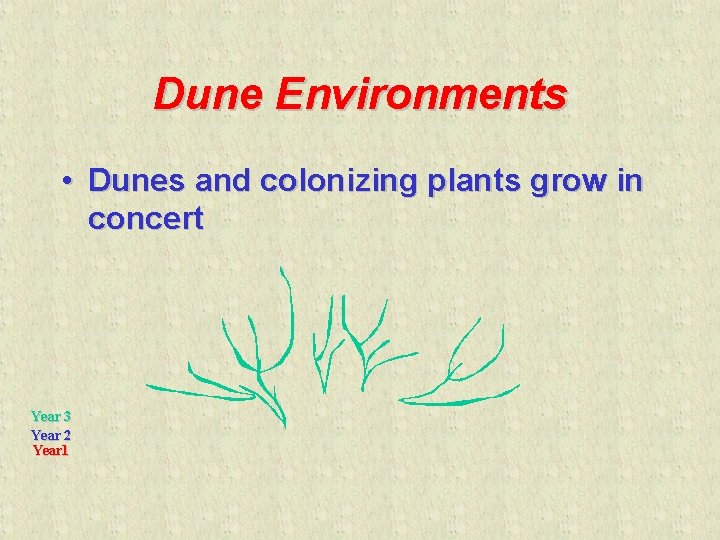
Dune Environments • Dunes and colonizing plants grow in concert Year 3 Year 2 Year 1
Dune Environmental Conditions • Low soil nutrients (N and P) • Desiccating winds • Blowing sand
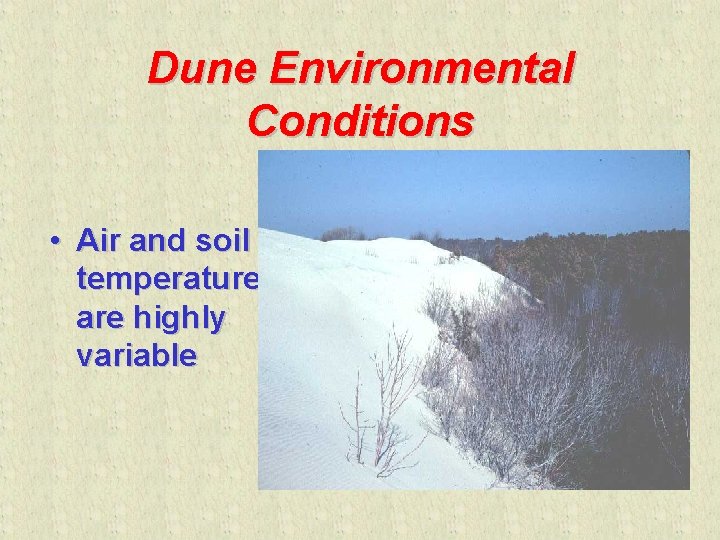
Dune Environmental Conditions • Air and soil temperatures are highly variable
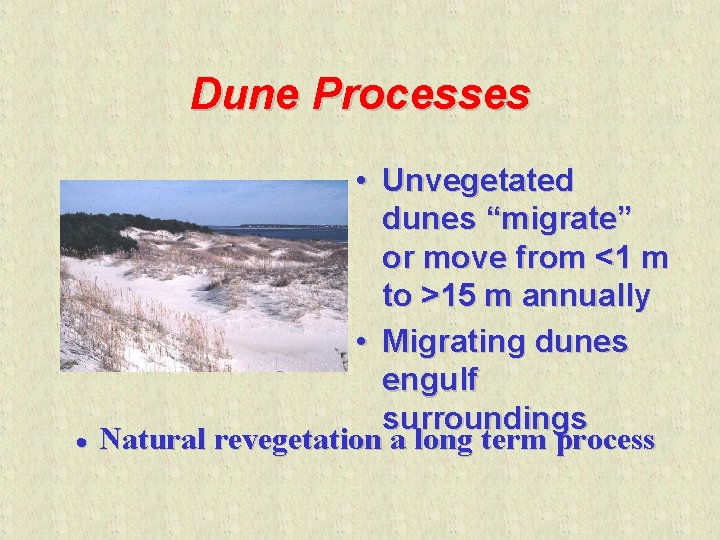
Dune Processes • Unvegetated dunes “migrate” or move from <1 m to >15 m annually • Migrating dunes engulf surroundings Natural revegetation a long term process
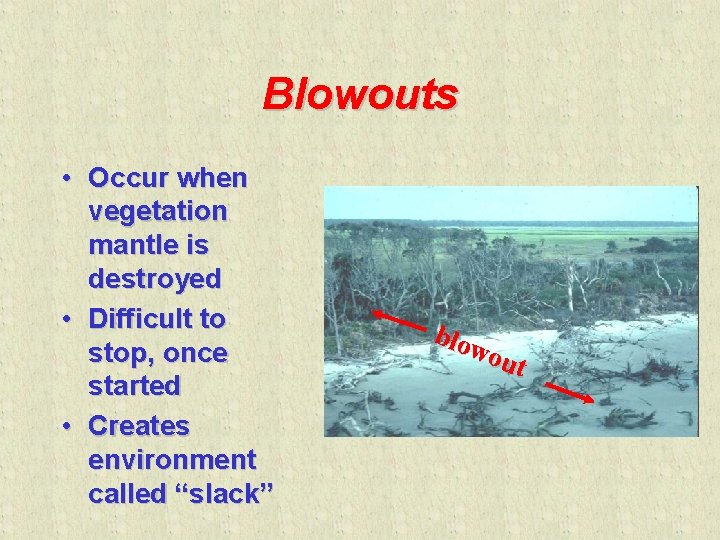
Blowouts • Occur when vegetation mantle is destroyed • Difficult to stop, once started • Creates environment called “slack” blow out
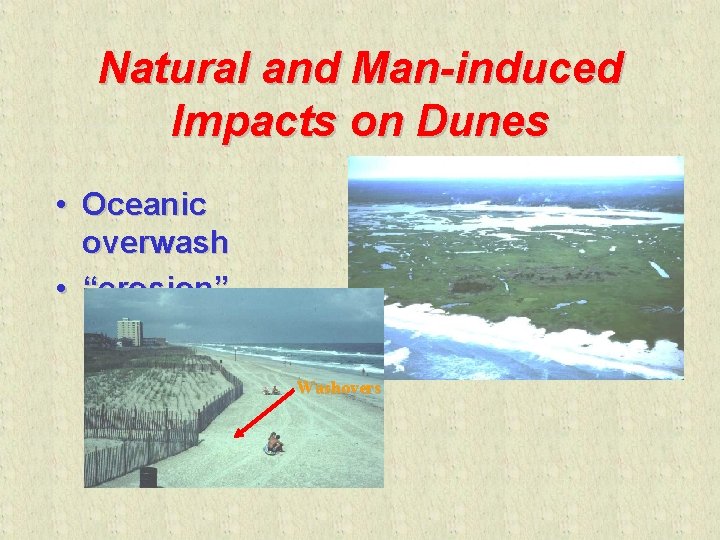
Natural and Man-induced Impacts on Dunes • Oceanic overwash • “erosion” Washovers
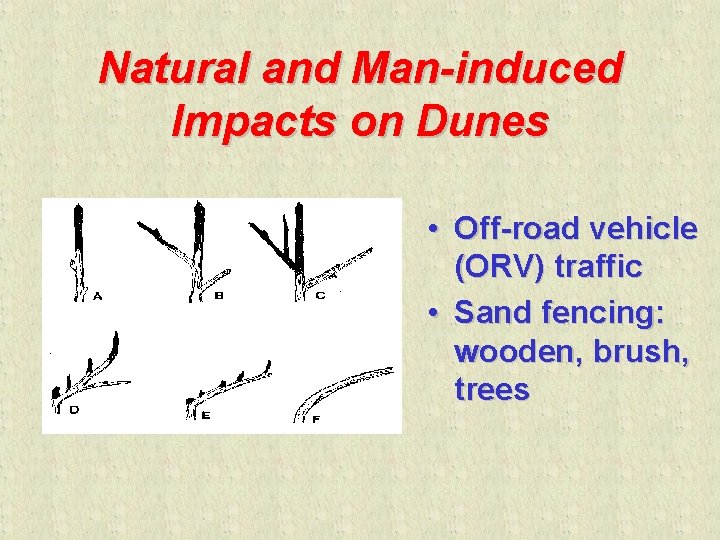
Natural and Man-induced Impacts on Dunes • Off-road vehicle (ORV) traffic • Sand fencing: wooden, brush, trees
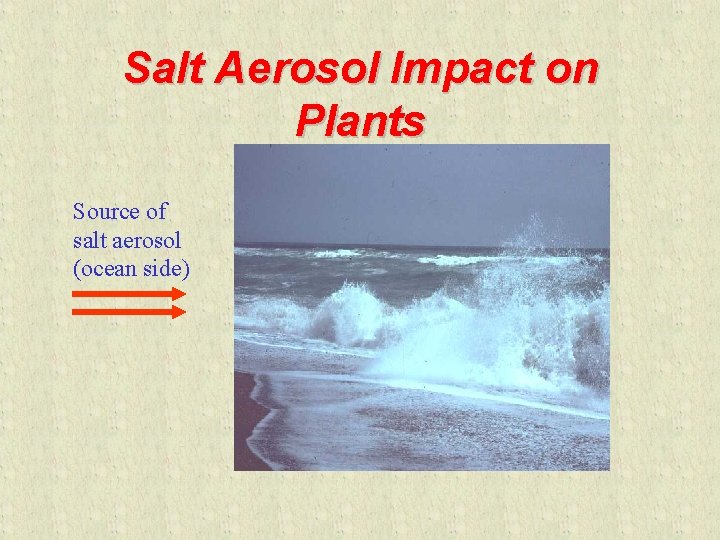
Salt Aerosol Impact on Plants Source of salt aerosol (ocean side)
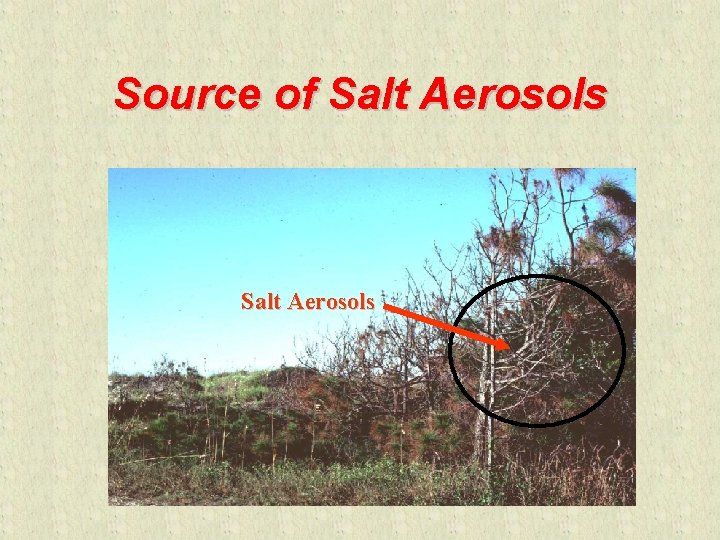
Source of Salt Aerosols
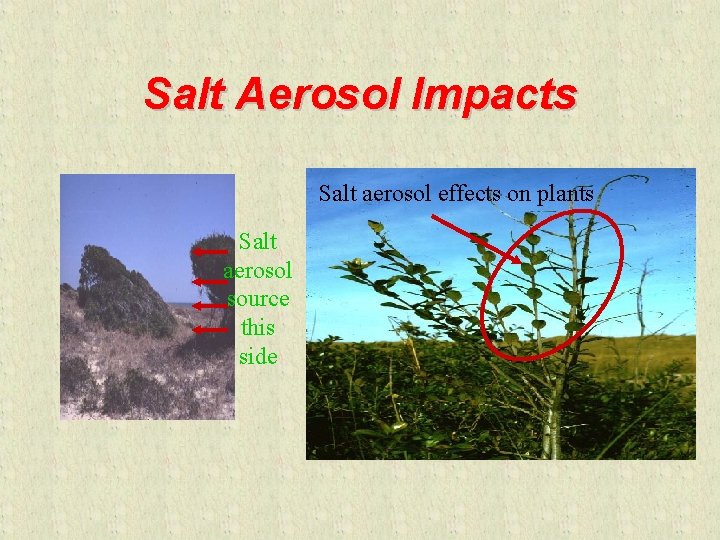
Salt Aerosol Impacts Salt aerosol effects on plants Salt aerosol source this side
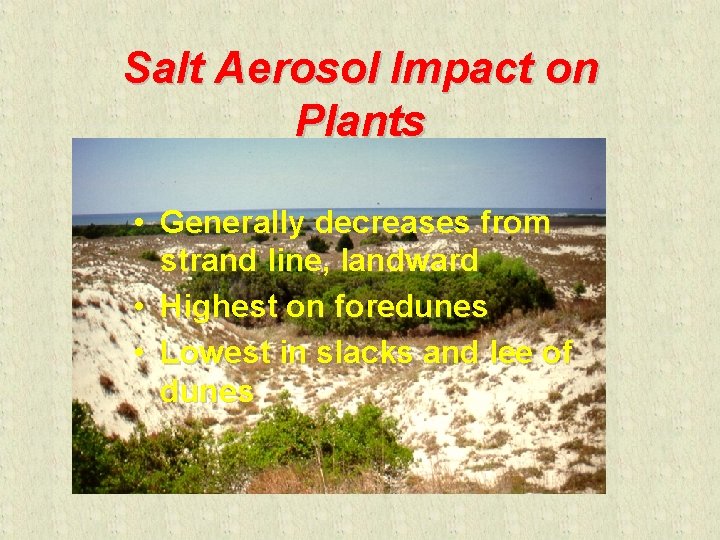
Salt Aerosol Impact on Plants • Generally decreases from strand line, landward • Highest on foredunes • Lowest in slacks and lee of dunes
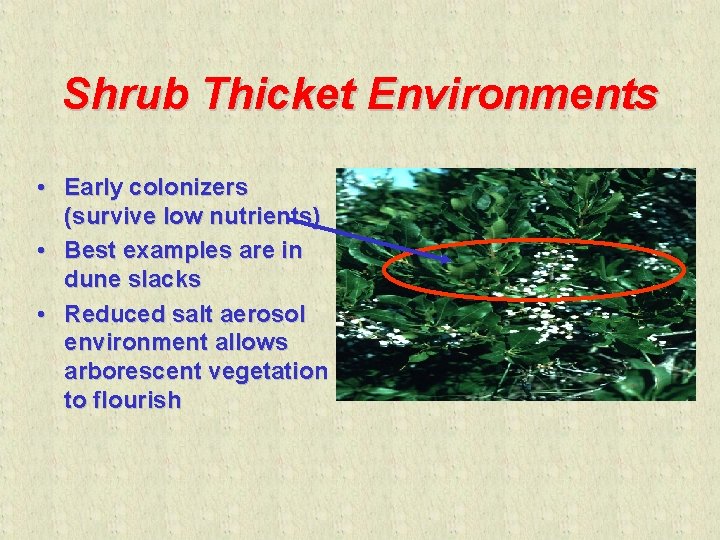
Shrub Thicket Environments • Early colonizers (survive low nutrients) • Best examples are in dune slacks • Reduced salt aerosol environment allows arborescent vegetation to flourish
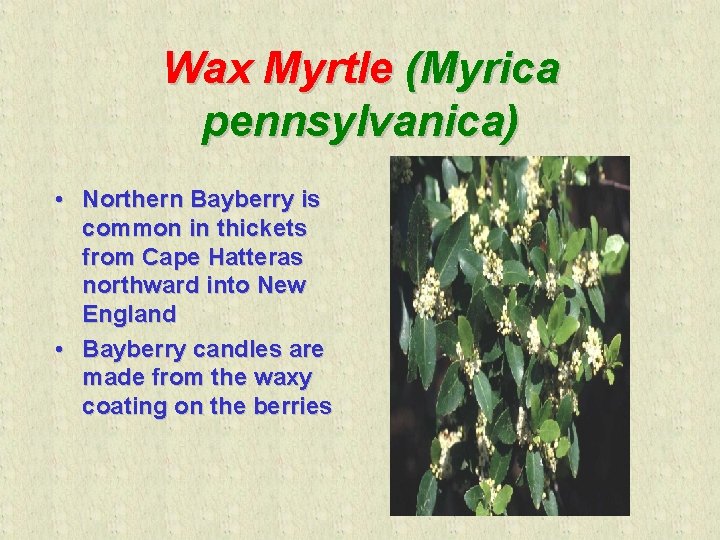
Wax Myrtle (Myrica pennsylvanica) • Northern Bayberry is common in thickets from Cape Hatteras northward into New England • Bayberry candles are made from the waxy coating on the berries
Yaupon (Ilex vomitoria)
- Slides: 30