
COACHES CHECKLIST A FUELING AND HYDRATION GAME PLAN
- Slides: 51
COACHES CHECKLIST- A FUELING AND HYDRATION GAME PLAN Leslie Bonci, M. P. H. , R. D. , LDN, CSSD Director Sports Nutrition Program University of Pittsburgh Medical Center
WHAT DO YOU WANT? – Players with • • • Improved performance Reduced fatigue More energy Fewer injuries Faster recovery Appropriate Body composition changes
PERFORMANCE DISABLERS • Inadequate sleep • Not eating/drinking BEFORE Exercise • Waiting too long to eat/drink AFTER exercise • Rapid weight loss • Alcohol/Caffeine/supplements misuse/abuse
INAPPROPRIATE TIMING OF FUELING AND HYDRATION • • • muscle mass performance perceived effort of exertion Delayed recovery risk of injury Harder to achieve weight goals
SO HOW DO WE ADDRESS PERFORMANCE ISSUES? l Low energy? l More even calorie distribution over the day rather than upload l Optimal hydration l Appropriate macronutrient distribution as part of every meal l Food availability over the day, not just snacks
DECREASED ENERGY OVER THE SEASON • Focus on post exercise recovery: – Carbohydrate + protein post workout- amount and timing matter – Less is more – Consistency with eating amounts / frequency – ATHLETES NEED IT THE MOST WHEN THEY WANT IT THE LEAST – Take advantage of the anabolic “window” post strength training
Practice Workouts Games
TIME IT • More even food intake during the day • Breakfast before bed for early morning workouts • Eat/drink BEFORE practice • Eat/drink AFTER practice • Fueling/hydrating pre and post exercise as part of warm-up and cool down
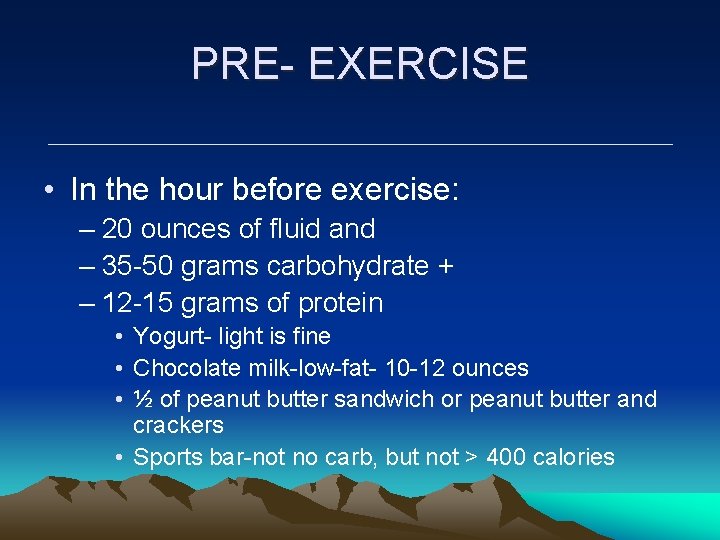
PRE- EXERCISE • In the hour before exercise: – 20 ounces of fluid and – 35 -50 grams carbohydrate + – 12 -15 grams of protein • Yogurt- light is fine • Chocolate milk-low-fat- 10 -12 ounces • ½ of peanut butter sandwich or peanut butter and crackers • Sports bar-not no carb, but not > 400 calories
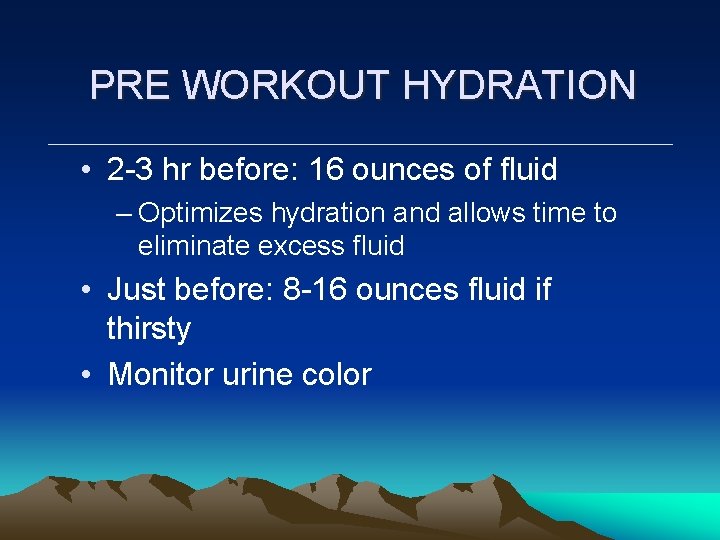
PRE WORKOUT HYDRATION • 2 -3 hr before: 16 ounces of fluid – Optimizes hydration and allows time to eliminate excess fluid • Just before: 8 -16 ounces fluid if thirsty • Monitor urine color
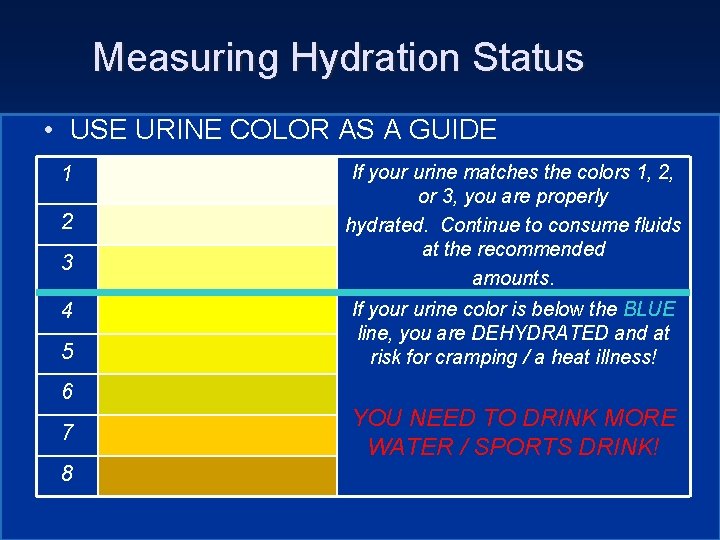
Measuring Hydration Status • USE URINE COLOR AS A GUIDE 1 2 3 4 5 If your urine matches the colors 1, 2, or 3, you are properly hydrated. Continue to consume fluids at the recommended amounts. If your urine color is below the BLUE line, you are DEHYDRATED and at risk for cramping / a heat illness! 6 7 8 YOU NEED TO DRINK MORE WATER / SPORTS DRINK!
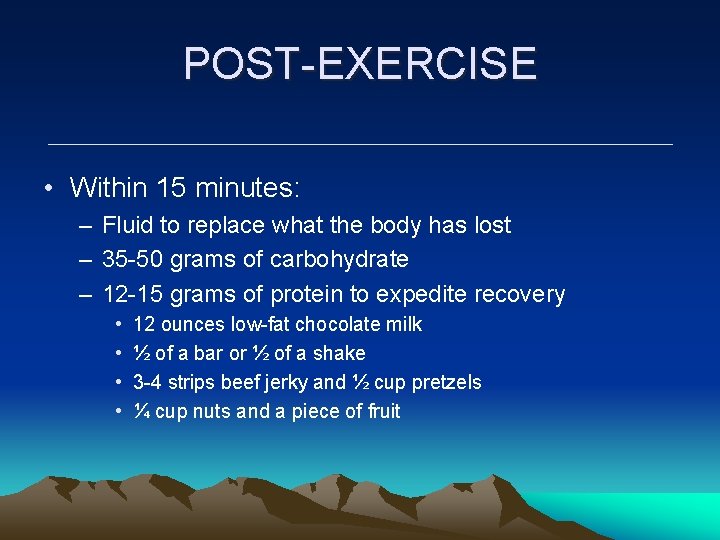
POST-EXERCISE • Within 15 minutes: – Fluid to replace what the body has lost – 35 -50 grams of carbohydrate – 12 -15 grams of protein to expedite recovery • • 12 ounces low-fat chocolate milk ½ of a bar or ½ of a shake 3 -4 strips beef jerky and ½ cup pretzels ¼ cup nuts and a piece of fruit
HYDRATION AFTER EXERCISE • At least 20 ounces per pound lost • Carbohydrate + fluid + electrolytes • Mix of carbohydrate sources: sucrose, glucose, fructose, maltodextrins • Metered rehydration vs large volumes may help to conserve fluid volumes and is preferred unless regular access to fluid is limited
BREAKFAST SPECIFICS – At least 3 -400 calories • • Protein ( eggs, yogurt, milk, ham, turkey sausage) Fat ( nuts, nut butters) Fiber ( whole grain cereals, bread, fruit) Fluid ( milk, water, coffee, tea, diluted juices)
EATING BEFORE BED • What TO eat: – Cereal- hot or cold with milk and juice – A smoothie – Egg sandwich with milk or juice • What NOT to eat – Fried foods – Pizza – Wings/ribs
SIZE IT • • In general- with food, LESS is more Baseball size pre/post practice or games Plate- picnic size at meals Snack size plate- salad or dessert size or small bowl size for evening snack • With beverages, at least 8 up to 20 ounces per meal/snack
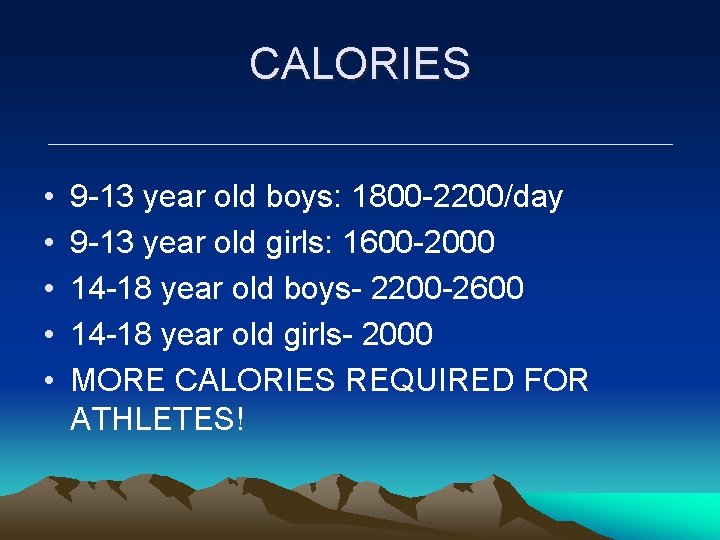
CALORIES • • • 9 -13 year old boys: 1800 -2200/day 9 -13 year old girls: 1600 -2000 14 -18 year old boys- 2200 -2600 14 -18 year old girls- 2000 MORE CALORIES REQUIRED FOR ATHLETES!
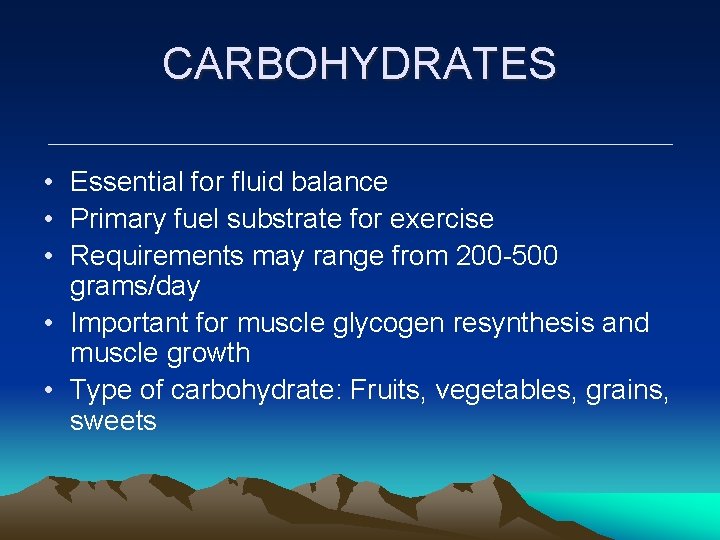
CARBOHYDRATES • Essential for fluid balance • Primary fuel substrate for exercise • Requirements may range from 200 -500 grams/day • Important for muscle glycogen resynthesis and muscle growth • Type of carbohydrate: Fruits, vegetables, grains, sweets
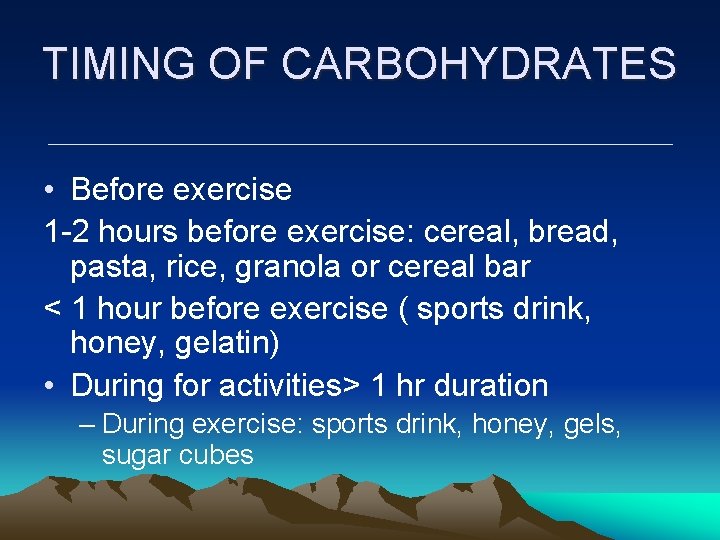
TIMING OF CARBOHYDRATES • Before exercise 1 -2 hours before exercise: cereal, bread, pasta, rice, granola or cereal bar < 1 hour before exercise ( sports drink, honey, gelatin) • During for activities> 1 hr duration – During exercise: sports drink, honey, gels, sugar cubes
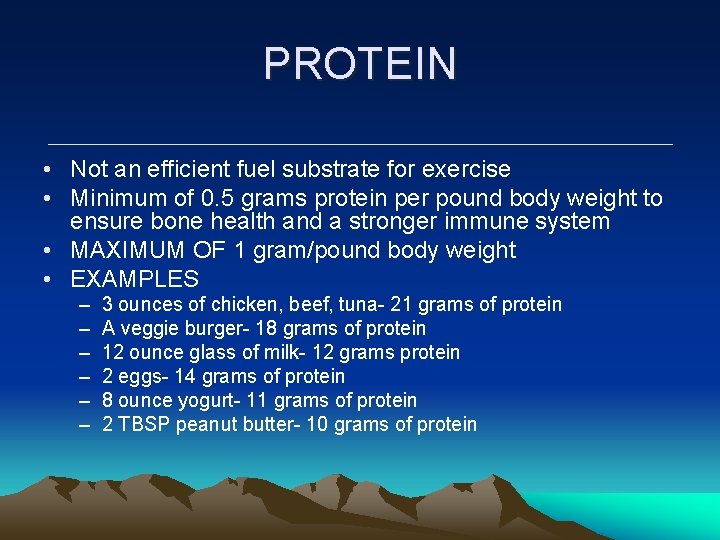
PROTEIN • Not an efficient fuel substrate for exercise • Minimum of 0. 5 grams protein per pound body weight to ensure bone health and a stronger immune system • MAXIMUM OF 1 gram/pound body weight • EXAMPLES – – – 3 ounces of chicken, beef, tuna- 21 grams of protein A veggie burger- 18 grams of protein 12 ounce glass of milk- 12 grams protein 2 eggs- 14 grams of protein 8 ounce yogurt- 11 grams of protein 2 TBSP peanut butter- 10 grams of protein
PROTEIN TIMING • Timing of protein intake is important– BEFORE lifting and after! • 12 -20 grams of protein with 35 grams of carbohydrate BEFORE lifting • Only 12 -20 grams of protein needed AFTER lifting- With 35 grams of carbohydrate
FAT AND EXERCISE • Diet too low in fat MAY limit performance by inhibiting intramuscular triglyceride stores • Dual duty foods: cheese, nuts, peanut butter • Healthier fats: fish, fish oils, olive, soybean, safflower, corn, sunflower and canola oils
AAP GUIDELINES FOR WEIGHT CONTROL • Maximum weight loss-1 -2 lb/week • 53 -63% carbohydrate, 15 -20% protein, 20 -30% fat • Smaller, more frequent meals • Calories in food, not fluid • Add liquid foods, protein, fiber • Keep a food log • Portion
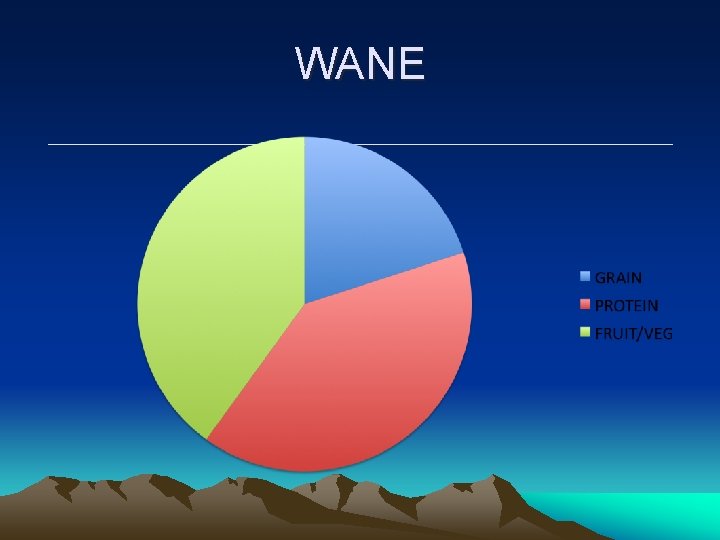
WANE
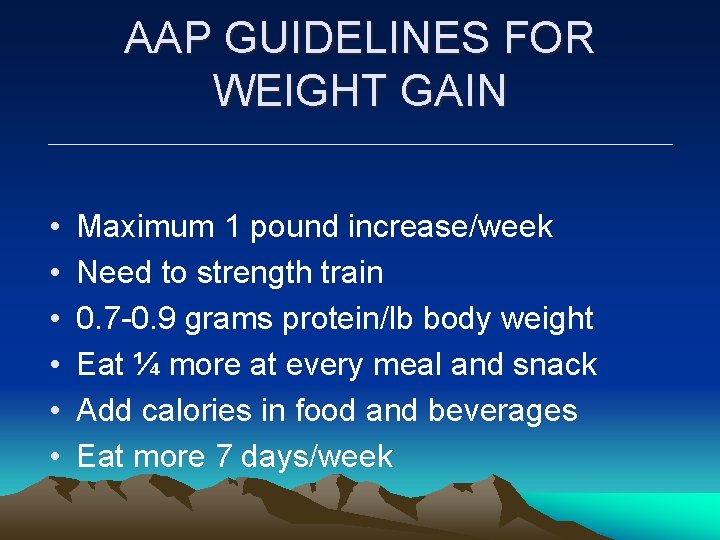
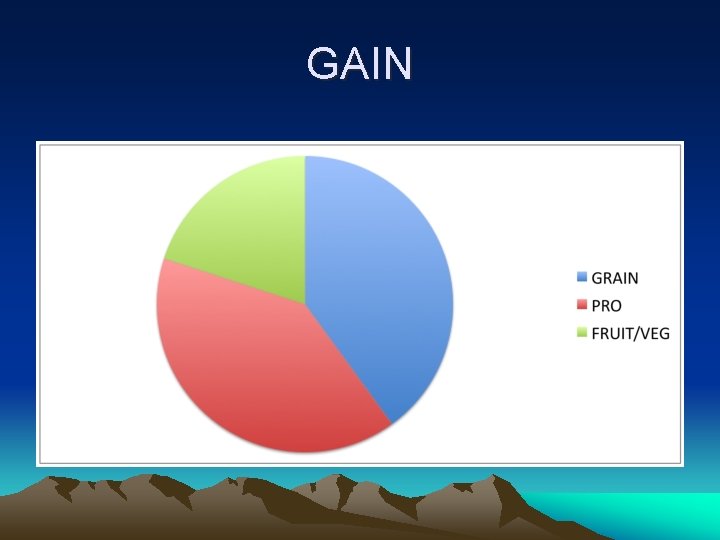
AAP GUIDELINES FOR WEIGHT GAIN • • • Maximum 1 pound increase/week Need to strength train 0. 7 -0. 9 grams protein/lb body weight Eat ¼ more at every meal and snack Add calories in food and beverages Eat more 7 days/week
GAIN
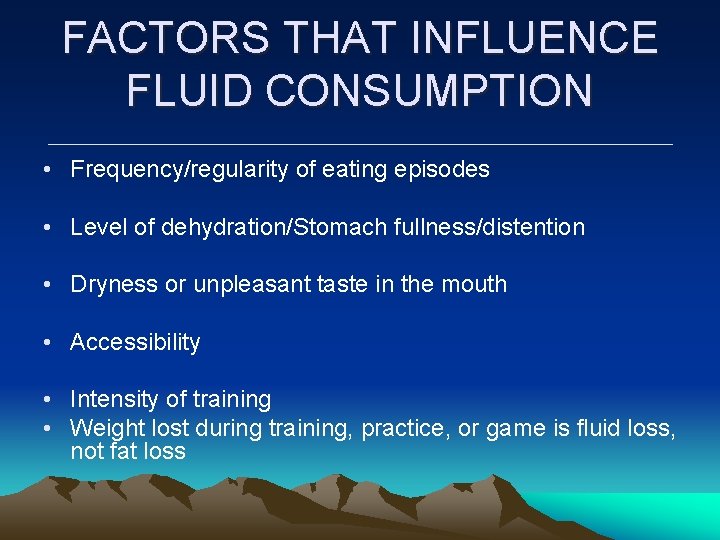
FACTORS THAT INFLUENCE FLUID CONSUMPTION • Frequency/regularity of eating episodes • Level of dehydration/Stomach fullness/distention • Dryness or unpleasant taste in the mouth • Accessibility • Intensity of training • Weight lost during training, practice, or game is fluid loss, not fat loss
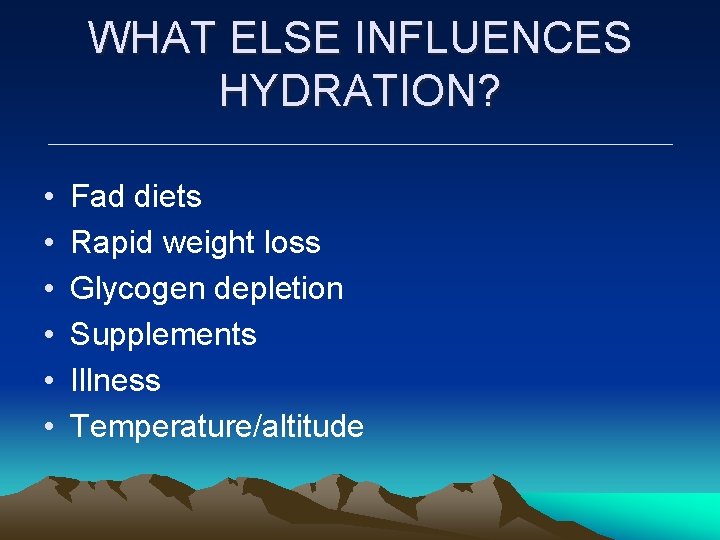
WHAT ELSE INFLUENCES HYDRATION? • • • Fad diets Rapid weight loss Glycogen depletion Supplements Illness Temperature/altitude
POINTS TO CONSIDER • Dehydration affects cognitive functioning • Liter of sweat loss = to 8 beats/minute in heart rate • Chronic dehydration that often accompanies weight class sports impairs training/ performance • Body water loss of> 2% impairs performance •
FLUID GOALS DURING EXERCISE • Most athletes consume 8 oz/hour • Larger fluid intake during exercise leads to: – Greater cardiac output – Greater skin blood flow – Lower core temperature – Reduced perceived effort of exertion
FLUID GUIDELINES FOR EXERCISE • 20 oz 1 hour before exercise • At least 14 -20+ ounces/hr of practice/conditioning • 20 oz per pound lost during exercise • Gulps over sips • Swallow instead of spit • In, not on
TYPES OF FLUID • • Water Carbonated beverages/seltzer Coffee or tea or herbal teas Milk Juices Sports drinks Energy drinks
CAFFEINE • Not a diuretic • Muscle glycogen sparing effect in endurance exercise • Varying doses in energy drinks • Caffeine + fluid, i. e. coffee, tea, energy drink or caffeine alone- 5 hour energy
CAFFEINE • Caffeine- IS a central nervous system stimulant • >200 mg may cause: – – Jitteriness, increased anxiety, restlessness Insomnia Upset stomach May be addicting
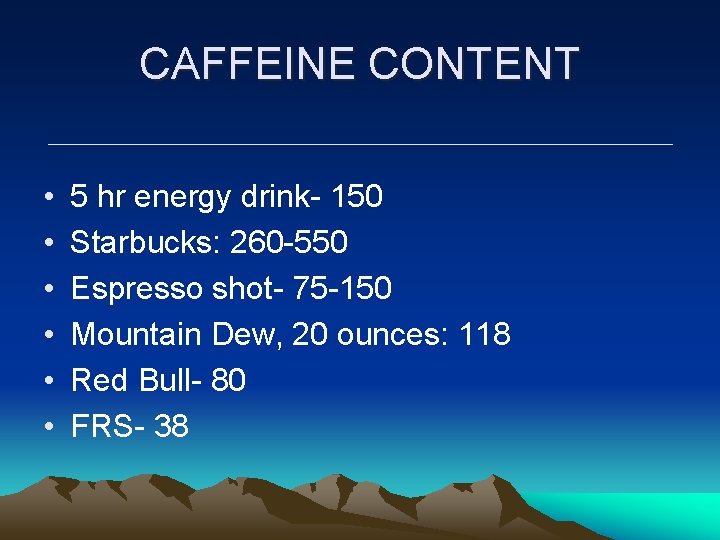
CAFFEINE CONTENT • • • 5 hr energy drink- 150 Starbucks: 260 -550 Espresso shot- 75 -150 Mountain Dew, 20 ounces: 118 Red Bull- 80 FRS- 38
HOW TO CONSUME FLUID • Large volume of fluid empties more rapidly than small amounts • 1 liter of fluid empties from the stomach and is absorbed by the intestine within 1 hour • Maximum 2 liters/hour • Large bolus of fluid followed by repeated ingesting of additional fluids
TEMPERATURE OF FLUID • Cold fluid may attenuate increased core temperature rise and improve exercise performance in the heat • May be more palatable than room temperature beverages and increase the drive to drink • In cold weather activities, warm fluids may be better tolerated
WATER VS SPORTS DRINK? • Source of additional fuel • Glucose stimulates sodium and water absorption • More fluid is absorbed from carbohydrate/electrolyte beverages than plain water • Higher the carbohydrate content, the slower the rate of gastric emptying
ALCOHOL • • • May dehydrate in susceptible individuals May delay muscle glycogen resynthesis Can cause liver disorders May delay recovery from injury Can be significant source of calories What is a drink? – – 12 oz beer 8 oz malt liquor 4 -5 oz glass of wine Shot of liquor
HOW MUCH FLUID • BASELINE – – – Ages 4 -8: 5 cups (1. 2 L) Age 9 -13 - boys- 8 cups (1. 8 L) Age 9 -13 –girls- 7 cups (1. 6 L) Age 14 -18 - boys- 11 cups (2. 6 L) Age 14 -18 - girls- 8 cups (1. 8 L)
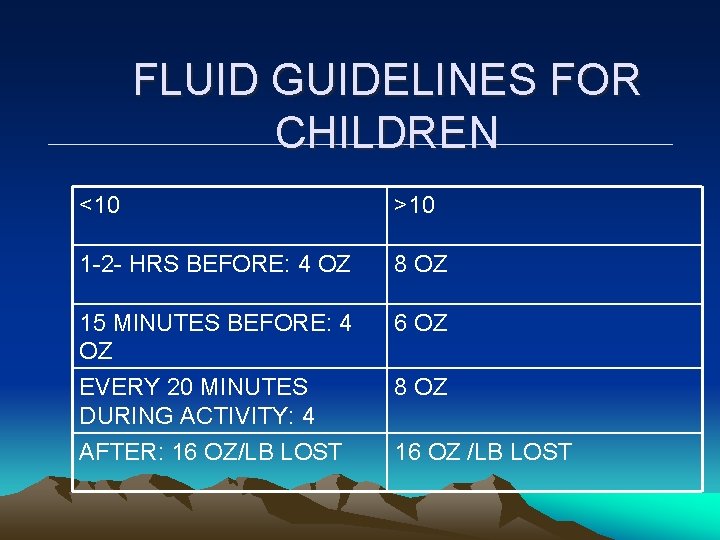
FLUID GUIDELINES FOR CHILDREN <10 >10 1 -2 - HRS BEFORE: 4 OZ 8 OZ 15 MINUTES BEFORE: 4 OZ 6 OZ EVERY 20 MINUTES DURING ACTIVITY: 4 AFTER: 16 OZ/LB LOST 8 OZ 16 OZ /LB LOST
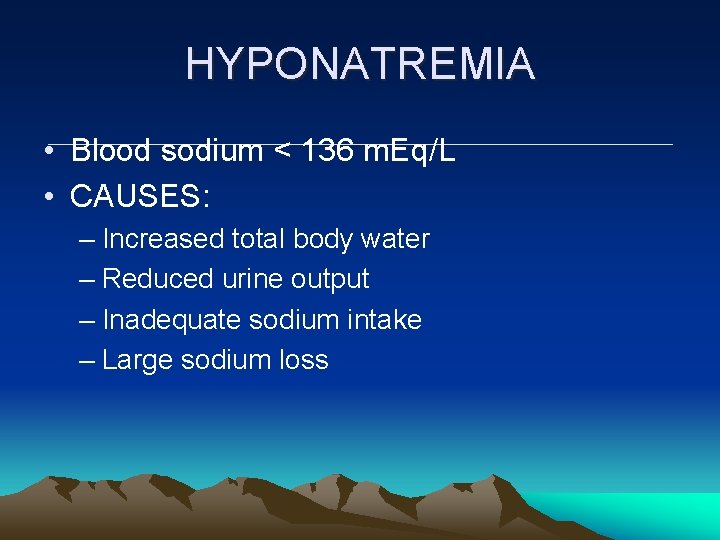
HYPONATREMIA • Blood sodium < 136 m. Eq/L • CAUSES: – Increased total body water – Reduced urine output – Inadequate sodium intake – Large sodium loss
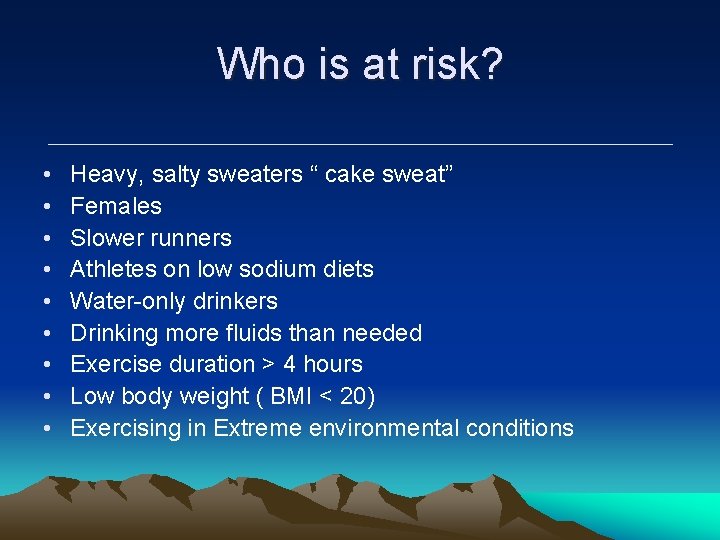
Who is at risk? • • • Heavy, salty sweaters “ cake sweat” Females Slower runners Athletes on low sodium diets Water-only drinkers Drinking more fluids than needed Exercise duration > 4 hours Low body weight ( BMI < 20) Exercising in Extreme environmental conditions
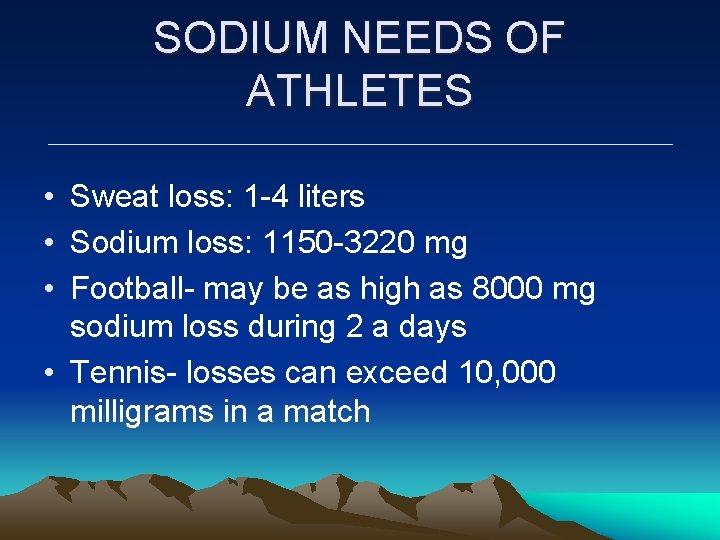
SODIUM NEEDS OF ATHLETES • Sweat loss: 1 -4 liters • Sodium loss: 1150 -3220 mg • Football- may be as high as 8000 mg sodium loss during 2 a days • Tennis- losses can exceed 10, 000 milligrams in a match
MUSCLE CRAMPING • May be many causal factors in the development of muscle cramps • A strategy that works for many athletes is an increase in fluid and sodium • Bananas or other high potassium foods will NOT help in the prevention/treatment of cramps
MEETING SODIUM NEEDS • • Salt added to foods Salty condiments: Soy sauce, marinades Salty beverages Salty foods: pickles, pretzels, crackers, snack mixes Cooking with saltier items, ie. Bouillon or broth Adding salt to every meal Adding ¼ tsp salt to 20 ounces of sports drink or ½ tsp added to 32 oz sports drink
WATER INTOXICATION AND HYPONATREMIA • • Need to know sweat rates of athletes Formulate a hydration plan Don’t worry about caffeinated beverages Palatability of fluids is key NOT just water alone Extra salt for the salty sweaters Recommend that athletes weigh in/out
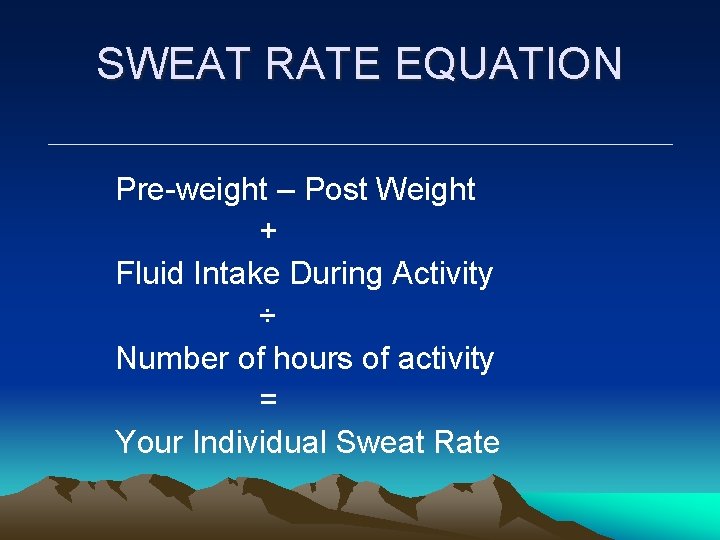
SWEAT RATE EQUATION Pre-weight – Post Weight + Fluid Intake During Activity ÷ Number of hours of activity = Your Individual Sweat Rate
CALL TO ACTION • Help athletes become fluid savvy • Individualize requirements • Have athletes bring water/sports bottle to practice and have cups available • Encourage athletes to hydrate during the day • Work with the ADs/parents/schools to enforce a hydration policy
BOTTOM LINE • If you Resist- your athletes won’t change • If You Insist- Your athletes are more likely to try • If you Persist- You will have athletes who perform at their maximum in the classroom and on the field of play
CONTACT INFORMATION • Leslie Bonci, MPH, RD, CSSD, LDN • Phone: 412 -432 -3674 • Email: boncilj@upmc. edu