
Co related to chapter Draw Iron carbon phase
Co related to chapter Draw Iron carbon phase equilibrium diagram; identify phases of steels and cast iron on diagram to interpret their significance. Visit for more Learning Resources
Pure metal A pure metal is a substance that contains atoms of only one type of metallic element, such as aluminum, gold, copper, lead or zinc. Alloy An alloy is a material composed of two or more metals or a metal and a nonmetal. Phase a phase is a region of space , throughout which all physical properties of a material are essentially uniform. In a system consisting of ice and water in a glass jar, the ice cubes are one phase, the water is a second phase, and the humid air over the water is a third phase. The glass of the jar is another separate phase
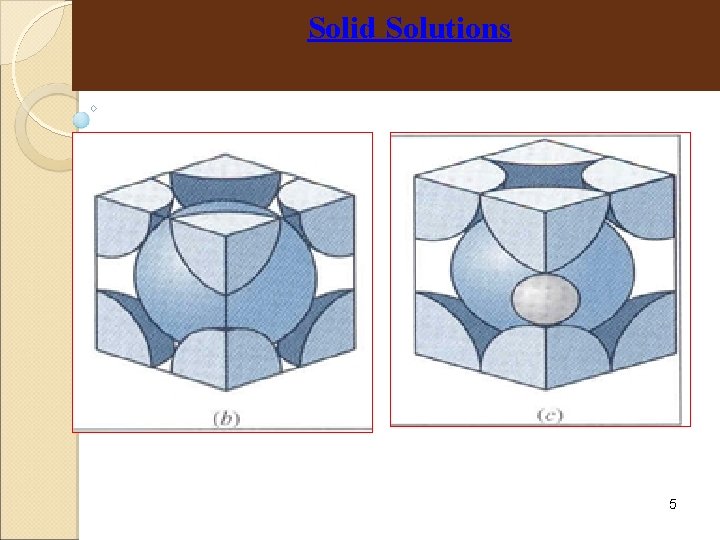
Solid solubility The degree to which one solid component can dissolve another. or The extent to which one metal is capable of forming solid solutions with another.
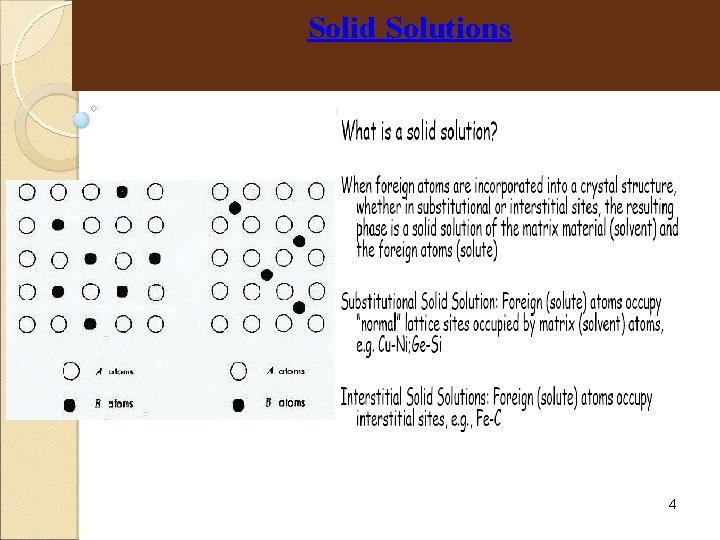
Solid Solutions 4
Solid Solutions 5
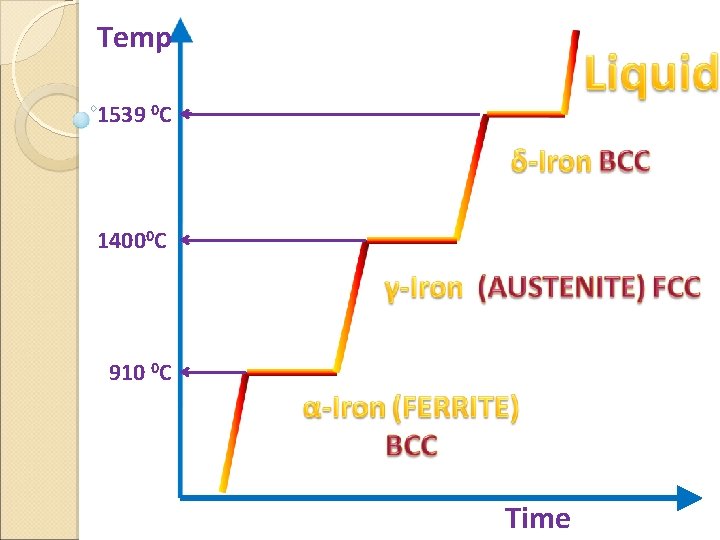
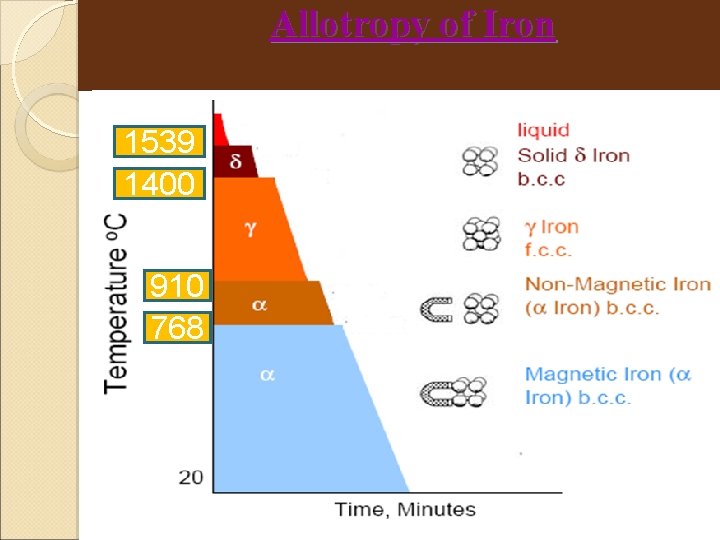
Allotropy of Iron changes its crystal structure from BCC to FCC at 910 c , then again to BCC at 1400 c and further heating , it melts at 1539 c. This change of crystal structure Is called allotropy.
Temp 1539 0 C 14000 C 910 0 C Time
Allotropy of Iron 1539 1400 910 768
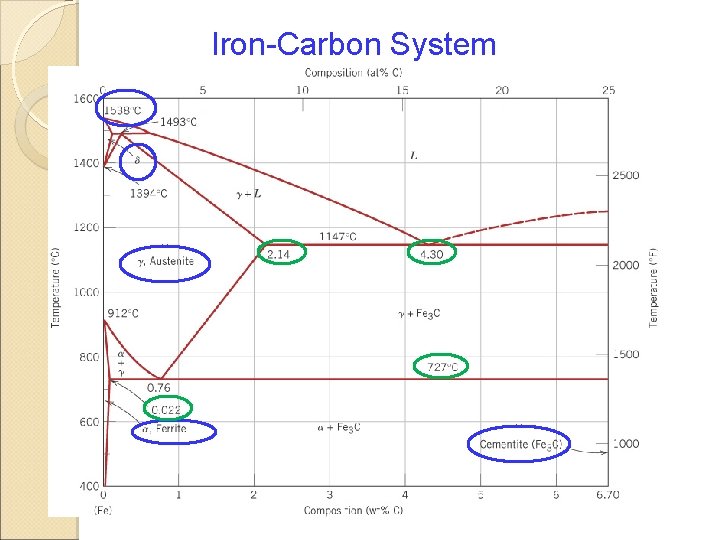
Phases in Steel α-ferrite Interstitial solid solution of carbon dissolve in α-iron having BCC structure. Maximum solubility of carbon in α-iron is 0. 02% (at 7270 C) At room temperature solubility is 0. 008%
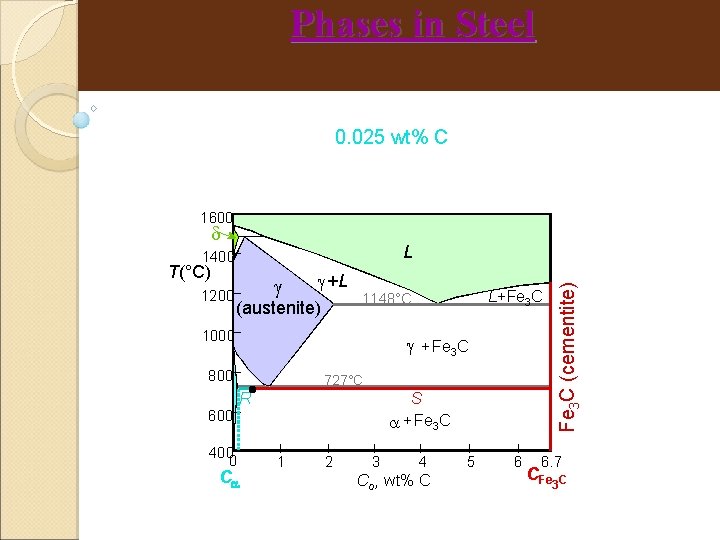
Phases in Steel 0. 025 wt% C 1600 T(°C) 1200 +L (austenite) + Fe 3 C 800 727°C R S + Fe 3 C 600 400 0 L+Fe 3 C 1148°C 1000 Fe 3 C (cementite) L 1400 C 1 2 3 4 Co , wt% C 5 6 6. 7 CFe 3 C
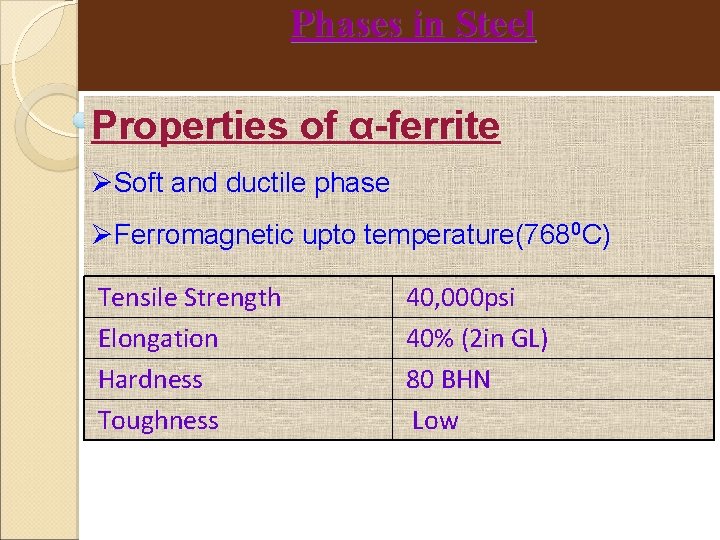
Phases in Steel Properties of α-ferrite Soft and ductile phase Ferromagnetic upto temperature(7680 C) Tensile Strength Elongation Hardness Toughness 40, 000 psi 40% (2 in GL) 80 BHN Low
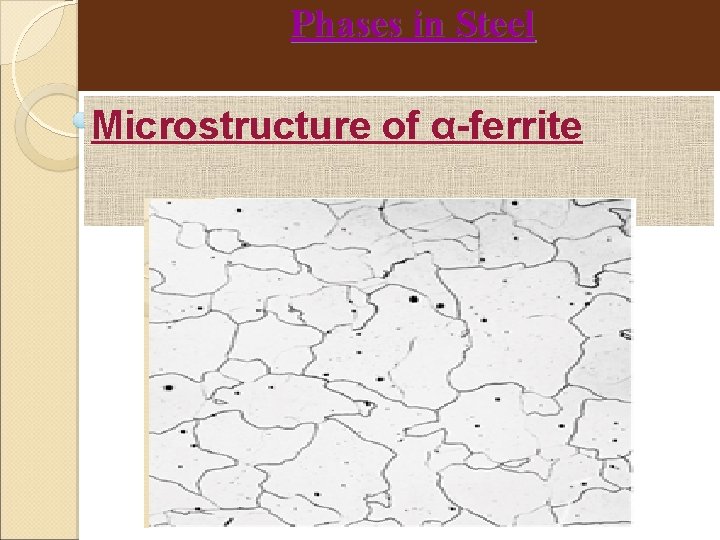
Phases in Steel Microstructure of α-ferrite

Phases in Steel Austenite (γ) Interstitial solid solution of carbon dissolve in γ-iron having FCC structure. Maximum solubility of carbon in γ-iron is 2% (at 11470 C) Stable only above 7270 C
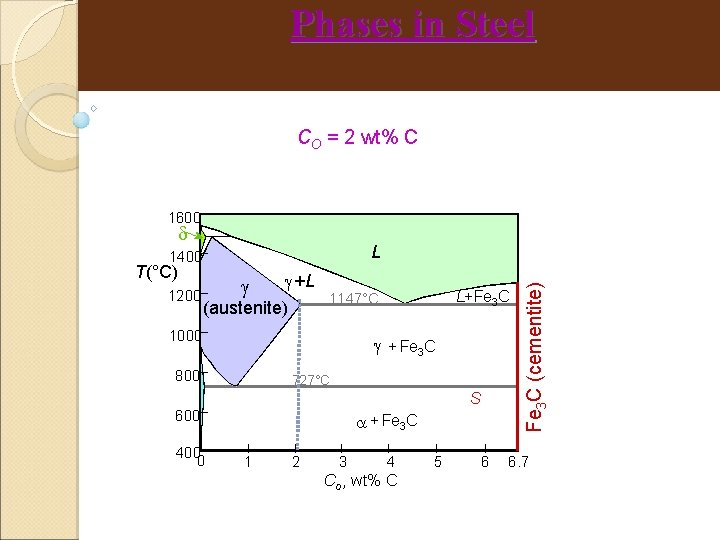
Phases in Steel CO = 2 wt% C 1600 T(°C) 1200 +L (austenite) L+Fe 3 C 1147°C 1000 + Fe 3 C 800 727°C S 600 400 0 + Fe 3 C 1 2 3 4 Co , wt% C 5 6 Fe 3 C (cementite) L 1400 6. 7

Phases in Steel Properties of Austenite Soft and ductile phase Non magnetic Tensile Strength Elongation Hardness Toughness 1, 50, 000 psi 10% Rc 40 High

Phases in Steel Microstructure of Austenite
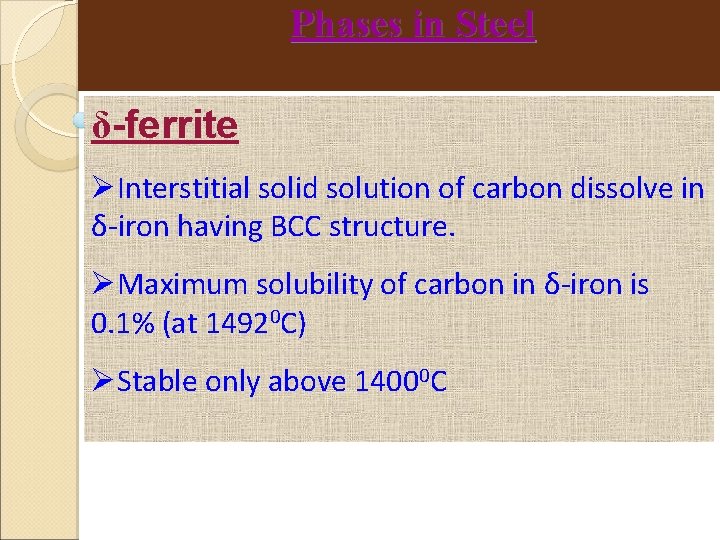
Phases in Steel δ-ferrite Interstitial solid solution of carbon dissolve in δ-iron having BCC structure. Maximum solubility of carbon in δ-iron is 0. 1% (at 14920 C) Stable only above 14000 C
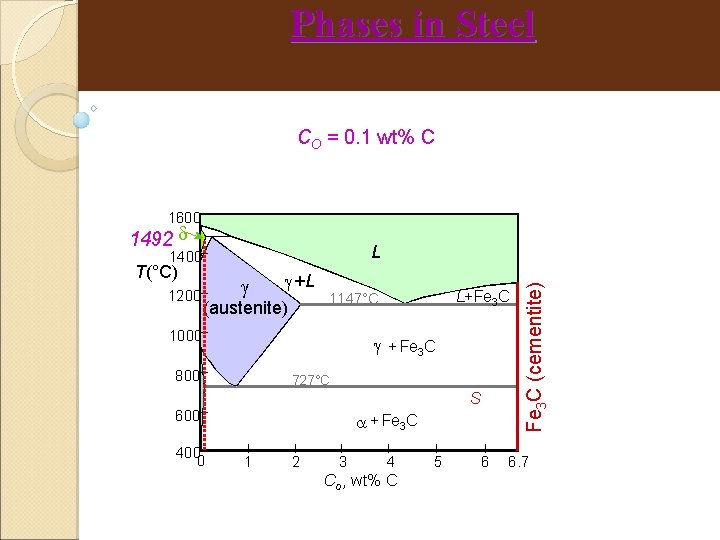
Phases in Steel CO = 0. 1 wt% C 1600 1492 T(°C) 1200 +L (austenite) L+Fe 3 C 1147°C 1000 + Fe 3 C 800 727°C S 600 400 0 + Fe 3 C 1 2 3 4 Co , wt% C 5 6 Fe 3 C (cementite) L 1400 6. 7
Phases in Steel Iron Carbide (Cementite) compound of iron and carbon with fixed carbon content of 6. 67% and having orthorhombic structure. Chemical formula Fe 3 C
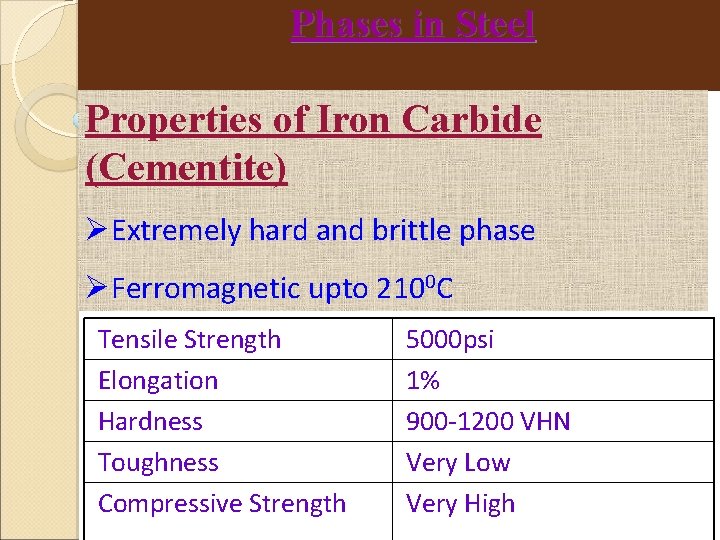
Phases in Steel Properties of Iron Carbide (Cementite) Extremely hard and brittle phase Ferromagnetic upto 2100 C Tensile Strength Elongation Hardness Toughness Compressive Strength 5000 psi 1% 900 -1200 VHN Very Low Very High
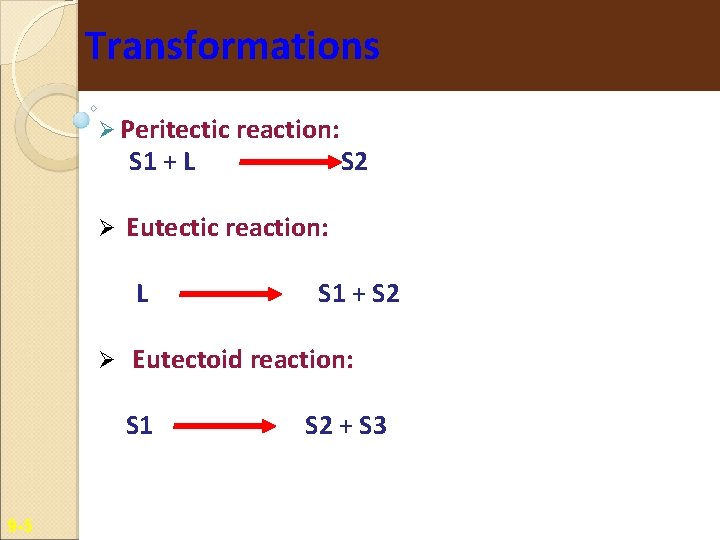
Transformations Peritectic reaction: S 1 + L Eutectic reaction: L S 1 + S 2 Eutectoid reaction: S 1 9 -5 S 2 + S 3
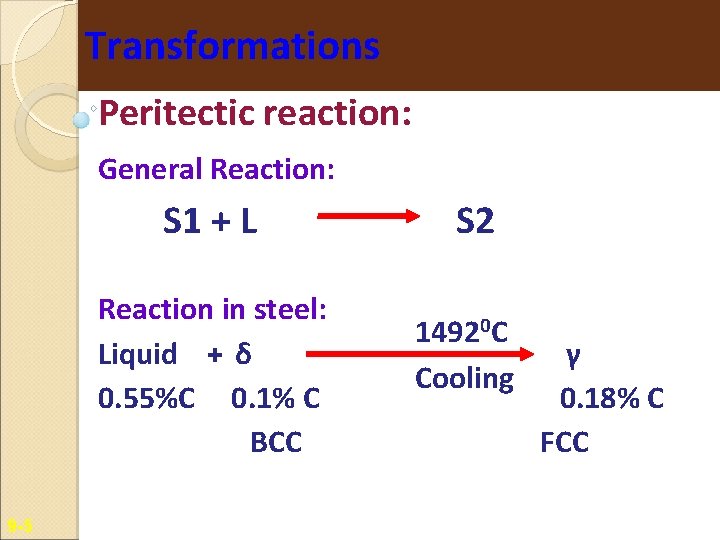
Transformations Peritectic reaction: General Reaction: S 1 + L Reaction in steel: Liquid + δ 0. 55%C 0. 1% C BCC 9 -5 S 2 14920 C Cooling γ 0. 18% C FCC
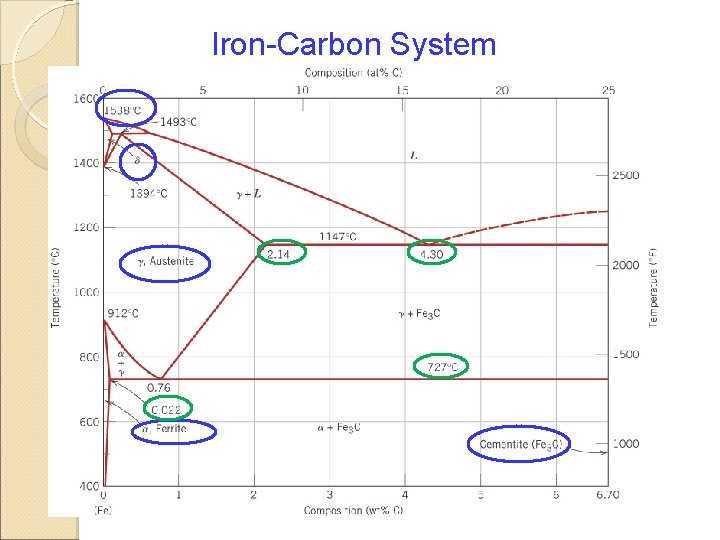
Iron-Carbon System
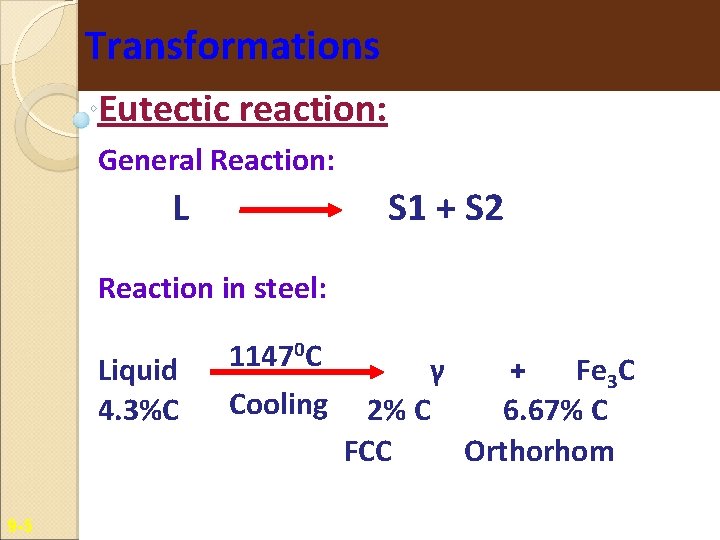
Transformations Eutectic reaction: General Reaction: L S 1 + S 2 Reaction in steel: Liquid 4. 3%C 9 -5 11470 C Cooling γ + Fe 3 C 2% C 6. 67% C FCC Orthorhom
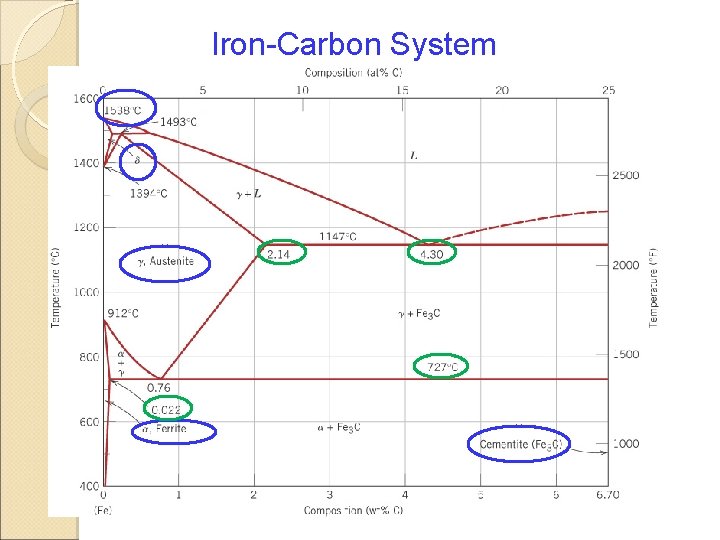
Iron-Carbon System
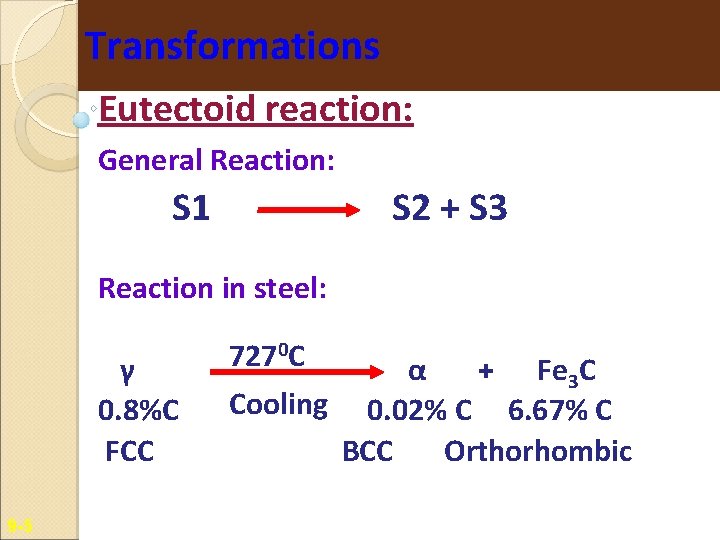
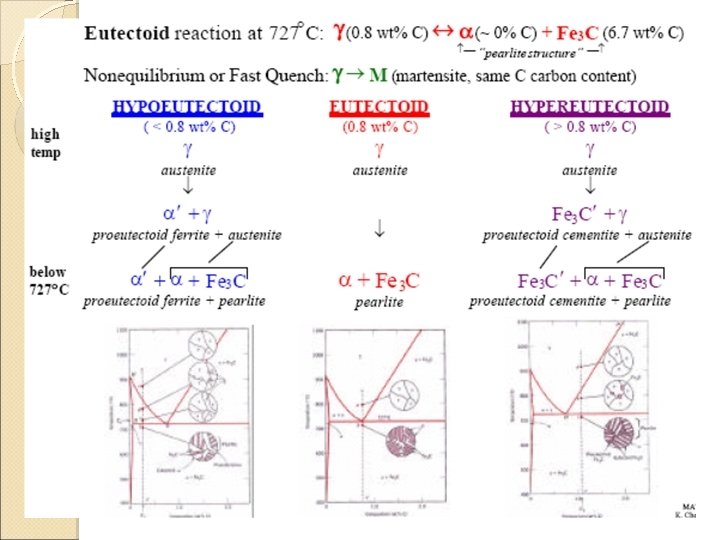
Transformations Eutectoid reaction: General Reaction: S 1 S 2 + S 3 Reaction in steel: γ 0. 8%C FCC 9 -5 7270 C Cooling α + Fe 3 C 0. 02% C 6. 67% C BCC Orthorhombic
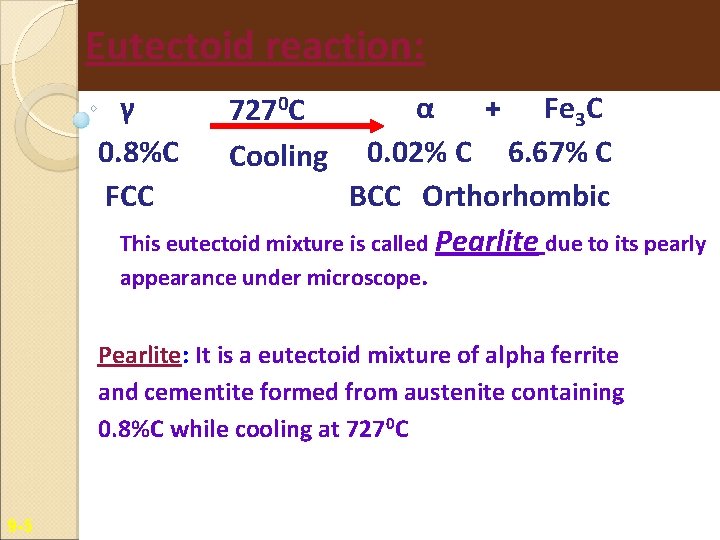
Eutectoid reaction: γ 0. 8%C FCC α + Fe 3 C 0. 02% C 6. 67% C BCC Orthorhombic This eutectoid mixture is called Pearlite due to its pearly 7270 C Cooling appearance under microscope. Pearlite: It is a eutectoid mixture of alpha ferrite and cementite formed from austenite containing 0. 8%C while cooling at 7270 C 9 -5
Iron-Carbon System
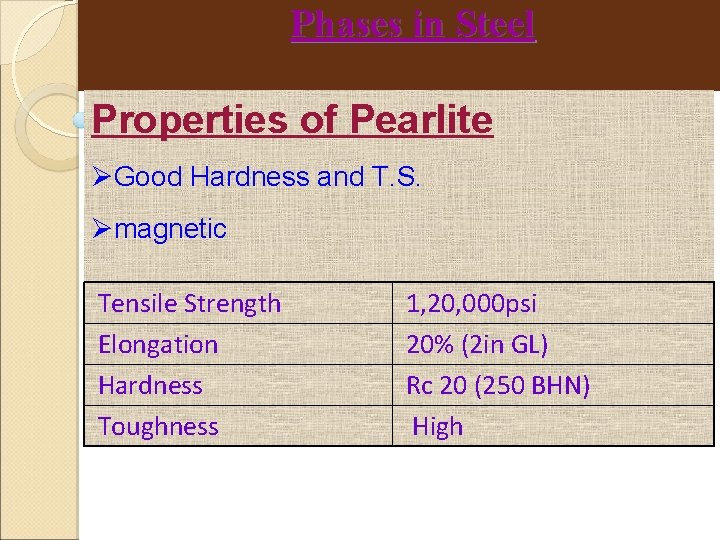
Phases in Steel Properties of Pearlite Good Hardness and T. S. magnetic Tensile Strength Elongation Hardness Toughness 1, 20, 000 psi 20% (2 in GL) Rc 20 (250 BHN) High
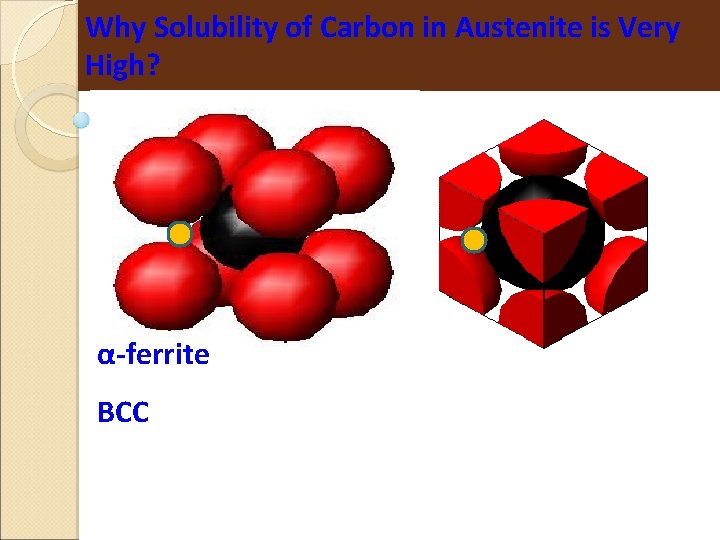
Why Solubility of Carbon in Austenite is Very High? α-ferrite BCC
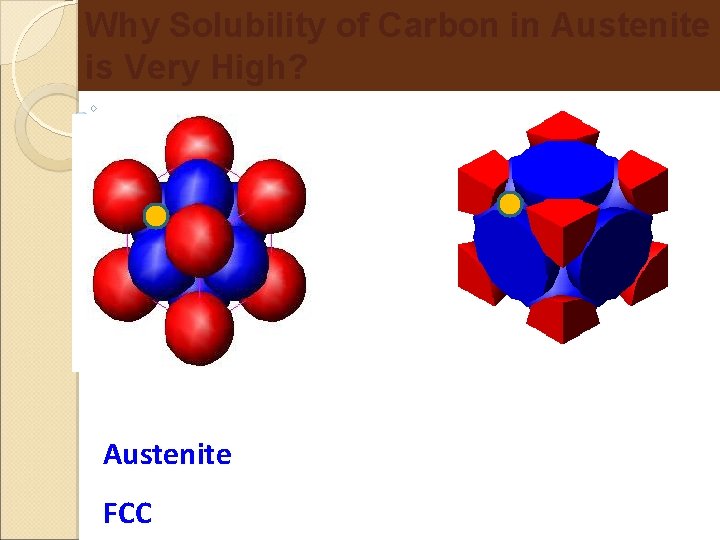
Why Solubility of Carbon in Austenite is Very High? Austenite FCC
Classification of Steels are classified base on various criterions: Amount of carbon Amount of alloying elements Amount of deoxidation Grain Coasening Characteristics Method of Manufacturing Depth of Hardening Form and use
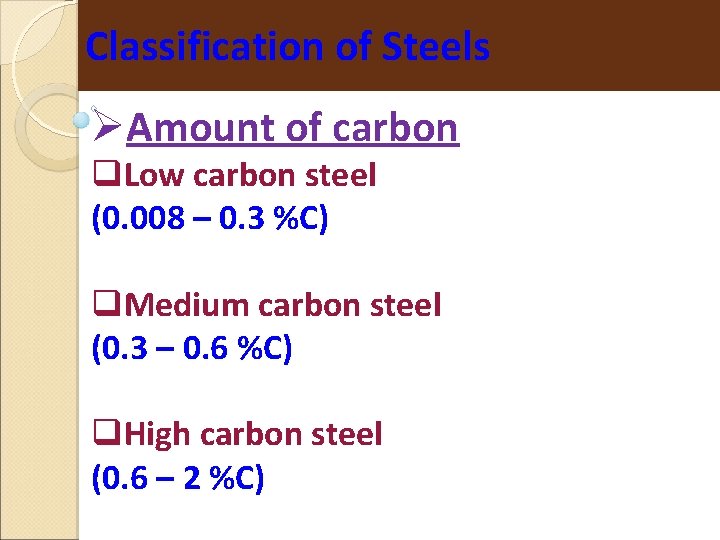
Classification of Steels Amount of carbon Low carbon steel (0. 008 – 0. 3 %C) Medium carbon steel (0. 3 – 0. 6 %C) High carbon steel (0. 6 – 2 %C)
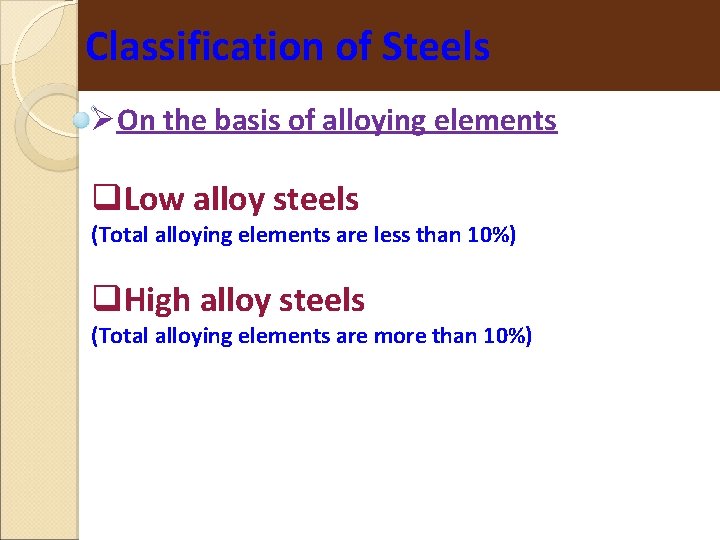
Classification of Steels On the basis of alloying elements Low alloy steels (Total alloying elements are less than 10%) High alloy steels (Total alloying elements are more than 10%)
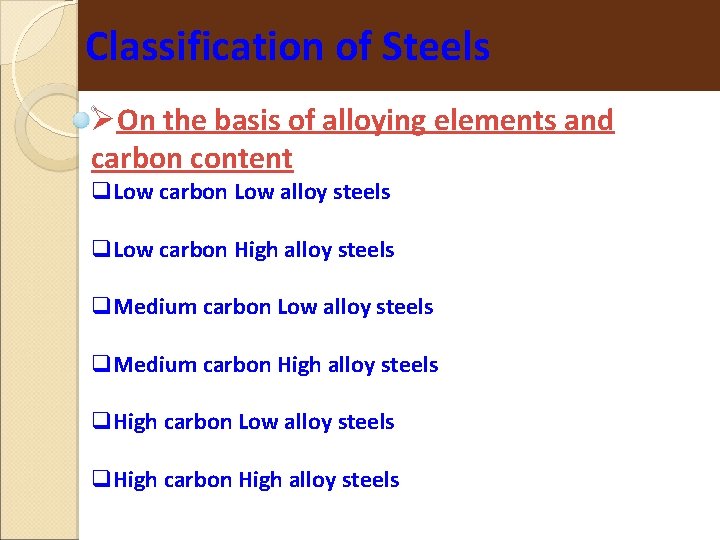
Classification of Steels On the basis of alloying elements and carbon content Low carbon Low alloy steels Low carbon High alloy steels Medium carbon Low alloy steels Medium carbon High alloy steels High carbon Low alloy steels High carbon High alloy steels
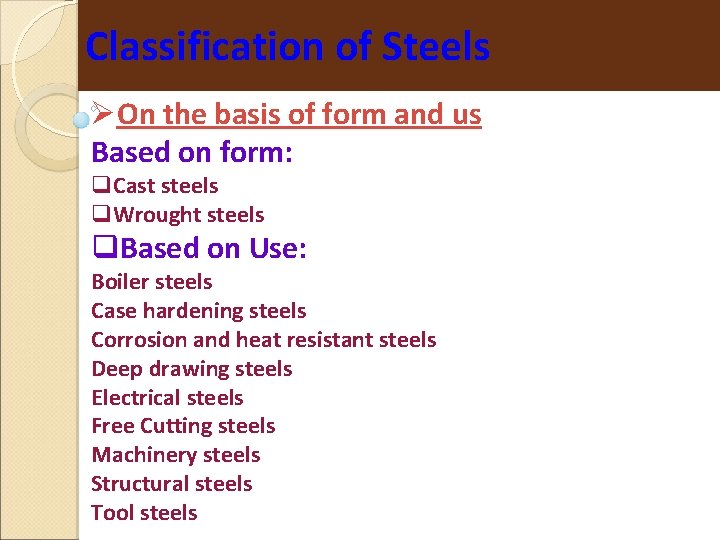
Classification of Steels On the basis of form and us Based on form: Cast steels Wrought steels Based on Use: Boiler steels Case hardening steels Corrosion and heat resistant steels Deep drawing steels Electrical steels Free Cutting steels Machinery steels Structural steels Tool steels
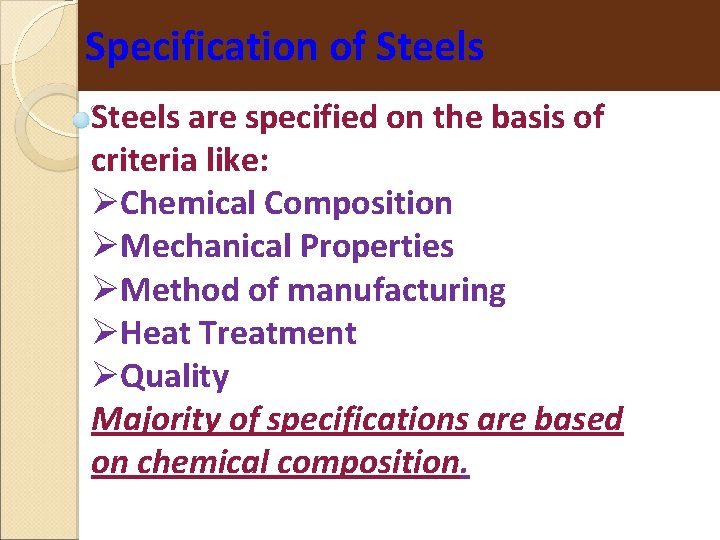
Specification of Steels are specified on the basis of criteria like: Chemical Composition Mechanical Properties Method of manufacturing Heat Treatment Quality Majority of specifications are based on chemical composition.
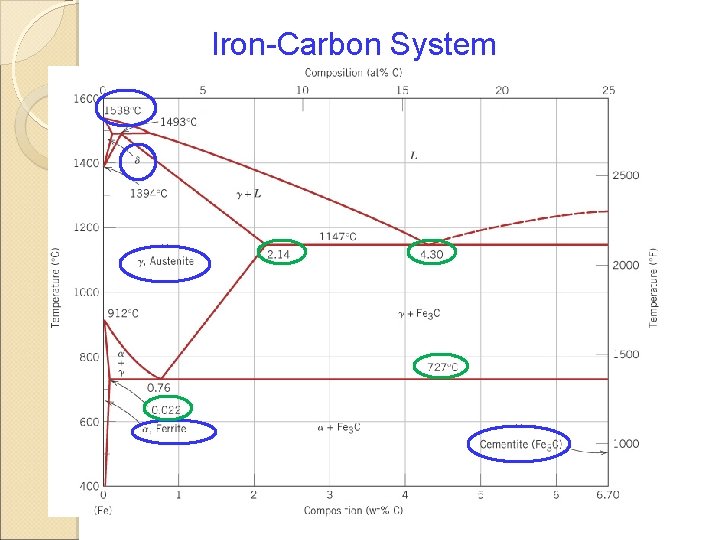
Iron-Carbon System
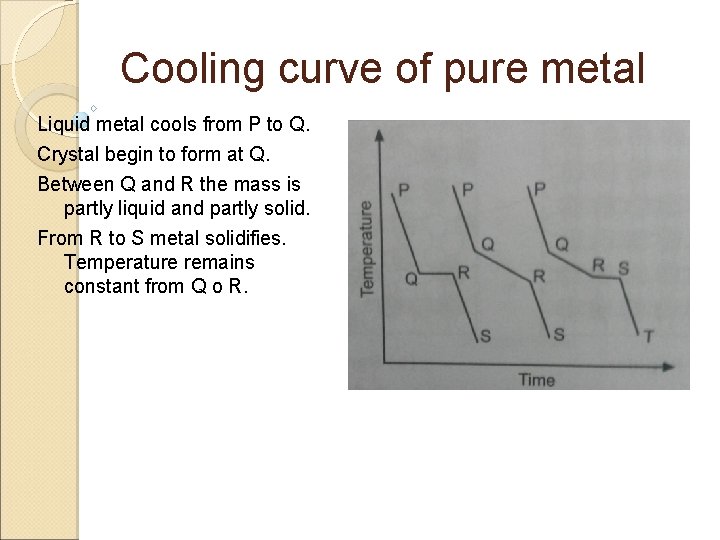
Cooling curve of pure metal Liquid metal cools from P to Q. Crystal begin to form at Q. Between Q and R the mass is partly liquid and partly solid. From R to S metal solidifies. Temperature remains constant from Q o R.
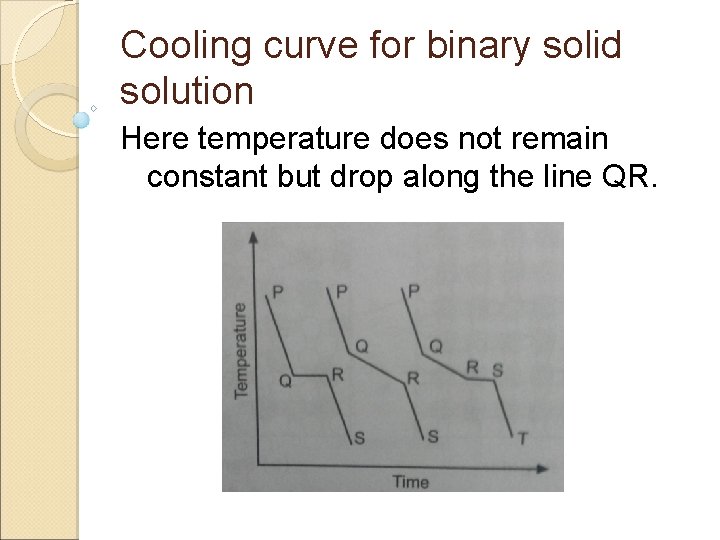
Cooling curve for binary solid solution Here temperature does not remain constant but drop along the line QR.
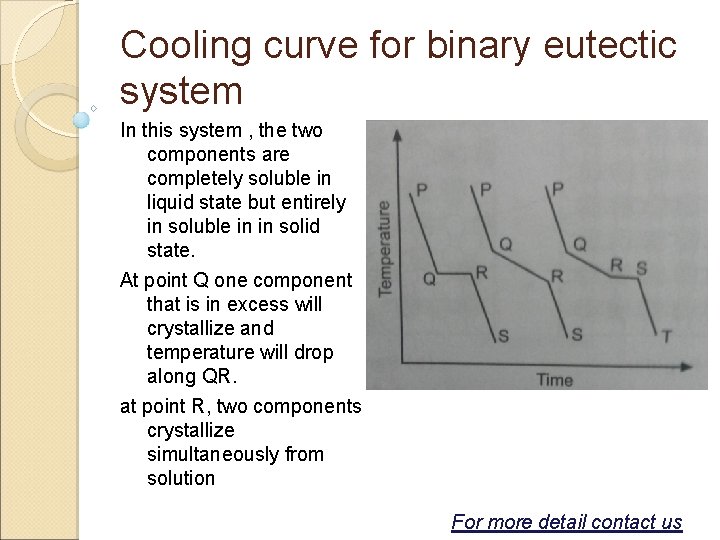
Cooling curve for binary eutectic system In this system , the two components are completely soluble in liquid state but entirely in soluble in in solid state. At point Q one component that is in excess will crystallize and temperature will drop along QR. at point R, two components crystallize simultaneously from solution For more detail contact us
- Slides: 42