
CNS radiation toxicity Horia Vulpe MD CM FRCPC

- Slides: 22
CNS radiation toxicity Horia Vulpe, MD, CM, FRCPC
A little about me
Outline • Radiation Therapy Primer • Mechanisms of CNS radiation toxicity • CNS toxicity overview • WBRT • Partial Brain RT • Stereotactic Radiosurgery • Peds
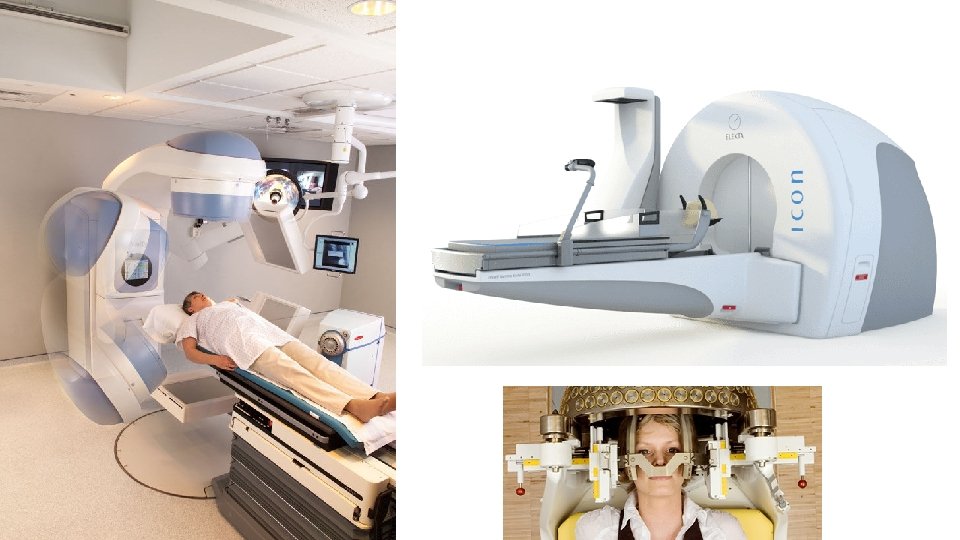
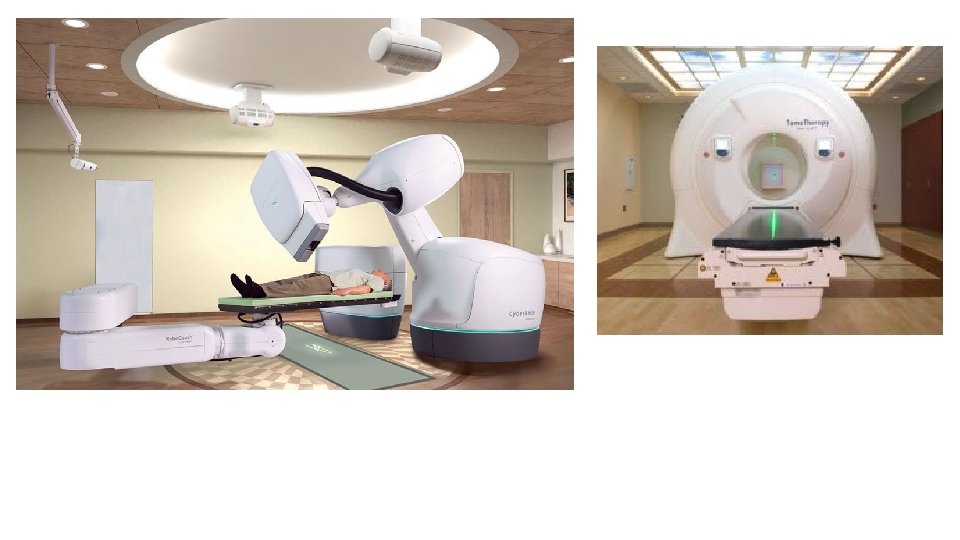
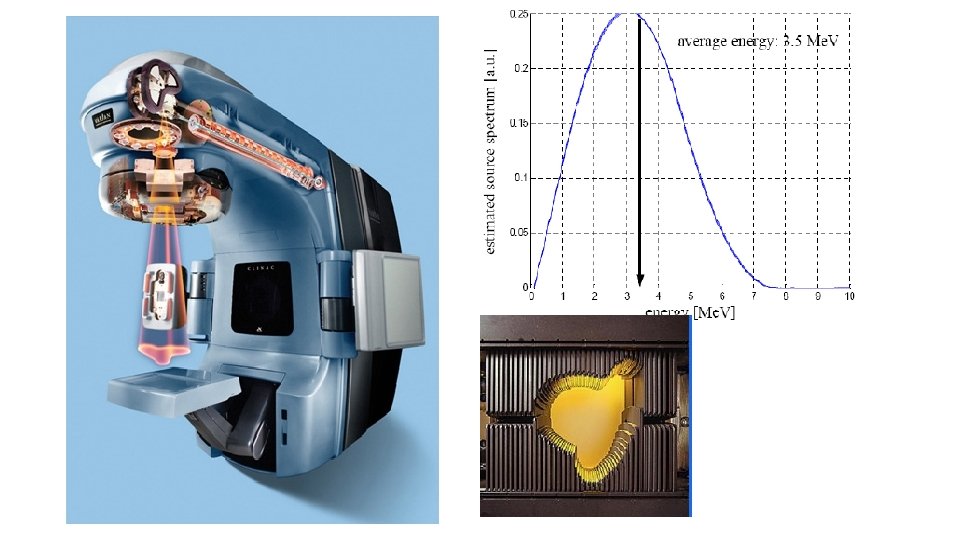
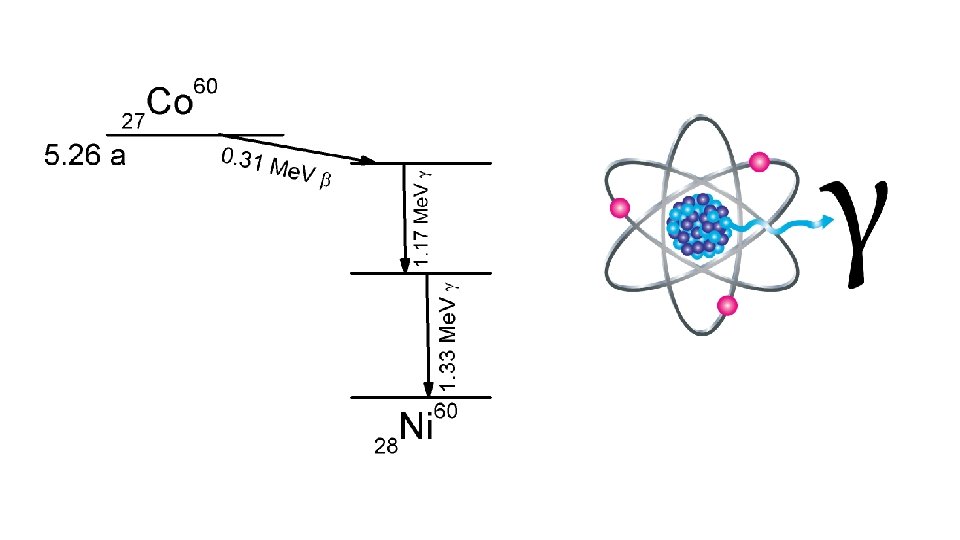
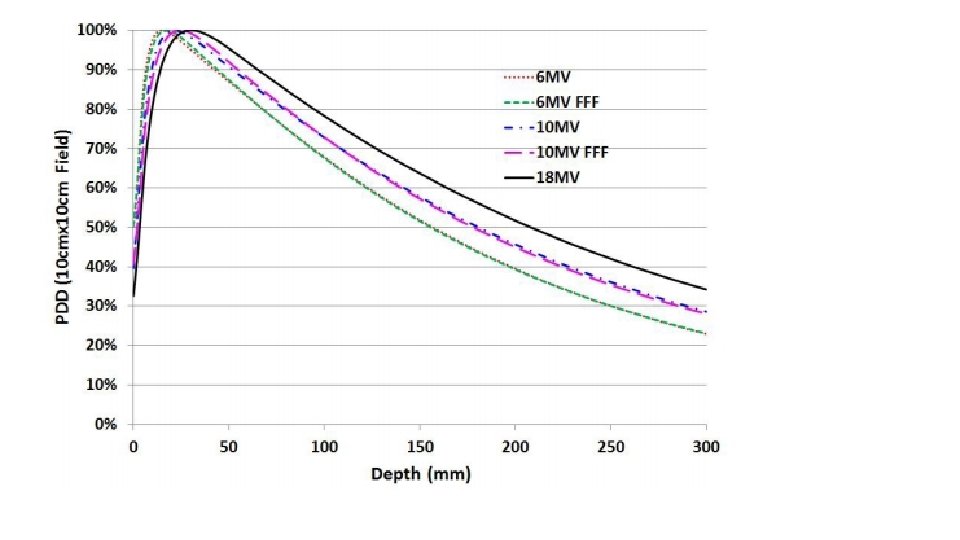
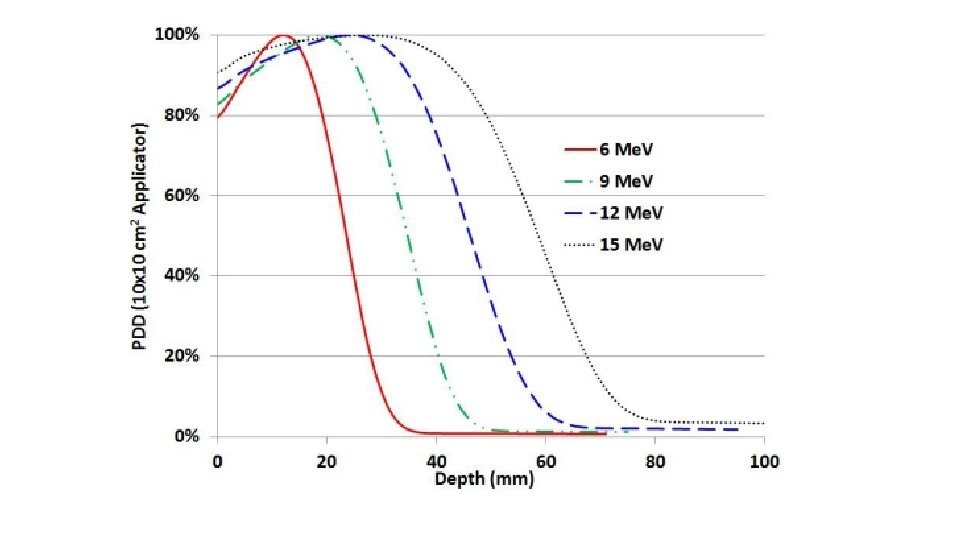
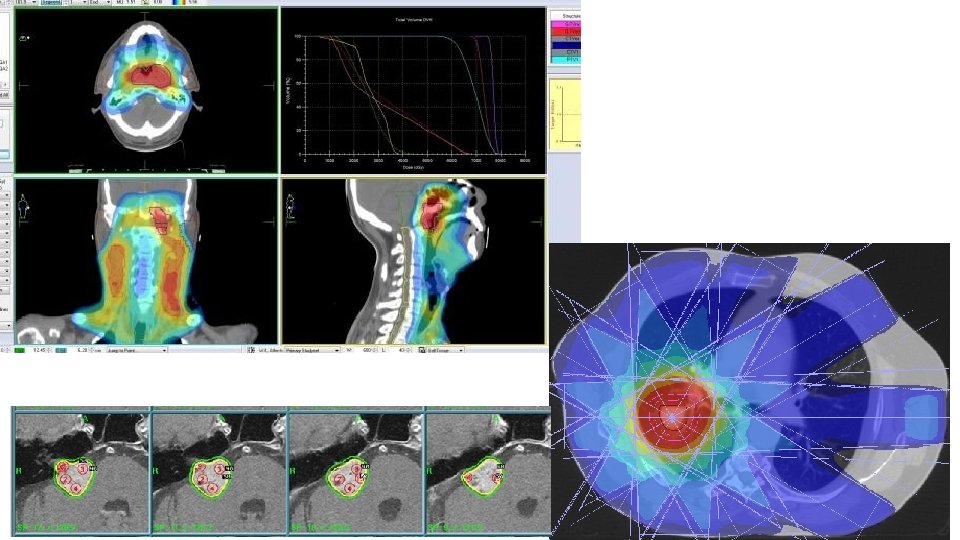
External RT
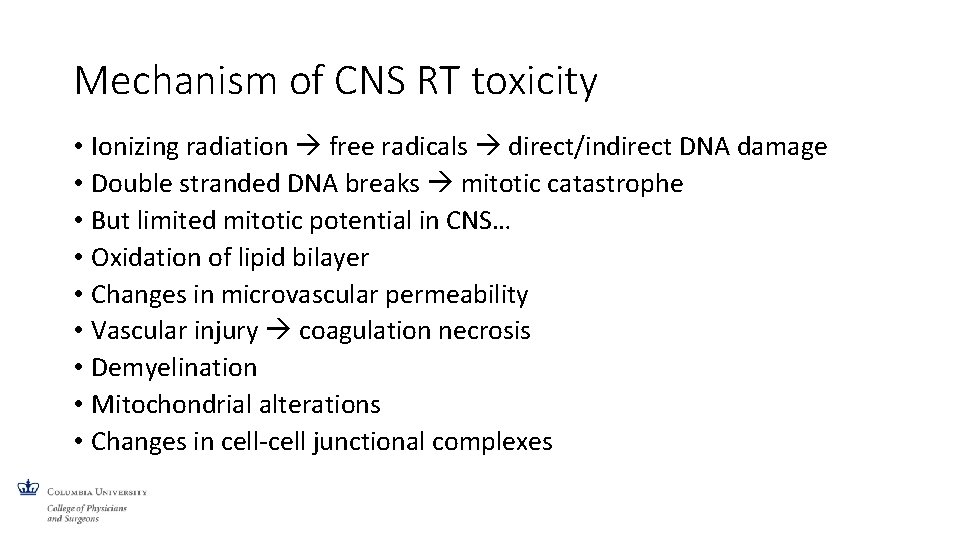
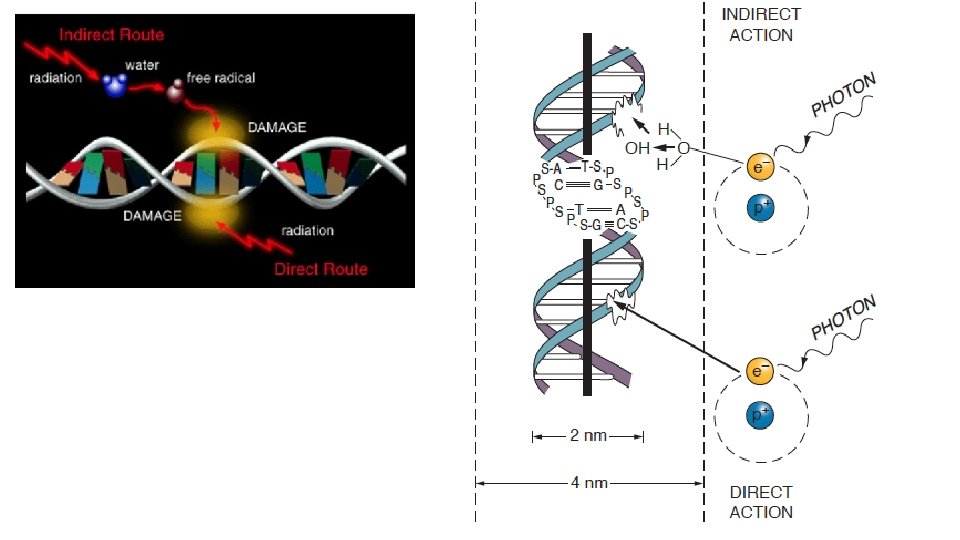
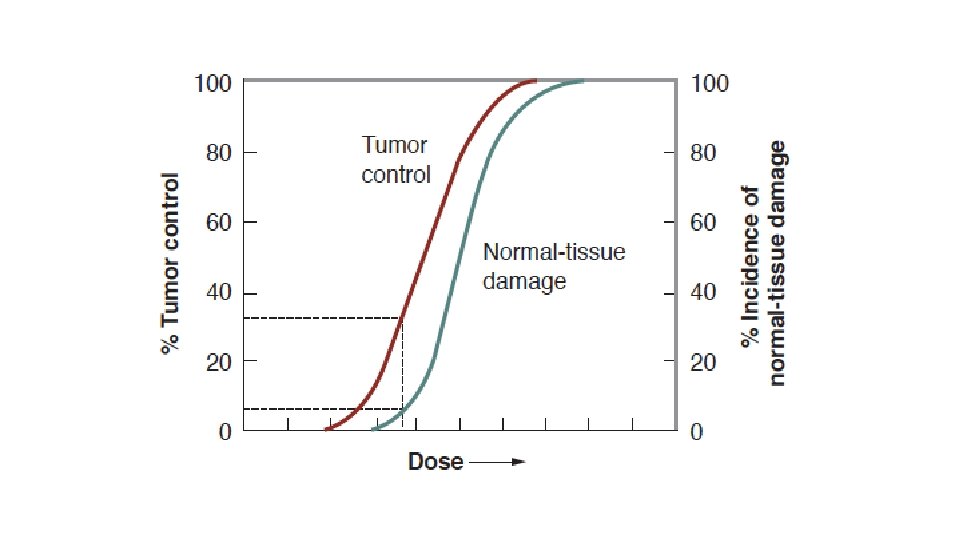
Mechanism of CNS RT toxicity • Ionizing radiation free radicals direct/indirect DNA damage • Double stranded DNA breaks mitotic catastrophe • But limited mitotic potential in CNS… • Oxidation of lipid bilayer • Changes in microvascular permeability • Vascular injury coagulation necrosis • Demyelination • Mitochondrial alterations • Changes in cell-cell junctional complexes
There is no safe dose of radiation
CNS Toxicity Overview • RT treatment factors: dose, volume, fractionation, location • Acute <3 months • Acute acute (within days to weeks after irradiation) • Early-delayed (within 1 -6 months postirradiation) • Incidence varies 15 -60% depending on population, scales, etc. • Late (>6 months postirradiation) • largely unknown for many patients treated with WBRT
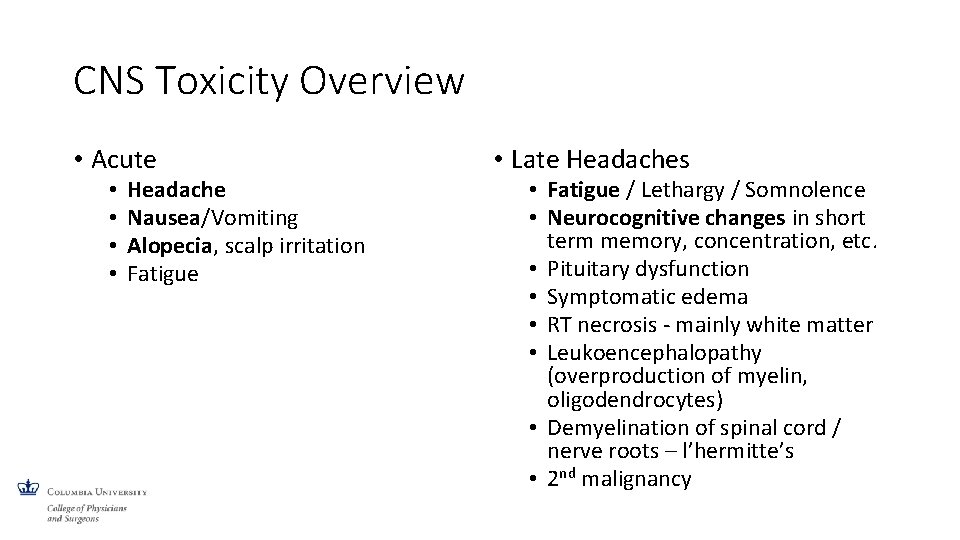
CNS Toxicity Overview • Acute • • Headache Nausea/Vomiting Alopecia, scalp irritation Fatigue • Late Headaches • Fatigue / Lethargy / Somnolence • Neurocognitive changes in short term memory, concentration, etc. • Pituitary dysfunction • Symptomatic edema • RT necrosis - mainly white matter • Leukoencephalopathy (overproduction of myelin, oligodendrocytes) • Demyelination of spinal cord / nerve roots – l’hermitte’s • 2 nd malignancy
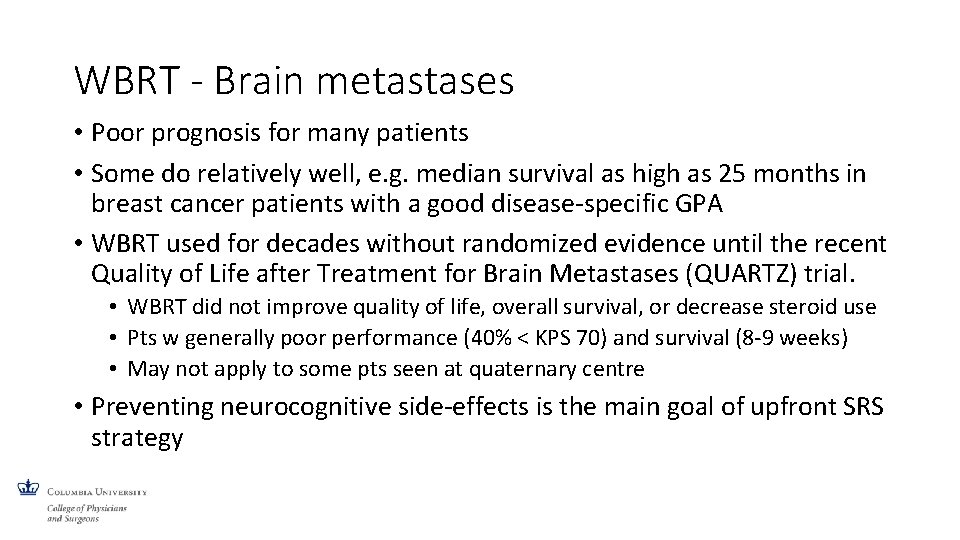
WBRT - Brain metastases • Poor prognosis for many patients • Some do relatively well, e. g. median survival as high as 25 months in breast cancer patients with a good disease-specific GPA • WBRT used for decades without randomized evidence until the recent Quality of Life after Treatment for Brain Metastases (QUARTZ) trial. • WBRT did not improve quality of life, overall survival, or decrease steroid use • Pts w generally poor performance (40% < KPS 70) and survival (8 -9 weeks) • May not apply to some pts seen at quaternary centre • Preventing neurocognitive side-effects is the main goal of upfront SRS strategy
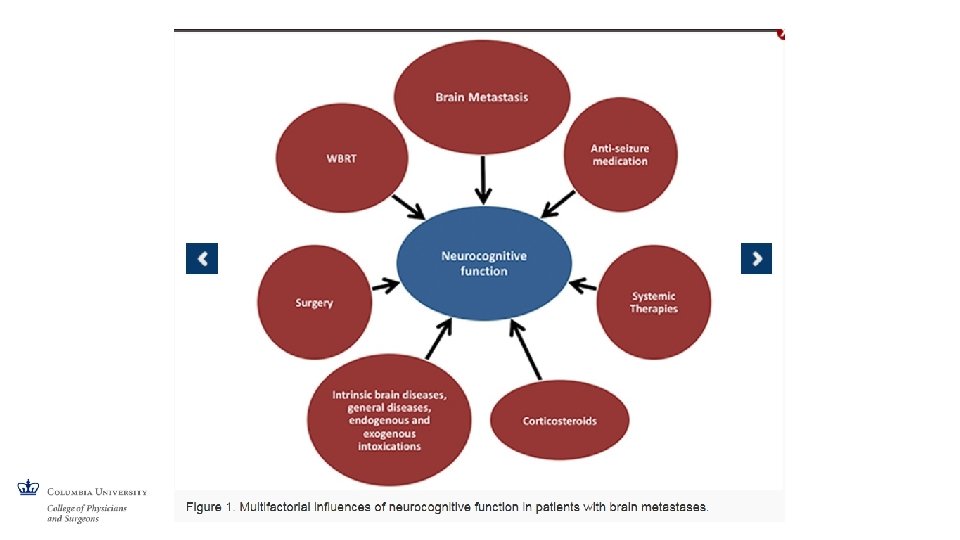
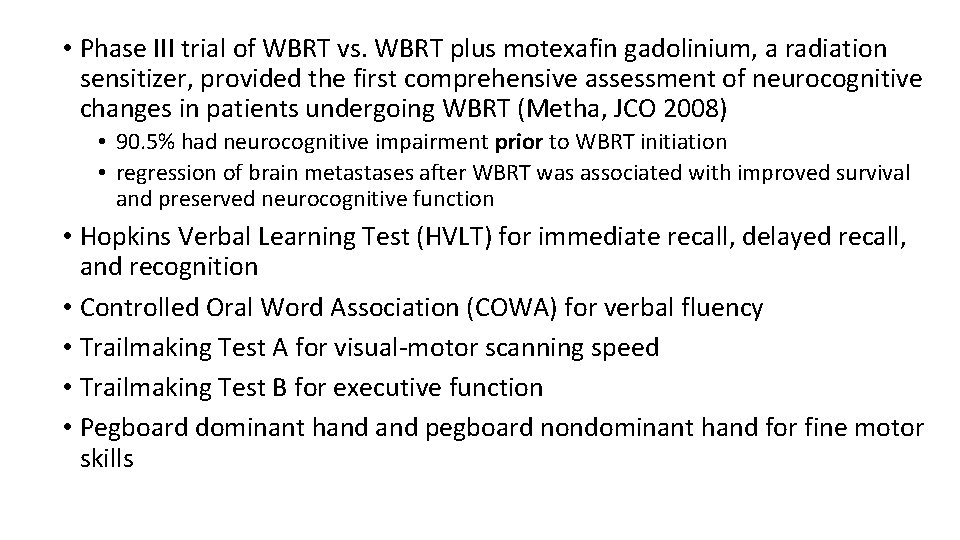
• Phase III trial of WBRT vs. WBRT plus motexafin gadolinium, a radiation sensitizer, provided the first comprehensive assessment of neurocognitive changes in patients undergoing WBRT (Metha, JCO 2008) • 90. 5% had neurocognitive impairment prior to WBRT initiation • regression of brain metastases after WBRT was associated with improved survival and preserved neurocognitive function • Hopkins Verbal Learning Test (HVLT) for immediate recall, delayed recall, and recognition • Controlled Oral Word Association (COWA) for verbal fluency • Trailmaking Test A for visual-motor scanning speed • Trailmaking Test B for executive function • Pegboard dominant hand pegboard nondominant hand for fine motor skills
WBRT - Brain metastases • RTOG 0214 Phase III RCT of PCI vs observation in pts with NSCLC (Sun, JCO 2011) • Stage III NSCLC without brain mets got PCI vs observation • Good opportunity to study WBRT on disease-free brains (and not in SCLC) • Worse HVLT scores in immediate recall and delayed recall @ 1 y (detonation in 5 -7% vs 26 -32% pts, P<0. 05) • No difference in MMSE, ADLs • PCI reduces risk of brain mets but no OS improvement at 1 y