
CNS as integration of arcs integration center interneurons
- Slides: 42
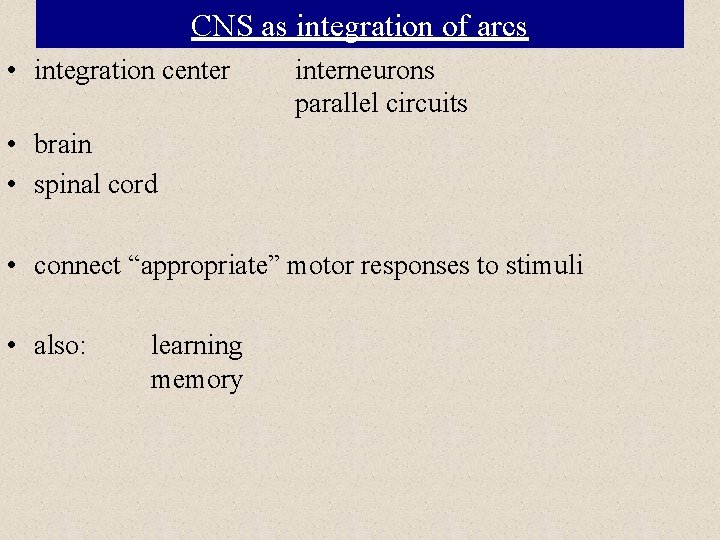
CNS as integration of arcs • integration center interneurons parallel circuits • brain • spinal cord • connect “appropriate” motor responses to stimuli • also: learning memory
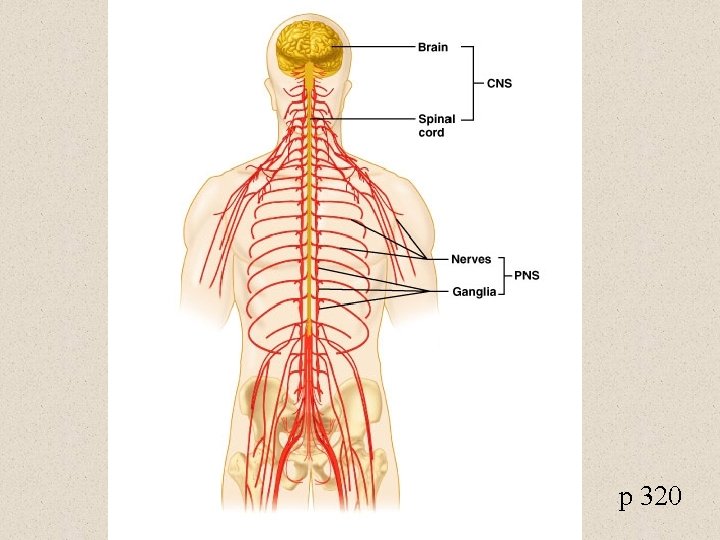
p 320
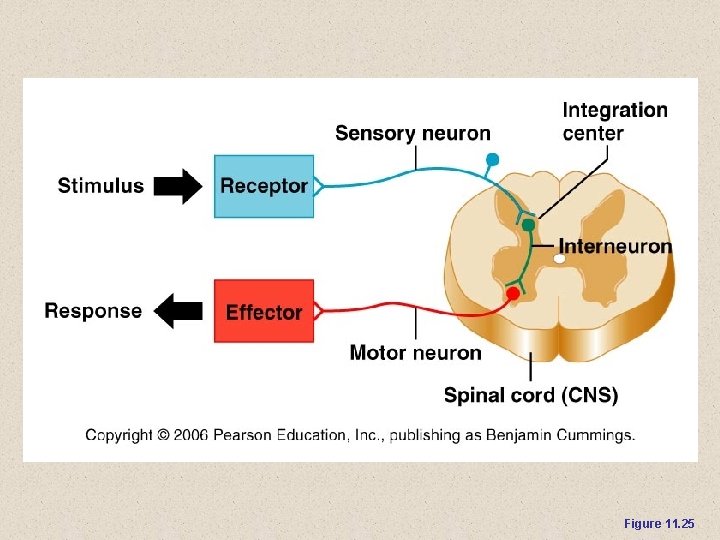
Figure 11. 25
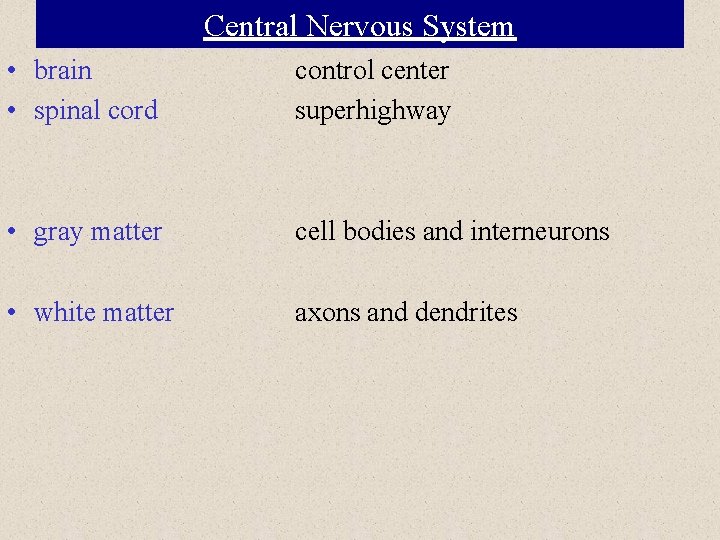
Central Nervous System • brain • spinal cord control center superhighway • gray matter cell bodies and interneurons • white matter axons and dendrites
brain functional areas • integration areas • connect sensory to motor sensory to sensory other areas (parallel)
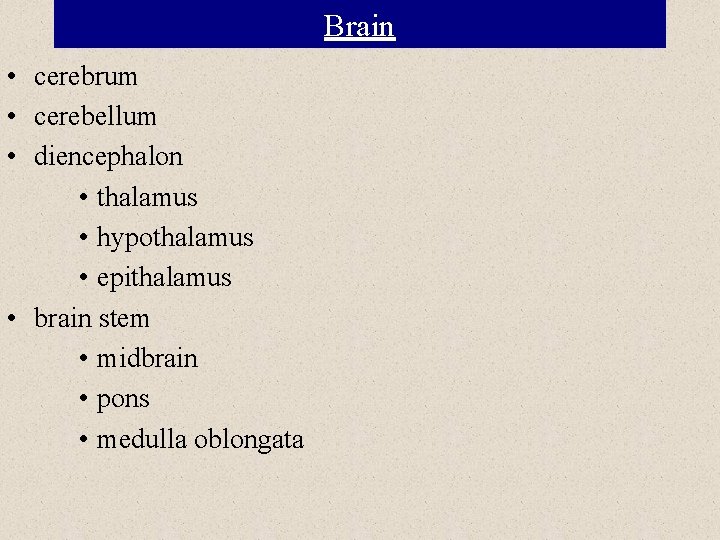
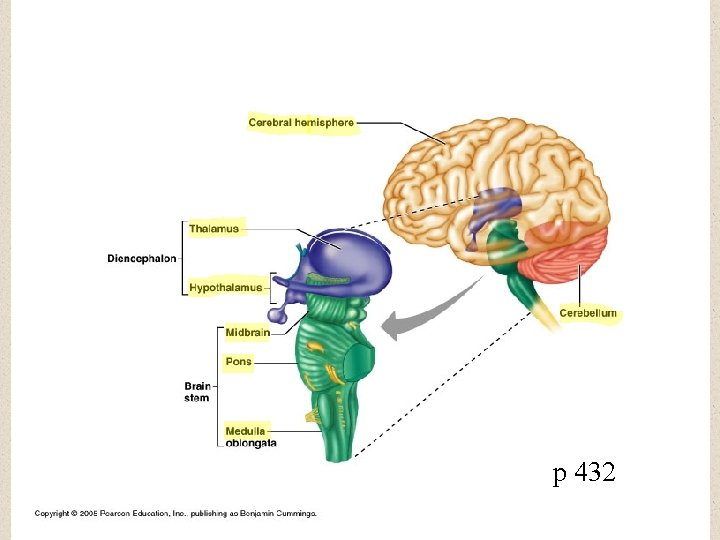
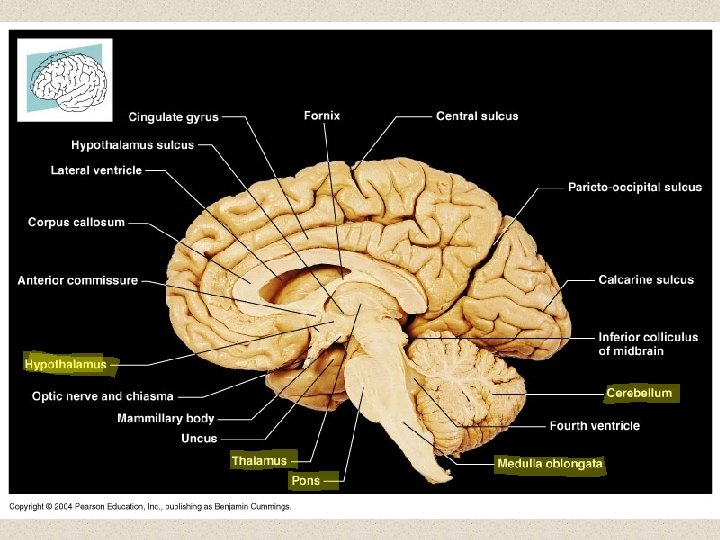
Brain • cerebrum • cerebellum • diencephalon • thalamus • hypothalamus • epithalamus • brain stem • midbrain • pons • medulla oblongata
p 432
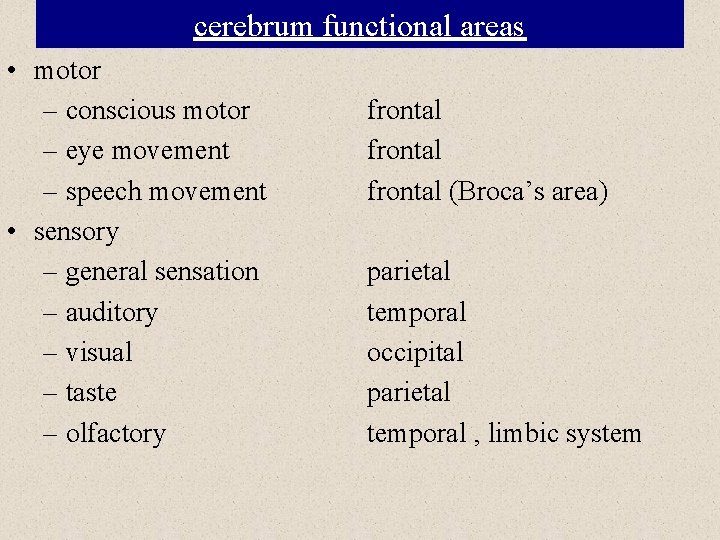
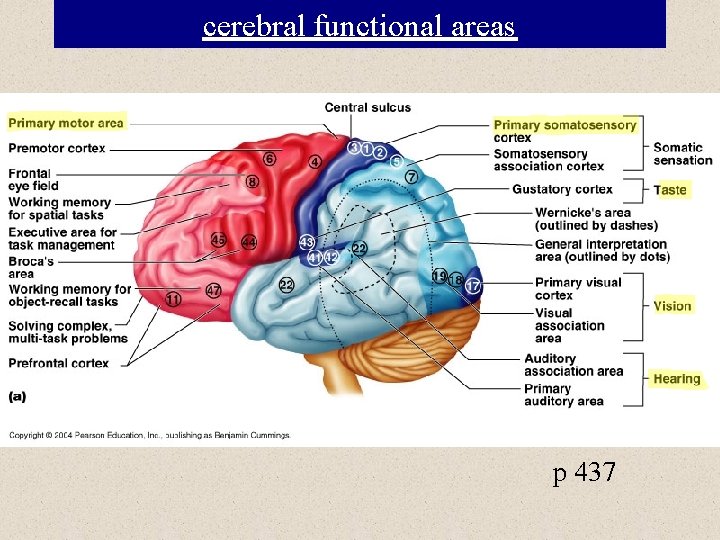
cerebrum functional areas • motor – conscious motor – eye movement – speech movement • sensory – general sensation – auditory – visual – taste – olfactory frontal (Broca’s area) parietal temporal occipital parietal temporal , limbic system
cerebral functional areas p 437
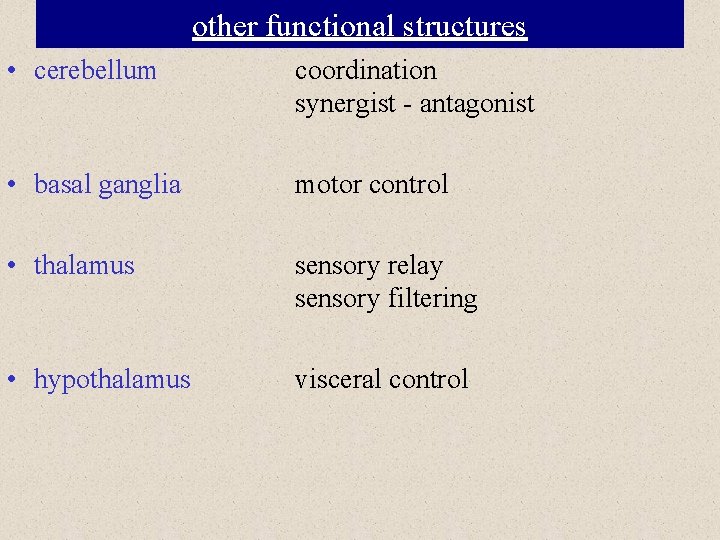
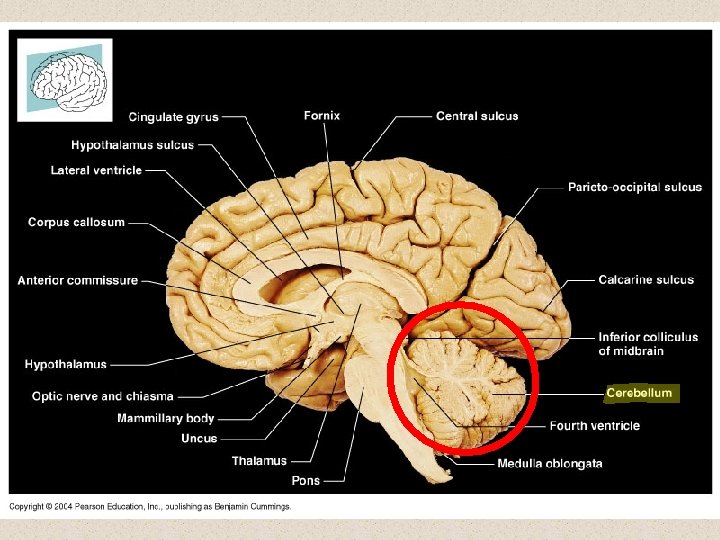
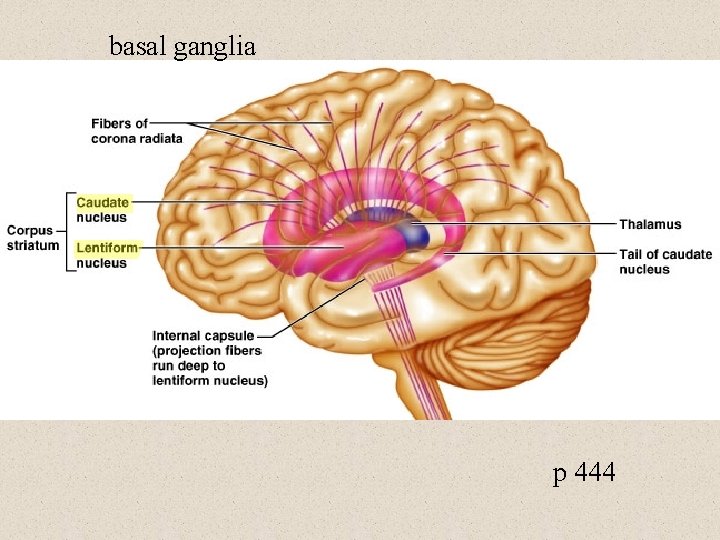
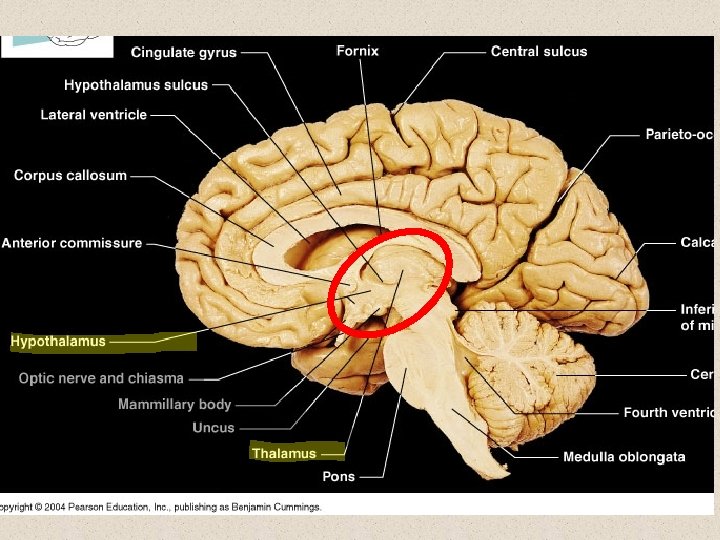
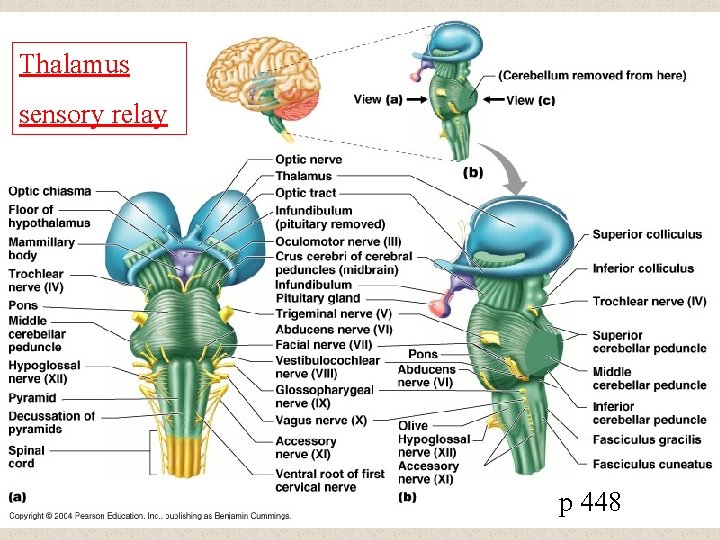
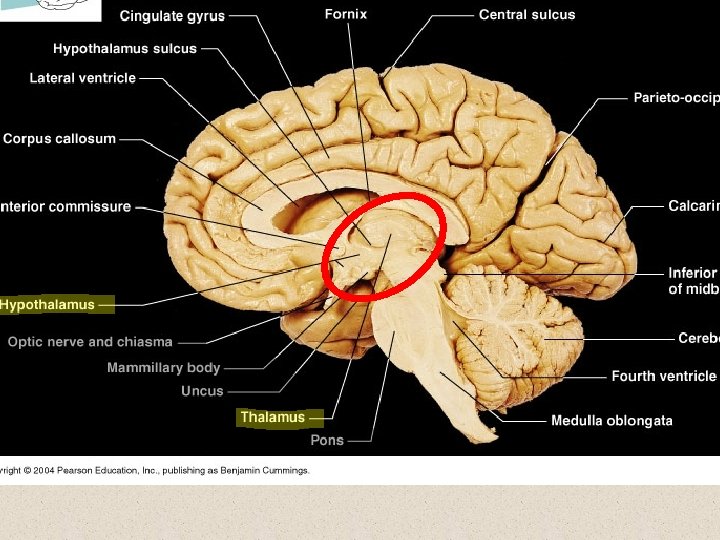
other functional structures • cerebellum coordination synergist - antagonist • basal ganglia motor control • thalamus sensory relay sensory filtering • hypothalamus visceral control
basal ganglia p 444
Thalamus sensory relay p 448
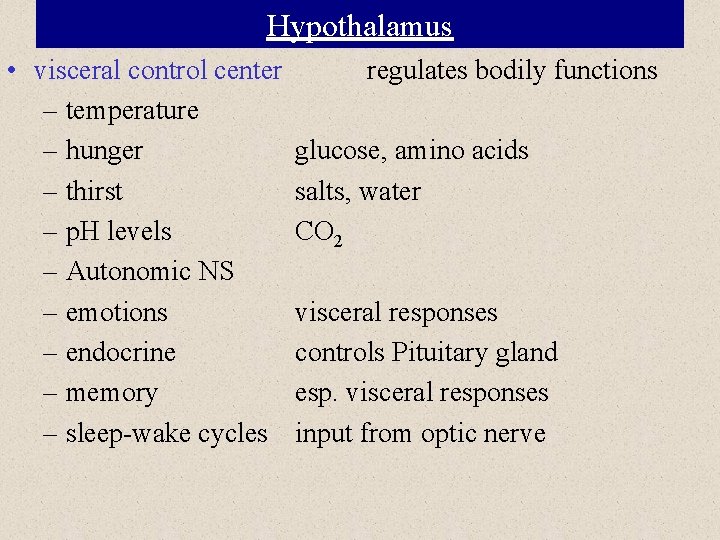
Hypothalamus • visceral control center – temperature – hunger – thirst – p. H levels – Autonomic NS – emotions – endocrine – memory – sleep-wake cycles regulates bodily functions glucose, amino acids salts, water CO 2 visceral responses controls Pituitary gland esp. visceral responses input from optic nerve
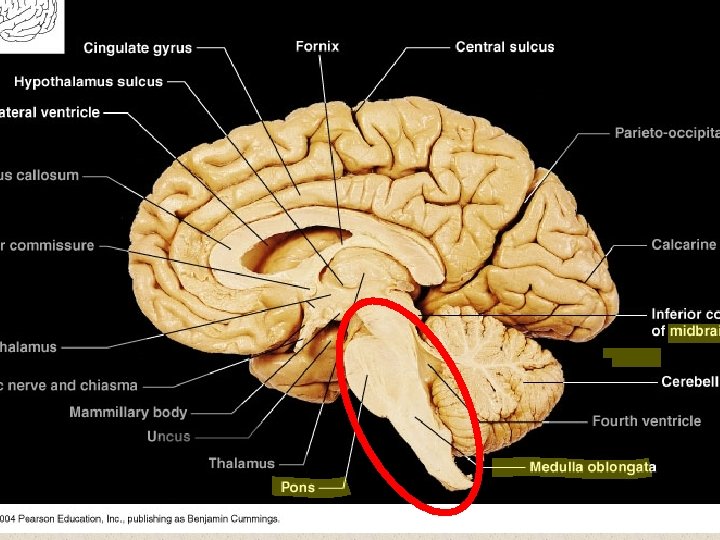
brain stem • 3 parts : – midbrain – pons – medulla oblongata • vital functions • passageway betw cortex and spinal cord • cranial nerves
midbrain • cranial nerves nuclei • corpora quadrigemina – superior colliculi – inferior colliculi • substantia nigra III , IV visual reflexes auditory reflexes influences basal ganglia produces Dopamine
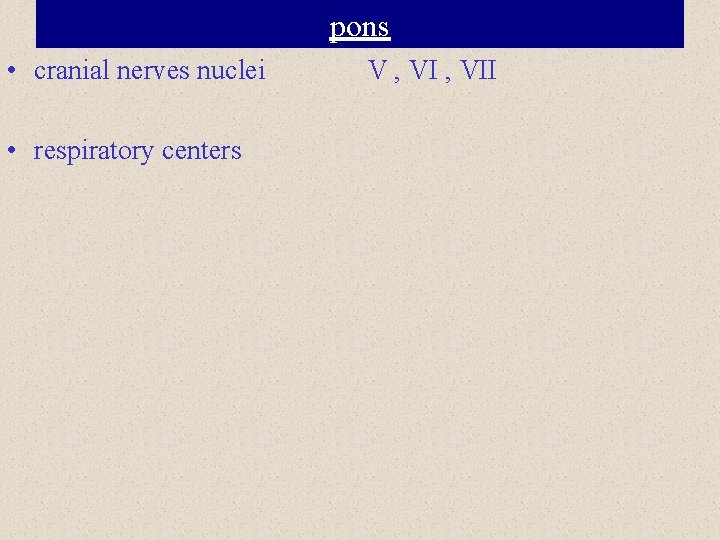
pons • cranial nerves nuclei • respiratory centers V , VII
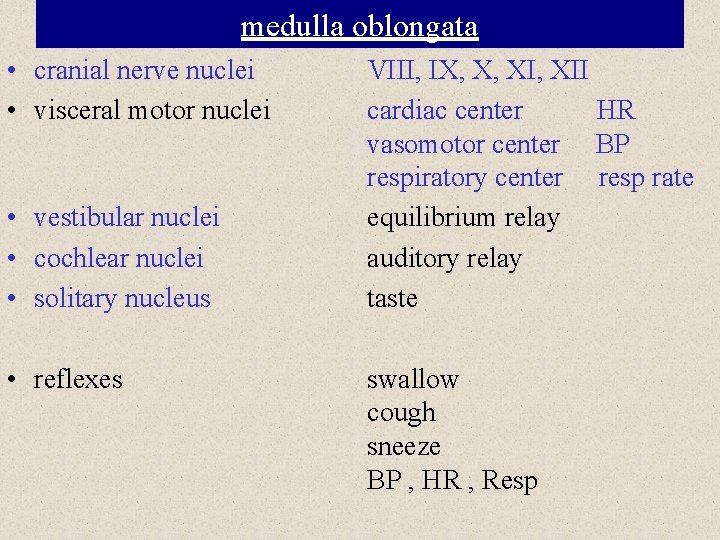
medulla oblongata • cranial nerve nuclei • visceral motor nuclei • vestibular nuclei • cochlear nuclei • solitary nucleus • reflexes VIII, IX, X, XII cardiac center HR vasomotor center BP respiratory center resp rate equilibrium relay auditory relay taste swallow cough sneeze BP , HR , Resp
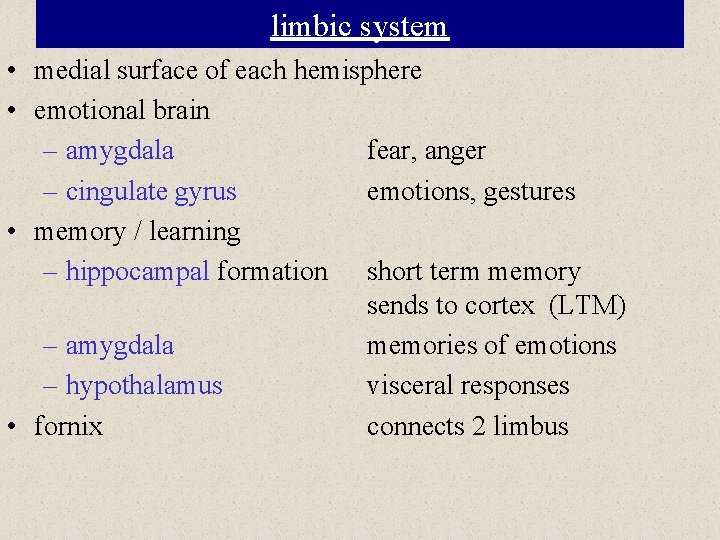
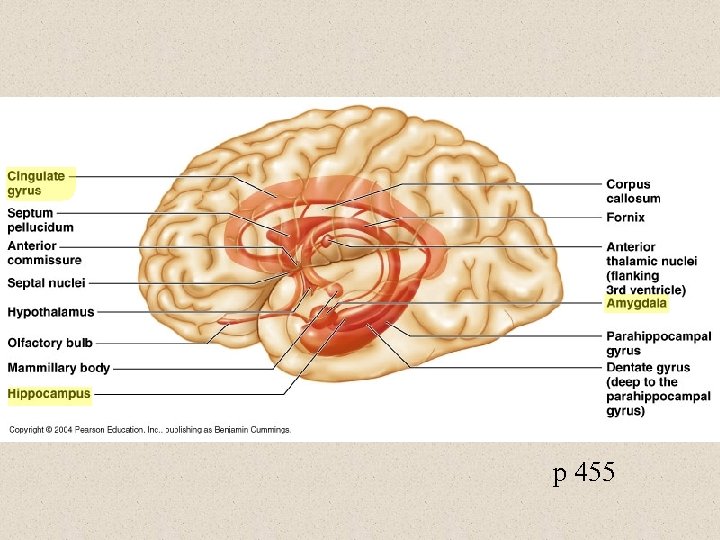
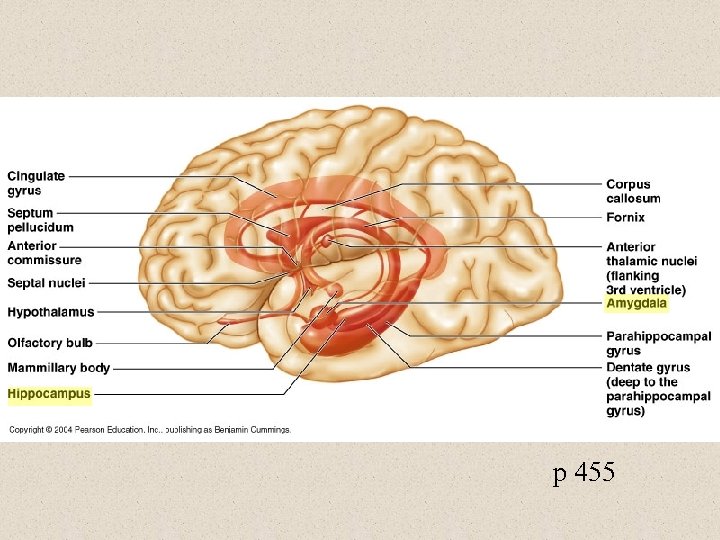
limbic system • medial surface of each hemisphere • emotional brain – amygdala fear, anger – cingulate gyrus emotions, gestures • memory / learning – hippocampal formation short term memory sends to cortex (LTM) – amygdala memories of emotions – hypothalamus visceral responses • fornix connects 2 limbus
p 455
reticular formation • center of brain stem • reticular activating system (RAS) – maintains consciousness and alertness • input from all senses of the body • motor to all muscles maintain tone and readiness
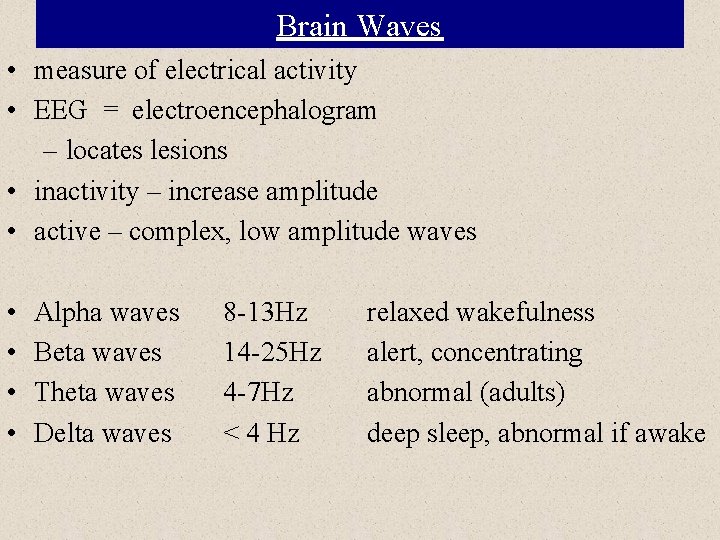
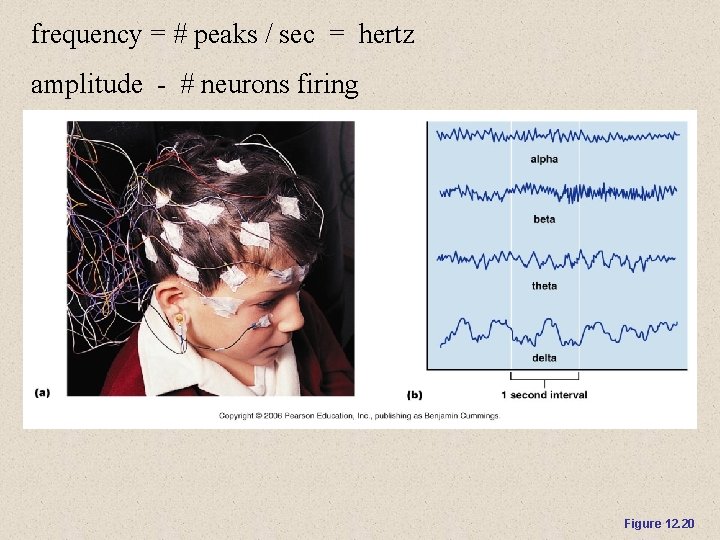
Brain Waves • measure of electrical activity • EEG = electroencephalogram – locates lesions • inactivity – increase amplitude • active – complex, low amplitude waves • • Alpha waves Beta waves Theta waves Delta waves 8 -13 Hz 14 -25 Hz 4 -7 Hz < 4 Hz relaxed wakefulness alert, concentrating abnormal (adults) deep sleep, abnormal if awake
frequency = # peaks / sec = hertz amplitude - # neurons firing Figure 12. 20
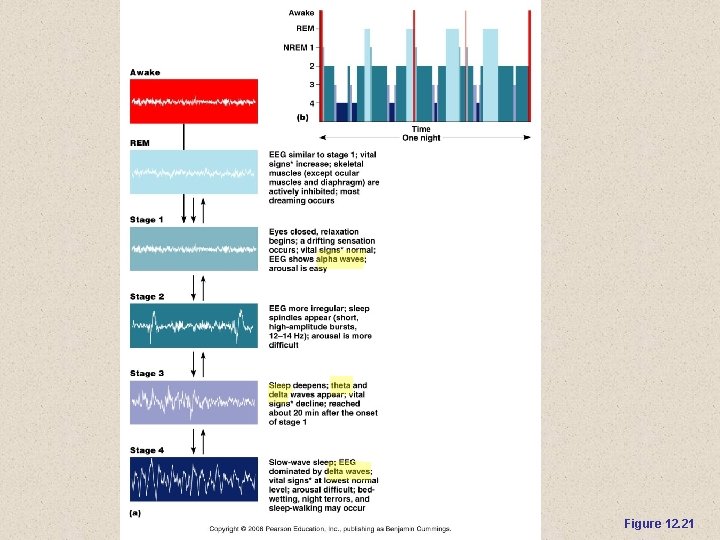
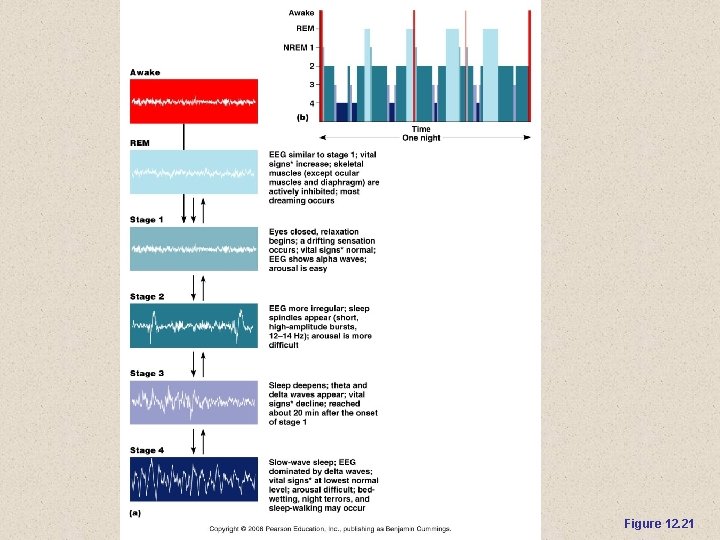
Figure 12. 21
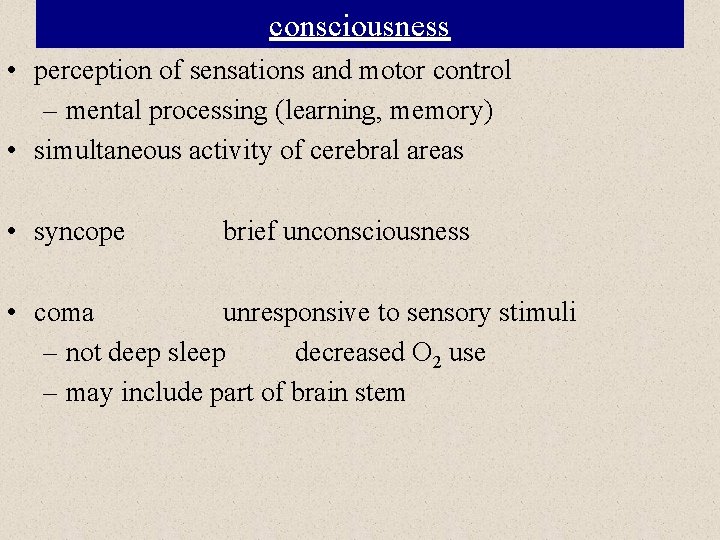
consciousness • perception of sensations and motor control – mental processing (learning, memory) • simultaneous activity of cerebral areas • syncope brief unconsciousness • coma unresponsive to sensory stimuli – not deep sleep decreased O 2 use – may include part of brain stem
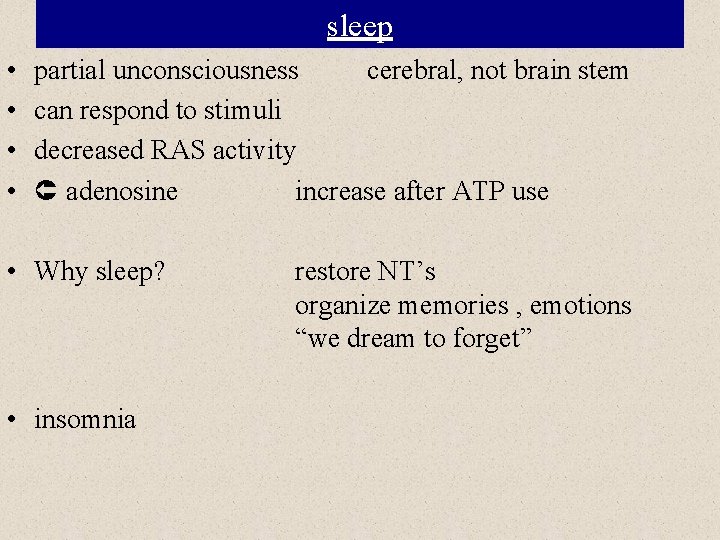
sleep • • partial unconsciousness cerebral, not brain stem can respond to stimuli decreased RAS activity adenosine increase after ATP use • Why sleep? • insomnia restore NT’s organize memories , emotions “we dream to forget”
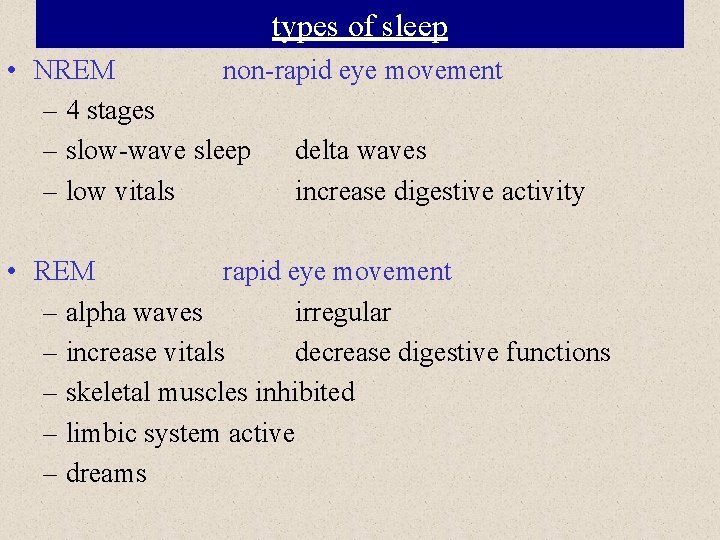
types of sleep • NREM non-rapid eye movement – 4 stages – slow-wave sleep delta waves – low vitals increase digestive activity • REM rapid eye movement – alpha waves irregular – increase vitals decrease digestive functions – skeletal muscles inhibited – limbic system active – dreams
Figure 12. 21
memory • learning changes in synaptic communication • memory those changes lasting a long time
memory • declarative – short term memory – long term memory facts , events • non-declarative motor skills, procedures
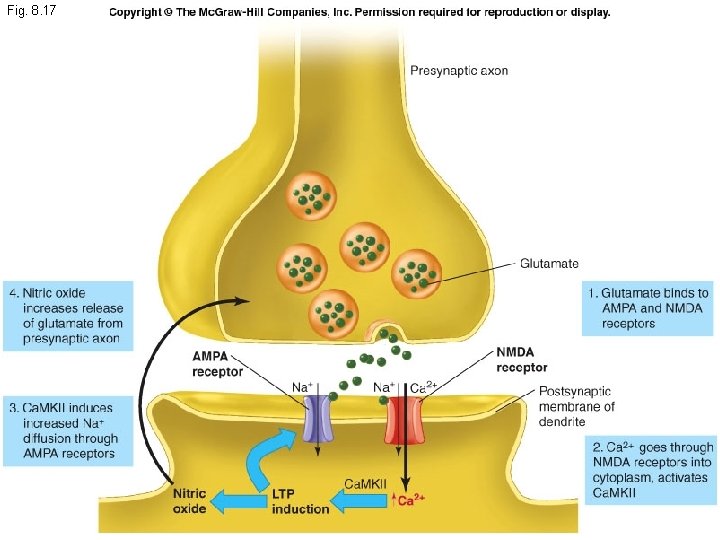
how ? • synapses work better = LTP • potentiates neural connections • sensory - sensory • sensory – motor • connect “appropriate” motor responses to stimuli • build networks associations
result • synapses work better = LTP • more NT receptors • glutamate - NMDA - Ca • NT production • NO • dendritic spines change shape • strength of graded potentials • greater chance of action potential
Fig. 8. 17
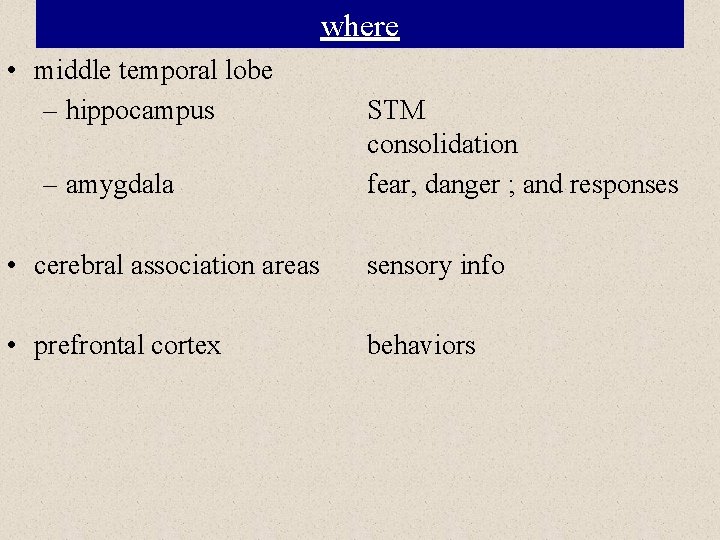
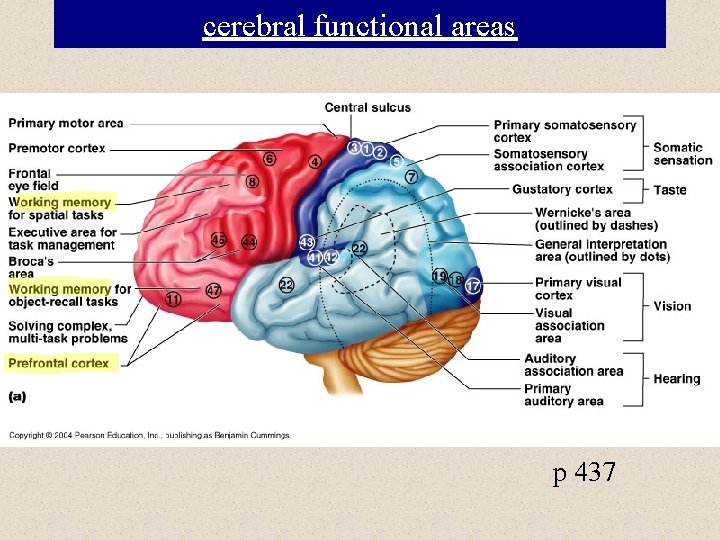
where • middle temporal lobe – hippocampus – amygdala STM consolidation fear, danger ; and responses • cerebral association areas sensory info • prefrontal cortex behaviors
cerebral functional areas p 437
p 455
affects on memory • repetition • association – networks • stress – norepinephrine – glucocorticoids • glutamate • sleep • alcohol increase LTP
memory problems • amnesia – anterograde amnesia – retrograde amnesia • post-traumatic stress disorder new info old info • Alzheimer’s Hippocampus cerebral cortex – change NMDA receptors and Ca++ influx – decreased Ach production – plaques : beta amyloid peptide • stem cells neurogenesis