
Cnidarians overview Includes sea anemones coral jellyfish hydras


- Slides: 43
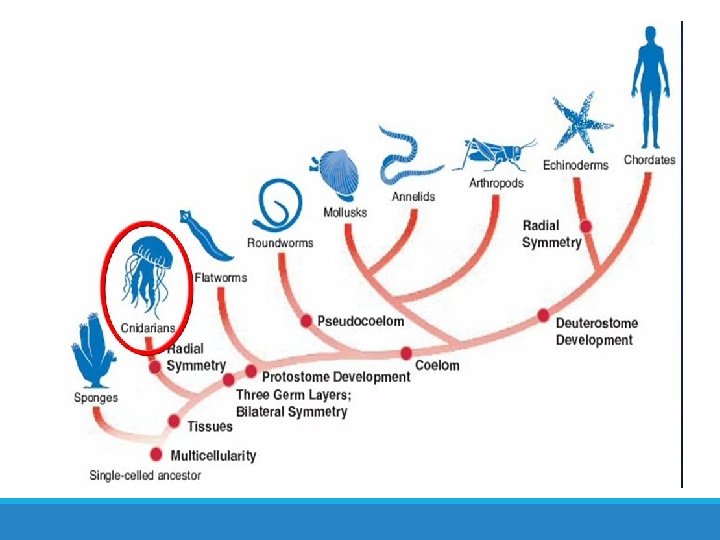
Cnidarians: overview • • Includes sea anemones, coral, jellyfish, hydras Over 10, 000 species, mostly marine Carnivores with specialized stinging cells called cnidocytes Radial symmetry First appearance of true tissues and germ layers Have a central gastrovascular cavity (GVC or ‘gut’) Two body forms: polyp and medusa
Cnidarians: key characteristics v (Eukaryotic, Multicellular) v Radial symmetry v Two germ layers: endoderm and ectoderm v Two alternating forms: polyp & medusa v Feeding: incomplete gut, cnidocytes v Nervous system: nerve net and rhopalia v Skeleton: • • Hydrostatic skeleton Exo and endoskeletons v Epitheliomuscular cells
Cnidarians have radial symmetry
Cnidarians have radial symmetry
Germ Layers v Germ layer: • • Group of cells that develop together in the embryo Each layer will develop into certain structures
Germ Layers Video
Germ Layers v Ectoderm: • • Outermost germ layer Skin, nervous system v Mesoderm: (absent in Cnidaria) • Middle germ layer • Muscles, heart, blood, bones v Endoderm: • • Innermost germ layer Gut (GVC), lungs
Life Cycle v Jellyfish alternate between two life forms: polyp and medusa v Corals, hydra and anemones have polyp stage only
Life Cycle v Polyp: • • • Sessile, attached to ocean floor Mouth facing upward Reproduces asexually by budding
Life Cycle v Medusa: • • • Free-floating Mouth facing downward Reproduces sexually
Life Cycle
Anatomy v Epidermis: (ectoderm) • Outermost layer (‘skin’) • Contains cnidocytes and nerve net in both polyp and medusa v Mesoglea: • • • Between epidermis and GVC Mostly non-living jelly Involved in hydrostatic skeleton v Gastrovascular cavity (GVC): (endoderm) • • Digests and processes food Single hole is mouth and anus
Anatomy v Tentacle: • Has cnidocytes on surface • Used to capture food, deter predators • In sea anemone, can be retracted into body v Oral arm (not testable) • Present on ‘true’ jellies • Located near mouth • Brings food to mouth
Anatomy v Basal plate • • In polyp form only Attaches organism to ocean floor
Feeding and Digestion v Cnidarians are carnivores v They capture and consume prey by stinging it with cells on their tentacles called cnidocytes
Specialized Cells: Cnidocytes v Cnidocyte (stinging cells) • Found on tentacle epidermis • For capturing prey or self-defense • Contains barbed thread that releases on contact
Specialized Cells v Is this dangerous? Discuss.
Feeding and Digestion v Cnidarians are carnivores v They capture and consume prey by stinging it with cells on their tentacles called cnidocytes. v Cnidarians only have one opening into their gastrovascular cavity (GVC): it is their mouth AND anus!
Feeding and Digestion
Feeding and Digestion
Feeding and Digestion
Nervous System v Rhopalium: cluster of sensory structures in jellyfish
Nervous System v Rhopalium: cluster of sensory structures in jellyfish • • • Eye-spot (ocellus): senses light Chemoreceptor (not shown): detects chemicals (taste, smell) Statocyst: senses gravity (which way is up? )
Nervous System v How the statocyst works: • • • Rock in fluid surrounded by cells with cilia When the rock touches a cilium, this is detected The cnidarian can always tell which way it is facing!
Nervous System v Neurons relay sensory information to nerve net from rhopalia v Nerve Net: • Found in animals with radial symmetry • Interconnected neurons without a brain or central nervous system
Skeleton Types v Animal cells are squishy and lack cell walls v Purpose of skeleton: • • Support animal Works with muscular system to allow for movement What type(s) of skeleton do sponges have?
Hydrostatic Skeleton (all cnidarians) v “Hydro” = water; “static” = not in motion v Mesoglea exerts outward pressure and provides support for cnidarian body • This is just like the insides of a grape, or water in a water balloon: both are surprisingly difficult to ‘pop’!
Endoskeleton (corals only) v Some corals have hardened components embedded inside their tissue (much like Poriferan spicules)
Exoskeleton (corals only) v Hard outer layer made of Ca. CO 3 (calcium carbonate) v Is left behind when coral dies v Affected by ocean acidification
Research Activity v What is ocean acidification? v What human activities cause ocean acidification? v How are corals (and other species) affected? v How can humans address the issue of ocean acidification?
Saving Coral v Video on making cement v Nas. Daily Video
Specialized cells by germ layer v Ectoderm: • • • Cnidocyte Neuron* Epitheliomuscular cell v Endoderm: • Digestive cells* * won’t go into detail
Specialized Cells: Cnidocytes See previous slide
Specialized Cells: Epitheliomuscular cells v Cnidarians do not have muscle because they do not have mesoderm v Epitheliomuscular cells are modified epithelial cells (derived from ectoderm) that work together in place of muscles
Subphylum (sea anemones: video) v Polyp stage only v Can retract tentacles into body v Release sperm and eggs directly into open ocean; external fertilization. Larvae freeswimming, settle in an area of ocean v *Pedal laceration: part of basal plate is left behind, develops into new organism *not testable
Subphylum (sea anemones: video) v Adaptations: • Sessile, but basal plate can ‘walk’ slowly on ocean floor. Or, can detach, float with current, attach elsewhere. • Can fight off nearby anemones using acrorhagi: bulbs that are densely packed with cnidocytes What are the benefits to sea anemones fighting each other? Drawbacks?
Subphylum (hydra) v Polyp stage only v Freshwater (live in lakes, ponds)
Subphylum (jellyfish) v Polyp and medusa stage
Subphylum (coral) v Polyp stage only v Endo and exoskeletons made of Ca. CO 3 v Build coral reefs v Affected by ocean acidification
Key vocabulary v Cnidaria v Tentacle v Coral, Sea anemone, Jellyfish, Hydra v Basal plate v Radial symmetry v Cnidocyte v Germ layer v Rhopalium, Eye-spot, Statocyst v Endoderm, (Mesoderm), Ectoderm v Nerve net v Polyp v Endoskeleton, Exoskeleton, Hydrostatic skeleton v Medusa v (Sessile) v Epidermis v Mesoglea v Gastrovascular cavity (GVC) v Ocean acidification v Epitheliomuscular cells