
Cncer de Mama Luminal Ms all de los
- Slides: 41
Cáncer de Mama Luminal Más allá de los Inhibidores de Ciclinas Joaquín Gavilá Gregori Servicio de Oncología Médica FUNDACIÓN INSTITUTO VALENCIANO DE ONCOLOGIA Pamplona, 24 de Octubre de 20191
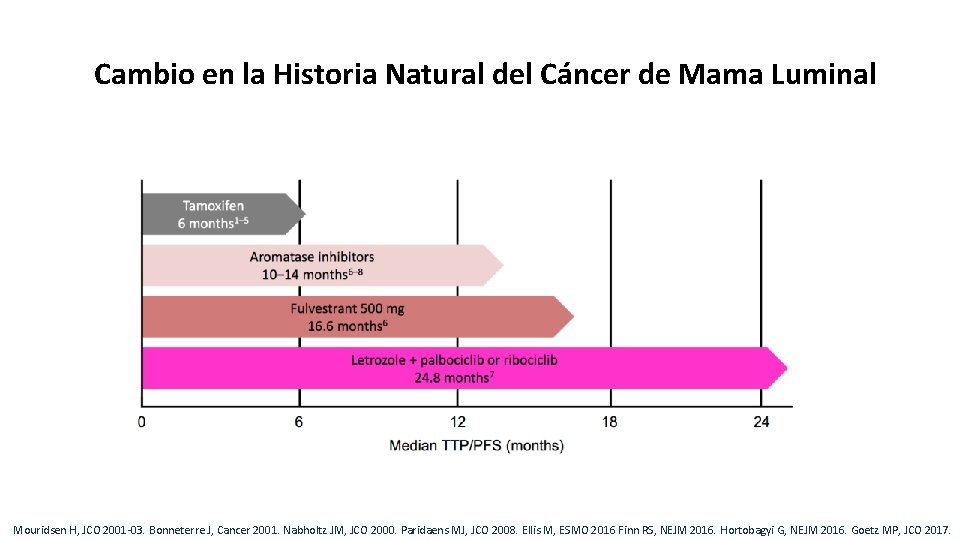
Cambio en la Historia Natural del Cáncer de Mama Luminal 3 Mouridsen H, JCO 2001 -03. Bonneterre J, Cancer 2001. Nabholtz JM, JCO 2000. Paridaens MJ, JCO 2008. Ellis M, ESMO 2016 Finn RS, NEJM 2016. Hortobagyi G, NEJM 2016. Goetz MP, JCO 2017.
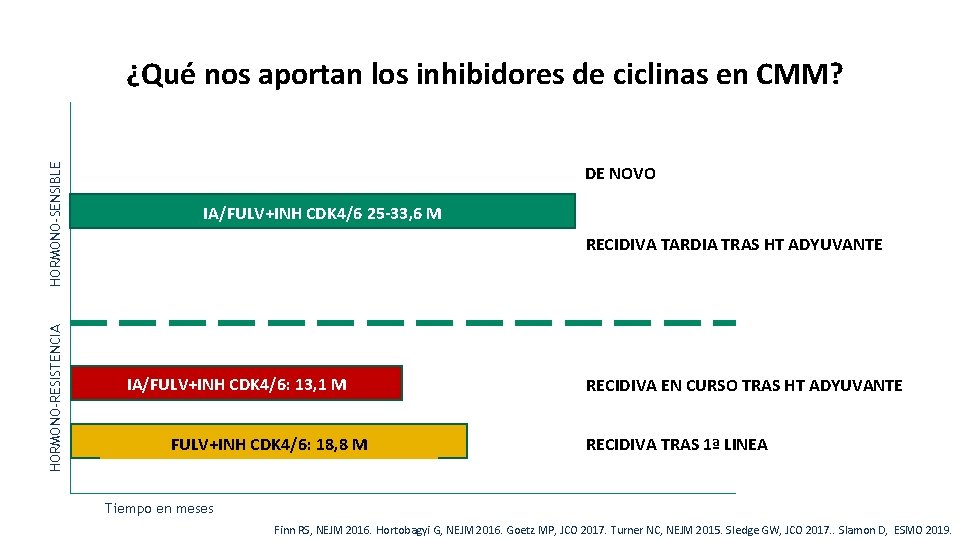
HORMONO-RESISTENCIA HORMONO-SENSIBLE ¿Qué nos aportan los inhibidores de ciclinas en CMM? DE NOVO IA/FULV+INH CDK 4/6 25 -33, 6 M RECIDIVA TARDIA TRAS HT ADYUVANTE IA/FULV+INH CDK 4/6: 13, 1 M FULV+INH CDK 4/6: 18, 8 M Tiempo en meses RECIDIVA EN CURSO TRAS HT ADYUVANTE RECIDIVA TRAS 1ª LINEA 4 Finn RS, NEJM 2016. Hortobagyi G, NEJM 2016. Goetz MP, JCO 2017. Turner NC, NEJM 2015. Sledge GW, JCO 2017. . Slamon D, ESMO 2019.
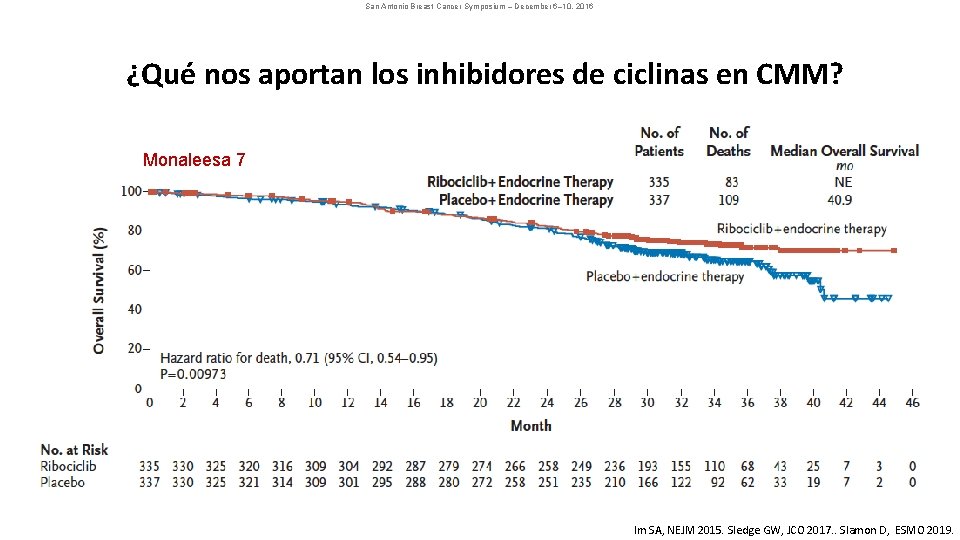
San Antonio Breast Cancer Symposium – December 6– 10, 2016 ¿Qué nos aportan los inhibidores de ciclinas en CMM? Monaleesa 7 Monarch 2 Monaleesa 3 Im SA, NEJM Sledge GW, This presentation is the intellectual property of the author/presenter. Contact them at angelo. dileo@uslcentro. toscana. it for permission to reprint 2015. and/or distribute. JCO 2017. . Slamon D, ESMO 2019. 5
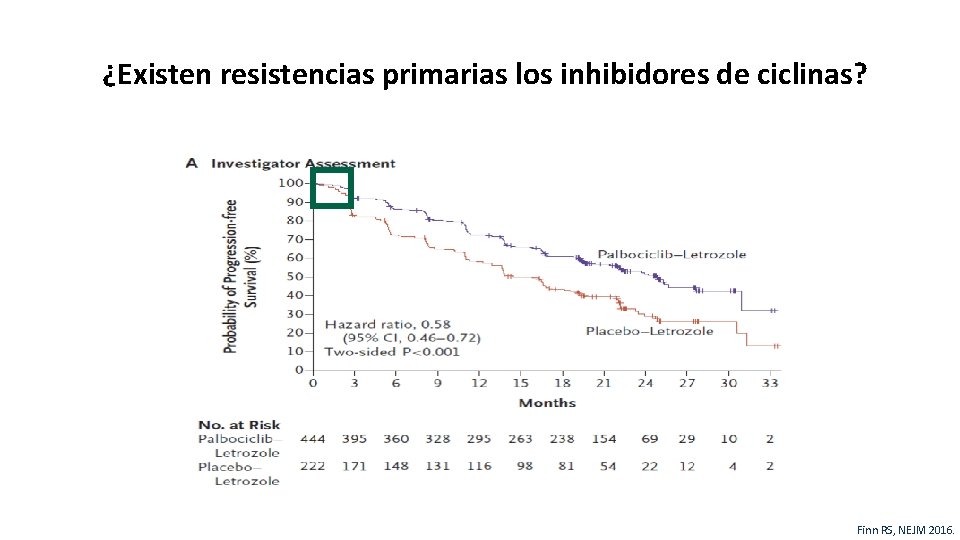
¿Existen resistencias primarias los inhibidores de ciclinas? 6 Finn RS, NEJM 2016.
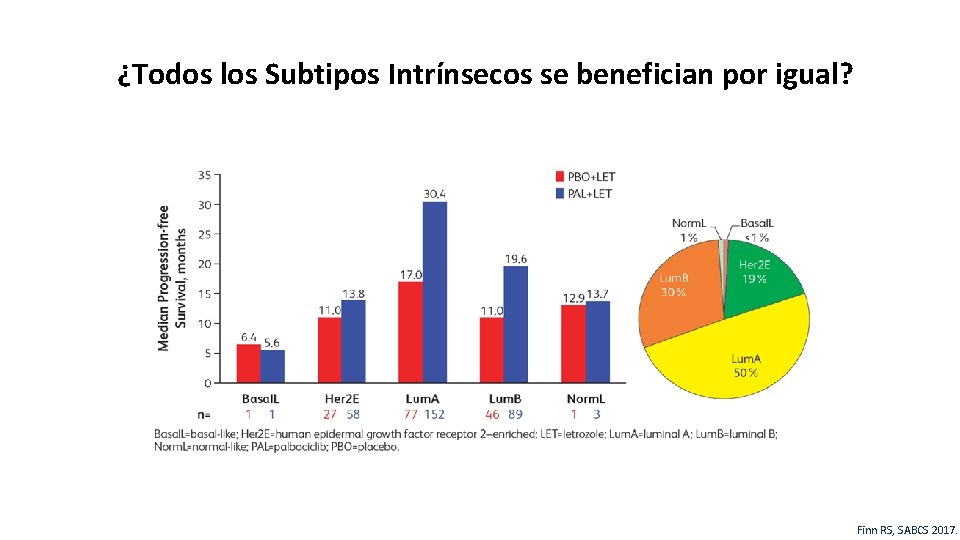
¿Todos los Subtipos Intrínsecos se benefician por igual? 8 Finn RS, SABCS 2017.
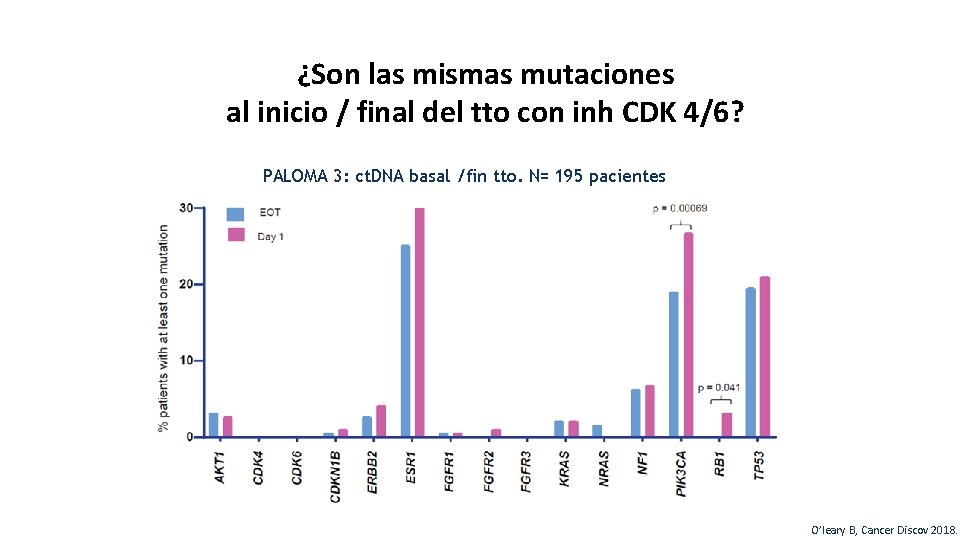
¿Son las mismas mutaciones al inicio / final del tto con inh CDK 4/6? PALOMA 3: ct. DNA basal /fin tto. N= 195 pacientes 9 O’leary B, Cancer Discov 2018.
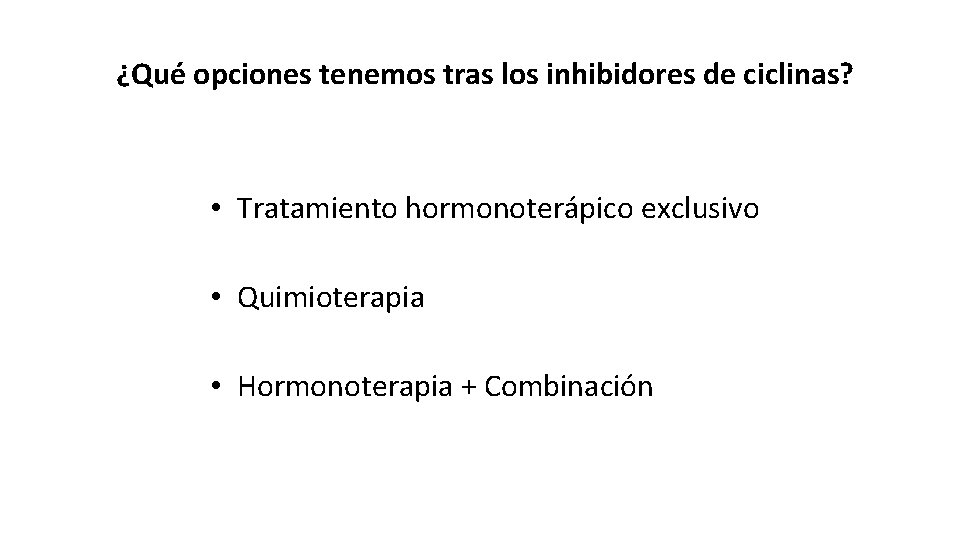
¿Qué opciones tenemos tras los inhibidores de ciclinas? • Tratamiento hormonoterápico exclusivo • Quimioterapia • Hormonoterapia + Combinación 10
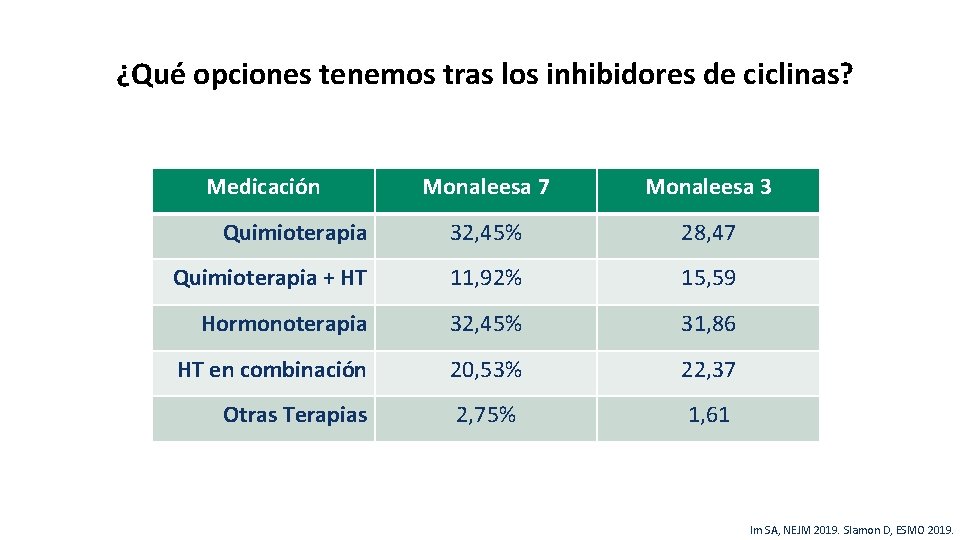
¿Qué opciones tenemos tras los inhibidores de ciclinas? Medicación Monaleesa 7 Monaleesa 3 Quimioterapia 32, 45% 28, 47 Quimioterapia + HT 11, 92% 15, 59 Hormonoterapia 32, 45% 31, 86 HT en combinación 20, 53% 22, 37 Otras Terapias 2, 75% 1, 61 11 Im SA, NEJM 2019. Slamon D, ESMO 2019.
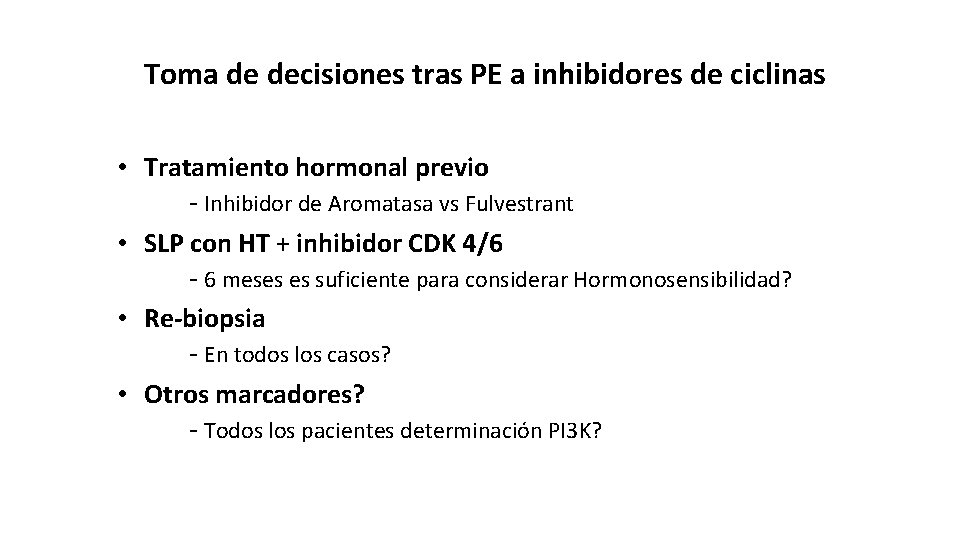
Toma de decisiones tras PE a inhibidores de ciclinas • Tratamiento hormonal previo - Inhibidor de Aromatasa vs Fulvestrant • SLP con HT + inhibidor CDK 4/6 - 6 meses es suficiente para considerar Hormonosensibilidad? • Re-biopsia - En todos los casos? • Otros marcadores? - Todos los pacientes determinación PI 3 K? 12
¿Qué opciones tenemos tras los inhibidores de ciclinas? • Tratamiento hormonoterápico exclusivo 13
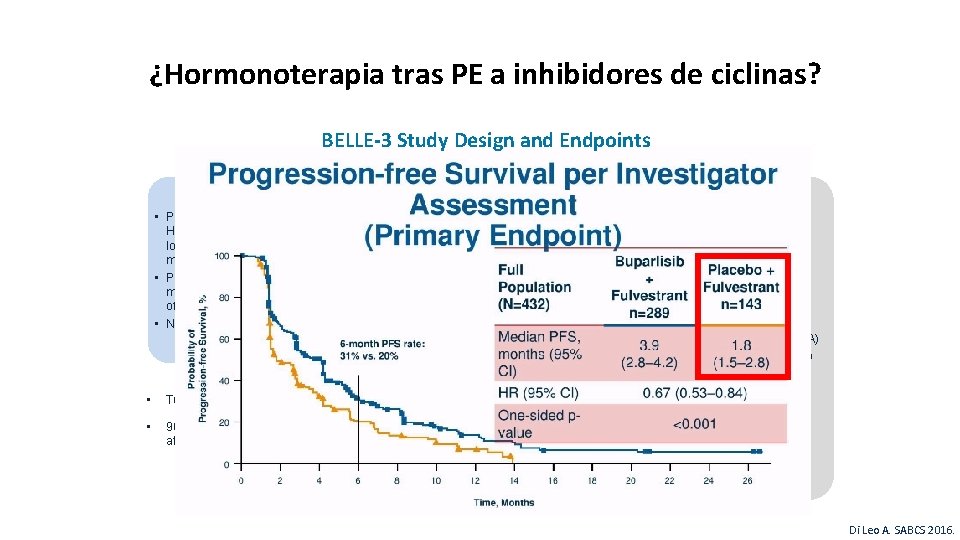
¿Hormonoterapia tras PE a inhibidores de ciclinas? BELLE-3 Study Design and Endpoints • Postmenopausal women with HR+/HER 2–, AI-pretreated, locally advanced or metastatic breast cancer • Progression on or after an m. TOR inhibitor as last line of treatment • N=432 Buparlisib (100 mg/day) + fulvestrant (500 mg) n=289 Randomization (2: 1) Stratified by visceral disease status Placebo + fulvestrant (500 mg) n=143 • Tumor assessments were performed every 6 weeks • 90% power to detect a 33% risk reduction in PFS (disease progression or death) at one-sided α=0. 025, based on the observation of 313 PFS events Primary endpoint • PFS (locally assessed per RECIST v 1. 1) Key secondary endpoint • OS Other secondary endpoints • PFS by PIK 3 CA status (ct. DNA) • ORR and CBR in the full population and by PIK 3 CA status (ct. DNA) • Safety, pharmacokinetics, quality of life 14 Di Leo A. SABCS 2016.
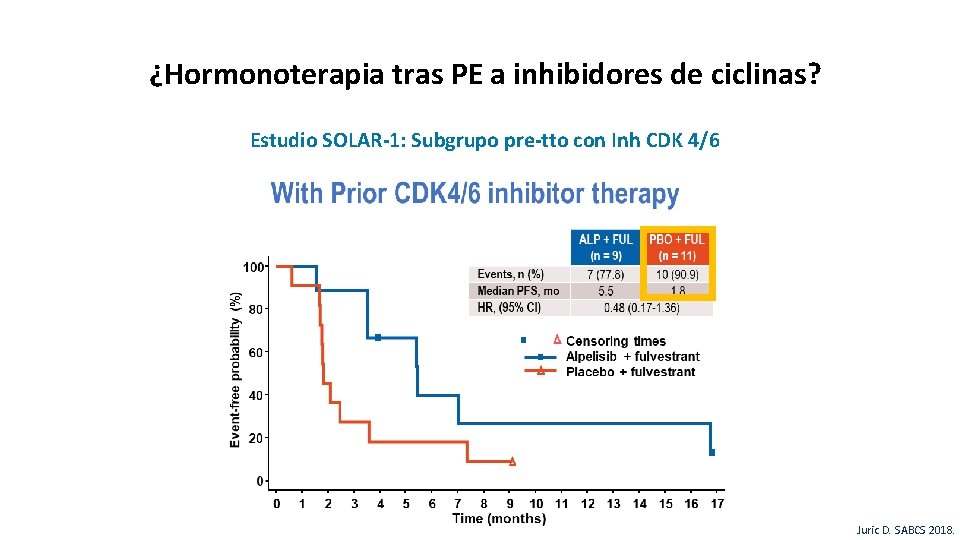
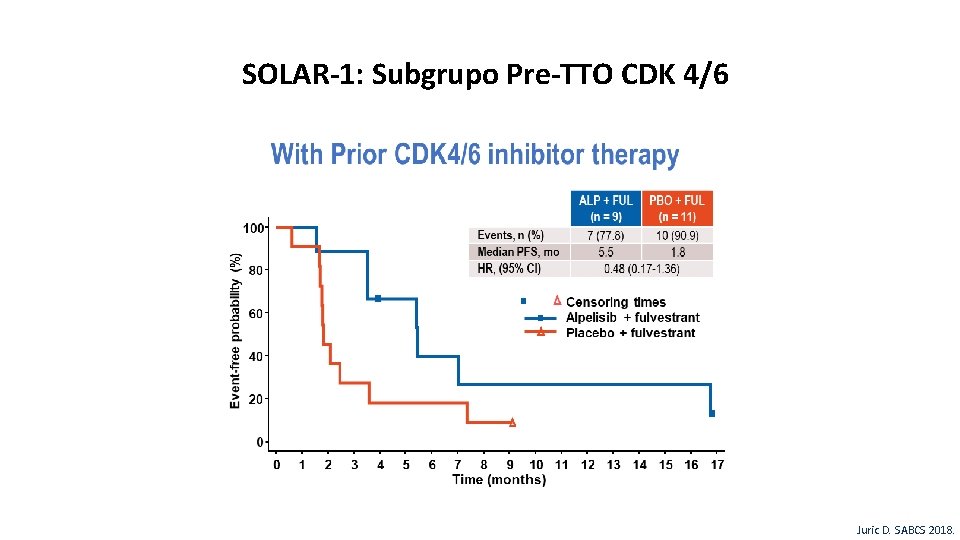
¿Hormonoterapia tras PE a inhibidores de ciclinas? Estudio SOLAR-1: Subgrupo pre-tto con Inh CDK 4/6 15 Juric D. SABCS 2018.
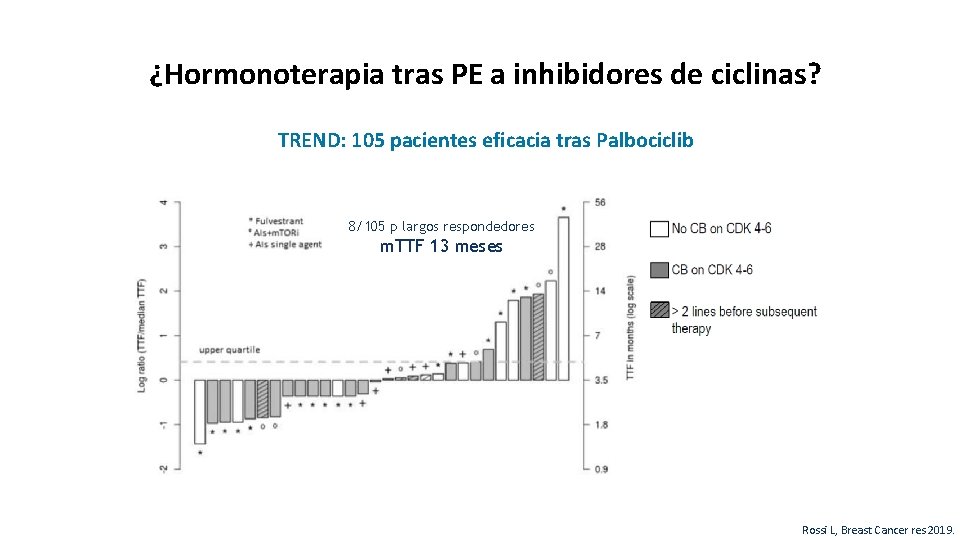
¿Hormonoterapia tras PE a inhibidores de ciclinas? TREND: 105 pacientes eficacia tras Palbociclib 8/105 p largos respondedores m. TTF 13 meses m. TTF 4. 6 m m. TTF 3. 7 m 16 Rossi L, Breast Cancer res 2019.
¿Qué opciones tenemos tras los inhibidores de ciclinas? • Tratamiento hormonoterápico exclusivo • Quimioterapia 17
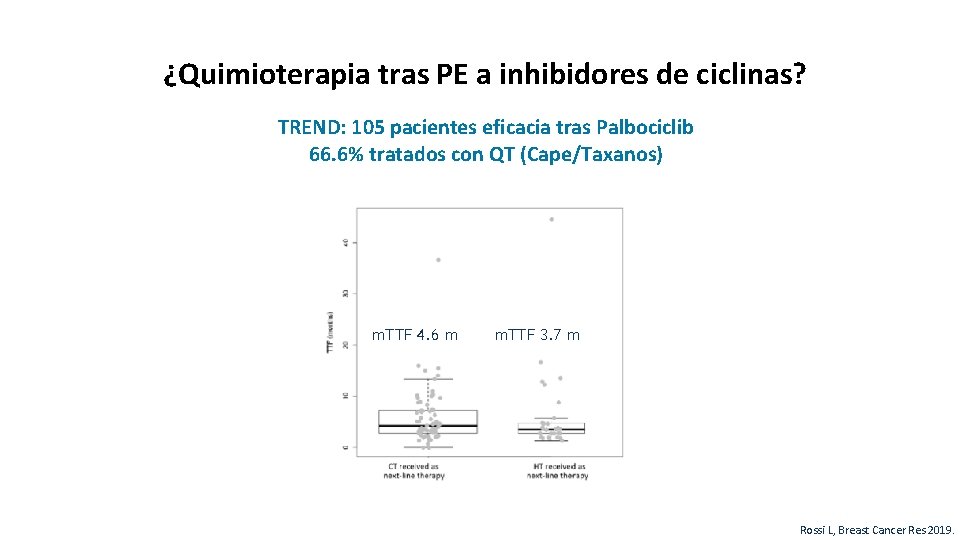
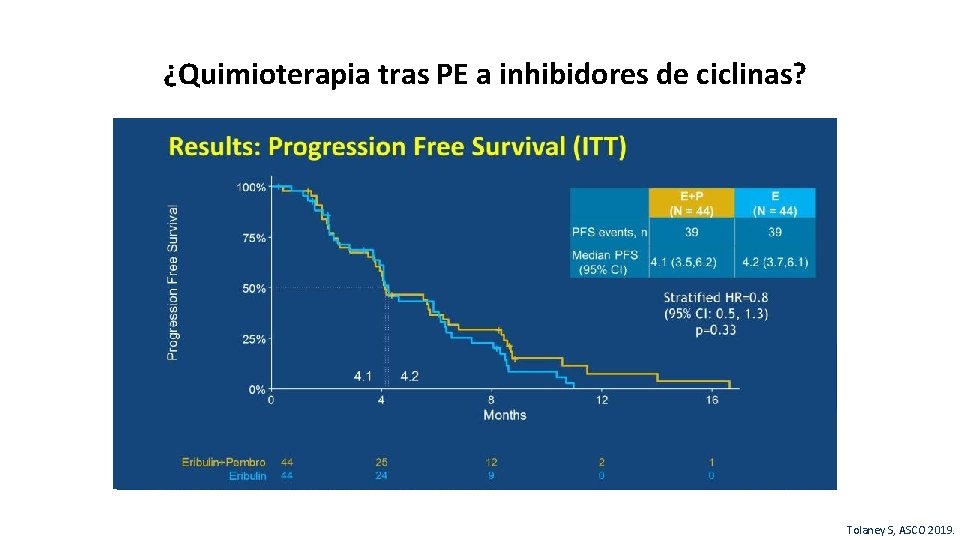
¿Quimioterapia tras PE a inhibidores de ciclinas? TREND: 105 pacientes eficacia tras Palbociclib 66. 6% tratados con QT (Cape/Taxanos) m. TTF 4. 6 m m. TTF 3. 7 m 18 Rossi L, Breast Cancer Res 2019.
¿Quimioterapia tras PE a inhibidores de ciclinas? 19 Tolaney S, ASCO 2019.
¿Qué opciones tenemos tras los inhibidores de ciclinas? • Tratamiento hormonoterápico exclusivo • Quimioterapia • Hormonoterapia + Combinación 20
¿Hormonoterapia + Combinación tras PE a inhibidores CDK? • Mantener inhibidores CDK 4/6? 21
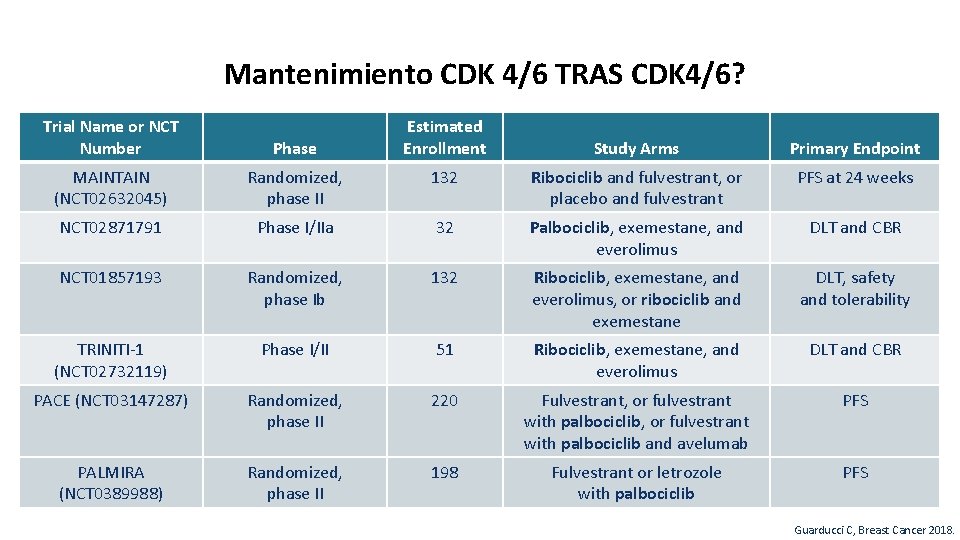
Mantenimiento CDK 4/6 TRAS CDK 4/6? Trial Name or NCT Number Phase MAINTAIN (NCT 02632045) Randomized, phase II NCT 02871791 Estimated Enrollment Study Arms Primary Endpoint 132 Ribociclib and fulvestrant, or placebo and fulvestrant PFS at 24 weeks Phase I/IIa 32 Palbociclib, exemestane, and everolimus DLT and CBR NCT 01857193 Randomized, phase Ib 132 Ribociclib, exemestane, and everolimus, or ribociclib and exemestane DLT, safety and tolerability TRINITI-1 (NCT 02732119) Phase I/II 51 Ribociclib, exemestane, and everolimus DLT and CBR PACE (NCT 03147287) Randomized, phase II 220 Fulvestrant, or fulvestrant with palbociclib and avelumab PFS PALMIRA Randomized, a Palbo: Dianas 198 Fulvestrant PFS Líneas celulares resistentes E 2 F inhibidas enorelletrozole momento resistencia (NCT 0389988) phase II with palbociclib 22 Guarducci C, Breast Cancer 2018.
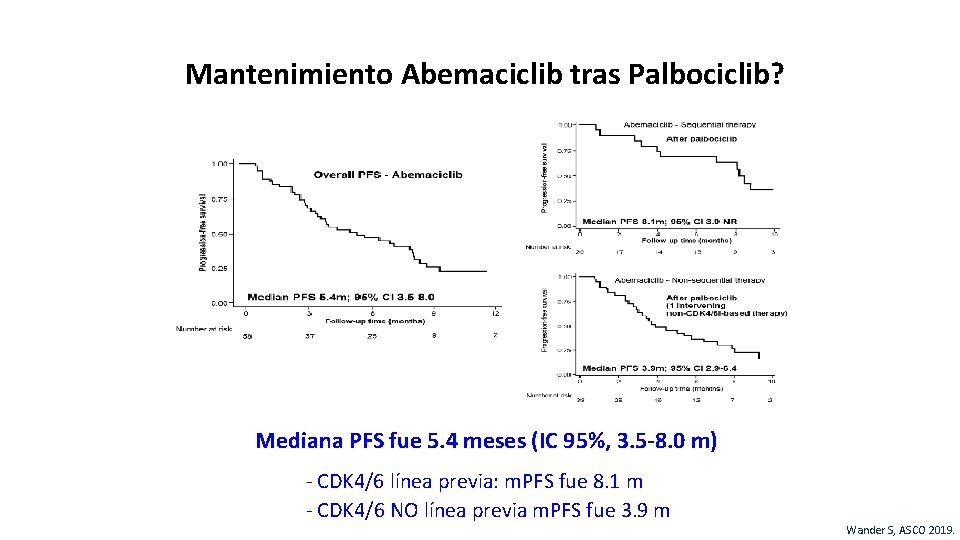
Mantenimiento Abemaciclib tras Palbociclib? Mediana PFS fue 5. 4 meses (IC 95%, 3. 5 -8. 0 m) - CDK 4/6 línea previa: m. PFS fue 8. 1 m - CDK 4/6 NO línea previa m. PFS fue 3. 9 m 25 Wander S, ASCO 2019.
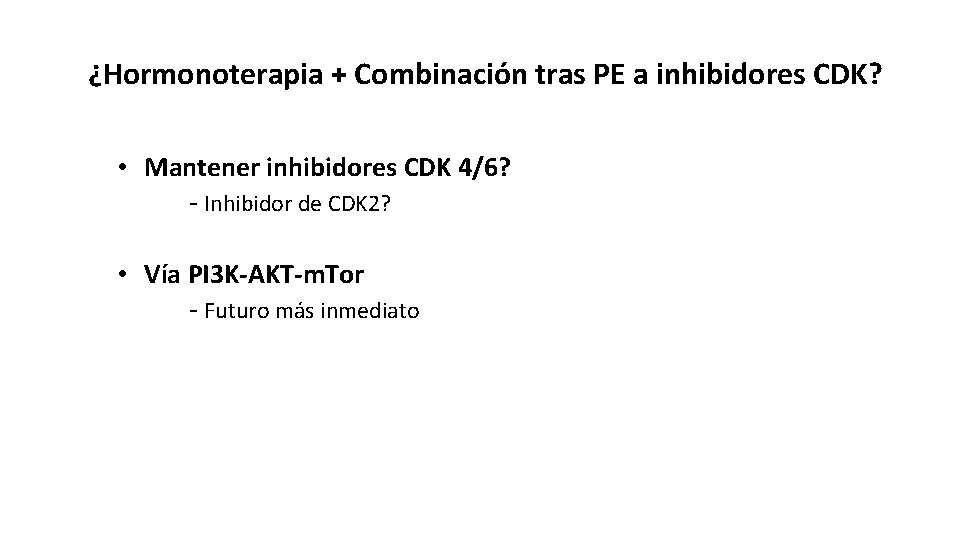
¿Hormonoterapia + Combinación tras PE a inhibidores CDK? • Mantener inhibidores CDK 4/6? - Inhibidor de CDK 2? • Vía PI 3 K-AKT-m. Tor - Futuro más inmediato 26
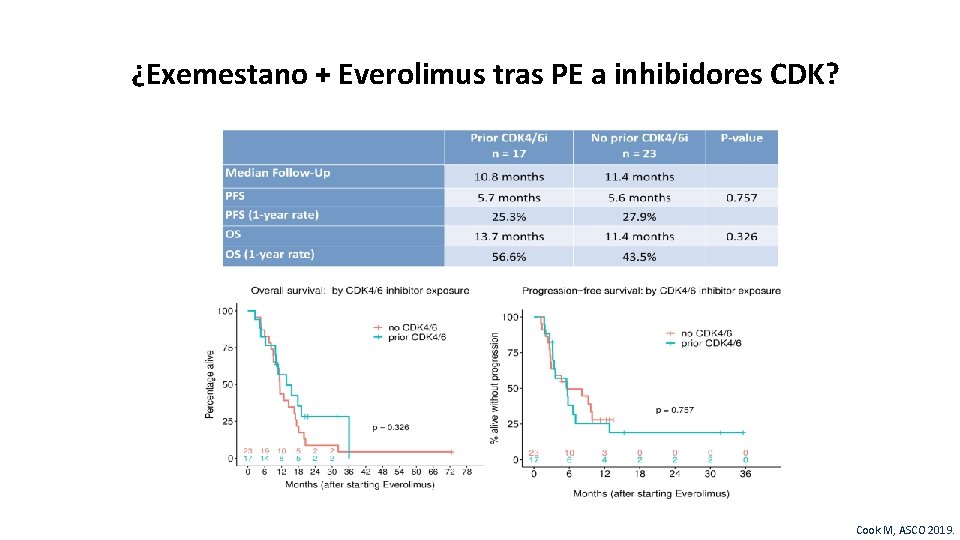
¿Exemestano + Everolimus tras PE a inhibidores CDK? 27 Cook M, ASCO 2019.
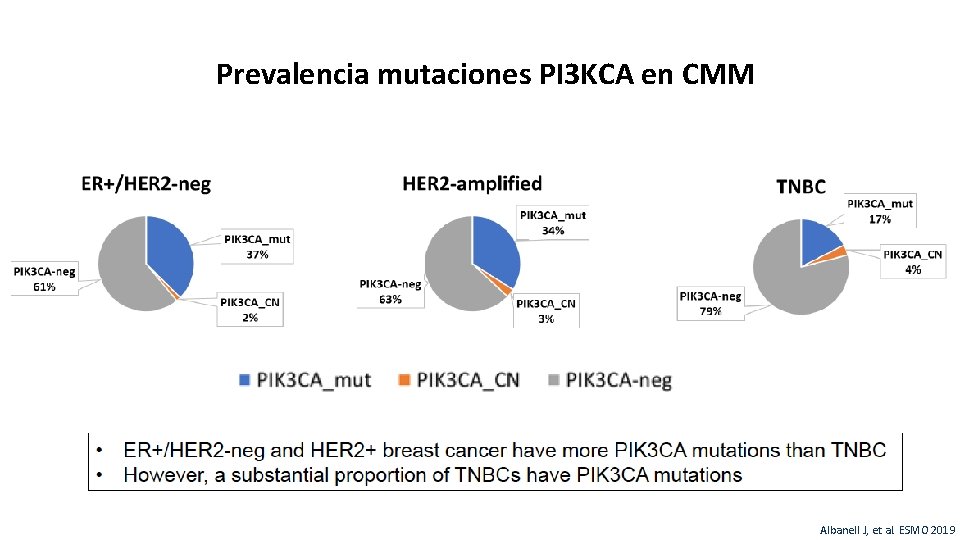
Prevalencia mutaciones PI 3 KCA en CMM 28 Albanell J, et al. ESMO 2019
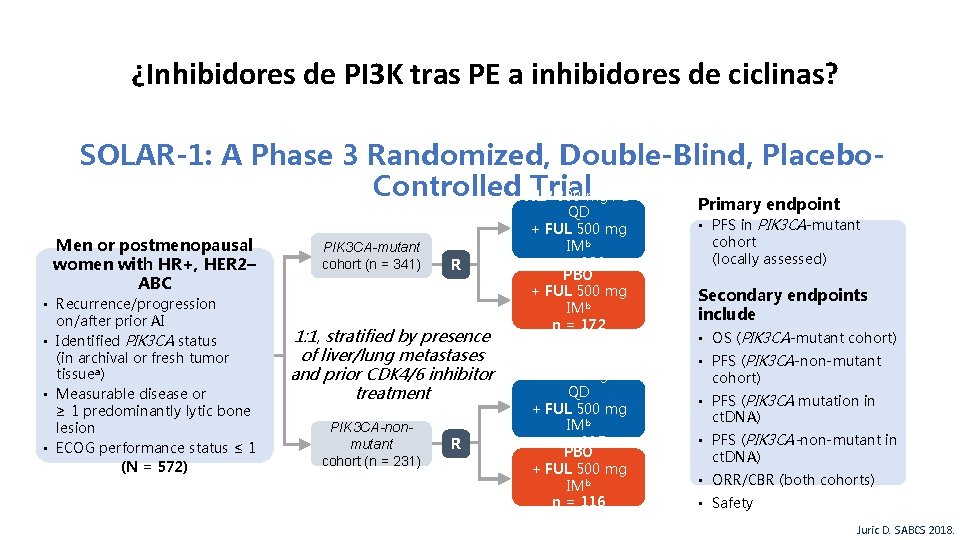
¿Inhibidores de PI 3 K tras PE a inhibidores de ciclinas? SOLAR-1: A Phase 3 Randomized, Double-Blind, Placebo. Controlled ALP Trial 300 mg PO Men or postmenopausal women with HR+, HER 2– ABC • Recurrence/progression on/after prior AI • Identified PIK 3 CA status (in archival or fresh tumor tissuea) • Measurable disease or ≥ 1 predominantly lytic bone lesion • ECOG performance status ≤ 1 (N = 572) PIK 3 CA-mutant cohort (n = 341) R 1: 1, stratified by presence of liver/lung metastases and prior CDK 4/6 inhibitor treatment PIK 3 CA-nonmutant cohort (n = 231) R QD + FUL 500 mg IMb n = 169 PBO + FUL 500 mg IMb n = 172 ALP 300 mg PO QD + FUL 500 mg IMb n = 115 PBO + FUL 500 mg IMb n = 116 Primary endpoint • PFS in PIK 3 CA-mutant cohort (locally assessed) Secondary endpoints include • OS (PIK 3 CA-mutant cohort) • PFS (PIK 3 CA-non-mutant cohort) • PFS (PIK 3 CA mutation in ct. DNA) • PFS (PIK 3 CA-non-mutant in ct. DNA) • ORR/CBR (both cohorts) • Safety 32 Juric D. SABCS 2018.
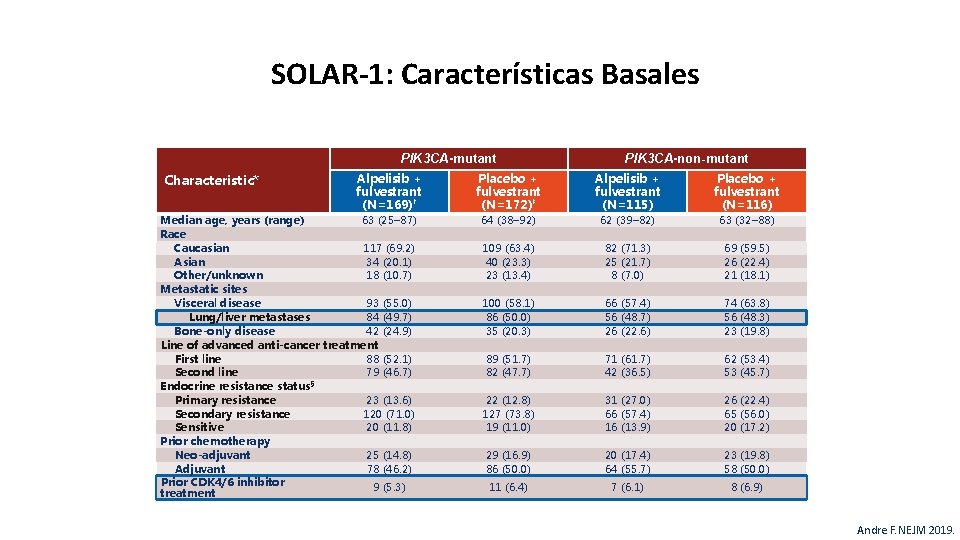
SOLAR-1: Características Basales PIK 3 CA-mutant Characteristic* Alpelisib + fulvestrant (N=169)† Median age, years (range) 63 (25– 87) Race Caucasian 117 (69. 2) Asian 34 (20. 1) Other/unknown 18 (10. 7) Metastatic sites Visceral disease 93 (55. 0) Lung/liver metastases 84 (49. 7) Bone-only disease 42 (24. 9) Line of advanced anti-cancer treatment First line 88 (52. 1) Second line 79 (46. 7) Endocrine resistance status§ Primary resistance 23 (13. 6) Secondary resistance 120 (71. 0) Sensitive 20 (11. 8) Prior chemotherapy Neo-adjuvant 25 (14. 8) Adjuvant 78 (46. 2) Prior CDK 4/6 inhibitor 9 (5. 3) treatment PIK 3 CA-non-mutant Placebo + fulvestrant (N=172)‡ Alpelisib + fulvestrant (N=115) Placebo + fulvestrant (N=116) 64 (38– 92) 62 (39– 82) 63 (32– 88) 109 (63. 4) 40 (23. 3) 23 (13. 4) 82 (71. 3) 25 (21. 7) 8 (7. 0) 69 (59. 5) 26 (22. 4) 21 (18. 1) 100 (58. 1) 86 (50. 0) 35 (20. 3) 66 (57. 4) 56 (48. 7) 26 (22. 6) 74 (63. 8) 56 (48. 3) 23 (19. 8) 89 (51. 7) 82 (47. 7) 71 (61. 7) 42 (36. 5) 62 (53. 4) 53 (45. 7) 22 (12. 8) 127 (73. 8) 19 (11. 0) 31 (27. 0) 66 (57. 4) 16 (13. 9) 26 (22. 4) 65 (56. 0) 20 (17. 2) 29 (16. 9) 86 (50. 0) 20 (17. 4) 64 (55. 7) 23 (19. 8) 58 (50. 0) 11 (6. 4) 7 (6. 1) 8 (6. 9) Andre F. NEJM 2019.
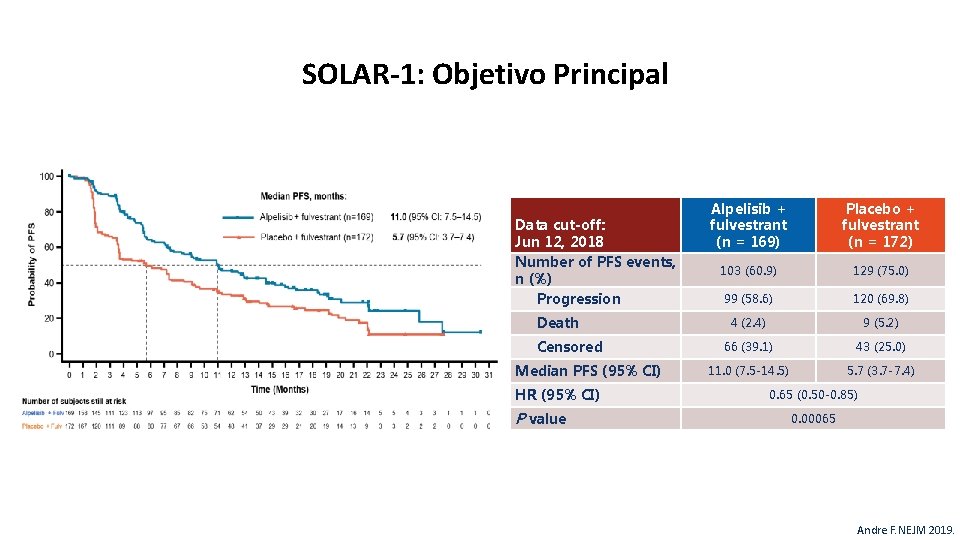
SOLAR-1: Objetivo Principal Data cut-off: Jun 12, 2018 Number of PFS events, n (%) Progression Death Censored Median PFS (95% CI) HR (95% CI) P value Alpelisib + fulvestrant (n = 169) Placebo + fulvestrant (n = 172) 103 (60. 9) 129 (75. 0) 99 (58. 6) 120 (69. 8) 4 (2. 4) 9 (5. 2) 66 (39. 1) 43 (25. 0) 11. 0 (7. 5 -14. 5) 5. 7 (3. 7 -7. 4) 0. 65 (0. 50 -0. 85) 0. 00065 Andre F. NEJM 2019.
SOLAR-1: Subgrupo Pre-TTO CDK 4/6 Juric D. SABCS 2018.
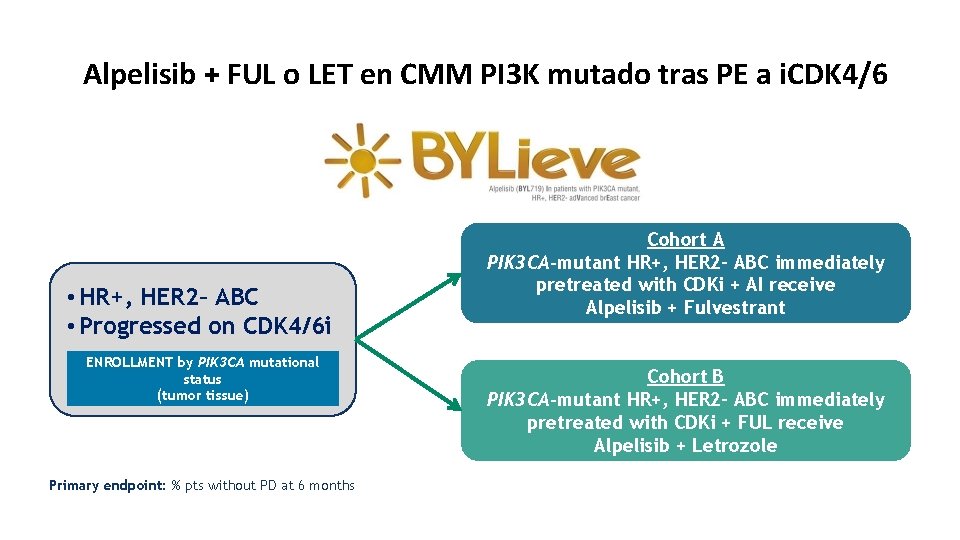
Alpelisib + FUL o LET en CMM PI 3 K mutado tras PE a i. CDK 4/6 • HR+, HER 2– ABC • Progressed on CDK 4/6 i ENROLLMENT by PIK 3 CA mutational status (tumor tissue) Primary endpoint: % pts without PD at 6 months Cohort A PIK 3 CA-mutant HR+, HER 2– ABC immediately pretreated with CDKi + AI receive Alpelisib + Fulvestrant Cohort B PIK 3 CA-mutant HR+, HER 2– ABC immediately pretreated with CDKi + FUL receive Alpelisib + Letrozole
¿Hormonoterapia + Combinación tras PE a inhibidores CDK? • Mantener inhibidores CDK 4/6? - Inhibidor de CDK 2? • Vía PI 3 K-AKT-m. Tor - Futuro más inmediato • Futuras estrategias? 38
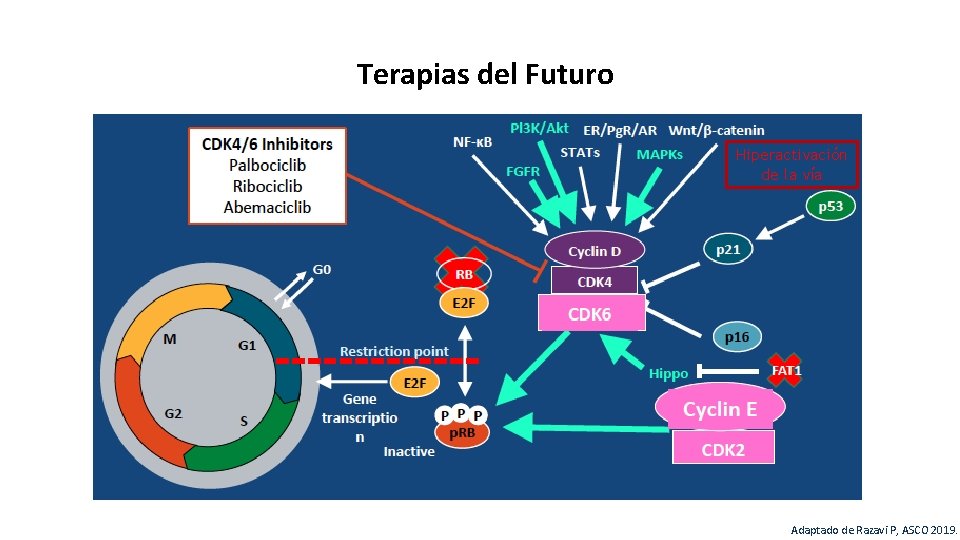
Terapias del Futuro Hiperactivación de la vía 39 Adaptado de Razavi P, ASCO 2019.
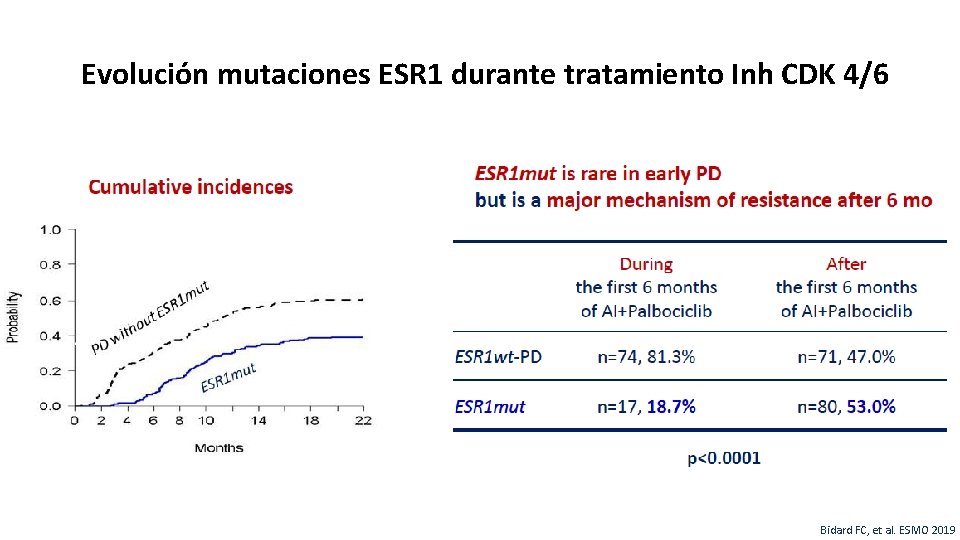
Evolución mutaciones ESR 1 durante tratamiento Inh CDK 4/6 40 Bidard FC, et al. ESMO 2019
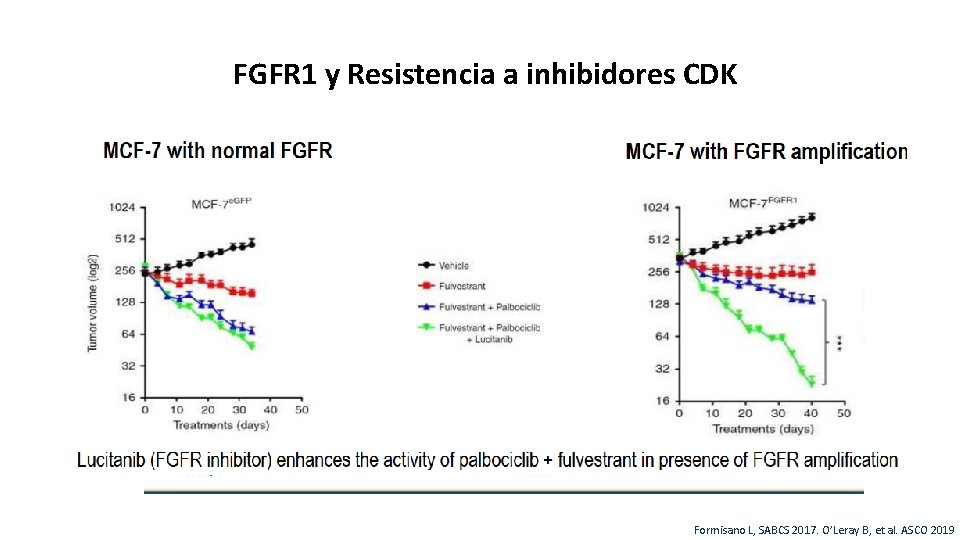
FGFR 1 y Resistencia a inhibidores CDK 41 Formisano L, SABCS 2017. O’Leray B, et al. ASCO 2019
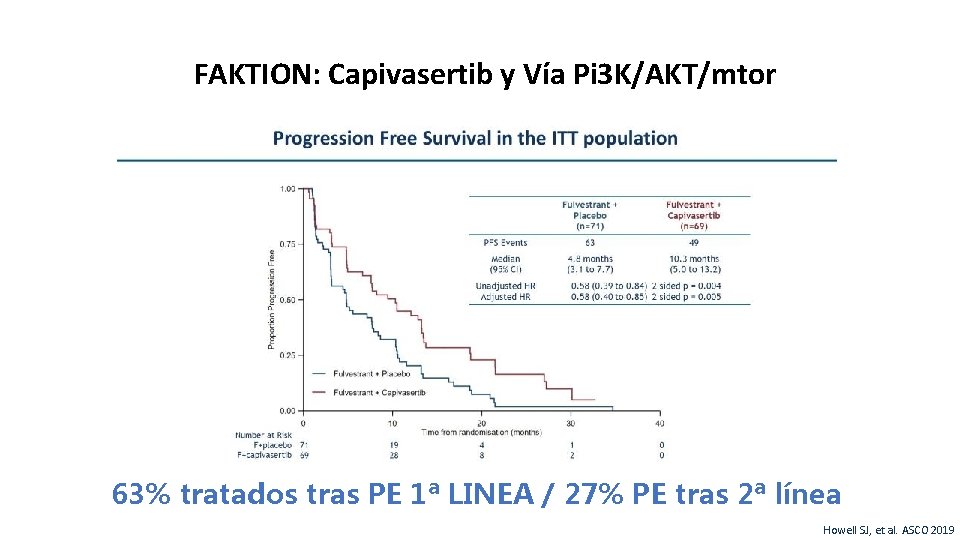
FAKTION: Capivasertib y Vía Pi 3 K/AKT/mtor 63% tratados tras PE 1ª LINEA / 27% PE tras 2ª línea 42 Howell SJ, et al. ASCO 2019
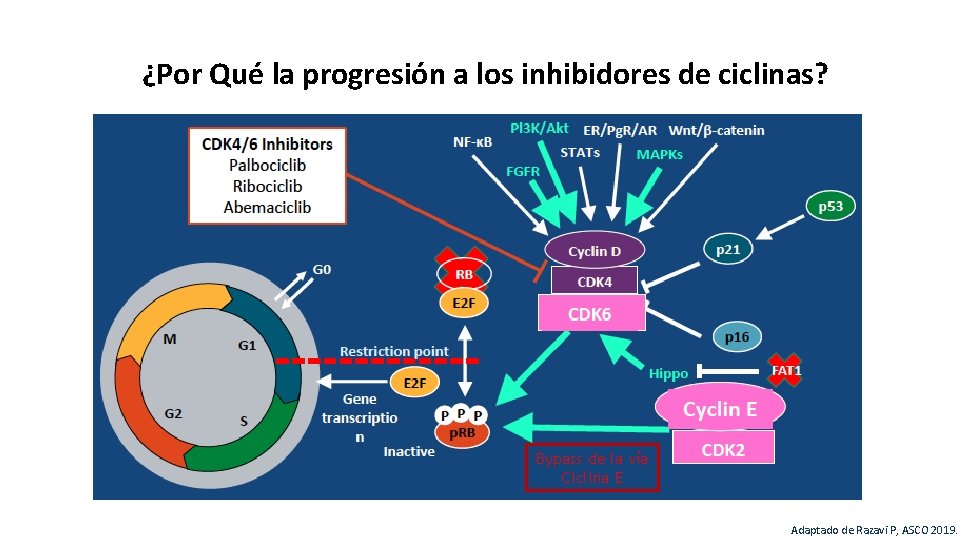
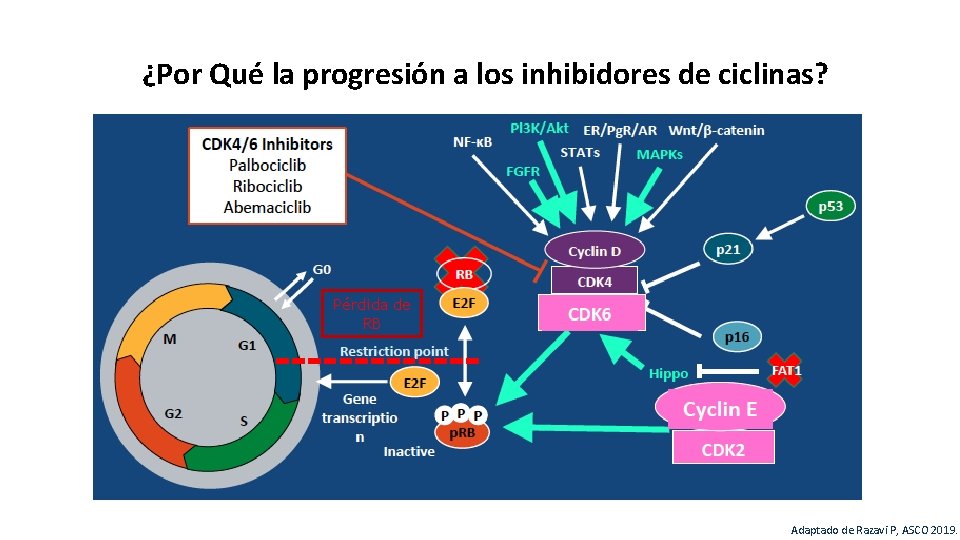
¿Por Qué la progresión a los inhibidores de ciclinas? Bypass de la vía Ciclina E 43 Adaptado de Razavi P, ASCO 2019.
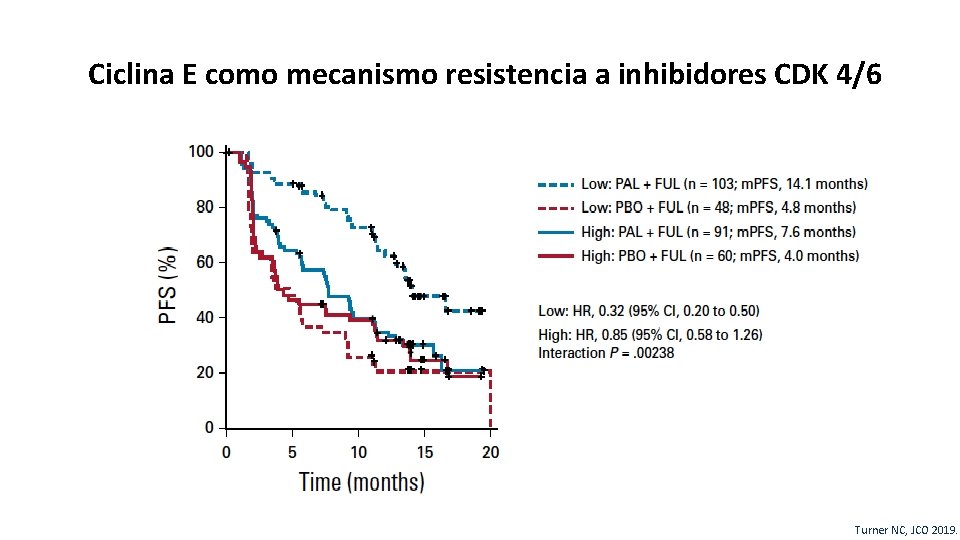
Ciclina E como mecanismo resistencia a inhibidores CDK 4/6 44 Turner NC, JCO 2019.
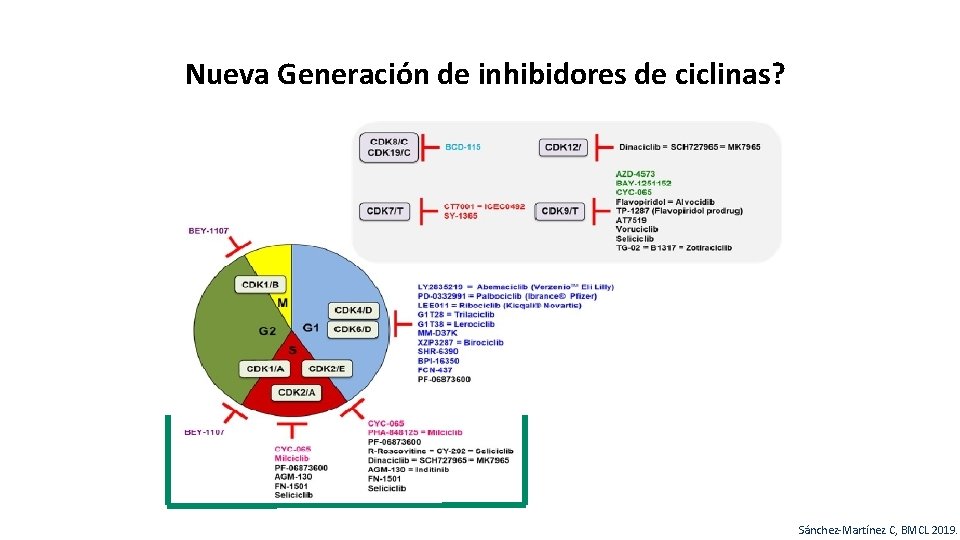
Nueva Generación de inhibidores de ciclinas? 45 Sánchez-Martínez C, BMCL 2019.
¿Por Qué la progresión a los inhibidores de ciclinas? Pérdida de RB 46 Adaptado de Razavi P, ASCO 2019.
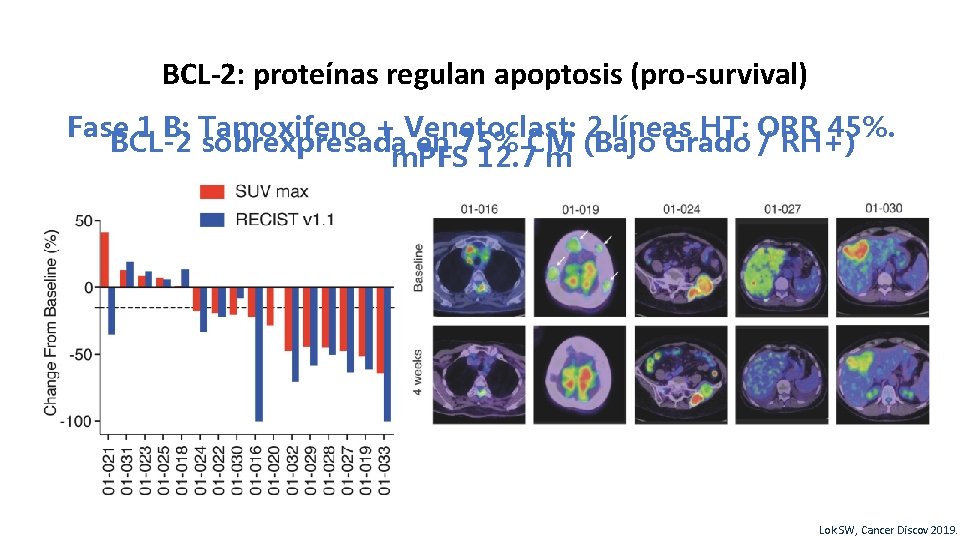
BCL-2: proteínas regulan apoptosis (pro-survival) Fase 1 B: Tamoxifeno + Venetoclast: 2 líneas HT; ORR 45%. BCL-2 sobrexpresada en 75% CM (Bajo Grado / RH+) m. PFS 12. 7 m 48 Lok SW, Cancer Discov 2019.
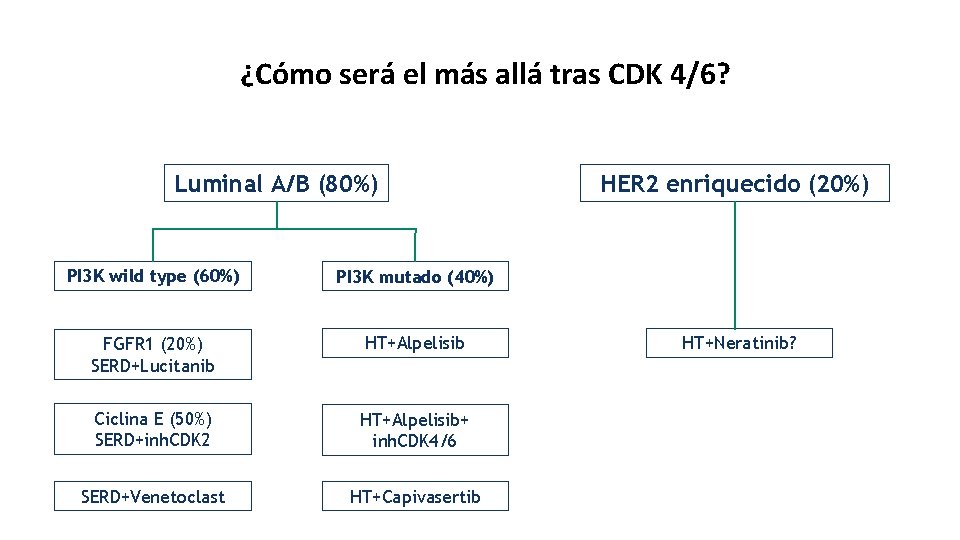
¿Cómo será el más allá tras CDK 4/6? Luminal A/B (80%) PI 3 K wild type (60%) PI 3 K mutado (40%) FGFR 1 (20%) SERD+Lucitanib HT+Alpelisib Ciclina E (50%) SERD+inh. CDK 2 HT+Alpelisib+ inh. CDK 4/6 SERD+Venetoclast HT+Capivasertib HER 2 enriquecido (20%) HT+Neratinib?
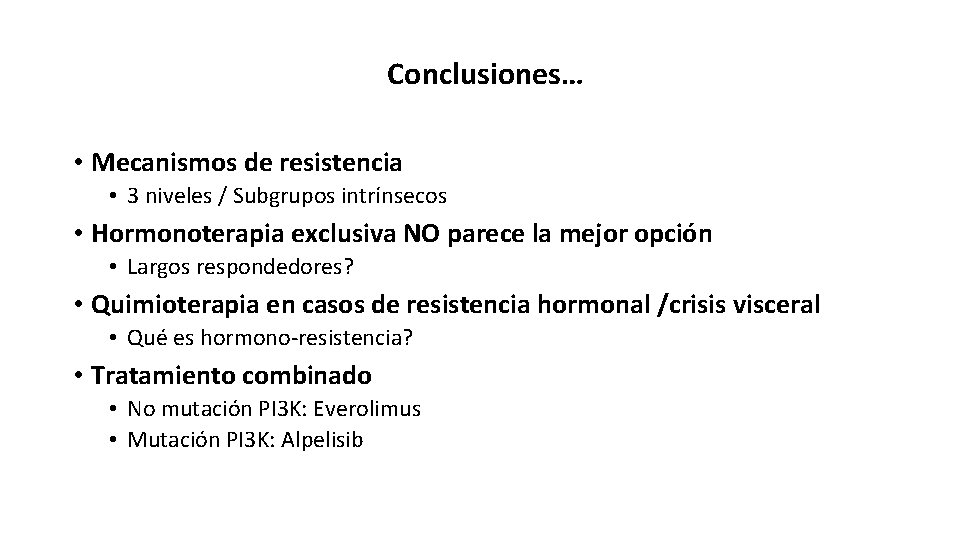
Conclusiones… • Mecanismos de resistencia • 3 niveles / Subgrupos intrínsecos • Hormonoterapia exclusiva NO parece la mejor opción • Largos respondedores? • Quimioterapia en casos de resistencia hormonal /crisis visceral • Qué es hormono-resistencia? • Tratamiento combinado • No mutación PI 3 K: Everolimus • Mutación PI 3 K: Alpelisib • Futuro… 50