
CMV infection in renal transplant recipients review INTRODUCTION
- Slides: 25
CMV infection in renal transplant recipients review
INTRODUCTION • CMV is one of the most important infections in renal transplant recipients. • Exposure to the virus (Ig. G anti-CMV antibodies in the plasma) increases with age in the general population. – more than 2/3 of donors and recipients prior to transplantation
• Transmission : – blood transfusion or transplanted kidney – immunosuppressive drugs->increases the risk • Thus, both the recipient and the donor are routinely tested for anti-CMV antibodies prior to transplantation.
• CMV : a significant underlying cause of morbidity and mortality in the renal transplant setting. – CMV-positive patients had significantly higher incidence of CMV disease, allograft loss, and overall costs. – The impact of CMV on overall mortality (a prospective, single center study of almost 500 pts who did not receive CMV prophylaxis) • a relative risk of overall mortality of 2. 5 • asymptomatic CMV infection was associated with a relative risk of overall mortality of 2. 9
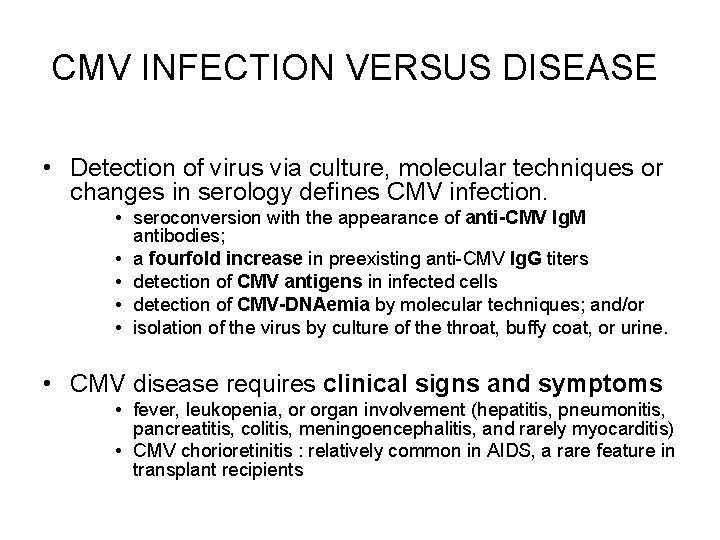
CMV INFECTION VERSUS DISEASE • Detection of virus via culture, molecular techniques or changes in serology defines CMV infection. • seroconversion with the appearance of anti-CMV Ig. M antibodies; • a fourfold increase in preexisting anti-CMV Ig. G titers • detection of CMV antigens in infected cells • detection of CMV-DNAemia by molecular techniques; and/or • isolation of the virus by culture of the throat, buffy coat, or urine. • CMV disease requires clinical signs and symptoms • fever, leukopenia, or organ involvement (hepatitis, pneumonitis, pancreatitis, colitis, meningoencephalitis, and rarely myocarditis) • CMV chorioretinitis : relatively common in AIDS, a rare feature in transplant recipients
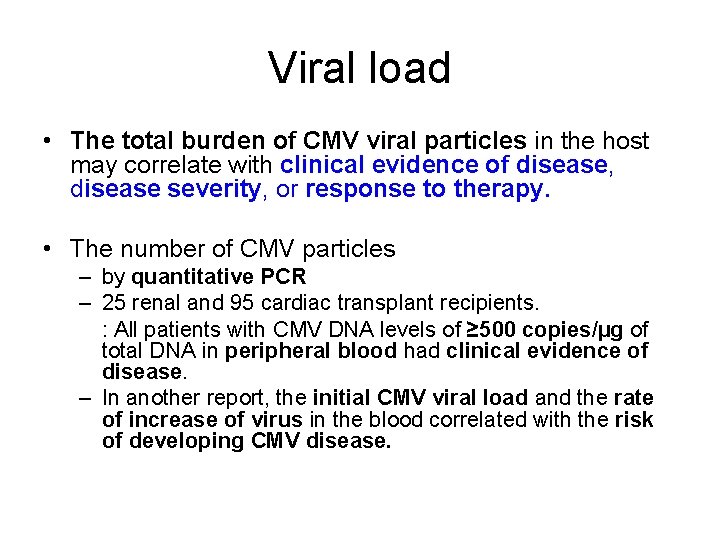
Viral load • The total burden of CMV viral particles in the host may correlate with clinical evidence of disease, disease severity, or response to therapy. • The number of CMV particles – by quantitative PCR – 25 renal and 95 cardiac transplant recipients. : All patients with CMV DNA levels of ≥ 500 copies/µg of total DNA in peripheral blood had clinical evidence of disease. – In another report, the initial CMV viral load and the rate of increase of virus in the blood correlated with the risk of developing CMV disease.
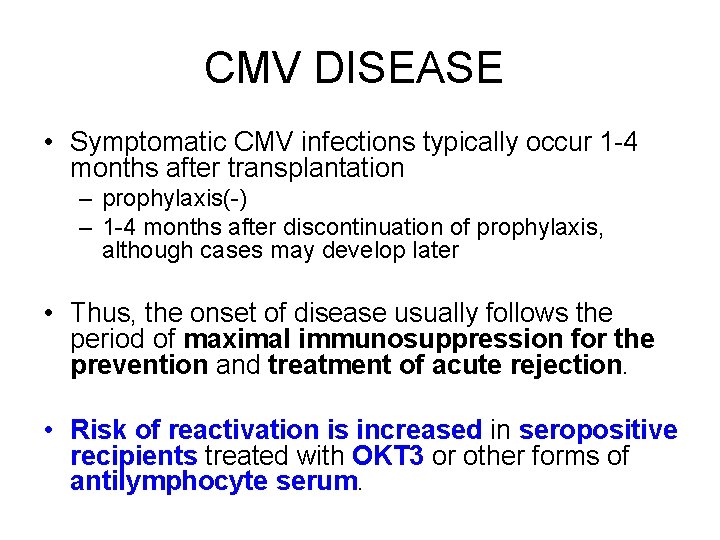
CMV DISEASE • Symptomatic CMV infections typically occur 1 -4 months after transplantation – prophylaxis(-) – 1 -4 months after discontinuation of prophylaxis, although cases may develop later • Thus, the onset of disease usually follows the period of maximal immunosuppression for the prevention and treatment of acute rejection. • Risk of reactivation is increased in seropositive recipients treated with OKT 3 or other forms of antilymphocyte serum.
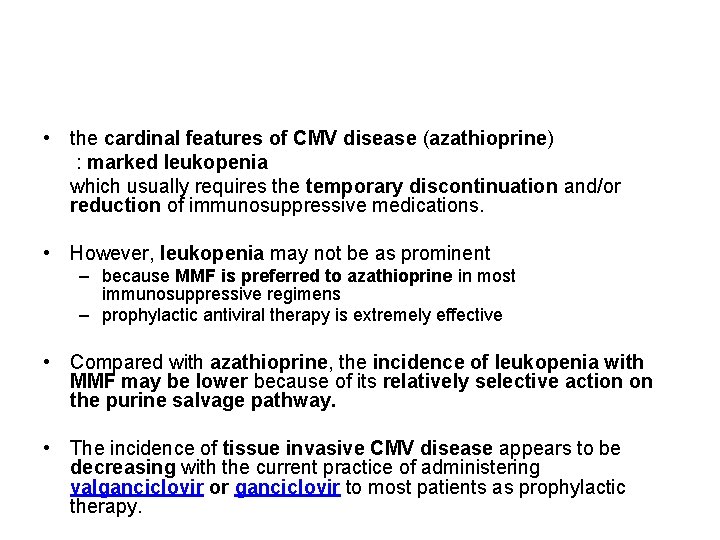
• the cardinal features of CMV disease (azathioprine) : marked leukopenia which usually requires the temporary discontinuation and/or reduction of immunosuppressive medications. • However, leukopenia may not be as prominent – because MMF is preferred to azathioprine in most immunosuppressive regimens – prophylactic antiviral therapy is extremely effective • Compared with azathioprine, the incidence of leukopenia with MMF may be lower because of its relatively selective action on the purine salvage pathway. • The incidence of tissue invasive CMV disease appears to be decreasing with the current practice of administering valganciclovir or ganciclovir to most patients as prophylactic therapy.
• No fixed protocol for this clinical situation – since the degree of immunosuppression may significantly vary by individual. – Nevertheless, the antimetabolite utilized (either azathioprine or MMF) is usually permanently discontinued.
Presentation of CMV disease • The most common presentation is a mononucleosis-like synd. – fever, malaise, myalgias, and arthralgias, usually associated with leukopenia and mild (5 to 10 percent) atypical lymphocytosis – A mild elevation in serum aminotransferase concentrations also may be seen. – MMF : invasive CMV disease can occur in the absence of fever and leukopenia. • Interstitial pneumonitis and ulcerations in the esophagus and colon are particularly troublesome and cause major morbidity. – GI bleeding among renal transplant recipients is commonly caused by erosions due to CMV. – Invasive disease is usually confirmed with endoscopic biopsy. • Encephalopathy and chorioretinitis are unusual in renal transplant recipients.
Diagnosis • Techniques for detecting CMV have improved dramatically. • However, interpretation of results may be problematic. – because of the broad spectrum of clinical disease (ranging from asymptomatic viral shedding to fulminant infection) • The implications of positive identification of CMV in blood or tissue depends largely upon – the clinical context and the source of the specimen
Several diagnostic modalities are available. • Serology – a fourfold increase in CMV-Ig. G titer or – a markedly positive CMV-Ig. M titer => suggest recent infection. – less useful than antigen or PCR testing and has largely been abandoned for the diagnosis – however, still useful for pre-transplant risk stratification – currently more frequently measured with an ELISA than with complement fixing titers
• Culture – culture of urine, buffy coat, throat, bronchoalveolar lavage fluid : the preferred method to diagnose active infection. – conventional tube culture takes weeks – rapid shell-vial culture technique (24 to 48 hrs) – more commonly, the CMV PCR – shell-vial culture technique : a fluorescence tagged monoclonal antibody is used to detect a CMV antigen expressed early in viral replication.
• Newer techniques – pp 65 antigenemia assay, PCR, quantitative CMV-PCR, and the hybrid-capture RNA-DNA hybridization assay.
Treatment • The mononucleosis-like syndrome may resolve without the administration of antiviral drugs. • A reduction in the overall level of immunotherapy is often recommended. – OKT 3 (or other form of antilymphocyte serum) should be discontinued – azathioprine or mycophenolate mofetil should be given in reduced dosage or discontinued. – We usually do not discontinue cyclosporine or tacrolimus unless there is evidence of life-threatening infection. – Corticosteroids are generally continued to prevent possible adrenal insufficiency.
• Uncontrolled trials suggest that patients with organ involvement may benefit from a 2 -3 week course of ganciclovir. • Hyperimmune globulin (Cytogam) • Prior to initiating this regimen, potential causes need to be excluded. – CMV infection may be associated with Pneumocystis carinii pneumonia, which should also be treated.
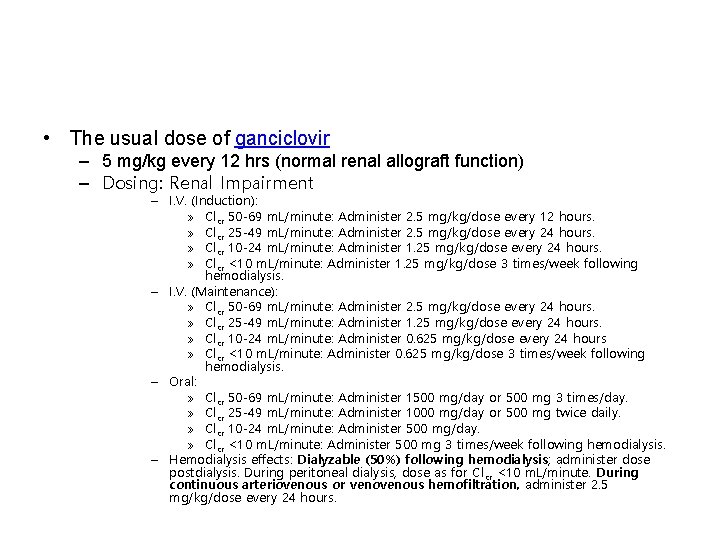
• The usual dose of ganciclovir – 5 mg/kg every 12 hrs (normal renal allograft function) – Dosing: Renal Impairment – I. V. (Induction): » Clcr 50 -69 m. L/minute: Administer 2. 5 mg/kg/dose every 12 hours. » Clcr 25 -49 m. L/minute: Administer 2. 5 mg/kg/dose every 24 hours. » Clcr 10 -24 m. L/minute: Administer 1. 25 mg/kg/dose every 24 hours. » Clcr <10 m. L/minute: Administer 1. 25 mg/kg/dose 3 times/week following hemodialysis. – I. V. (Maintenance): » Clcr 50 -69 m. L/minute: Administer 2. 5 mg/kg/dose every 24 hours. » Clcr 25 -49 m. L/minute: Administer 1. 25 mg/kg/dose every 24 hours. » Clcr 10 -24 m. L/minute: Administer 0. 625 mg/kg/dose every 24 hours » Clcr <10 m. L/minute: Administer 0. 625 mg/kg/dose 3 times/week following hemodialysis. – Oral: » Clcr 50 -69 m. L/minute: Administer 1500 mg/day or 500 mg 3 times/day. » Clcr 25 -49 m. L/minute: Administer 1000 mg/day or 500 mg twice daily. » Clcr 10 -24 m. L/minute: Administer 500 mg/day. » Clcr <10 m. L/minute: Administer 500 mg 3 times/week following hemodialysis. – Hemodialysis effects: Dialyzable (50%) following hemodialysis; administer dose postdialysis. During peritoneal dialysis, dose as for Cl cr <10 m. L/minute. During continuous arteriovenous or venous hemofiltration, administer 2. 5 mg/kg/dose every 24 hours.
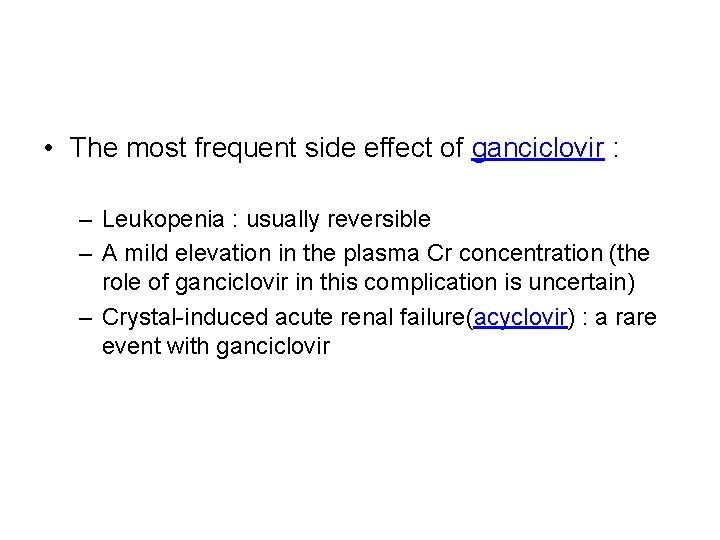
• The most frequent side effect of ganciclovir : – Leukopenia : usually reversible – A mild elevation in the plasma Cr concentration (the role of ganciclovir in this complication is uncertain) – Crystal-induced acute renal failure(acyclovir) : a rare event with ganciclovir
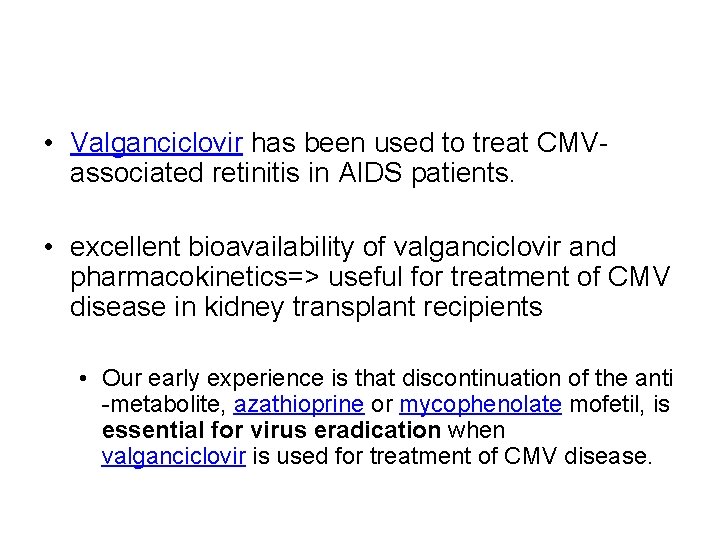
• Valganciclovir has been used to treat CMVassociated retinitis in AIDS patients. • excellent bioavailability of valganciclovir and pharmacokinetics=> useful for treatment of CMV disease in kidney transplant recipients • Our early experience is that discontinuation of the anti -metabolite, azathioprine or mycophenolate mofetil, is essential for virus eradication when valganciclovir is used for treatment of CMV disease.
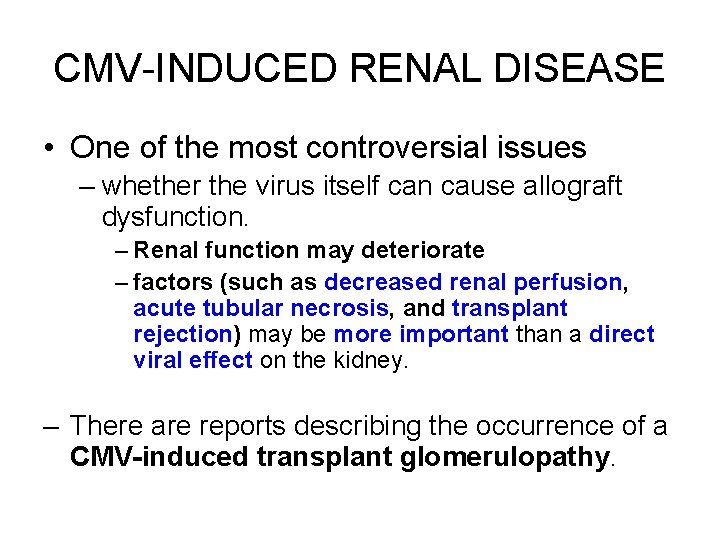
CMV-INDUCED RENAL DISEASE • One of the most controversial issues – whether the virus itself can cause allograft dysfunction. – Renal function may deteriorate – factors (such as decreased renal perfusion, acute tubular necrosis, and transplant rejection) may be more important than a direct viral effect on the kidney. – There are reports describing the occurrence of a CMV-induced transplant glomerulopathy.
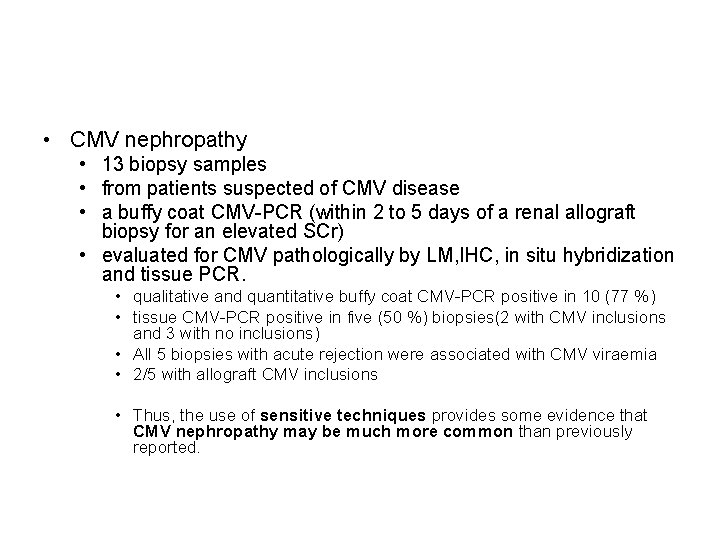
• CMV nephropathy • 13 biopsy samples • from patients suspected of CMV disease • a buffy coat CMV-PCR (within 2 to 5 days of a renal allograft biopsy for an elevated SCr) • evaluated for CMV pathologically by LM, IHC, in situ hybridization and tissue PCR. • qualitative and quantitative buffy coat CMV-PCR positive in 10 (77 %) • tissue CMV-PCR positive in five (50 %) biopsies(2 with CMV inclusions and 3 with no inclusions) • All 5 biopsies with acute rejection were associated with CMV viraemia • 2/5 with allograft CMV inclusions • Thus, the use of sensitive techniques provides some evidence that CMV nephropathy may be much more common than previously reported.
• CMV infection is an independent risk factor for the development of rejection. • How this might occur is not known – prevention of CMV infection may diminish the incidence of rejection and lead to improved allograft survival
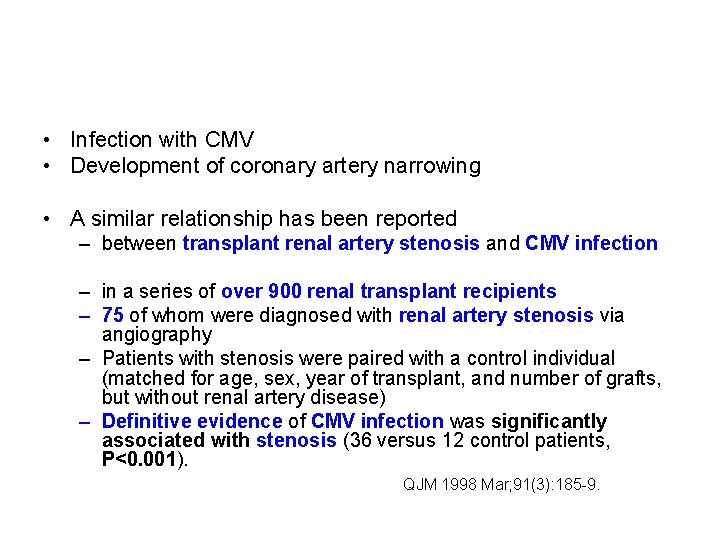
• Infection with CMV • Development of coronary artery narrowing • A similar relationship has been reported – between transplant renal artery stenosis and CMV infection – in a series of over 900 renal transplant recipients – 75 of whom were diagnosed with renal artery stenosis via angiography – Patients with stenosis were paired with a control individual (matched for age, sex, year of transplant, and number of grafts, but without renal artery disease) – Definitive evidence of CMV infection was significantly associated with stenosis (36 versus 12 control patients, P<0. 001). QJM 1998 Mar; 91(3): 185 -9.
• In addition, CMV has been associated with thrombotic microangiopathy (HUS/TTP) in solid organ and bone marrow transplant recipients • The disorder may respond to immunoglobulin infusion
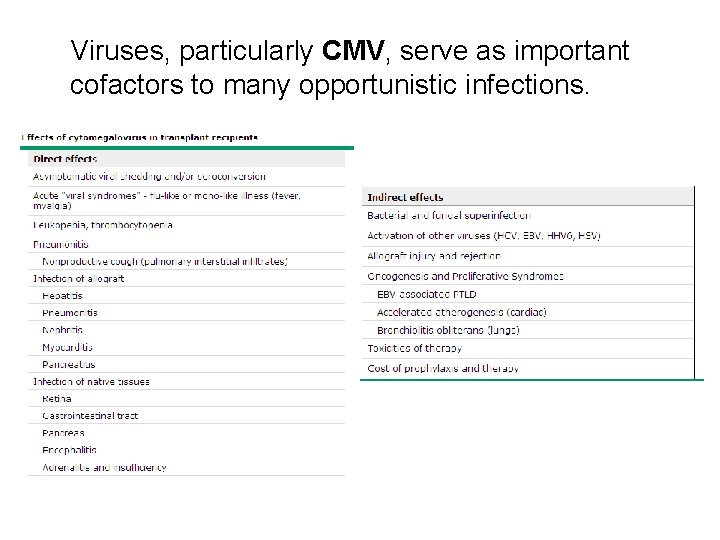
Viruses, particularly CMV, serve as important cofactors to many opportunistic infections.