
CMSC 426 Image Processing Computer Vision What is




- Slides: 26
CMSC 426: Image Processing (Computer Vision)
What is Vision? • What does it mean to see? • To know what is where by looking (Marr 1982) • To understand from images the objects and actions in the world.
The goal of Computer Vision • We would like machines that are able to autonomously interpret the images taken by their sensors and are able to interact with the world. • We would like human-like or even superhuman like capabilities. • But what does it mean to understand?
Vision depends on: • Geometry • Physics • The nature of objects in the world (This is the hardest part).
Human Vision appears easy • We use more than 60% of our brain for visual perception • Vision is immediate • What we perceive is a reconstruction within our brain • We regard it as reflecting the world
Human Vision is • • Subject to illusions Quantitatively imprecise Limited to a narrow range of frequencies A passive sense -- but we are not passively seeing
Interesting Approaches • Many animals have vision (frogs, insects, birds) • Active, Purposive Vision: Our Vision is related to our capabilities and we are embodied. “We move therefore we see”
The Computer Vision we study A set of computational techniques that allow us to estimate geometric and dynamic properties of the 3 D world from digital images
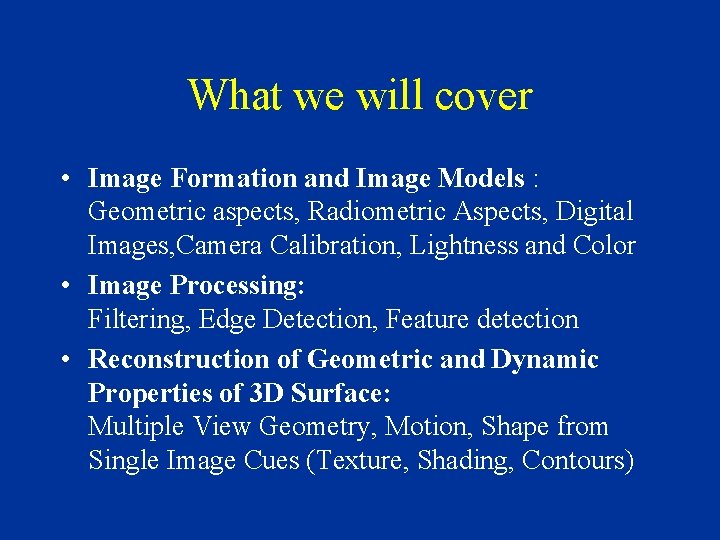
What we will cover • Image Formation and Image Models : Geometric aspects, Radiometric Aspects, Digital Images, Camera Calibration, Lightness and Color • Image Processing: Filtering, Edge Detection, Feature detection • Reconstruction of Geometric and Dynamic Properties of 3 D Surface: Multiple View Geometry, Motion, Shape from Single Image Cues (Texture, Shading, Contours)
Books • E. Trucco and A. Verri, “Introductory Techniques for 3 D Computer Vision”, Prentice Hall (strongly recommended) • BKP Horn, “Robot Vision”, MIT Press • M. Sonka and V. Hlavac, “Image Processing, Analysis, and Machine Vision”, PWS Publishing • D. Forsyth and J. Ponce, “Computer Vision • A Modern Approach”, Prentice Hall
Related Disciplines • Image Processing: image-to-image transformations, image enhancement (e. g to interpret radiography of lungs), compression, feature extraction (image operations which extract differential invariants of the image) • Pattern Recognition: recognizing and classifying objects • Photogrammetry: obtaining accurate measurements from noncontact imaging, higher accuracy
Related Fields • • Graphics. “Vision is inverse graphics”. Visual perception (Psychphysics) Neuroscience. AI Learning Robotics Math: eg. , geometry, stochastic processes, optimaztion
A Quick Tour of Computer Vision
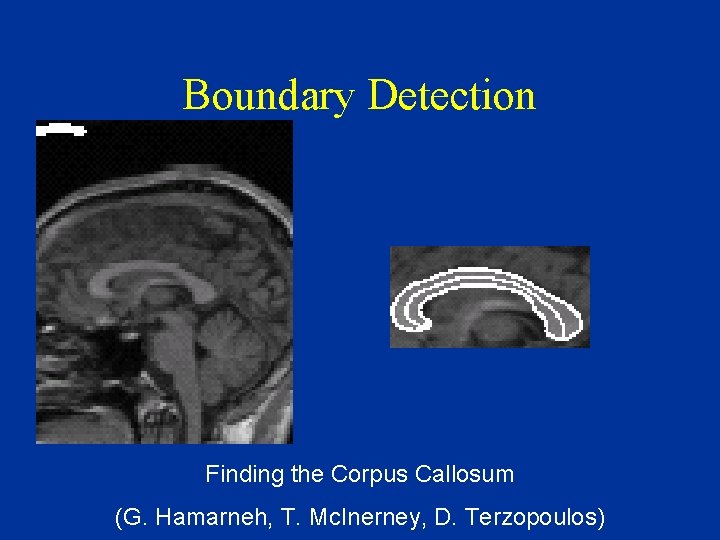
Boundary Detection Finding the Corpus Callosum (G. Hamarneh, T. Mc. Inerney, D. Terzopoulos)
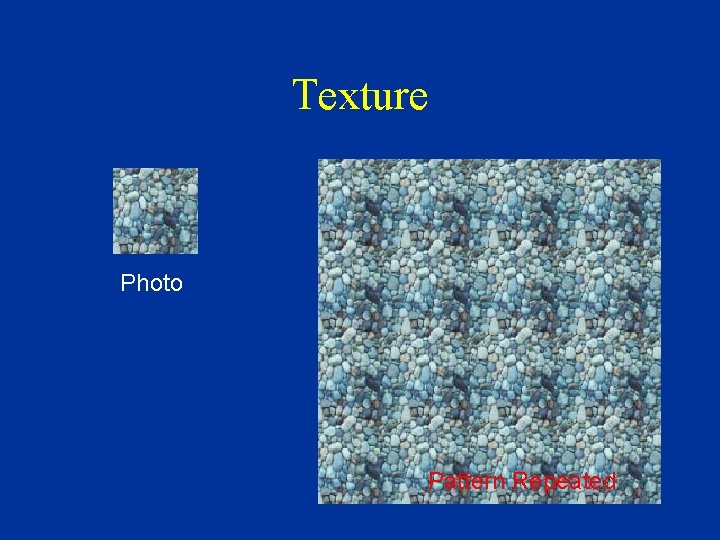
Texture Photo Pattern Repeated
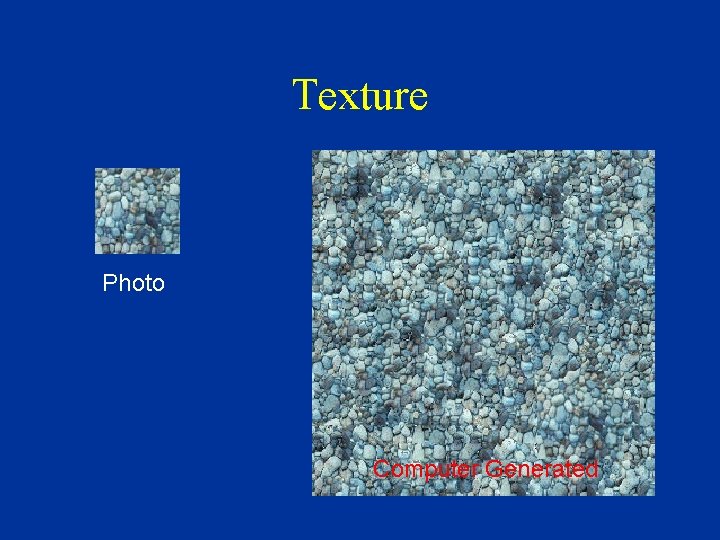
Texture Photo Computer Generated
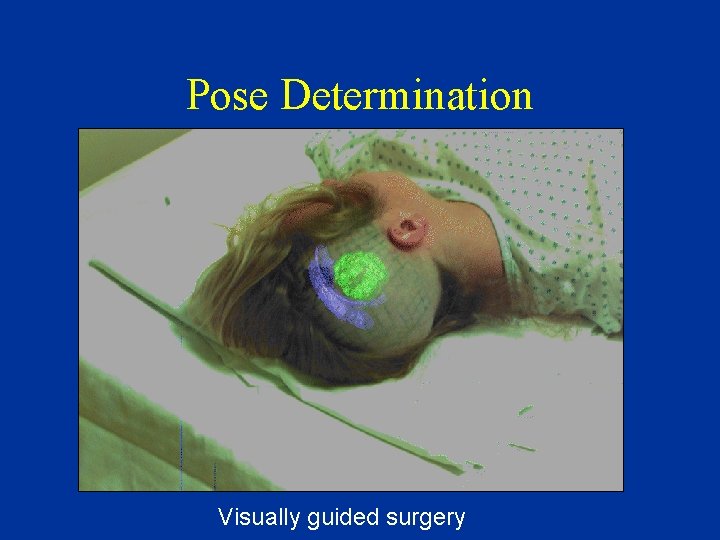
Pose Determination Visually guided surgery
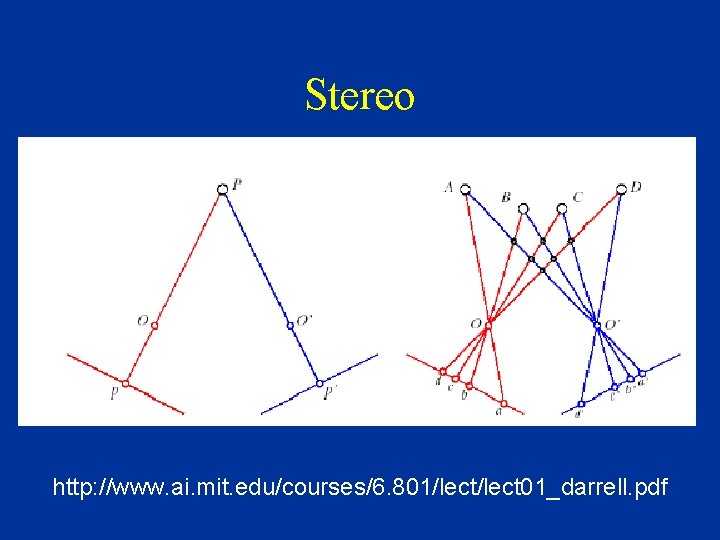
Stereo http: //www. ai. mit. edu/courses/6. 801/lect 01_darrell. pdf
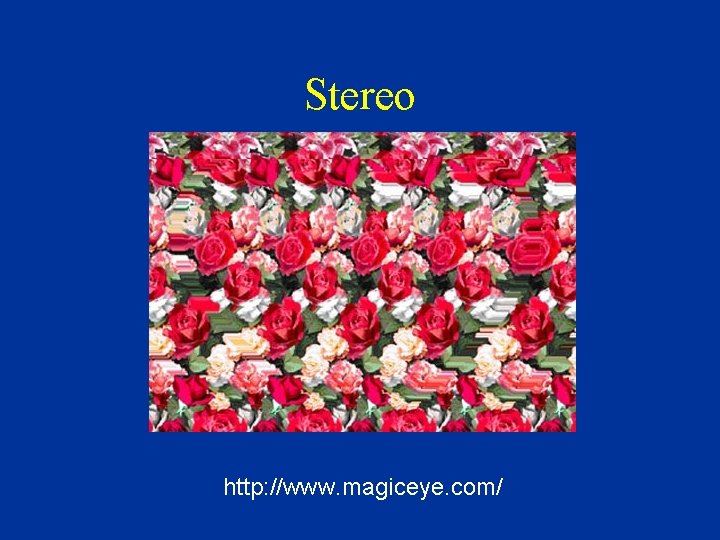
Stereo http: //www. magiceye. com/
Stereo http: //www. magiceye. com/
3 D model construction
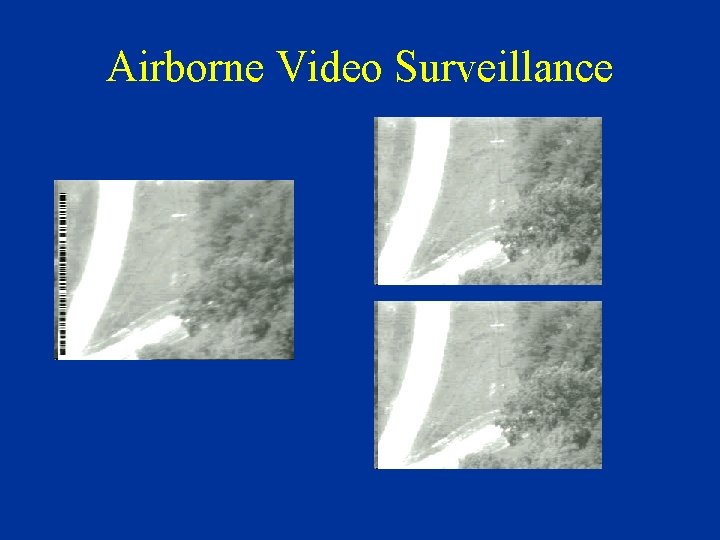
Airborne Video Surveillance
Shape from Shading
New camera design