
CMS Cathode Strip Chambers Performance with LHC Data

CMS Cathode Strip Chambers Performance with LHC Data Vladimir Palichik JINR, Dubna NEC’ 2013 Varna, September 10, 2013 1
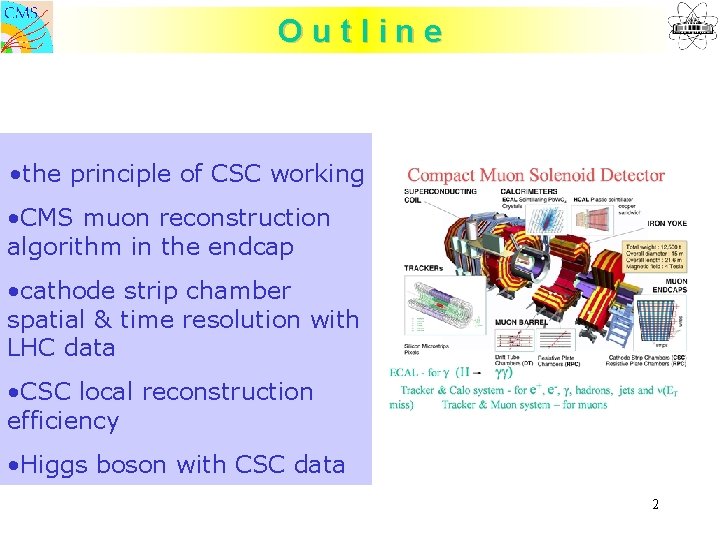
Outline • the principle of CSC working • CMS muon reconstruction algorithm in the endcap • cathode strip chamber spatial & time resolution with LHC data • CSC local reconstruction efficiency • Higgs boson with CSC data 2
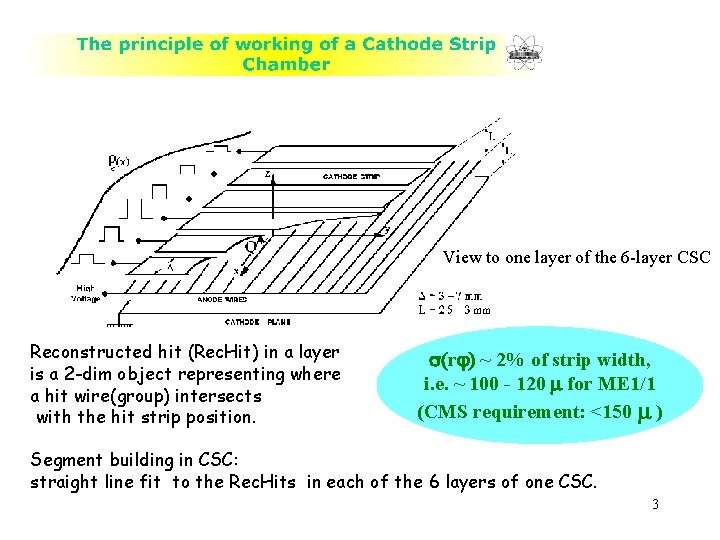
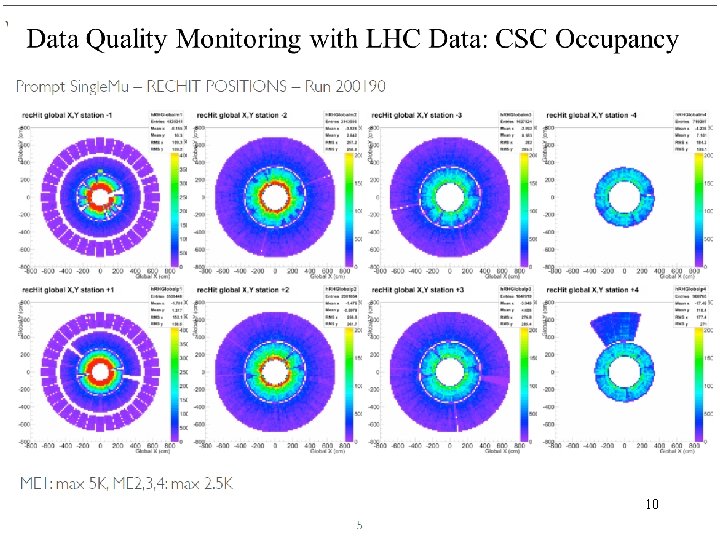
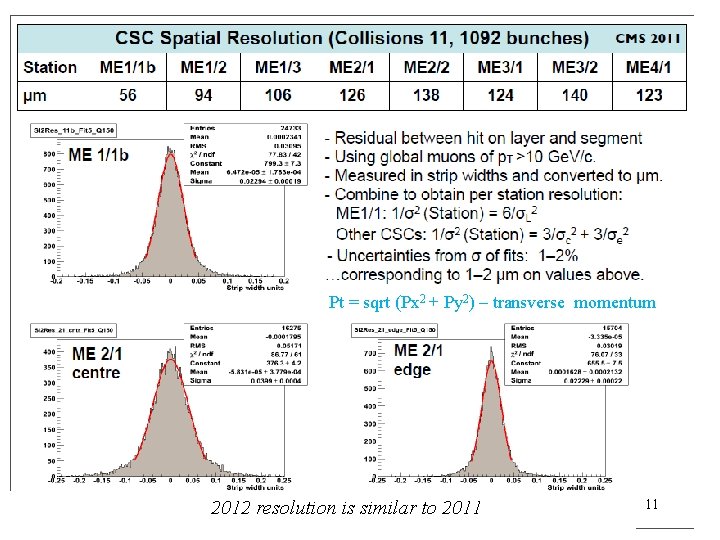
View to one layer of the 6 -layer CSC Reconstructed hit (Rec. Hit) in a layer is a 2 -dim object representing where a hit wire(group) intersects with the hit strip position. r ~ 2% of strip width, i. e. ~ 100 - 120 for ME 1/1 (CMS requirement: <150 ) Segment building in CSC: straight line fit to the Rec. Hits in each of the 6 layers of one CSC. 3
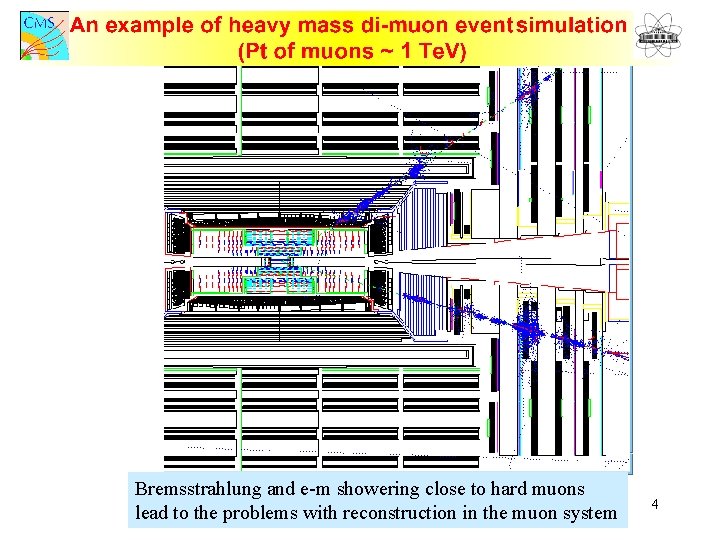
Bremsstrahlung and e-m showering close to hard muons lead to the problems with reconstruction in the muon system 4
5
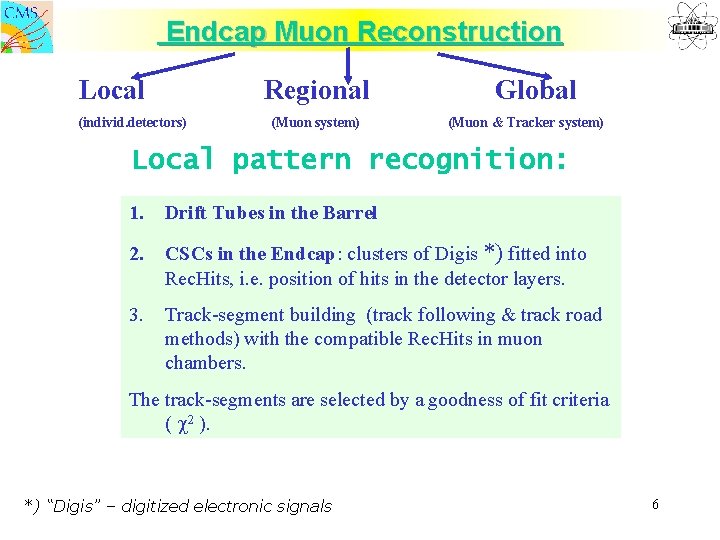
Endcap Muon Reconstruction Local Regional (individ. detectors) (Muon system) Global (Muon & Tracker system) Local pattern recognition: 1. Drift Tubes in the Barrel 2. CSCs in the Endcap: clusters of Digis *) fitted into Rec. Hits, i. e. position of hits in the detector layers. 3. Track-segment building (track following & track road methods) with the compatible Rec. Hits in muon chambers. The track-segments are selected by a goodness of fit criteria ( 2 ). *) “Digis” – digitized electronic signals 6
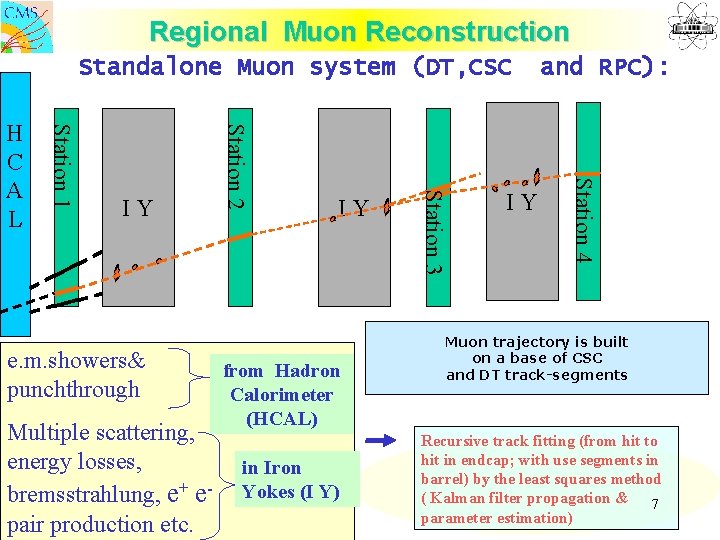
Regional Muon Reconstruction Standalone Muon system (DT, CSC Multiple scattering, energy losses, bremsstrahlung, e+ epair production etc. from Hadron Calorimeter (HCAL) in Iron Yokes (I Y) IY Station 4 e. m. showers& punchthrough IY Station 3 IY Station 2 Station 1 H C A L and RPC): Muon trajectory is built on a base of CSC and DT track-segments Recursive track fitting (from hit to hit in endcap; with use segments in barrel) by the least squares method ( Kalman filter propagation & 7 parameter estimation)
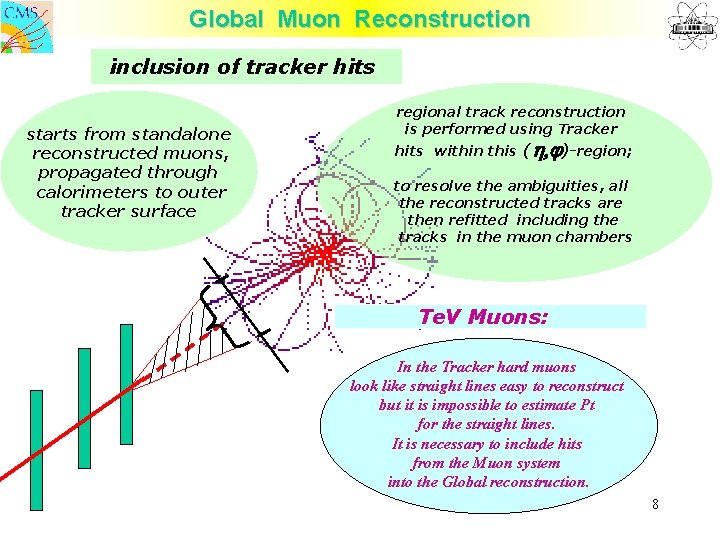
Global Muon Reconstruction inclusion of tracker hits starts from standalone reconstructed muons, propagated through calorimeters to outer tracker surface regional track reconstruction is performed using Tracker hits within this ( )-region; to resolve the ambiguities, all the reconstructed tracks are then refitted including the tracks in the muon chambers Te. V Muons: In the Tracker hard muons look like straight lines easy to reconstruct but it is impossible to estimate Pt for the straight lines. It is necessary to include hits from the Muon system into the Global reconstruction. 8
9
10
Pt = sqrt (Px 2 + Py 2) – transverse momentum 2012 resolution is similar to 2011 11
and higher 12
ADC Time. Bins 13 Strips
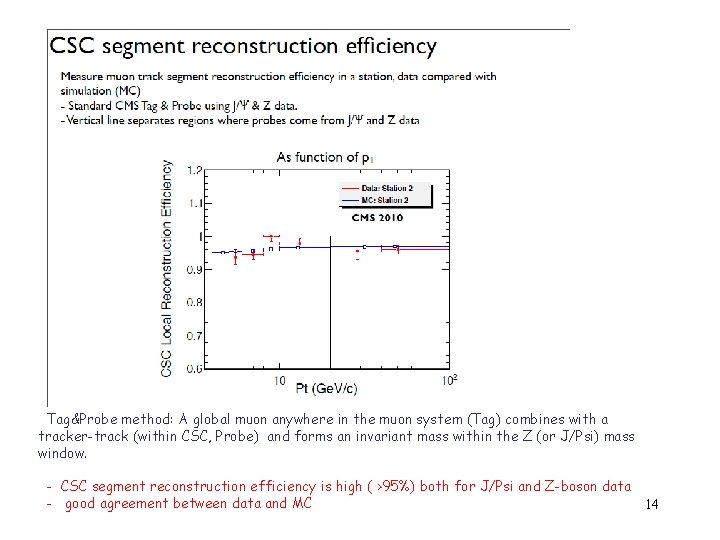
Tag&Probe method: A global muon anywhere in the muon system (Tag) combines with a tracker-track (within CSC, Probe) and forms an invariant mass within the Z (or J/Psi) mass window. - CSC segment reconstruction efficiency is high ( >95%) both for J/Psi and Z-boson data - good agreement between data and MC 14
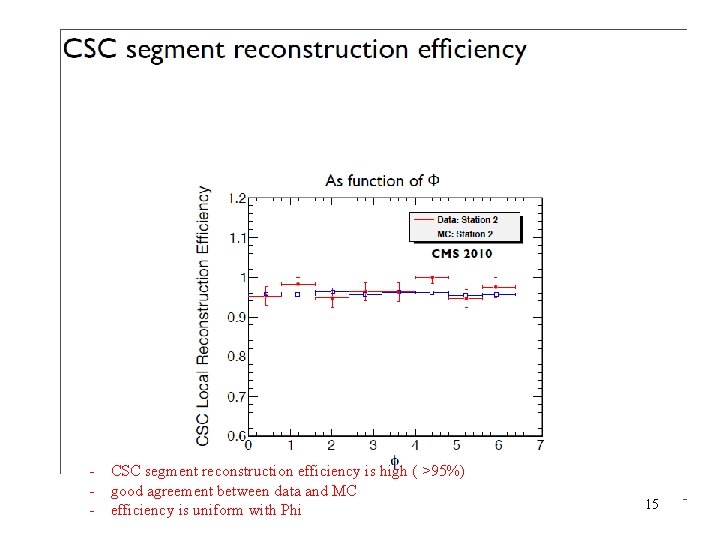
- CSC segment reconstruction efficiency is high ( >95%) good agreement between data and MC efficiency is uniform with Phi 15
16
17
18
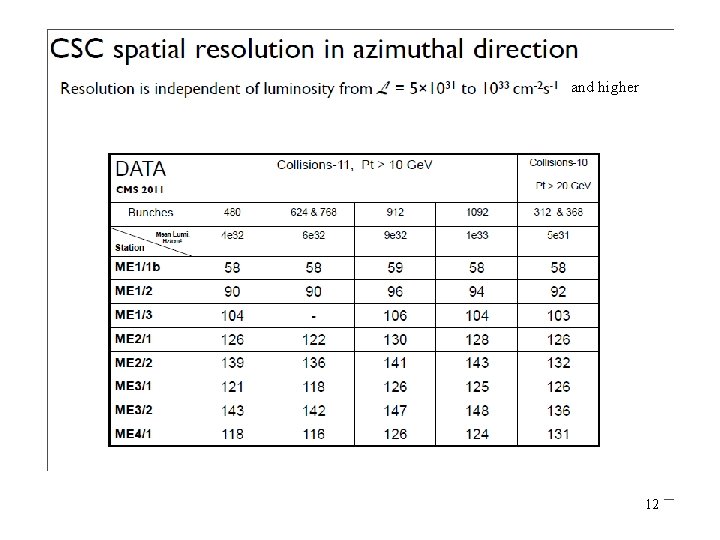
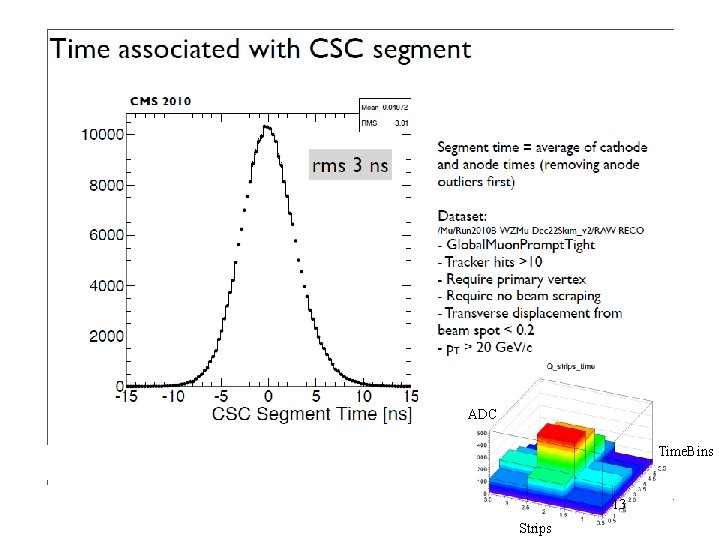
Conclusions Cathode Strip Chambers play an important role in CMS On LHC pp data: - CSC spatial resolution is about 60 -150 microns per station which is in a good agreement with CMS requirements - CSC time resolution ~ 3 ns - CSC high efficiency of segment reconstruction (96 -98%) 19
- Slides: 19