
CMMI Requirements Development RD Listening to the Voice
- Slides: 31
CMMI Requirements Development (RD) Listening to the Voice of the Customer Presenter: Ralph Williams, President SEI Authorized • CBA IPI Lead Assessor (CMM®) • SCAMPI Lead Appraiser. SM (CMMI®) ®CMM and CMMI is registered in the U. S. Patent and Trademark Office. is a service mark of Carnegie Mellon University. SMIDEAL Copyright © 2003 by Cooliemon. TM, LLC 1
Special Permission Special permission to reproduce and adapt portions of: • Software Engineering Process Group Guide, CMU/SEI-90 -TR-024, (c) 1990 by Carnegie Mellon University • Capability Maturity Model® Integration (CMMI®), Version 1. 1 (CMMISMSE/SW/IPPD/SS, V 1. 1) Continuous Representation, CMU/SEI -2002 -TR-011, (c) 2002 by Carnegie Mellon University • Capability Maturity Model® Integration (CMMI®), Version 1. 1 (CMMISMSE/SW/IPPD/SS, V 1. 1) Staged Representation, CMU/SEI-2002 -TR-012, (c) 2002 by Carnegie Mellon University • Standard CMMISM Assessment Method for Process Improvement: Method Definition, Version 1. 1 (SCAMPISM, V 1. 1), CMU/SEI -2001 -HB-2001, (c) 2001 by Carnegie Mellon University is granted by the Software Engineering Institute. ®CMMI, SMIDEAL CMM and Capability Maturity Model are registered in the U. S. Patent and Trademark Office. and SCAMPI are service marks of Carnegie Mellon University. Copyright © 2003 by Cooliemon. TM, LLC 2
About Cooliemon, LLC The mission of Cooliemon, LLC is: “helping organizations achieve excellence through process improvement” Our goal is to focus your process improvement efforts to: • improve quality and productivity • reduce operating costs (i. e. , reduce rework, waste and duplicate effort) • capture the market with high quality products and services • help you become the industry standard by which your competitors measure themselves Copyright © 2003 by Cooliemon. TM, LLC 3
Objectives Review CMMI RD Process Area, specifically how to develop customer requirements (Specific Goal 1). Provide an overview of how Juran’s version of Quality Function Deployment (QFD) can be used to identify the different customer(s) and their needs. Review a practical spreadsheet (Juran’s product design spreadsheet) to capture the needs of the customer. Answer any of your questions. Copyright © 2003 by Cooliemon. TM, LLC 4
Agenda RD Process Area (CMMI) Juran’s version of QFD Identify Customers Discover Customer Needs Summary Copyright © 2003 by Cooliemon. TM, LLC 5
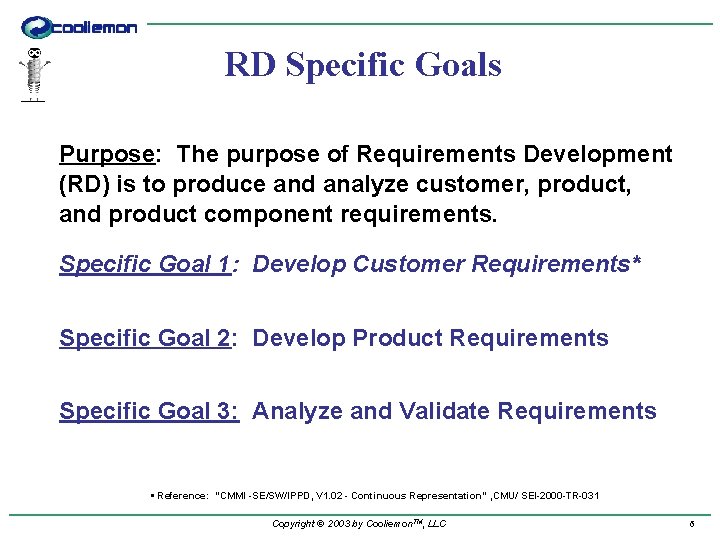
RD Specific Goals Purpose: The purpose of Requirements Development (RD) is to produce and analyze customer, product, and product component requirements. Specific Goal 1: Develop Customer Requirements* Specific Goal 2: Develop Product Requirements Specific Goal 3: Analyze and Validate Requirements • Reference: “CMMI -SE/SW/IPPD, V 1. 02 - Continuous Representation” , CMU/ SEI-2000 -TR-031 Copyright © 2003 by Cooliemon. TM, LLC 6
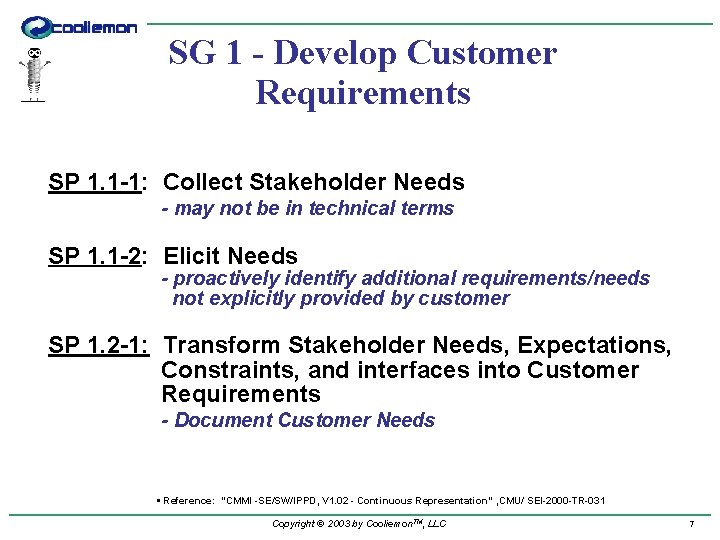
SG 1 - Develop Customer Requirements SP 1. 1 -1: Collect Stakeholder Needs - may not be in technical terms SP 1. 1 -2: Elicit Needs - proactively identify additional requirements/needs not explicitly provided by customer SP 1. 2 -1: Transform Stakeholder Needs, Expectations, Constraints, and interfaces into Customer Requirements - Document Customer Needs • Reference: “CMMI -SE/SW/IPPD, V 1. 02 - Continuous Representation” , CMU/ SEI-2000 -TR-031 Copyright © 2003 by Cooliemon. TM, LLC 7
Agenda RD Process Area (CMMI) Juran’s version of QFD Identify Customers Discover Customer Needs Summary Copyright © 2003 by Cooliemon. TM, LLC 8
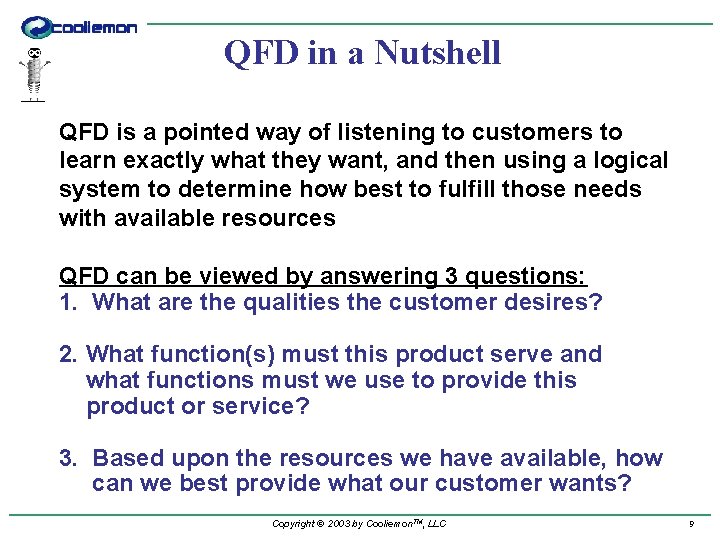
QFD in a Nutshell QFD is a pointed way of listening to customers to learn exactly what they want, and then using a logical system to determine how best to fulfill those needs with available resources QFD can be viewed by answering 3 questions: 1. What are the qualities the customer desires? 2. What function(s) must this product serve and what functions must we use to provide this product or service? 3. Based upon the resources we have available, how can we best provide what our customer wants? Copyright © 2003 by Cooliemon. TM, LLC 9
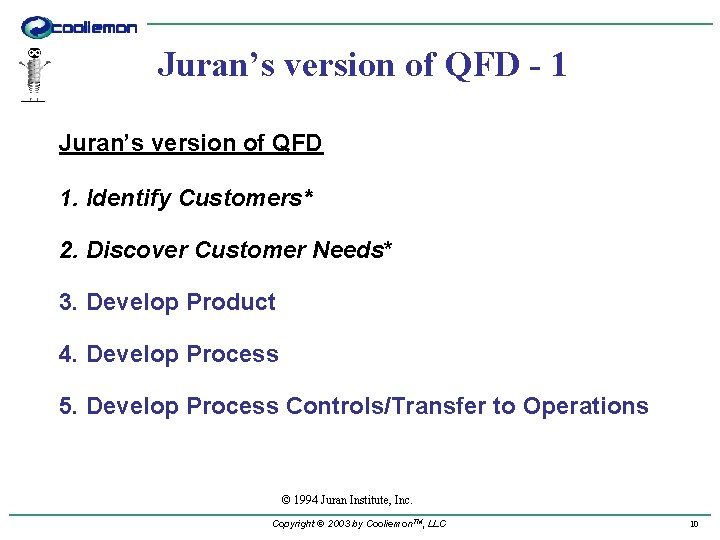
Juran’s version of QFD - 1 Juran’s version of QFD 1. Identify Customers* 2. Discover Customer Needs* 3. Develop Product 4. Develop Process 5. Develop Process Controls/Transfer to Operations © 1994 Juran Institute, Inc. Copyright © 2003 by Cooliemon. TM, LLC 10
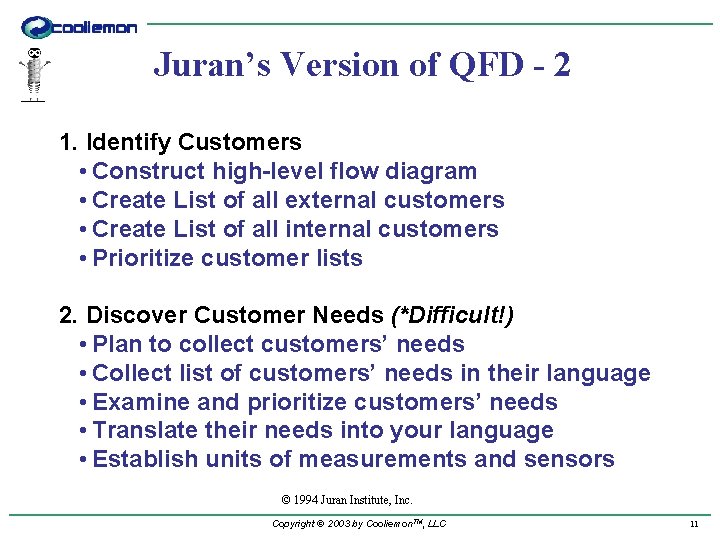
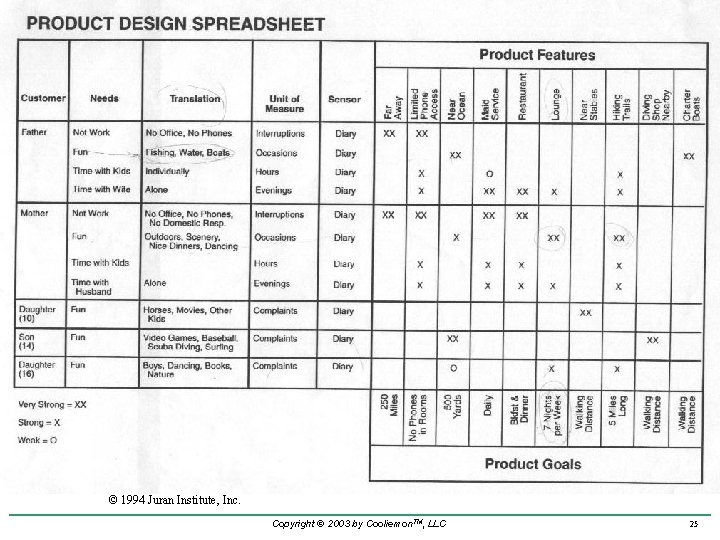
Juran’s Version of QFD - 2 1. Identify Customers • Construct high-level flow diagram • Create List of all external customers • Create List of all internal customers • Prioritize customer lists 2. Discover Customer Needs (*Difficult!) • Plan to collect customers’ needs • Collect list of customers’ needs in their language • Examine and prioritize customers’ needs • Translate their needs into your language • Establish units of measurements and sensors © 1994 Juran Institute, Inc. Copyright © 2003 by Cooliemon. TM, LLC 11
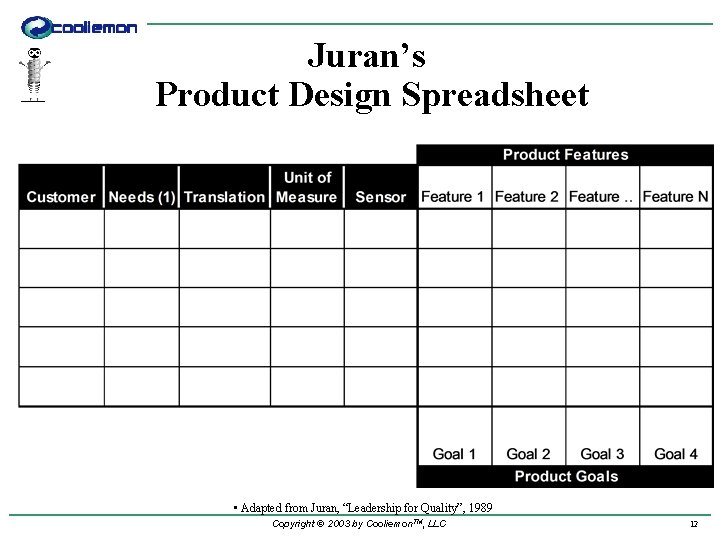
Juran’s Product Design Spreadsheet • Adapted from Juran, “Leadership for Quality”, 1989 Copyright © 2003 by Cooliemon. TM, LLC 12
Agenda RD Process Area (CMMI) Juran’s version of QFD Identify Customers Discover Customer Needs Summary Copyright © 2003 by Cooliemon. TM, LLC 13
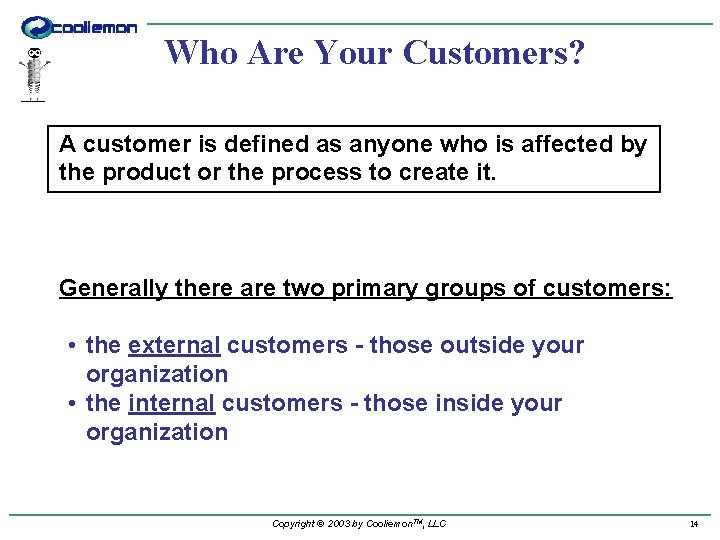
Who Are Your Customers? A customer is defined as anyone who is affected by the product or the process to create it. Generally there are two primary groups of customers: • the external customers - those outside your organization • the internal customers - those inside your organization Copyright © 2003 by Cooliemon. TM, LLC 14
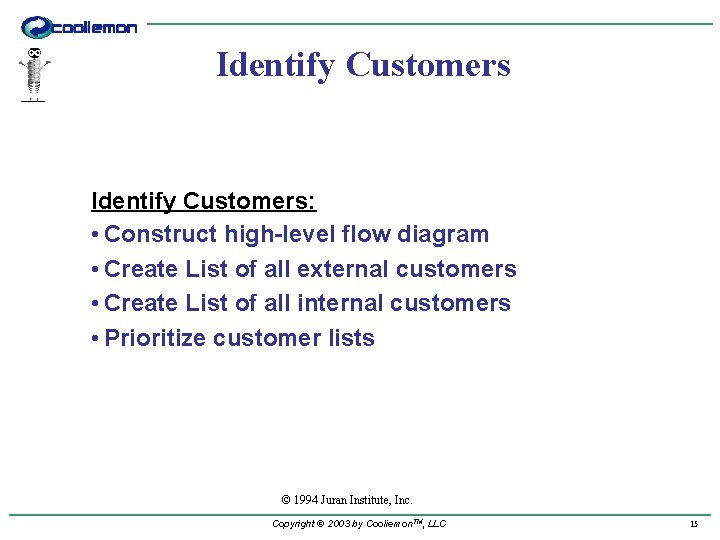
Identify Customers: • Construct high-level flow diagram • Create List of all external customers • Create List of all internal customers • Prioritize customer lists © 1994 Juran Institute, Inc. Copyright © 2003 by Cooliemon. TM, LLC 15
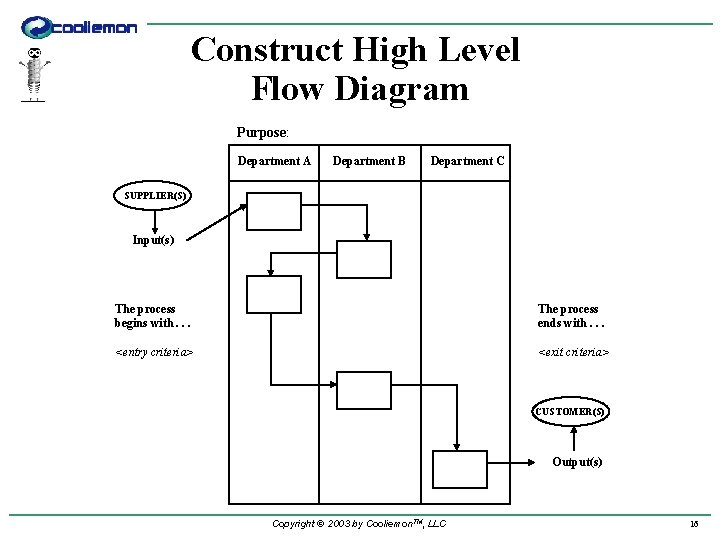
Construct High Level Flow Diagram Purpose: Department A Department B Department C SUPPLIER(S) Input(s) The process begins with. . . The process ends with. . . <entry criteria> <exit criteria> CUSTOMER(S) Output(s) Copyright © 2003 by Cooliemon. TM, LLC 16
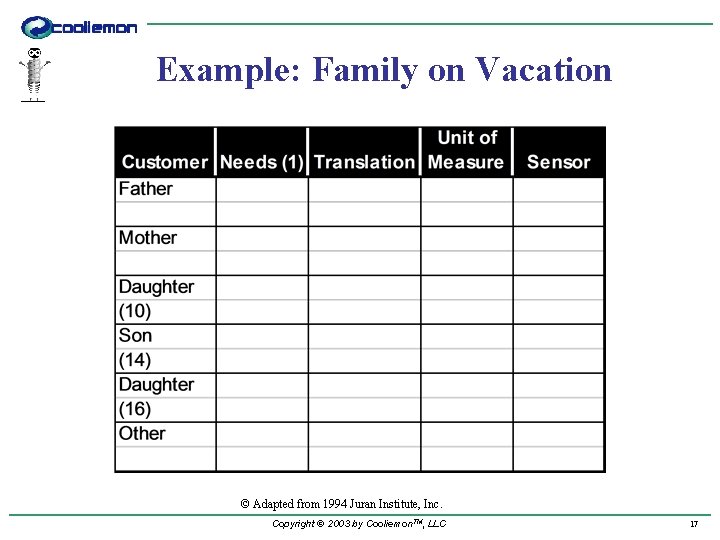
Example: Family on Vacation © Adapted from 1994 Juran Institute, Inc. Copyright © 2003 by Cooliemon. TM, LLC 17
Agenda RD Process Area (CMMI) Juran’s version of QFD Identify Customers Discover Customer Needs Summary Copyright © 2003 by Cooliemon. TM, LLC 18
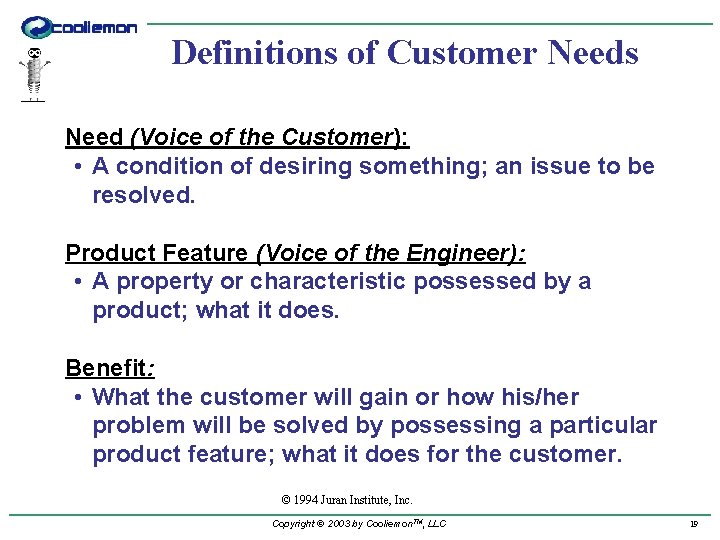
Definitions of Customer Needs Need (Voice of the Customer): • A condition of desiring something; an issue to be resolved. Product Feature (Voice of the Engineer): • A property or characteristic possessed by a product; what it does. Benefit: • What the customer will gain or how his/her problem will be solved by possessing a particular product feature; what it does for the customer. © 1994 Juran Institute, Inc. Copyright © 2003 by Cooliemon. TM, LLC 19
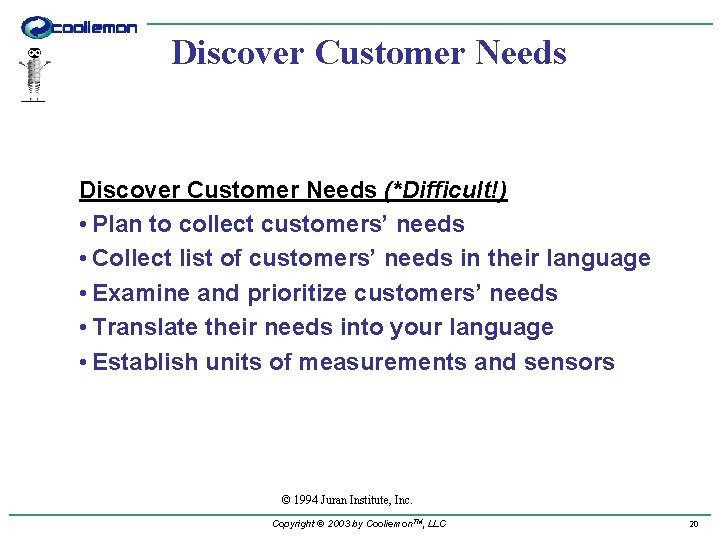
Discover Customer Needs (*Difficult!) • Plan to collect customers’ needs • Collect list of customers’ needs in their language • Examine and prioritize customers’ needs • Translate their needs into your language • Establish units of measurements and sensors © 1994 Juran Institute, Inc. Copyright © 2003 by Cooliemon. TM, LLC 20
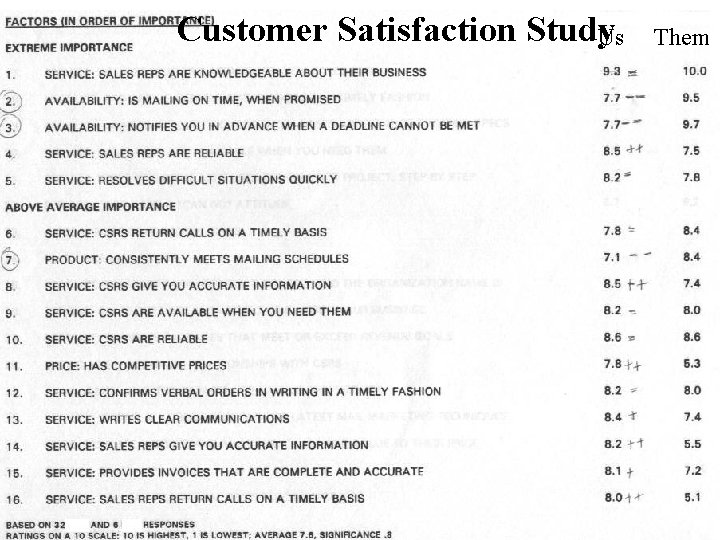
Customer Satisfaction Study Us Copyright © 2003 by Cooliemon. TM, LLC Them 21
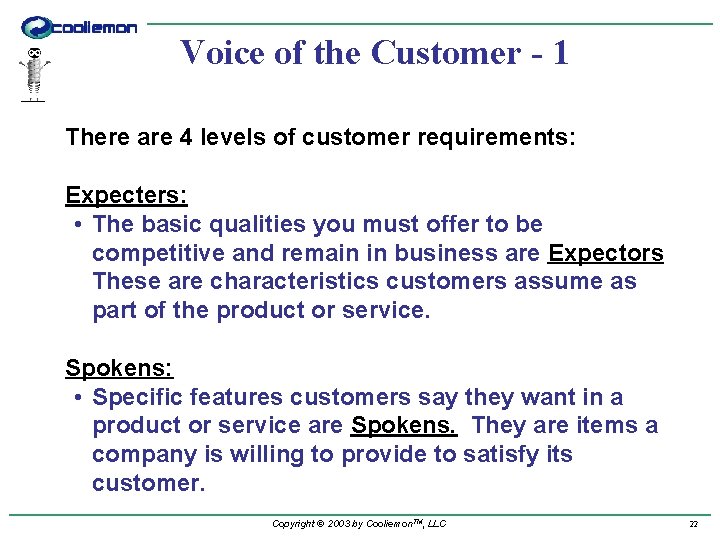
Voice of the Customer - 1 There are 4 levels of customer requirements: Expecters: • The basic qualities you must offer to be competitive and remain in business are Expectors These are characteristics customers assume as part of the product or service. Spokens: • Specific features customers say they want in a product or service are Spokens. They are items a company is willing to provide to satisfy its customer. Copyright © 2003 by Cooliemon. TM, LLC 22
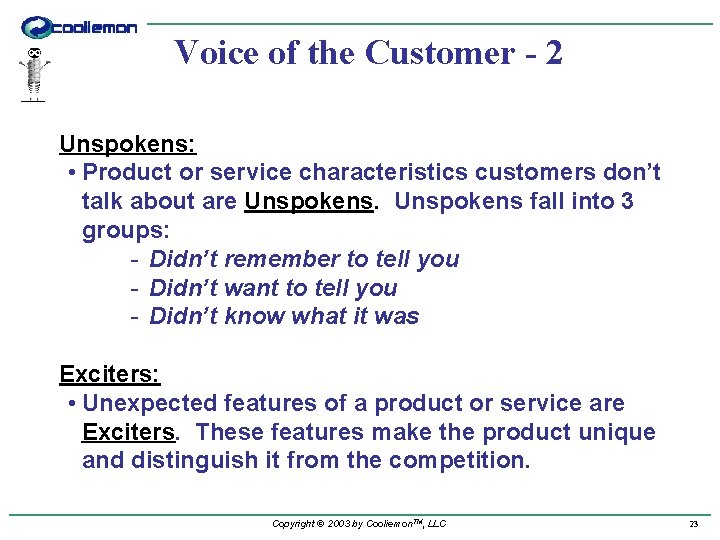
Voice of the Customer - 2 Unspokens: • Product or service characteristics customers don’t talk about are Unspokens fall into 3 groups: - Didn’t remember to tell you - Didn’t want to tell you - Didn’t know what it was Exciters: • Unexpected features of a product or service are Exciters. These features make the product unique and distinguish it from the competition. Copyright © 2003 by Cooliemon. TM, LLC 23
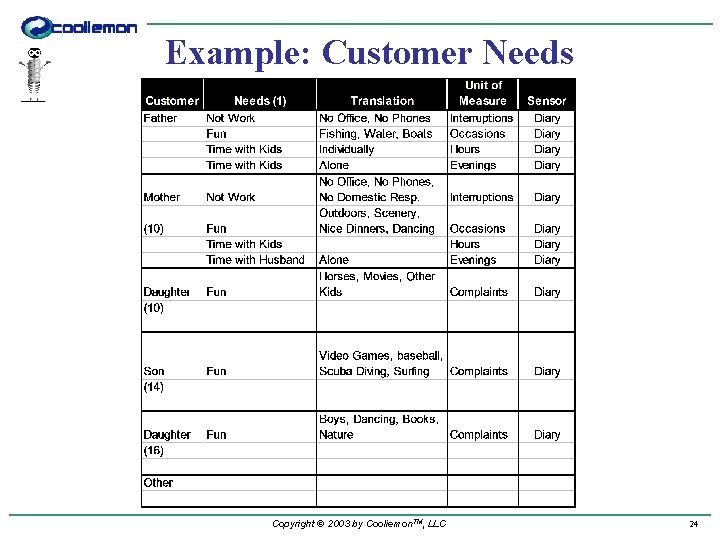
Example: Customer Needs Copyright © 2003 by Cooliemon. TM, LLC 24
© 1994 Juran Institute, Inc. Copyright © 2003 by Cooliemon. TM, LLC 25
Agenda RD Process Area (CMMI) Juran’s version of QFD Identify Customers Discover Customer Needs Summary Copyright © 2003 by Cooliemon. TM, LLC 26
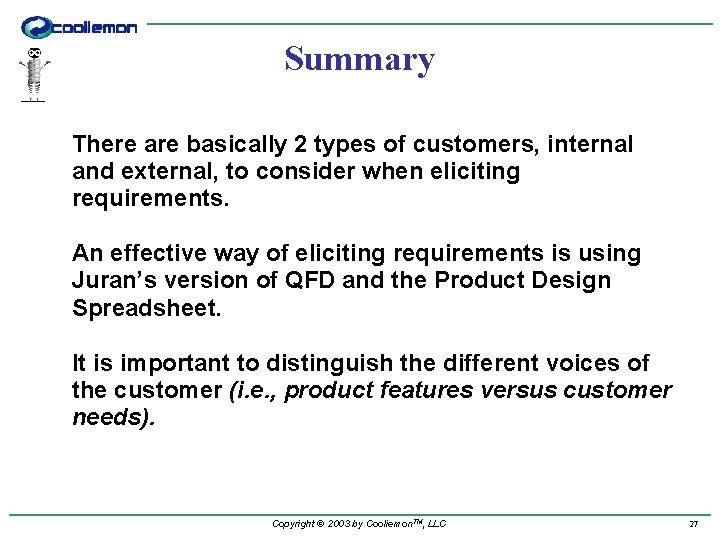
Summary There are basically 2 types of customers, internal and external, to consider when eliciting requirements. An effective way of eliciting requirements is using Juran’s version of QFD and the Product Design Spreadsheet. It is important to distinguish the different voices of the customer (i. e. , product features versus customer needs). Copyright © 2003 by Cooliemon. TM, LLC 27
One to Grow On Most people listen NOT with the intent to understand BUT with the intent to reply Copyright © 2003 by Cooliemon. TM, LLC 28
Copyright © 2003 by Cooliemon. TM, LLC 29
One to Grow On “The competitor to be feared is one who never bothers about you at all, but goes on making his own business better all the time. ” (Henry Ford, Sr. ) Copyright © 2003 by Cooliemon. TM, LLC 30
Contact Information Ralph Williams, President 129 Liberty Road, Harmony, PA 16037 Tel: 724. 910. 3666 Fax: 724. 452. 1126 WWW. COOLIEMON. COM E-mail: rwilliams@cooliemon. com Copyright © 2003 by Cooliemon. TM, LLC 31