
CMMI and People CMM Overview 1 What are
- Slides: 14
CMMI® and People CMM® Overview 1
What are the Maturity Models? • Globally recognised best practice process models: – Integration of multiple process models that have been used and proven world-wide since the early 1990 s – Proven use and benefits in multiple organisations • Developed by international teams: – Led by Carnegie Mellon University – Representation from industry, academia and government organisations – Regularly updated to reflect latest trends 2
How the Maturity Models are used • Used as benchmarking standards: – Appraising organisational processes against internationally recognised frameworks – Allow an organisation to measure performance and capability – Supports the business case for improvement initiative • Used as a guide: – Guides rollout of improvement initiative – Used to ensure the organisation continues to meet the intent of best practice 3
Benefits of model based benchmarking • Helps to understand current practices: – Compare organisational practices to best practice reference models – Comparison can be made with other organisations’ ratings • Focuses downstream improvement activities: – Quantifies where improvement effort needs to occur • Provides catalyst for change and risk mitigation: – Obtain buy-in for improvement 4
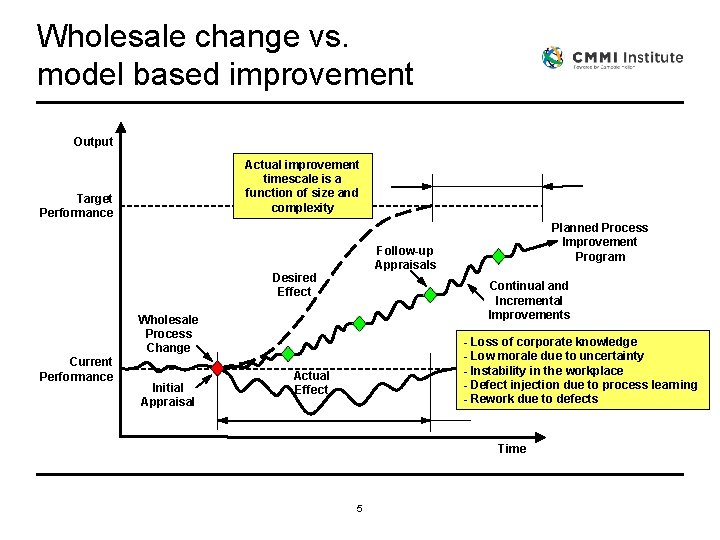
Wholesale change vs. model based improvement Output Actual improvement timescale is a function of size and complexity Target Performance Follow-up Appraisals Desired Effect Continual and Incremental Improvements Wholesale Process Change Current Performance Initial Appraisal Planned Process Improvement Program - Loss of corporate knowledge - Low morale due to uncertainty - Instability in the workplace - Defect injection due to process learning - Rework due to defects Actual Effect Time 5
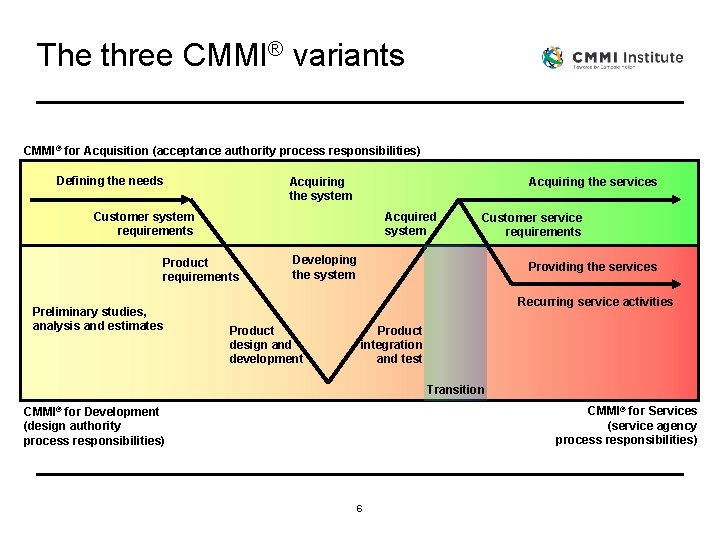
The three CMMI® variants CMMI® for Acquisition (acceptance authority process responsibilities) Defining the needs Acquiring the system Acquiring the services Customer system requirements Acquired system Product requirements Preliminary studies, analysis and estimates Customer service requirements Developing the system Providing the services Recurring service activities Product design and development Product integration and test Transition CMMI® for Services (service agency process responsibilities) CMMI® for Development (design authority process responsibilities) 6
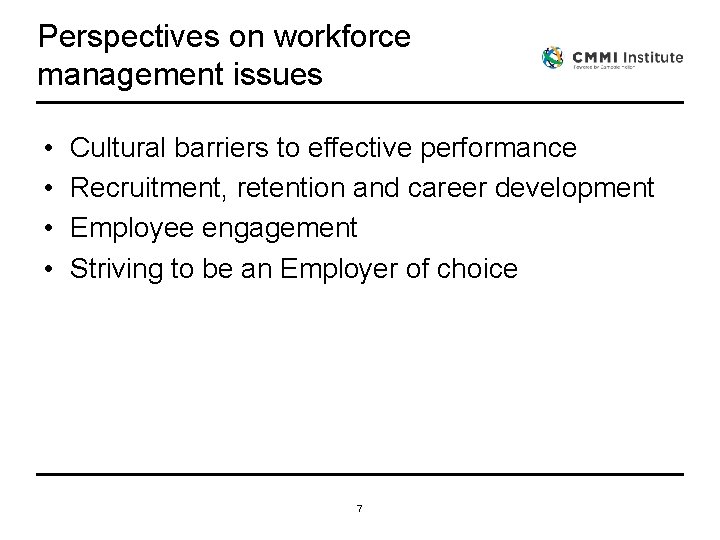
Perspectives on workforce management issues • • Cultural barriers to effective performance Recruitment, retention and career development Employee engagement Striving to be an Employer of choice 7
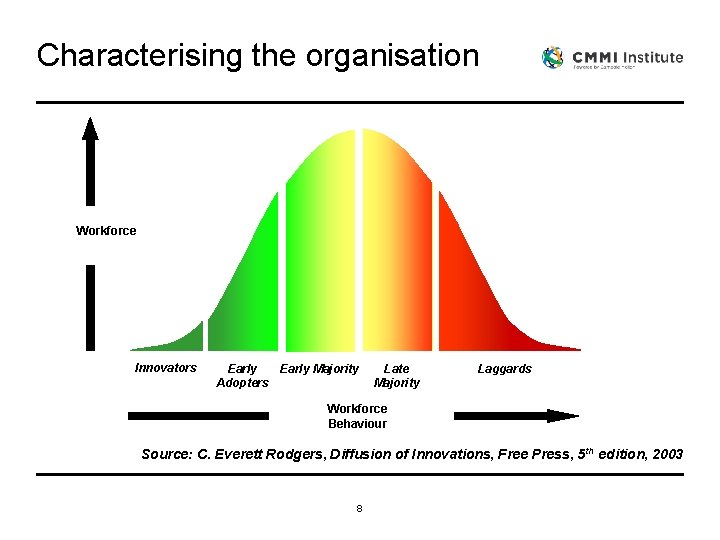
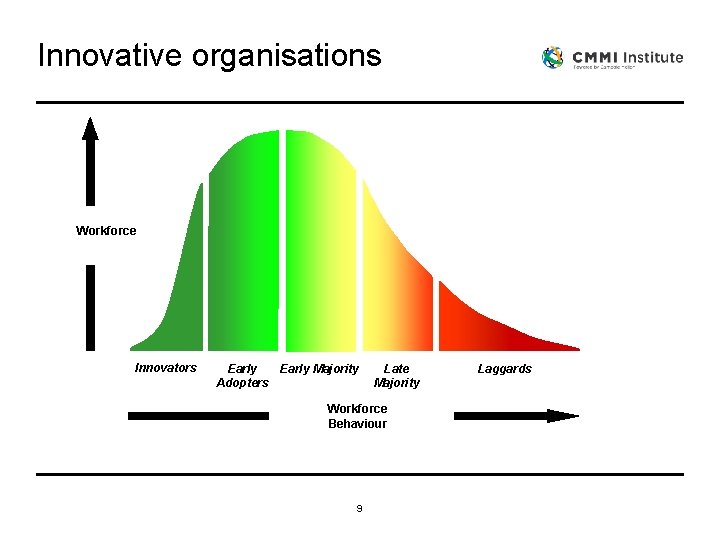
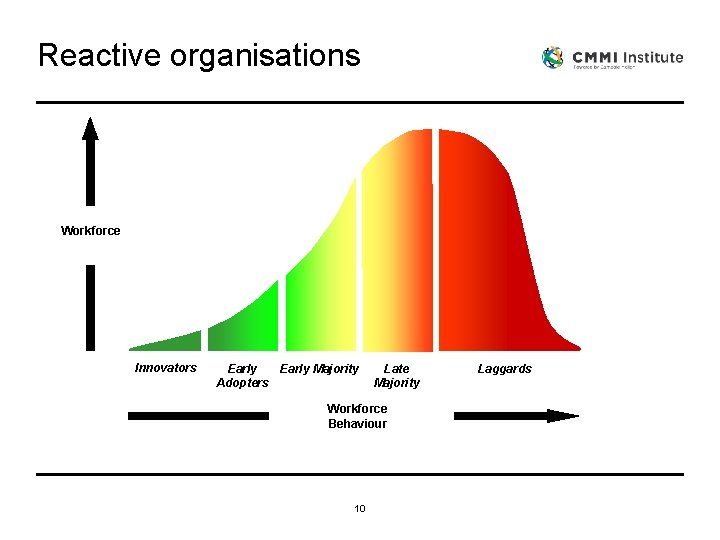
Characterising the organisation Workforce Innovators Early Majority Adopters Late Majority Laggards Workforce Behaviour Source: C. Everett Rodgers, Diffusion of Innovations, Free Press, 5 th edition, 2003 8
Innovative organisations Workforce Innovators Early Majority Adopters Late Majority Workforce Behaviour 9 Laggards
Reactive organisations Workforce Innovators Early Majority Adopters Late Majority Workforce Behaviour 10 Laggards
What the People CMM® does • The People CMM® provides a roadmap for transforming an organisation into one that: – Focuses its workforce around competencies – Employs an agile workforce to meet current and evolving customer needs – Fosters a culture of improvement – Is able to rapidly respond to new opportunities – Is able to take advantage of emerging technologies – Becomes an Employer of Choice 11
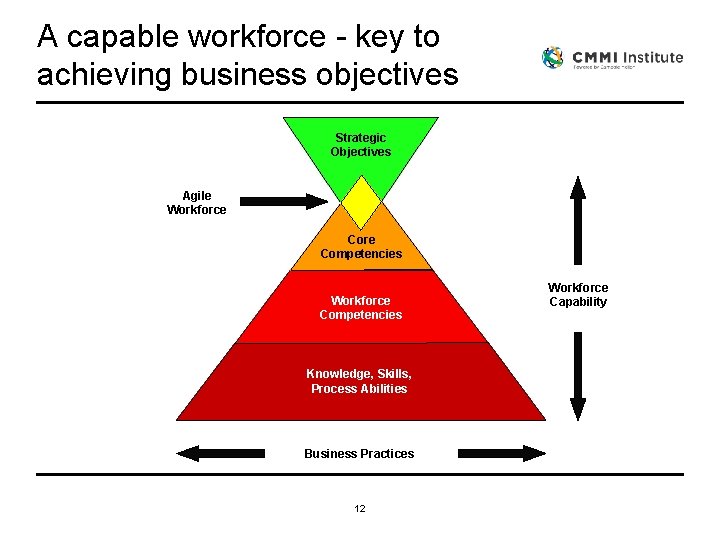
A capable workforce - key to achieving business objectives Strategic Objectives Agile Workforce Core Competencies Workforce Competencies Knowledge, Skills, Process Abilities Business Practices 12 Workforce Capability
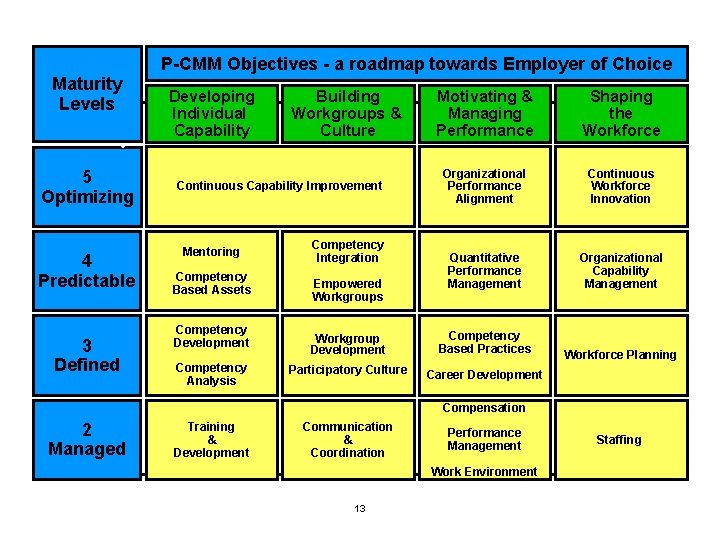
P-CMM Objectives - a roadmap towards Employer of Choice Maturity Levels 5 Optimizing 4 Predictable 3 Defined Developing Individual Capability Building Workgroups & Culture Continuous Capability Improvement Mentoring Competency Based Assets Competency Development Competency Analysis Competency Integration Empowered Workgroups Motivating & Managing Performance Shaping the Workforce Organizational Performance Alignment Continuous Workforce Innovation Quantitative Performance Management Organizational Capability Management Workgroup Development Competency Based Practices Participatory Culture Career Development Workforce Planning Compensation 2 Managed Training & Development Communication & Coordination Performance Management Work Environment 13 Staffing
Questions CMM® & CMMI® are registered in the US Patent & Trademark Office by Carnegie Mellon University SCAMPISM is a Service Mark of Carnegie Mellon University