
CMED 305 course Orientation Introduction to Research methods










- Slides: 35
CMED 305 course Orientation & Introduction to Research methods: Why do we need research? Dr. Shaik Shaffi Ahamed Ph. D. , Associate Professor Department of Family & Community Medicine College of Medicine, King Saud University September, 2018
Introduction to Course Objectives The overall objectives of this course are to enable students understand & learn the basic elements of research, its design and conduct an epidemiological study to answer a specific research question of interest.
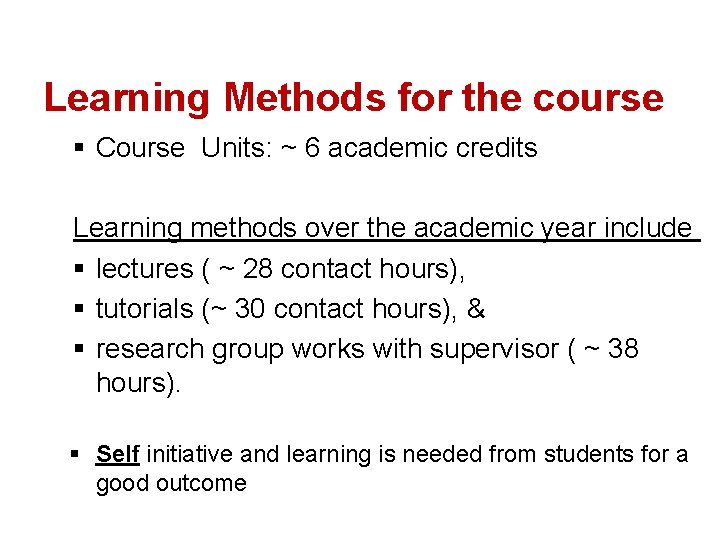
Learning Methods for the course § Course Units: ~ 6 academic credits Learning methods over the academic year include § lectures ( ~ 28 contact hours), § tutorials (~ 30 contact hours), & § research group works with supervisor ( ~ 38 hours). § Self initiative and learning is needed from students for a good outcome
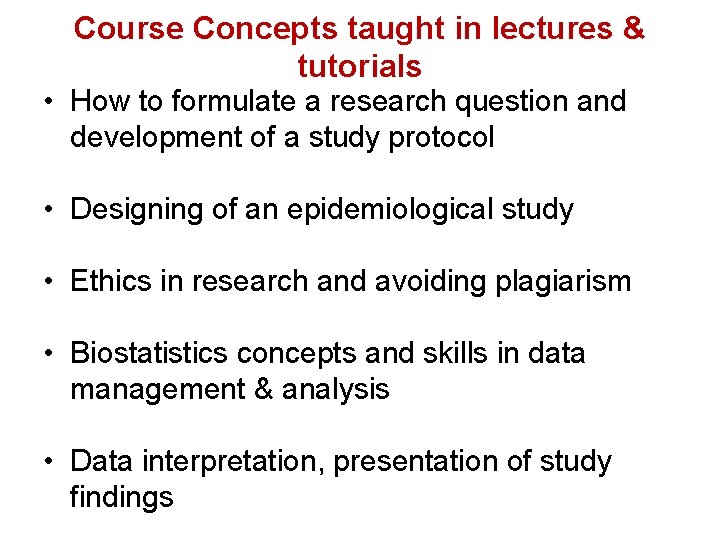
Course Concepts taught in lectures & tutorials • How to formulate a research question and development of a study protocol • Designing of an epidemiological study • Ethics in research and avoiding plagiarism • Biostatistics concepts and skills in data management & analysis • Data interpretation, presentation of study findings
Focus on the entire process of concepts taught in lectures & tutorials to link with a research topic.
Group Meetings with Research Supervisor • The Research Supervisor, who is a faculty or expert in the research & specific topic of interest, will help you to choose research topic, formulate the research question and also supervising towards: -the development of protocol, -monitor the conduct of study, -using appropriate scientific & ethical methods
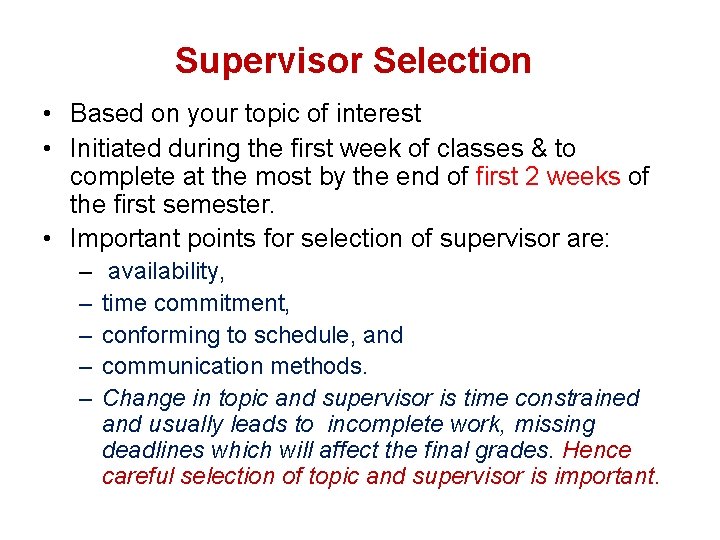
Supervisor Selection • Based on your topic of interest • Initiated during the first week of classes & to complete at the most by the end of first 2 weeks of the first semester. • Important points for selection of supervisor are: – – – availability, time commitment, conforming to schedule, and communication methods. Change in topic and supervisor is time constrained and usually leads to incomplete work, missing deadlines which will affect the final grades. Hence careful selection of topic and supervisor is important.
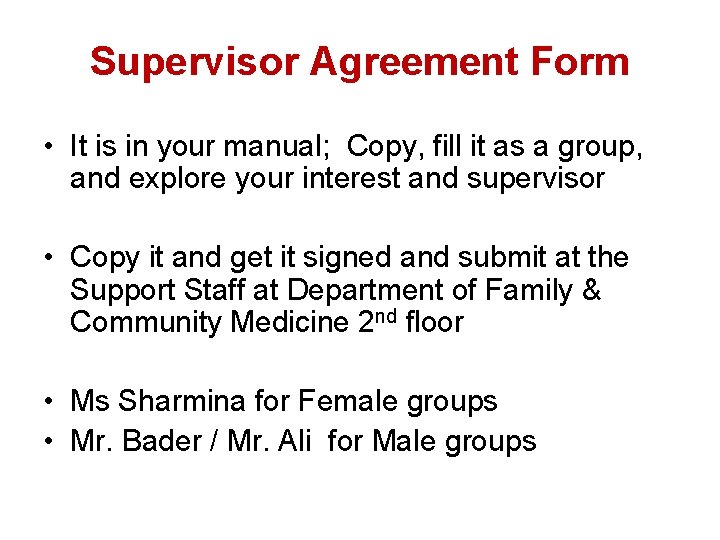
Supervisor Agreement Form • It is in your manual; Copy, fill it as a group, and explore your interest and supervisor • Copy it and get it signed and submit at the Support Staff at Department of Family & Community Medicine 2 nd floor • Ms Sharmina for Female groups • Mr. Bader / Mr. Ali for Male groups
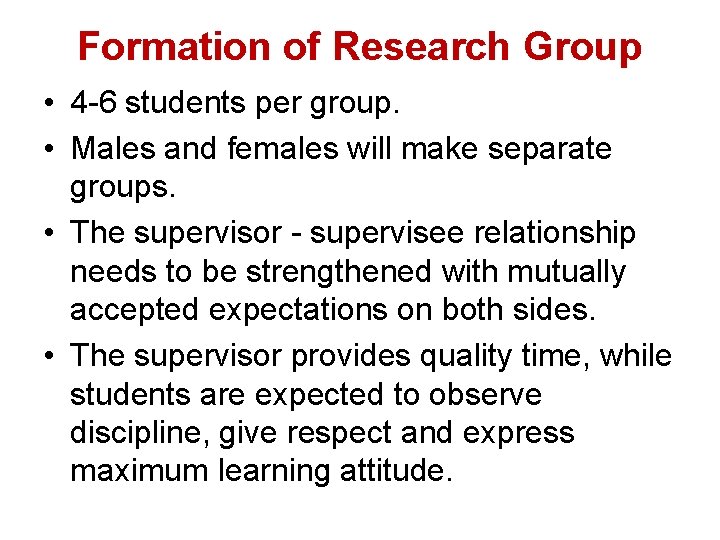
Formation of Research Group • 4 -6 students per group. • Males and females will make separate groups. • The supervisor - supervisee relationship needs to be strengthened with mutually accepted expectations on both sides. • The supervisor provides quality time, while students are expected to observe discipline, give respect and express maximum learning attitude.
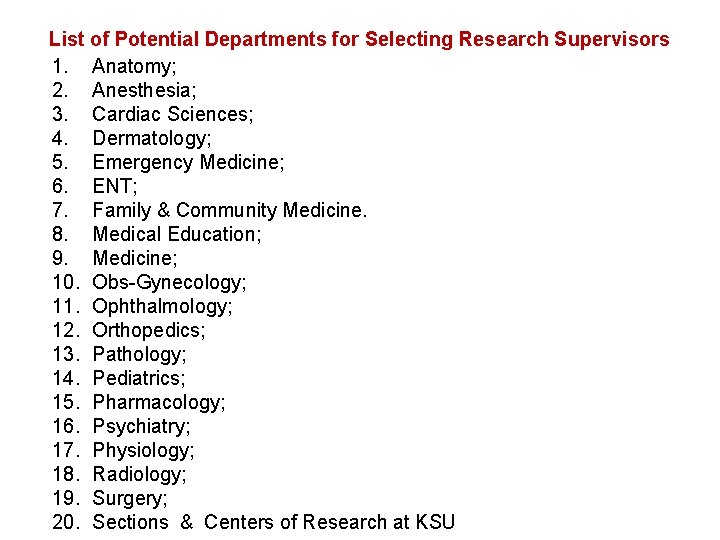
List of Potential Departments for Selecting Research Supervisors 1. Anatomy; 2. Anesthesia; 3. Cardiac Sciences; 4. Dermatology; 5. Emergency Medicine; 6. ENT; 7. Family & Community Medicine. 8. Medical Education; 9. Medicine; 10. Obs-Gynecology; 11. Ophthalmology; 12. Orthopedics; 13. Pathology; 14. Pediatrics; 15. Pharmacology; 16. Psychiatry; 17. Physiology; 18. Radiology; 19. Surgery; 20. Sections & Centers of Research at KSU
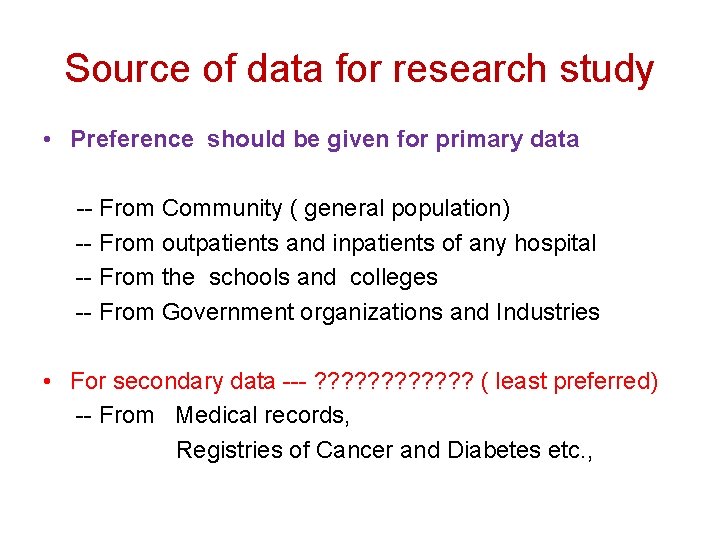
Source of data for research study • Preference should be given for primary data -- From Community ( general population) -- From outpatients and inpatients of any hospital -- From the schools and colleges -- From Government organizations and Industries • For secondary data --- ? ? ? ( least preferred) -- From Medical records, Registries of Cancer and Diabetes etc. ,
Read Your Manual Carefully • • All information in details is present in Manual Responsibilities of supervisors and students Guidelines to develop protocol and report Guidelines for collaboration within and outside KSU • Assessment Methods • Evaluation forms that will be used by supervisors and Ethical Review Committee
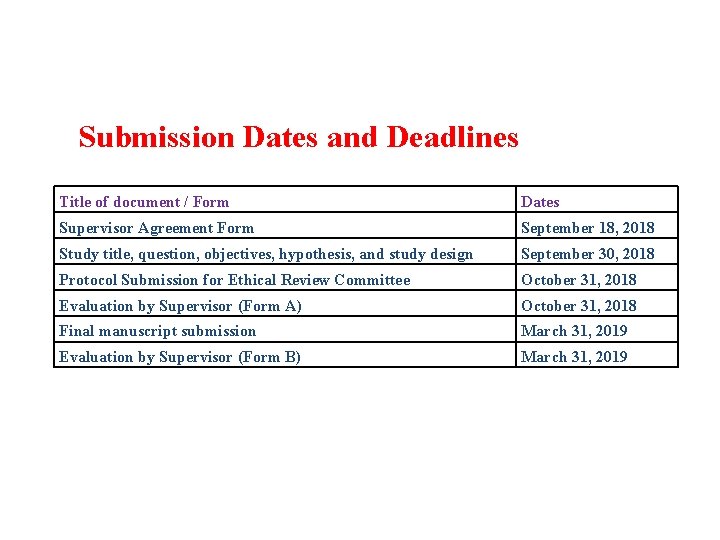
Submission Dates and Deadlines Title of document / Form Dates Supervisor Agreement Form September 18, 2018 Study title, question, objectives, hypothesis, and study design September 30, 2018 Protocol Submission for Ethical Review Committee October 31, 2018 Evaluation by Supervisor (Form A) October 31, 2018 Final manuscript submission March 31, 2019 Evaluation by Supervisor (Form B) March 31, 2019
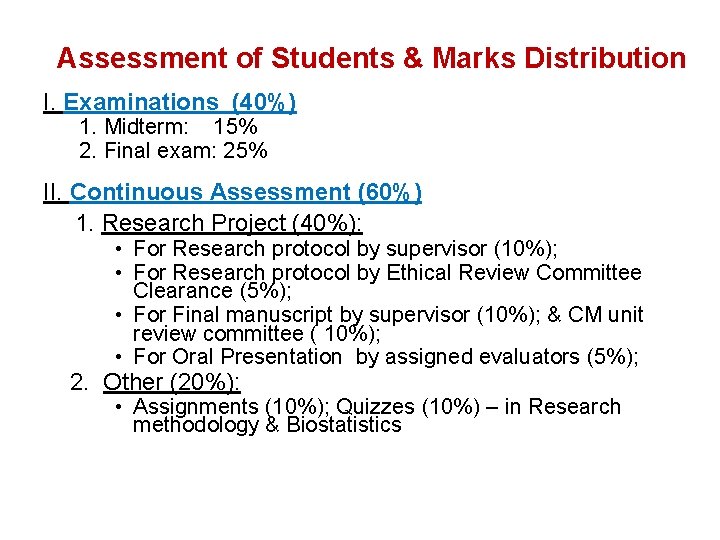
Assessment of Students & Marks Distribution I. Examinations (40%) 1. Midterm: 15% 2. Final exam: 25% II. Continuous Assessment (60%) 1. Research Project (40%): • For Research protocol by supervisor (10%); • For Research protocol by Ethical Review Committee Clearance (5%); • For Final manuscript by supervisor (10%); & CM unit review committee ( 10%); • For Oral Presentation by assigned evaluators (5%); 2. Other (20%): • Assignments (10%); Quizzes (10%) – in Research methodology & Biostatistics
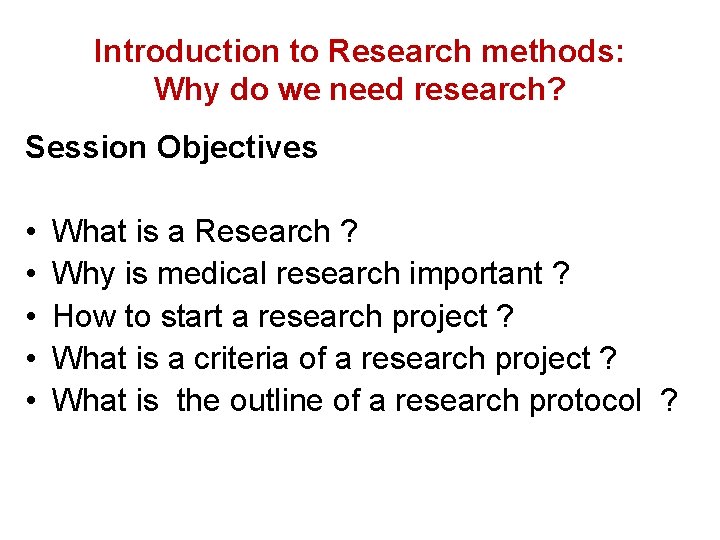
Introduction to Research methods: Why do we need research? Session Objectives • • • What is a Research ? Why is medical research important ? How to start a research project ? What is a criteria of a research project ? What is the outline of a research protocol ?
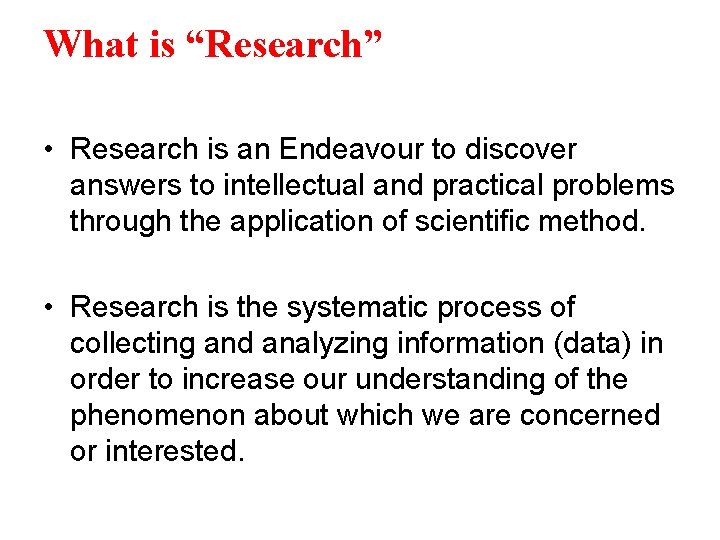
What is “Research” • Research is an Endeavour to discover answers to intellectual and practical problems through the application of scientific method. • Research is the systematic process of collecting and analyzing information (data) in order to increase our understanding of the phenomenon about which we are concerned or interested.
SCIENTIFIC METHOD Scientific method is the systematic collection of data (facts) and their theoretical treatment through proper observation, experimentation and interpretation.
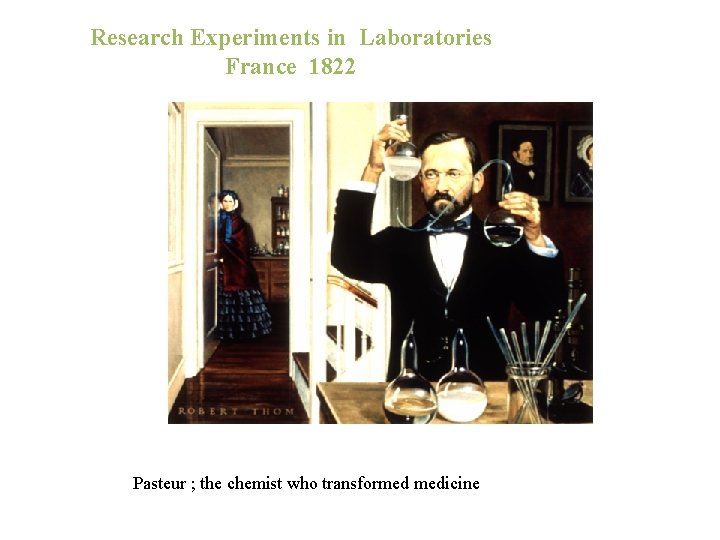
Research Experiments in Laboratories France 1822 Pasteur ; the chemist who transformed medicine
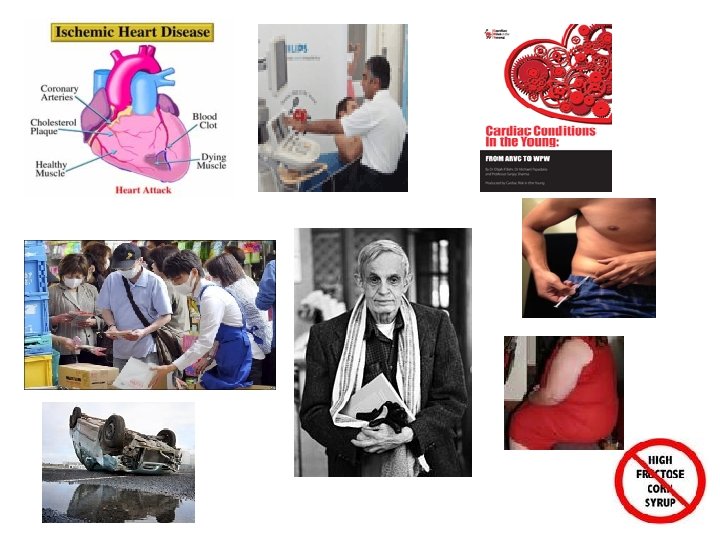
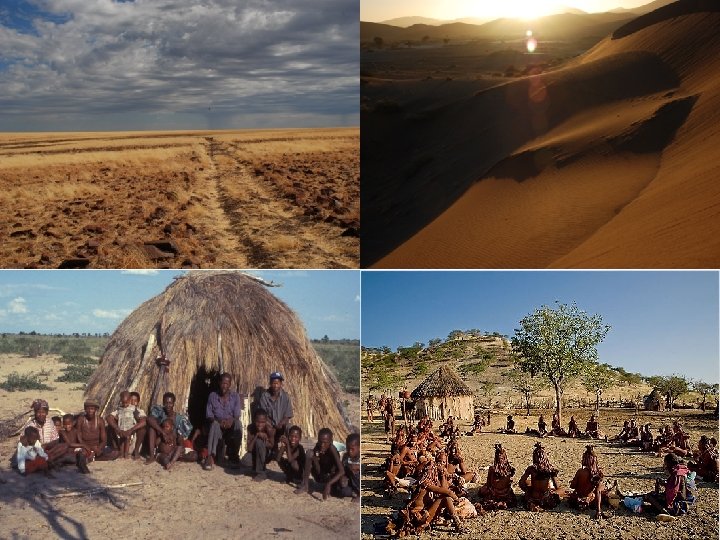
Pace of Change in Medicine • Changing patterns of diseases • Demographic transition & longevity • Variation in patient population and clinical care in various geographical regions differs for many reasons
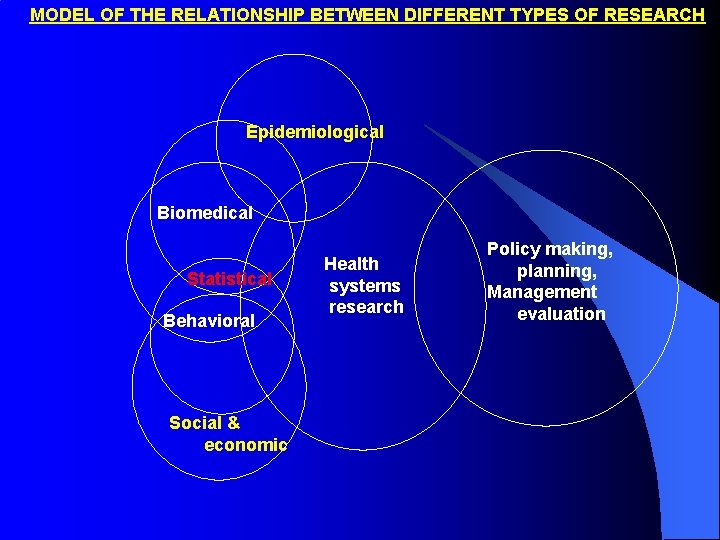
MODEL OF THE RELATIONSHIP BETWEEN DIFFERENT TYPES OF RESEARCH Epidemiological Biomedical Statistical Behavioral Social & economic Health systems research Policy making, planning, Management evaluation
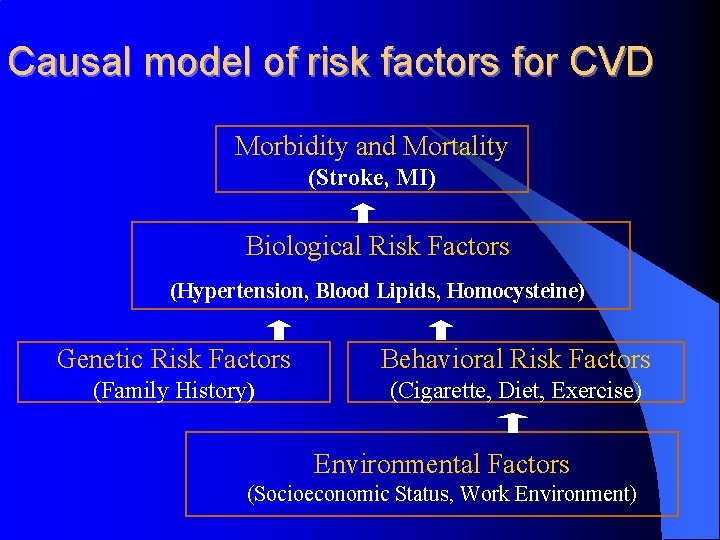
Causal model of risk factors for CVD Morbidity and Mortality (Stroke, MI) Biological Risk Factors (Hypertension, Blood Lipids, Homocysteine) Genetic Risk Factors Behavioral Risk Factors (Family History) (Cigarette, Diet, Exercise) Environmental Factors (Socioeconomic Status, Work Environment)
Preventable Causes of Disease BEINGS l l l Biological factors and Behavioral Factors Environmental factors Immunologic factors Nutritional factors Genetic factors Services, Social factors, and Spiritual factors [JF Jekel, Epidemiology, Biostatistics, and Preventive Medicine, 1996]
Clinical Research • Clinical research involves working with human subjects to answer questions relevant to their well-being
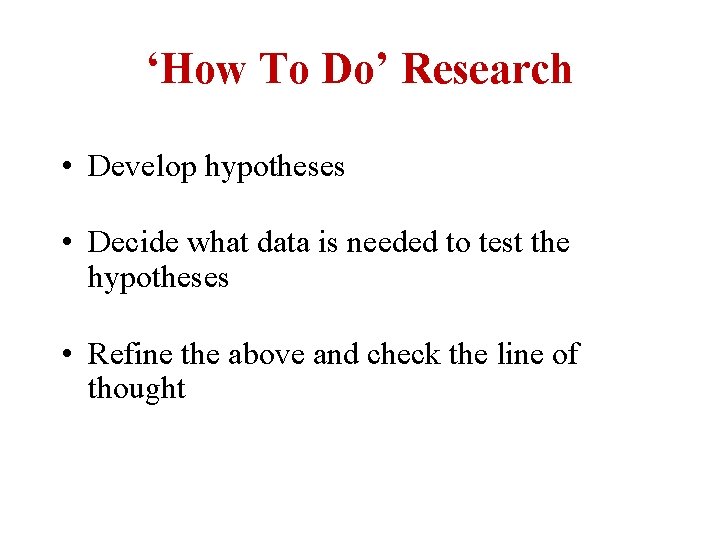
‘How To Do’ Research • Start with defining the question • Write down a clear aim • Divide the problem into smaller, answerable questions
‘How To Do’ Research • Develop hypotheses • Decide what data is needed to test the hypotheses • Refine the above and check the line of thought
Good Research • CLEAR – Essential for both the problem and the answer • ACCURATE – Exactness and precision come from hard work and responsible effort • RELIABLE – If repeated will the answer be the same?
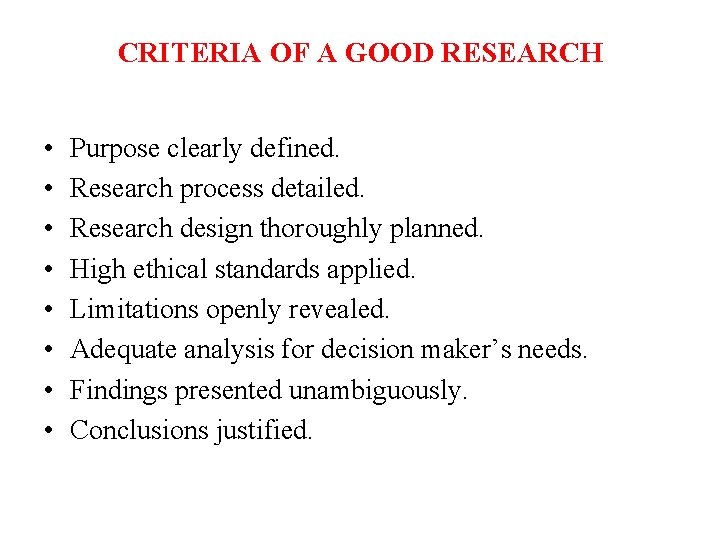
CRITERIA OF A GOOD RESEARCH • • Purpose clearly defined. Research process detailed. Research design thoroughly planned. High ethical standards applied. Limitations openly revealed. Adequate analysis for decision maker’s needs. Findings presented unambiguously. Conclusions justified.
Getting Started • • Learn your subject Read, Read Start general and then focus Begin with the problem
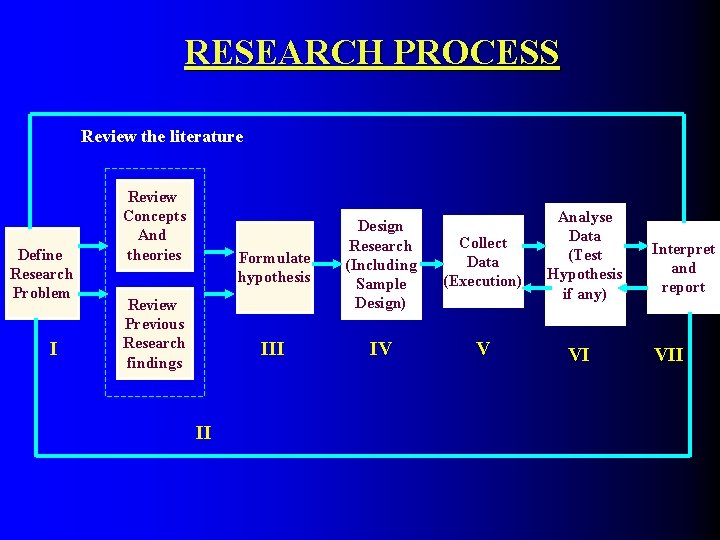
RESEARCH PROCESS Review the literature Define Research Problem I Review Concepts And theories Review Previous Research findings II Formulate hypothesis Design Research (Including Sample Design) Collect Data (Execution) III IV V Analyse Data (Test Hypothesis if any) VI Interpret and report VII
THERE ARE ONLY A HANDFUL OF WAYS TO DO A STUDY PROPELY BUT A THOUSAND WAYS TO DO IT WRONG --Sackett (1986)
Protocol Development 1. 2. 3. 4. 5. 6. 7. 8. 9. Research Question Hypotheses Objectives Background Design Subjects Variables Data Collection Quality control 10. Data Management 11. Sample size 12. Plan of Analysis 13. Ethical issues 14. Budget 15. Report results 16. Institution capacity 17. Administration 18. Work Plan
References • Stephen B Hulley. Designing Clinical Research. Chapter 1. Getting Started: The Anatomy and Physiology of Clinical Research. Pages 3 -15. 3 rd Edition. Wolters Kluwer Health Lippincott Williams and Wilkins 2007 • Daniel P Schuster & William J Powers. Translational and Experimental Clinical Research. Introduction: The value of Translational and Experimental Clinical Research. Pages: xvxxi Lippincott Williams and Wilkins 2005