
CloudNative Architecture Patterns Or why your precloud architecture







- Slides: 54
Cloud-Native Architecture Patterns (Or… why your pre-cloud architecture won’t work so well in the cloud) Examples drawn from Windows Azure cloud platform Azure Florida Association 28 -March-2012 Boston Azure User Group http: //www. bostonazure. org @bostonazure Bill Wilder http: //blog. codingoutloud. com @codingoutloud
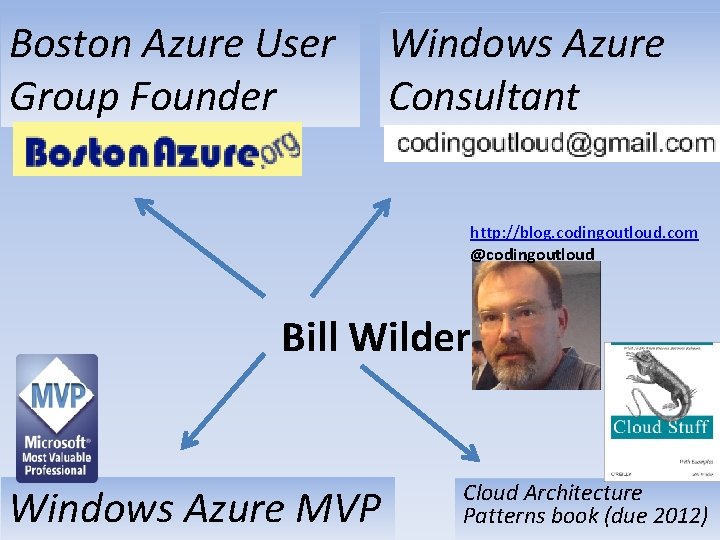
Boston Azure User Group Founder Windows Azure Consultant http: //blog. codingoutloud. com @codingoutloud Bill Wilder Windows Azure MVP Cloud Architecture Patterns book (due 2012)
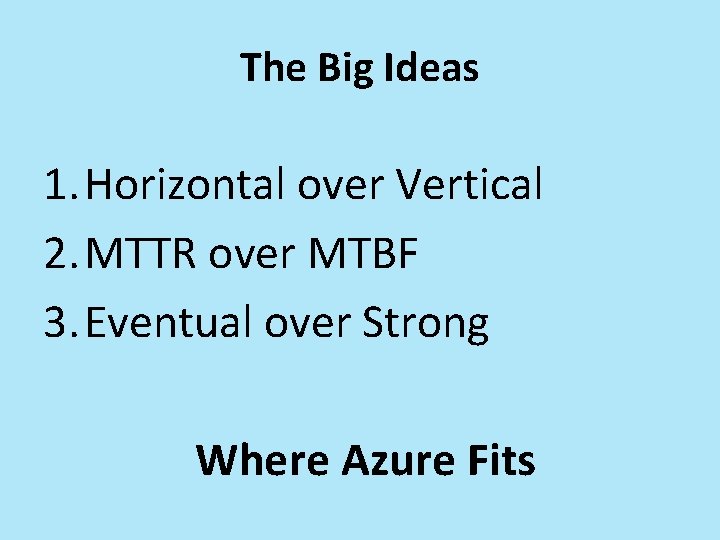
The Big Ideas 1. Horizontal over Vertical 2. MTTR over MTBF 3. Eventual over Strong Where Azure Fits
What’s the Big Idea? scale compute
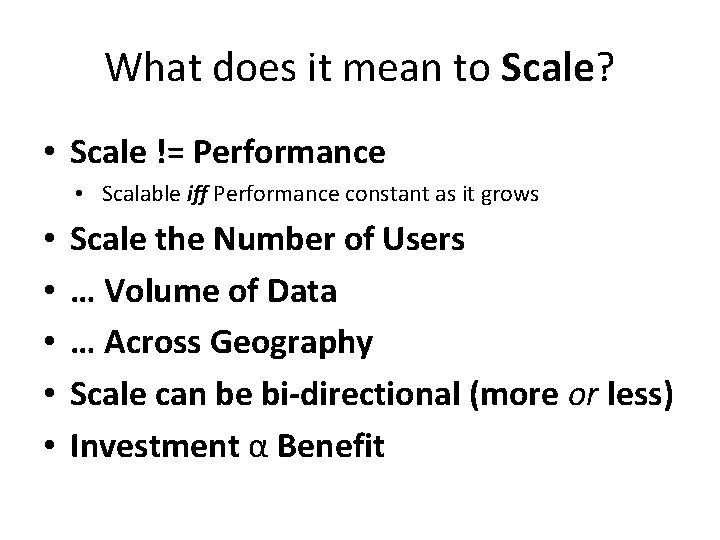
What does it mean to Scale? • Scale != Performance • Scalable iff Performance constant as it grows • • • Scale the Number of Users … Volume of Data … Across Geography Scale can be bi-directional (more or less) Investment α Benefit
Old School Excel and Word
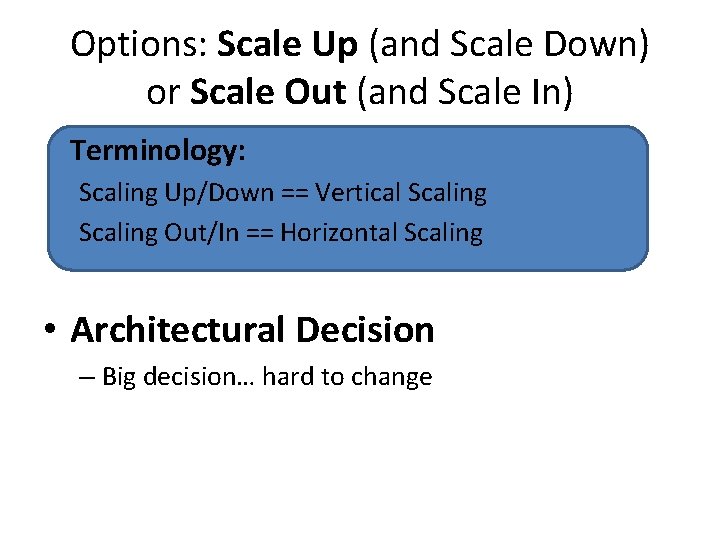
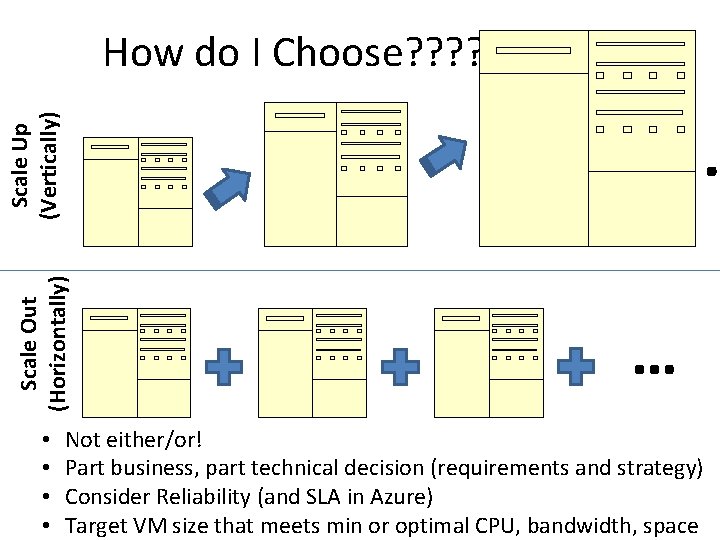
Options: Scale Up (and Scale Down) or Scale Out (and Scale In) Terminology: Scaling Up/Down == Vertical Scaling Out/In == Horizontal Scaling • Architectural Decision – Big decision… hard to change
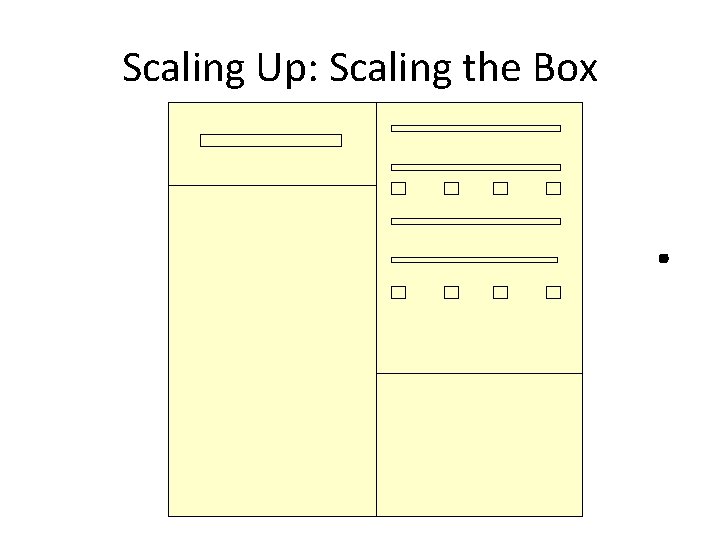
Scaling Up: Scaling the Box .
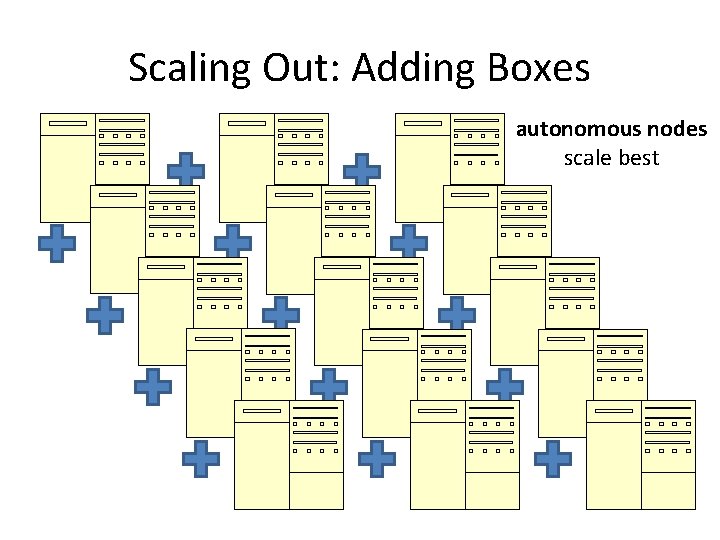
Scaling Out: Adding Boxes autonomous nodes scale best
Scale Up (Vertically) How do I Choose? ? ? ? ? Scale Out (Horizontally) . • • … Not either/or! Part business, part technical decision (requirements and strategy) Consider Reliability (and SLA in Azure) Target VM size that meets min or optimal CPU, bandwidth, space
Where does Azure fit? scale compute
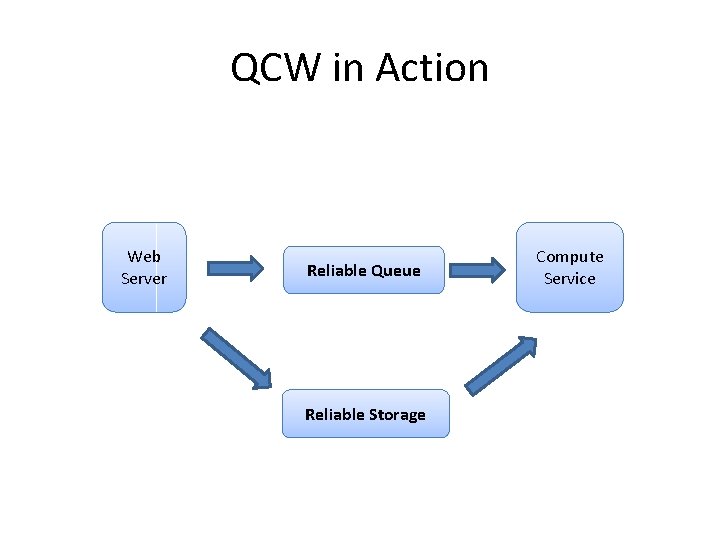
Queue-Centric Workflow Pattern • Enables systems where the UI and back-end services are Loosely Coupled • (Compare to CQRS at the end)
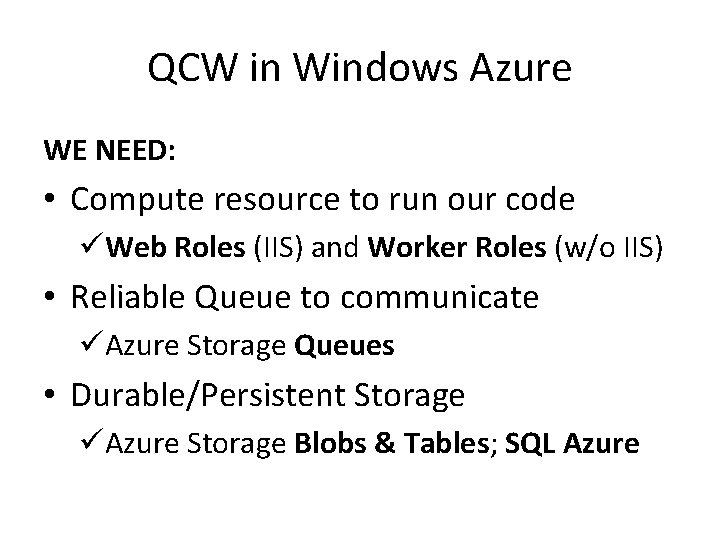
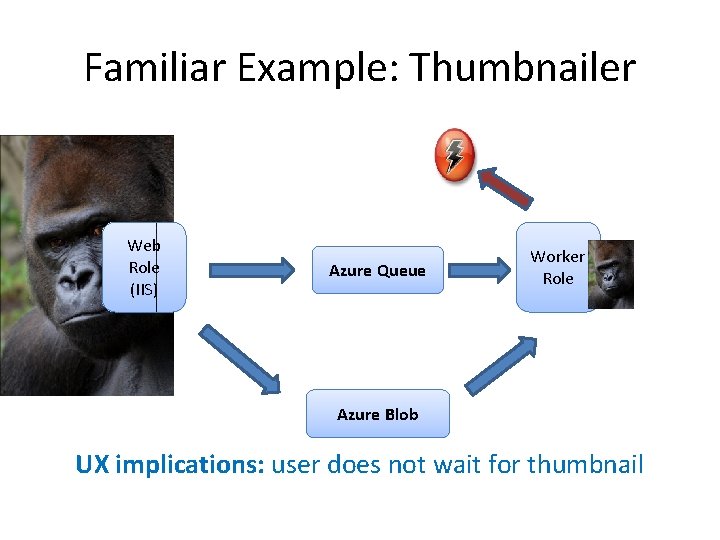
QCW in Windows Azure WE NEED: • Compute resource to run our code üWeb Roles (IIS) and Worker Roles (w/o IIS) • Reliable Queue to communicate üAzure Storage Queues • Durable/Persistent Storage üAzure Storage Blobs & Tables; SQL Azure
QCW in Action Web Server Reliable Queue Reliable Storage Compute Service
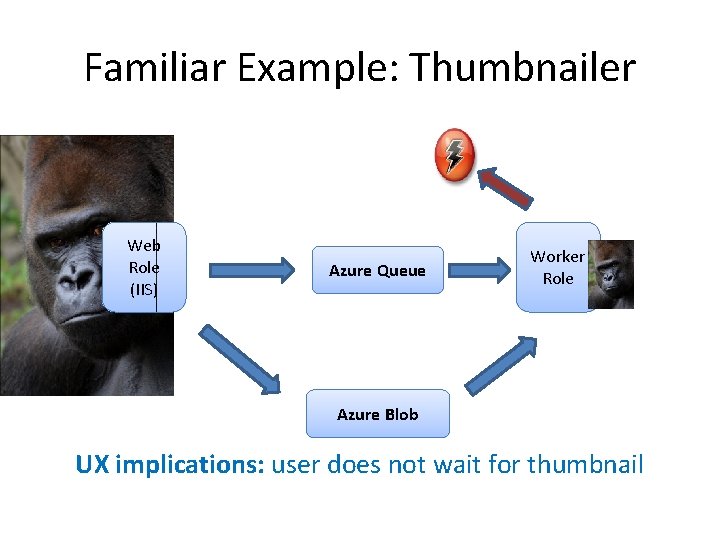
Familiar Example: Thumbnailer Web Role (IIS) Azure Queue Worker Role Azure Blob UX implications: user does not wait for thumbnail
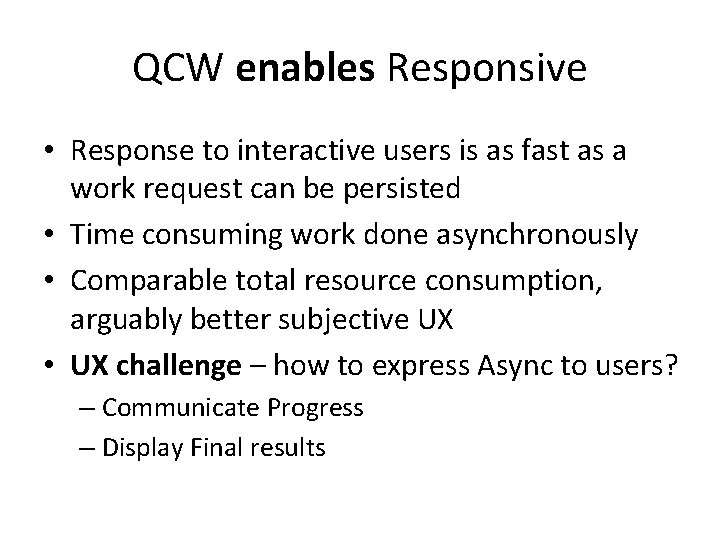
QCW enables Responsive • Response to interactive users is as fast as a work request can be persisted • Time consuming work done asynchronously • Comparable total resource consumption, arguably better subjective UX • UX challenge – how to express Async to users? – Communicate Progress – Display Final results
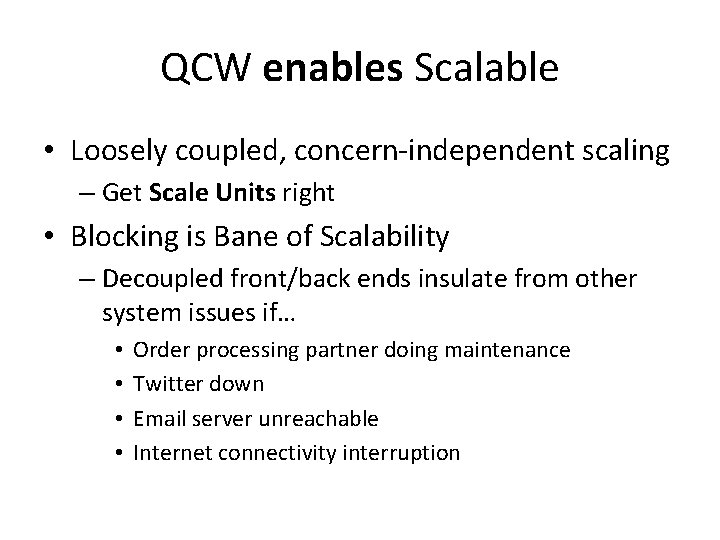
QCW enables Scalable • Loosely coupled, concern-independent scaling – Get Scale Units right • Blocking is Bane of Scalability – Decoupled front/back ends insulate from other system issues if… • • Order processing partner doing maintenance Twitter down Email server unreachable Internet connectivity interruption
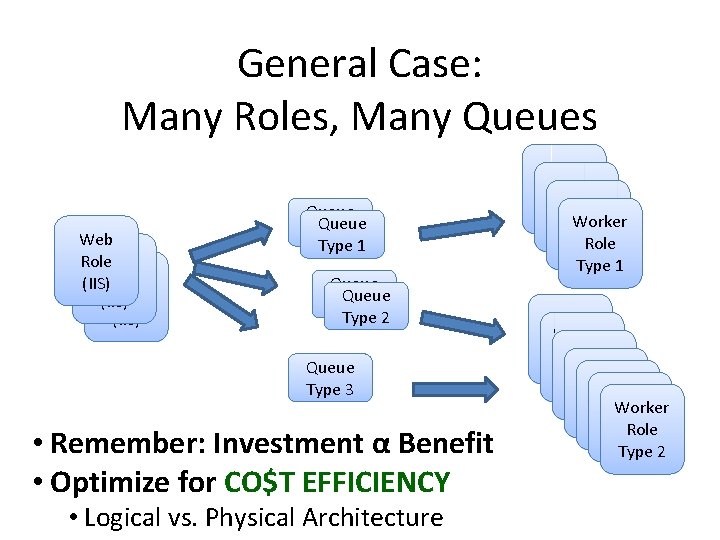
General Case: Many Roles, Many Queues Web Role (IIS) Queue Type 1 Queue Type 2 Queue Type 3 • Remember: Investment α Benefit • Optimize for CO$T EFFICIENCY • Logical vs. Physical Architecture Worker Role Type 1 Worker Role Worker Role Worker Type. Role 2 Type 2
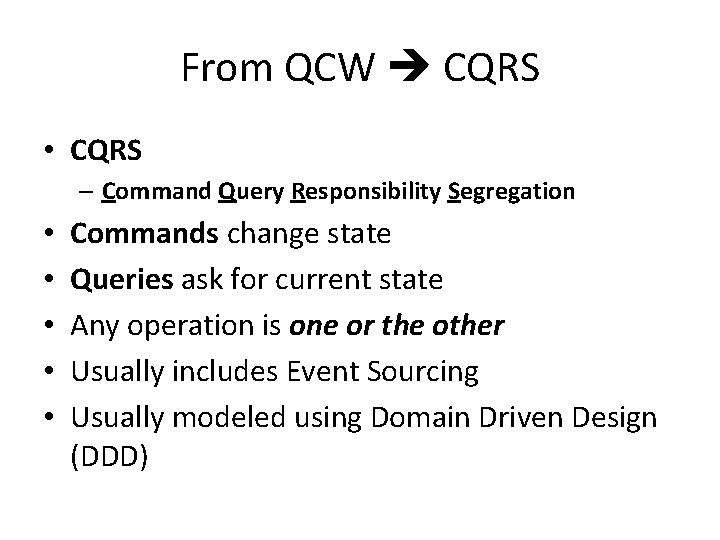
From QCW CQRS • CQRS – Command Query Responsibility Segregation • • • Commands change state Queries ask for current state Any operation is one or the other Usually includes Event Sourcing Usually modeled using Domain Driven Design (DDD)
What’s the Big Idea? #fail
MTBF… vs. MTTR…
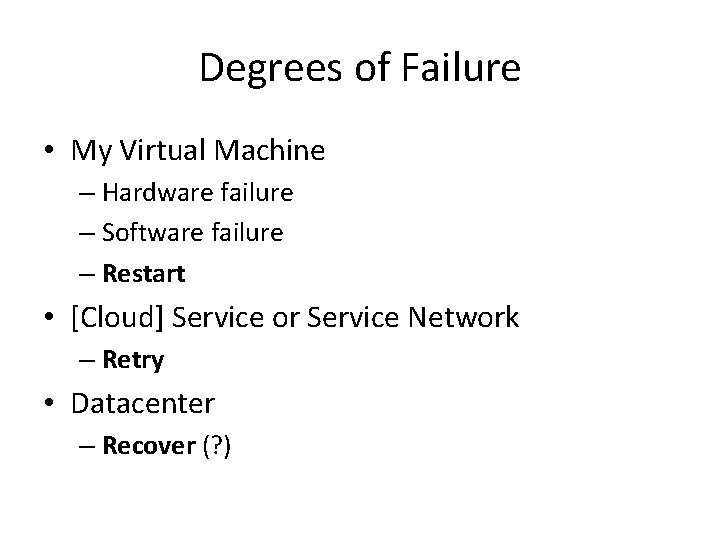
Degrees of Failure • My Virtual Machine – Hardware failure – Software failure – Restart • [Cloud] Service or Service Network – Retry • Datacenter – Recover (? )
Where does Azure fit? #fail
Familiar Example: Thumbnailer Web Role (IIS) Azure Queue Worker Role Azure Blob UX implications: user does not wait for thumbnail
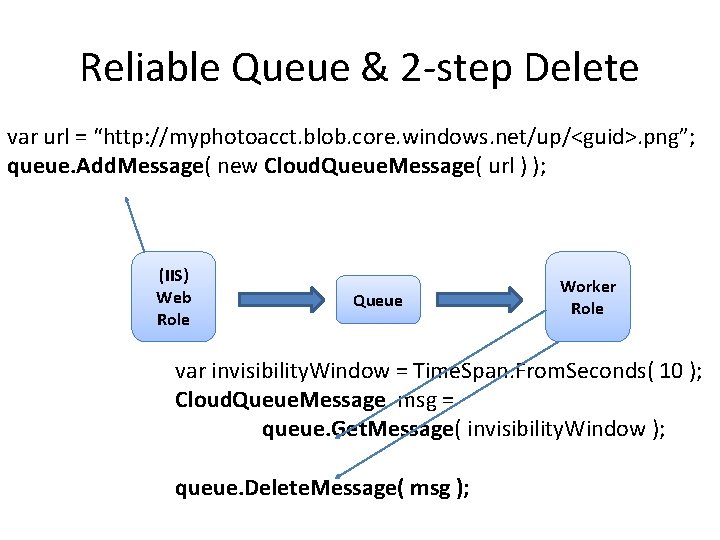
Reliable Queue & 2 -step Delete var url = “http: //myphotoacct. blob. core. windows. net/up/<guid>. png”; queue. Add. Message( new Cloud. Queue. Message( url ) ); (IIS) Web Role Queue Worker Role var invisibility. Window = Time. Span. From. Seconds( 10 ); Cloud. Queue. Message msg = queue. Get. Message( invisibility. Window ); queue. Delete. Message( msg );
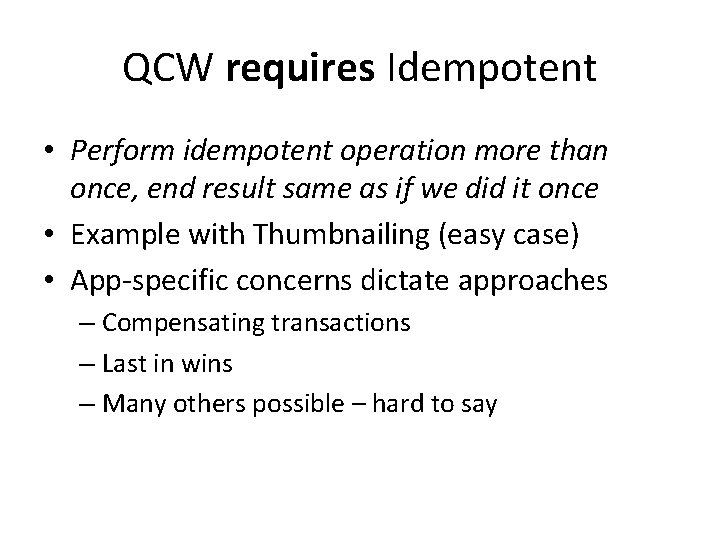
QCW requires Idempotent • Perform idempotent operation more than once, end result same as if we did it once • Example with Thumbnailing (easy case) • App-specific concerns dictate approaches – Compensating transactions – Last in wins – Many others possible – hard to say
QCW expects Poison Messages • A Poison Message cannot be processed – Error condition for non-transient reason – Detect via Cloud. Queue. Message. Dequeue. Count property • Be proactive – Falling off the queue may kill your system • Message TTL = 7 days by default in Azure • Determine a Max Retry policy – May differ by queue object type or other criteria – Then what? Delete, move to “bad” queue, alert human, …
CQRS requires “Plan for Failure” • There will be VM (or Azure role) restarts – Hardware failure, O/S patching, crash (bug) • Fabric Controller honors Fault Domains • Bake in handling of restarts into our apps – Restarts are routine: system “just keeps working” – Idempotent support important again • Not an exception case! Expect it!
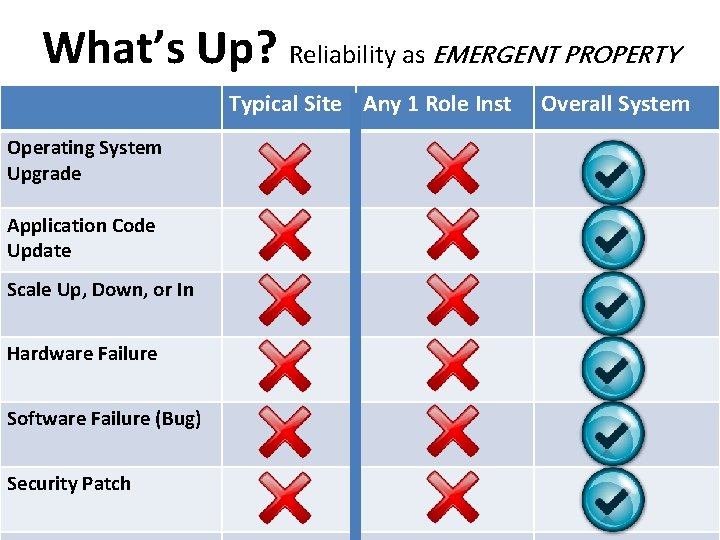
What’s Up? Reliability as EMERGENT PROPERTY Typical Site Any 1 Role Inst Operating System Upgrade Application Code Update Scale Up, Down, or In Hardware Failure Software Failure (Bug) Security Patch Overall System
What about the DATA? • You: Azure Web Roles and Azure Worker Roles – Taking user input, dispatching work, doing work – Follow a decoupled queue-in-the-middle pattern – Stateless compute nodes • “Hard Part”: persistent data, scalable data – Azure Queue, Blob, Table, SQL Azure – Three copies of each byte – Blobs and Tables geo-replicated – Retry and Throttle!
Retrying • Retry Logic for Transient Failures in SQL Azure http: //social. technet. microsoft. com/wiki/contents/articles/retry-logic-for-transientfailures-in-sql-azure. aspx • Overview of Retry Policies in. NET SDK http: //blogs. msdn. com/b/windowsazurestorage/archive/2011/02/03/overview-of -retry-policies-in-the-windows-azure-storage-client-library. aspx http: //msdn. microsoft. com/enus/library/microsoft. windowsazure. storageclient. cloudblobclient. retrypolicy. aspx
What’s the Big Idea? scale data
Foursquare #Fail • October 4, 2010 – trouble begins… • After 17 hours of downtime over two days… “Oct. 5 10: 28 p. m. : Running on pizza and Red Bull. Another long night. ” WHAT WENT WRONG?
What is Sharding? • Problem: one database can’t handle all the data – Too big, not performant, needs geo distribution, … • Solution: split data across multiple databases – One Logical Database, multiple Physical Databases • Each Physical Database Node is a Shard • Most scalable is Shared Nothing design – May require some denormalization (duplication)
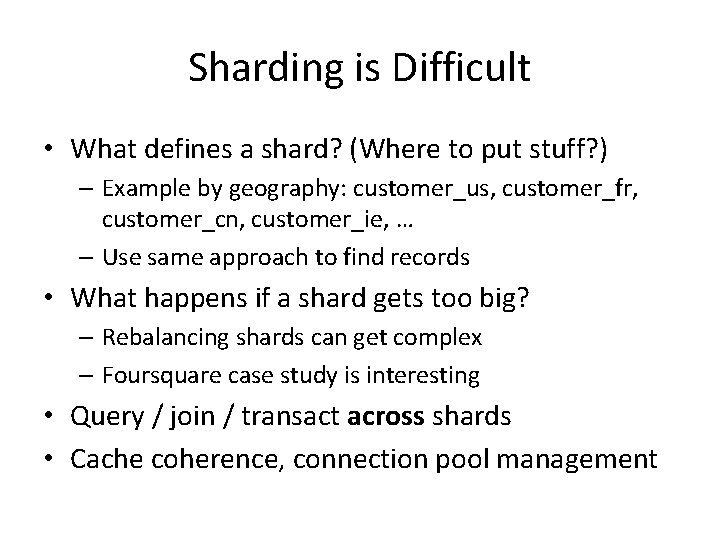
Sharding is Difficult • What defines a shard? (Where to put stuff? ) – Example by geography: customer_us, customer_fr, customer_cn, customer_ie, … – Use same approach to find records • What happens if a shard gets too big? – Rebalancing shards can get complex – Foursquare case study is interesting • Query / join / transact across shards • Cache coherence, connection pool management
Where does Azure fit? scale data
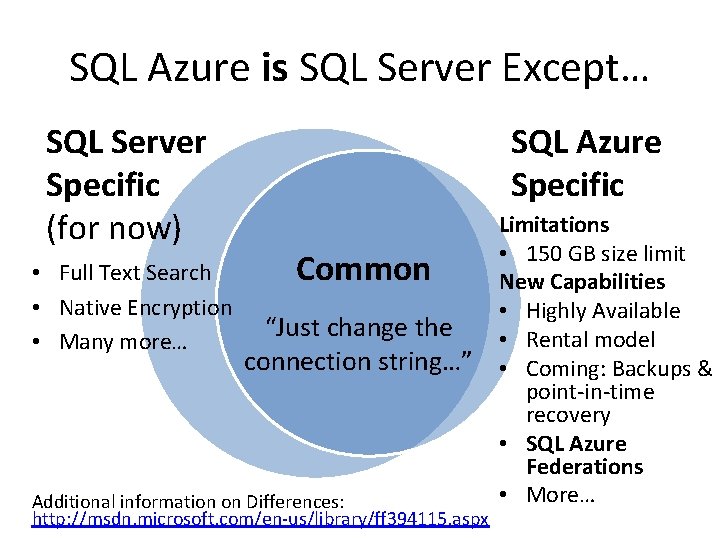
SQL Azure is SQL Server Except… SQL Server Specific (for now) • Full Text Search • Native Encryption • Many more… SQL Azure Specific Common “Just change the connection string…” Additional information on Differences: http: //msdn. microsoft. com/en-us/library/ff 394115. aspx Limitations • 150 GB size limit New Capabilities • Highly Available • Rental model • Coming: Backups & point-in-time recovery • SQL Azure Federations • More…
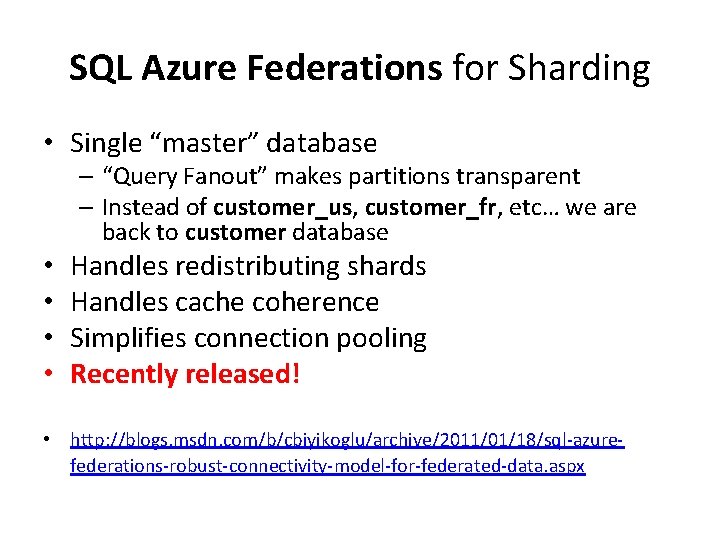
SQL Azure Federations for Sharding • Single “master” database – “Query Fanout” makes partitions transparent – Instead of customer_us, customer_fr, etc… we are back to customer database • • Handles redistributing shards Handles cache coherence Simplifies connection pooling Recently released! • http: //blogs. msdn. com/b/cbiyikoglu/archive/2011/01/18/sql-azurefederations-robust-connectivity-model-for-federated-data. aspx
What’s the Big Idea? big data
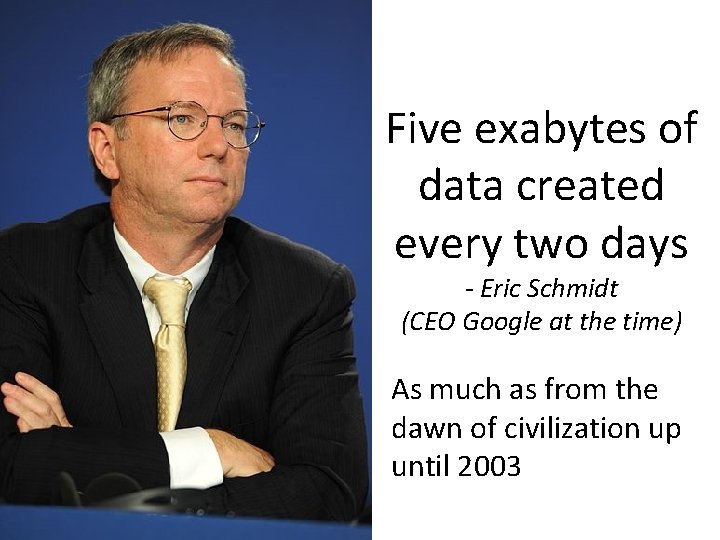
Five exabytes of data created every two days - Eric Schmidt (CEO Google at the time) As much as from the dawn of civilization up until 2003
“Big Data” Challenge Three Vs • Volume lots of it already • Velocity more of it every day • Variety many sources, many formats
Short History of Hadoop ////// 1. Inspired by: • Google Map/Reduce paper – http: //research. google. com/archive/mapreduce. html • Google File System (GFS) – Goals: distributed, fault tolerant, fast enough 2. Born in: Lucene Nutch project • Built in Java • Hadoop cluster appears as single übermachine
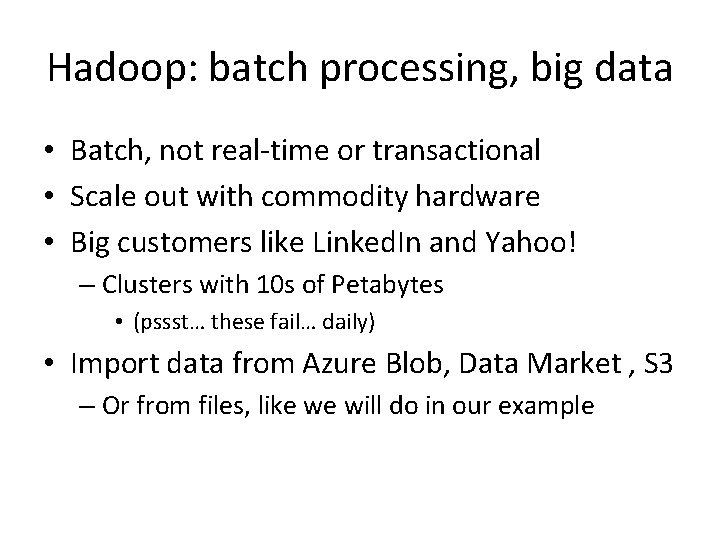
Hadoop: batch processing, big data • Batch, not real-time or transactional • Scale out with commodity hardware • Big customers like Linked. In and Yahoo! – Clusters with 10 s of Petabytes • (pssst… these fail… daily) • Import data from Azure Blob, Data Market , S 3 – Or from files, like we will do in our example
Where does Azure fit? big data
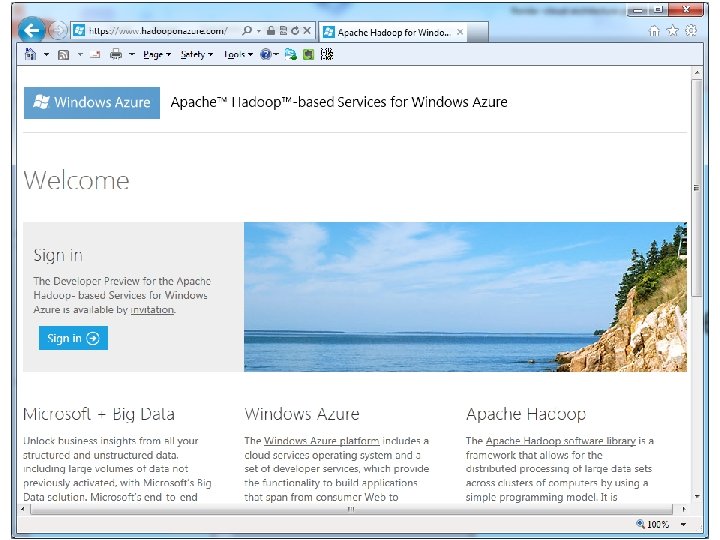
Hadoop on Azure
Hadoop on Azure http: //www. hadooponazure. com/
done questions
Boston Azure User Group Founder Windows Azure Consultant http: //blog. codingoutloud. com @codingoutloud Bill Wilder Windows Azure MVP Cloud Architecture Patterns book (due 2012)
done (really done)
done (really done)
? Questions? Comments? More information?
Boston. Azure. org • Boston Azure cloud user group • Focused on Microsoft’s Paa. S cloud platform • Late Thursday, monthly, 6: 00 -8: 30 PM at NERD – Food; wifi; free; great topics; growing community • Boston Azure Boot Camp: June 2012 (planning) • Follow on Twitter: @bostonazure • More info or to join our Meetup. com group: http: //www. bostonazure. org
Contact Me Looking for … • consulting help with Windows Azure Platform? • someone to bounce Azure or cloud questions off? • a speaker for your user group or company technology event? Just Ask! Bill Wilder @codingoutloud http: //blog. codingoutloud. com