
Cloud Occurrence and Phase at Arctic Atmospheric Observatories
Cloud Occurrence and Phase at Arctic Atmospheric Observatories: Further progress towards understanding Arctic clouds Matthew Shupe Von Walden Ed Eloranta Taneil Uttal James Campbell Masataka Shiobara Sandy Starkweather AMS Polar Met. & Ocean. 2009 Madison, WI
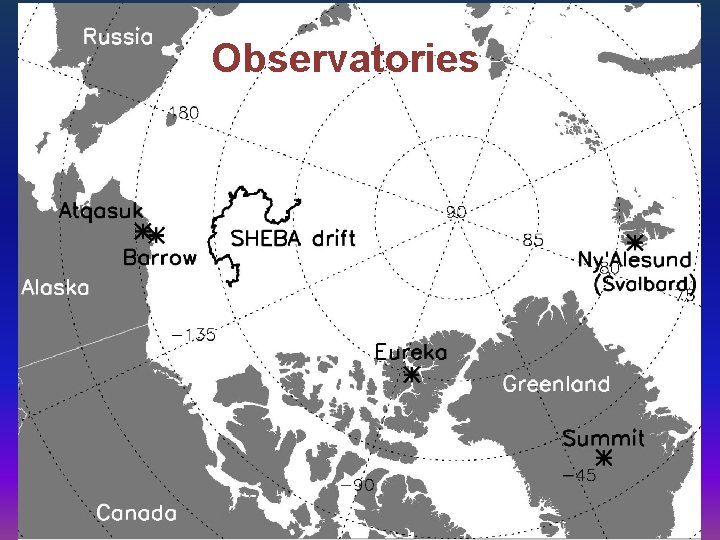
Observatories
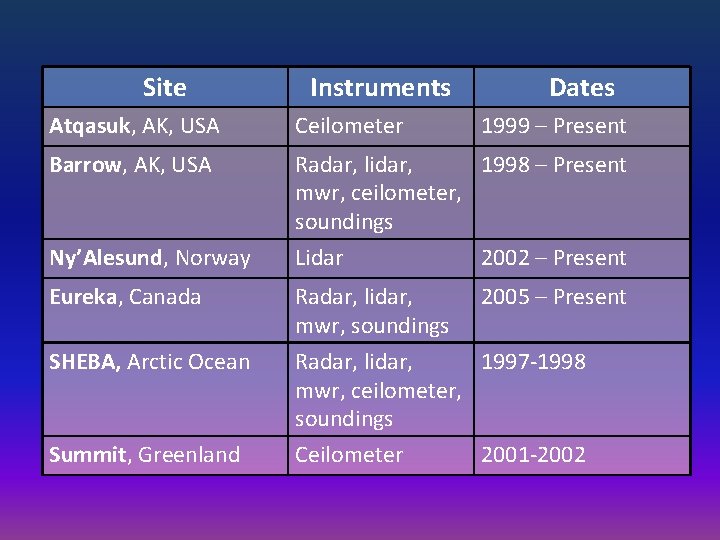
Site Instruments Dates Atqasuk, AK, USA Ceilometer 1999 – Present Barrow, AK, USA Radar, lidar, 1998 – Present mwr, ceilometer, soundings Ny’Alesund, Norway Lidar Eureka, Canada SHEBA, Arctic Ocean Radar, lidar, 2005 – Present mwr, soundings Radar, lidar, 1997 -1998 mwr, ceilometer, soundings Summit, Greenland Ceilometer 2002 – Present 2001 -2002
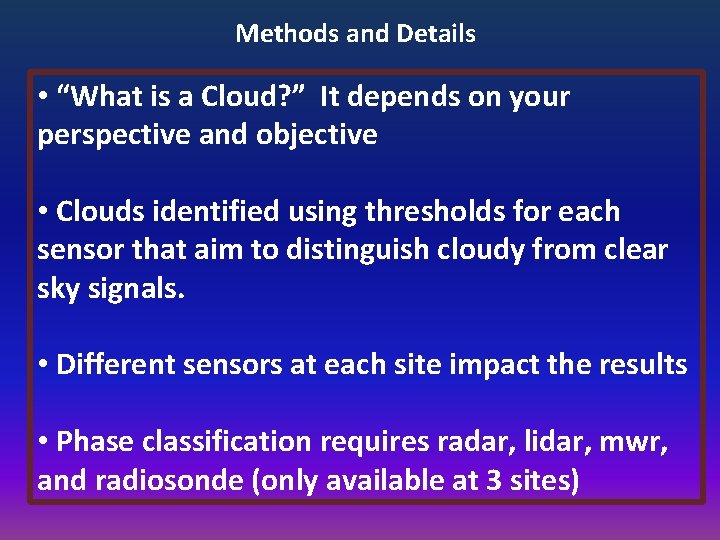
Methods and Details • “What is a Cloud? ” It depends on your perspective and objective • Clouds identified using thresholds for each sensor that aim to distinguish cloudy from clear sky signals. • Different sensors at each site impact the results • Phase classification requires radar, lidar, mwr, and radiosonde (only available at 3 sites)
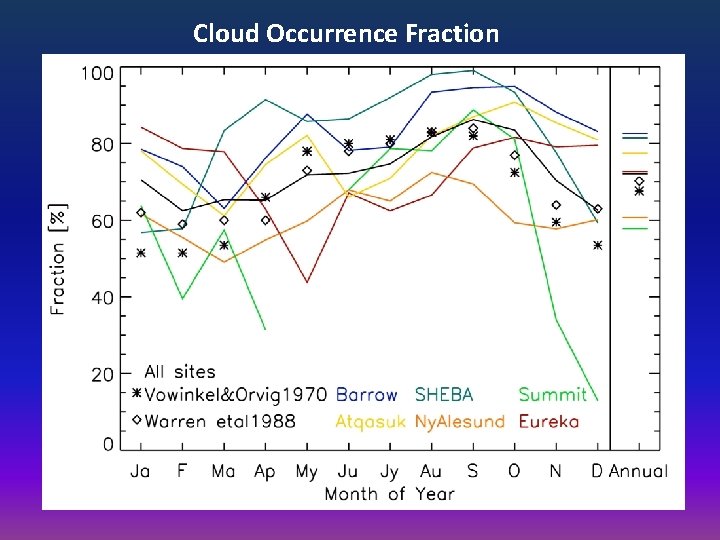
Cloud Occurrence Fraction
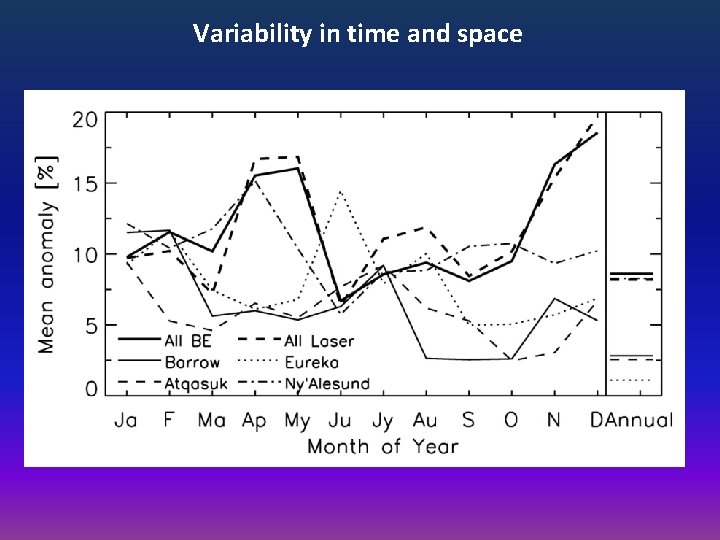
Variability in time and space
Cloud “Phase” Type Fraction Barrow SHEBA Eureka All (black) Ice (blue) Mixed-Phase (orange) Liquid (red) Liquid present (red dash)
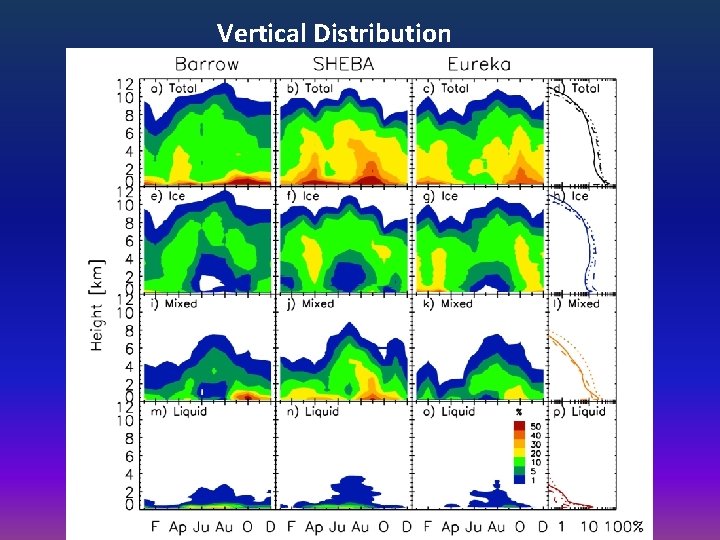
Vertical Distribution
![ANOMALY [%] Diurnal Cycle](http://slidetodoc.com/presentation_image_h2/b503cc73aba8b3353e555cac86c78514/image-9.jpg "ANOMALY [%] Diurnal Cycle")
ANOMALY [%] Diurnal Cycle
![Cloud Fraction Anomaly [%] Cloud Occurrence Fraction](http://slidetodoc.com/presentation_image_h2/b503cc73aba8b3353e555cac86c78514/image-10.jpg "Cloud Fraction Anomaly [%] Cloud Occurrence Fraction")
Cloud Fraction Anomaly [%] Cloud Occurrence Fraction
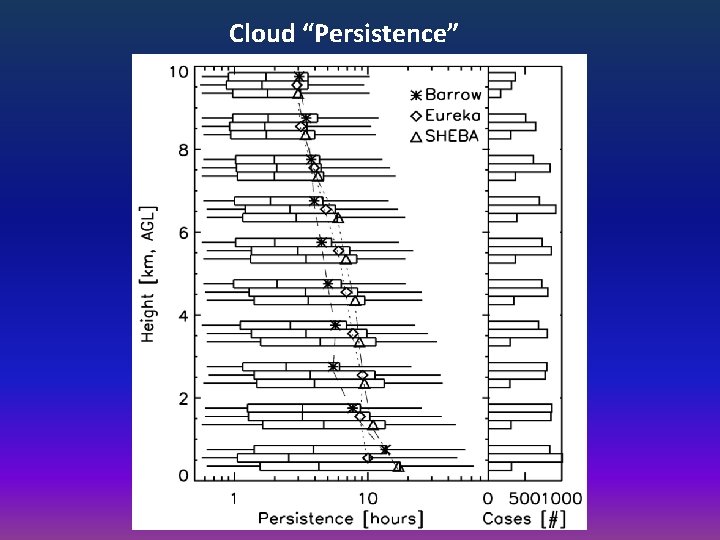
Cloud “Persistence”
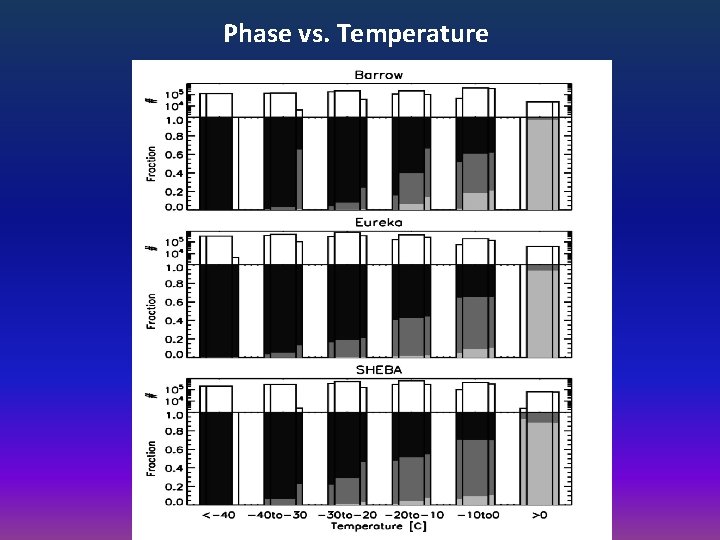
Phase vs. Temperature
To Conclude • Detailed perspective from the surface complements satellite climatologies and in situ campaigns. • Results are appropriate for model evaluation and comparisons with satellite retrievals. • Need more observations to better establish baselines and to detect change. Needs: E. Arctic, over the sea-ice, longer records. • Much of data used in this analysis is available at CADIS archive (www. eol. ucar. edu/projects/aon-cadis)
- Slides: 13