
Cloud Control with Distributed Rate Limiting Barath Raghavan
Cloud Control with Distributed Rate Limiting Barath Raghavan, Kashi Vishwanath, Sriram Ramabhadran, Kenneth Yocum, and Alex C. Snoeren University of California, San Diego
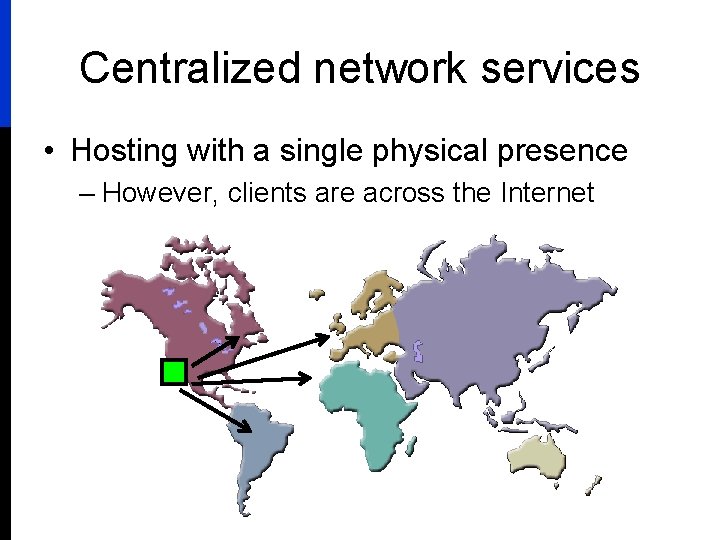
Centralized network services • Hosting with a single physical presence – However, clients are across the Internet
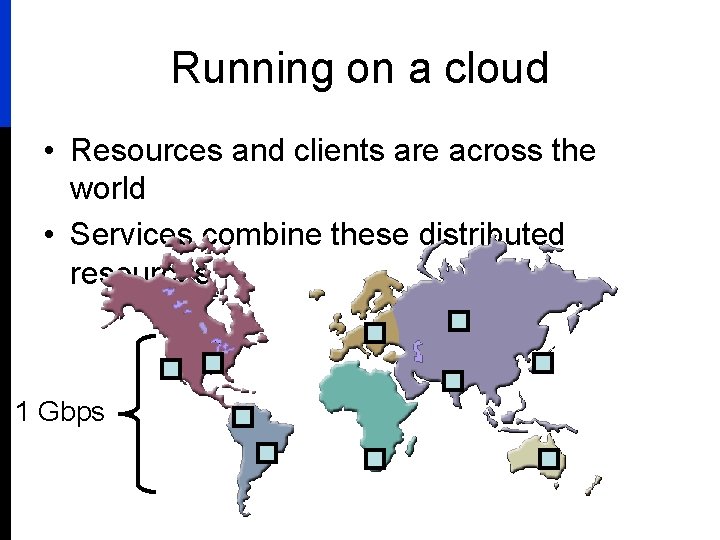
Running on a cloud • Resources and clients are across the world • Services combine these distributed resources 1 Gbps
Key challenge We want to control distributed resources as if they were centralized
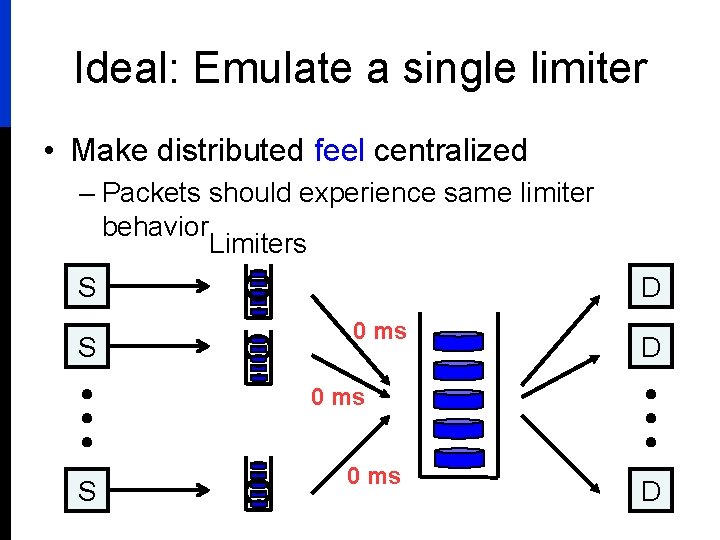
Ideal: Emulate a single limiter • Make distributed feel centralized – Packets should experience same limiter behavior Limiters S S D 0 ms S 0 ms D
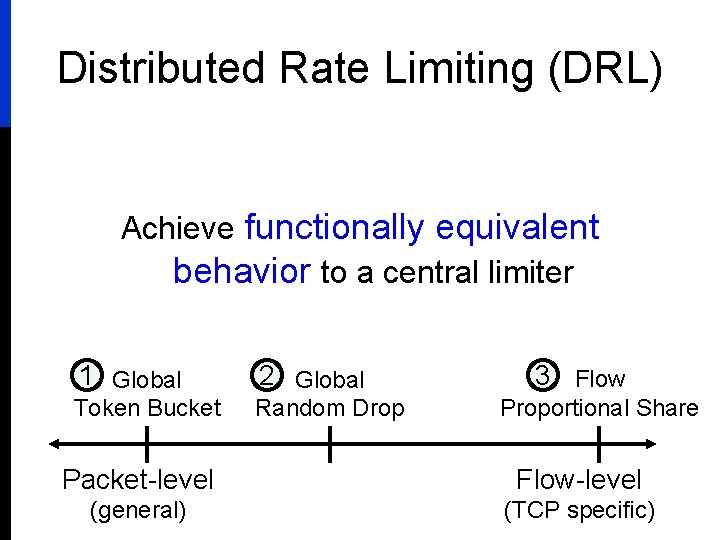
Distributed Rate Limiting (DRL) Achieve functionally equivalent behavior to a central limiter 1 Global 2 Global Token Bucket Random Drop 3 Flow Proportional Share Packet-level Flow-level (general) (TCP specific)
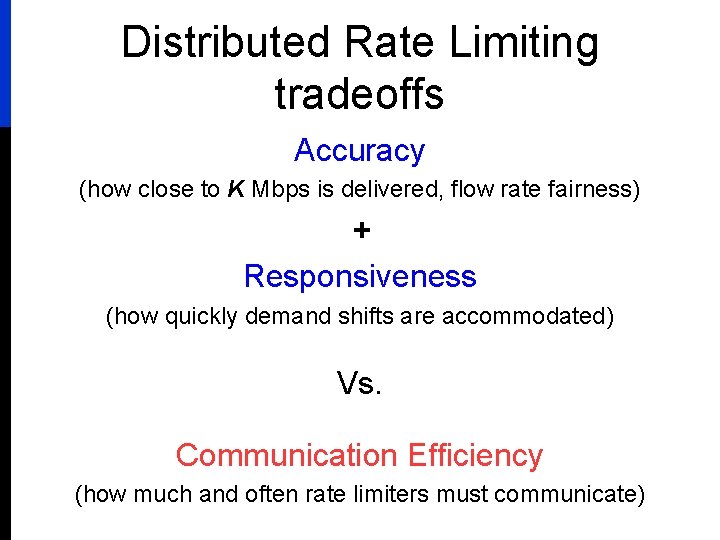
Distributed Rate Limiting tradeoffs Accuracy (how close to K Mbps is delivered, flow rate fairness) + Responsiveness (how quickly demand shifts are accommodated) Vs. Communication Efficiency (how much and often rate limiters must communicate)
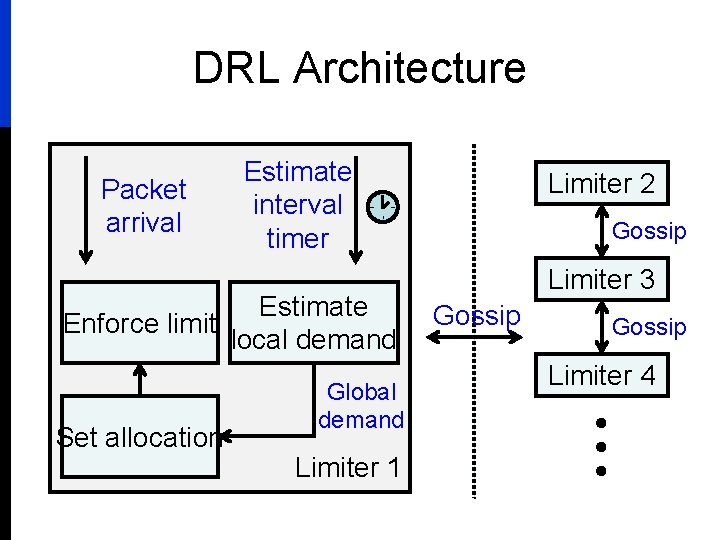
DRL Architecture Packet arrival Estimate interval timer Estimate Enforce limit local demand Set allocation Global demand Limiter 1 Limiter 2 Gossip Limiter 3 Gossip Limiter 4
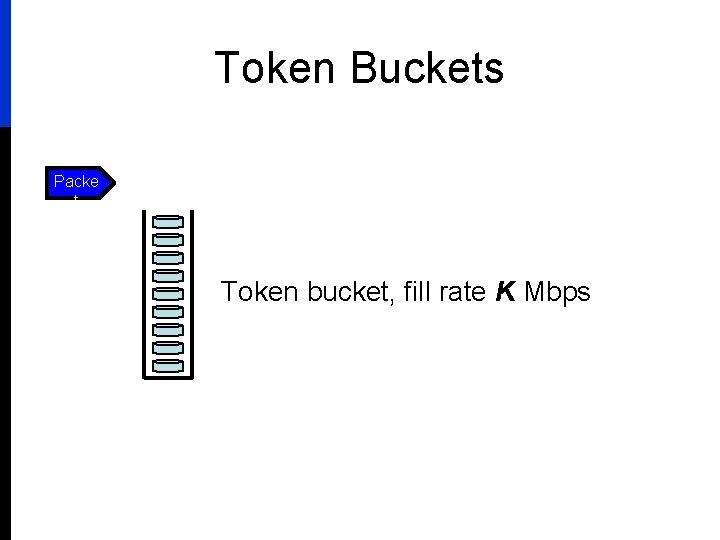
Token Buckets Packe t Token bucket, fill rate K Mbps
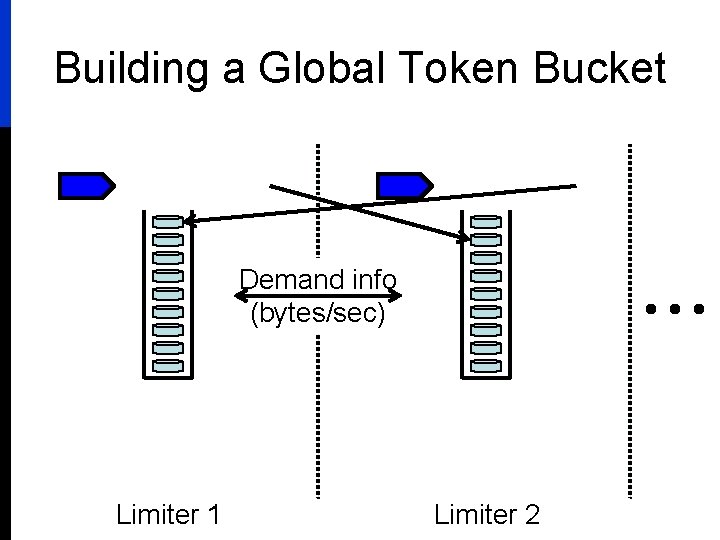
Building a Global Token Bucket Demand info (bytes/sec) Limiter 1 Limiter 2
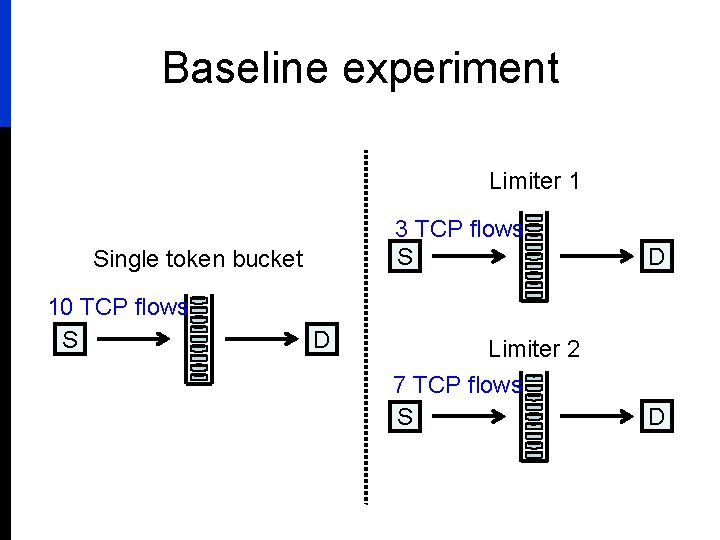
Baseline experiment Limiter 1 Single token bucket 10 TCP flows S D 3 TCP flows S D Limiter 2 7 TCP flows S D
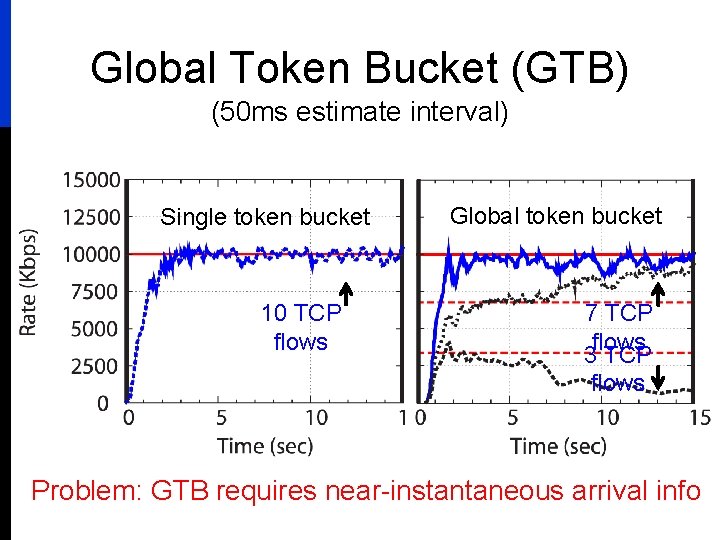
Global Token Bucket (GTB) (50 ms estimate interval) Single token bucket 10 TCP flows Global token bucket 7 TCP flows 3 TCP flows Problem: GTB requires near-instantaneous arrival info
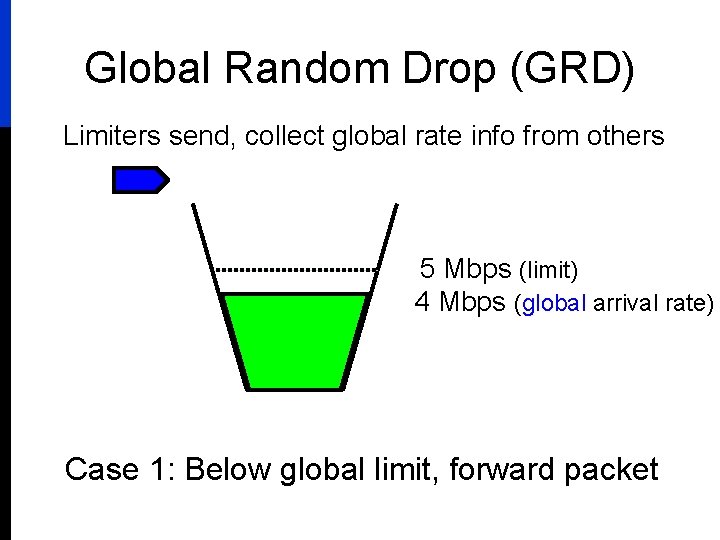
Global Random Drop (GRD) Limiters send, collect global rate info from others 5 Mbps (limit) 4 Mbps (global arrival rate) Case 1: Below global limit, forward packet
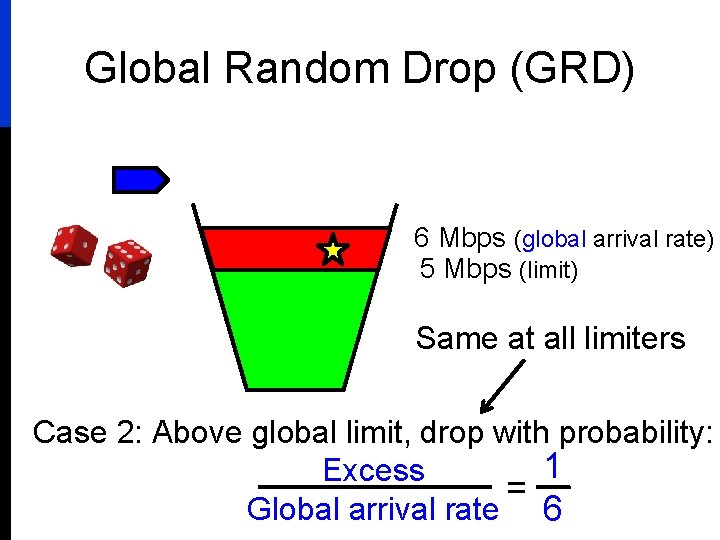
Global Random Drop (GRD) 6 Mbps (global arrival rate) 5 Mbps (limit) Same at all limiters Case 2: Above global limit, drop with probability: 1 Excess = Global arrival rate 6
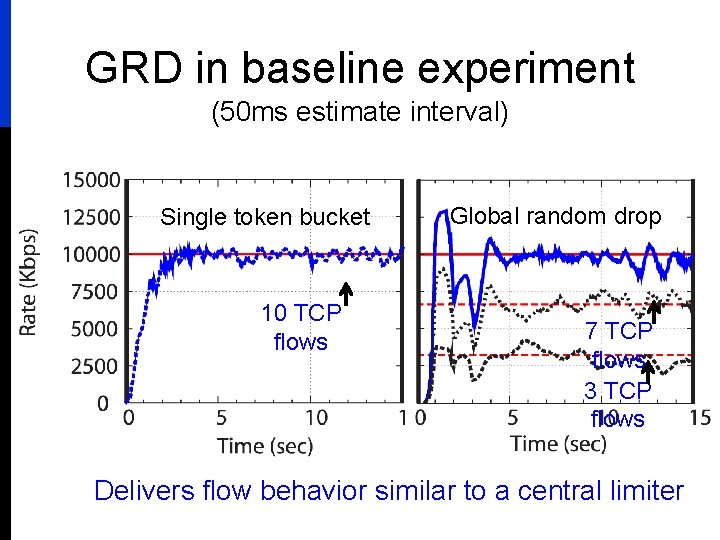
GRD in baseline experiment (50 ms estimate interval) Single token bucket 10 TCP flows Global random drop 7 TCP flows 3 TCP flows Delivers flow behavior similar to a central limiter
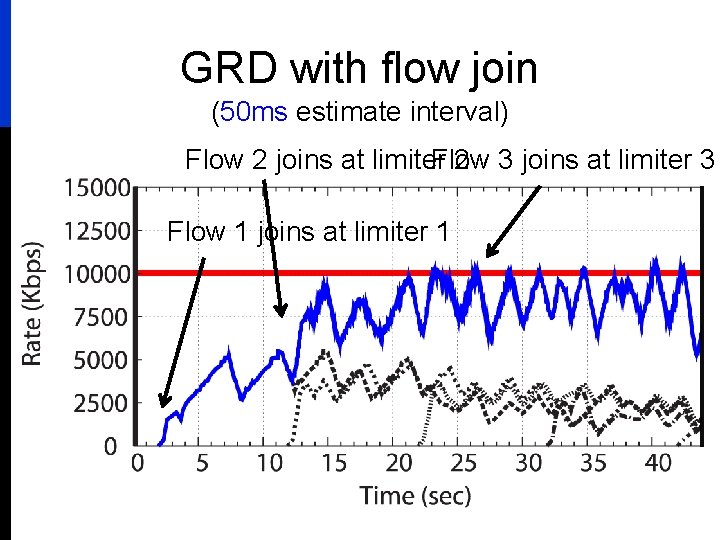
GRD with flow join (50 ms estimate interval) Flow 2 joins at limiter Flow 2 3 joins at limiter 3 Flow 1 joins at limiter 1
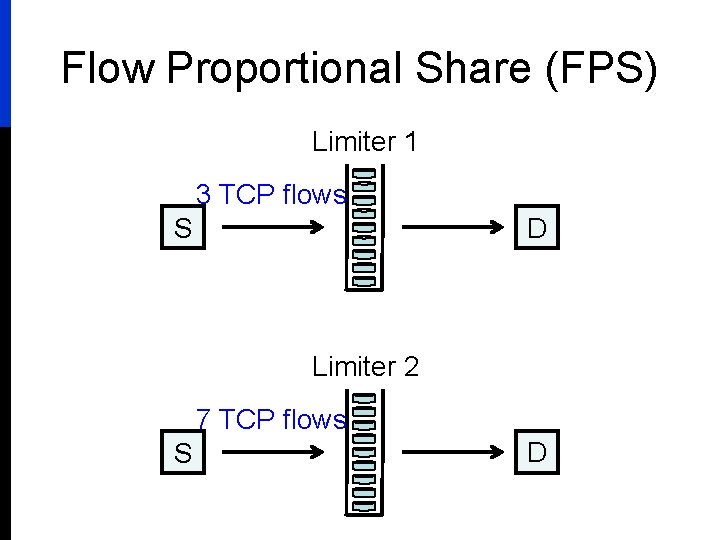
Flow Proportional Share (FPS) Limiter 1 3 TCP flows D S Limiter 2 7 TCP flows S D
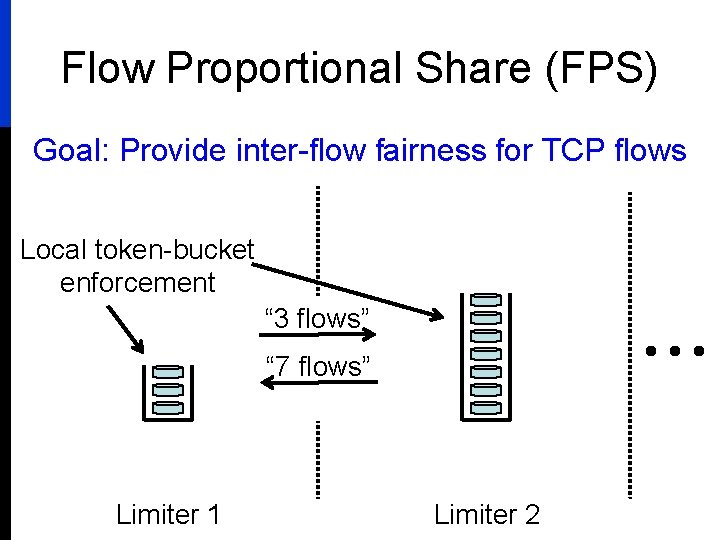
Flow Proportional Share (FPS) Goal: Provide inter-flow fairness for TCP flows Local token-bucket enforcement “ 3 flows” “ 7 flows” Limiter 1 Limiter 2
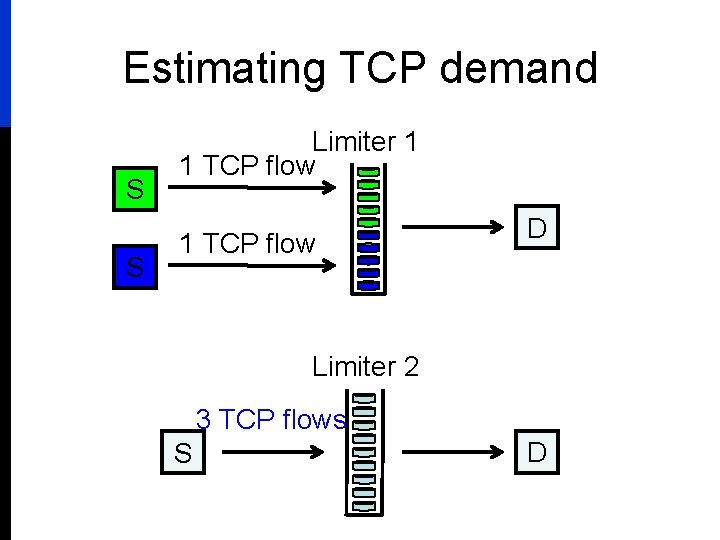
Estimating TCP demand S S Limiter 1 1 TCP flow D Limiter 2 3 TCP flows S D
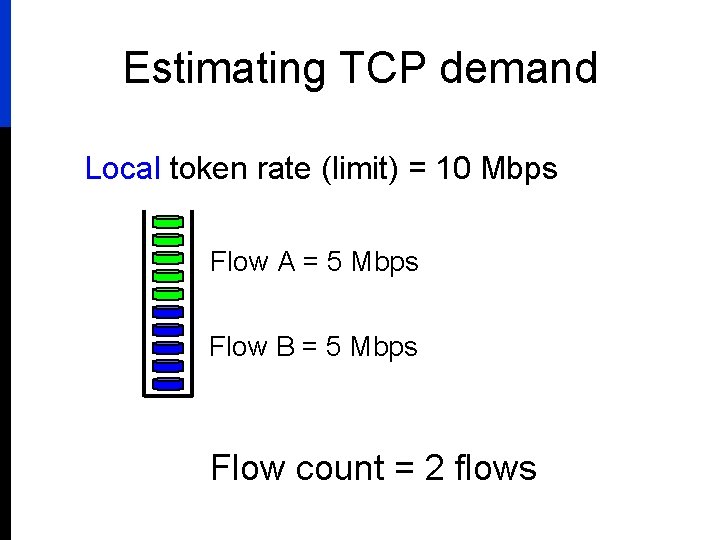
Estimating TCP demand Local token rate (limit) = 10 Mbps Flow A = 5 Mbps Flow B = 5 Mbps Flow count = 2 flows
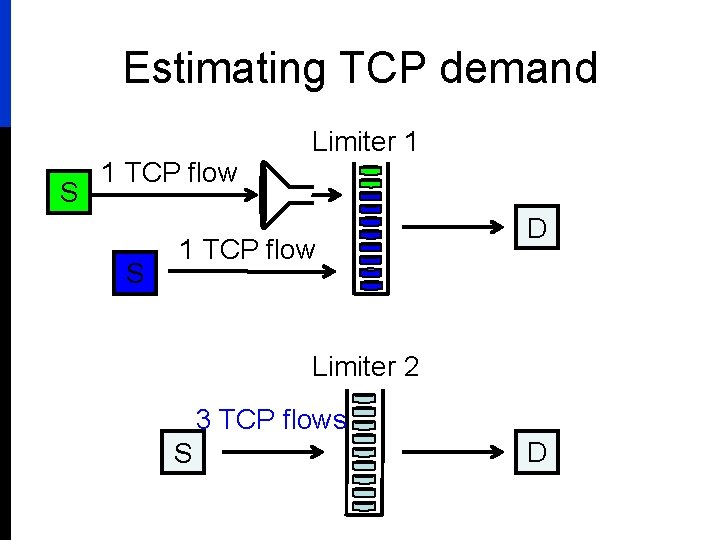
Estimating TCP demand Limiter 1 S 1 TCP flow D Limiter 2 3 TCP flows S D
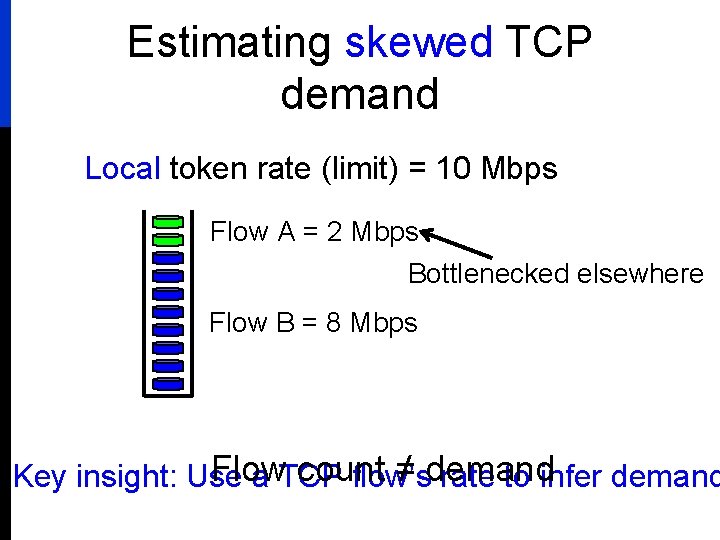
Estimating skewed TCP demand Local token rate (limit) = 10 Mbps Flow A = 2 Mbps Bottlenecked elsewhere Flow B = 8 Mbps Flow count ≠ demand Key insight: Use a TCP flow’s rate to infer demand
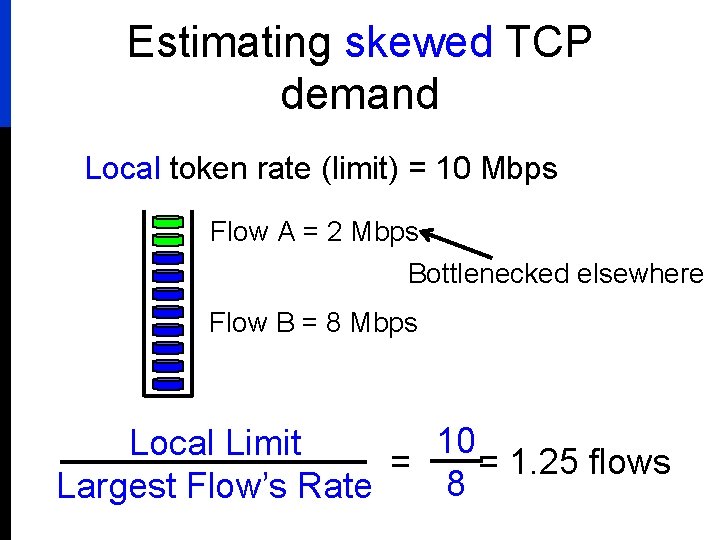
Estimating skewed TCP demand Local token rate (limit) = 10 Mbps Flow A = 2 Mbps Bottlenecked elsewhere Flow B = 8 Mbps 10 Local Limit = = 1. 25 flows 8 Largest Flow’s Rate
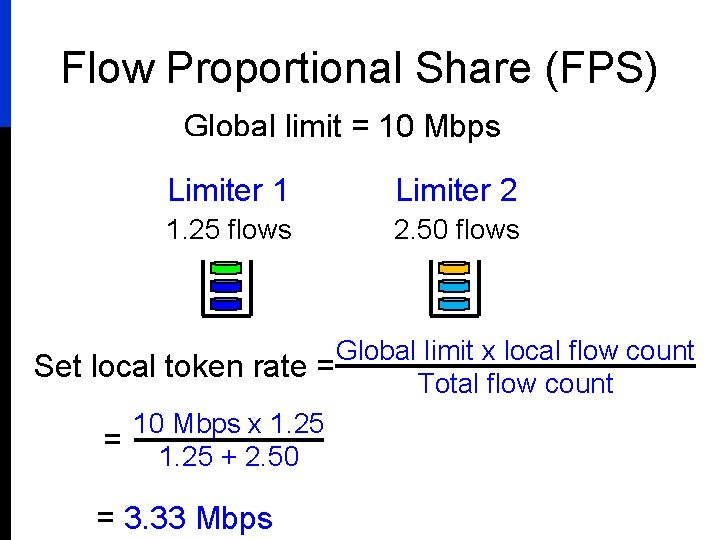
Flow Proportional Share (FPS) Global limit = 10 Mbps Limiter 1 Limiter 2 1. 25 flows 2. 50 flows Global limit x local flow count Set local token rate = Total flow count 10 Mbps x 1. 25 = 1. 25 + 2. 50 = 3. 33 Mbps
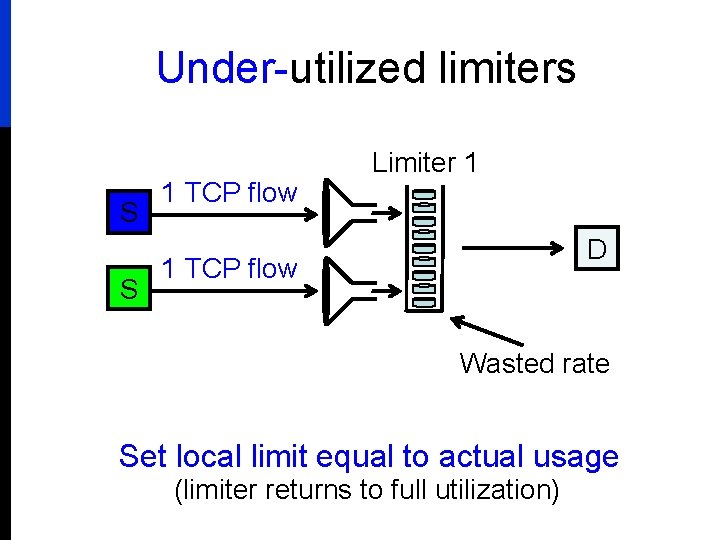
Under-utilized limiters S S 1 TCP flow Limiter 1 D 1 TCP flow Wasted rate Set local limit equal to actual usage (limiter returns to full utilization)
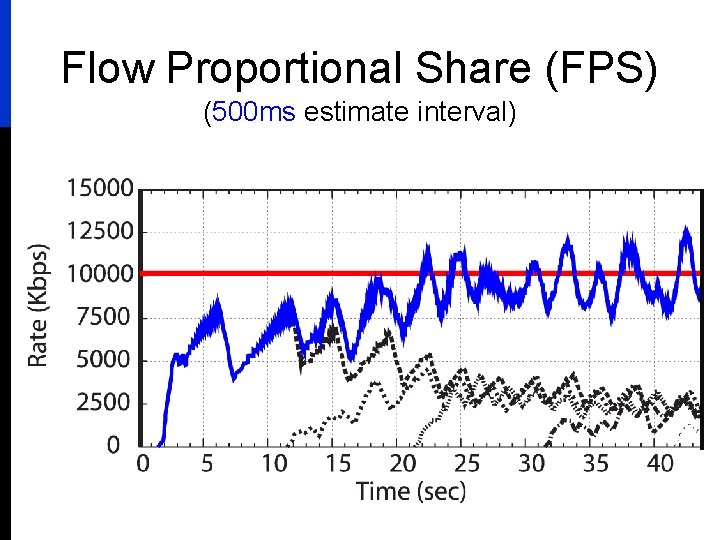
Flow Proportional Share (FPS) (500 ms estimate interval)
Additional issues • What if a limiter has no flows and one arrives? • What about bottlenecked traffic? • What about varied RTT flows? • What about short-lived vs. long-lived flows? • Experimental evaluation in the paper – Evaluated on a testbed and over Planetlab
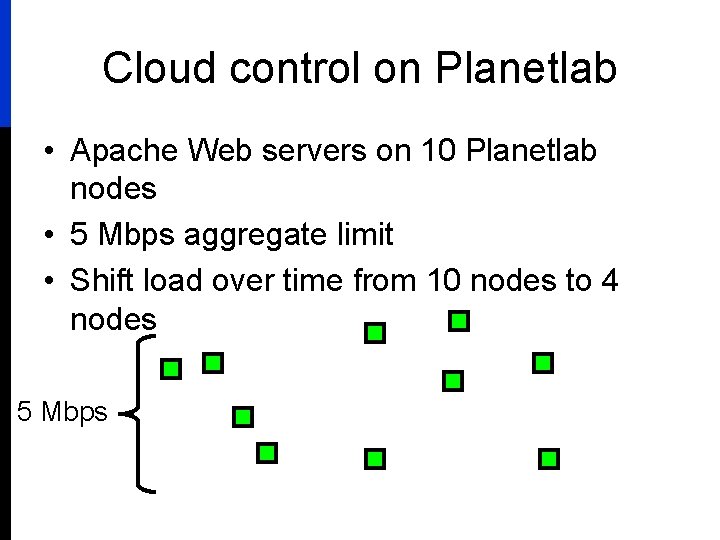
Cloud control on Planetlab • Apache Web servers on 10 Planetlab nodes • 5 Mbps aggregate limit • Shift load over time from 10 nodes to 4 nodes 5 Mbps
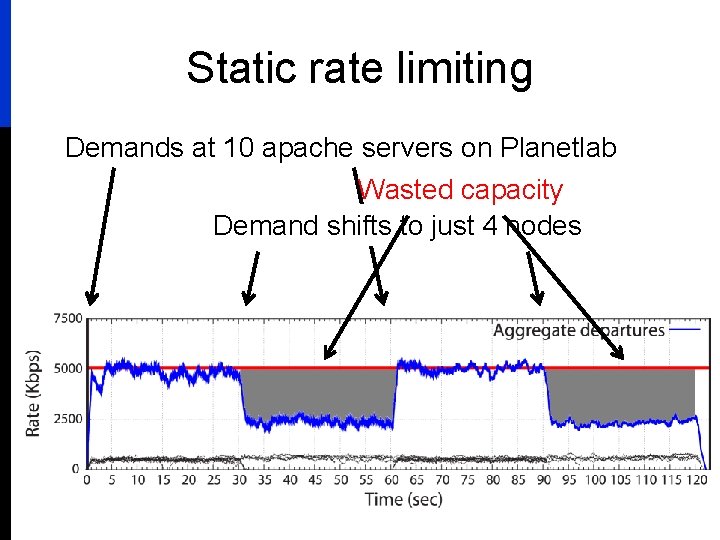
Static rate limiting Demands at 10 apache servers on Planetlab Wasted capacity Demand shifts to just 4 nodes
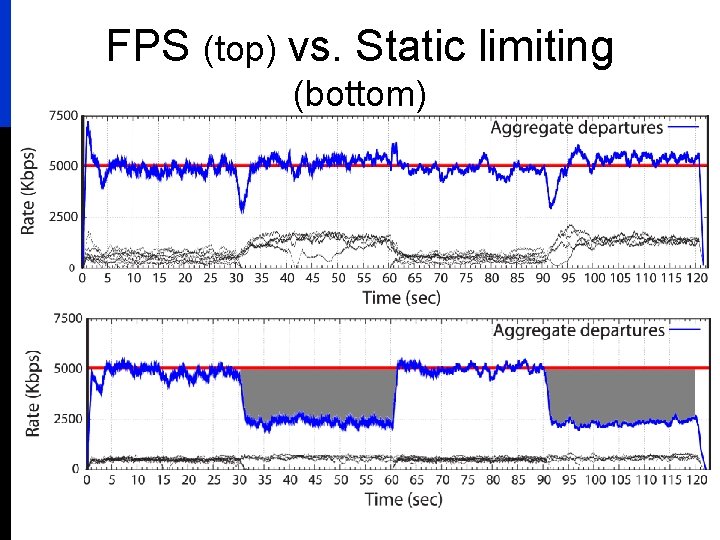
FPS (top) vs. Static limiting (bottom)
Conclusions • Protocol agnostic limiting (extra cost) – Requires shorter estimate intervals • Fine-grained packet arrival info not required – For TCP, flow-level granularity is sufficient • Many avenues left to explore – Inter-service limits, other resources (e. g. CPU)

Questions!
- Slides: 32