
Clostridium difficile Community Infection Control Nurses Leicestershire Northamptonshire

- Slides: 26
Clostridium difficile Community Infection Control Nurses Leicestershire, Northamptonshire & Rutland PCT’s Health Protection Agency Nurses Leicestershire, Northamptonshire & Rutland Social Care Providers Leicestershire, Northamptonshire & Rutland 2006
What is Clostridium difficile? ü A bacterium that usually lives in the bowel ü First described in the 1930’s ü Not identified as a cause of diarrhoea and colitis following antibiotic treatment until the late 1970’s
Where is Clostridium difficile found ? ü Can normally be found in the bowel in a small proportion of the healthy adult population ü Is common in the bowel of babies and infants but rarely causes problems
What does it cause ? ü Explosive/offensive diarrhoea and occasionally vomiting ü Abdominal pain ü Complications can include dehydration, malnourishment and in extreme circumstances blood poisoning and/or death
How is it spread ? ü Via the faecal/oral route ü Direct contact with contaminated equipment, clients or the environment ü On the hands of carers/healthcare workers People having a normal bowel action are not thought to be an infection risk to others risk or need treatment.
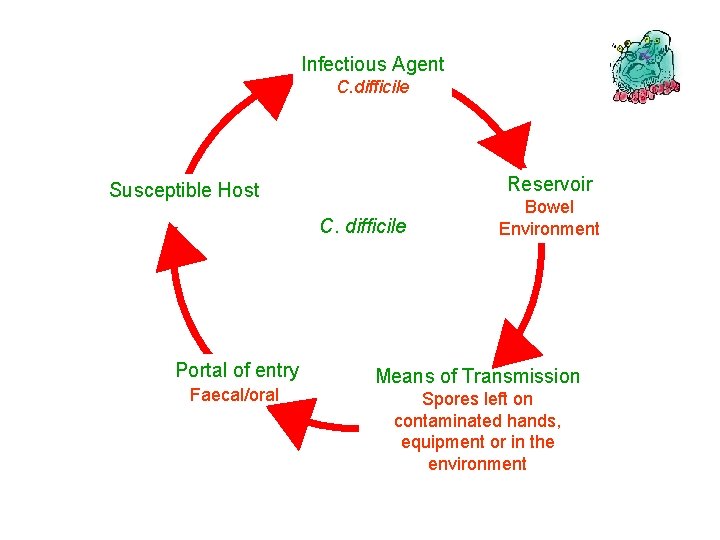
Infectious Agent C. difficile Reservoir Susceptible Host C. difficile Portal of entry Faecal/oral Bowel Environment Means of Transmission Spores left on contaminated hands, equipment or in the environment
Who may be at risk ? ü Clients who have received certain antibiotics ü Those beyond the age of 65 yrs ü Patients with underlying disease/illness – cancer, chronic renal disease ü People who have been exposed to the bacteria ü People with a poor immune system ü People who have had abdominal surgery
How is it diagnosed ? üBy sending a specimen of diarrhoea to the laboratory üA sample should be taken as soon as possible üObtain a specimen pot and form from the GP üUsing the appropriate Personal Protective Equipment (PPE), take a specimen of diarrhoea üEnsure pots and forms are labelled with the correct name and date of birth üEnsure specimen reaches the GP surgery
How is it treated ? ü Review of current/previous antibiotic treatment ü Review of current laxatives ü Consideration of underlying diseases ü Appropriate antibiotic drug treatment
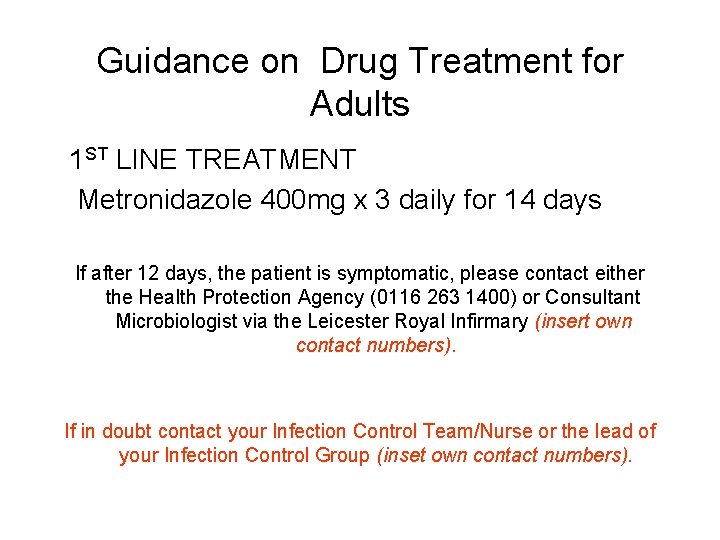
Guidance on Drug Treatment for Adults 1 ST LINE TREATMENT Metronidazole 400 mg x 3 daily for 14 days If after 12 days, the patient is symptomatic, please contact either the Health Protection Agency (0116 263 1400) or Consultant Microbiologist via the Leicester Royal Infirmary (insert own contact numbers). If in doubt contact your Infection Control Team/Nurse or the lead of your Infection Control Group (inset own contact numbers).
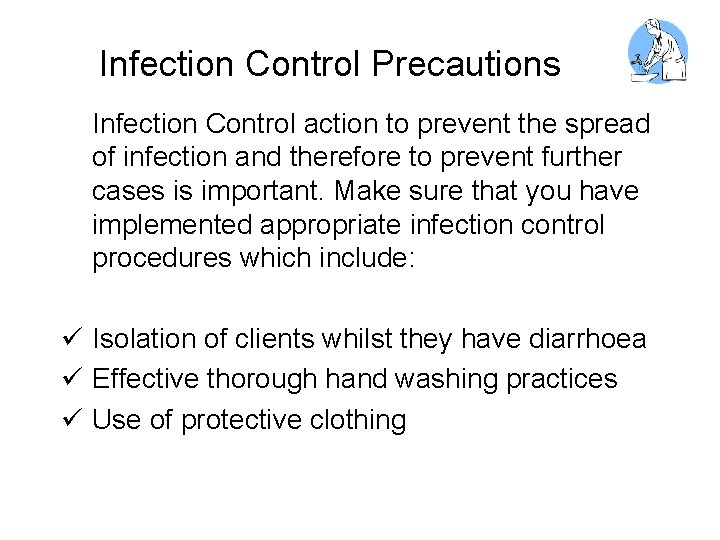
Infection Control Precautions Infection Control action to prevent the spread of infection and therefore to prevent further cases is important. Make sure that you have implemented appropriate infection control procedures which include: ü Isolation of clients whilst they have diarrhoea ü Effective thorough hand washing practices ü Use of protective clothing
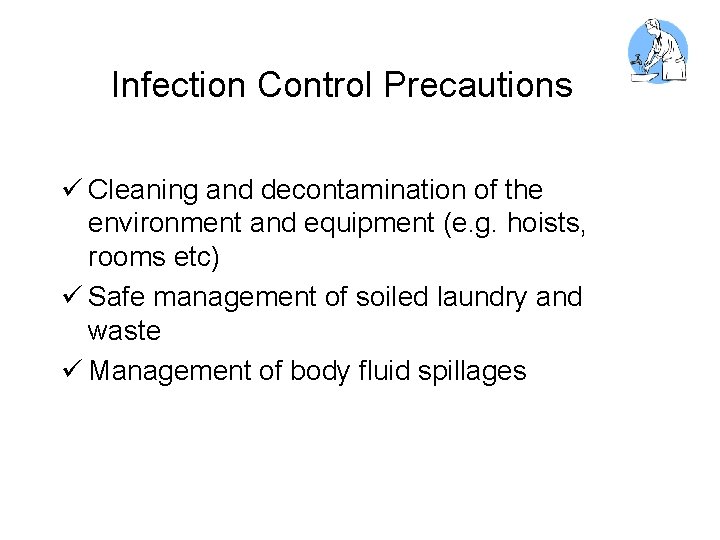
Infection Control Precautions ü Cleaning and decontamination of the environment and equipment (e. g. hoists, rooms etc) ü Safe management of soiled laundry and waste ü Management of body fluid spillages
Isolation Precautions ü Single room ü Own toilet/commode ü Designated equipment (e. g. hoists, slings. ) ü Daily clean of room paying particular attention to horizontal surfaces ü Hand washing before entering the room and after removing protective clothing ü Final clean of room
All Clear When the client has had no diarrhoea for 48 hours and has normal bowel action, they are no longer considered an infection risk to others. No further specimens are required to confirm the client is C. difficile negative.
Hand Washing ü Hand hygiene is one of the key interventions in reducing the spread of all infections especially C. difficile associated diarrhoea ü Must be done by all Healthcare Workers, relatives and other carers before caring for a symptomatic person and after removal of protective clothing ü Liquid soap and warm running water should be used to wash hands
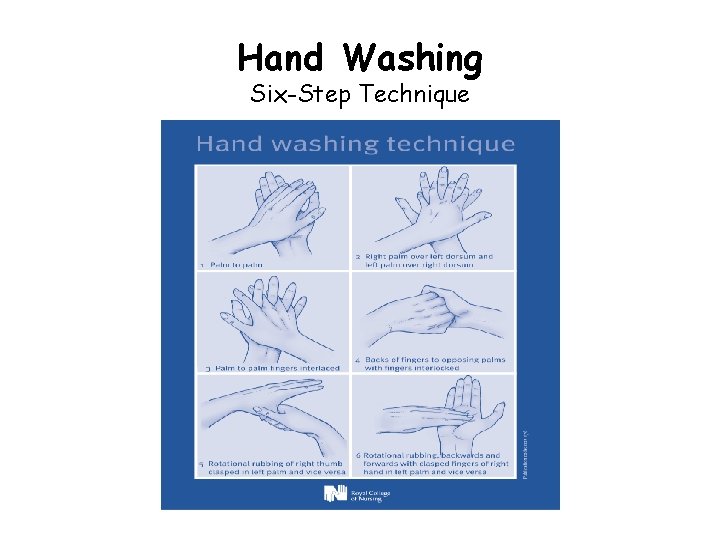
Hand Washing Six-Step Technique
Hand Washing ü Drying is essential ü Hand washing must be done: - After handling clothing, bedding, contact equipment - After visiting toilet/using commode ü Towels should not be shared (staff in Residential/Nursing homes should not use residents towels) Alcohol hand rubs are not effective against Clostridium difficile
Personal Protective Equipment (PPE) Gloves and aprons must be worn when: ü In contact with the client or their immediate environment ü When assisting a client to use the toilet ü When undertaking cleaning activities ü Must be disposed of immediately after use and before caring for another client
Cleaning and Decontamination It is essential that the following surfaces are washed with hot, soapy, water, rinsed and dried at least daily or more frequently if possible: Toilet seats, flush handles, hand wash basin taps, horizontal surfaces and toilet door handles Bedpans, commode pans and urinals should be washed with hot water and detergent, rinsed and allowed to dry Chlorine-based solutions (i. e. Milton) may be used on toilet seats and other surfaces after visible soiling has been removed
Cleaning and Decontamination ü An allocated mop, bucket and disposable cloth should be kept in the room of the affected patient ü Ideally mops with disposable heads should be used and the mop heads disposed of at the end of the episode of illness ü No cleaning of soiled items should take place in food preparation areas (e. g. sinks in kitchens)
Laundry ü At home soiled items should go directly into the washing machine ü Soiled laundry should be put into a plastic bag if staff are not able to put linen directly into a washing machine ü Clothing should be washed separately from other clothing on the hottest temperature the fabric will allow ü The outside of the washing machine should be wiped down with hot water and detergent after soiled laundry is loaded Hands should be washed after handling soiled linen
Spillages ü Spillages should be dealt with immediately ü Protective clothing should be worn ü Clean up using a disposable cloth/paper towel ü Area should be cleaned using warm water and detergent, rinsed and dried. ü Disinfect with a chlorine-based solution (i. e. Milton), rinse and dry.
Spillages ü If spillage occurs on carpeted area, ideally a carpet shampoo or steam clean should be undertaken. ü All accessible parts of the cleaner should also be cleaned following use
Exclusion from Outside Activities ü All cases of diarrhoea should be regarded as potentially infectious and should normally be excluded from outside activities for at least 48 hours after the person is free from diarrhoea and/or vomiting and has had a normal bowel action
Can it come back ? ü Staff should be aware of the possibility of the re-occurrence of diarrhoea ü A significant proportion of clients may relapse following further antibiotic treatment ü If re-occurrence of diarrhoea develops then infection control precautions must be implemented until the client has had no diarrhoea for 48 hours and is having a normal bowel action
Any Questions