
Closing the gigatonne gap Kaisa Kosonen Greenpeace International
- Slides: 33
Closing the gigatonne gap Kaisa Kosonen Greenpeace International
This presentation • 1. 5, 2 or 3 degrees C, what’s the difference? • The carbon budget for staying below 2 deg C and the implications for 2020 emissions • Options for closing the gap • Check list for governments
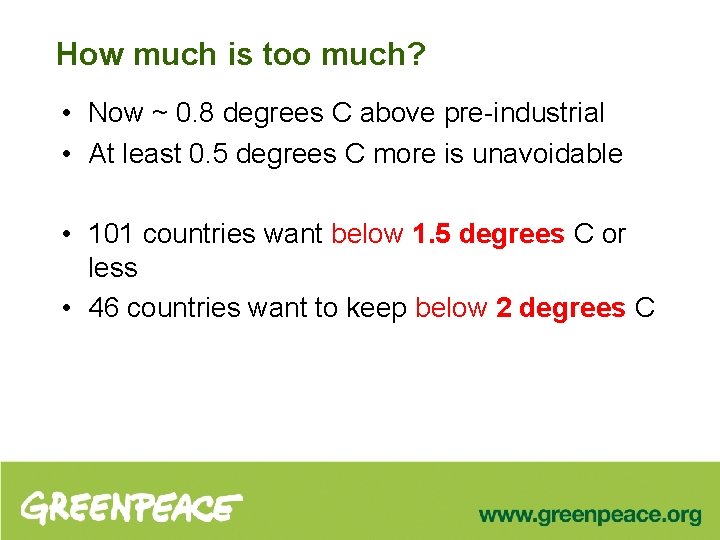
How much is too much? • Now ~ 0. 8 degrees C above pre-industrial • At least 0. 5 degrees C more is unavoidable • 101 countries want below 1. 5 degrees C or less • 46 countries want to keep below 2 degrees C
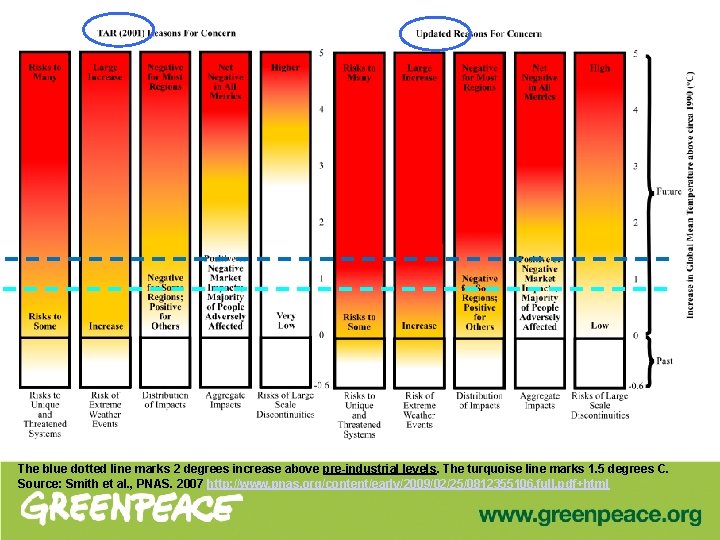
Scientific understanding about the risks related to relatively low levels of warming have changed significantly within the last decade
The blue dotted line marks 2 degrees increase above pre-industrial levels. The turquoise line marks 1. 5 degrees C. Source: Smith et al. , PNAS. 2007 http: //www. pnas. org/content/early/2009/02/25/0812355106. full. pdf+html
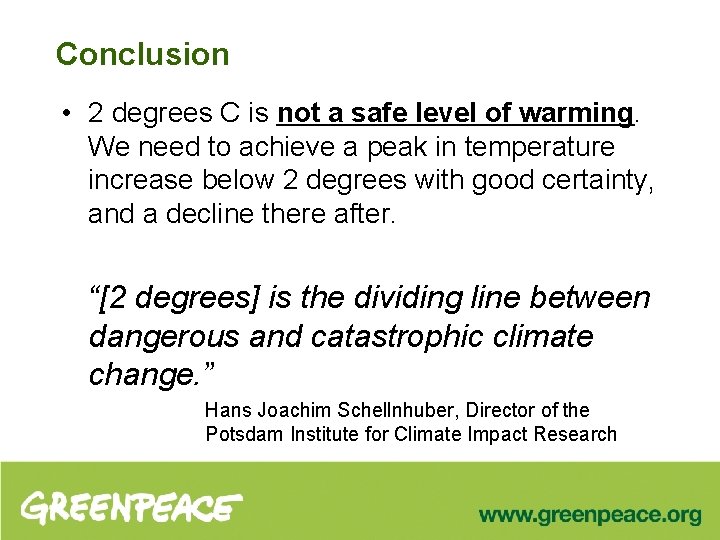
Conclusion • 2 degrees C is not a safe level of warming. We need to achieve a peak in temperature increase below 2 degrees with good certainty, and a decline there after. “[2 degrees] is the dividing line between dangerous and catastrophic climate change. ” Hans Joachim Schellnhuber, Director of the Potsdam Institute for Climate Impact Research
This presentation • 1. 5, 2 or 3 degrees C, what’s the difference? • The carbon budget for staying below 2 deg C and the implications for 2020 emissions • Options for closing the gap • Check list for negotiators
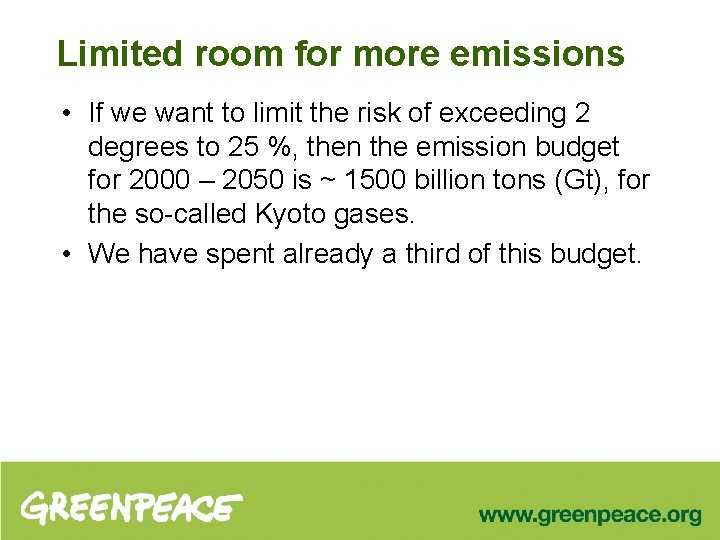
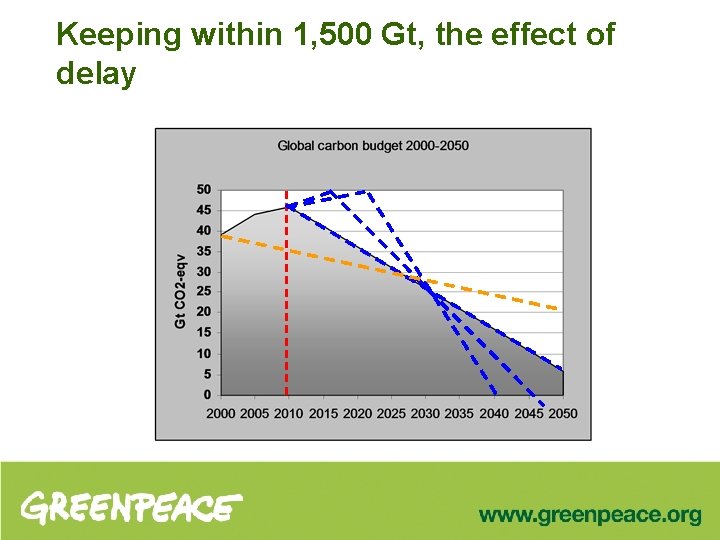
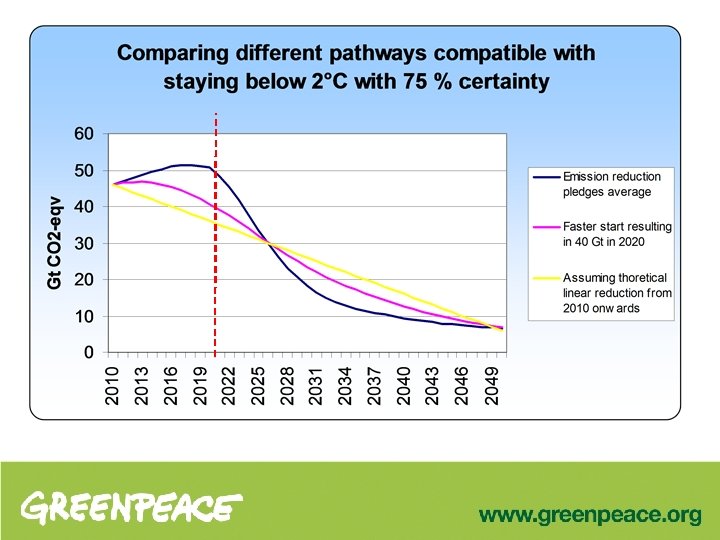
Limited room for more emissions • If we want to limit the risk of exceeding 2 degrees to 25 %, then the emission budget for 2000 – 2050 is ~ 1500 billion tons (Gt), for the so-called Kyoto gases. • We have spent already a third of this budget.
Keeping within 1, 500 Gt, the effect of delay
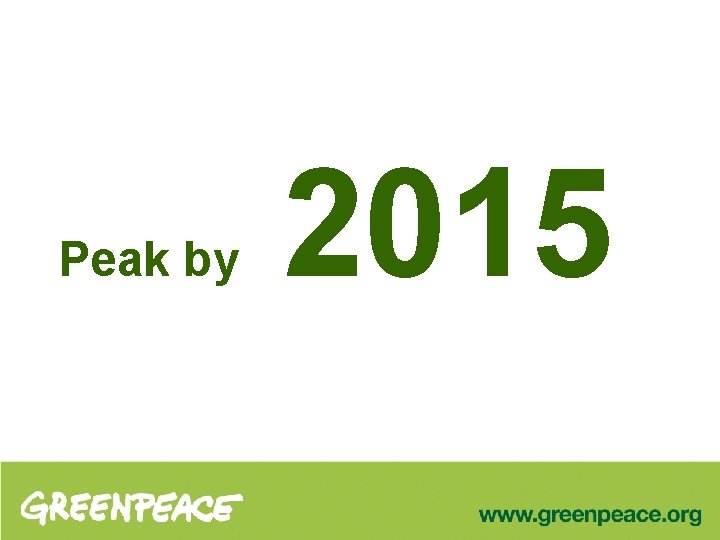
Peak by 2015
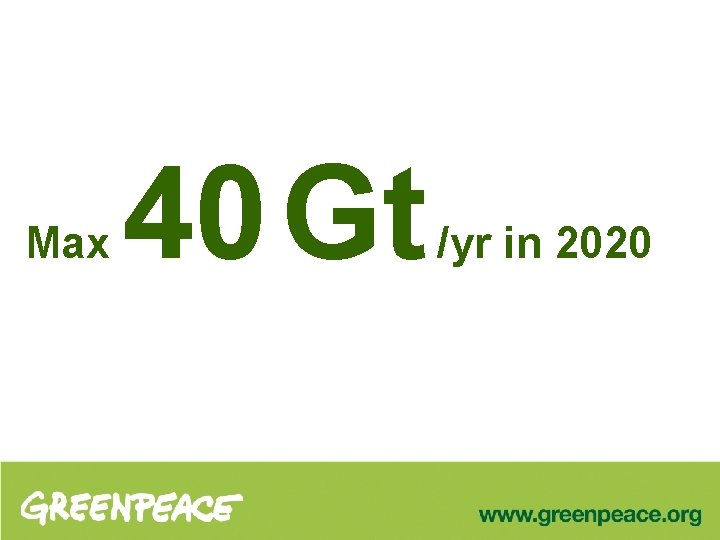
Max 40 Gt /yr in 2020
This presentation • 1. 5, 2 or 3 degrees C, what’s the difference? • The carbon budget for staying below 2 deg C and the implications for 2020 emissions • Options for closing the gap • Check list for governments
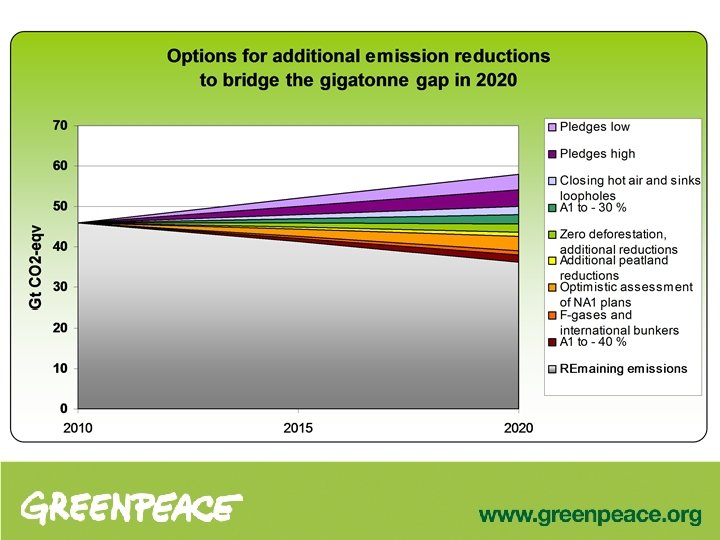
Business As Usual (BAU) Assuming BAU 58 Gt in 2020 (could be lower)
Pledges at best (w. loopholes) Down to ~ 50 Gt
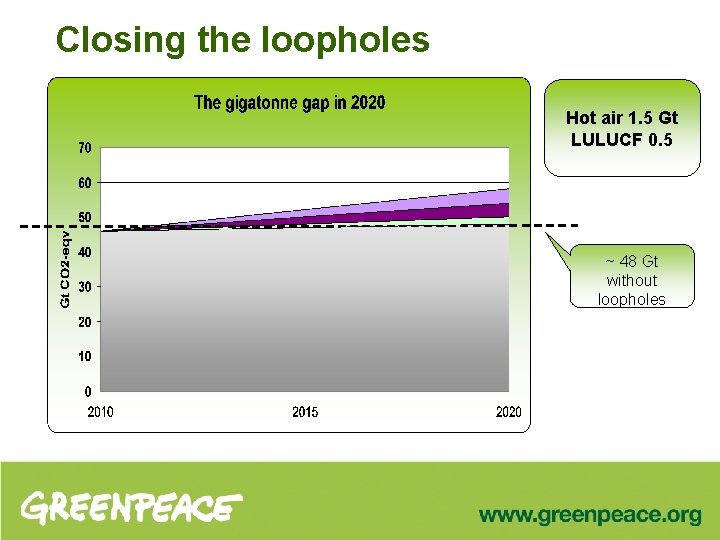
Closing the loopholes Hot air 1. 5 Gt LULUCF 0. 5 ~ 48 Gt without loopholes
“ 48 gigatonnes of carbon dioxide equivalents in 2020 is not on track — it is racing towards a cliff and hoping to stop just before it. “ (Rogelj et. al. 2010)
A 1 to 30 % 2. 4 Gt
Additional REDD (zero deforestation) ~ 2. 1 Gt
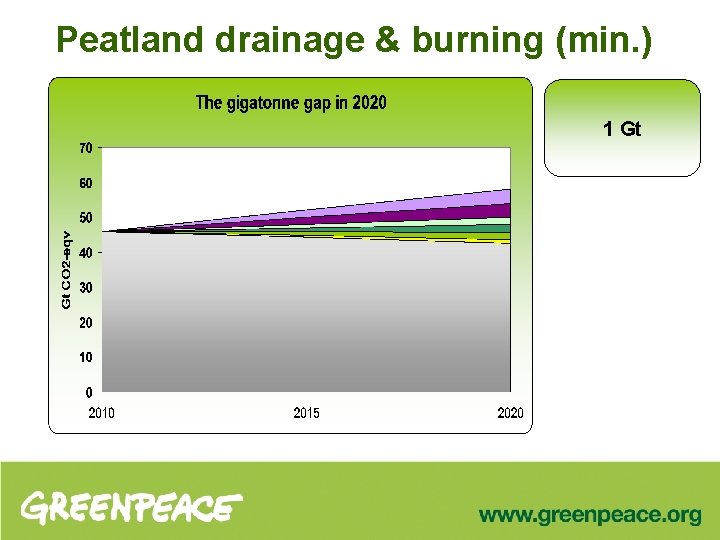
Peatland drainage & burning (min. ) 1 Gt
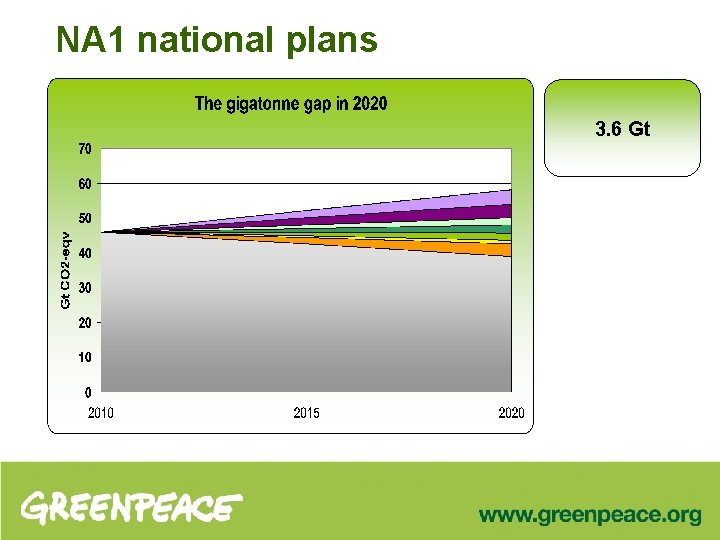
NA 1 national plans 3. 6 Gt
F-gases & bunkers 1 Gt
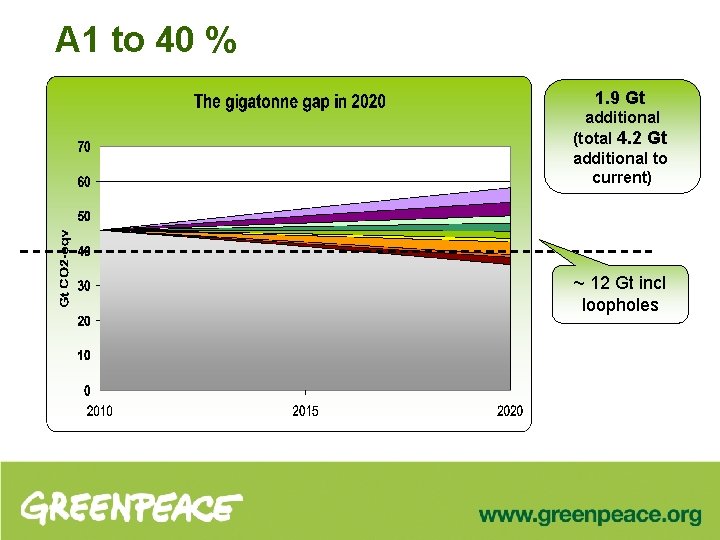
A 1 to 40 % 1. 9 Gt additional (total 4. 2 Gt additional to current) ~ 12 Gt incl loopholes
This presentation • 1. 5, 2 or 3 degrees C, what’s the difference? • The carbon budget for staying below 2 deg C and the implications for 2020 emissions • Options for closing the gap • Check list for governments
1) Face the truth • Conduct an assessment of the adequacy of cuts before Cancun (workshop/technical paper) • Conduct at COP 16, under Art. 4. 2 of the Convention, a review of the adequacy of current commitments, in light of the 2°C and 1. 5°C benchmarks. • Assess the adequacy of the pledges in light of the Millennium Development Goals at the UN MDG stock taking summit in September. Commit to addressing the inconsistency.
2) National action to match the global goals – Leaders of rich countries are talking about the biggest threat to mankind, but their action does not match the rethoric. – Large developing countries can pursue greener growth, including through implementing their nocost and low cost emission reduction potential, that will bring both climate and development benefits. The extent of emission cuts will partially depend on the technical and financial support by developed countries. – Low-carbon emission plans and zero emission plans with transparent MRV provisions are crucial
3) Look for additional reductions through international cooperation • Agree on stopping tropical deforestation by 2020. – The UN year of biodiversity 2010. • Stop peatland drainage and burning. – Indonesia-Norway partnership a good example • Bunkers – IMO and ICAO need clear goals and guidance from the UNFCCC. • HFC – Phase out by 2020 in cooperation with the Montreal protocol. • Black carbon – National, regional and international action all needed.
4) Ensuring a robust framework for action • ”Legally binding” is the highest expression of commitment. Both tracks must result in legally binding agreements. • Close the loopholes – Address hot air by amending the banking rules of the Kyoto Protocol (Art 3. 13) and adjusting developed countries’ targets. – Stop cheating with dodgy sinks accounting and start maintaining and enhancing natural sinks. – Prevent double counting of emissions and of finance with robust MRV rules. • Building blocks geared towards fixing the gap.
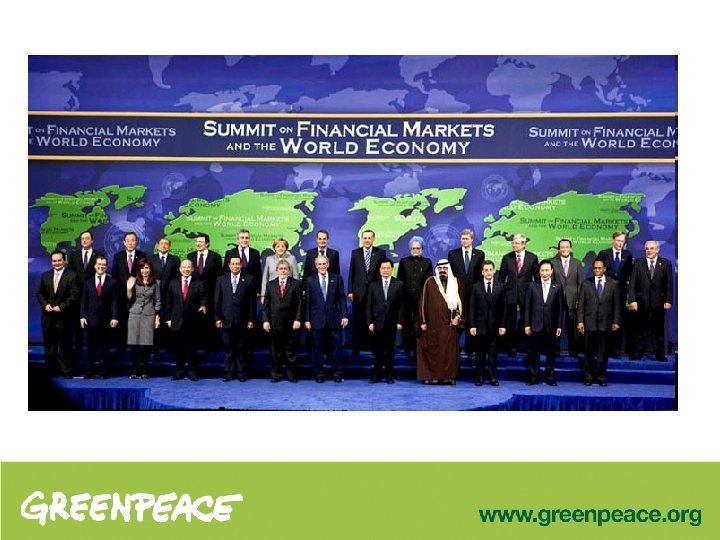
5) Maintain climate on top of international agenda – G 20 & G 8 to acknowledge their particular role in preventing climate chaos and maintain climate on top of their agenda. – Climate change and security on the permanent agenda of the security council. (Support the initiative of Pacific Islands) – World Bank energy strategy review to incorporate climate safeguards into its lending principles – etc.
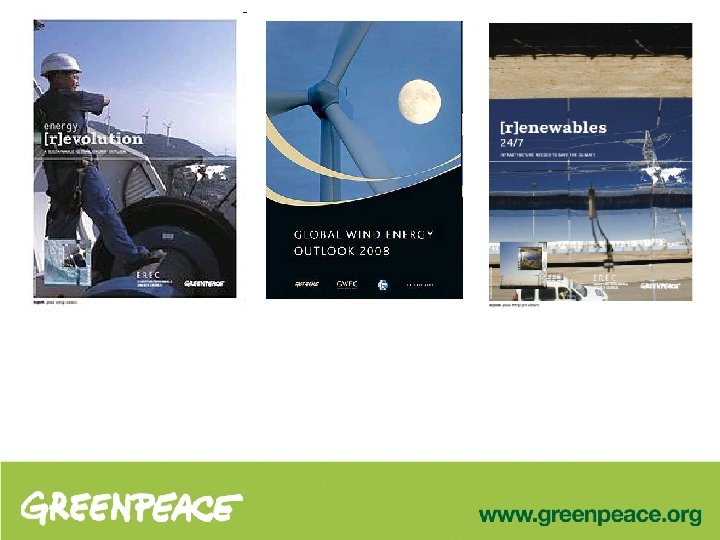
Thank you! www. energyblueprint. info www. greenpeace. org/climatevision