
Closed Point of Dispensing Training Preparing your organization
- Slides: 46
Closed Point of Dispensing Training • Preparing your organization to provide emergency measures for your staff, their family and potentially clients 1
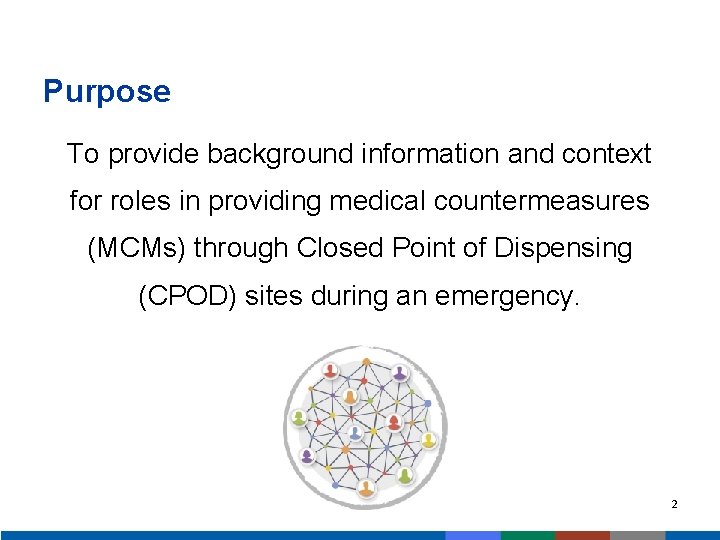
Purpose To provide background information and context for roles in providing medical countermeasures (MCMs) through Closed Point of Dispensing (CPOD) sites during an emergency. 2
Learning Objectives § Outline the decision process for activating point of dispensing (POD) sites during a public health emergency § Define a POD and a Closed POD § Explain the importance of any POD during a public health emergency § Describe the CPOD functions and roles 3
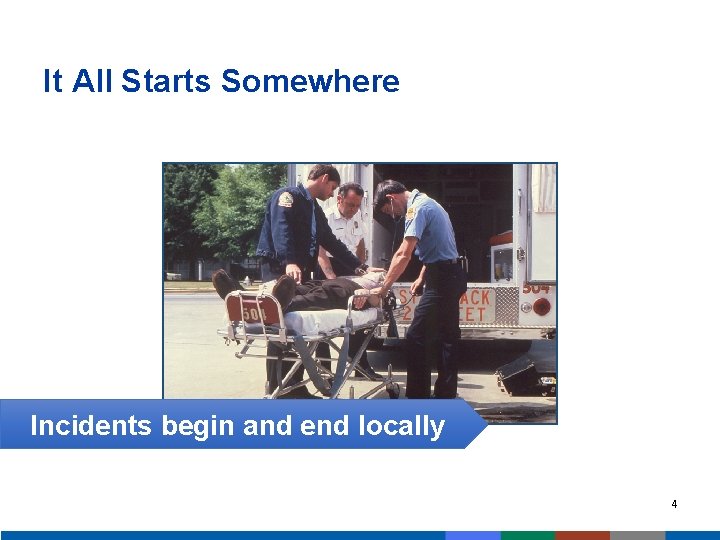
It All Starts Somewhere Incidents begin and end locally 4
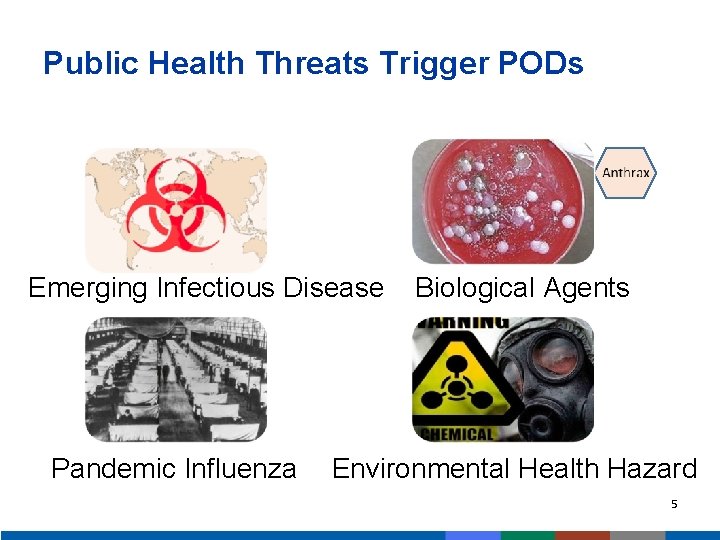
Public Health Threats Trigger PODs Emerging Infectious Disease Pandemic Influenza Biological Agents Environmental Health Hazard 5
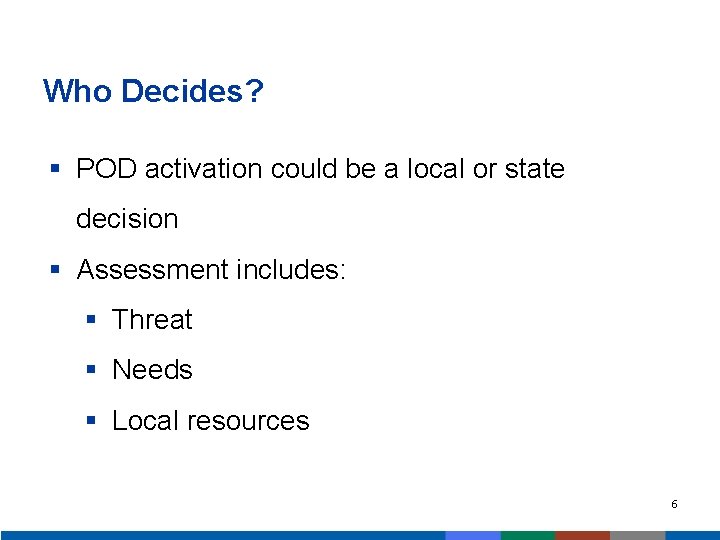
Who Decides? § POD activation could be a local or state decision § Assessment includes: § Threat § Needs § Local resources 6
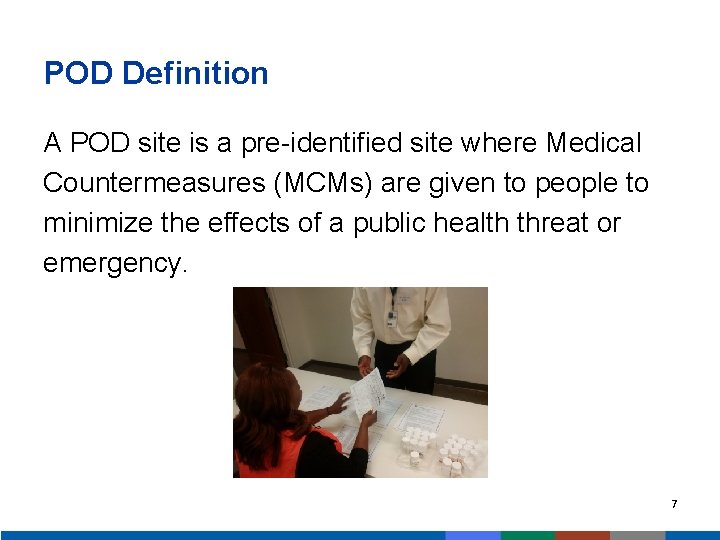
POD Definition A POD site is a pre-identified site where Medical Countermeasures (MCMs) are given to people to minimize the effects of a public health threat or emergency. 7
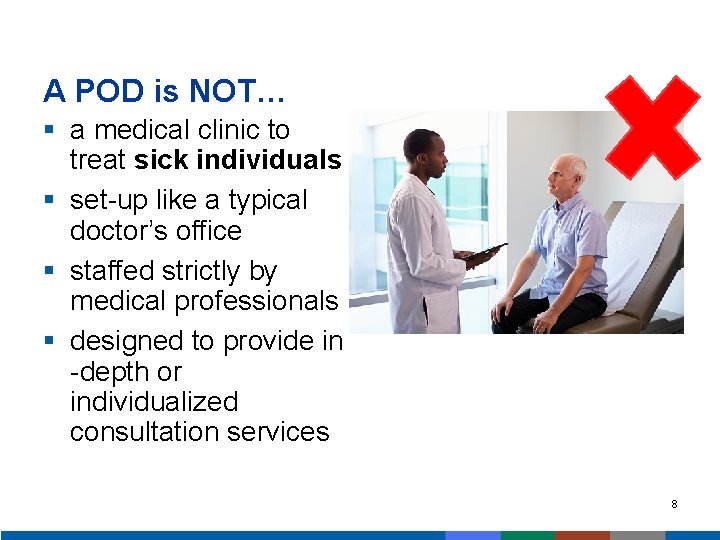
A POD is NOT… 4 § a medical clinic to treat sick individuals § set-up like a typical doctor’s office § staffed strictly by medical professionals § designed to provide in -depth or individualized consultation services 8
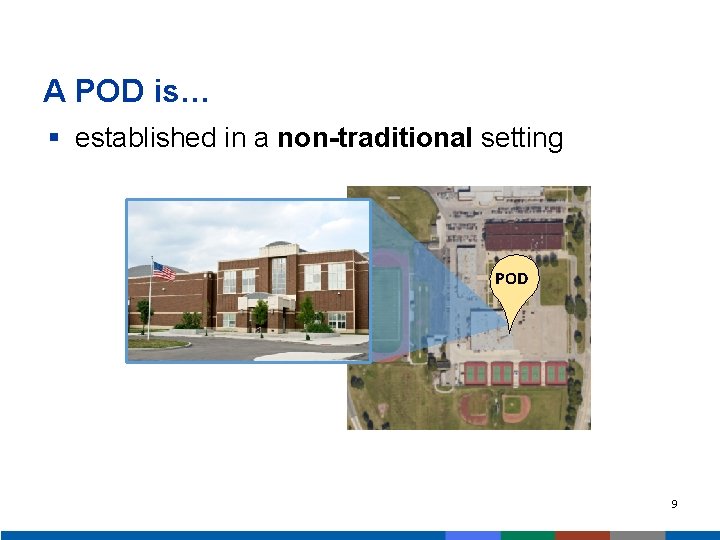
A POD is… 1 § established in a non-traditional setting POD 9
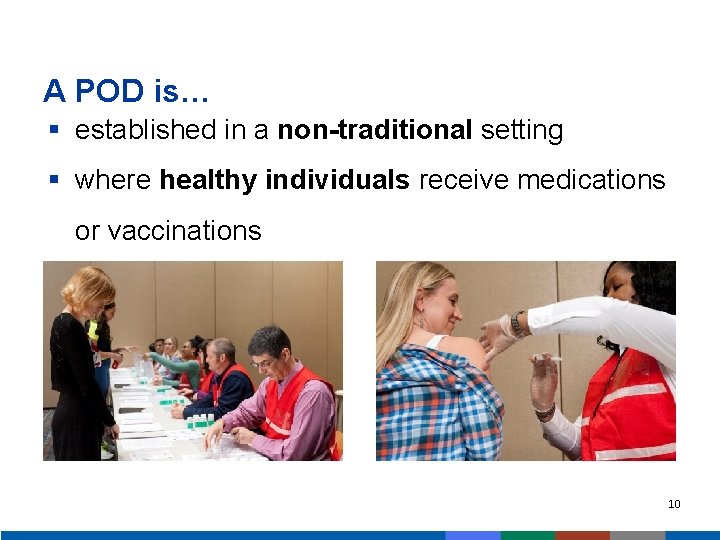
A POD is… 2 § established in a non-traditional setting § where healthy individuals receive medications or vaccinations 10
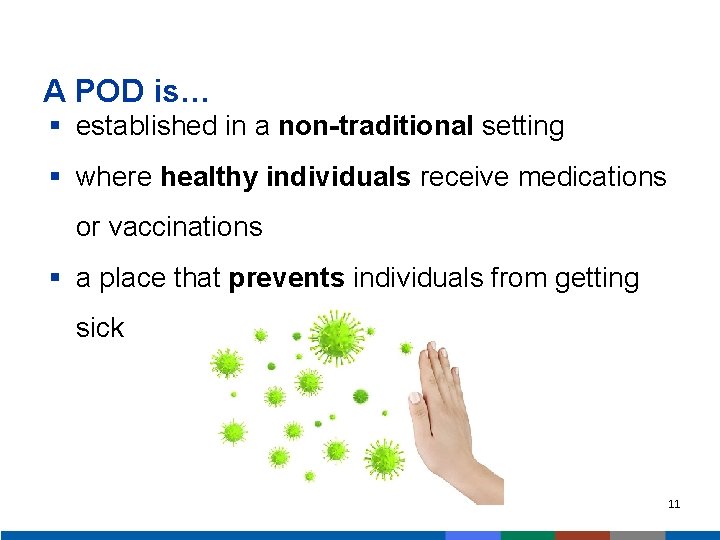
A POD is… 3 § established in a non-traditional setting § where healthy individuals receive medications or vaccinations § a place that prevents individuals from getting sick 11
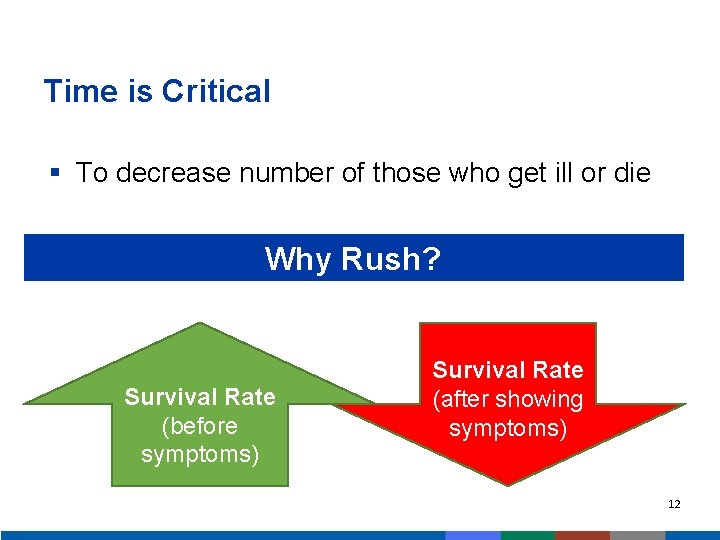
Time is Critical § To decrease number of those who get ill or die Why Rush? - Survival Rate (before symptoms) Survival Rate (after showing symptoms) 12
Closed PODs § Organization dispenses to their own population § Not open for the public § Partners with LPH to develop scope and plan § Organization staffs CPOD internally § MCM are free 13
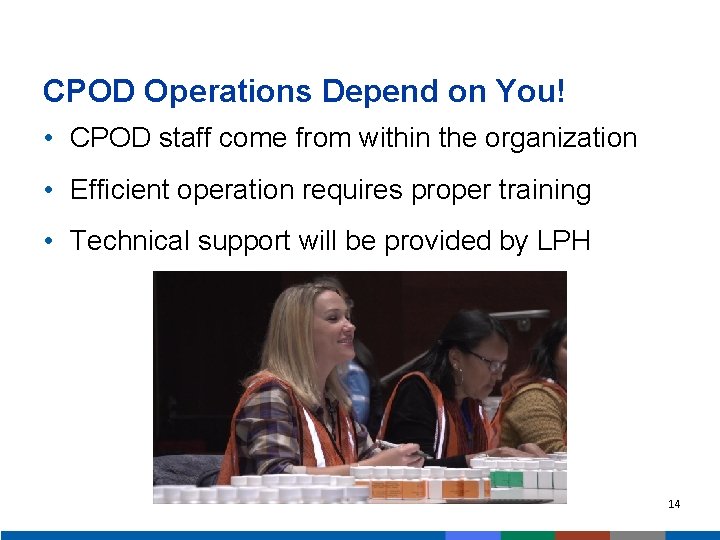
CPOD Operations Depend on You! • CPOD staff come from within the organization • Efficient operation requires proper training • Technical support will be provided by LPH 14
CPOD Staff Activation and Orientation § Receive activation notification § Check-in at CPOD location § Receive just-in-time-training § Perform work assignment § Check-out of CPOD 15
Notification of CPOD Staff § Where to go § What to bring • Facility • Photo ID or Badge • Room • Wear comfortable clothes and shoes § When to report • Immediate • Standby § Length of time • Duration of CPOD operations • 8, 10, 12 hour shifts 16
Check-in Procedures § Report to sign-in area § Obtain work assignment with Job Action Sheet § Participate in CPOD general briefing § Receive MCMs 17
Training of CPOD Staff Just-in-Time Training is about the job you are about to start § Delivered before your shift § Outlines the CPOD process - stations § Identifies resources – materials, equipment and supplies 18
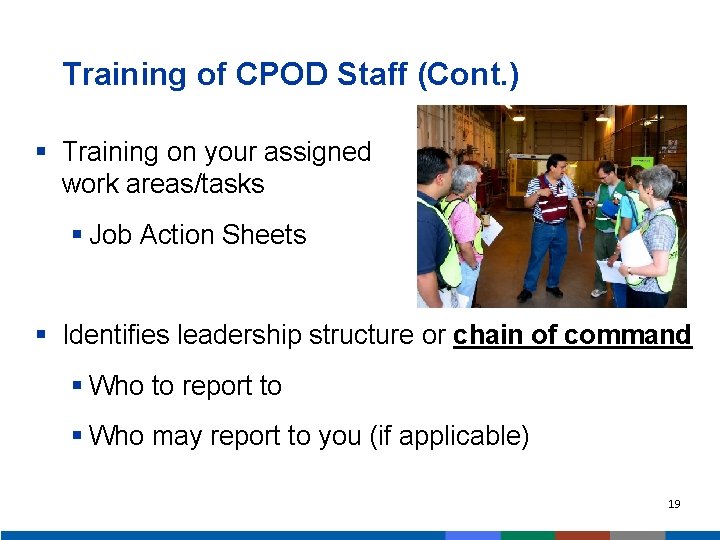
Training of CPOD Staff (Cont. ) § Training on your assigned work areas/tasks § Job Action Sheets § Identifies leadership structure or chain of command § Who to report to § Who may report to you (if applicable) 19
Checkout Procedures § Just-in-time training for next shift § Restocking workstation (as needed) § Reporting requirements fulfilled (if any) § Debriefing § Sign out 20
Thus Far…… § PODs are activated in response to a public health threat. § PODs are pre-identified locations where people receive MCMs to minimize threat effects. § PODs provide MCM quickly to threats with potentially high illness or death rates. § CPODs service a specific population and are closed to the public. § POD staff gets activated and trained to work at a POD site. 21
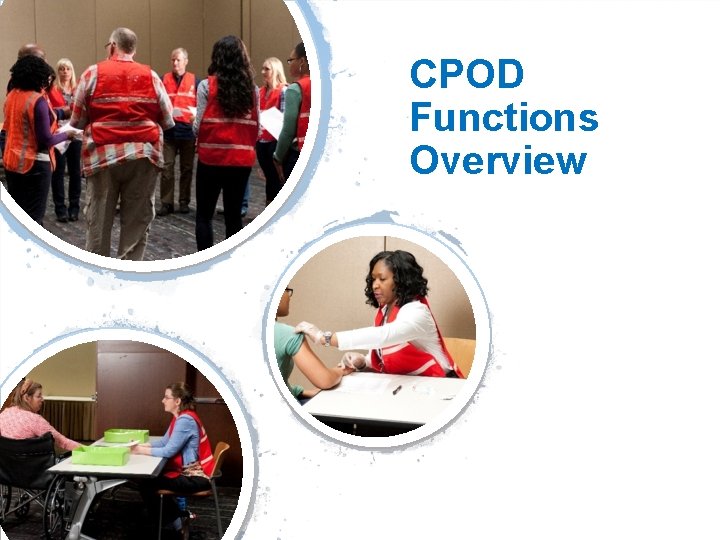
CPOD Functions Overview 22
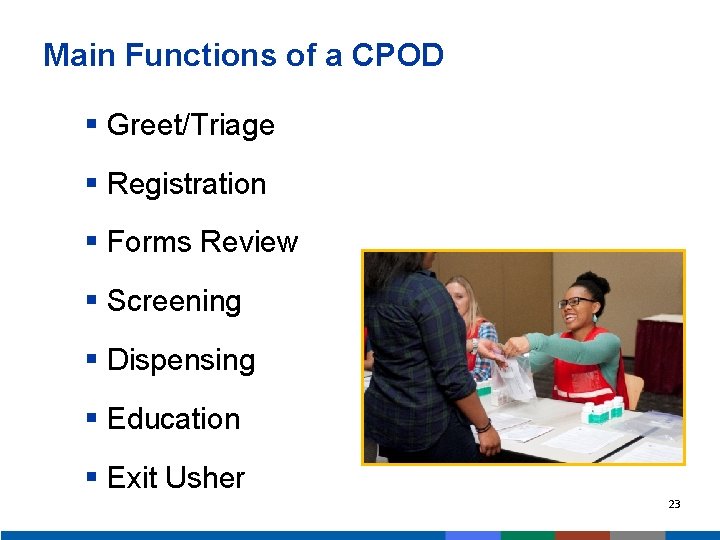
Main Functions of a CPOD § Greet/Triage § Registration § Forms Review § Screening § Dispensing § Education § Exit Usher 23
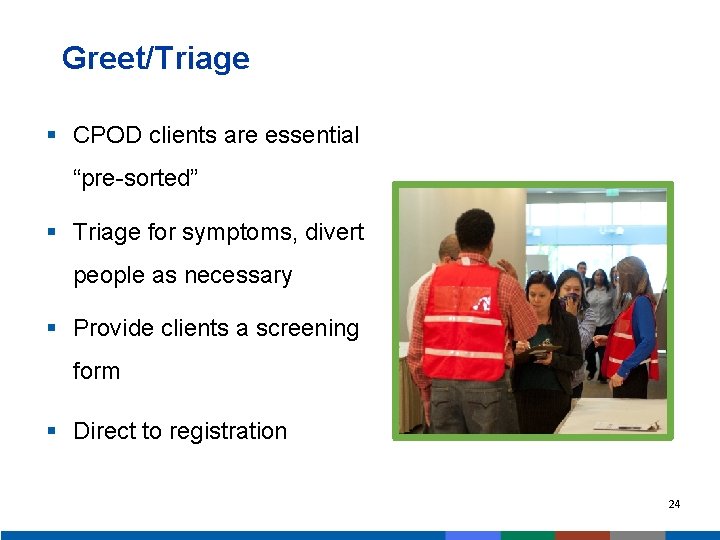
Greet/Triage § CPOD clients are essential “pre-sorted” § Triage for symptoms, divert people as necessary § Provide clients a screening form § Direct to registration 24
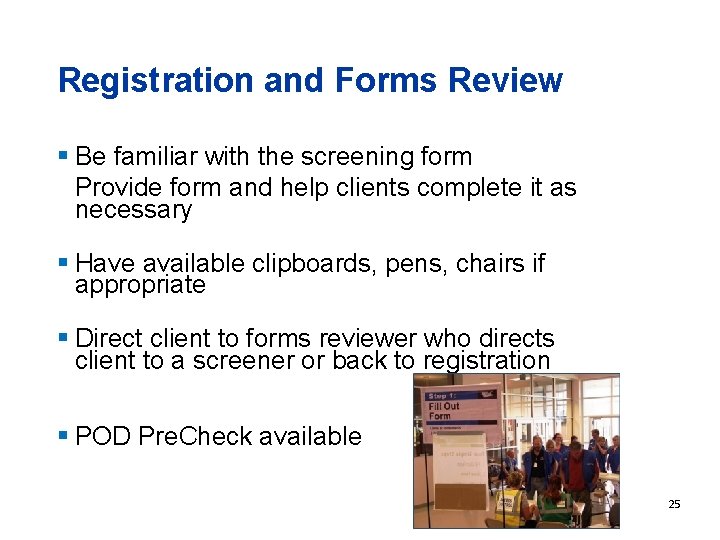
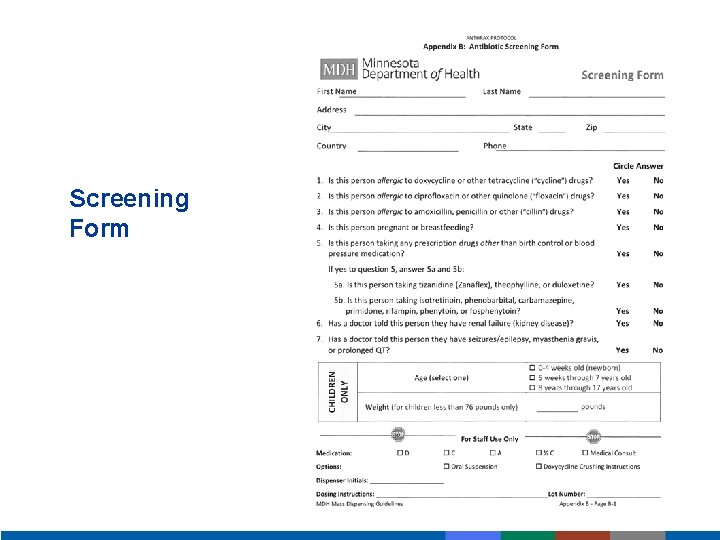
Registration and Forms Review § Be familiar with the screening form Provide form and help clients complete it as necessary § Have available clipboards, pens, chairs if appropriate § Direct client to forms reviewer who directs client to a screener or back to registration § POD Pre. Check available 25 25
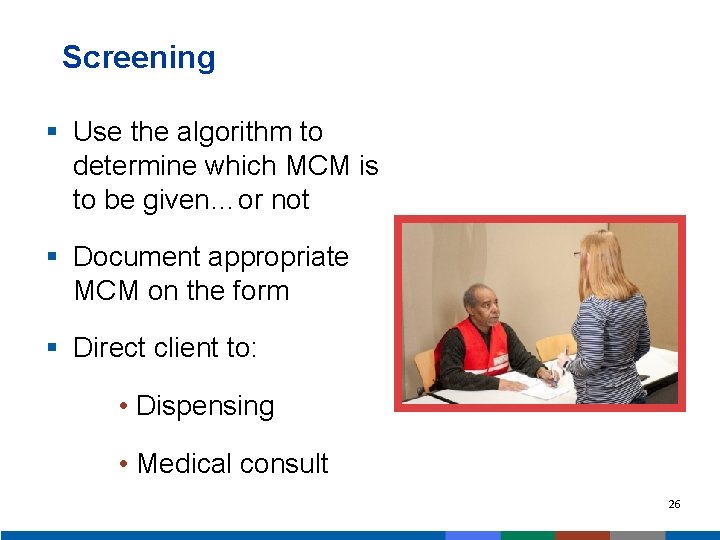
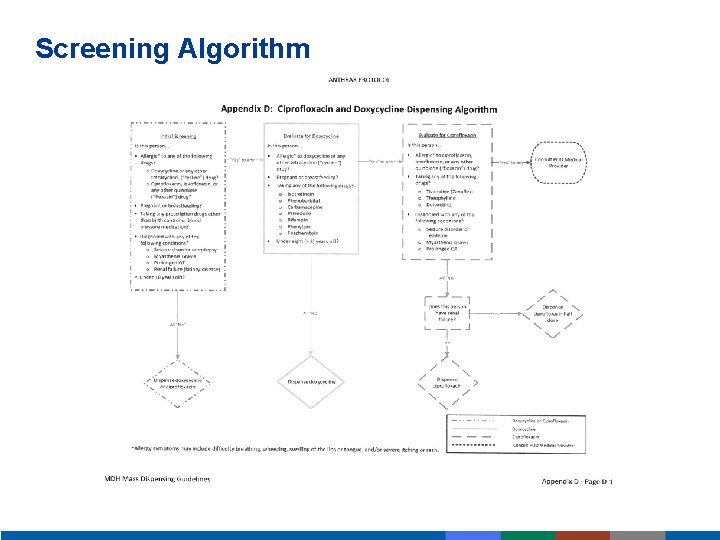
Screening § Use the algorithm to determine which MCM is to be given…or not § Document appropriate MCM on the form § Direct client to: • Dispensing • Medical consult 26
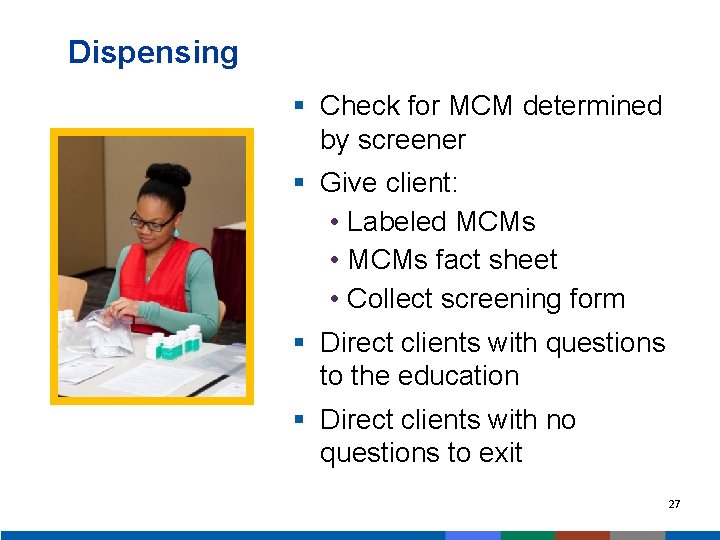
Dispensing § Check for MCM determined by screener § Give client: • Labeled MCMs • MCMs fact sheet • Collect screening form § Direct clients with questions to the education § Direct clients with no questions to exit 27
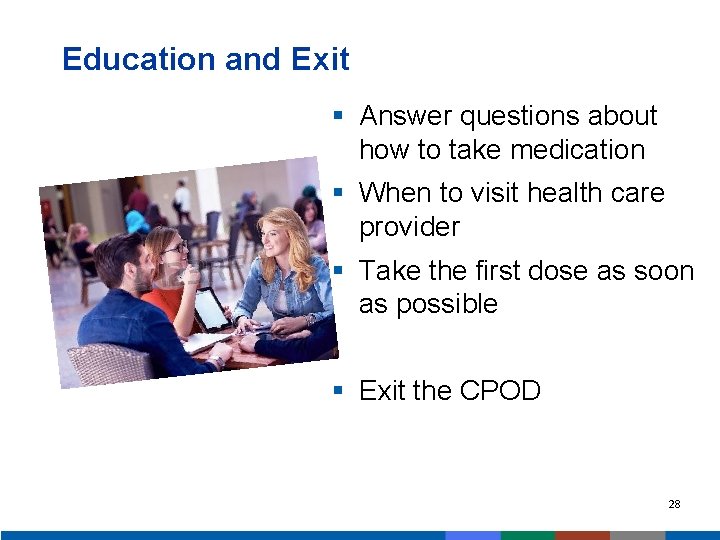
Education and Exit § Answer questions about how to take medication § When to visit health care provider § Take the first dose as soon as possible § Exit the CPOD 28
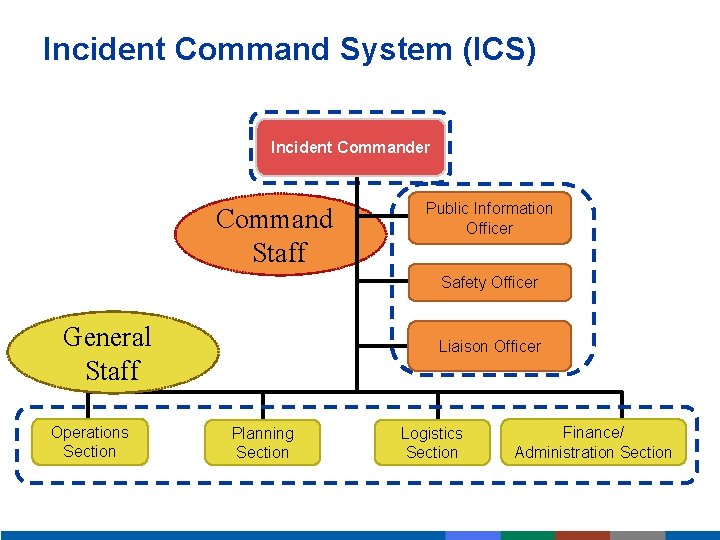
Incident Command System (ICS) Incident Commander Command Staff Public Information Officer Safety Officer General Staff Operations Section Liaison Officer Planning Section Logistics Section Finance/ Administration Section 29
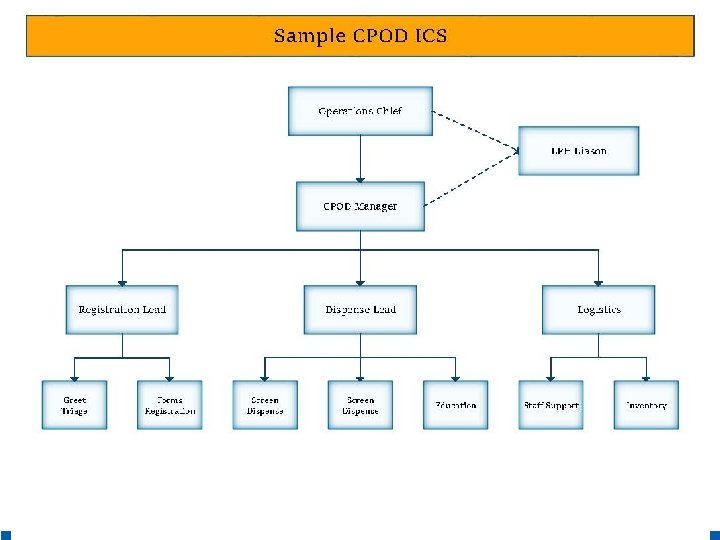
30
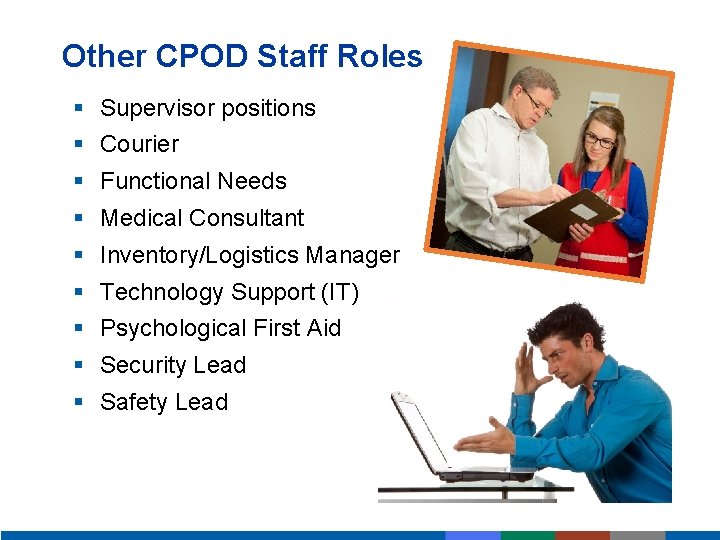
Other CPOD Staff Roles § Supervisor positions § Courier § Functional Needs § Medical Consultant § Inventory/Logistics Manager § Technology Support (IT) § Psychological First Aid § Security Lead § Safety Lead 31
Thus far…… § The main functions of our CPOD include: greeting and triage, registration and forms, screening, dispensing and education. § The Incident Command System can be used for management. § There an array of different roles that support the CPOD functions. 32
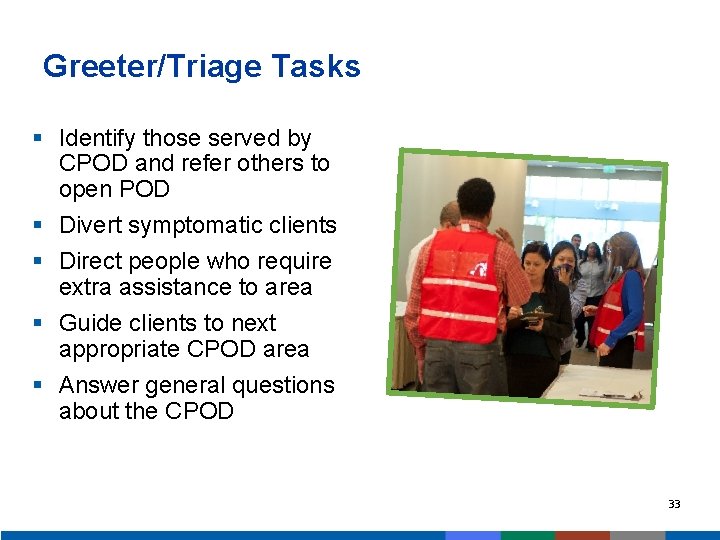
Greeter/Triage Tasks § Identify those served by CPOD and refer others to open POD § Divert symptomatic clients § Direct people who require extra assistance to area § Guide clients to next appropriate CPOD area § Answer general questions about the CPOD 33
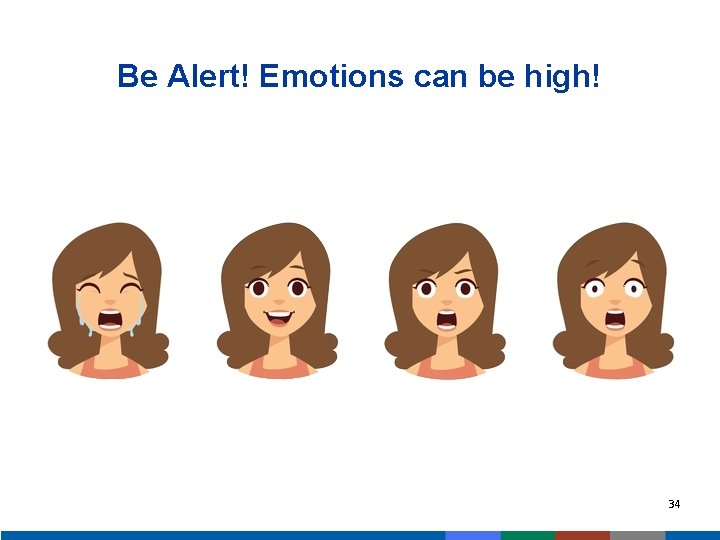
Be Alert! Emotions can be high! 34
Registration and Forms Review Tasks Registration § Help clients complete the screening form § Answer questions about the form § If a functional access need is identified, help the client to get proper assistance § Direct clients to Forms Review § Assist with POD Pre. Check if available Forms Review: § Review form to ensure all questions are answered § If not-ask client to complete the questions § Direct client to Screening when the form is complete 36
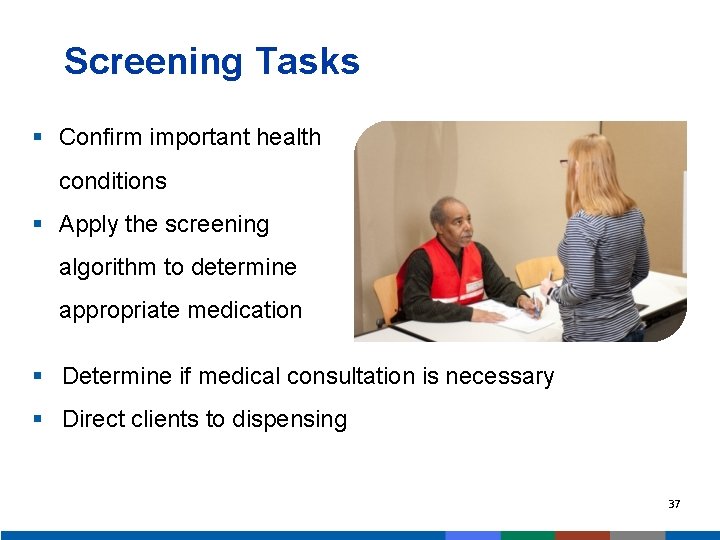
Screening Tasks § Confirm important health conditions § Apply the screening algorithm to determine appropriate medication § Determine if medical consultation is necessary § Direct clients to dispensing 37
Screening Form 38
Screening Algorithm 39
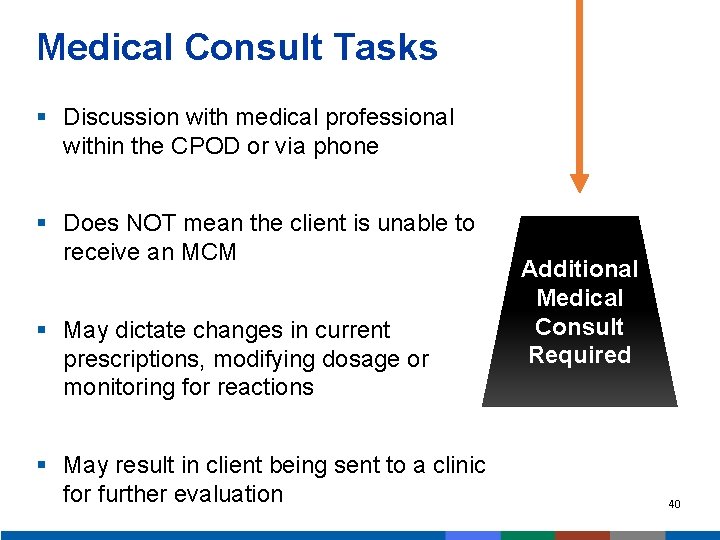
Medical Consult Tasks § Discussion with medical professional within the CPOD or via phone § Does NOT mean the client is unable to receive an MCM § May dictate changes in current prescriptions, modifying dosage or monitoring for reactions § May result in client being sent to a clinic for further evaluation Additional Medical Consult Required 40
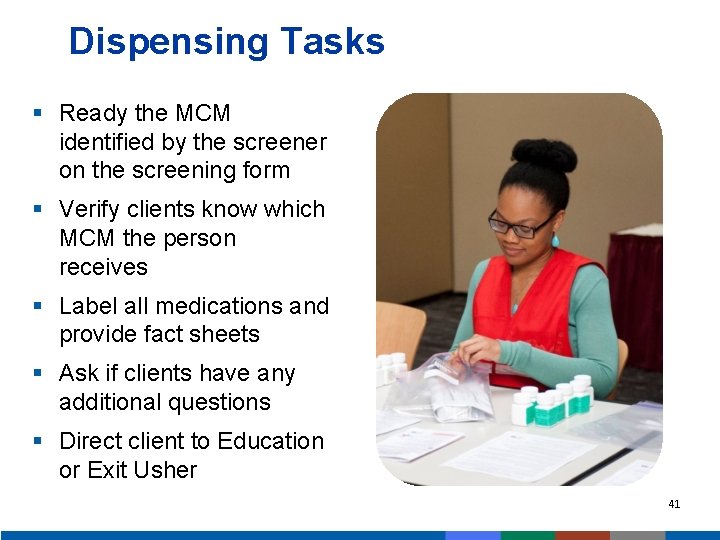
Dispensing Tasks § Ready the MCM identified by the screener on the screening form § Verify clients know which MCM the person receives § Label all medications and provide fact sheets § Ask if clients have any additional questions § Direct client to Education or Exit Usher 41
Education and Exit Usher Tasks § Answer any other questions § Remind people to contact their health care provider if they have questions § Know how to report at adverse event § Encourage people to take the first dose as soon as possible § Direct clients to the exit 42
Process Flow Chart 43
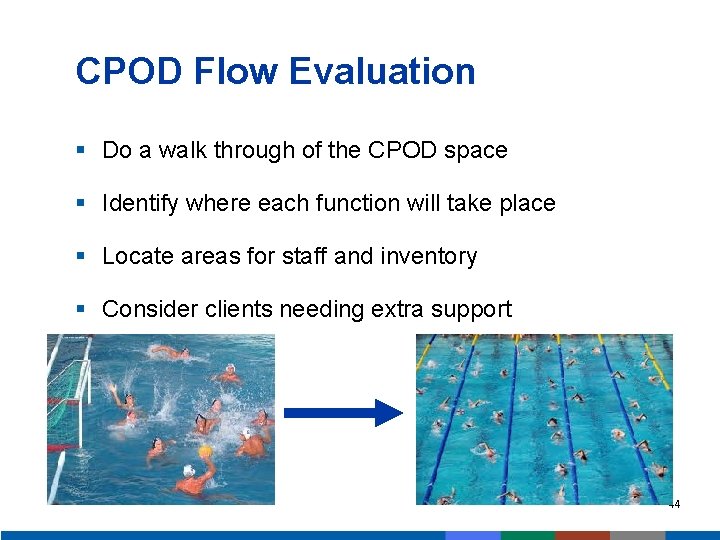
CPOD Flow Evaluation § Do a walk through of the CPOD space § Identify where each function will take place § Locate areas for staff and inventory § Consider clients needing extra support 44
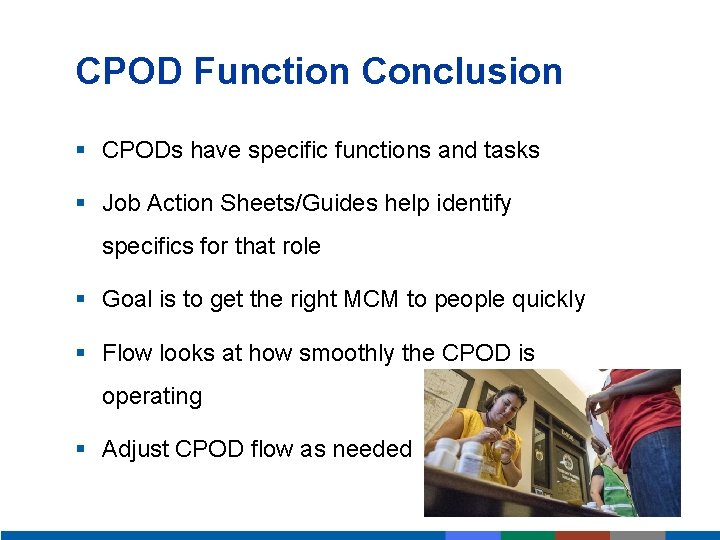
CPOD Function Conclusion § CPODs have specific functions and tasks § Job Action Sheets/Guides help identify specifics for that role § Goal is to get the right MCM to people quickly § Flow looks at how smoothly the CPOD is operating § Adjust CPOD flow as needed 45
CPOD Summary § CPODs get MCM to people quickly during a public health emergency § CPOD allow organizations to dispense to their specific population § CPOD functions ensure the right MCM goes to the person § Local Public Health agencies are here to support POD and CPOD partners 46
Thank you! § Public Health will be in close contact with you throughout the CPOD process § Contact your Local Public Health person for more information 47