
Close Reading and Complex Text ELA I Grades
- Slides: 50
Close Reading and Complex Text ELA I Grades 4– 5 Day 2
We know from experience the hard work teachers face every day as they strive to help their students meet the challenges set by higher standards. We are dedicated to empowering teachers by providing free, high-quality standards-aligned resources for the classroom, the opportunity for immersive training through our Institute, and the option of support through our website offerings. We are a team of current and former classroom teachers, curriculum writers, school leaders, and education experts who have worked in the public, private, and nonprofit sectors. 2
From Foundations in Standards and Shifts Feedback on Feedback Plus Delta 3
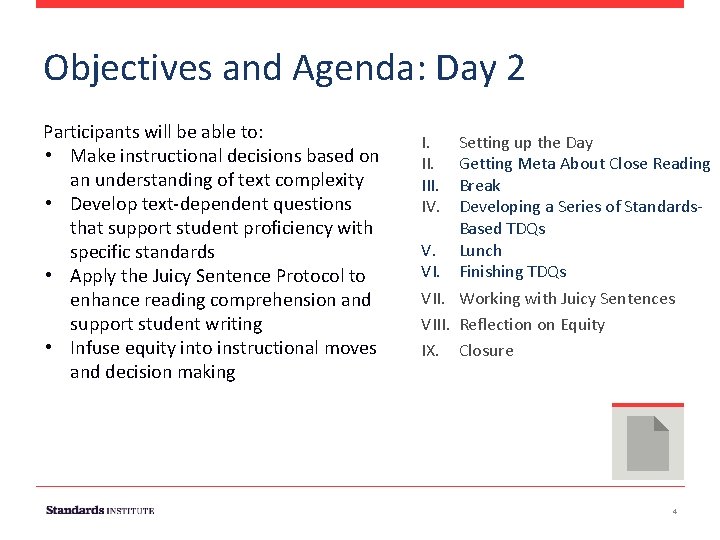
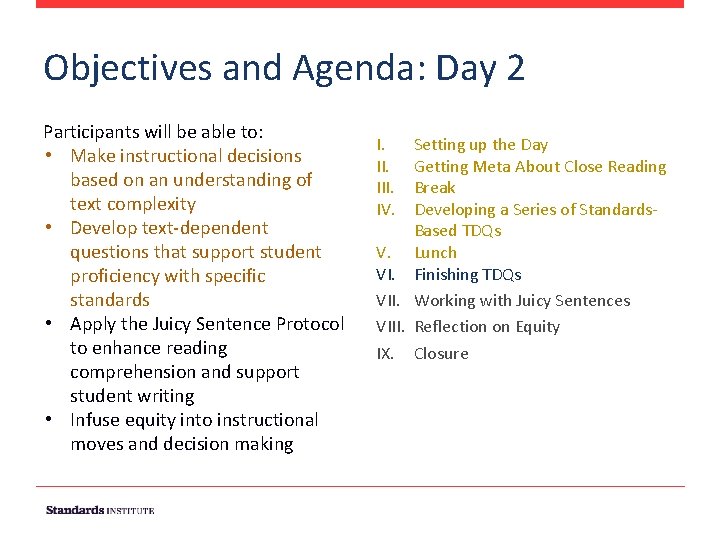
Objectives and Agenda: Day 2 Participants will be able to: • Make instructional decisions based on an understanding of text complexity • Develop text-dependent questions that support student proficiency with specific standards • Apply the Juicy Sentence Protocol to enhance reading comprehension and support student writing • Infuse equity into instructional moves and decision making I. III. IV. Setting up the Day Getting Meta About Close Reading Break Developing a Series of Standards. Based TDQs V. Lunch VI. Finishing TDQs VII. Working with Juicy Sentences VIII. Reflection on Equity IX. Closure 4
Norms that Support Our Learning • Take responsibility for yourself as a learner • Honor time frames (start, end, activity) • Be an active and hands-on learner • Use technology to enhance learning • Strive for equity of voice • Contribute to a learning environment in which it is “safe to not know” 5
Where You Might Be During the Week Inspired by Jennifer Abrams • Moments of Validation • Moments of Reminding • Moments of New Information Notice where you are at any given time and support yourself and others by: Asking Questions Taking Notes Stretching Yourself 6
Debriefing the Keynote Take five minutes to reflect in your journal on one or more of the following prompts: • OPTION A: What are three salient points or ideas that you want to remember from the keynote, and why? • OPTION B: List three questions that this keynote bubbles up about teaching and learning that are immediately relevant to your work. • OPTION C: How did the keynote link to the learning from yesterday, and how does the keynote provide a specific lens through which you read objectives for today? 7
Revisiting Equity • Equity is engaging in practices that meet students where they are and advances their learning by giving them what they need. It’s about fairness, not sameness. • Equity ensures that all children – regardless of circumstances – are receiving high-quality and standards-aligned instruction with access to high-quality materials and resources. • We want to ensure that standards-aligned instruction is a pathway to the equitable practices needed to close the gaps caused by systemic and systematic racism, bias, and poverty. • All week, we will explore our learning through an equity lens, and we will capture those moments visibly here in our room. 8
Student Profile Develop a Student Profile 2 Minutes: • Share • Question • Answer
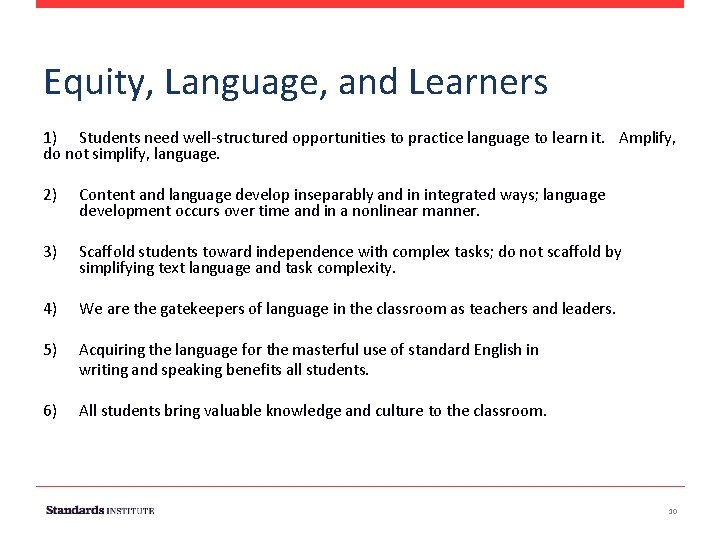
Equity, Language, and Learners 1) Students need well-structured opportunities to practice language to learn it. Amplify, do not simplify, language. 2) Content and language develop inseparably and in integrated ways; language development occurs over time and in a nonlinear manner. 3) Scaffold students toward independence with complex tasks; do not scaffold by simplifying text language and task complexity. 4) We are the gatekeepers of language in the classroom as teachers and leaders. 5) Acquiring the language for the masterful use of standard English in writing and speaking benefits all students. All students bring valuable knowledge and culture to the classroom. 6) 10
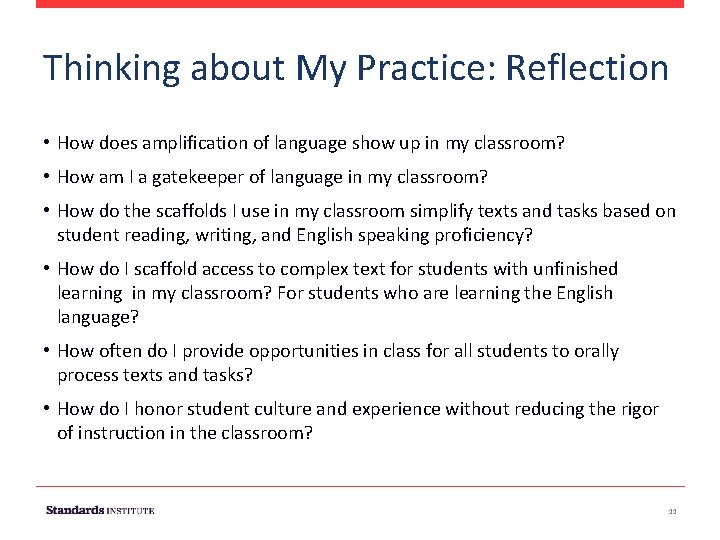
Thinking about My Practice: Reflection • How does amplification of language show up in my classroom? • How am I a gatekeeper of language in my classroom? • How do the scaffolds I use in my classroom simplify texts and tasks based on student reading, writing, and English speaking proficiency? • How do I scaffold access to complex text for students with unfinished learning in my classroom? For students who are learning the English language? • How often do I provide opportunities in class for all students to orally process texts and tasks? • How do I honor student culture and experience without reducing the rigor of instruction in the classroom? 11
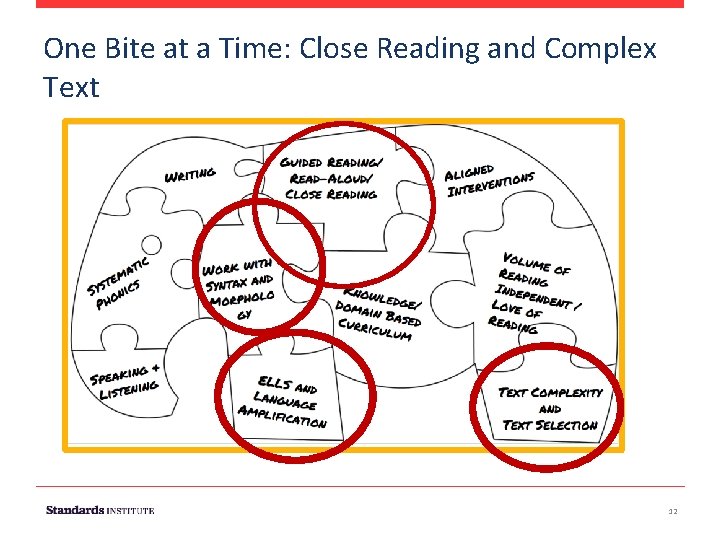
One Bite at a Time: Close Reading and Complex Text 12
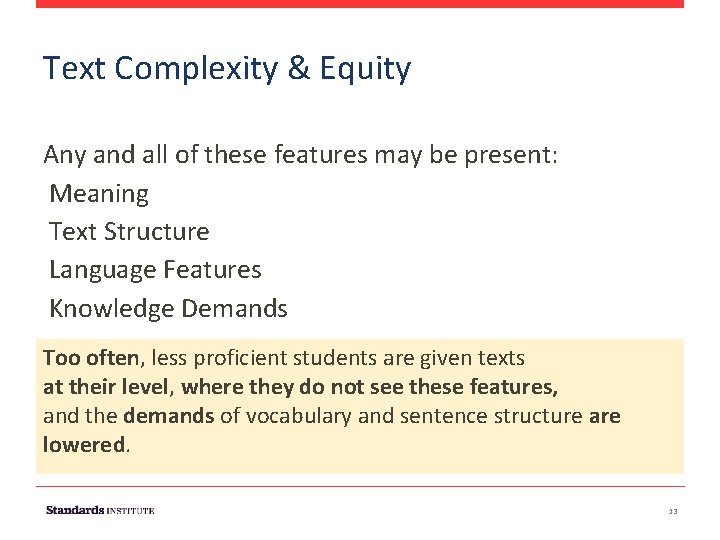
Text Complexity & Equity Any and all of these features may be present: Meaning Text Structure Language Features Knowledge Demands Too often, less proficient students are given texts at their level, where they do not see these features, and the demands of vocabulary and sentence structure are lowered. 13 13
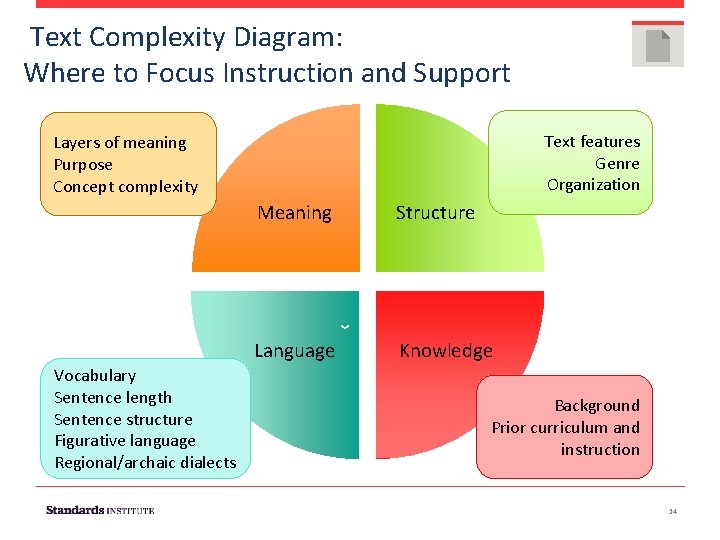
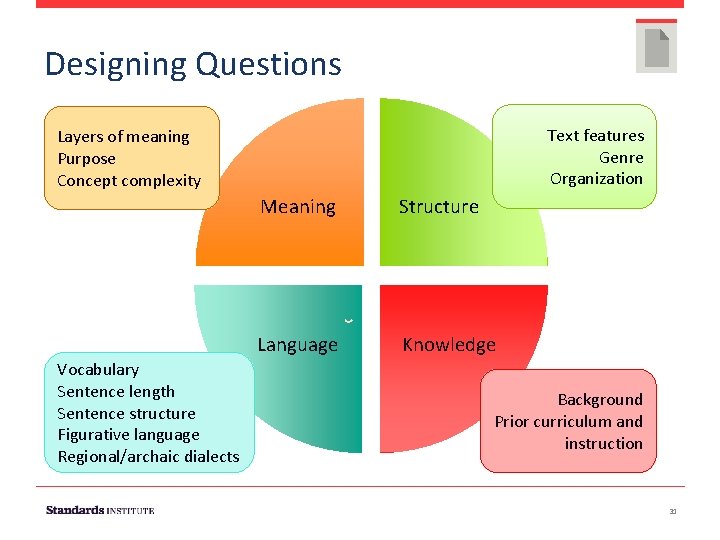
Text Complexity Diagram: Where to Focus Instruction and Support Text features Genre Organization Layers of meaning Purpose Concept complexity Vocabulary Sentence length Sentence structure Figurative language Regional/archaic dialects Meaning Structure Language Knowledge Background Prior curriculum and instruction 14
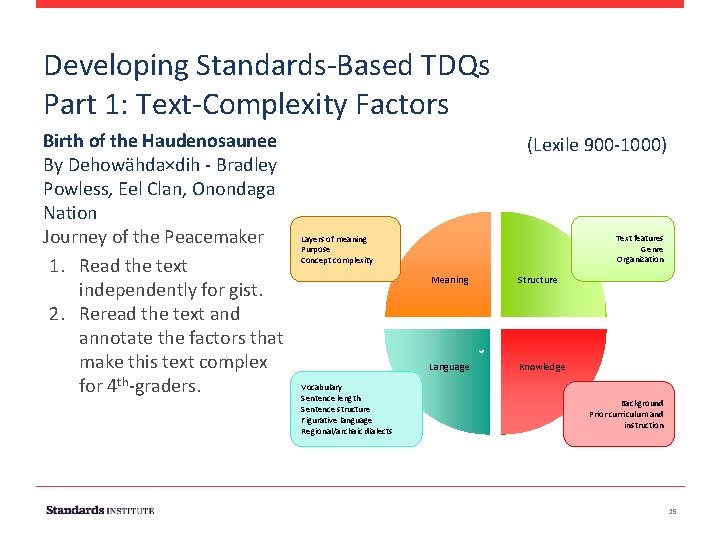
Developing Standards-Based TDQs Part 1: Text-Complexity Factors Birth of the Haudenosaunee By Dehowӓhda×dih - Bradley Powless, Eel Clan, Onondaga Nation Journey of the Peacemaker 1. Read the text independently for gist. 2. Reread the text and annotate the factors that make this text complex for 4 th-graders. (Lexile 900 -1000) Text features Genre Organization Layers of meaning Purpose Concept complexity Vocabulary Sentence length Sentence structure Figurative language Regional/archaic dialects Meaning Structure Language Knowledge Background Prior curriculum and instruction 15
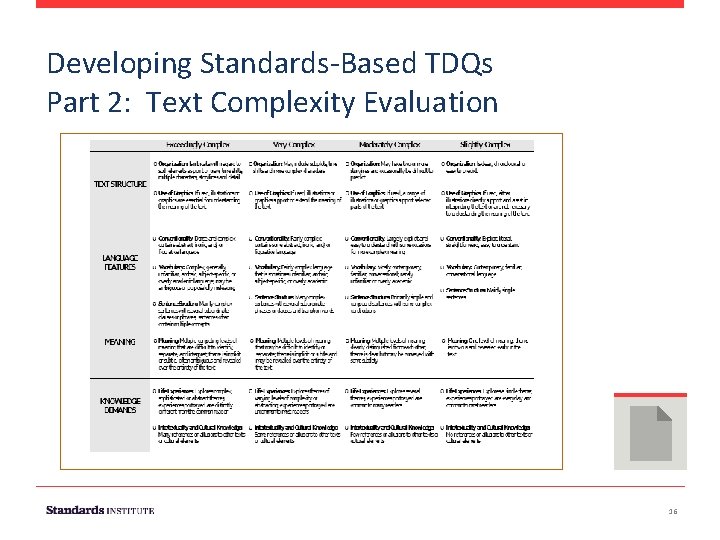
Developing Standards-Based TDQs Part 2: Text Complexity Evaluation 16
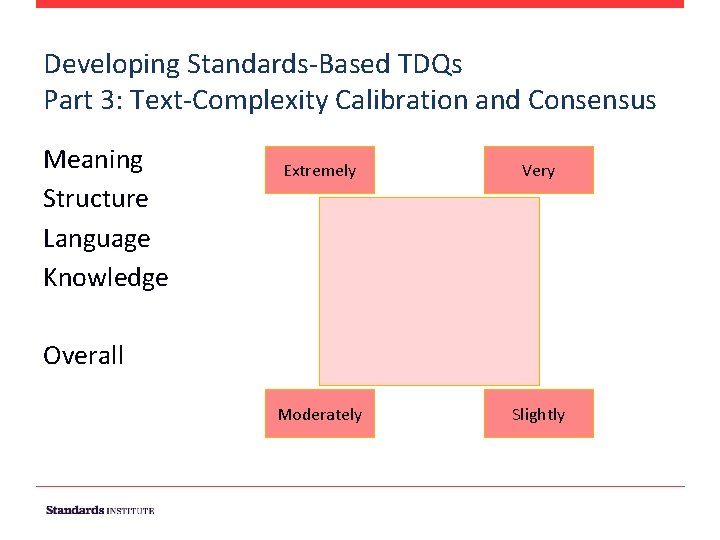
Developing Standards-Based TDQs Part 3: Text-Complexity Calibration and Consensus Meaning Structure Language Knowledge Extremely Very Moderately Slightly Overall
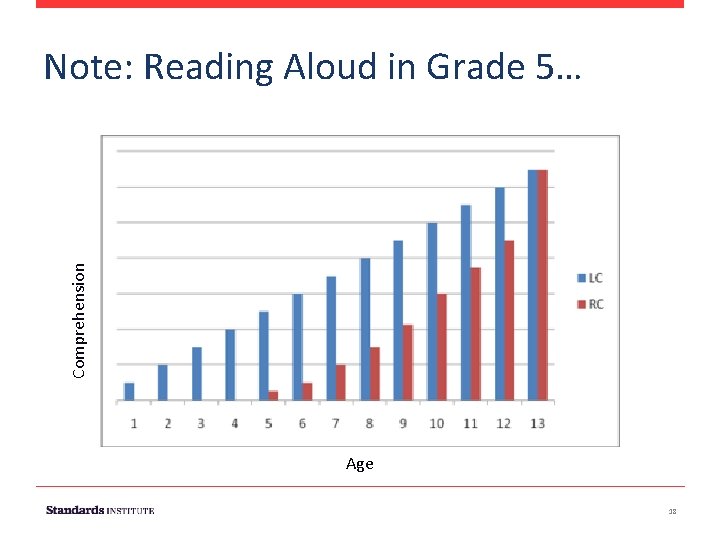
Comprehension Note: Reading Aloud in Grade 5… Age 18
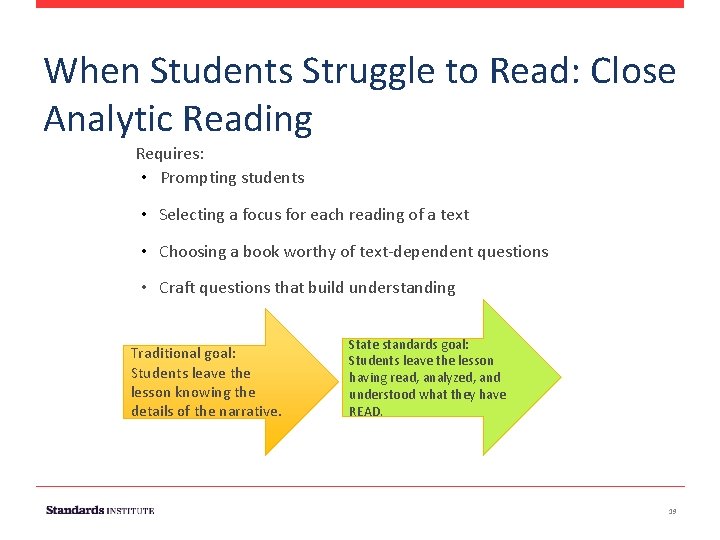
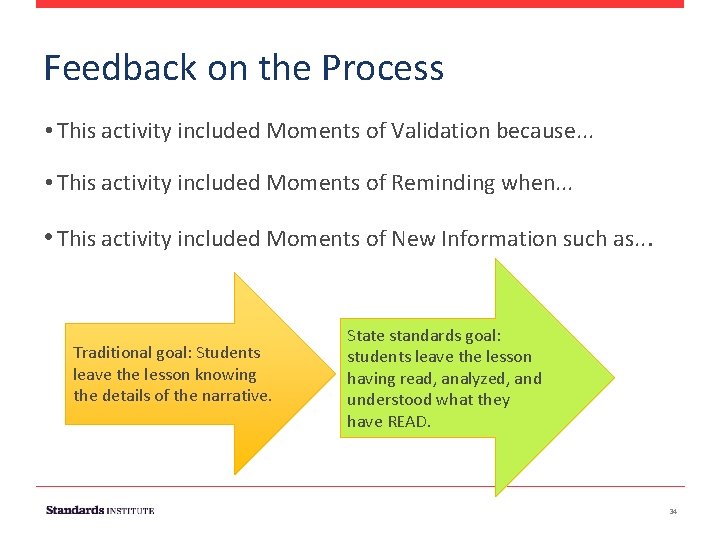
When Students Struggle to Read: Close Analytic Reading Requires: • Prompting students • Selecting a focus for each reading of a text • Choosing a book worthy of text-dependent questions • Craft questions that build understanding Traditional goal: Students leave the lesson knowing the details of the narrative. State standards goal: Students leave the lesson having read, analyzed, and understood what they have READ. 19 19
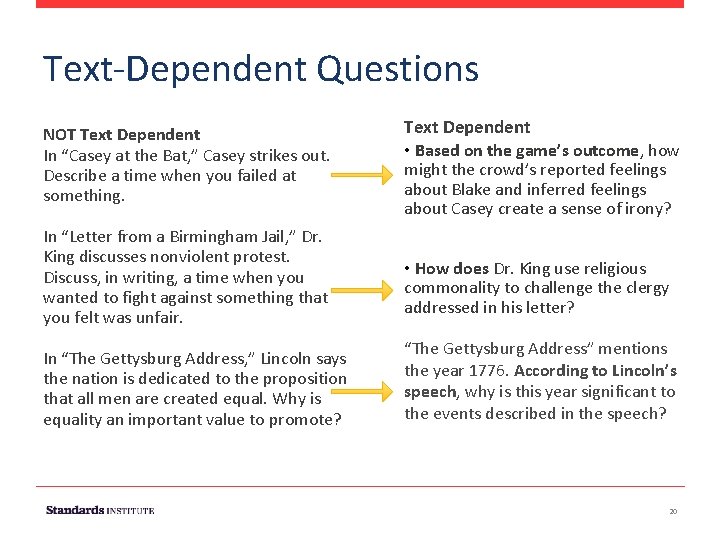
Text-Dependent Questions NOT Text Dependent In “Casey at the Bat, ” Casey strikes out. Describe a time when you failed at something. In “Letter from a Birmingham Jail, ” Dr. King discusses nonviolent protest. Discuss, in writing, a time when you wanted to fight against something that you felt was unfair. In “The Gettysburg Address, ” Lincoln says the nation is dedicated to the proposition that all men are created equal. Why is equality an important value to promote? Text Dependent • Based on the game’s outcome, how might the crowd’s reported feelings about Blake and inferred feelings about Casey create a sense of irony? • How does Dr. King use religious commonality to challenge the clergy addressed in his letter? “The Gettysburg Address” mentions the year 1776. According to Lincoln’s speech, why is this year significant to the events described in the speech? 20
Creating Questions for Close Analytic Reading: TDQs • • • Think about. . . Create. . . Integrate … Develop. . . Build. . . Find. . . Think About: • • • Equity is engaging in practices that meet students where they are and advances their learning by giving them what they need. It’s about fairness, not sameness. Equity ensures that all children – regardless of circumstances – are receiving high-quality and standardsaligned instruction with access to highquality materials and resources. Scaffold students toward independence with complex tasks; do not scaffold by simplifying text language and task complexity. 21
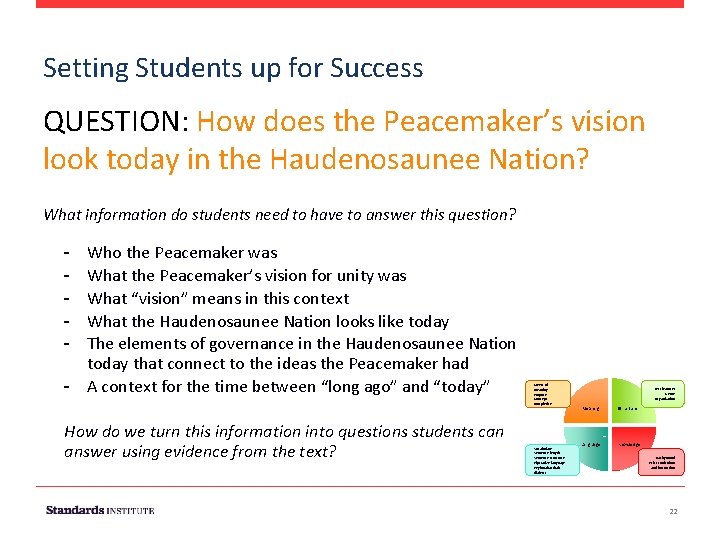
Setting Students up for Success QUESTION: How does the Peacemaker’s vision look today in the Haudenosaunee Nation? What information do students need to have to answer this question? Who the Peacemaker was What the Peacemaker’s vision for unity was What “vision” means in this context What the Haudenosaunee Nation looks like today The elements of governance in the Haudenosaunee Nation today that connect to the ideas the Peacemaker had - A context for the time between “long ago” and “today” - How do we turn this information into questions students can answer using evidence from the text? Layers of meaning Purpose Concept complexity Vocabulary Sentence length Sentence structure Figurative language Regional/archaic dialects Text features Genre Organization Meaning Structure Language Knowledge Background Prior curriculum and instruction 22
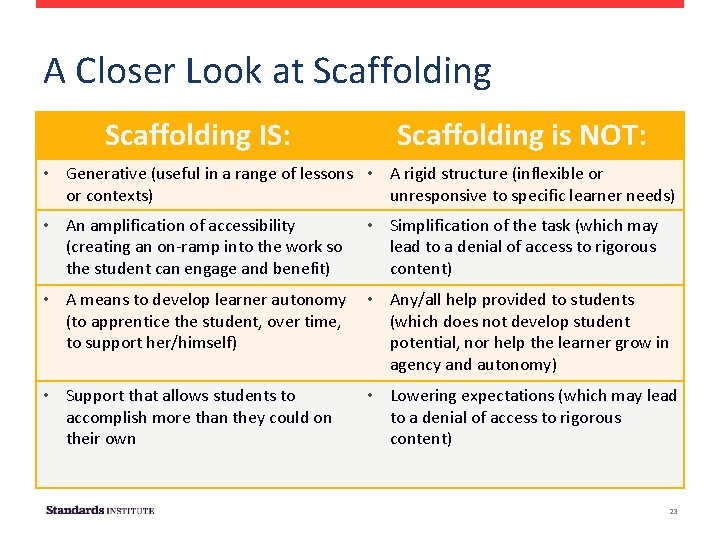
A Closer Look at Scaffolding IS: Scaffolding is NOT: • Generative (useful in a range of lessons • A rigid structure (inflexible or or contexts) unresponsive to specific learner needs) • An amplification of accessibility (creating an on-ramp into the work so the student can engage and benefit) • Simplification of the task (which may lead to a denial of access to rigorous content) • A means to develop learner autonomy • Any/all help provided to students (to apprentice the student, over time, (which does not develop student to support her/himself) potential, nor help the learner grow in agency and autonomy) • Support that allows students to accomplish more than they could on their own • Lowering expectations (which may lead to a denial of access to rigorous content) 23
Morning Take-Aways 24
Lunch
Objectives and Agenda: Day 2 Participants will be able to: • Make instructional decisions based on an understanding of text complexity • Develop text-dependent questions that support student proficiency with specific standards • Apply the Juicy Sentence Protocol to enhance reading comprehension and support student writing • Infuse equity into instructional moves and decision making I. III. IV. Setting up the Day Getting Meta About Close Reading Break Developing a Series of Standards. Based TDQs V. Lunch VI. Finishing TDQs VII. Working with Juicy Sentences VIII. Reflection on Equity IX. Closure
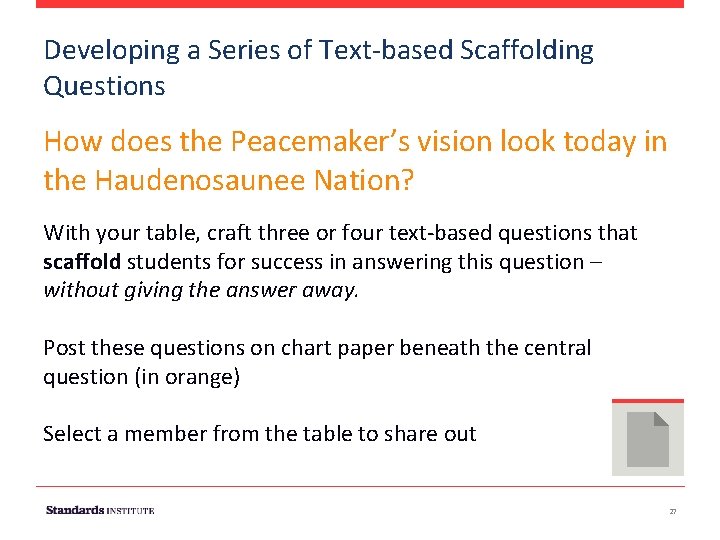
Developing a Series of Text-based Scaffolding Questions How does the Peacemaker’s vision look today in the Haudenosaunee Nation? With your table, craft three or four text-based questions that scaffold students for success in answering this question – without giving the answer away. Post these questions on chart paper beneath the central question (in orange) Select a member from the table to share out 27
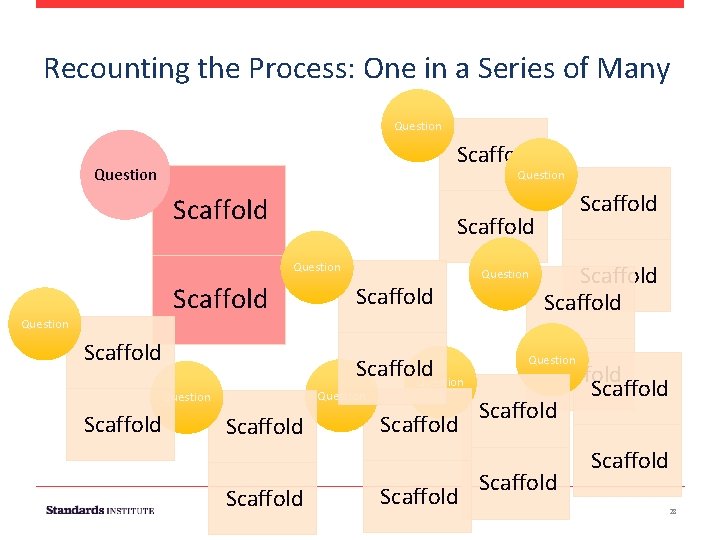
Recounting the Process: One in a Series of Many Question Scaffold Question Scaffold Question Scaffold Scaffold Question Scaffold Scaffold 28
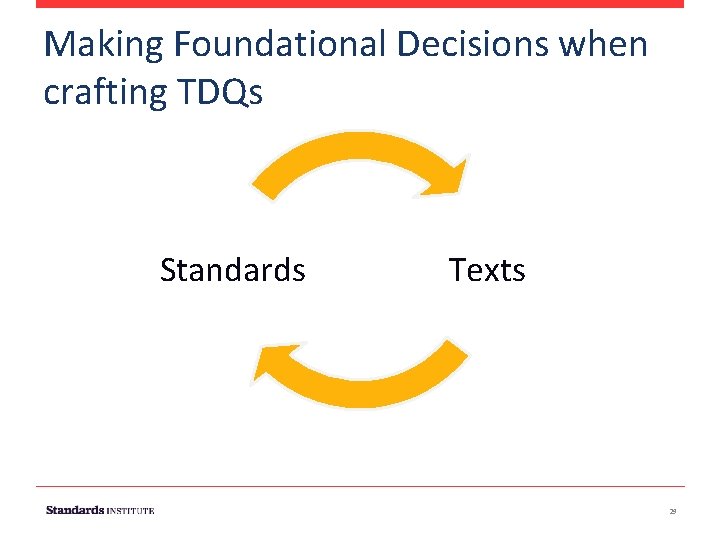
Making Foundational Decisions when crafting TDQs Standards Texts 29
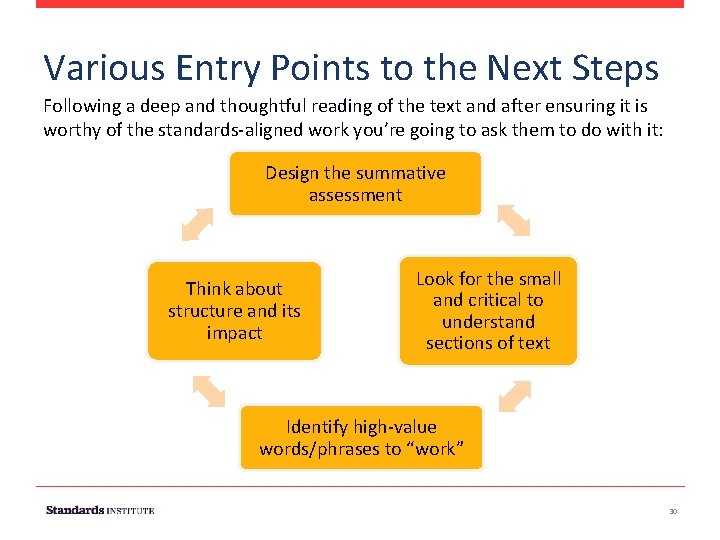
Various Entry Points to the Next Steps Following a deep and thoughtful reading of the text and after ensuring it is worthy of the standards-aligned work you’re going to ask them to do with it: Design the summative assessment Think about structure and its impact Look for the small and critical to understand sections of text Identify high-value words/phrases to “work” 30
Designing Questions Text features Genre Organization Layers of meaning Purpose Concept complexity Vocabulary Sentence length Sentence structure Figurative language Regional/archaic dialects Meaning Structure Language Knowledge Background Prior curriculum and instruction 31
Let’s Practice: Introducing Haudenosaunee as a Counternarrative The tight spot: your students have just completed a unit on the history of the Native Americans. This has left many students with an understanding only of Native Americans in the past, and they are grappling with the fact that Native Americans cultures are alive today in North America. The text: You have chosen to use The Birth of the Haudenosaunee to reflect that, written by a contemporary Haudenosaunee. The task: Create a text dependent question that addresses the entirety of the standard assigned to you using the full text or a specific excerpt. If you have time, create scaffolding questions to support students as they work toward answering the question, without giving the answer away. The time: 25 minutes 32
Connecting on the Questions 1 6 5 Share Compare Assess 2 3 4 33
Feedback on the Process • This activity included Moments of Validation because. . . • This activity included Moments of Reminding when. . . • This activity included Moments of New Information such as. . . Traditional goal: Students leave the lesson knowing the details of the narrative. State standards goal: students leave the lesson having read, analyzed, and understood what they have READ. 34
Juicy Sentences: Getting Deeper Text Part 1: Digging Deeper into Comprehension and Complexity What happens when students struggle with making sense of sentences that are critical to reaching an overall comprehension? • Fluent reading is basically reading at a sensible rate so you can making meaning from the words as you read. • Fluent reading does not ensure comprehension. • Lack of fluent reading ensures lack of comprehension. 35
A Propensity for Density The language used in complex texts differs enough from the English familiar to most students in that it constitutes a barrier to understanding when they first encounter it in the texts they read in school. This becomes critical in the fourth grade and beyond when the texts children read take on a different pedagogical function…. . . To communicate complex ideas and information calls for the lexical and grammatical resources of mature discourse – students must master these if they are to succeed in school and career. From “Understanding Language: What does text complexity mean for English Language Learners and Language Minority Students” Lily Wong Filmore, Charles Filmore 36
Juicy Sentences Part 2: Syntax Read the definition of syntax on the “Syntax 1818” handout. Craft your own definition of syntax based on what you read. 37
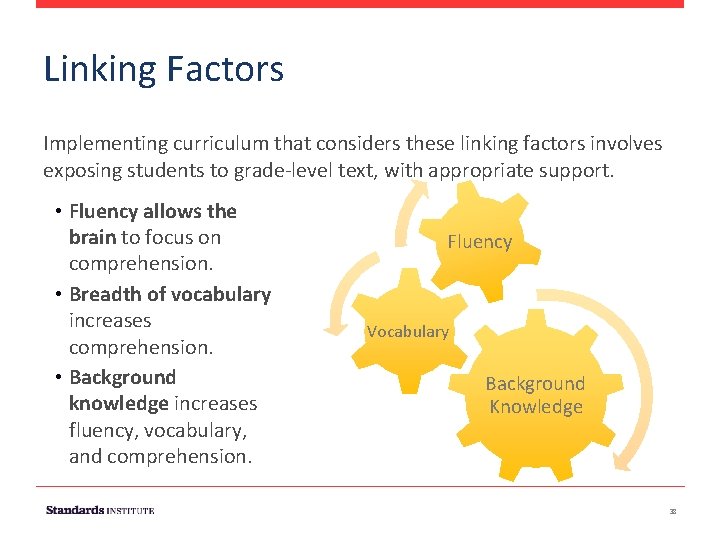
Linking Factors Implementing curriculum that considers these linking factors involves exposing students to grade-level text, with appropriate support. • Fluency allows the brain to focus on comprehension. • Breadth of vocabulary increases comprehension. • Background knowledge increases fluency, vocabulary, and comprehension. Fluency Vocabulary Background Knowledge 38
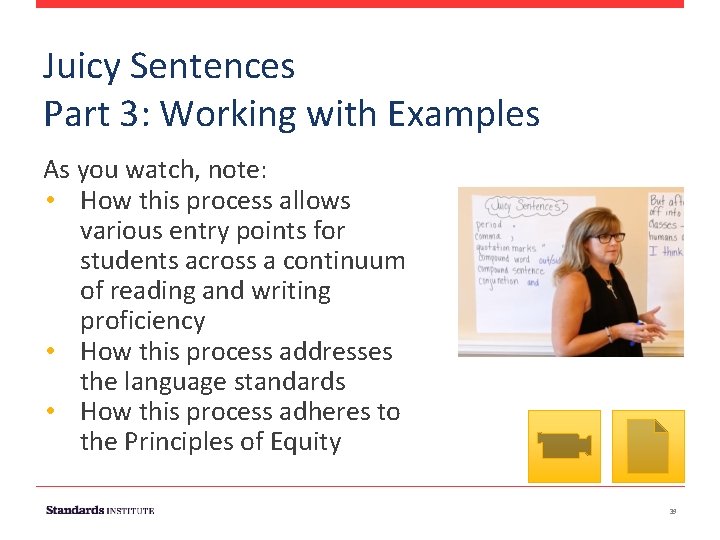
Juicy Sentences Part 3: Working with Examples As you watch, note: • How this process allows various entry points for students across a continuum of reading and writing proficiency • How this process addresses the language standards • How this process adheres to the Principles of Equity 39
Break: 15 Minutes
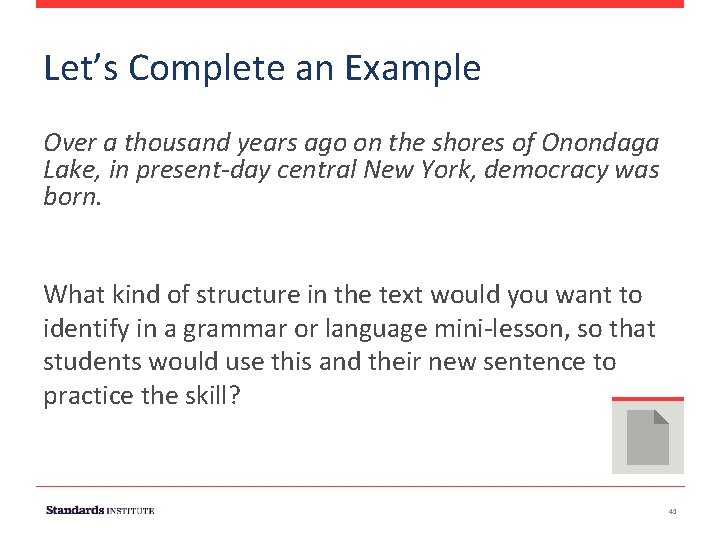
Let’s Complete an Example Over a thousand years ago on the shores of Onondaga Lake, in present-day central New York, democracy was born. What kind of structure in the text would you want to identify in a grammar or language mini-lesson, so that students would use this and their new sentence to practice the skill? 41
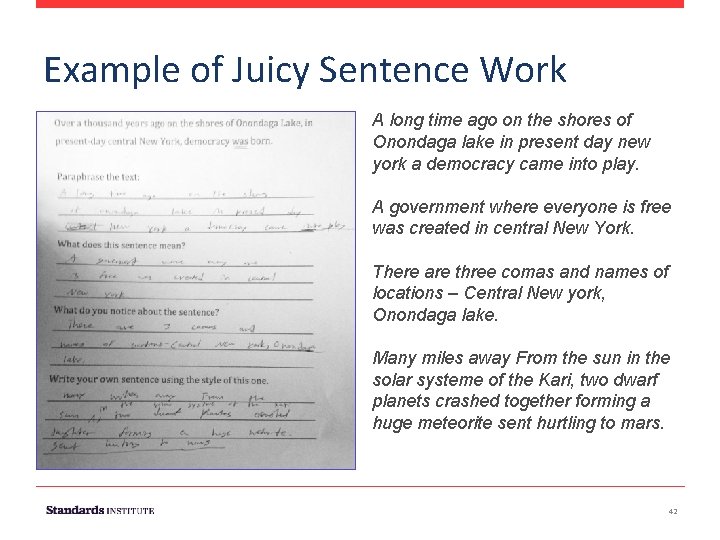
Example of Juicy Sentence Work A long time ago on the shores of Onondaga lake in present day new york a democracy came into play. A government where everyone is free was created in central New York. There are three comas and names of locations – Central New york, Onondaga lake. Many miles away From the sun in the solar systeme of the Kari, two dwarf planets crashed together forming a huge meteorite sent hurtling to mars. 42
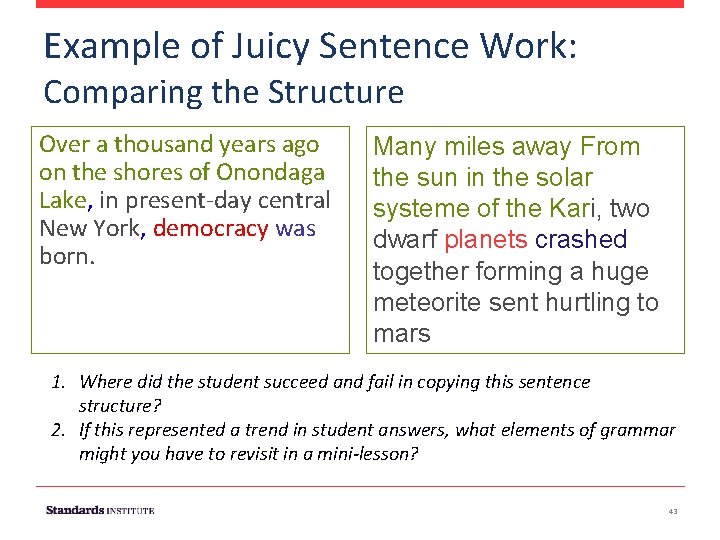
Example of Juicy Sentence Work: Comparing the Structure Over a thousand years ago on the shores of Onondaga Lake, in present-day central New York, democracy was born. Many miles away From the sun in the solar systeme of the Kari, two dwarf planets crashed together forming a huge meteorite sent hurtling to mars 1. Where did the student succeed and fail in copying this sentence structure? 2. If this represented a trend in student answers, what elements of grammar might you have to revisit in a mini-lesson? 43
Sharing Thinking About Juicy Sentences Juicy Sentence: Copy down yours • Why did you choose this sentence? • What language and/or language standard(s) does it lend itself to? • What reading standard does it best address? • What teaching opportunities could it provide? How does this sentence help students better understand the text? 44
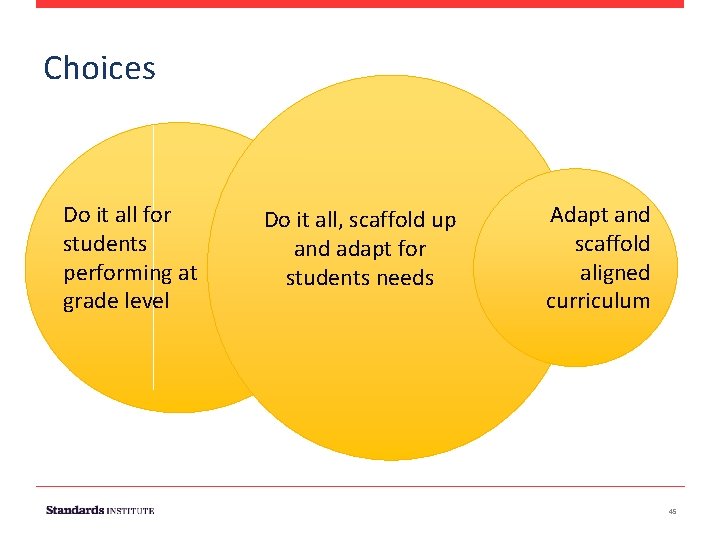
Choices Do it all for students performing at grade level Do it all, scaffold up and adapt for students needs Adapt and scaffold aligned curriculum 45
Revisiting Thinking about My Practice Reflection Review your Reflection and Student Profile from this morning. In the three remaining spaces, answer the following: ● Two adjustments I can make immediately in the classroom based on today’s learning ● Two adjustments I can make to address the Principles of Equity and/or the Equity, Language, and Learners Principles in my classroom, instruction, or planning. ● How would these adjustments help the student I described in my profile? 46
Day 2: Have we met our objectives? Are we now better prepared to: • Make instructional decisions based on an understanding of text complexity? • Develop text-dependent questions that support student proficiency with specific standards? • Apply the Juicy Sentence Protocol to enhance reading comprehension and support student writing? • Infuse equity into instructional moves and decision making? 47
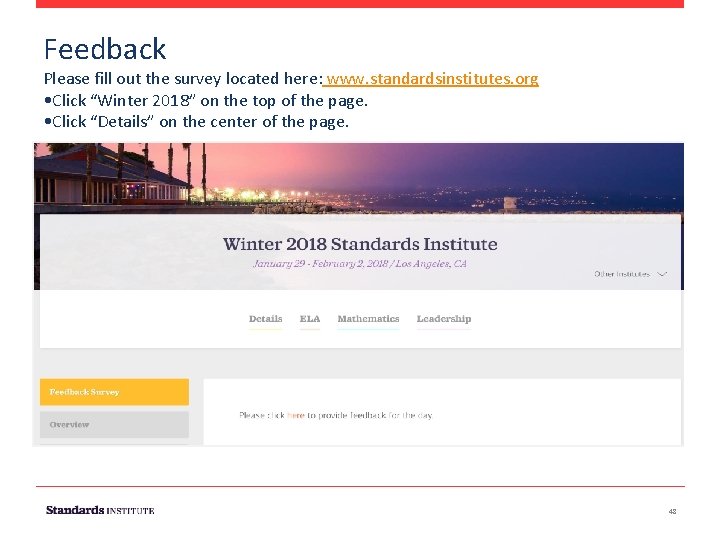
Feedback Please fill out the survey located here: www. standardsinstitutes. org • Click “Winter 2018” on the top of the page. • Click “Details” on the center of the page. 48
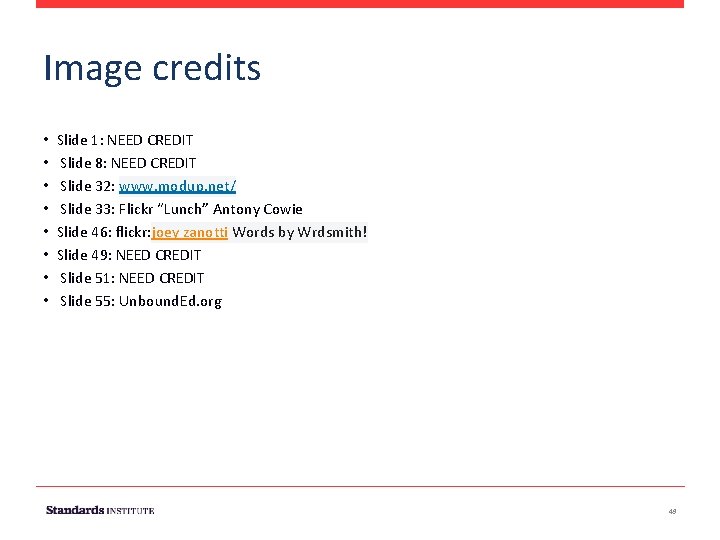
Image credits • • Slide 1: NEED CREDIT Slide 8: NEED CREDIT Slide 32: www. modup. net/ Slide 33: Flickr “Lunch” Antony Cowie Slide 46: flickr: joey zanotti Words by Wrdsmith! Slide 49: NEED CREDIT Slide 51: NEED CREDIT Slide 55: Unbound. Ed. org 49
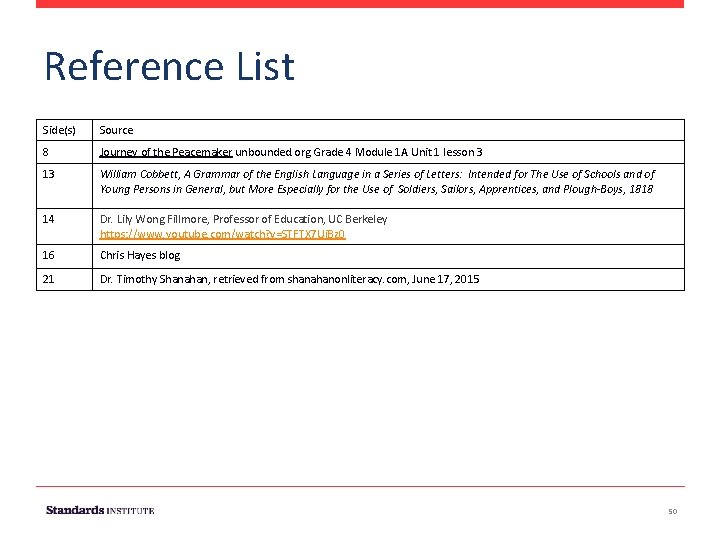
Reference List Side(s) Source 8 Journey of the Peacemaker unbounded. org Grade 4 Module 1 A Unit 1 lesson 3 13 William Cobbett, A Grammar of the English Language in a Series of Letters: Intended for The Use of Schools and of Young Persons in General, but More Especially for the Use of Soldiers, Sailors, Apprentices, and Plough-Boys, 1818 14 Dr. Lily Wong Fillmore, Professor of Education, UC Berkeley https: //www. youtube. com/watch? v=STFTX 7 Ui. Bz 0 16 Chris Hayes blog 21 Dr. Timothy Shanahan, retrieved from shanahanonliteracy. com, June 17, 2015 50