
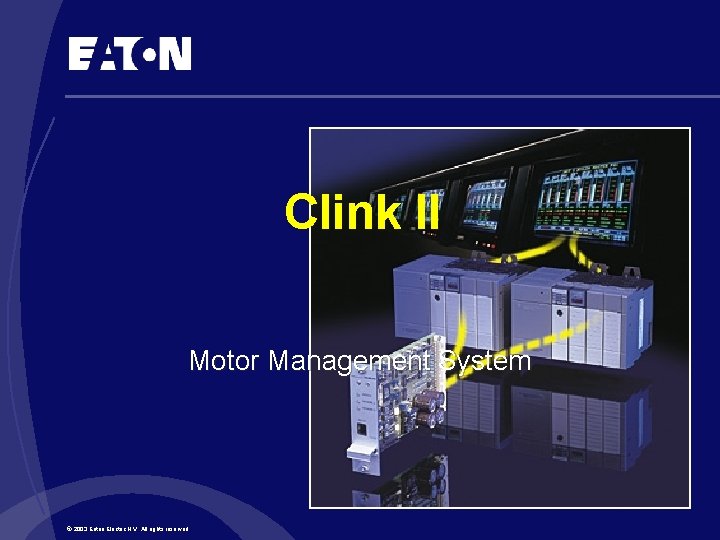
Clink II Motor Management System 2003 Eaton Electric
- Slides: 48
Clink II Motor Management System © 2003 Eaton Electric N. V. All rights reserved.
Clink II History of Eaton Holec Motor Management Systems: l 1985 CIT l 1993 Clink l 1999 Clink. II
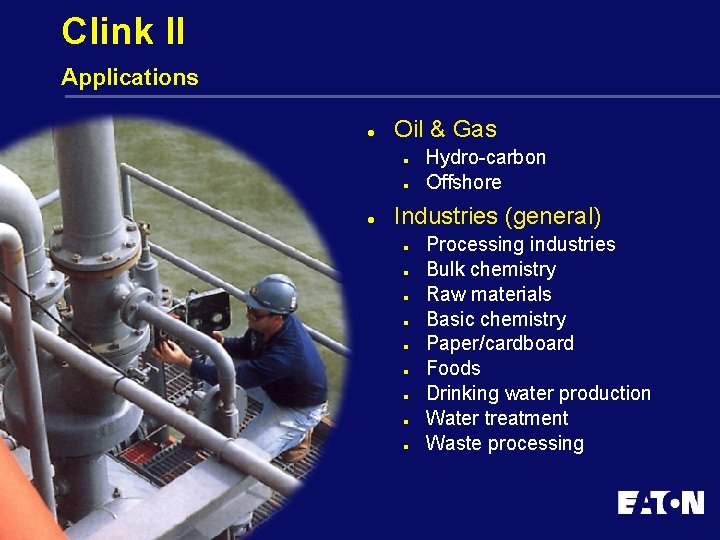
Clink II Applications l Oil & Gas n n l Hydro-carbon Offshore Industries (general) n n n n n Processing industries Bulk chemistry Raw materials Basic chemistry Paper/cardboard Foods Drinking water production Water treatment Waste processing
Clink II References Oil & Gas n n n n ADMA-OPCO BSP Isla Refinary Ceska Khalda Phillips SSB NAM + Shell SPDC PDO PSPC SEPC GNOPC Thai Shell EP Qatar Kentz. Qatar Abu Dhabi Brunei Curacao Czech Rep. Egypt Great Britain Malaysia Netherlands Nigeria Oman Philippines Singapore Sudan Thailand
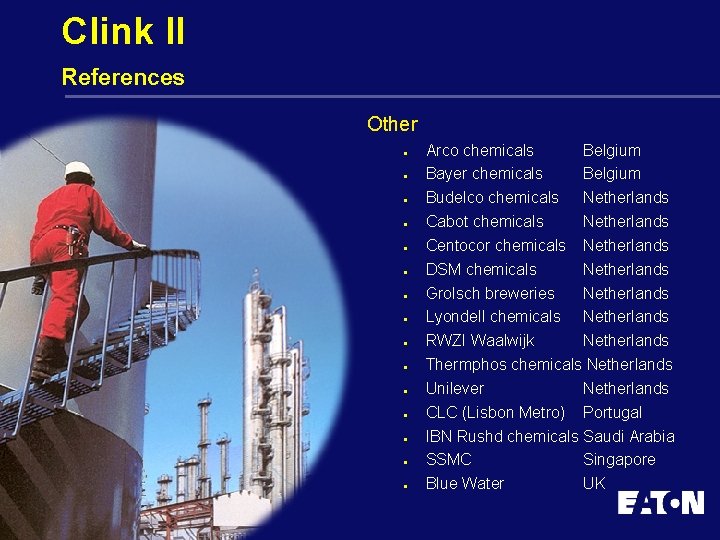
Clink II References Other n n n n Arco chemicals Belgium Bayer chemicals Belgium Budelco chemicals Netherlands Cabot chemicals Netherlands Centocor chemicals Netherlands DSM chemicals Netherlands Grolsch breweries Netherlands Lyondell chemicals Netherlands RWZI Waalwijk Netherlands Thermphos chemicals Netherlands Unilever Netherlands CLC (Lisbon Metro) Portugal IBN Rushd chemicals Saudi Arabia SSMC Singapore Blue Water UK
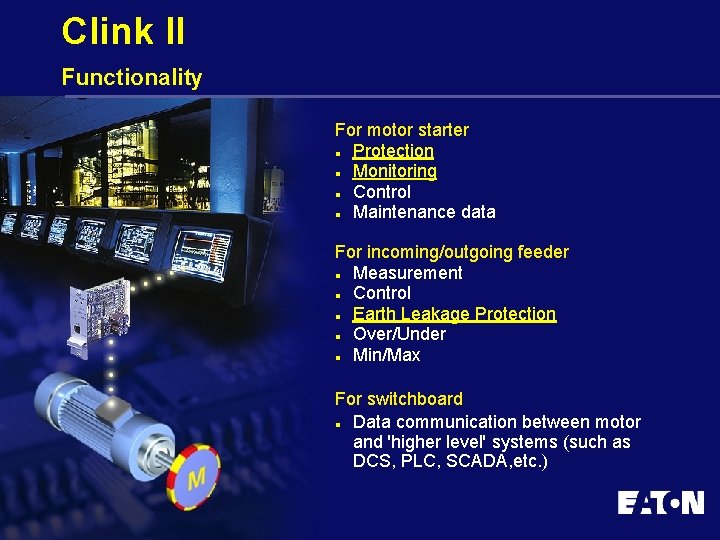
Clink II Functionality For motor starter l Protection l Monitoring l Control l Maintenance data For incoming/outgoing feeder l Measurement l Control l Earth Leakage Protection l Over/Under l Min/Max For switchboard l Data communication between motor and 'higher level' systems (such as DCS, PLC, SCADA, etc. )
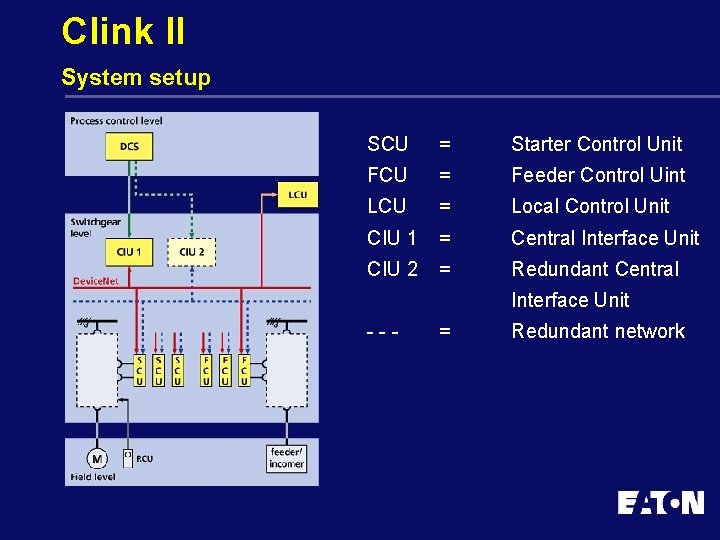
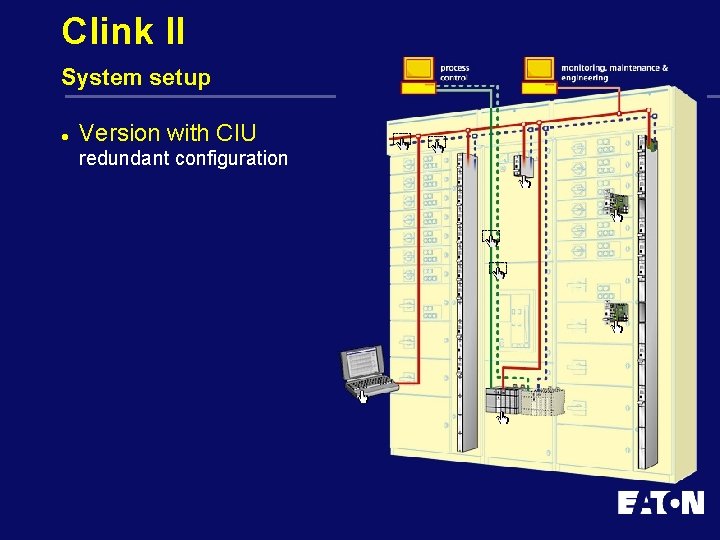
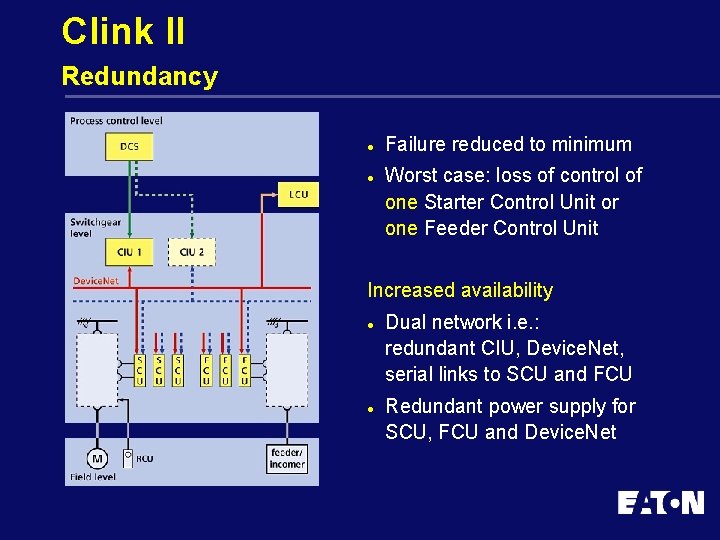
Clink II System setup SCU = Starter Control Unit FCU = Feeder Control Uint LCU = Local Control Unit CIU 1 = Central Interface Unit CIU 2 = Redundant Central Interface Unit --- = Redundant network
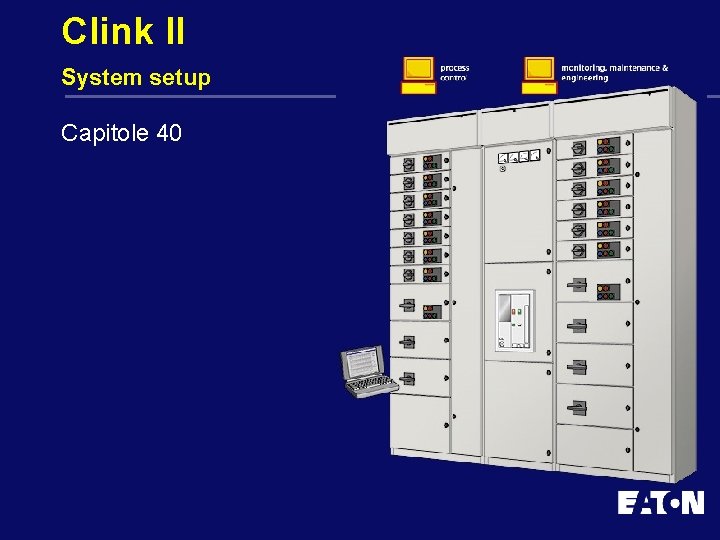
Clink II System setup Capitole 40
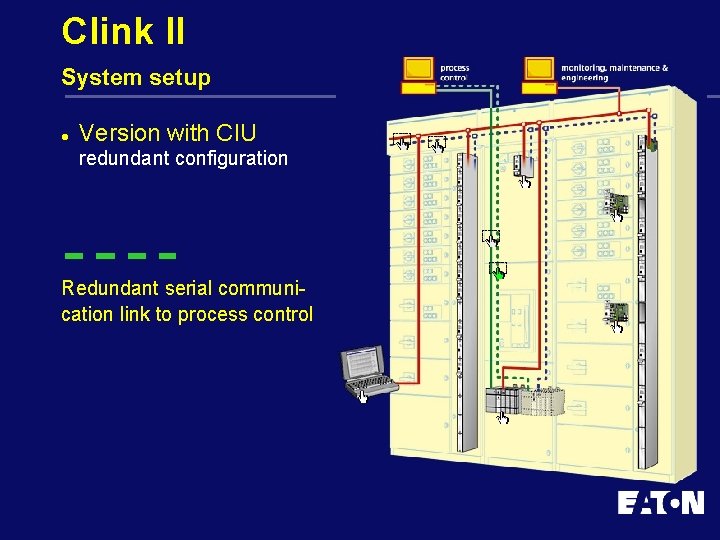
Clink II System setup l Version with CIU redundant configuration
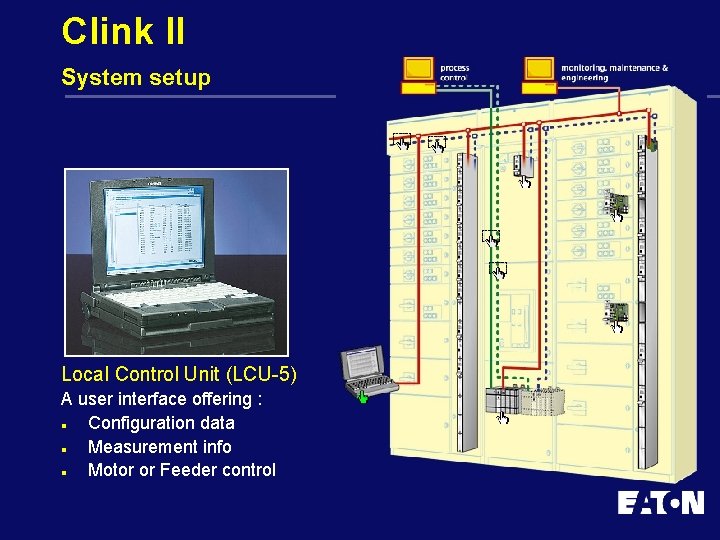
Clink II System setup Local Control Unit (LCU-5) A user interface offering : l Configuration data l Measurement info l Motor or Feeder control
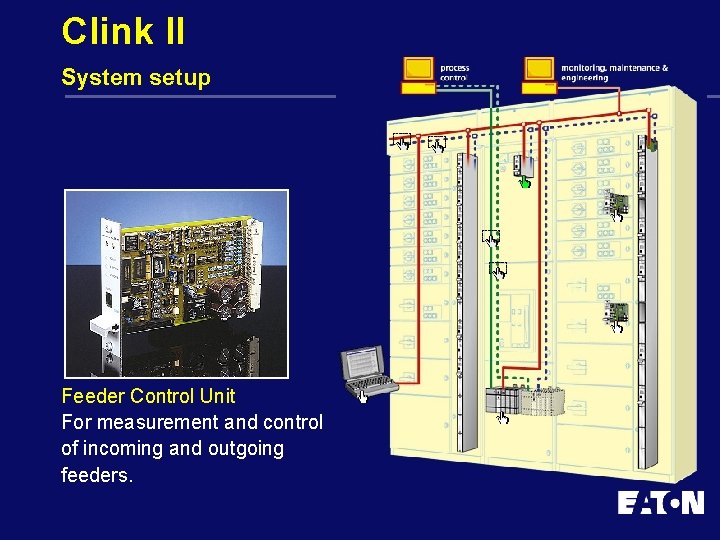
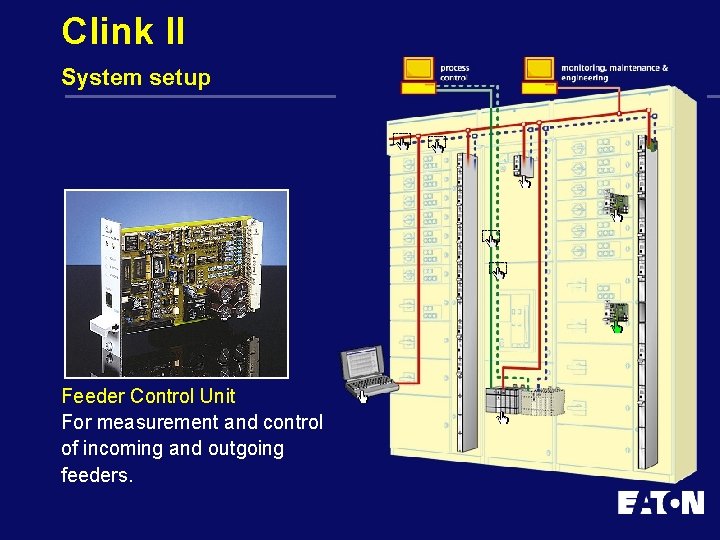
Clink II System setup Feeder Control Unit For measurement and control of incoming and outgoing feeders.
Clink II System setup Feeder Control Unit For measurement and control of incoming and outgoing feeders.
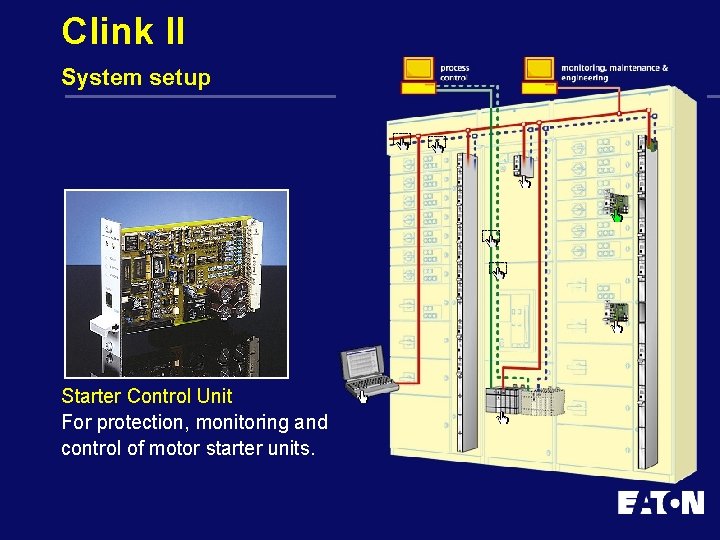
Clink II System setup Starter Control Unit For protection, monitoring and control of motor starter units.
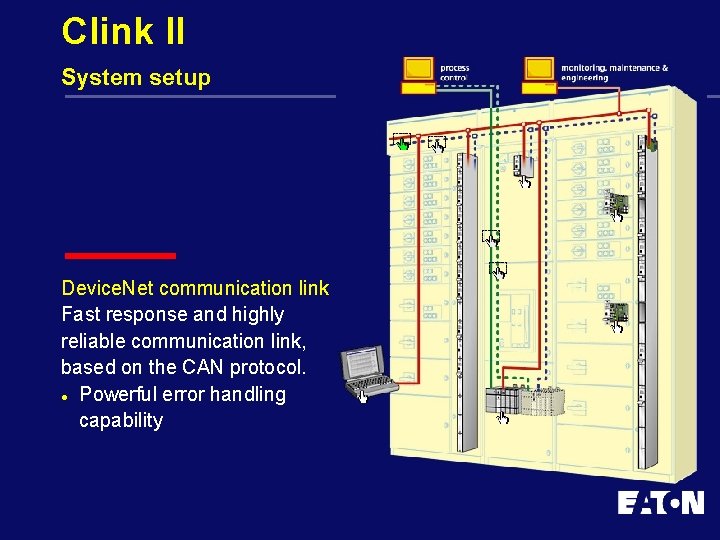
Clink II System setup Device. Net communication link Fast response and highly reliable communication link, based on the CAN protocol. l Powerful error handling capability
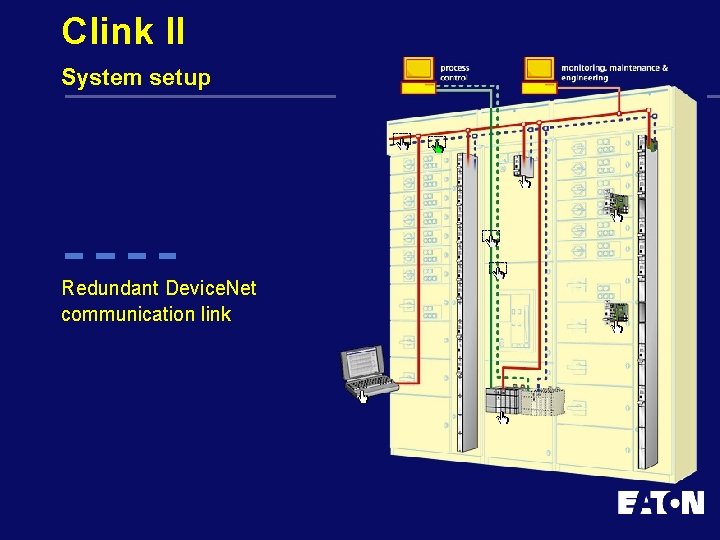
Clink II System setup Redundant Device. Net communication link
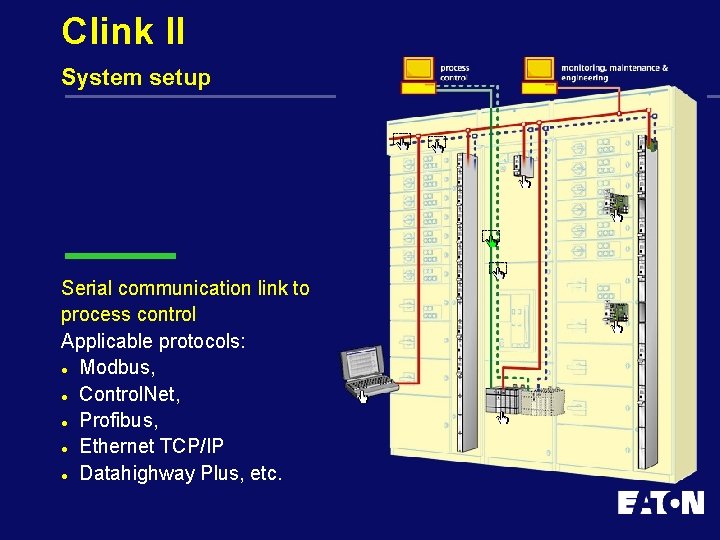
Clink II System setup Serial communication link to process control Applicable protocols: l Modbus, l Control. Net, l Profibus, l Ethernet TCP/IP l Datahighway Plus, etc.
Clink II System setup l Version with CIU redundant configuration Redundant serial communication link to process control
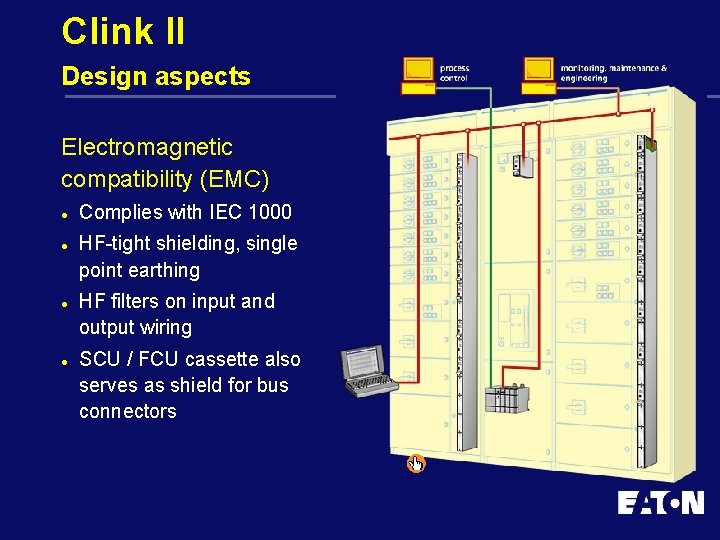
Clink II Design aspects Electromagnetic compatibility (EMC) l l Complies with IEC 1000 HF-tight shielding, single point earthing HF filters on input and output wiring SCU / FCU cassette also serves as shield for bus connectors
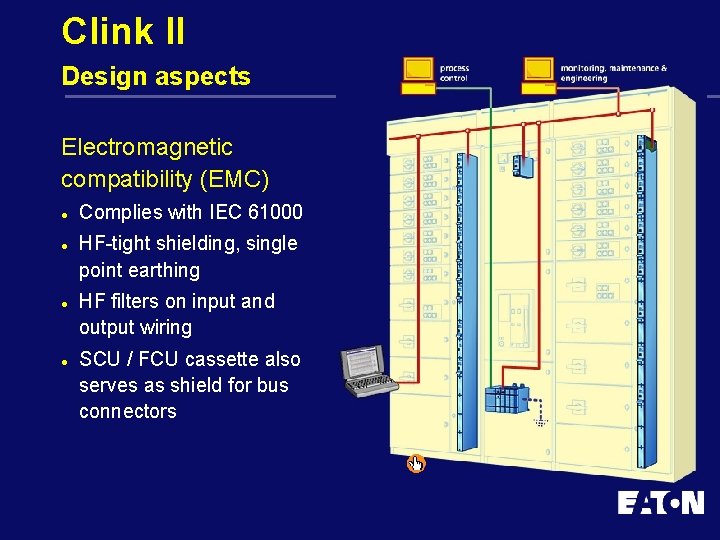
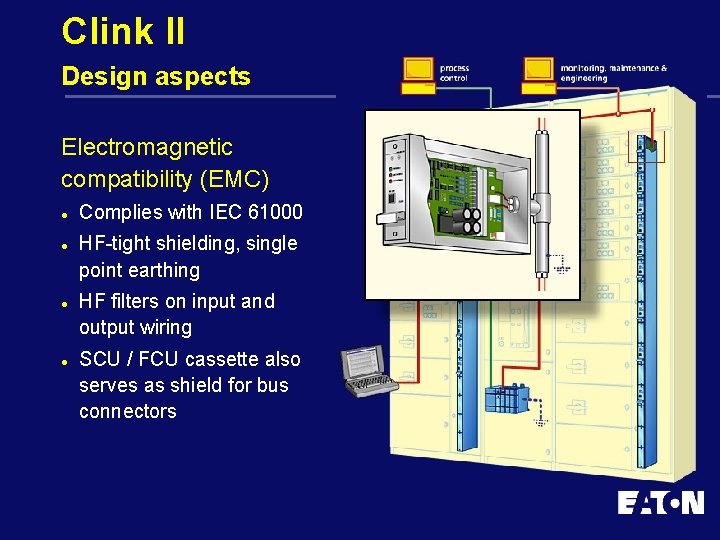
Clink II Design aspects Electromagnetic compatibility (EMC) l l Complies with IEC 61000 HF-tight shielding, single point earthing HF filters on input and output wiring SCU / FCU cassette also serves as shield for bus connectors
Clink II Design aspects Electromagnetic compatibility (EMC) l l Complies with IEC 61000 HF-tight shielding, single point earthing HF filters on input and output wiring SCU / FCU cassette also serves as shield for bus connectors
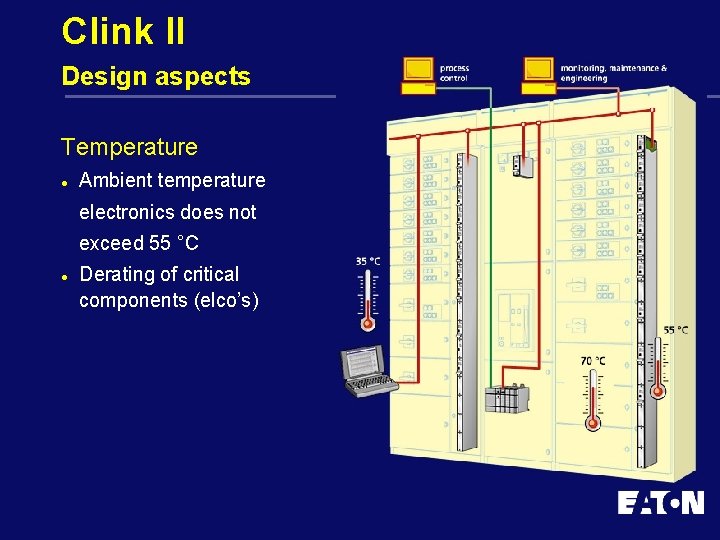
Clink II Design aspects Temperature l Ambient temperature electronics does not exceed 55 °C l Derating of critical components (elco’s)
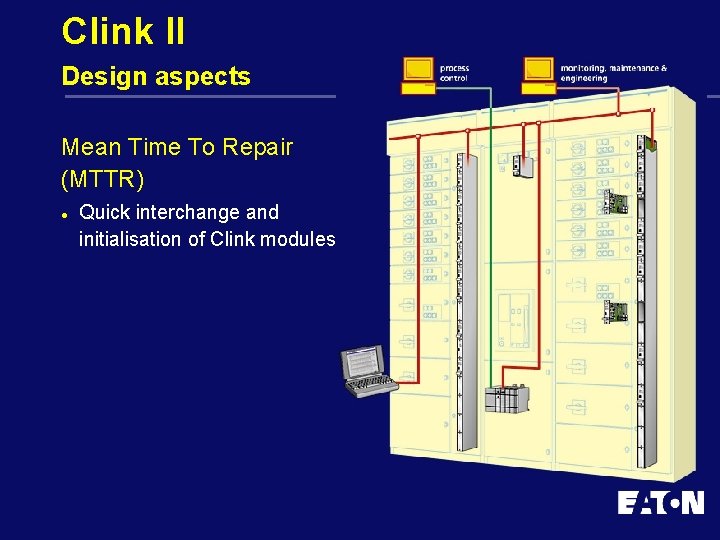
Clink II Design aspects Mean Time To Repair (MTTR) l Quick interchange and initialisation of Clink modules
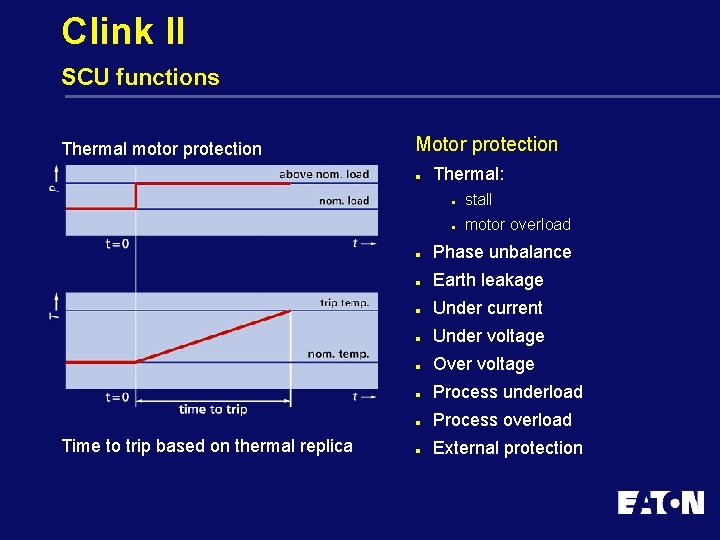
Clink II SCU functions Thermal motor protection Motor protection l Time to trip based on thermal replica Thermal: n stall n motor overload l Phase unbalance l Earth leakage l Under current l Under voltage l Over voltage l Process underload l Process overload l External protection
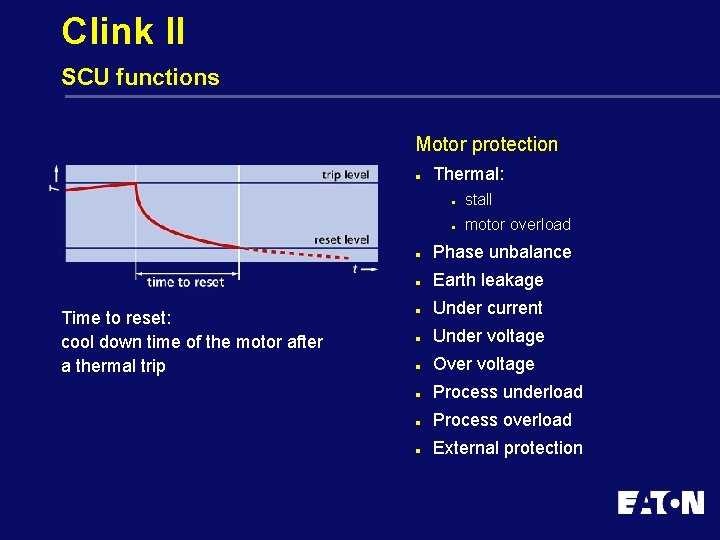
Clink II SCU functions Motor protection l Time to reset: cool down time of the motor after a thermal trip Thermal: n stall n motor overload l Phase unbalance l Earth leakage l Under current l Under voltage l Over voltage l Process underload l Process overload l External protection
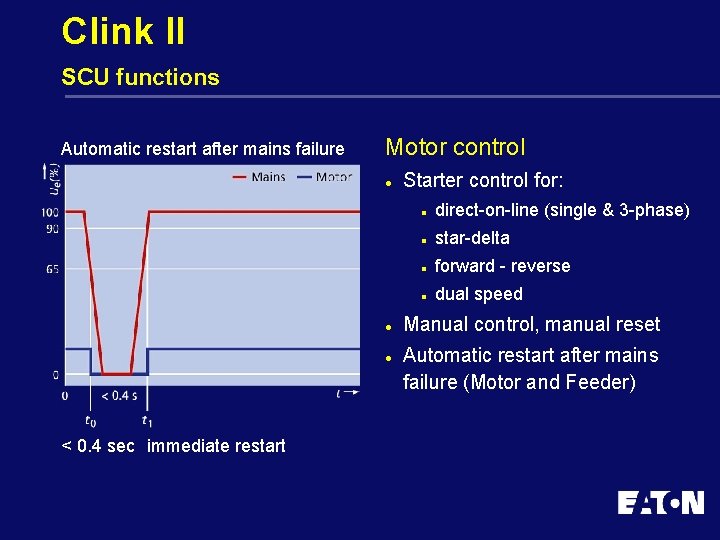
Clink II SCU functions Automatic restart after mains failure Motor control l < 0. 4 sec immediate restart Starter control for: n direct-on-line (single & 3 -phase) n star-delta n forward - reverse n dual speed Manual control, manual reset Automatic restart after mains failure (Motor and Feeder)
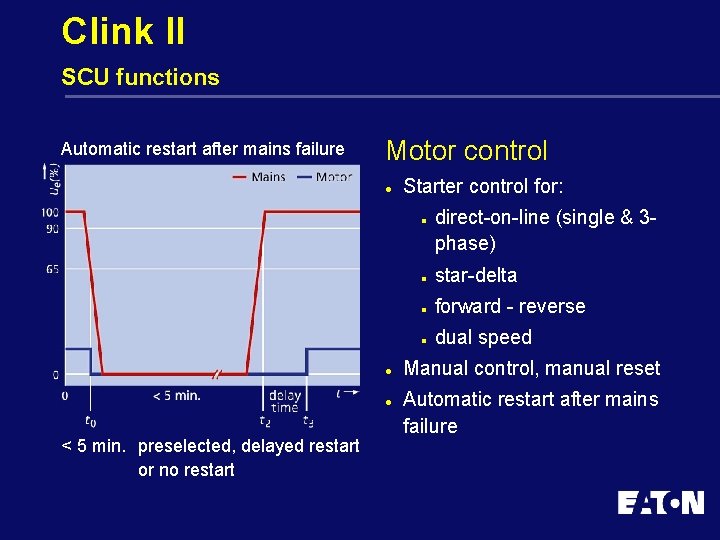
Clink II SCU functions Automatic restart after mains failure Motor control l Starter control for: n l l < 5 min. preselected, delayed restart or no restart direct-on-line (single & 3 phase) n star-delta n forward - reverse n dual speed Manual control, manual reset Automatic restart after mains failure
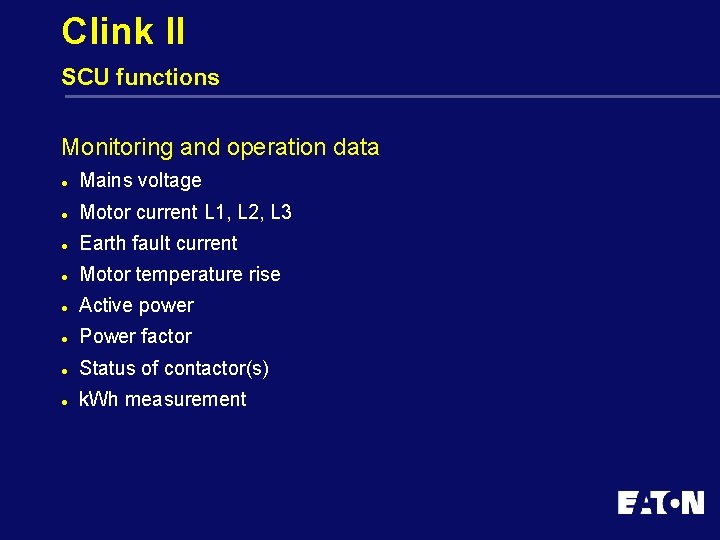
Clink II SCU functions Monitoring and operation data l Mains voltage l Motor current L 1, L 2, L 3 l Earth fault current l Motor temperature rise l Active power l Power factor l Status of contactor(s) l k. Wh measurement
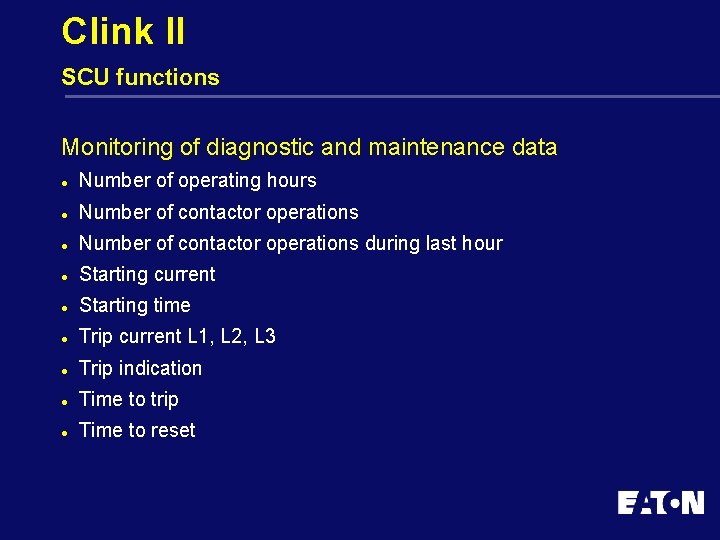
Clink II SCU functions Monitoring of diagnostic and maintenance data l Number of operating hours l Number of contactor operations during last hour l Starting current l Starting time l Trip current L 1, L 2, L 3 l Trip indication l Time to trip l Time to reset
Clink II FCU functions Feeder protection l Earth leakage Feeder control l 8 digital inputs and 8 digital outputs for e. g. the status of circuit breaker and switch-disconnector Outputs also enable closing or opening of circuit breaker, or resetting circuit breaker after a trip Automatic restart after mains failure
Clink II FCU functions Measurement l Voltage l Current l Power factor l Power l Frequency From these measurements the following values can be derived: l Voltage between phases and between phase and neutral (V) l Current through phases and neutral (A) l Current demand (A) l Active power (k. W) l Active power demand (k. W) l Reactive power (k. VAr) l Apparent power (k. VA) l Active energy import (k. Wh) l Active energy export (k. Wh) l Reactive energy import (k. VArh) l Reactive energy export (k. VArh) l Apparent energy (k. VAh)
Clink II FCU functions Over/Under l To determine whether voltage, current and power have fallen below or have exceeded the set level
Clink II FCU functions Min/Max l To define the maximum and minimum values of n n n n l voltage current demand active power reactive power apparent power active power demand The values of peak demand or minimum load over a new period of time can be reset
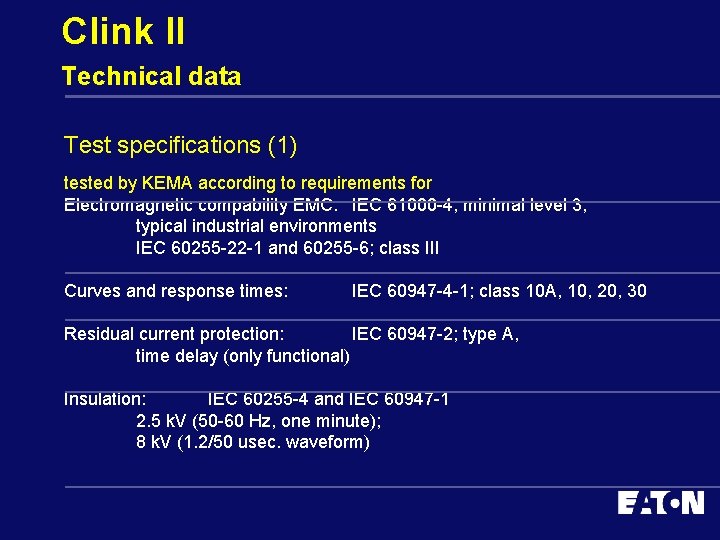
Clink II Technical data Test specifications (1) tested by KEMA according to requirements for Electromagnetic compability EMC: IEC 61000 -4; minimal level 3, typical industrial environments IEC 60255 -22 -1 and 60255 -6; class III Curves and response times: IEC 60947 -4 -1; class 10 A, 10, 20, 30 Residual current protection: IEC 60947 -2; type A, time delay (only functional) Insulation: IEC 60255 -4 and IEC 60947 -1 2. 5 k. V (50 -60 Hz, one minute); 8 k. V (1. 2/50 usec. waveform)
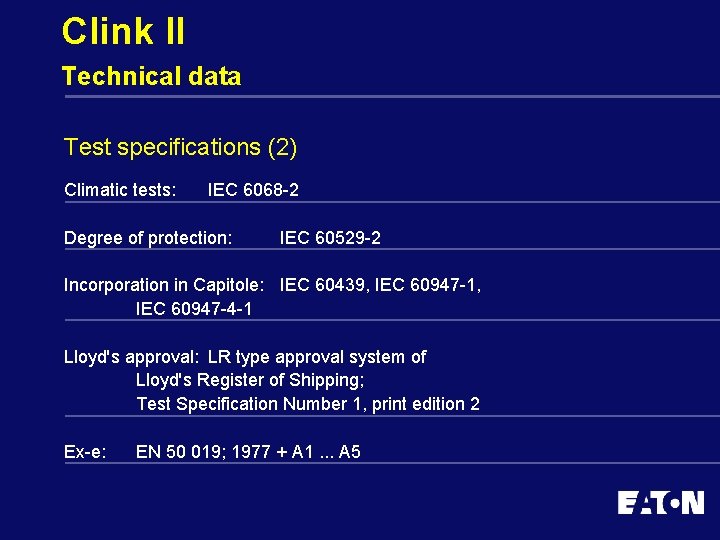
Clink II Technical data Test specifications (2) Climatic tests: IEC 6068 -2 Degree of protection: IEC 60529 -2 Incorporation in Capitole: IEC 60439, IEC 60947 -1, IEC 60947 -4 -1 Lloyd's approval: LR type approval system of Lloyd's Register of Shipping; Test Specification Number 1, print edition 2 Ex-e: EN 50 019; 1977 + A 1. . . A 5
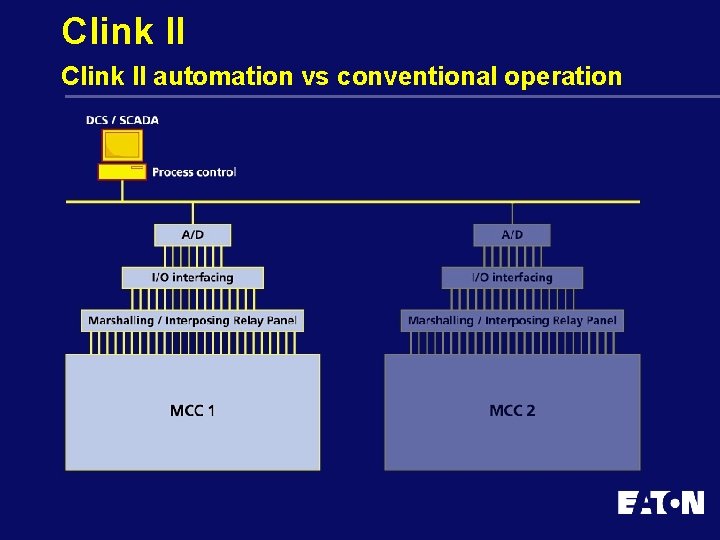
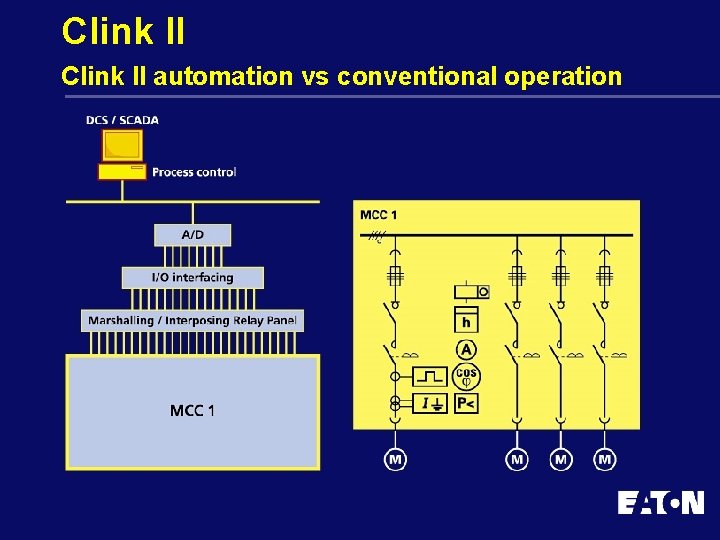
Clink II automation vs conventional operation
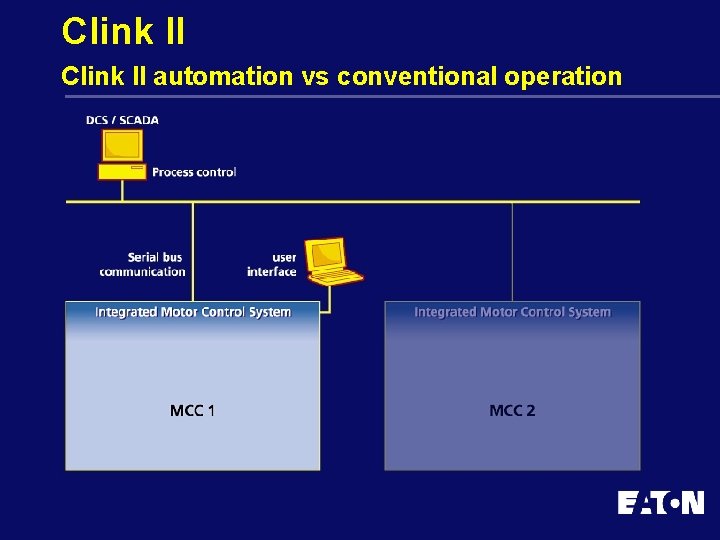
Clink II automation vs conventional operation
Clink II automation vs conventional operation
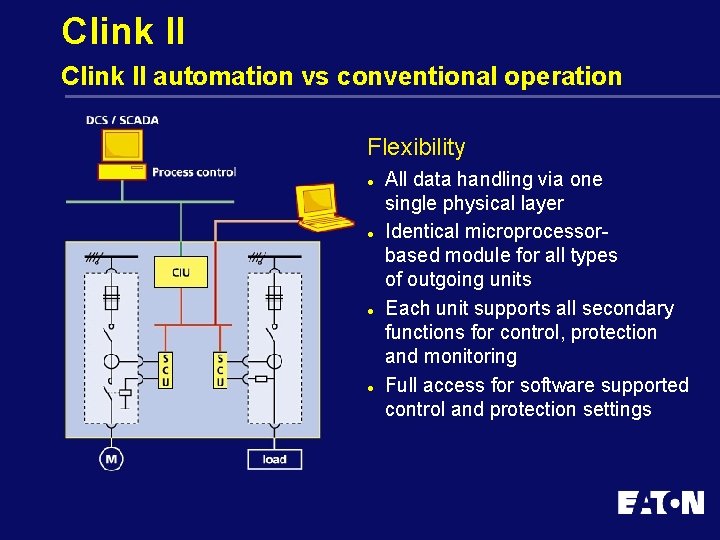
Clink II automation vs conventional operation Flexibility l l All data handling via one single physical layer Identical microprocessorbased module for all types of outgoing units Each unit supports all secondary functions for control, protection and monitoring Full access for software supported control and protection settings
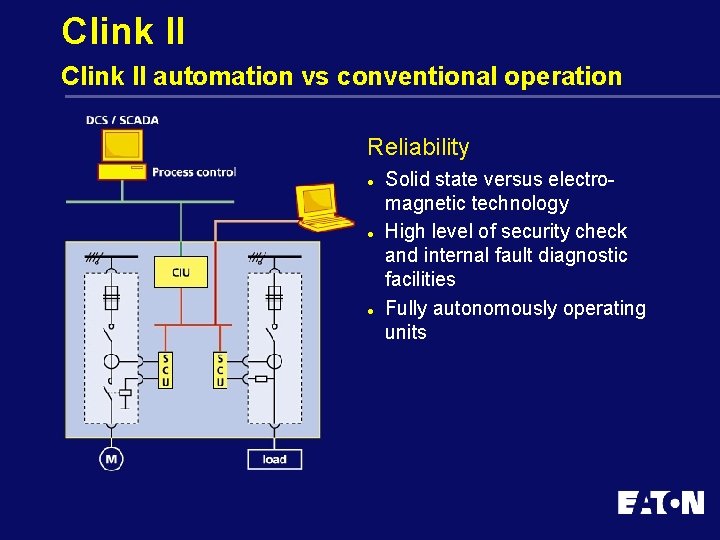
Clink II automation vs conventional operation Reliability l l l Solid state versus electromagnetic technology High level of security check and internal fault diagnostic facilities Fully autonomously operating units
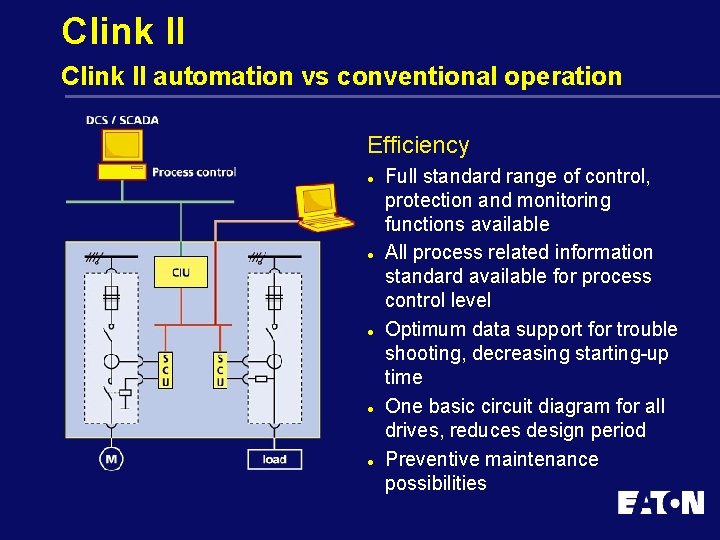
Clink II automation vs conventional operation Efficiency l l l Full standard range of control, protection and monitoring functions available All process related information standard available for process control level Optimum data support for trouble shooting, decreasing starting-up time One basic circuit diagram for all drives, reduces design period Preventive maintenance possibilities
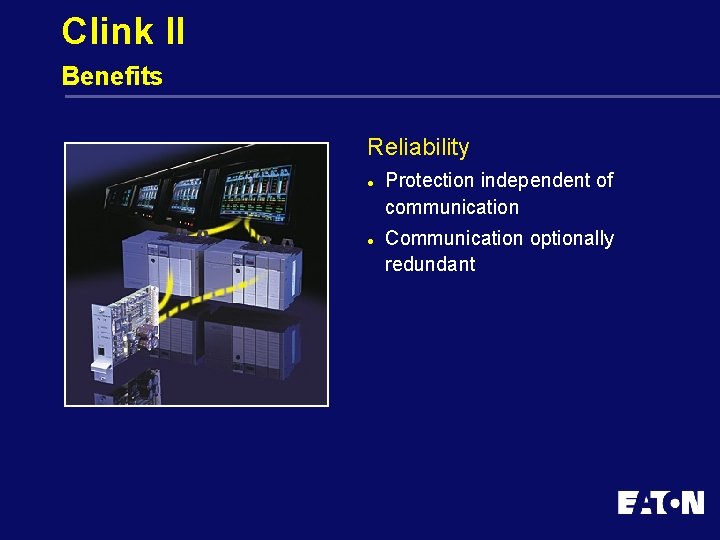
Clink II Benefits Reliability l l Protection independent of communication Communication optionally redundant
Clink II Redundancy l l Failure reduced to minimum Worst case: loss of control of one Starter Control Unit or one Feeder Control Unit Increased availability l l Dual network i. e. : redundant CIU, Device. Net, serial links to SCU and FCU Redundant power supply for SCU, FCU and Device. Net
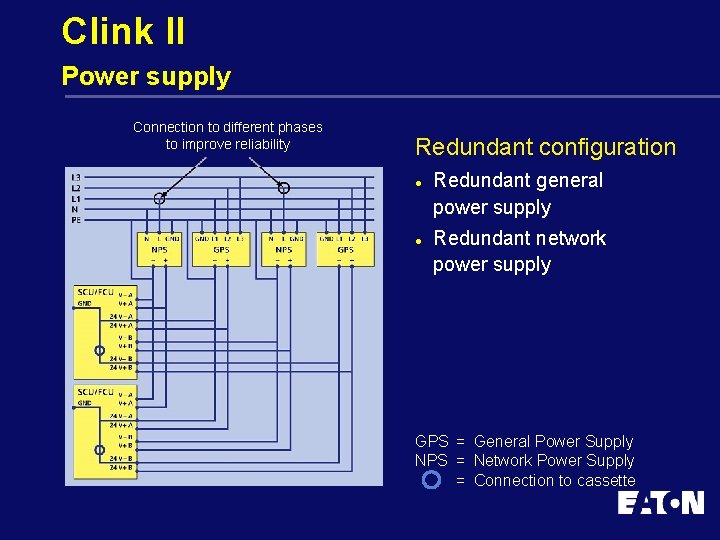
Clink II Power supply Connection to different phases to improve reliability Redundant configuration l l Redundant general power supply Redundant network power supply GPS = General Power Supply NPS = Network Power Supply = Connection to cassette
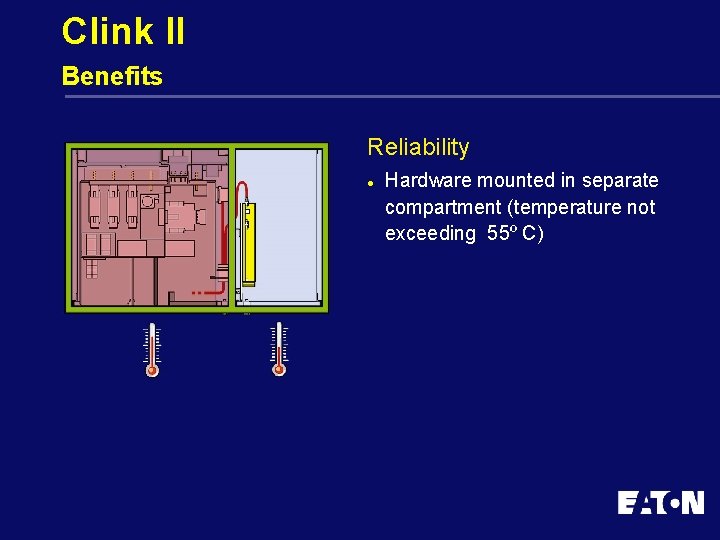
Clink II Benefits Reliability l Hardware mounted in separate compartment (temperature not exceeding 55º C)
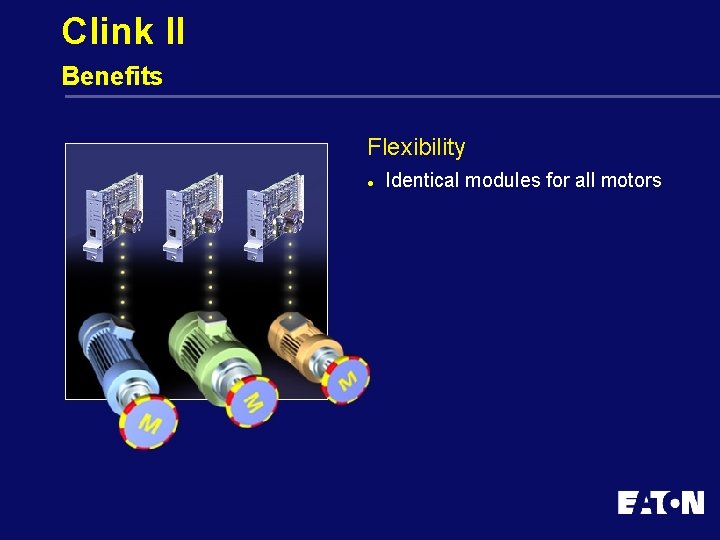
Clink II Benefits Flexibility l Identical modules for all motors
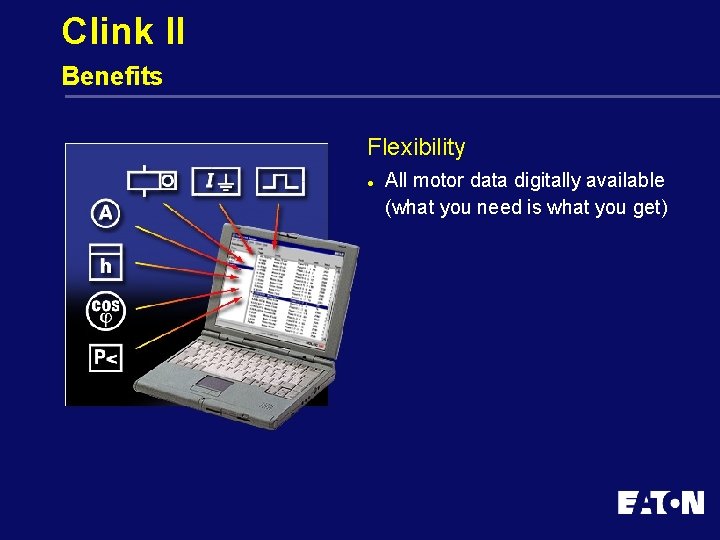
Clink II Benefits Flexibility l All motor data digitally available (what you need is what you get)
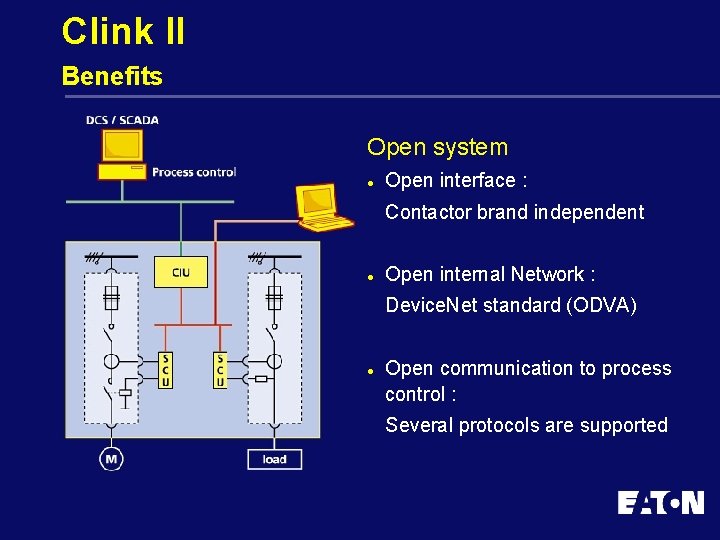
Clink II Benefits Open system l Open interface : Contactor brand independent l Open internal Network : Device. Net standard (ODVA) l Open communication to process control : Several protocols are supported
Clink II The reliable, flexible and open Motor Management System