
Clinician Wellness Building Resiliency in Family Medicine Teachers
Clinician Wellness - Building Resiliency in Family Medicine Teachers and Trainees Debra A. Gould MD, MPH deb. gould@commhealthcw. org Kirk D. Strosahl Ph. D Mountainconsult@msn. com Patricia J. Robinson, Ph. D robinsonpatricia@me. com (Pre-conference Workshop) STFM Annual Conference – Seattle WA April 25, 2012
Goals & Objectives • teach residents about Resiliency • develop a personal strategy for building resiliency based on Acceptance and Commitment Therapy (ACT). • learn Self-Assessment – Burnout (MBI), sources and magnitude of Stress (PCP-SC) ) and Psychological flexibility (AAQII). • identify 6 core psychological processes that support clinician resiliency • learn specific exercises to teach residents effective strategies for coping with the stresses of primary care practice and adaptation to the Patient Centered Medical Home (PCMH).
Workshop Outline I. II. Intro – personal - Deb Intro – Burnout epidemiology; Resiliency through Psychological Flexibility (brief model) - Deb Burnout - Kirk III. a. b. MBI PCP-SC IV. Psychological Flexibility , Avoidance, hexaflexes - Deb a. AAQII V. Mindfulness - Patti a. b. VI. TEAMS Sky Metaphor Values - Kirk a. Professional and Personal Values Clarification VII. Bringing it all together ! – Passengers on the Bus - Patti VIII. Self-Compassion – Kirk & Patti a. Video IX. What will you take Home? Professional & Personal Values Assessment & Action Plan - Deb X. Wrap-up –Evaluation & Feedback - Deb
CWFM Clinician Wellness Program • Goals – burnout education, self-assessments, promote activities & behaviors • Core Philosophies – at risk throughout training & career – recognizing & managing risk factors is legitimate core activity of residency – stepped care approach, evidence-based (see handout)
CWFM Clinician Wellness Program • Activities – Social integration retreats (Snow day) – Self-discovery workshops (mindfulness) – Clinical Skill Building (Star curriculum) – Individual Assessment & Intervention (MBI, AAQII, PCP-SC)
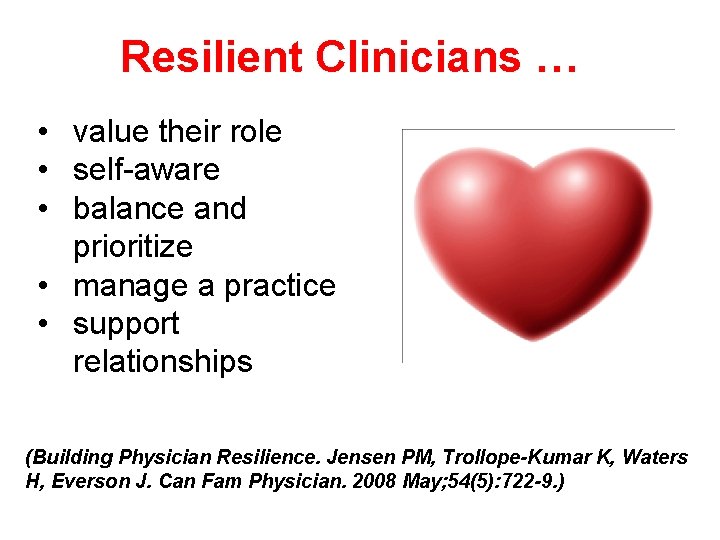
Resilient Clinicians … • value their role • self-aware • balance and prioritize • manage a practice • support relationships (Building Physician Resilience. Jensen PM, Trollope-Kumar K, Waters H, Everson J. Can Fam Physician. 2008 May; 54(5): 722 -9. )
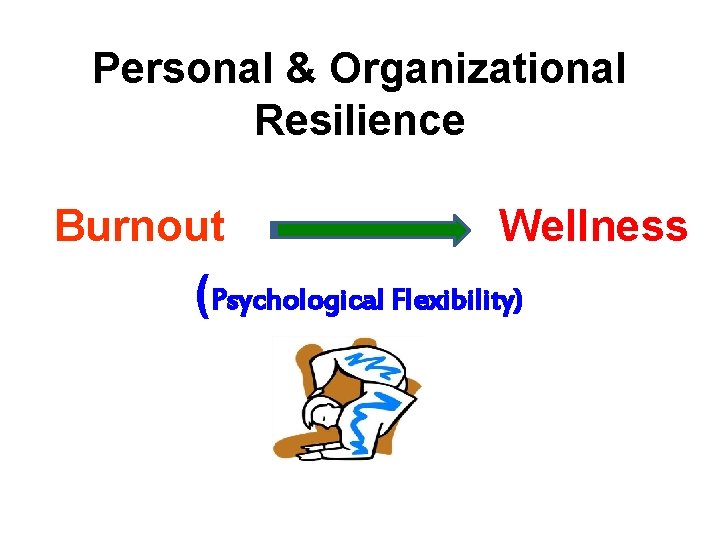
Personal & Organizational Resilience Burnout Wellness (Psychological Flexibility)
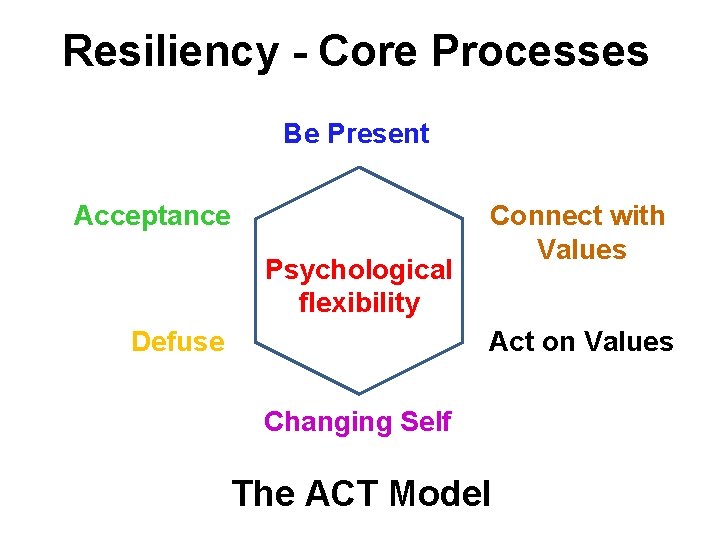
Resiliency - Core Processes Be Present Acceptance Psychological flexibility Defuse Connect with Values Act on Values Changing Self The ACT Model
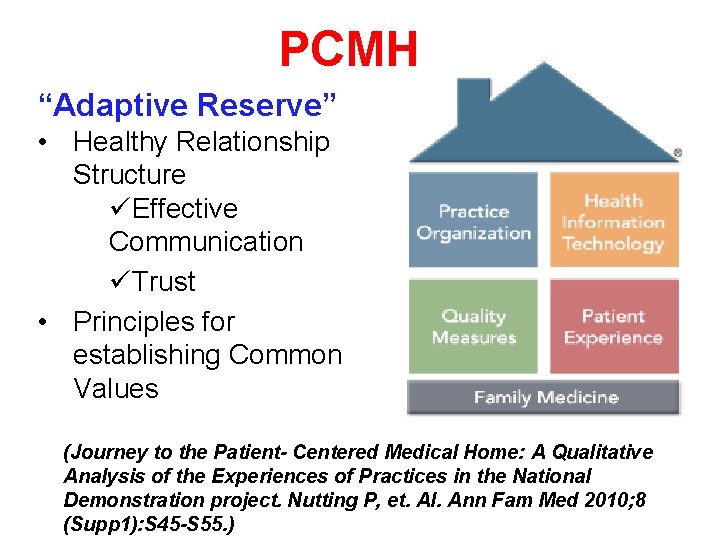
PCMH “Adaptive Reserve” • Healthy Relationship Structure üEffective Communication üTrust • Principles for establishing Common Values (Journey to the Patient- Centered Medical Home: A Qualitative Analysis of the Experiences of Practices in the National Demonstration project. Nutting P, et. Al. Ann Fam Med 2010; 8 (Supp 1): S 45 -S 55. )

The Primary Care Behavioral Health (PCBH) Model in PCMH: • fulltime member of PC team • consultant to patients, residents, faculty • brief interventions to promote psychological flexibility in patients and teaches residents to use these as well • ID’s patient populations and develops pathway services that promote skill development in patients and clinicians • Teaches & supports ongoing skill development of personal and organizational resiliency (For more information of this model, see Robinson & Reiter, 2007. Behavioral 10 Consultation and Primary Care: A Guide to Integrating Services)
Burnout • • • Over-eat, drink, work Substance abuse Isolation Depression, Suicide Leave Profession Relationship Problems 2014
Burnout • Emotional Exhaustion • De-Personalization • Personal Accomplishment (Maslach, C. , Schaufeli, W. B. , & Leiter, M. P. (2001). Job burnout. Annual Review of Psychology. 2001; 52, 397– 422. doi: 10. 1146/annurev. psych. 52. 1. 397. )
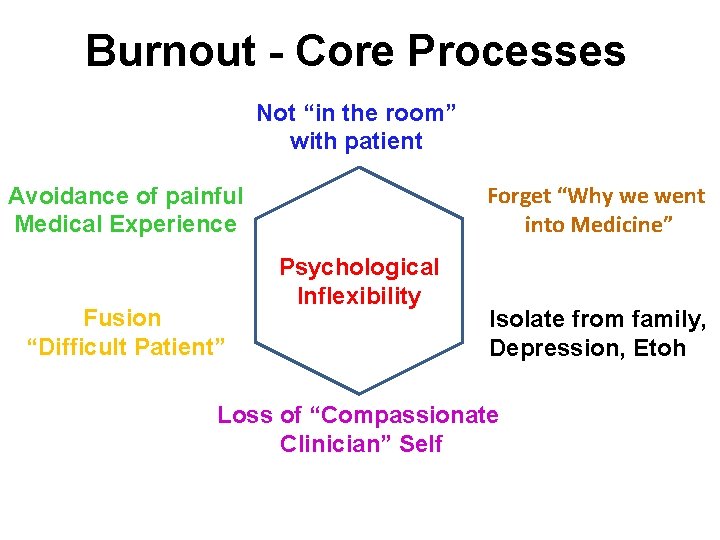
Burnout - Core Processes Not “in the room” with patient Forget “Why we went into Medicine” Avoidance of painful Medical Experience Fusion “Difficult Patient” Psychological Inflexibility Isolate from family, Depression, Etoh Loss of “Compassionate Clinician” Self
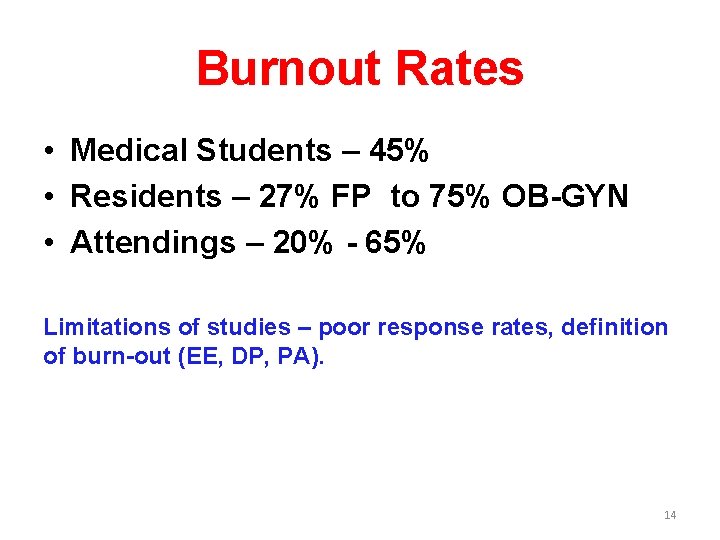
Burnout Rates • Medical Students – 45% • Residents – 27% FP to 75% OB-GYN • Attendings – 20% - 65% Limitations of studies – poor response rates, definition of burn-out (EE, DP, PA). 14
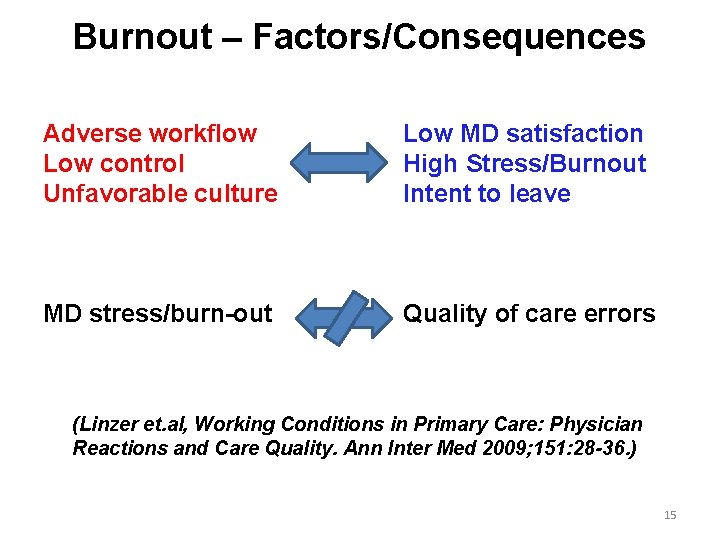
Burnout – Factors/Consequences Adverse workflow Low control Unfavorable culture Low MD satisfaction High Stress/Burnout Intent to leave MD stress/burn-out Quality of care errors (Linzer et. al, Working Conditions in Primary Care: Physician Reactions and Care Quality. Ann Inter Med 2009; 151: 28 -36. ) 15
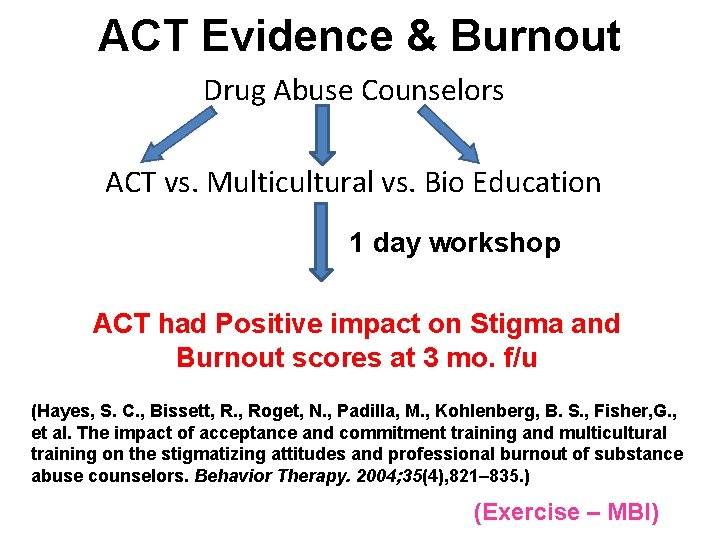
ACT Evidence & Burnout Drug Abuse Counselors ACT vs. Multicultural vs. Bio Education 1 day workshop ACT had Positive impact on Stigma and Burnout scores at 3 mo. f/u (Hayes, S. C. , Bissett, R. , Roget, N. , Padilla, M. , Kohlenberg, B. S. , Fisher, G. , et al. The impact of acceptance and commitment training and multicultural training on the stigmatizing attitudes and professional burnout of substance abuse counselors. Behavior Therapy. 2004; 35(4), 821– 835. ) (Exercise – MBI)
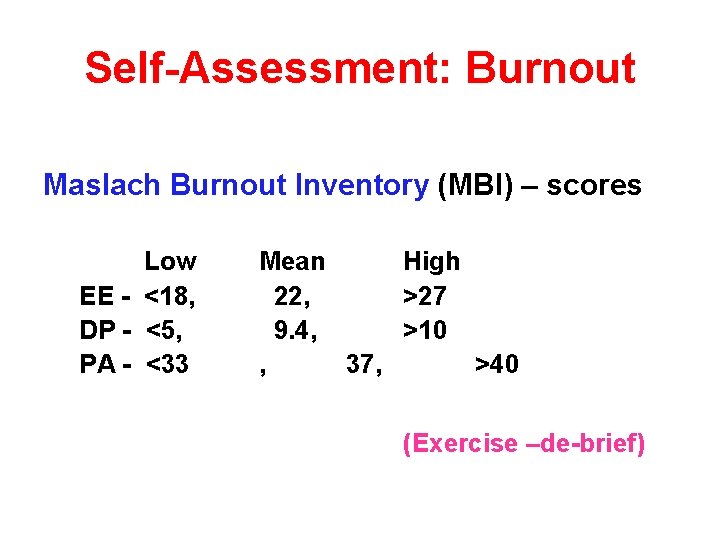
Self-Assessment: Burnout Maslach Burnout Inventory (MBI) – scores Low EE - <18, DP - <5, PA - <33 Mean High 22, >27 9. 4, >10 , 37, >40 (Exercise –de-brief)
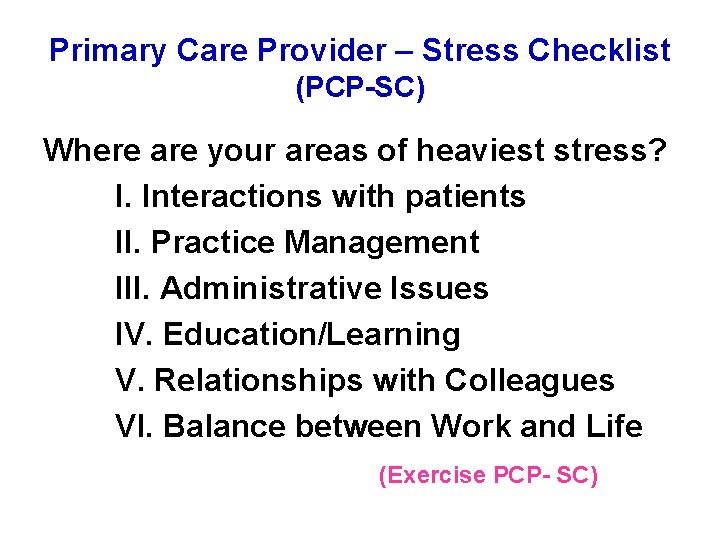
Primary Care Provider – Stress Checklist (PCP-SC) Where are your areas of heaviest stress? I. Interactions with patients II. Practice Management III. Administrative Issues IV. Education/Learning V. Relationships with Colleagues VI. Balance between Work and Life (Exercise PCP- SC)
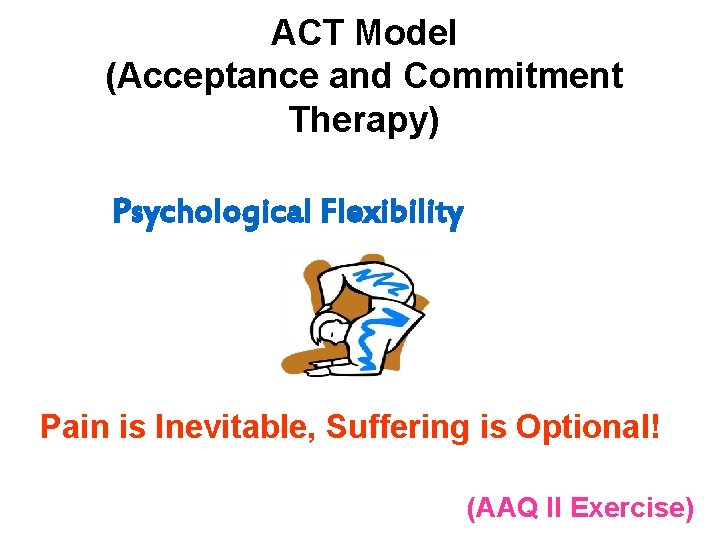
ACT Model (Acceptance and Commitment Therapy) Psychological Flexibility Pain is Inevitable, Suffering is Optional! (AAQ II Exercise)
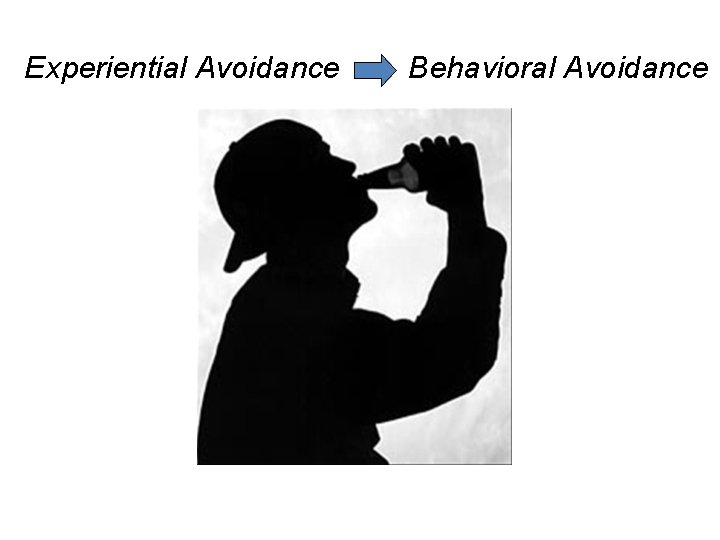
Experiential Avoidance Behavioral Avoidance
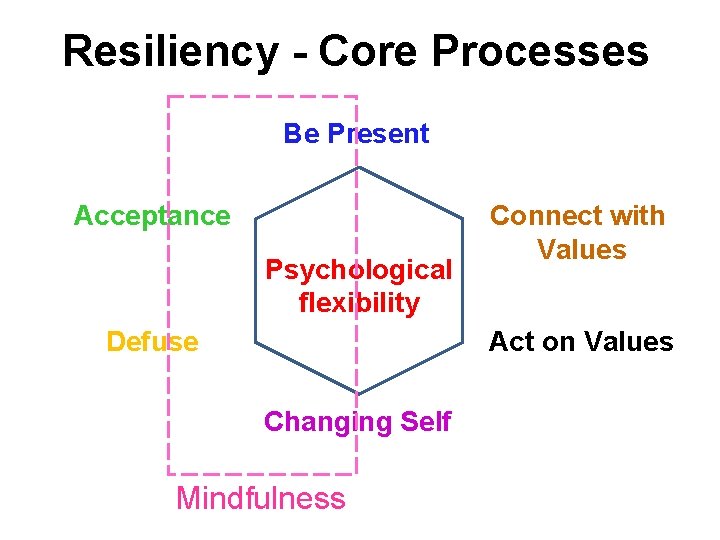
Resiliency - Core Processes Be Present Acceptance Psychological flexibility Defuse Connect with Values Act on Values Changing Self Mindfulness
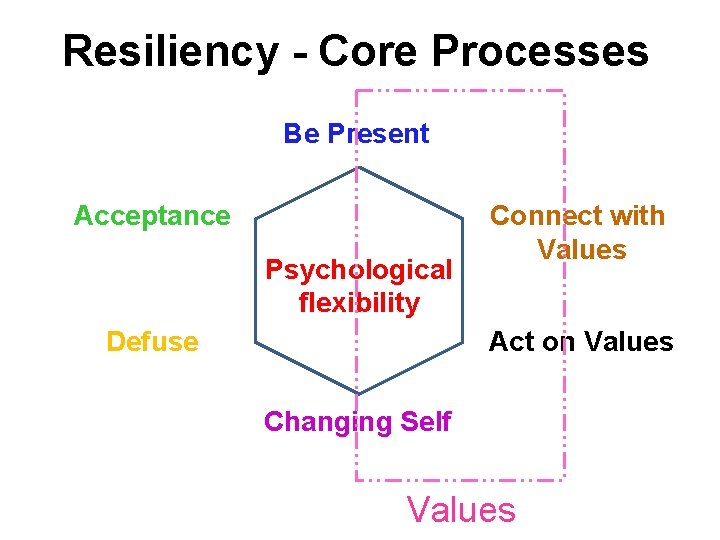
Resiliency - Core Processes Be Present Acceptance Psychological flexibility Defuse Connect with Values Act on Values Changing Self Values
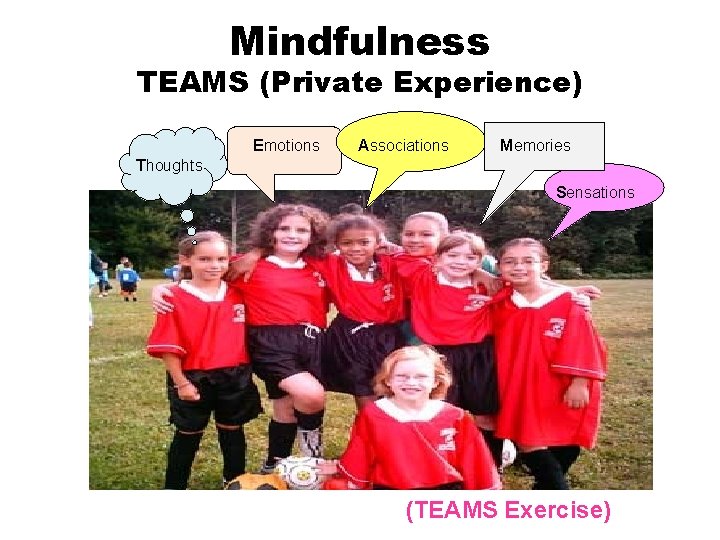
Mindfulness TEAMS (Private Experience) Emotions Associations Memories Thoughts Sensations (TEAMS Exercise)
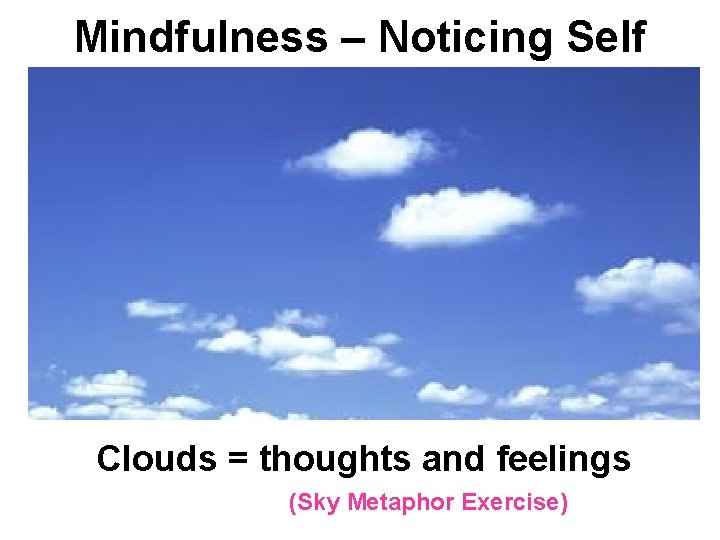
Mindfulness – Noticing Self Clouds = thoughts and feelings (Sky Metaphor Exercise)
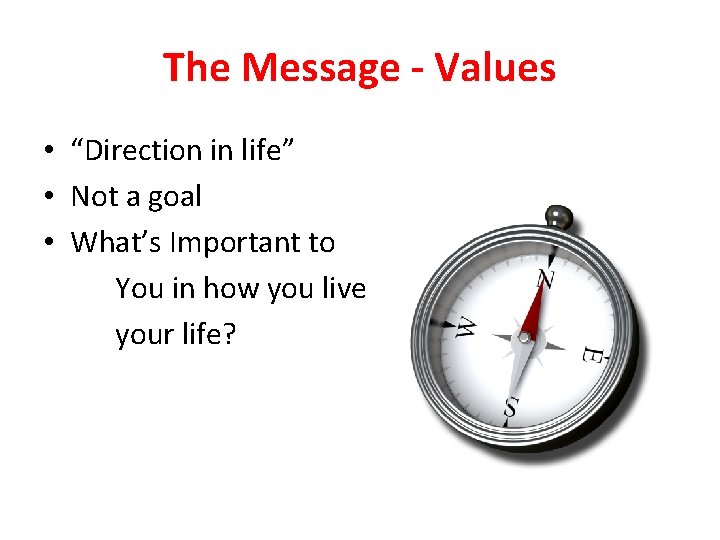
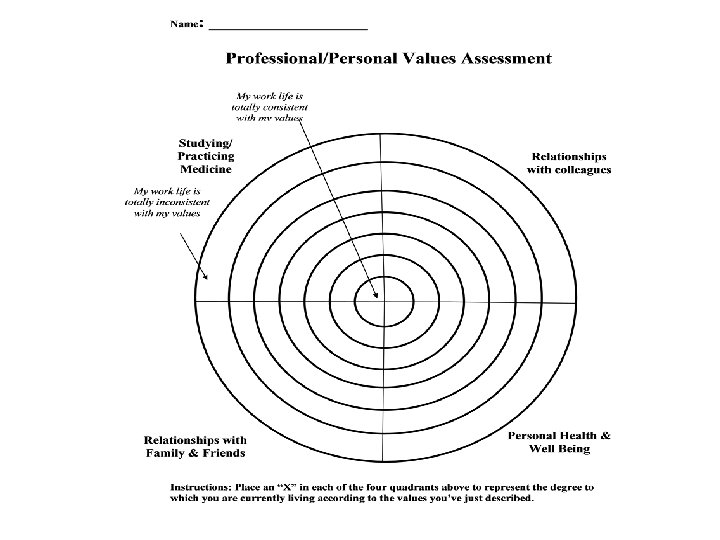
The Message - Values • “Direction in life” • Not a goal • What’s Important to You in how you live your life?
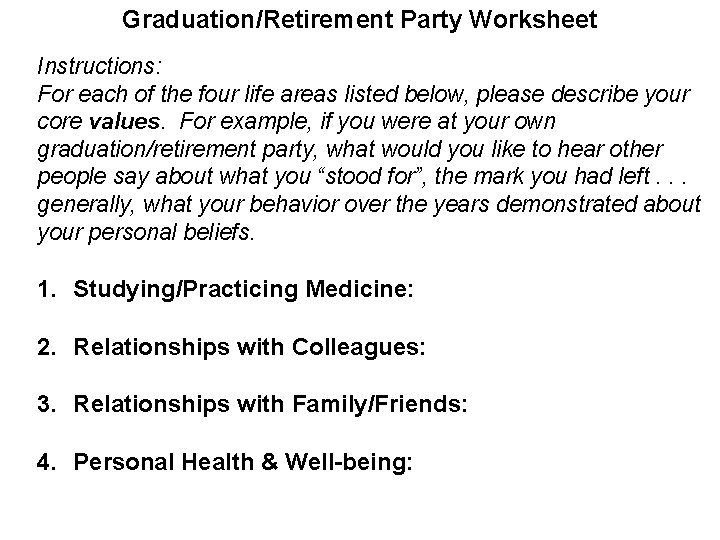
Graduation/Retirement Party Worksheet Instructions: For each of the four life areas listed below, please describe your core values. For example, if you were at your own graduation/retirement party, what would you like to hear other people say about what you “stood for”, the mark you had left. . . generally, what your behavior over the years demonstrated about your personal beliefs. 1. Studying/Practicing Medicine: 2. Relationships with Colleagues: 3. Relationships with Family/Friends: 4. Personal Health & Well-being:
Passengers on the Bus (Exercise)
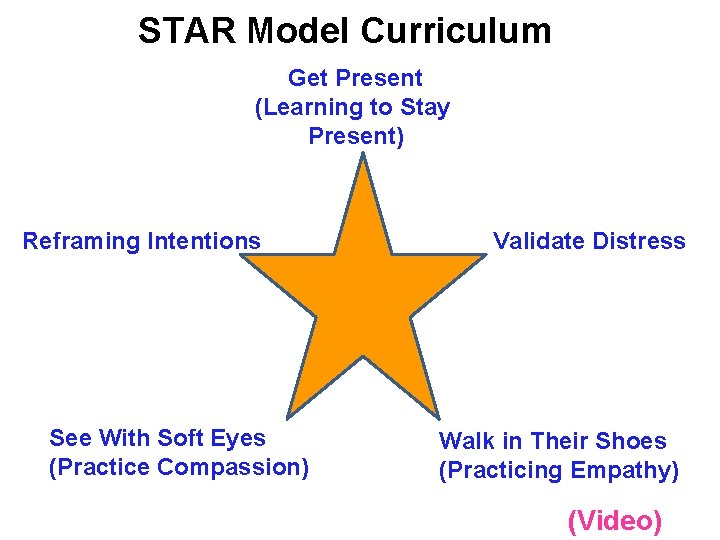
STAR Model Curriculum Get Present (Learning to Stay Present) Reframing Intentions See With Soft Eyes (Practice Compassion) Validate Distress Walk in Their Shoes (Practicing Empathy) (Video)
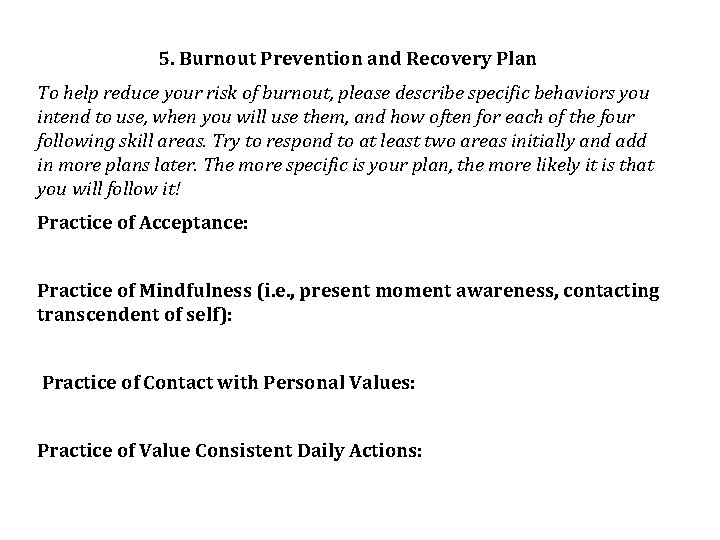
5. Burnout Prevention and Recovery Plan To help reduce your risk of burnout, please describe specific behaviors you intend to use, when you will use them, and how often for each of the four following skill areas. Try to respond to at least two areas initially and add in more plans later. The more specific is your plan, the more likely it is that you will follow it! Practice of Acceptance: Practice of Mindfulness (i. e. , present moment awareness, contacting transcendent of self): Practice of Contact with Personal Values: Practice of Value Consistent Daily Actions:
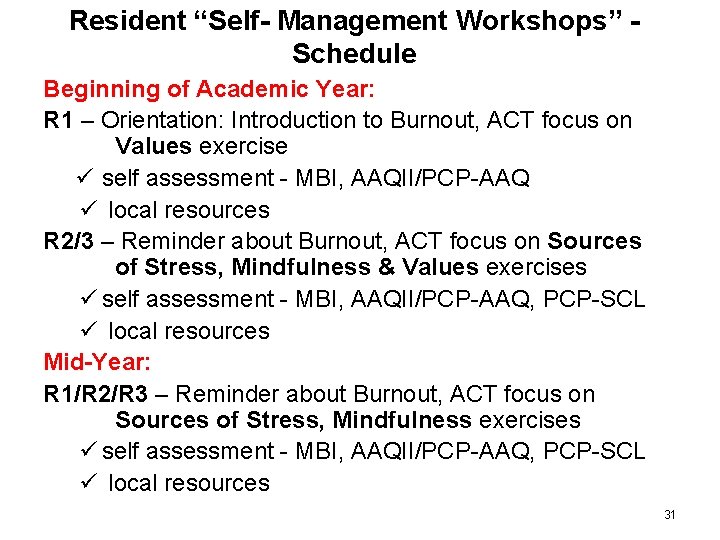
Resident “Self- Management Workshops” Schedule Beginning of Academic Year: R 1 – Orientation: Introduction to Burnout, ACT focus on Values exercise ü self assessment - MBI, AAQII/PCP-AAQ ü local resources R 2/3 – Reminder about Burnout, ACT focus on Sources of Stress, Mindfulness & Values exercises ü self assessment - MBI, AAQII/PCP-AAQ, PCP-SCL ü local resources Mid-Year: R 1/R 2/R 3 – Reminder about Burnout, ACT focus on Sources of Stress, Mindfulness exercises ü self assessment - MBI, AAQII/PCP-AAQ, PCP-SCL ü local resources 31

Resident Resources CHCW § Employee Assistant Program § Athletic Club corporate membership § Peers § Advisor § Dr. Strosahl – Behavioralist Faculty § Health insurance – health risk assessment, § - Gift certificate for healthy lifestyle choices; massage therapist. Hospital – Physician Wellness Committees Washington State Physicians Health Program http: //www. wphp. org/services Community – family, faith community, social interests, Farmer’s Market, Sparkpeople. com – diet & exercise (free) 32
Wrap – up • Feedback/evaluation forms • Thank-you for attending our workshop!!

ACT Resources New Harbinger Publications http: //www. newharbinger. com “Association for Contextual Behavioral Science” http: //www. contextualpsychology. org/ http: //www. newharbingeronline. com/real-behavior-change-in-primary-care. html 34
- Slides: 34