
Clinical Update ADAPTED FROM 2020 ACCAHA Guideline for
- Slides: 45
Clinical Update ADAPTED FROM: 2020 ACC/AHA Guideline for the Management of Patients With Valvular Heart Disease
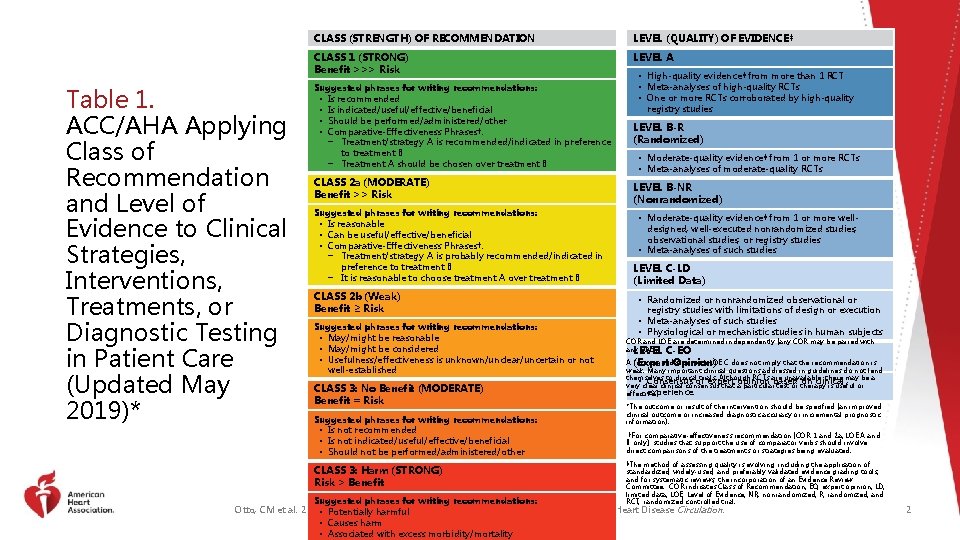
Table 1. ACC/AHA Applying Class of Recommendation and Level of Evidence to Clinical Strategies, Interventions, Treatments, or Diagnostic Testing in Patient Care (Updated May 2019)* CLASS (STRENGTH) OF RECOMMENDATION LEVEL (QUALITY) OF EVIDENCE‡ CLASS 1 (STRONG) Benefit >>> Risk LEVEL A Suggested phrases for writing recommendations: • Is recommended • Is indicated/useful/effective/beneficial • Should be performed/administered/other • Comparative-Effectiveness Phrases†: − Treatment/strategy A is recommended/indicated in preference to treatment B − Treatment A should be chosen over treatment B CLASS 2 a (MODERATE) Benefit >> Risk Suggested phrases for writing recommendations: • Is reasonable • Can be useful/effective/beneficial • Comparative-Effectiveness Phrases†: − Treatment/strategy A is probably recommended/indicated in preference to treatment B − It is reasonable to choose treatment A over treatment B CLASS 2 b (Weak) Benefit ≥ Risk Suggested phrases for writing recommendations: • May/might be reasonable • May/might be considered • Usefulness/effectiveness is unknown/unclear/uncertain or not well-established CLASS 3: No Benefit (MODERATE) Benefit = Risk Suggested phrases for writing recommendations: • Is not recommended • Is not indicated/useful/effective/beneficial • Should not be performed/administered/other CLASS 3: Harm (STRONG) Risk > Benefit • High-quality evidence‡ from more than 1 RCT • Meta-analyses of high-quality RCTs • One or more RCTs corroborated by high-quality registry studies LEVEL B-R (Randomized) • Moderate-quality evidence‡ from 1 or more RCTs • Meta-analyses of moderate-quality RCTs LEVEL B-NR (Nonrandomized) • Moderate-quality evidence‡ from 1 or more welldesigned, well-executed nonrandomized studies, observational studies, or registry studies • Meta-analyses of such studies LEVEL C-LD (Limited Data) • Randomized or nonrandomized observational or registry studies with limitations of design or execution • Meta-analyses of such studies • Physiological or mechanistic studies in human subjects COR and LOE are determined independently (any COR may be paired with any LOE). C-EO LEVEL A recommendation with LOE C does not imply that the recommendation is (Expert Opinion) weak. Many important clinical questions addressed in guidelines do not lend themselves to clinical trials. Although RCTs are unavailable, there may be a • Consensus of expert opinion based on clinical very clear clinical consensus that a particular test or therapy is useful or experience. effective. *The outcome or result of the intervention should be specified (an improved clinical outcome or increased diagnostic accuracy or incremental prognostic information). †For comparative-effectiveness recommendation (COR 1 and 2 a; LOE A and B only), studies that support the use of comparator verbs should involve direct comparisons of the treatments or strategies being evaluated. ‡The method of assessing quality is evolving, including the application of standardized, widely-used, and preferably validated evidence grading tools; and for systematic reviews, the incorporation of an Evidence Review Committee. COR indicates Class of Recommendation; EO, expert opinion; LD, limited data; LOE, Level of Evidence; NR, nonrandomized; R, randomized; and RCT, randomized controlled trial. Suggested phrases for writing recommendations: Otto, CM et al. 2020 • ACC/AHA. Potentially. Guideline harmful for the Management of Patients With Valvular Heart Disease Circulation. • Causes harm • Associated with excess morbidity/mortality 2
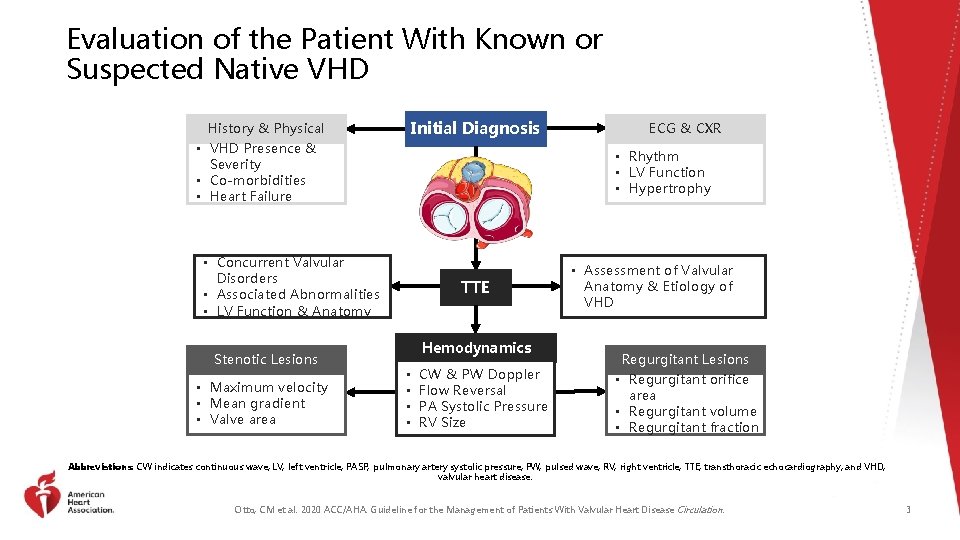
Evaluation of the Patient With Known or Suspected Native VHD Initial Diagnosis History & Physical • VHD Presence & Severity • Co-morbidities • Heart Failure • Rhythm • LV Function • Hypertrophy • Concurrent Valvular Disorders • Associated Abnormalities • LV Function & Anatomy Stenotic Lesions • Maximum velocity • Mean gradient • Valve area ECG & CXR TTE Hemodynamics • • CW & PW Doppler Flow Reversal PA Systolic Pressure RV Size • Assessment of Valvular Anatomy & Etiology of VHD Regurgitant Lesions • Regurgitant orifice area • Regurgitant volume • Regurgitant fraction Abbreviations: CW indicates continuous wave; LV, left ventricle; PASP, pulmonary artery systolic pressure; PW, pulsed wave; RV, right ventricle; TTE, transthoracic echocardiography; and VHD, valvular heart disease. Otto, CM et al. 2020 ACC/AHA. Guideline for the Management of Patients With Valvular Heart Disease Circulation. 3
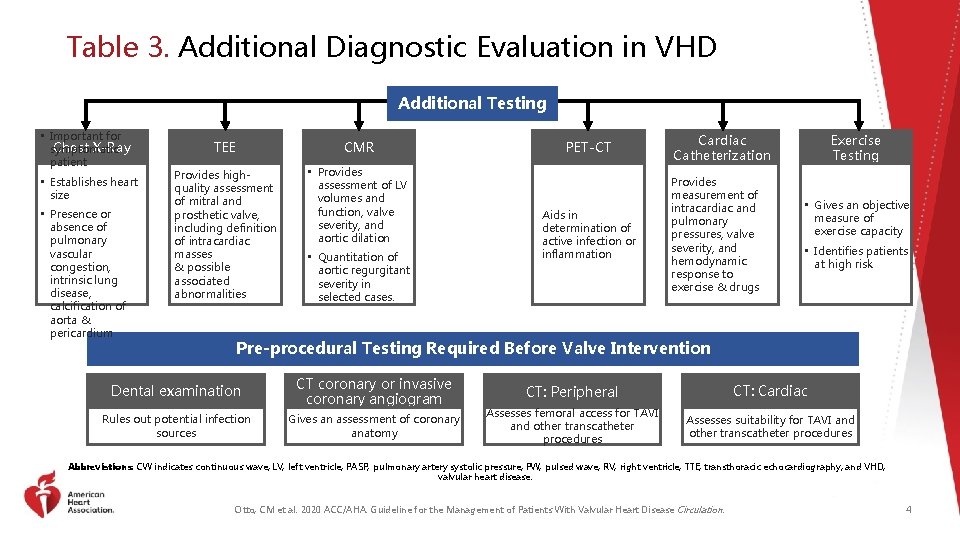
Table 3. Additional Diagnostic Evaluation in VHD Additional Testing • Important for Chest X-Ray symptomatic patient • Establishes heart size • Presence or absence of pulmonary vascular congestion, intrinsic lung disease, calcification of aorta & pericardium TEE CMR Provides highquality assessment of mitral and prosthetic valve, including definition of intracardiac masses & possible associated abnormalities • Provides assessment of LV volumes and function, valve severity, and aortic dilation • Quantitation of aortic regurgitant severity in selected cases. PET-CT Aids in determination of active infection or inflammation Cardiac Catheterization Provides measurement of intracardiac and pulmonary pressures, valve severity, and hemodynamic response to exercise & drugs Exercise Testing • Gives an objective measure of exercise capacity • Identifies patients at high risk Pre-procedural Testing Required Before Valve Intervention Dental examination CT coronary or invasive coronary angiogram Rules out potential infection sources Gives an assessment of coronary anatomy CT: Peripheral CT: Cardiac Assesses femoral access for TAVI and other transcatheter procedures Assesses suitability for TAVI and other transcatheter procedures Abbreviations: CW indicates continuous wave; LV, left ventricle; PASP, pulmonary artery systolic pressure; PW, pulsed wave; RV, right ventricle; TTE, transthoracic echocardiography; and VHD, valvular heart disease. Otto, CM et al. 2020 ACC/AHA. Guideline for the Management of Patients With Valvular Heart Disease Circulation. 4
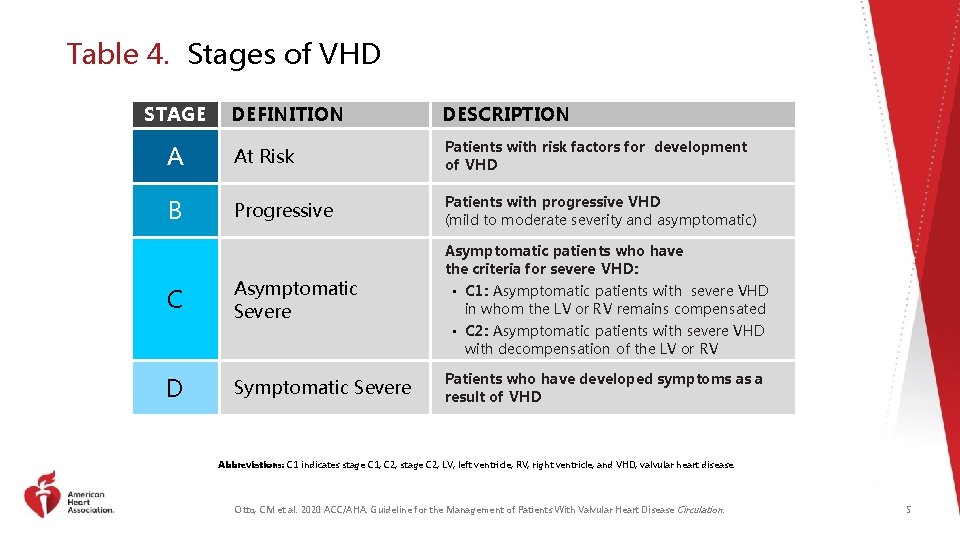
Table 4. Stages of VHD STAGE DEFINITION DESCRIPTION A At Risk Patients with risk factors for development of VHD B Progressive Patients with progressive VHD (mild to moderate severity and asymptomatic) C D Asymptomatic Severe Symptomatic Severe Asymptomatic patients who have the criteria for severe VHD: • C 1: Asymptomatic patients with severe VHD in whom the LV or RV remains compensated • C 2: Asymptomatic patients with severe VHD with decompensation of the LV or RV Patients who have developed symptoms as a result of VHD Abbreviations: C 1 indicates stage C 1; C 2; stage C 2; LV; left ventricle; RV, right ventricle; and VHD, valvular heart disease. Otto, CM et al. 2020 ACC/AHA. Guideline for the Management of Patients With Valvular Heart Disease Circulation. 5
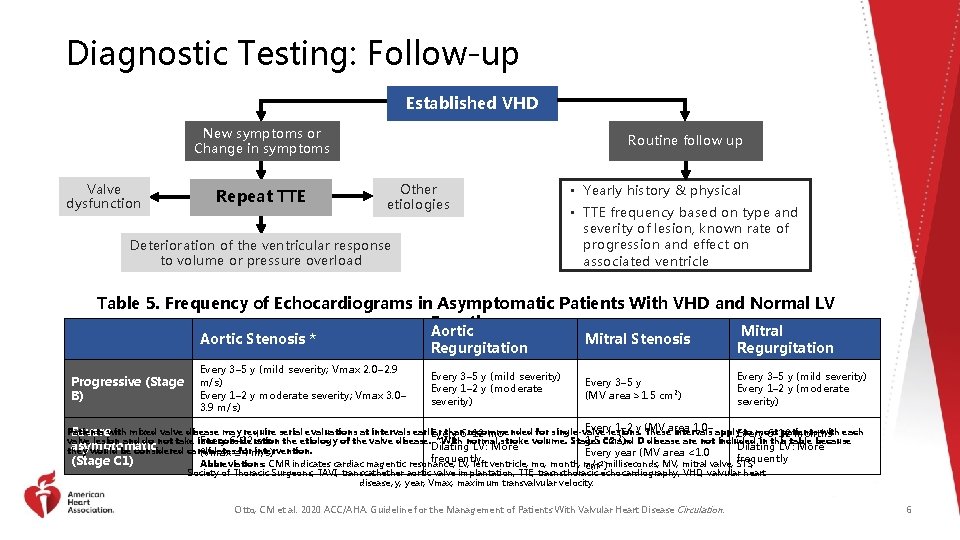
Diagnostic Testing: Follow-up Established VHD New symptoms or Change in symptoms Valve dysfunction Repeat TTE Routine follow up Other etiologies Deterioration of the ventricular response to volume or pressure overload • Yearly history & physical • TTE frequency based on type and severity of lesion, known rate of progression and effect on associated ventricle Table 5. Frequency of Echocardiograms in Asymptomatic Patients With VHD and Normal LV Function Aortic Mitral Aortic Stenosis * Progressive (Stage B) Every 3– 5 y (mild severity; Vmax 2. 0– 2. 9 m/s) Every 1– 2 y moderate severity; Vmax 3. 0– 3. 9 m/s) Regurgitation Every 3– 5 y (mild severity) Every 1– 2 y (moderate severity) Mitral Stenosis Every 3– 5 y (MV area >1. 5 cm 2) Regurgitation Every 3– 5 y (mild severity) Every 1– 2 y (moderate severity) Everylesions. 1– 2 y (MV 1. 0– apply to most patients with each Patients than 6– 12 recommended for single-valve Thesearea intervals Severewith mixed valve disease may require serial evaluations at intervals earlier Every mo Every 6– 12 months 2) 1. 5 cm Every 6– 12 mo valve lesion and do not take into consideration the etiology of the valve disease. *With normal stroke volume. Stages C 2 and D disease are not included in this table because Dilating LV: More asymptomatic they would be considered candidates form/s) intervention. (Vmax ≥ 4 Every year (MV area <1. 0 frequently (Stage C 1) Abbreviations: CMR indicates cardiac magentic resonance; LV, left ventricle; mo, month; m/s, cm 2)milliseconds; MV, mitral valve; STS, Society of Thoracic Surgeons; TAVI, transcathether aortic valve implantation; TTE, trasnsthoracic echocardiography; VHD, valvular heart disease; y, year; Vmax, maximum transvalvular velocity. Otto, CM et al. 2020 ACC/AHA. Guideline for the Management of Patients With Valvular Heart Disease Circulation. 6
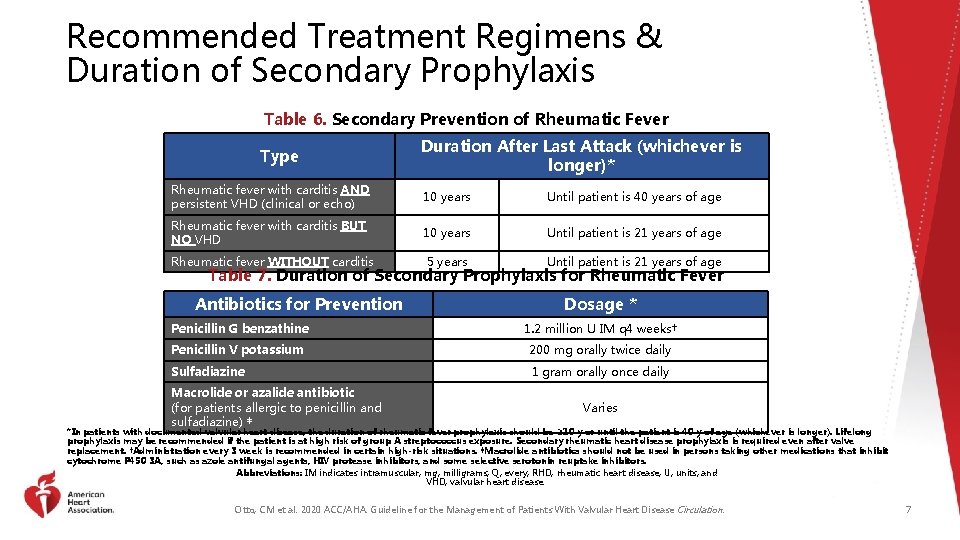
Recommended Treatment Regimens & Duration of Secondary Prophylaxis Table 6. Secondary Prevention of Rheumatic Fever Type Duration After Last Attack (whichever is longer)* Rheumatic fever with carditis AND persistent VHD (clinical or echo) 10 years Until patient is 40 years of age Rheumatic fever with carditis BUT NO VHD 10 years Until patient is 21 years of age Rheumatic fever WITHOUT carditis 5 years Until patient is 21 years of age Table 7. Duration of Secondary Prophylaxis for Rheumatic Fever Antibiotics for Prevention Dosage * Penicillin G benzathine 1. 2 million U IM q 4 weeks† Penicillin V potassium 200 mg orally twice daily Sulfadiazine 1 gram orally once daily Macrolide or azalide antibiotic (for patients allergic to penicillin and sulfadiazine) ‡ Varies *In patients with documented valvular heart disease, the duration of rheumatic fever prophylaxis should be ≥ 10 y or until the patient is 40 y of age (whichever is longer). Lifelong prophylaxis may be recommended if the patient is at high risk of group A streptococcus exposure. Secondary rheumatic heart disease prophylaxis is required even after valve replacement. †Administration every 3 week is recommended in certain high-risk situations. ‡Macrolide antibiotics should not be used in persons taking other medications that inhibit cytochrome P 450 3 A, such as azole antifungal agents, HIV protease inhibitors, and some selective serotonin reuptake inhibitors. Abbreviations: IM indicates intramuscular; mg; milligrams; Q; every; RHD, rheumatic heart disease; U; units; and VHD, valvular heart disease. Otto, CM et al. 2020 ACC/AHA. Guideline for the Management of Patients With Valvular Heart Disease Circulation. 7
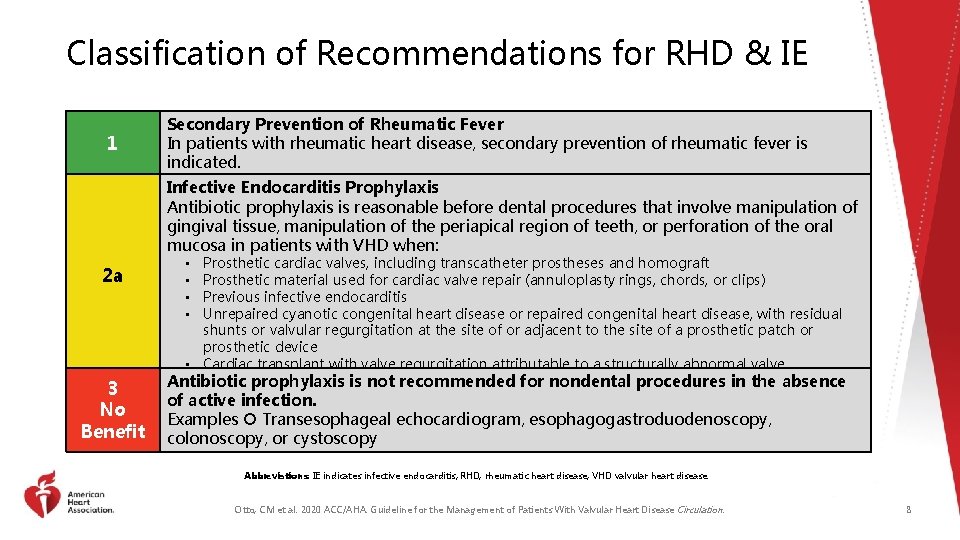
Classification of Recommendations for RHD & IE 1 Secondary Prevention of Rheumatic Fever In patients with rheumatic heart disease, secondary prevention of rheumatic fever is indicated. Infective Endocarditis Prophylaxis Antibiotic prophylaxis is reasonable before dental procedures that involve manipulation of gingival tissue, manipulation of the periapical region of teeth, or perforation of the oral mucosa in patients with VHD when: 2 a 3 No Benefit Prosthetic cardiac valves, including transcatheter prostheses and homograft Prosthetic material used for cardiac valve repair (annuloplasty rings, chords, or clips) Previous infective endocarditis Unrepaired cyanotic congenital heart disease or repaired congenital heart disease, with residual shunts or valvular regurgitation at the site of or adjacent to the site of a prosthetic patch or prosthetic device • Cardiac transplant with valve regurgitation attributable to a structurally abnormal valve • • Antibiotic prophylaxis is not recommended for nondental procedures in the absence of active infection. Examples Transesophageal echocardiogram, esophagogastroduodenoscopy, colonoscopy, or cystoscopy Abbreviations: IE indicates infective endocarditis; RHD, rheumatic heart disease; VHD valvular heart disease. Otto, CM et al. 2020 ACC/AHA. Guideline for the Management of Patients With Valvular Heart Disease Circulation. 8
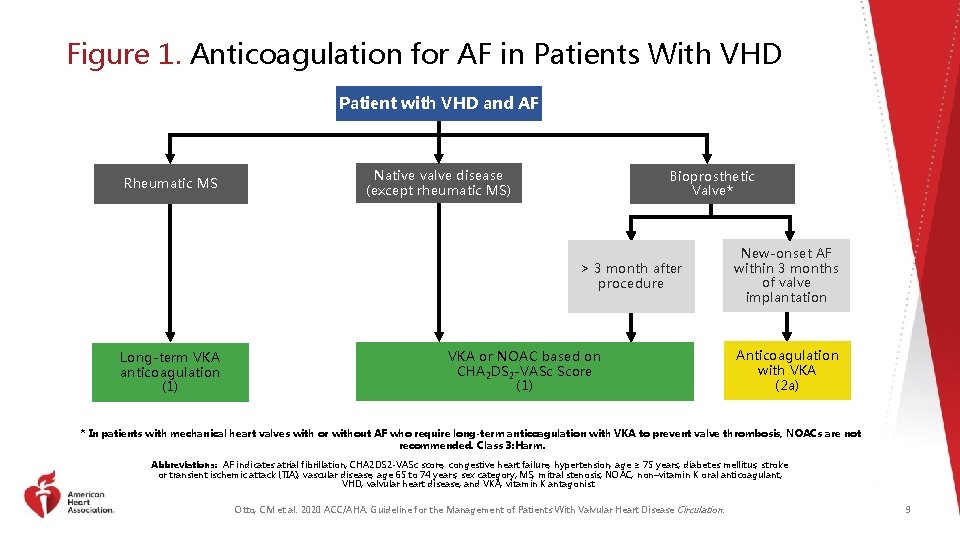
Figure 1. Anticoagulation for AF in Patients With VHD Patient with VHD and AF Rheumatic MS Native valve disease (except rheumatic MS) Bioprosthetic Valve* > 3 month after procedure Long-term VKA anticoagulation (1) VKA or NOAC based on CHA 2 DS 2 -VASc Score (1) New-onset AF within 3 months of valve implantation Anticoagulation with VKA (2 a) * In patients with mechanical heart valves with or without AF who require long-term anticoagulation with VKA to prevent valve thrombosis, NOACs are not recommended. Class 3: Harm. Abbreviations: AF indicates atrial fibrillation; CHA 2 DS 2 -VASc score, congestive heart failure, hypertension, age ≥ 75 years, diabetes mellitus, stroke or transient ischemic attack (TIA), vascular disease, age 65 to 74 years, sex category; MS, mitral stenosis; NOAC, non–vitamin K oral anticoagulant; VHD, valvular heart disease; and VKA, vitamin K antagonist. Otto, CM et al. 2020 ACC/AHA. Guideline for the Management of Patients With Valvular Heart Disease Circulation. 9
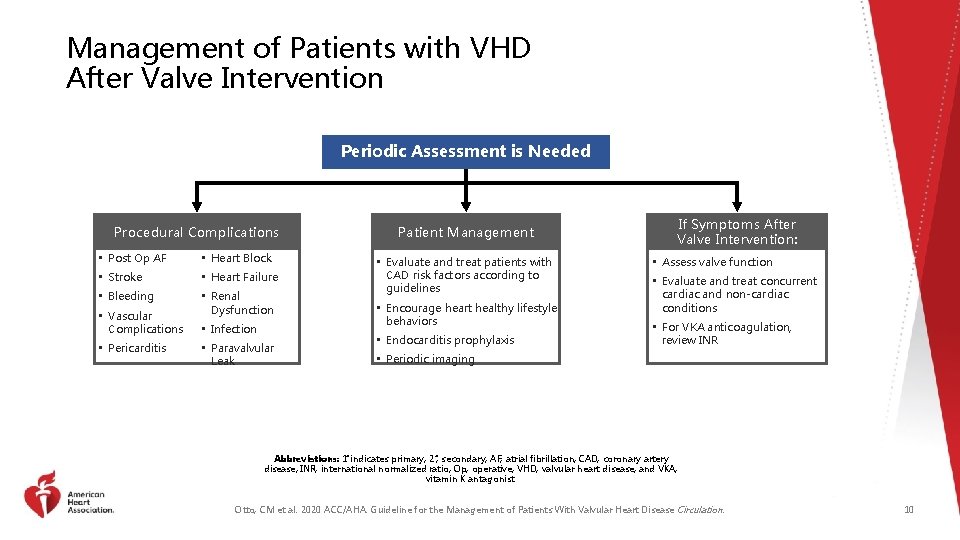
Management of Patients with VHD After Valve Intervention Periodic Assessment is Needed Procedural Complications • Post Op AF • Heart Block • Stroke • Heart Failure • Bleeding • Renal Dysfunction • Vascular Complications • Pericarditis • Infection • Paravalvular Leak Patient Management • Evaluate and treat patients with CAD risk factors according to guidelines • Encourage heart healthy lifestyle behaviors • Endocarditis prophylaxis If Symptoms After Valve Intervention: • Assess valve function • Evaluate and treat concurrent cardiac and non-cardiac conditions • For VKA anticoagulation, review INR • Periodic imaging Abbreviations: 1 indicates primary; 2 , secondary; AF, atrial fibrillation; CAD, coronary artery disease; INR, international normalized ratio; Op, operative; VHD, valvular heart disease; and VKA, vitamin K antagonist. Otto, CM et al. 2020 ACC/AHA. Guideline for the Management of Patients With Valvular Heart Disease Circulation. 10
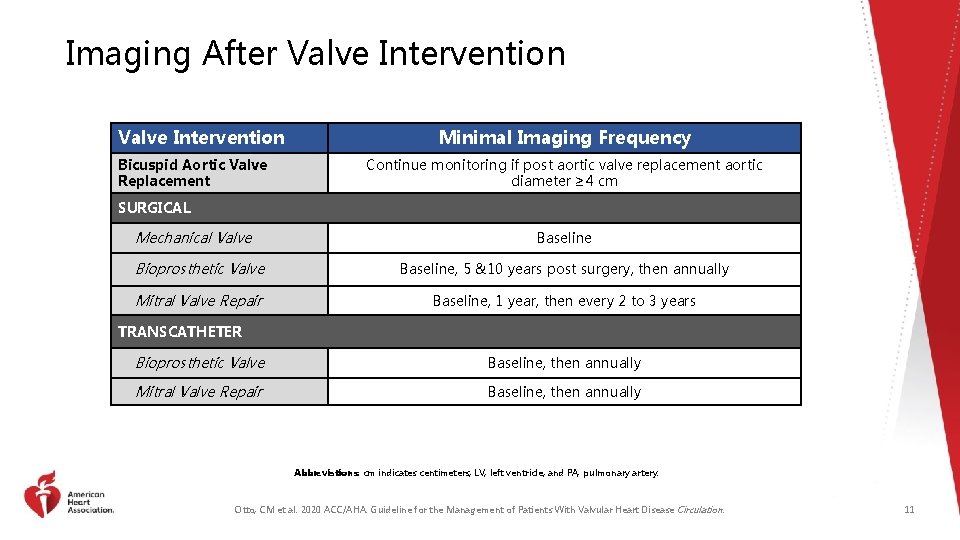
Imaging After Valve Intervention Bicuspid Aortic Valve Replacement Minimal Imaging Frequency Continue monitoring if post aortic valve replacement aortic diameter ≥ 4 cm SURGICAL Mechanical Valve Baseline Bioprosthetic Valve Baseline, 5 &10 years post surgery, then annually Mitral Valve Repair Baseline, 1 year, then every 2 to 3 years TRANSCATHETER Bioprosthetic Valve Baseline, then annually Mitral Valve Repair Baseline, then annually Abbreviations: cm indicates centimeters; LV, left ventricle; and PA, pulmonary artery. Otto, CM et al. 2020 ACC/AHA. Guideline for the Management of Patients With Valvular Heart Disease Circulation. 11
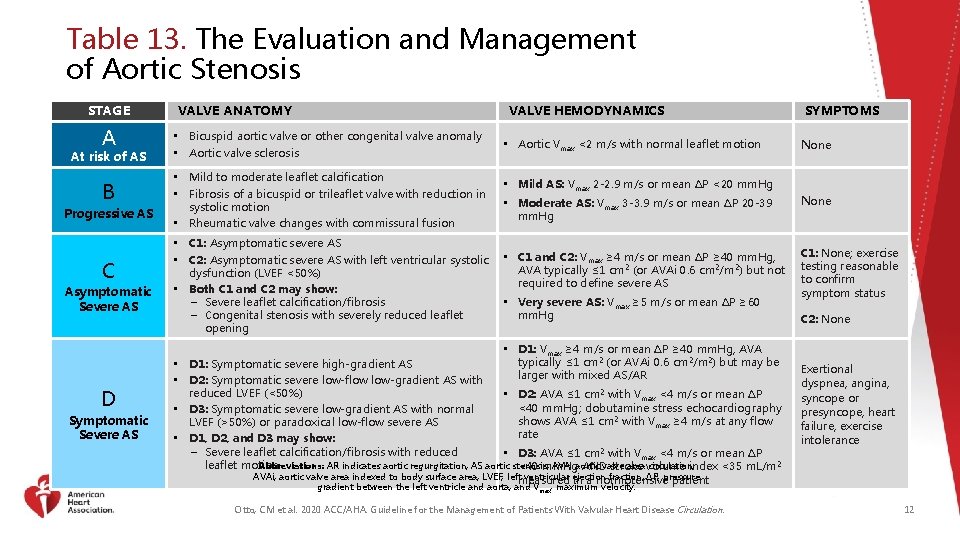
Table 13. The Evaluation and Management of Aortic Stenosis STAGE A At risk of AS B Progressive AS C Asymptomatic Severe AS D Symptomatic Severe AS VALVE ANATOMY VALVE HEMODYNAMICS • Bicuspid aortic valve or other congenital valve anomaly • Aortic valve sclerosis • Mild to moderate leaflet calcification • Fibrosis of a bicuspid or trileaflet valve with reduction in systolic motion • Rheumatic valve changes with commissural fusion • C 1: Asymptomatic severe AS • C 2: Asymptomatic severe AS with left ventricular systolic dysfunction (LVEF <50%) • Both C 1 and C 2 may show: − Severe leaflet calcification/fibrosis − Congenital stenosis with severely reduced leaflet opening • Aortic Vmax <2 m/s with normal leaflet motion • Mild AS: Vmax 2 -2. 9 m/s or mean ∆P <20 mm. Hg SYMPTOMS None • Moderate AS: Vmax 3 -3. 9 m/s or mean ∆P 20 -39 mm. Hg None • C 1 and C 2: Vmax ≥ 4 m/s or mean ∆P ≥ 40 mm. Hg, AVA typically ≤ 1 cm 2 (or AVAi 0. 6 cm 2/m 2) but not required to define severe AS C 1: None; exercise testing reasonable to confirm symptom status • Very severe AS: Vmax ≥ 5 m/s or mean ∆P ≥ 60 mm. Hg • D 1: Vmax ≥ 4 m/s or mean ∆P ≥ 40 mm. Hg, AVA typically ≤ 1 cm 2 (or AVAi 0. 6 cm 2/m 2) but may be • D 1: Symptomatic severe high-gradient AS larger with mixed AS/AR • D 2: Symptomatic severe low-flow low-gradient AS with reduced LVEF (<50%) • D 2: AVA ≤ 1 cm 2 with Vmax <4 m/s or mean ∆P <40 mm. Hg; dobutamine stress echocardiography • D 3: Symptomatic severe low-gradient AS with normal shows AVA ≤ 1 cm 2 with Vmax ≥ 4 m/s at any flow LVEF (>50%) or paradoxical low-flow severe AS rate • D 1, D 2, and D 3 may show: − Severe leaflet calcification/fibrosis with reduced • D 3: AVA ≤ 1 cm 2 with Vmax <4 m/s or mean ∆P Abbreviations: AR indicates aortic regurgitation; AS aortic stenosis; AVA, aortic area volume circulation; leaflet motion <40 mm. Hg ANDvalve stroke index <35 m. L/m 2 AVAi, aortic valve area indexed to body surface area; LVEF, leftmeasured ventricular ejection fraction; ∆P, pressure in a normotensive patient C 2: None Exertional dyspnea, angina, syncope or presyncope, heart failure, exercise intolerance gradient between the left ventricle and aorta; and Vmax, maximum velocity. Otto, CM et al. 2020 ACC/AHA. Guideline for the Management of Patients With Valvular Heart Disease Circulation. 12
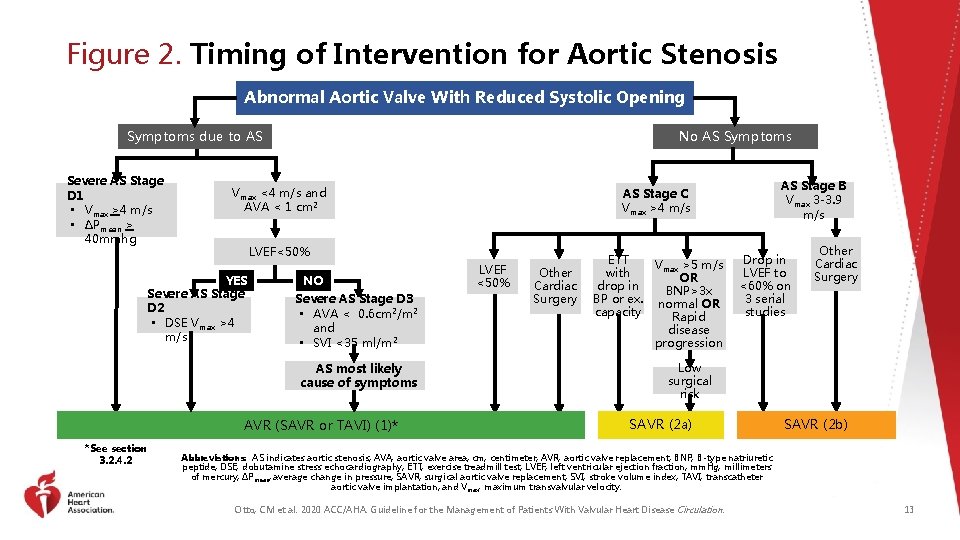
Figure 2. Timing of Intervention for Aortic Stenosis Abnormal Aortic Valve With Reduced Systolic Opening No AS Symptoms due to AS Severe AS Stage D 1 • Vmax >4 m/s • ∆Pmean > 40 mmhg Vmax <4 m/s and AVA < 1 cm 2 LVEF<50% YES Severe AS Stage D 2 • DSE Vmax >4 m/s NO Severe AS Stage D 3 • AVA < 0. 6 cm 2/m 2 and • SVI <35 ml/m 2 AS most likely cause of symptoms AVR (SAVR or TAVI) (1)* *See section 3. 2. 4. 2 AS Stage B Vmax 3 -3. 9 m/s AS Stage C Vmax >4 m/s LVEF <50% Other Cardiac Surgery ETT Vmax >5 m/s with OR drop in BNP>3 x BP or ex. normal OR capacity Rapid disease progression Drop in LVEF to <60% on 3 serial studies Other Cardiac Surgery Low surgical risk SAVR (2 a) SAVR (2 b) Abbreviations: AS indicates aortic stenosis; AVA, aortic valve area; cm, centimeter; AVR, aortic valve replacement; BNP, B-type natriuretic peptide; DSE, dobutamine stress echocardiography; ETT, exercise treadmill test; LVEF, left ventricular ejection fraction; mm. Hg, millimeters of mercury; ∆Pmean, average change in pressure; SAVR, surgical aortic valve replacement; SVI, stroke volume index; TAVI, transcatheter aortic valve implantation; and Vmax, maximum transvalvular velocity. Otto, CM et al. 2020 ACC/AHA. Guideline for the Management of Patients With Valvular Heart Disease Circulation. 13
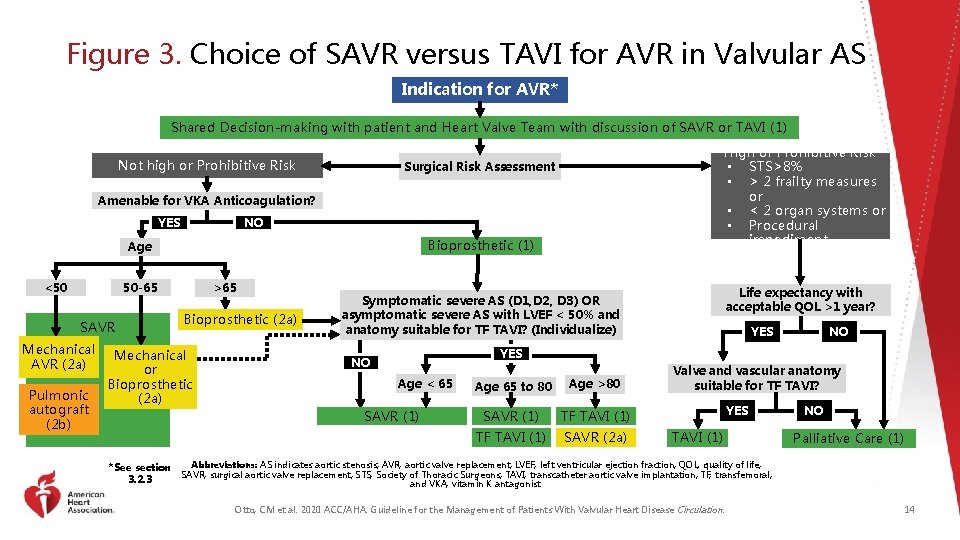
Figure 3. Choice of SAVR versus TAVI for AVR in Valvular AS Indication for AVR* Shared Decision-making with patient and Heart Valve Team with discussion of SAVR or TAVI (1) Not high or Prohibitive Risk High or Prohibitive Risk • STS>8% • > 2 frailty measures or • < 2 organ systems or • Procedural impediment Surgical Risk Assessment Amenable for VKA Anticoagulation? NO YES Bioprosthetic (1) Age <50 50 -65 SAVR Mechanical AVR (2 a) Pulmonic autograft (2 b) >65 Bioprosthetic (2 a) Mechanical or Bioprosthetic (2 a) *See section 3. 2. 3 Life expectancy with acceptable QOL >1 year? Symptomatic severe AS (D 1, D 2, D 3) OR asymptomatic severe AS with LVEF < 50% and anatomy suitable for TF TAVI? (Individualize) YES NO Age < 65 SAVR (1) Age 65 to 80 Age >80 SAVR (1) TF TAVI (1) SAVR (2 a) Valve and vascular anatomy suitable for TF TAVI? YES TAVI (1) NO Palliative Care (1) Abbreviations: AS indicates aortic stenosis; AVR, aortic valve replacement; LVEF, left ventricular ejection fraction; QOL, quality of life; SAVR, surgical aortic valve replacement; STS, Society of Thoracic Surgeons; TAVI, transcatheter aortic valve implantation; TF, transfemoral; and VKA, vitamin K antagonist. Otto, CM et al. 2020 ACC/AHA. Guideline for the Management of Patients With Valvular Heart Disease Circulation. 14
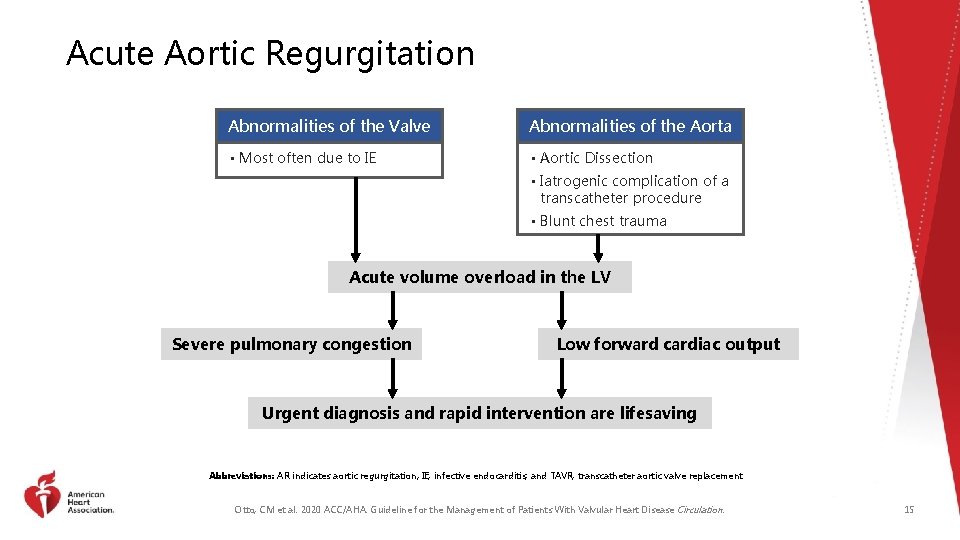
Acute Aortic Regurgitation Abnormalities of the Valve Abnormalities of the Aorta • Most often due to IE • Aortic Dissection • Iatrogenic complication of a transcatheter procedure • Blunt chest trauma Acute volume overload in the LV Severe pulmonary congestion Low forward cardiac output Urgent diagnosis and rapid intervention are lifesaving Abbreviations: AR indicates aortic regurgitation; IE, infective endocarditis, and TAVR, transcatheter aortic valve replacement. Otto, CM et al. 2020 ACC/AHA. Guideline for the Management of Patients With Valvular Heart Disease Circulation. 15
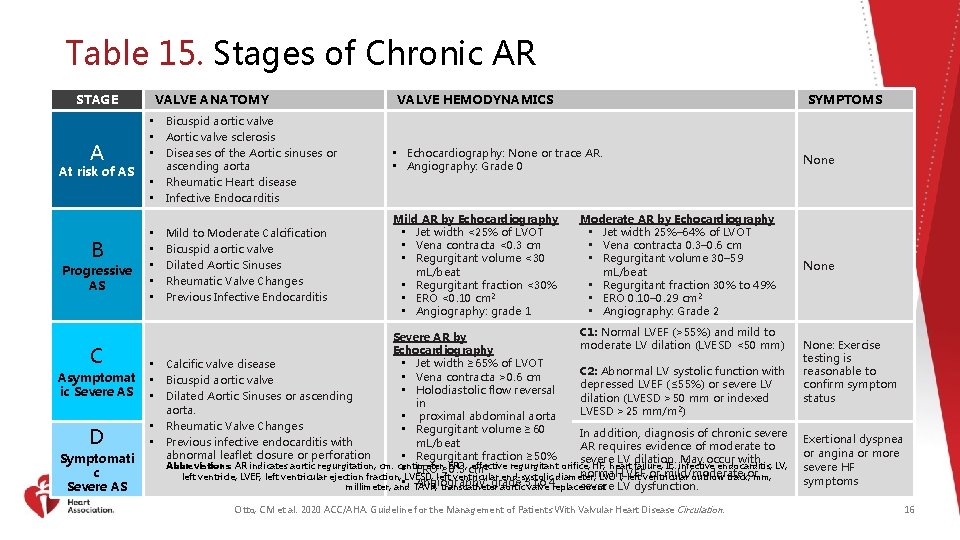
Table 15. Stages of Chronic AR STAGE A At risk of AS B Progressive AS C VALVE ANATOMY • Bicuspid aortic valve • Aortic valve sclerosis • Diseases of the Aortic sinuses or ascending aorta • Rheumatic Heart disease • Infective Endocarditis • • • Asymptomat ic Severe AS • • • D • • Symptomati c Severe AS Mild to Moderate Calcification Bicuspid aortic valve Dilated Aortic Sinuses Rheumatic Valve Changes Previous Infective Endocarditis VALVE HEMODYNAMICS SYMPTOMS • Echocardiography: None or trace AR. • Angiography: Grade 0 None Mild AR by Echocardiography • Jet width <25% of LVOT • Vena contracta <0. 3 cm • Regurgitant volume <30 m. L/beat • Regurgitant fraction <30% • ERO <0. 10 cm 2 • Angiography: grade 1 None Moderate AR by Echocardiography • Jet width 25%– 64% of LVOT • Vena contracta 0. 3– 0. 6 cm • Regurgitant volume 30– 59 m. L/beat • Regurgitant fraction 30% to 49% • ERO 0. 10– 0. 29 cm 2 • Angiography: Grade 2 C 1: Normal LVEF (>55%) and mild to Severe AR by moderate LV dilation (LVESD <50 mm) Echocardiography • Jet width ≥ 65% of LVOT Calcific valve disease C 2: Abnormal LV systolic function with • Vena contracta >0. 6 cm Bicuspid aortic valve depressed LVEF (≤ 55%) or severe LV • Holodiastolic flow reversal Dilated Aortic Sinuses or ascending dilation (LVESD >50 mm or indexed in aorta. LVESD >25 mm/m 2) • proximal abdominal aorta Rheumatic Valve Changes • Regurgitant volume ≥ 60 In addition, diagnosis of chronic severe Previous infective endocarditis with m. L/beat AR requires evidence of moderate to abnormal leaflet closure or perforation • Regurgitant fraction ≥ 50% severe LV dilation. May occur with Abbreviations: AR indicates aortic regurgitation; cm. centimeter; ERO, cm effective regurgitant orifice; HF, heart failure; IE, infective endocarditis; LV, 2 • ERO ≥ 0. 3 normal or mild/moderate left ventricle; LVEF, left ventricular ejection fraction; LVESD, left ventricular end-systolic diameter; LVOT, LVEF left ventricular outflow track; or mm, • TAVR, Angiography: grade to 4 replacement. severe LV dysfunction. millimeter; and transcatheter aortic 3 valve Otto, CM et al. 2020 ACC/AHA. Guideline for the Management of Patients With Valvular Heart Disease Circulation. None: Exercise testing is reasonable to confirm symptom status Exertional dyspnea or angina or more severe HF symptoms 16
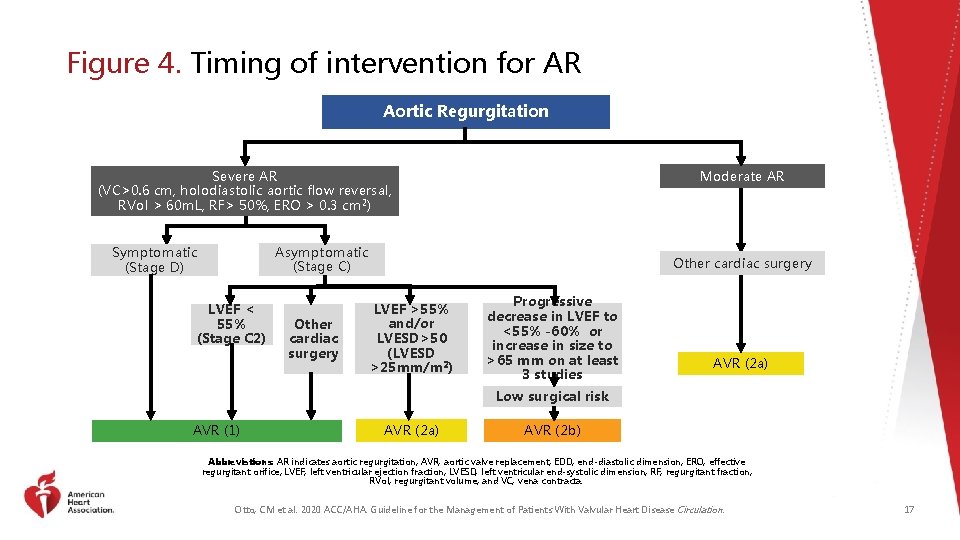
Figure 4. Timing of intervention for AR Aortic Regurgitation Severe AR (VC>0. 6 cm, holodiastolic aortic flow reversal, RVol > 60 m. L, RF> 50%, ERO > 0. 3 cm 2) Moderate AR Asymptomatic (Stage C) Symptomatic (Stage D) LVEF < 55% (Stage C 2) Other cardiac surgery LVEF >55% and/or LVESD>50 (LVESD >25 mm/m 2) Progressive decrease in LVEF to <55% -60% or increase in size to >65 mm on at least 3 studies AVR (2 a) Low surgical risk AVR (1) AVR (2 a) AVR (2 b) Abbreviations: AR indicates aortic regurgitation; AVR, aortic valve replacement; EDD, end-diastolic dimension; ERO, effective regurgitant orifice; LVEF, left ventricular ejection fraction; LVESD, left ventricular end-systolic dimension; RF, regurgitant fraction; RVol, regurgitant volume; and VC, vena contracta. Otto, CM et al. 2020 ACC/AHA. Guideline for the Management of Patients With Valvular Heart Disease Circulation. 17
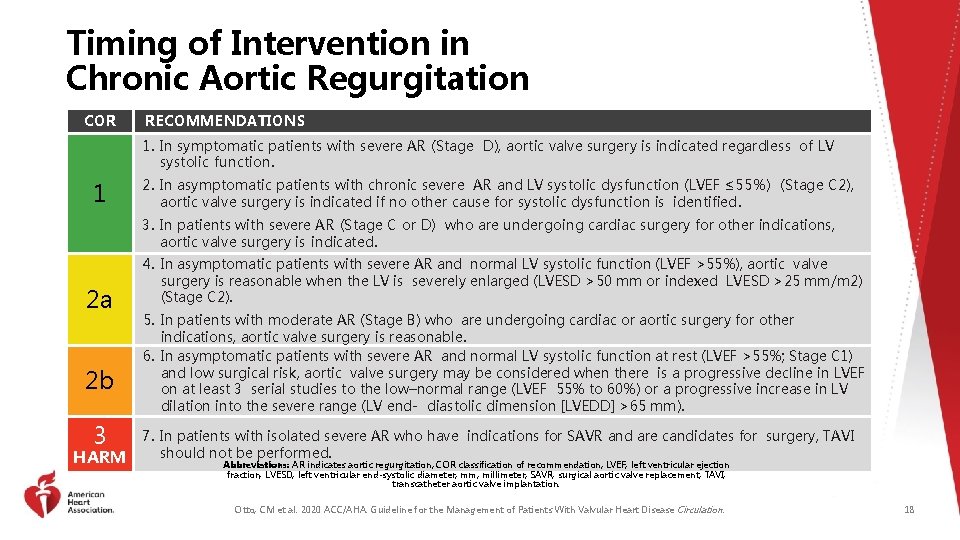
Timing of Intervention in Chronic Aortic Regurgitation COR RECOMMENDATIONS 1. In symptomatic patients with severe AR (Stage D), aortic valve surgery is indicated regardless of LV systolic function. 1 2. In asymptomatic patients with chronic severe AR and LV systolic dysfunction (LVEF ≤ 55%) (Stage C 2), aortic valve surgery is indicated if no other cause for systolic dysfunction is identified. 3. In patients with severe AR (Stage C or D) who are undergoing cardiac surgery for other indications, aortic valve surgery is indicated. 2 a 2 b 3 HARM 4. In asymptomatic patients with severe AR and normal LV systolic function (LVEF >55%), aortic valve surgery is reasonable when the LV is severely enlarged (LVESD >50 mm or indexed LVESD >25 mm/m 2) (Stage C 2). 5. In patients with moderate AR (Stage B) who are undergoing cardiac or aortic surgery for other indications, aortic valve surgery is reasonable. 6. In asymptomatic patients with severe AR and normal LV systolic function at rest (LVEF >55%; Stage C 1) and low surgical risk, aortic valve surgery may be considered when there is a progressive decline in LVEF on at least 3 serial studies to the low–normal range (LVEF 55% to 60%) or a progressive increase in LV dilation into the severe range (LV end- diastolic dimension [LVEDD] >65 mm). 7. In patients with isolated severe AR who have indications for SAVR and are candidates for surgery, TAVI should not be performed. Abbreviations: AR indicates aortic regurgitation; COR classification of recommendation; LVEF, left ventricular ejection fraction, LVESD, left ventricular end-systolic diameter; mm; millimeter; SAVR, surgical aortic valve replacement; TAVI, transcatheter aortic valve implantation. Otto, CM et al. 2020 ACC/AHA. Guideline for the Management of Patients With Valvular Heart Disease Circulation. 18
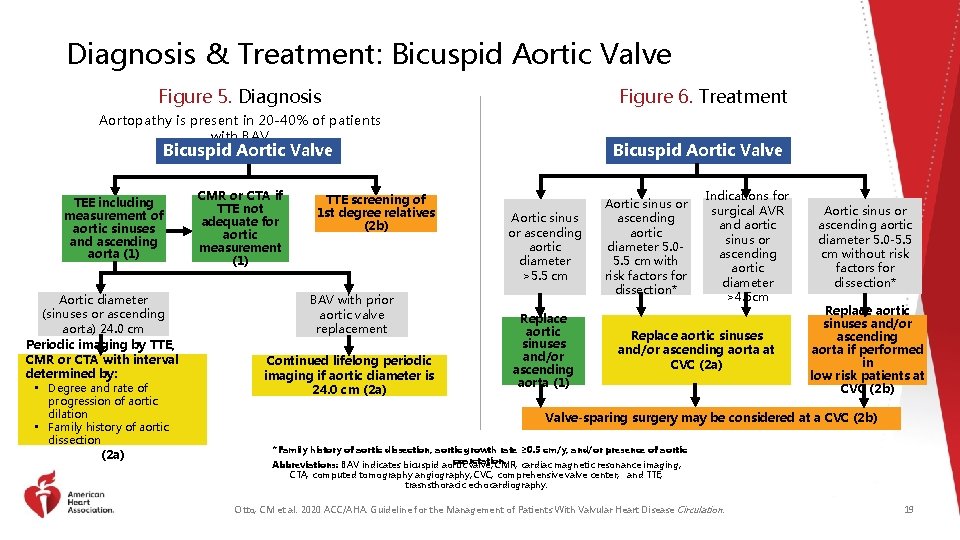
Diagnosis & Treatment: Bicuspid Aortic Valve Figure 5. Diagnosis Figure 6. Treatment Aortopathy is present in 20 -40% of patients with BAV Bicuspid Aortic Valve TEE including measurement of aortic sinuses and ascending aorta (1) Aortic diameter (sinuses or ascending aorta) 24. 0 cm Periodic imaging by TTE, CMR or CTA with interval determined by: • Degree and rate of progression of aortic dilation • Family history of aortic dissection (2 a) CMR or CTA if TTE not adequate for aortic measurement (1) TTE screening of 1 st degree relatives (2 b) BAV with prior aortic valve replacement Continued lifelong periodic imaging if aortic diameter is 24. 0 cm (2 a) Aortic sinus or ascending aortic diameter >5. 5 cm Replace aortic sinuses and/or ascending aorta (1) Aortic sinus or ascending aortic diameter 5. 05. 5 cm with risk factors for dissection* Indications for surgical AVR and aortic sinus or ascending aortic diameter >4. 5 cm Replace aortic sinuses and/or ascending aorta at CVC (2 a) Aortic sinus or ascending aortic diameter 5. 0 -5. 5 cm without risk factors for dissection* Replace aortic sinuses and/or ascending aorta if performed in low risk patients at CVC (2 b) Valve-sparing surgery may be considered at a CVC (2 b) *Family history of aortic dissection, aortic growth rate ≥ 0. 5 cm/y, and/or presence of aortic coarctation. Abbreviations: BAV indicates bicuspid aortic valve; CMR, cardiac magnetic resonance imaging; CTA, computed tomography angiography; CVC, comprehensive valve center; and TTE, trasnsthoracic echocardiography. Otto, CM et al. 2020 ACC/AHA. Guideline for the Management of Patients With Valvular Heart Disease Circulation. 19
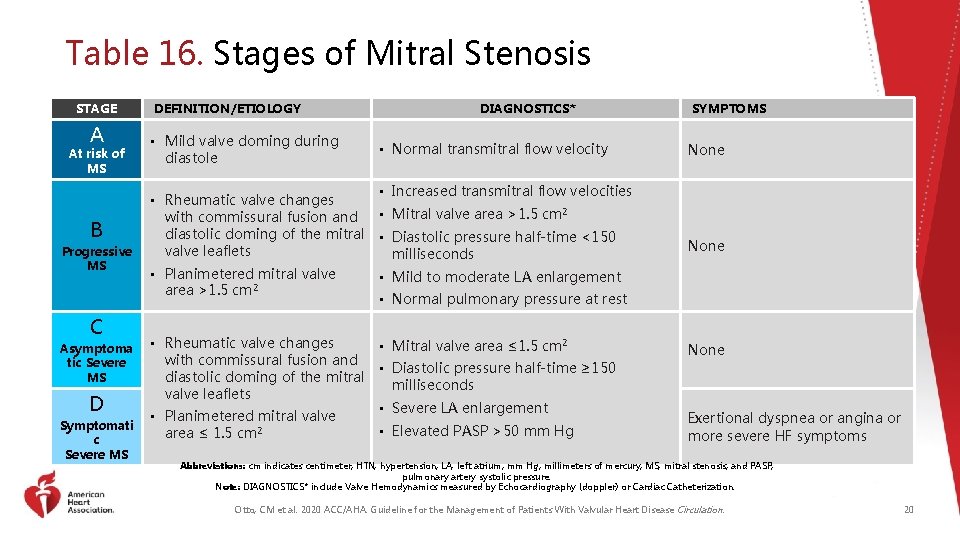
Table 16. Stages of Mitral Stenosis STAGE A At risk of MS B Progressive MS C Asymptoma tic Severe MS D Symptomati c Severe MS DEFINITION/ETIOLOGY • Mild valve doming during diastole DIAGNOSTICS* • Normal transmitral flow velocity • Increased transmitral flow velocities • Rheumatic valve changes 2 with commissural fusion and • Mitral valve area >1. 5 cm diastolic doming of the mitral • Diastolic pressure half-time <150 valve leaflets milliseconds • Planimetered mitral valve • Mild to moderate LA enlargement area >1. 5 cm 2 • Normal pulmonary pressure at rest • Rheumatic valve changes • Mitral valve area ≤ 1. 5 cm 2 with commissural fusion and • Diastolic pressure half-time ≥ 150 diastolic doming of the mitral milliseconds valve leaflets • Severe LA enlargement • Planimetered mitral valve • Elevated PASP >50 mm Hg area ≤ 1. 5 cm 2 SYMPTOMS None Exertional dyspnea or angina or more severe HF symptoms Abbreviations: cm indicates centimeter; HTN, hypertension; LA, left atrium; mm Hg; millimeters of mercury; MS, mitral stenosis; and PASP, pulmonary artery systolic pressure. Note: DIAGNOSTICS* include Valve Hemodynamics measured by Echocardiography (doppler) or Cardiac Catheterization. Otto, CM et al. 2020 ACC/AHA. Guideline for the Management of Patients With Valvular Heart Disease Circulation. 20
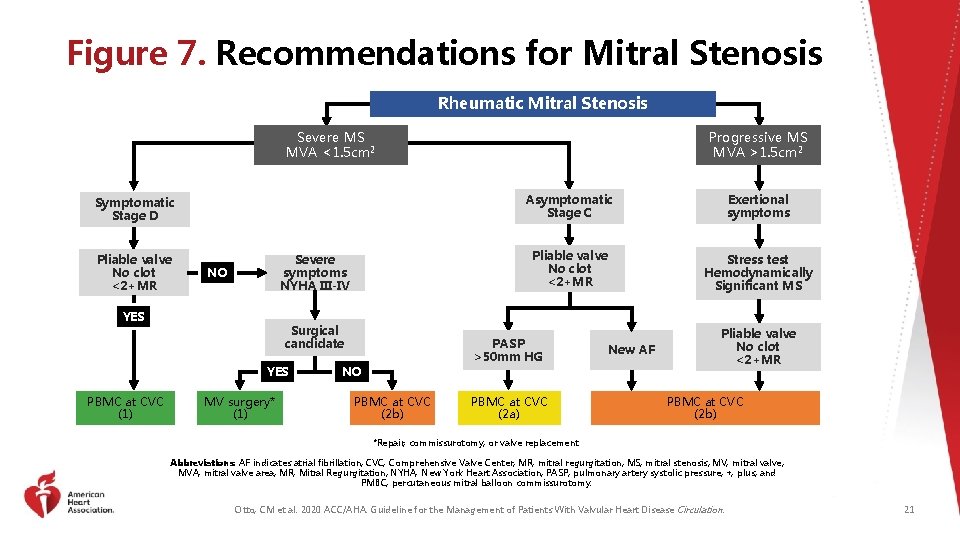
Figure 7. Recommendations for Mitral Stenosis Rheumatic Mitral Stenosis Severe MS MVA <1. 5 cm 2 Symptomatic Stage D Pliable valve No clot <2+MR Severe symptoms NYHA III-IV NO YES Surgical candidate YES PBMC at CVC (1) MV surgery* (1) Progressive MS MVA >1. 5 cm 2 Asymptomatic Stage C Exertional symptoms Pliable valve No clot <2+MR Stress test Hemodynamically Significant MS PASP >50 mm HG NO PBMC at CVC (2 b) PBMC at CVC (2 a) New AF Pliable valve No clot <2+MR PBMC at CVC (2 b) *Repair, commissurotomy, or valve replacement. Abbreviations: AF indicates atrial fibrillation; CVC, Comprehensive Valve Center; MR, mitral regurgitation; MS, mitral stenosis; MV, mitral valve; MVA, mitral valve area; MR, Mitral Regurgitation; NYHA, New York Heart Association; PASP, pulmonary artery systolic pressure; +, plus; and PMBC, percutaneous mitral balloon commissurotomy. Otto, CM et al. 2020 ACC/AHA. Guideline for the Management of Patients With Valvular Heart Disease Circulation. 21
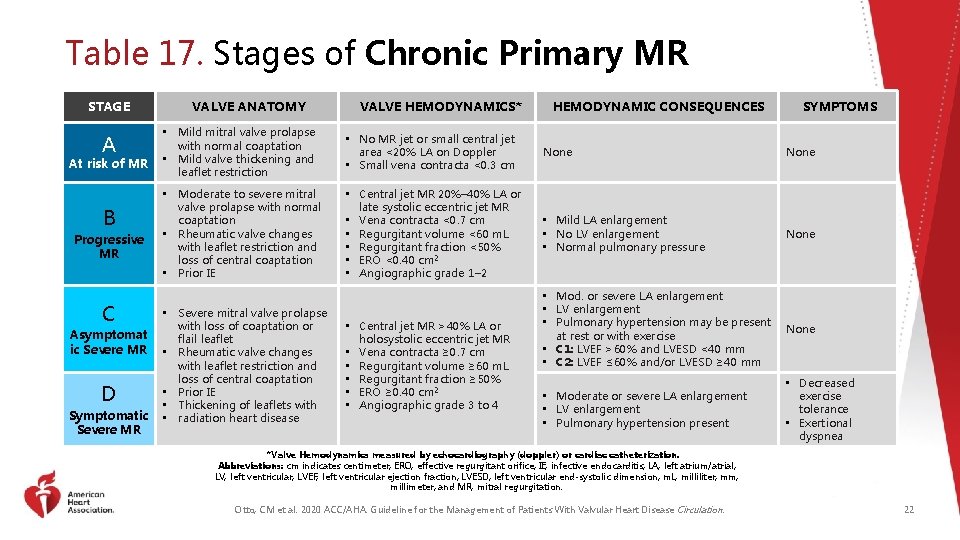
Table 17. Stages of Chronic Primary MR STAGE A At risk of MR B Progressive MR C Asymptomat ic Severe MR D Symptomatic Severe MR VALVE ANATOMY VALVE HEMODYNAMICS* HEMODYNAMIC CONSEQUENCES SYMPTOMS • Mild mitral valve prolapse with normal coaptation • Mild valve thickening and leaflet restriction • No MR jet or small central jet area <20% LA on Doppler • Small vena contracta <0. 3 cm None • Moderate to severe mitral valve prolapse with normal coaptation • Rheumatic valve changes with leaflet restriction and loss of central coaptation • Prior IE • Central jet MR 20%– 40% LA or late systolic eccentric jet MR • Vena contracta <0. 7 cm • Regurgitant volume <60 m. L • Regurgitant fraction <50% • ERO <0. 40 cm 2 • Angiographic grade 1– 2 • Mild LA enlargement • No LV enlargement • Normal pulmonary pressure None • Mod. or severe LA enlargement • LV enlargement • Pulmonary hypertension may be present at rest or with exercise • C 1: LVEF >60% and LVESD <40 mm • C 2: LVEF ≤ 60% and/or LVESD ≥ 40 mm None • Moderate or severe LA enlargement • LV enlargement • Pulmonary hypertension present • Decreased exercise tolerance • Exertional dyspnea • Severe mitral valve prolapse with loss of coaptation or flail leaflet • Rheumatic valve changes with leaflet restriction and loss of central coaptation • Prior IE • Thickening of leaflets with • radiation heart disease • Central jet MR >40% LA or holosystolic eccentric jet MR • Vena contracta ≥ 0. 7 cm • Regurgitant volume ≥ 60 m. L • Regurgitant fraction ≥ 50% • ERO ≥ 0. 40 cm 2 • Angiographic grade 3 to 4 *Valve Hemodynamics measured by echocardiography (doppler) or cardiac catheterization. Abbreviations: cm indicates centimeter; ERO, effective regurgitant orifice; IE, infective endocarditis; LA, left atrium/atrial; LV, left ventricular; LVEF, left ventricular ejection fraction; LVESD; left ventricular end-systolic dimension; m. L, milliliter; mm, millimeter; and MR, mitral regurgitation. Otto, CM et al. 2020 ACC/AHA. Guideline for the Management of Patients With Valvular Heart Disease Circulation. 22
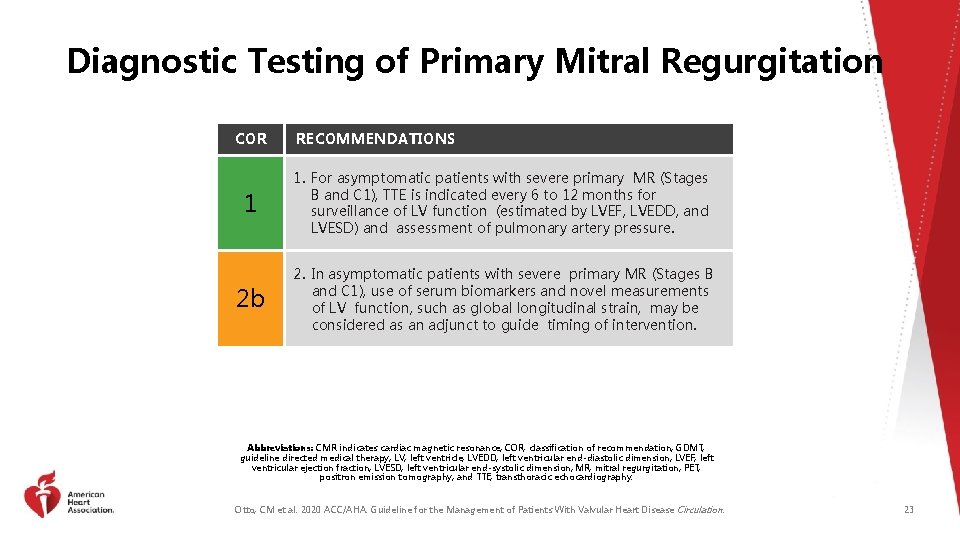
Diagnostic Testing of Primary Mitral Regurgitation COR RECOMMENDATIONS 1 1. For asymptomatic patients with severe primary MR (Stages B and C 1), TTE is indicated every 6 to 12 months for surveillance of LV function (estimated by LVEF, LVEDD, and LVESD) and assessment of pulmonary artery pressure. 2 b 2. In asymptomatic patients with severe primary MR (Stages B and C 1), use of serum biomarkers and novel measurements of LV function, such as global longitudinal strain, may be considered as an adjunct to guide timing of intervention. Abbreviations: CMR indicates cardiac magnetic resonance; COR, classification of recommendation; GDMT, guideline directed medical therapy; LV, left ventricle, LVEDD, left ventricular end-diastolic dimension; LVEF, left ventricular ejection fraction; LVESD, left ventricular end-systolic dimension; MR, mitral regurgitation; PET, positron emission tomography; and TTE, transthoracic echocardiography. Otto, CM et al. 2020 ACC/AHA. Guideline for the Management of Patients With Valvular Heart Disease Circulation. 23
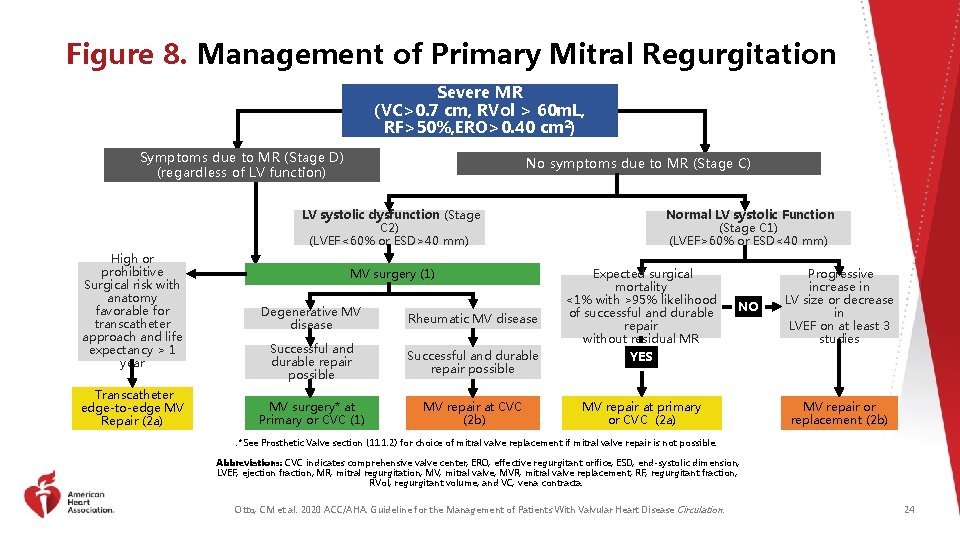
Figure 8. Management of Primary Mitral Regurgitation Severe MR (VC>0. 7 cm, RVol > 60 m. L, RF>50%, ERO>0. 40 cm 2) Symptoms due to MR (Stage D) (regardless of LV function) No symptoms due to MR (Stage C) LV systolic dysfunction (Stage C 2) (LVEF<60% or ESD>40 mm) High or prohibitive Surgical risk with anatomy favorable for transcatheter approach and life expectancy > 1 year Transcatheter edge-to-edge MV Repair (2 a) MV surgery (1) Normal LV systolic Function (Stage C 1) (LVEF>60% or ESD<40 mm) Expected surgical mortality <1% with >95% likelihood of successful and durable repair without residual MR Degenerative MV disease Rheumatic MV disease Successful and durable repair possible YES MV surgery* at Primary or CVC (1) MV repair at CVC (2 b) MV repair at primary or CVC (2 a) NO Progressive increase in LV size or decrease in LVEF on at least 3 studies MV repair or replacement (2 b) . *See Prosthetic Valve section (11. 1. 2) for choice of mitral valve replacement if mitral valve repair is not possible. Abbreviations: CVC indicates comprehensive valve center; ERO, effective regurgitant orifice; ESD, end-systolic dimension; LVEF, ejection fraction; MR, mitral regurgitation; MV, mitral valve; MVR, mitral valve replacement; RF, regurgitant fraction; RVol, regurgitant volume; and VC, vena contracta. Otto, CM et al. 2020 ACC/AHA. Guideline for the Management of Patients With Valvular Heart Disease Circulation. 24
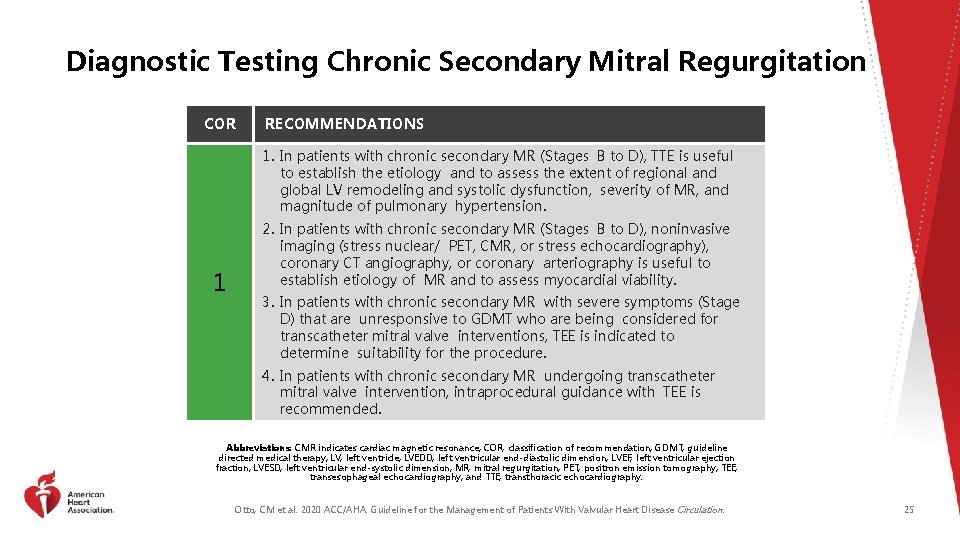
Diagnostic Testing Chronic Secondary Mitral Regurgitation COR RECOMMENDATIONS 1. In patients with chronic secondary MR (Stages B to D), TTE is useful to establish the etiology and to assess the extent of regional and global LV remodeling and systolic dysfunction, severity of MR, and magnitude of pulmonary hypertension. 1 2. In patients with chronic secondary MR (Stages B to D), noninvasive imaging (stress nuclear/ PET, CMR, or stress echocardiography), coronary CT angiography, or coronary arteriography is useful to establish etiology of MR and to assess myocardial viability. 3. In patients with chronic secondary MR with severe symptoms (Stage D) that are unresponsive to GDMT who are being considered for transcatheter mitral valve interventions, TEE is indicated to determine suitability for the procedure. 4. In patients with chronic secondary MR undergoing transcatheter mitral valve intervention, intraprocedural guidance with TEE is recommended. Abbreviations: CMR indicates cardiac magnetic resonance; COR, classification of recommendation; GDMT, guideline directed medical therapy; LV, left ventricle; LVEDD, left ventricular end-diastolic dimension; LVEF, left ventricular ejection fraction; LVESD, left ventricular end-systolic dimension; MR, mitral regurgitation; PET, positron emission tomography; TEE, transesophageal echocardiography; and TTE, transthoracic echocardiography. Otto, CM et al. 2020 ACC/AHA. Guideline for the Management of Patients With Valvular Heart Disease Circulation. 25
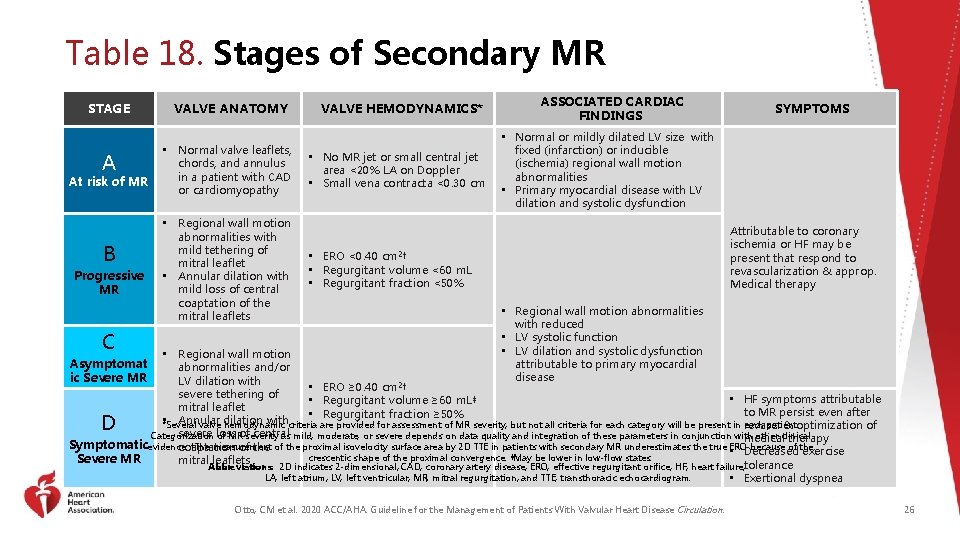
Table 18. Stages of Secondary MR STAGE A At risk of MR B Progressive MR C VALVE ANATOMY • Normal valve leaflets, chords, and annulus in a patient with CAD or cardiomyopathy • Regional wall motion abnormalities with mild tethering of mitral leaflet • Annular dilation with mild loss of central coaptation of the mitral leaflets VALVE HEMODYNAMICS* • No MR jet or small central jet area <20% LA on Doppler • Small vena contracta <0. 30 cm ASSOCIATED CARDIAC FINDINGS SYMPTOMS • Normal or mildly dilated LV size with fixed (infarction) or inducible (ischemia) regional wall motion abnormalities • Primary myocardial disease with LV dilation and systolic dysfunction Attributable to coronary ischemia or HF may be present that respond to revascularization & approp. Medical therapy • ERO <0. 40 cm 2† • Regurgitant volume <60 m. L • Regurgitant fraction <50% • Regional wall motion abnormalities with reduced • LV systolic function • LV dilation and systolic dysfunction attributable to primary myocardial disease • Regional wall motion abnormalities and/or LV dilation with • ERO ≥ 0. 40 cm 2† severe tethering of • HF symptoms attributable • Regurgitant volume ≥ 60 m. L‡ mitral leaflet to MR persist even after • Regurgitant fraction ≥ 50% • *Several Annular dilation with valve hemodynamic criteria are provided for assessment of MR severity, but not all criteria for each category will be present in revasc. each patient. & optimization of severe loss central Categorization of MRof severity as mild, moderate, or severe depends on data quality and integration of these parameters in conjunction with other clinical medical therapy Symptomaticevidence. †The measurement because of the coaptation of the proximal isovelocity surface area by 2 D TTE in patients with secondary MR underestimates the true ERO • Decreased exercise crescentic shape of the proximal convergence. ‡May be lower in low-flow states. Severe MR mitral leaflets tolerance Asymptomat ic Severe MR D Abbreviations: 2 D indicates 2 -dimensional; CAD, coronary artery disease; ERO, effective regurgitant orifice; HF, heart failure; LA, left atrium; LV, left ventricular; MR, mitral regurgitation; and TTE, transthoracic echocardiogram. • Exertional Otto, CM et al. 2020 ACC/AHA. Guideline for the Management of Patients With Valvular Heart Disease Circulation. dyspnea 26
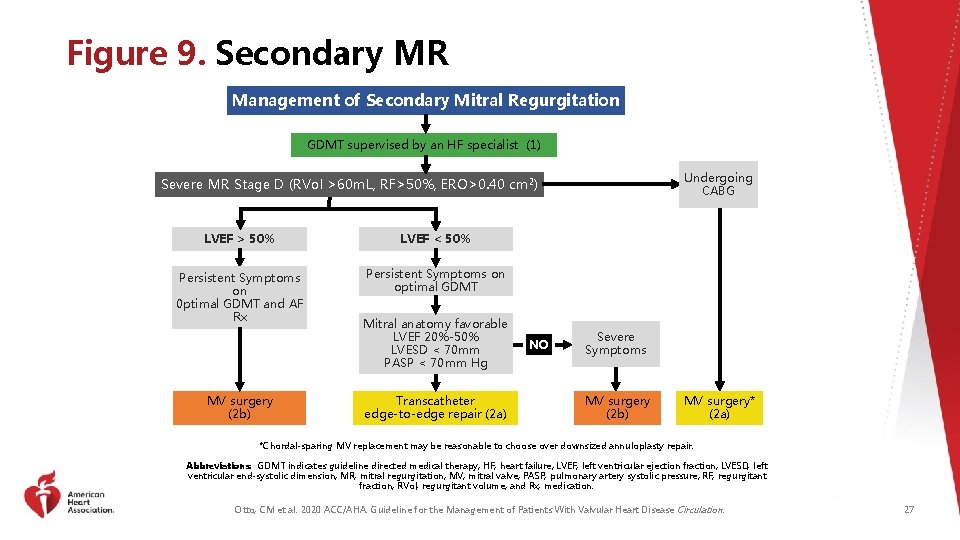
Figure 9. Secondary MR Management of Secondary Mitral Regurgitation GDMT supervised by an HF specialist (1) Undergoing CABG Severe MR Stage D (RVol >60 m. L, RF>50%, ERO>0. 40 cm 2) LVEF > 50% LVEF < 50% Persistent Symptoms on 0 ptimal GDMT and AF Rx Persistent Symptoms on optimal GDMT MV surgery (2 b) Mitral anatomy favorable LVEF 20%-50% LVESD < 70 mm PASP < 70 mm Hg Transcatheter edge-to-edge repair (2 a) NO Severe Symptoms MV surgery (2 b) MV surgery* (2 a) *Chordal-sparing MV replacement may be reasonable to choose over downsized annuloplasty repair. Abbreviations: GDMT indicates guideline directed medical therapy; HF, heart failure; LVEF, left ventricular ejection fraction; LVESD, left ventricular end-systolic dimension; MR, mitral regurgitation; MV, mitral valve; PASP, pulmonary artery systolic pressure; RF, regurgitant fraction; RVol, regurgitant volume; and Rx, medication. Otto, CM et al. 2020 ACC/AHA. Guideline for the Management of Patients With Valvular Heart Disease Circulation. 27
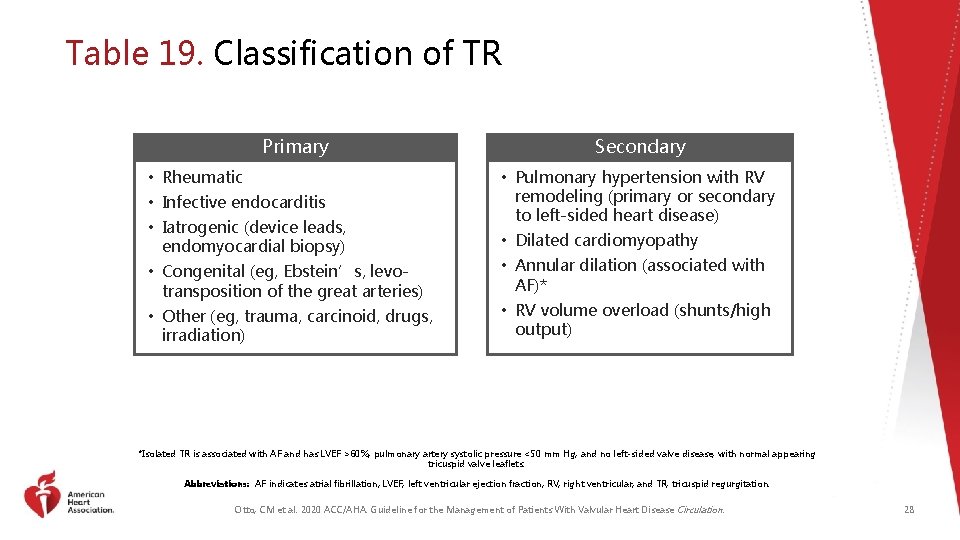
Table 19. Classification of TR Primary • Rheumatic • Infective endocarditis • Iatrogenic (device leads, endomyocardial biopsy) • Congenital (eg, Ebstein’s, levotransposition of the great arteries) • Other (eg, trauma, carcinoid, drugs, irradiation) Secondary • Pulmonary hypertension with RV remodeling (primary or secondary to left-sided heart disease) • Dilated cardiomyopathy • Annular dilation (associated with AF)* • RV volume overload (shunts/high output) *Isolated TR is associated with AF and has LVEF >60%, pulmonary artery systolic pressure <50 mm Hg, and no left-sided valve disease, with normal appearing tricuspid valve leaflets. Abbreviations: AF indicates atrial fibrillation; LVEF, left ventricular ejection fraction; RV, right ventricular; and TR, tricuspid regurgitation. Otto, CM et al. 2020 ACC/AHA. Guideline for the Management of Patients With Valvular Heart Disease Circulation. 28
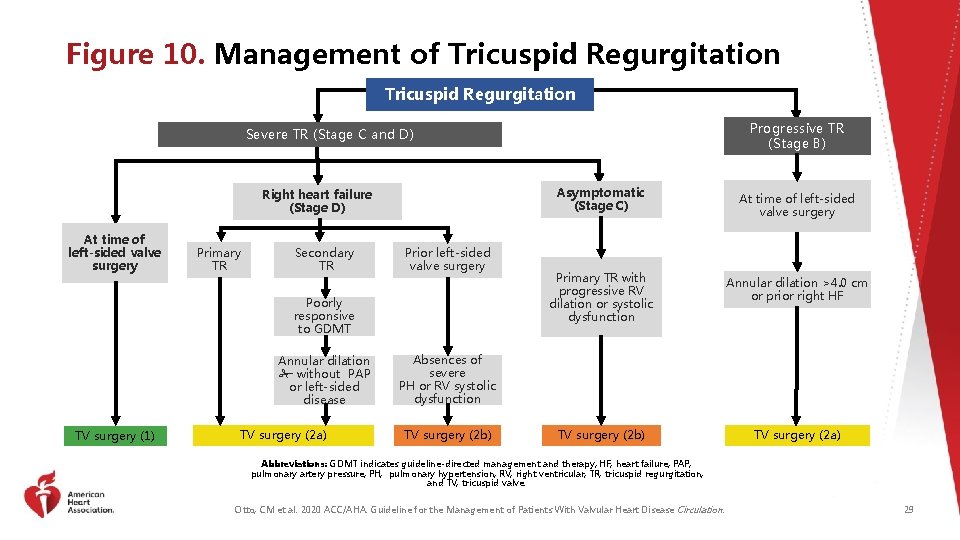
Figure 10. Management of Tricuspid Regurgitation Progressive TR (Stage B) Severe TR (Stage C and D) Asymptomatic (Stage C) Right heart failure (Stage D) At time of left-sided valve surgery Primary TR Secondary TR Prior left-sided valve surgery Poorly responsive to GDMT Annular dilation without PAP or left-sided disease TV surgery (1) TV surgery (2 a) At time of left-sided valve surgery Primary TR with progressive RV dilation or systolic dysfunction Annular dilation >4. 0 cm or prior right HF TV surgery (2 b) TV surgery (2 a) Absences of severe PH or RV systolic dysfunction TV surgery (2 b) Abbreviations: GDMT indicates guideline-directed management and therapy; HF, heart failure; PAP, pulmonary artery pressure; PH, pulmonary hypertension; RV, right ventricular; TR, tricuspid regurgitation; and TV, tricuspid valve. Otto, CM et al. 2020 ACC/AHA. Guideline for the Management of Patients With Valvular Heart Disease Circulation. 29
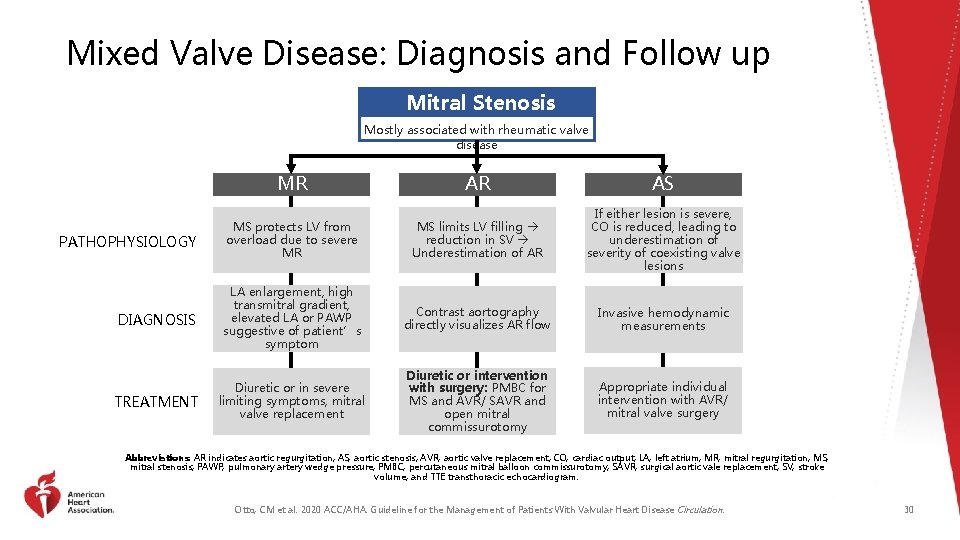
Mixed Valve Disease: Diagnosis and Follow up Mitral Stenosis Mostly associated with rheumatic valve disease MR AR AS PATHOPHYSIOLOGY MS protects LV from overload due to severe MR MS limits LV filling reduction in SV Underestimation of AR If either lesion is severe, CO is reduced, leading to underestimation of severity of coexisting valve lesions DIAGNOSIS LA enlargement, high transmitral gradient, elevated LA or PAWP suggestive of patient’s symptom Contrast aortography directly visualizes AR flow Invasive hemodynamic measurements Diuretic or in severe limiting symptoms, mitral valve replacement Diuretic or intervention with surgery: PMBC for MS and AVR/ SAVR and open mitral commissurotomy Appropriate individual intervention with AVR/ mitral valve surgery TREATMENT Abbreviations: AR indicates aortic regurgitation; AS, aortic stenosis; AVR, aortic valve replacement; CO, cardiac output; LA, left atrium; MR, mitral regurgitation; MS, mitral stenosis; PAWP, pulmonary artery wedge pressure; PMBC, percutaneous mitral balloon commissurotomy; SAVR, surgical aortic vale replacement; SV, stroke volume; and TTE transthoracic echocardiogram. Otto, CM et al. 2020 ACC/AHA. Guideline for the Management of Patients With Valvular Heart Disease Circulation. 30
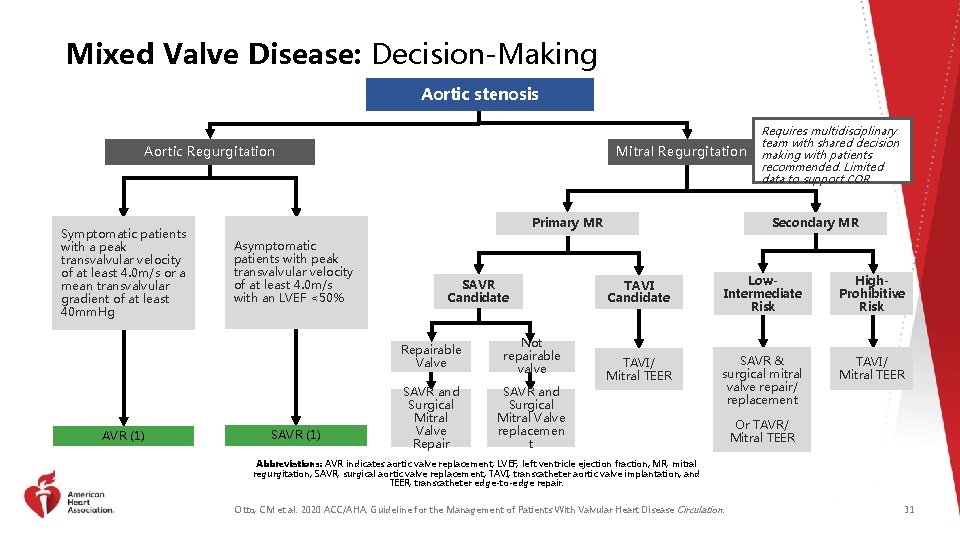
Mixed Valve Disease: Decision-Making Aortic stenosis Aortic Regurgitation Symptomatic patients with a peak transvalvular velocity of at least 4. 0 m/s or a mean transvalvular gradient of at least 40 mm. Hg AVR (1) Mitral Regurgitation Primary MR Asymptomatic patients with peak transvalvular velocity of at least 4. 0 m/s with an LVEF <50% SAVR (1) SAVR Candidate Repairable Valve Not repairable valve SAVR and Surgical Mitral Valve Repair SAVR and Surgical Mitral Valve replacemen t Requires multidisciplinary team with shared decision making with patients recommended. Limited data to support COR Secondary MR TAVI Candidate Low. Intermediate Risk High. Prohibitive Risk TAVI/ Mitral TEER SAVR & surgical mitral valve repair/ replacement TAVI/ Mitral TEER Or TAVR/ Mitral TEER Abbreviations: AVR indicates aortic valve replacement; LVEF, left ventricle ejection fraction; MR, mitral regurgitation; SAVR, surgical aortic valve replacement; TAVI, transcatheter aortic valve implantation; and TEER, transcatheter edge-to-edge repair. Otto, CM et al. 2020 ACC/AHA. Guideline for the Management of Patients With Valvular Heart Disease Circulation. 31
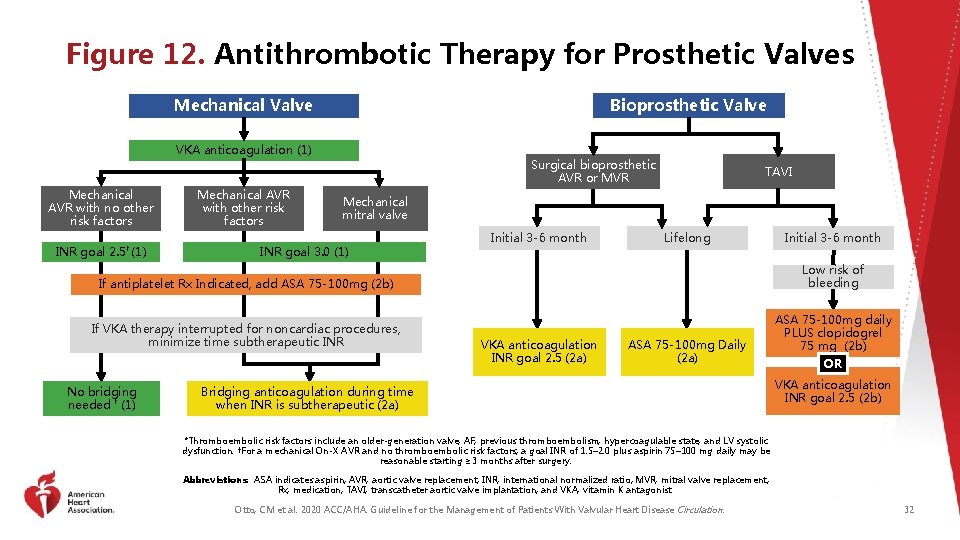
Figure 12. Antithrombotic Therapy for Prosthetic Valves Bioprosthetic Valve Mechanical Valve VKA anticoagulation (1) Mechanical AVR with no other risk factors INR goal 2. 5† (1) Mechanical AVR with other risk factors Surgical bioprosthetic AVR or MVR TAVI Mechanical mitral valve INR goal 3. 0 (1) Initial 3 -6 month Lifelong Low risk of bleeding If antiplatelet Rx Indicated, add ASA 75 -100 mg (2 b) If VKA therapy interrupted for noncardiac procedures, minimize time subtherapeutic INR No bridging needed † (1) Initial 3 -6 month VKA anticoagulation INR goal 2. 5 (2 a) ASA 75 -100 mg Daily (2 a) Bridging anticoagulation during time when INR is subtherapeutic (2 a) ASA 75 -100 mg daily PLUS clopidogrel 75 mg (2 b) OR VKA anticoagulation INR goal 2. 5 (2 b) *Thromboembolic risk factors include an older-generation valve, AF, previous thromboembolism, hypercoagulable state, and LV systolic dysfunction. †For a mechanical On-X AVR and no thromboembolic risk factors, a goal INR of 1. 5– 2. 0 plus aspirin 75– 100 mg daily may be reasonable starting ≥ 3 months after surgery. Abbreviations: ASA indicates aspirin; AVR, aortic valve replacement; INR, international normalized ratio; MVR, mitral valve replacement; Rx, medication; TAVI, transcatheter aortic valve implantation; and VKA, vitamin K antagonist. Otto, CM et al. 2020 ACC/AHA. Guideline for the Management of Patients With Valvular Heart Disease Circulation. 32
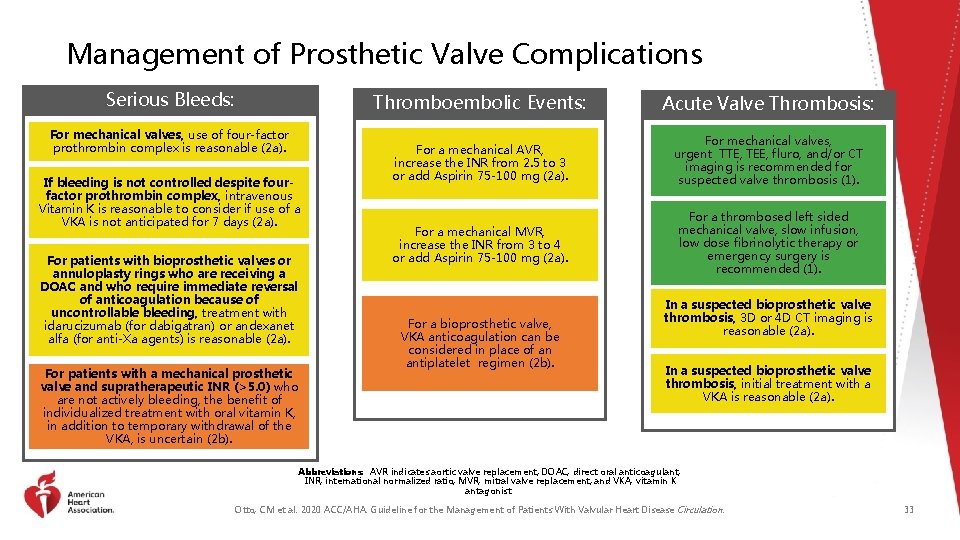
Management of Prosthetic Valve Complications Serious Bleeds: For mechanical valves, use of four-factor prothrombin complex is reasonable (2 a). If bleeding is not controlled despite fourfactor prothrombin complex, intravenous Vitamin K is reasonable to consider if use of a VKA is not anticipated for 7 days (2 a). For patients with bioprosthetic valves or annuloplasty rings who are receiving a DOAC and who require immediate reversal of anticoagulation because of uncontrollable bleeding, treatment with idarucizumab (for dabigatran) or andexanet alfa (for anti-Xa agents) is reasonable (2 a). For patients with a mechanical prosthetic valve and supratherapeutic INR (>5. 0) who are not actively bleeding, the benefit of individualized treatment with oral vitamin K, in addition to temporary withdrawal of the VKA, is uncertain (2 b). Thromboembolic Events: Acute Valve Thrombosis: For a mechanical AVR, increase the INR from 2. 5 to 3 or add Aspirin 75 -100 mg (2 a). For mechanical valves, urgent TTE, TEE, fluro, and/or CT imaging is recommended for suspected valve thrombosis (1). For a mechanical MVR, increase the INR from 3 to 4 or add Aspirin 75 -100 mg (2 a). For a thrombosed left sided mechanical valve, slow infusion, low dose fibrinolytic therapy or emergency surgery is recommended (1). For a bioprosthetic valve, VKA anticoagulation can be considered in place of an antiplatelet regimen (2 b). In a suspected bioprosthetic valve thrombosis, 3 D or 4 D CT imaging is reasonable (2 a). In a suspected bioprosthetic valve thrombosis, initial treatment with a VKA is reasonable (2 a). Abbreviations: AVR indicates aortic valve replacement; DOAC, direct oral anticoagulant; INR, international normalized ratio; MVR, mitral valve replacement; and VKA, vitamin K antagonist. Otto, CM et al. 2020 ACC/AHA. Guideline for the Management of Patients With Valvular Heart Disease Circulation. 33
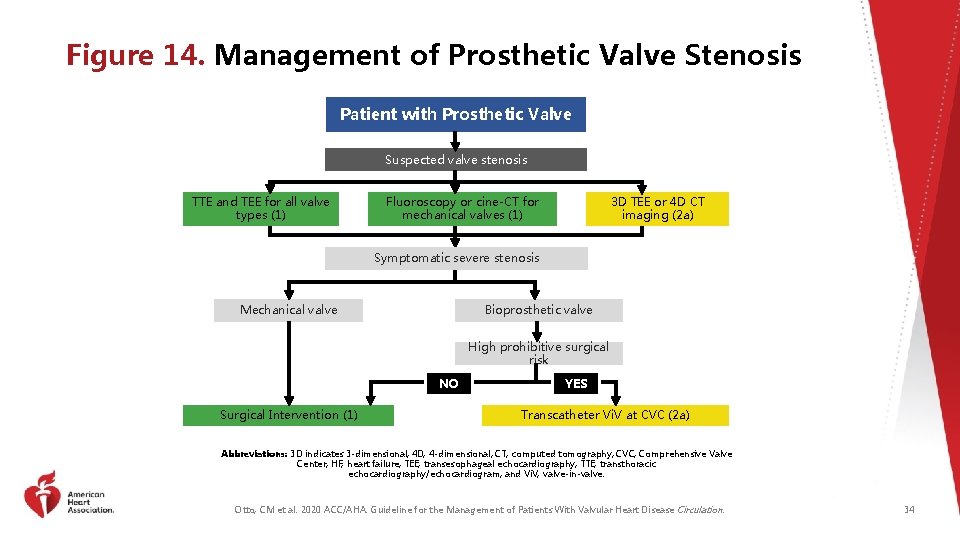
Figure 14. Management of Prosthetic Valve Stenosis Patient with Prosthetic Valve Suspected valve stenosis TTE and TEE for all valve types (1) 3 D TEE or 4 D CT imaging (2 a) Fluoroscopy or cine-CT for mechanical valves (1) Symptomatic severe stenosis Mechanical valve Bioprosthetic valve High prohibitive surgical risk NO Surgical Intervention (1) YES Transcatheter Vi. V at CVC (2 a) Abbreviations: 3 D indicates 3 -dimensional; 4 D, 4 -dimensional; CT, computed tomography; CVC, Comprehensive Valve Center; HF, heart failure; TEE, transesophageal echocardiography; TTE, transthoracic echocardiography/echocardiogram; and Vi. V, valve-in-valve. Otto, CM et al. 2020 ACC/AHA. Guideline for the Management of Patients With Valvular Heart Disease Circulation. 34
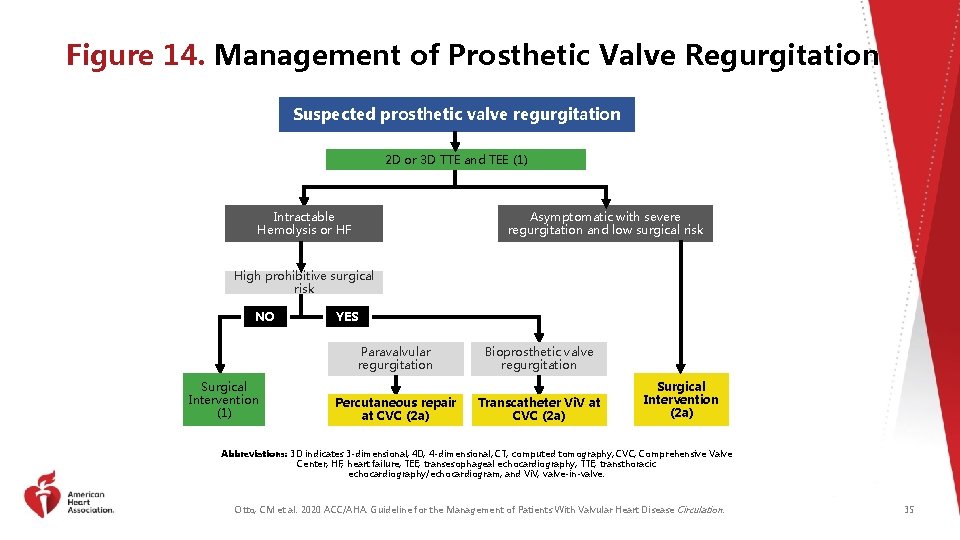
Figure 14. Management of Prosthetic Valve Regurgitation Suspected prosthetic valve regurgitation 2 D or 3 D TTE and TEE (1) Intractable Hemolysis or HF Asymptomatic with severe regurgitation and low surgical risk High prohibitive surgical risk NO YES Paravalvular regurgitation Surgical Intervention (1) Percutaneous repair at CVC (2 a) Bioprosthetic valve regurgitation Transcatheter Vi. V at CVC (2 a) Surgical Intervention (2 a) Abbreviations: 3 D indicates 3 -dimensional; 4 D, 4 -dimensional; CT, computed tomography; CVC, Comprehensive Valve Center; HF, heart failure; TEE, transesophageal echocardiography; TTE, transthoracic echocardiography/echocardiogram; and Vi. V, valve-in-valve. Otto, CM et al. 2020 ACC/AHA. Guideline for the Management of Patients With Valvular Heart Disease Circulation. 35
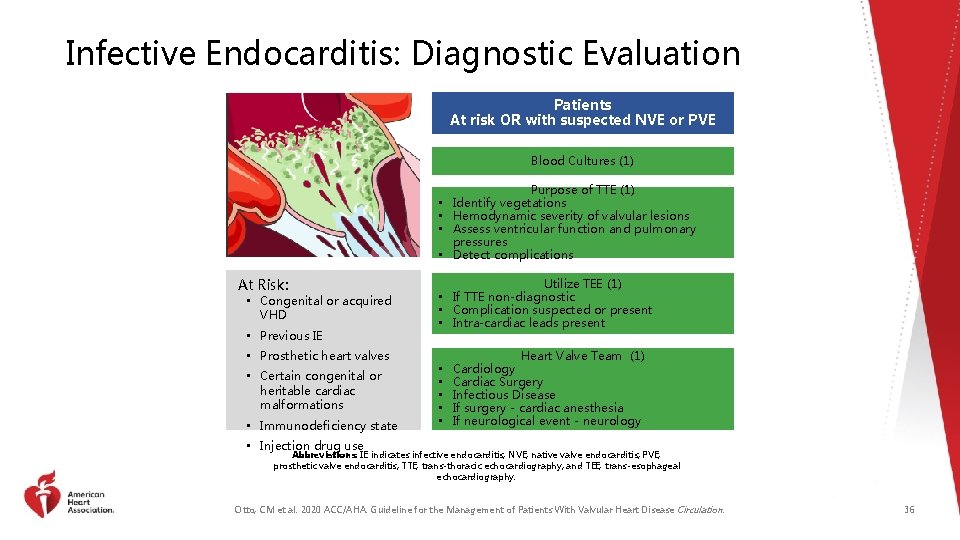
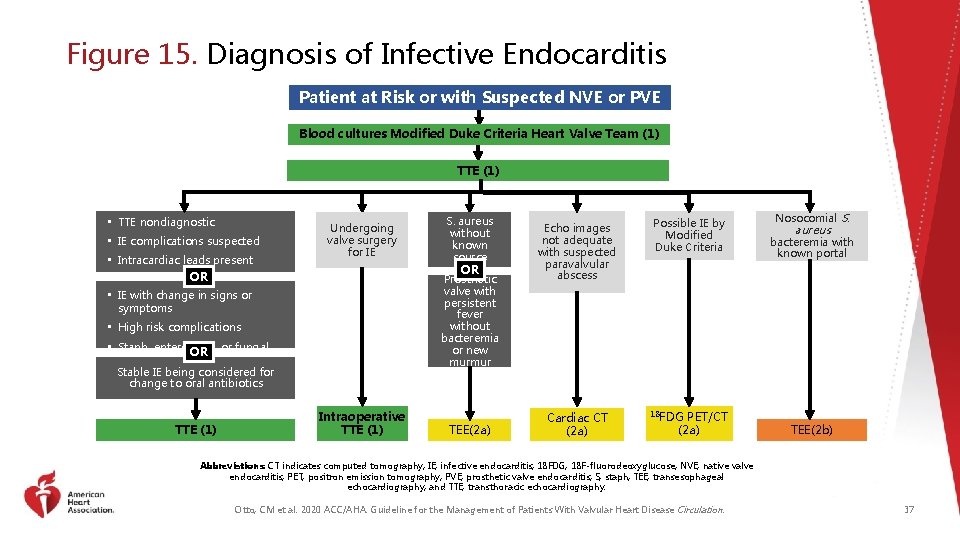
Infective Endocarditis: Diagnostic Evaluation Patients At risk OR with suspected NVE or PVE Blood Cultures (1) Purpose of TTE (1) • Identify vegetations • Hemodynamic severity of valvular lesions • Assess ventricular function and pulmonary pressures • Detect complications At Risk: • Congenital or acquired VHD • Previous IE • Prosthetic heart valves • Certain congenital or heritable cardiac malformations • Immunodeficiency state Utilize TEE (1) • If TTE non-diagnostic • Complication suspected or present • Intra-cardiac leads present • • • Heart Valve Team (1) Cardiology Cardiac Surgery Infectious Disease If surgery - cardiac anesthesia If neurological event - neurology • Injection drug use Abbreviations: IE indicates infective endocarditis; NVE, native valve endocarditis; PVE, prosthetic valve endocarditis; TTE, trans-thoracic echocardiography; and TEE, trans-esophageal echocardiography. Otto, CM et al. 2020 ACC/AHA. Guideline for the Management of Patients With Valvular Heart Disease Circulation. 36
Figure 15. Diagnosis of Infective Endocarditis Patient at Risk or with Suspected NVE or PVE Blood cultures Modified Duke Criteria Heart Valve Team (1) TTE (1) • TTE nondiagnostic • IE complications suspected • Intracardiac leads present OR Undergoing valve surgery for IE OR Echo images not adequate with suspected paravalvular abscess TEE(2 a) Cardiac CT (2 a) Prosthetic valve with persistent fever without bacteremia or new murmur • IE with change in signs or symptoms • High risk complications • Staph, enterococci, or fungal OR infection Stable IE being considered for change to oral antibiotics TTE (1) S. aureus without known source Intraoperative TTE (1) Possible IE by Modified Duke Criteria 18 FDG PET/CT (2 a) Nosocomial S. aureus bacteremia with known portal TEE(2 b) Abbreviations: CT indicates computed tomography; IE, infective endocarditis; 18 FDG, 18 F-fluorodeoxyglucose; NVE, native valve endocarditis; PET, positron emission tomography; PVE, prosthetic valve endocarditis; S, staph; TEE, transesophageal echocardiography; and TTE, transthoracic echocardiography. Otto, CM et al. 2020 ACC/AHA. Guideline for the Management of Patients With Valvular Heart Disease Circulation. 37
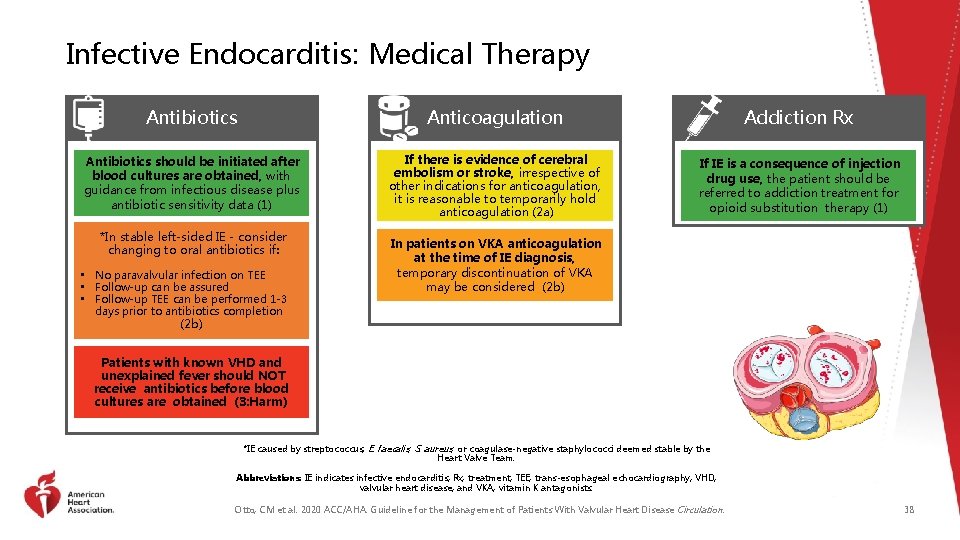
Infective Endocarditis: Medical Therapy Antibiotics Anticoagulation Addiction Rx Antibiotics should be initiated after blood cultures are obtained, with guidance from infectious disease plus antibiotic sensitivity data (1) If there is evidence of cerebral embolism or stroke, irrespective of other indications for anticoagulation, it is reasonable to temporarily hold anticoagulation (2 a) If IE is a consequence of injection drug use, the patient should be referred to addiction treatment for opioid substitution therapy (1) *In stable left-sided IE - consider changing to oral antibiotics if: • No paravalvular infection on TEE • Follow-up can be assured • Follow-up TEE can be performed 1 -3 days prior to antibiotics completion (2 b) In patients on VKA anticoagulation at the time of IE diagnosis, temporary discontinuation of VKA may be considered (2 b) Patients with known VHD and unexplained fever should NOT receive antibiotics before blood cultures are obtained (3: Harm) *IE caused by streptococcus, E. faecalis, S. aureus, or coagulase-negative staphylococci deemed stable by the Heart Valve Team. Abbreviations: IE indicates infective endocarditis; Rx, treatment; TEE, trans-esophageal echocardiography; VHD, valvular heart disease; and VKA, vitamin K antagonists. Otto, CM et al. 2020 ACC/AHA. Guideline for the Management of Patients With Valvular Heart Disease Circulation. 38
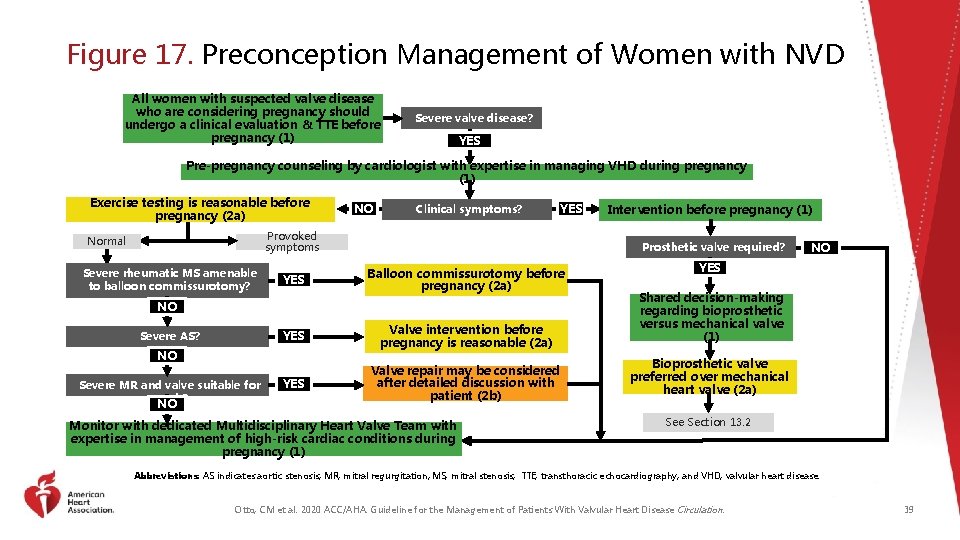
Figure 17. Preconception Management of Women with NVD All women with suspected valve disease who are considering pregnancy should undergo a clinical evaluation & TTE before pregnancy (1) Severe valve disease? YES Pre-pregnancy counseling by cardiologist with expertise in managing VHD during pregnancy (1) Exercise testing is reasonable before pregnancy (2 a) NO Clinical symptoms? YES Provoked symptoms Normal Severe rheumatic MS amenable to balloon commissurotomy? YES Prosthetic valve required? Balloon commissurotomy before pregnancy (2 a) NO Severe AS? YES Valve intervention before pregnancy is reasonable (2 a) YES Valve repair may be considered after detailed discussion with patient (2 b) NO Severe MR and valve suitable for repair? NO Intervention before pregnancy (1) Monitor with dedicated Multidisciplinary Heart Valve Team with expertise in management of high-risk cardiac conditions during pregnancy (1) NO YES Shared decision-making regarding bioprosthetic versus mechanical valve (1) Bioprosthetic valve preferred over mechanical heart valve (2 a) See Section 13. 2 Abbreviations: AS indicates aortic stenosis; MR, mitral regurgitation; MS, mitral stenosis; TTE, transthoracic echocardiography; and VHD, valvular heart disease. Otto, CM et al. 2020 ACC/AHA. Guideline for the Management of Patients With Valvular Heart Disease Circulation. 39
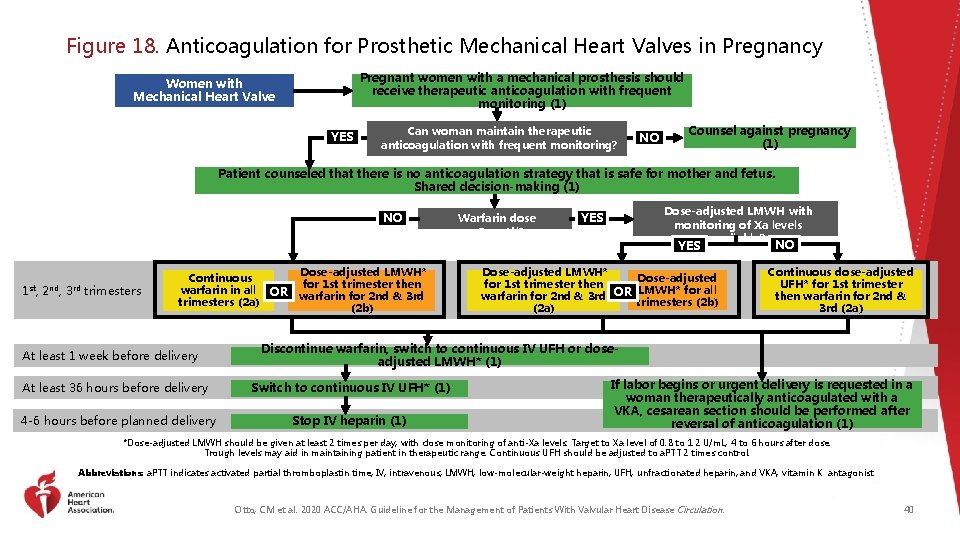
Figure 18. Anticoagulation for Prosthetic Mechanical Heart Valves in Pregnancy Pregnant women with a mechanical prosthesis should receive therapeutic anticoagulation with frequent monitoring (1) Women with Mechanical Heart Valve YES Can woman maintain therapeutic anticoagulation with frequent monitoring? NO Counsel against pregnancy (1) Patient counseled that there is no anticoagulation strategy that is safe for mother and fetus. Shared decision-making (1) NO 1 st, 2 nd, 3 rd trimesters Dose-adjusted LMWH* Continuous for 1 st trimester then warfarin in all OR warfarin for 2 nd & 3 rd trimesters (2 a) (2 b) At least 1 week before delivery Warfarin dose >5 mg/dl? Dose-adjusted LMWH with monitoring of Xa levels available? YES Dose-adjusted LMWH* Dose-adjusted for 1 st trimester then LMWH* for all OR warfarin for 2 nd & 3 rd trimesters (2 b) (2 a) NO Continuous dose-adjusted UFH* for 1 st trimester then warfarin for 2 nd & 3 rd (2 a) Discontinue warfarin, switch to continuous IV UFH or doseadjusted LMWH* (1) At least 36 hours before delivery Switch to continuous IV UFH* (1) 4 -6 hours before planned delivery Stop IV heparin (1) If labor begins or urgent delivery is requested in a woman therapeutically anticoagulated with a VKA, cesarean section should be performed after reversal of anticoagulation (1) *Dose-adjusted LMWH should be given at least 2 times per day, with close monitoring of anti-Xa levels. Target to Xa level of 0. 8 to 1. 2 U/m. L, 4 to 6 hours after dose. Trough levels may aid in maintaining patient in therapeutic range. Continuous UFH should be adjusted to a. PTT 2 times control. Abbreviations: a. PTT indicates activated partial thromboplastin time; IV, intravenous; LMWH, low-molecular-weight heparin; UFH, unfractionated heparin; and VKA, vitamin K antagonist. Otto, CM et al. 2020 ACC/AHA. Guideline for the Management of Patients With Valvular Heart Disease Circulation. 40
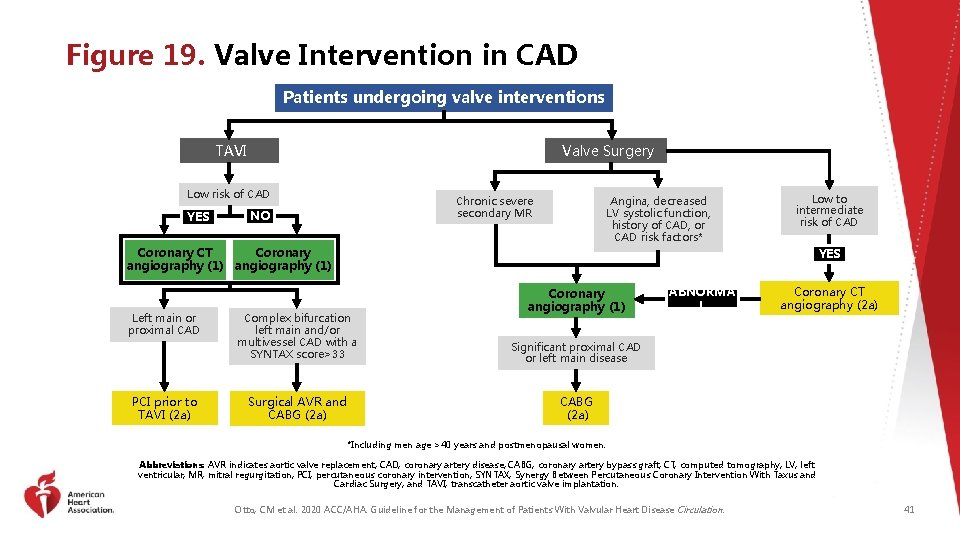
Figure 19. Valve Intervention in CAD Patients undergoing valve interventions TAVI Valve Surgery Low risk of CAD YES Chronic severe secondary MR NO Angina, decreased LV systolic function, history of CAD, or CAD risk factors* Low to intermediate risk of CAD Coronary CT angiography (1) Left main or proximal CAD PCI prior to TAVI (2 a) YES Coronary angiography (1) Complex bifurcation left main and/or multivessel CAD with a SYNTAX score>33 Significant proximal CAD or left main disease Surgical AVR and CABG (2 a) ABNORMA L Coronary CT angiography (2 a) *Including men age >40 years and postmenopausal women. Abbreviations: AVR indicates aortic valve replacement; CAD, coronary artery disease; CABG, coronary artery bypass graft; CT, computed tomography; LV, left ventricular; MR, mitral regurgitation; PCI, percutaneous coronary intervention; SYNTAX, Synergy Between Percutaneous Coronary Intervention With Taxus and Cardiac Surgery; and TAVI, transcatheter aortic valve implantation. Otto, CM et al. 2020 ACC/AHA. Guideline for the Management of Patients With Valvular Heart Disease Circulation. 41
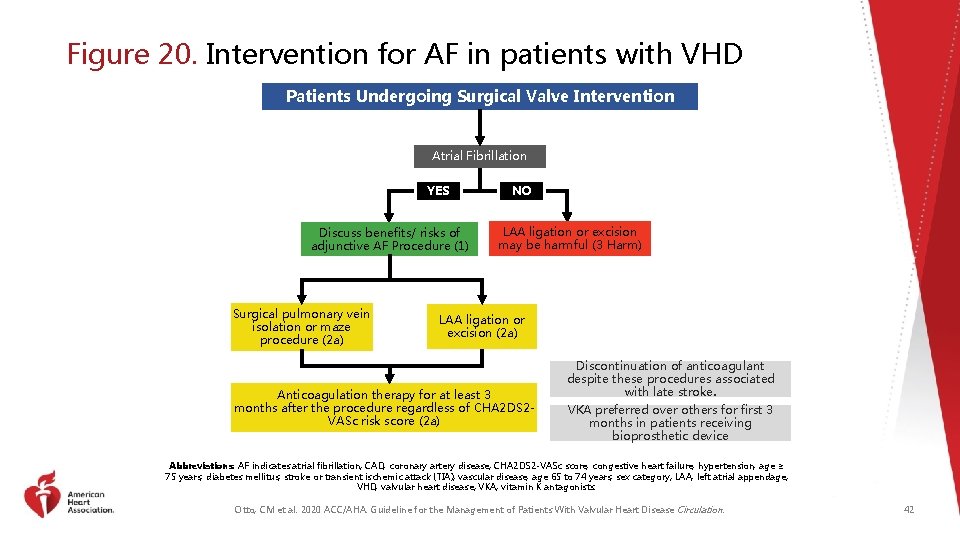
Figure 20. Intervention for AF in patients with VHD Patients Undergoing Surgical Valve Intervention Atrial Fibrillation YES Discuss benefits/ risks of adjunctive AF Procedure (1) Surgical pulmonary vein isolation or maze procedure (2 a) NO LAA ligation or excision may be harmful (3 Harm) LAA ligation or excision (2 a) Anticoagulation therapy for at least 3 months after the procedure regardless of CHA 2 DS 2 VASc risk score (2 a) Discontinuation of anticoagulant despite these procedures associated with late stroke. VKA preferred over others for first 3 months in patients receiving bioprosthetic device Abbreviations: AF indicates atrial fibrillation; CAD, coronary artery disease; CHA 2 DS 2 -VASc score, congestive heart failure, hypertension, age ≥ 75 years, diabetes mellitus, stroke or transient ischemic attack (TIA), vascular disease, age 65 to 74 years, sex category; LAA, left atrial appendage; VHD, valvular heart disease; VKA, vitamin K antagonists. Otto, CM et al. 2020 ACC/AHA. Guideline for the Management of Patients With Valvular Heart Disease Circulation. 42
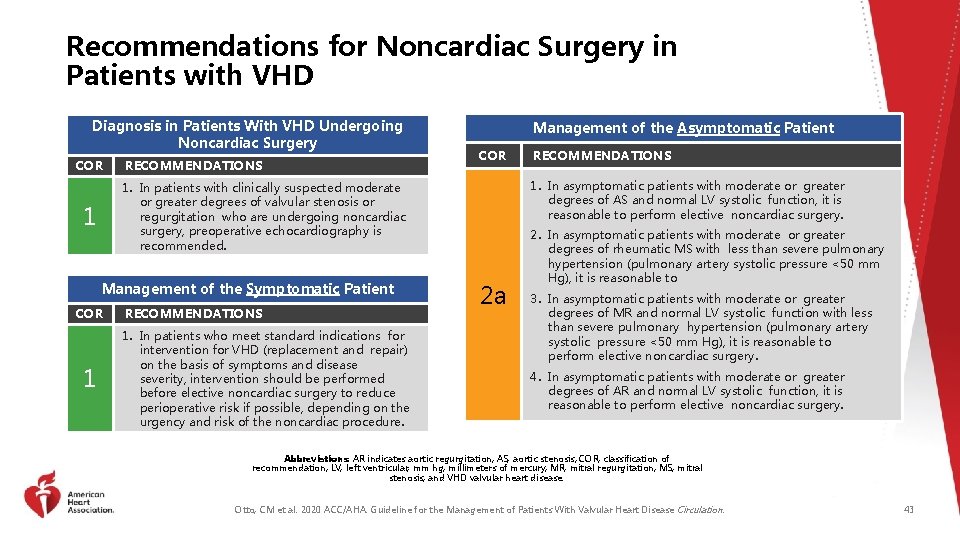
Recommendations for Noncardiac Surgery in Patients with VHD Diagnosis in Patients With VHD Undergoing Noncardiac Surgery COR RECOMMENDATIONS COR Management of the Symptomatic Patient COR RECOMMENDATIONS 1. In patients who meet standard indications for intervention for VHD (replacement and repair) on the basis of symptoms and disease severity, intervention should be performed before elective noncardiac surgery to reduce perioperative risk if possible, depending on the urgency and risk of the noncardiac procedure. RECOMMENDATIONS 1. In asymptomatic patients with moderate or greater degrees of AS and normal LV systolic function, it is reasonable to perform elective noncardiac surgery. 1. In patients with clinically suspected moderate or greater degrees of valvular stenosis or regurgitation who are undergoing noncardiac surgery, preoperative echocardiography is recommended. 1 1 Management of the Asymptomatic Patient 2 a 2. In asymptomatic patients with moderate or greater degrees of rheumatic MS with less than severe pulmonary hypertension (pulmonary artery systolic pressure <50 mm Hg), it is reasonable to 3. In asymptomatic patients with moderate or greater degrees of MR and normal LV systolic function with less than severe pulmonary hypertension (pulmonary artery systolic pressure <50 mm Hg), it is reasonable to perform elective noncardiac surgery. 4. In asymptomatic patients with moderate or greater degrees of AR and normal LV systolic function, it is reasonable to perform elective noncardiac surgery. Abbreviations: AR indicates aortic regurgitation; AS, aortic stenosis; COR, classification of recommendation; LV, left ventricular, mm hg, millimeters of mercury; MR, mitral regurgitation; MS, mitral stenosis; and VHD valvular heart disease. Otto, CM et al. 2020 ACC/AHA. Guideline for the Management of Patients With Valvular Heart Disease Circulation. 43
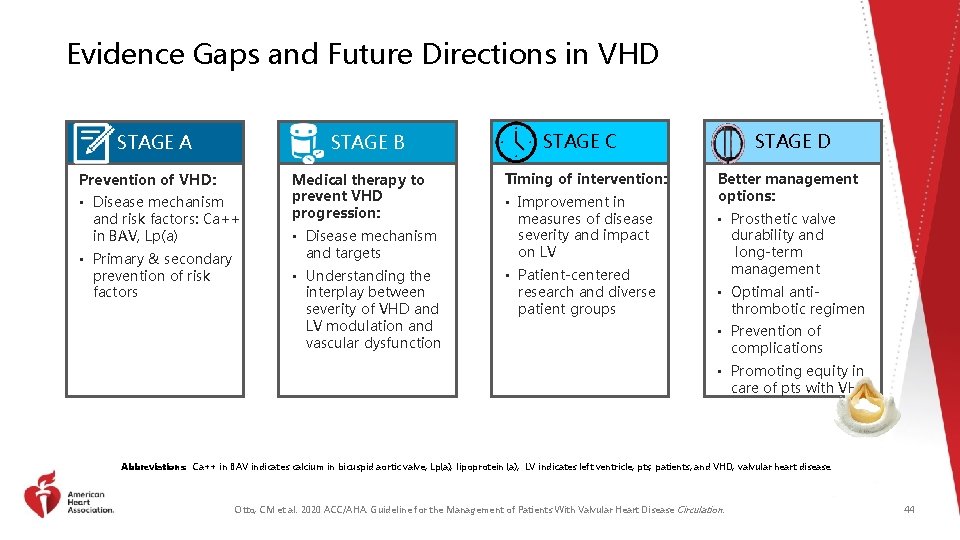
Evidence Gaps and Future Directions in VHD STAGE A STAGE B Prevention of VHD: • Disease mechanism and risk factors: Ca++ in BAV, Lp(a) • Primary & secondary prevention of risk factors Medical therapy to prevent VHD progression: • Disease mechanism and targets • Understanding the interplay between severity of VHD and LV modulation and vascular dysfunction STAGE C Timing of intervention: • Improvement in measures of disease severity and impact on LV • Patient-centered research and diverse patient groups STAGE D Better management options: • Prosthetic valve durability and long-term management • Optimal antithrombotic regimen • Prevention of complications • Promoting equity in care of pts with VHD Abbreviations: Ca++ in BAV indicates calcium in bicuspid aortic valve; Lp(a), lipoprotein (a); LV indicates left ventricle; pts, patients; and VHD, valvular heart disease. Otto, CM et al. 2020 ACC/AHA. Guideline for the Management of Patients With Valvular Heart Disease Circulation. 44
Acknowledgments Many thanks to our Guideline Ambassadors who were guided by Dr. Elliott Antman in developing this translational learning product in support of the 2020 ACC/AHA Guideline for the Management of Patients With Valvular Heart Disease. Yuvraj Chowdhury, MD Marat Fudim, MD, MHS Charles German, MD Agnes Kozco, MD Arnav Kumar, MD Sonali Kumar, MD Dae Hyun Lee, MD Jainy Savla, MD Mrinali Shetty, MD Lina Ya'qoub, MD The American Heart Association requests this electronic slide deck be cited as follows: Chowdhury, Y. , Fudim, M. , German, C. , Kozco, A. , Kumar, S. , Lee, D. , H. , Savla, J. , Shetty, M. , Ya’qoub, L, Bezanson, J. L. , & Antman, E. (2020). Clinical Update; Adapted from: 2020 ACC/AHA Guideline for the Management of Patients With Valvular Heart Disease [Power. Point slides]. Retrieved from https: //professional. heart. org/en/science-news Otto, CM et al. 2020 ACC/AHA. Guideline for the Management of Patients With Valvular Heart Disease Circulation. 45