
Clinical Supervision HPR 450 Chapter 9 Table 9

Clinical Supervision HPR 450 Chapter 9
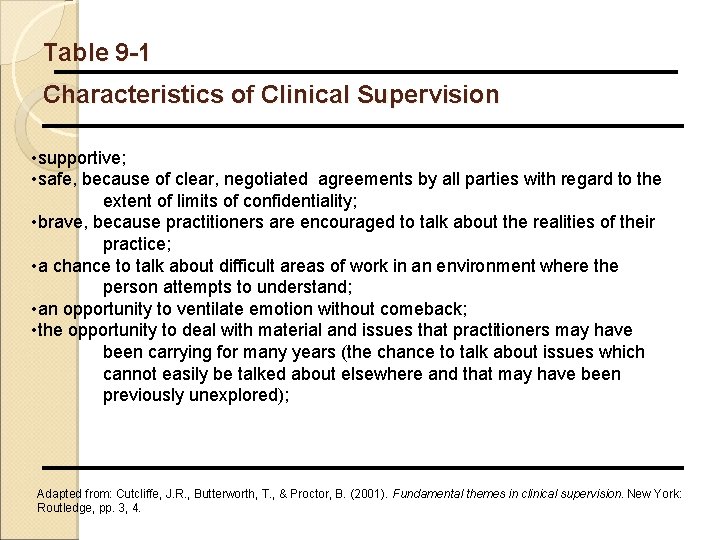
Table 9 -1 Characteristics of Clinical Supervision • supportive; • safe, because of clear, negotiated agreements by all parties with regard to the extent of limits of confidentiality; • brave, because practitioners are encouraged to talk about the realities of their practice; • a chance to talk about difficult areas of work in an environment where the person attempts to understand; • an opportunity to ventilate emotion without comeback; • the opportunity to deal with material and issues that practitioners may have been carrying for many years (the chance to talk about issues which cannot easily be talked about elsewhere and that may have been previously unexplored); Adapted from: Cutcliffe, J. R. , Butterworth, T. , & Proctor, B. (2001). Fundamental themes in clinical supervision. New York: Routledge, pp. 3, 4.
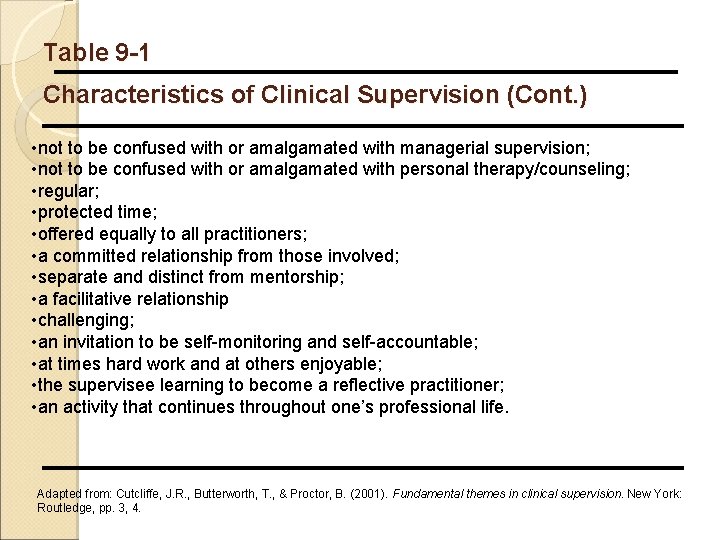
Table 9 -1 Characteristics of Clinical Supervision (Cont. ) • not to be confused with or amalgamated with managerial supervision; • not to be confused with or amalgamated with personal therapy/counseling; • regular; • protected time; • offered equally to all practitioners; • a committed relationship from those involved; • separate and distinct from mentorship; • a facilitative relationship • challenging; • an invitation to be self-monitoring and self-accountable; • at times hard work and at others enjoyable; • the supervisee learning to become a reflective practitioner; • an activity that continues throughout one’s professional life. Adapted from: Cutcliffe, J. R. , Butterworth, T. , & Proctor, B. (2001). Fundamental themes in clinical supervision. New York: Routledge, pp. 3, 4.
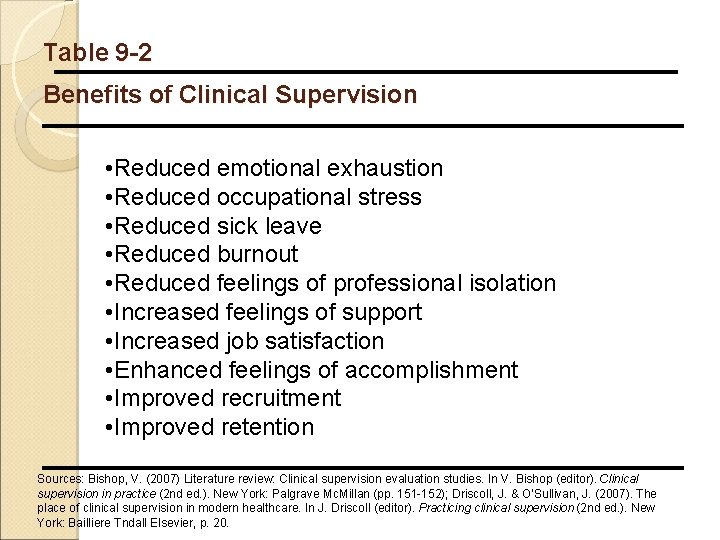
Table 9 -2 Benefits of Clinical Supervision • Reduced emotional exhaustion • Reduced occupational stress • Reduced sick leave • Reduced burnout • Reduced feelings of professional isolation • Increased feelings of support • Increased job satisfaction • Enhanced feelings of accomplishment • Improved recruitment • Improved retention Sources: Bishop, V. (2007) Literature review: Clinical supervision evaluation studies. In V. Bishop (editor). Clinical supervision in practice (2 nd ed. ). New York: Palgrave Mc. Millan (pp. 151 -152); Driscoll, J. & O’Sullivan, J. (2007). The place of clinical supervision in modern healthcare. In J. Driscoll (editor). Practicing clinical supervision (2 nd ed. ). New York: Bailliere Tndall Elsevier, p. 20.
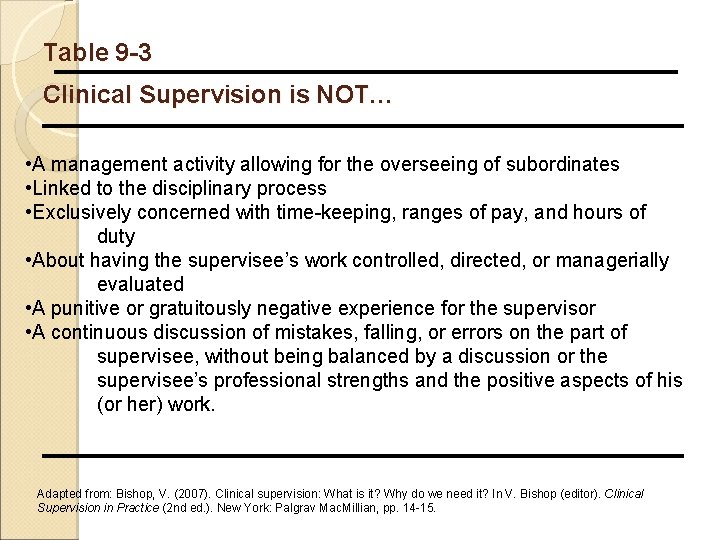
Table 9 -3 Clinical Supervision is NOT… • A management activity allowing for the overseeing of subordinates • Linked to the disciplinary process • Exclusively concerned with time-keeping, ranges of pay, and hours of duty • About having the supervisee’s work controlled, directed, or managerially evaluated • A punitive or gratuitously negative experience for the supervisor • A continuous discussion of mistakes, falling, or errors on the part of supervisee, without being balanced by a discussion or the supervisee’s professional strengths and the positive aspects of his (or her) work. Adapted from: Bishop, V. (2007). Clinical supervision: What is it? Why do we need it? In V. Bishop (editor). Clinical Supervision in Practice (2 nd ed. ). New York: Palgrav Mac. Millian, pp. 14 -15.
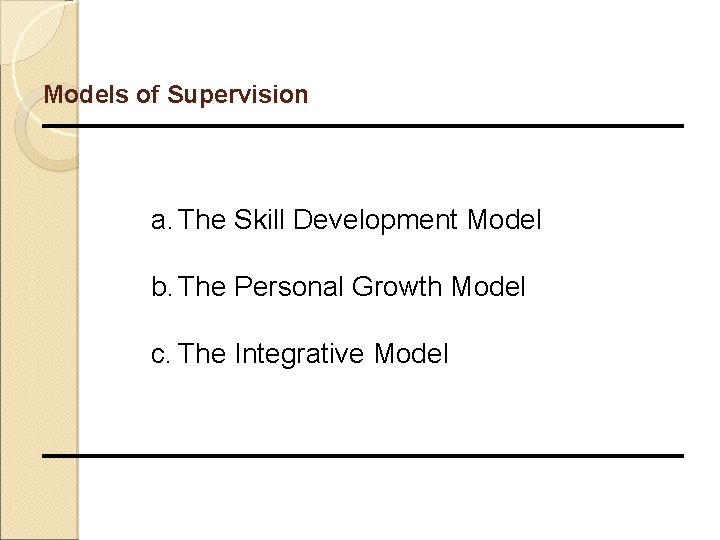
Models of Supervision a. The Skill Development Model b. The Personal Growth Model c. The Integrative Model
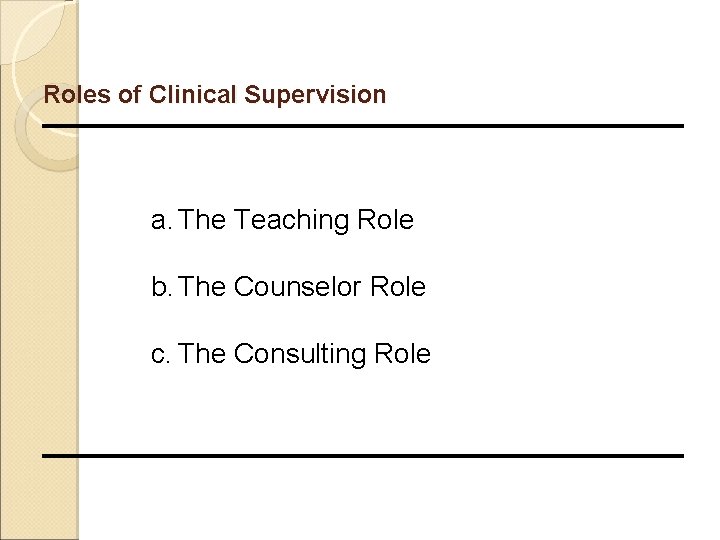
Roles of Clinical Supervision a. The Teaching Role b. The Counselor Role c. The Consulting Role
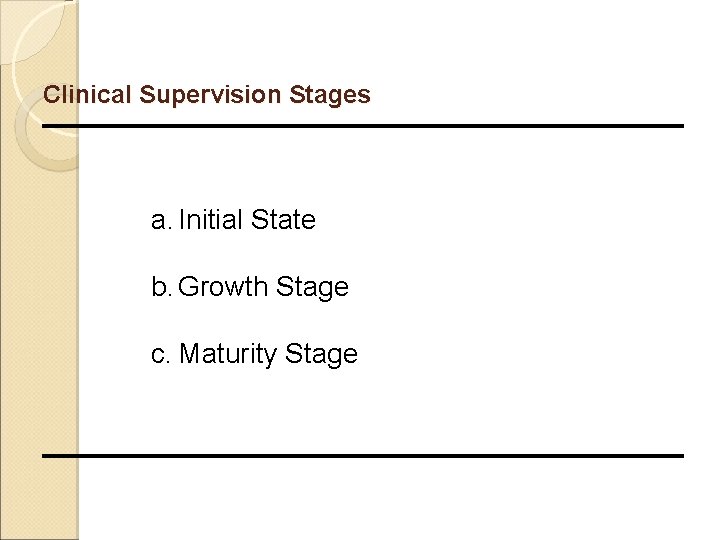
Clinical Supervision Stages a. Initial State b. Growth Stage c. Maturity Stage
- Slides: 8