
Clinical Staging AIDS surveillance and Mortality in resourcepoor
- Slides: 22
Clinical Staging, AIDS surveillance and Mortality in resource-poor settings a clinician’s view of strategic information needs Charlie Gilks Surveillance, Research Monitoring and Evaluation Department of HIV/AIDS World Health Organization 24 th June 2003
Some core concepts l HIV slowly destroys part of the immune system l Infected individuals pass through different stages l Advanced infection characterised by a few diseases l Death is the ultimate outcome for most l ARVs successfully modify the course of disease We are in the “three by five” era World Health Organization 24 th June 2003
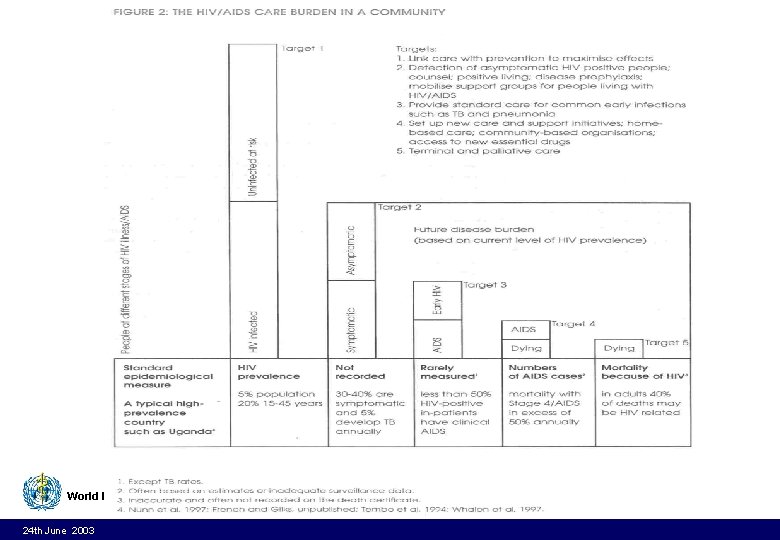
World Health Organization 24 th June 2003 3
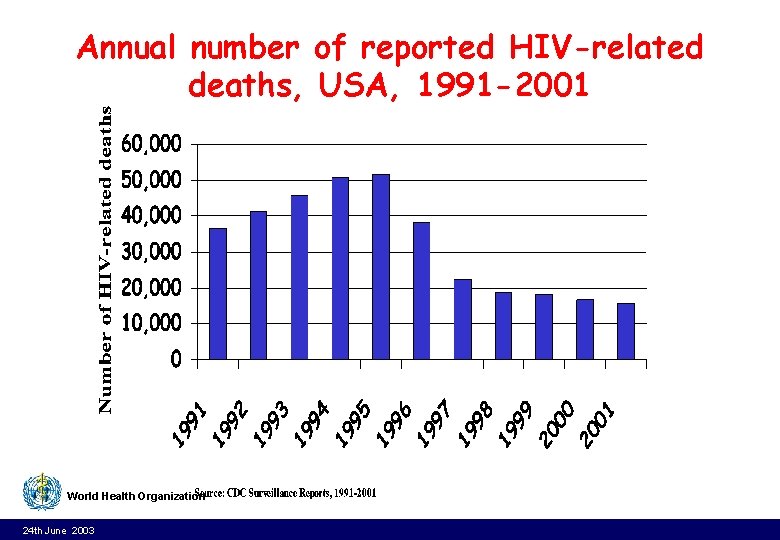
Mortality: resource-rich countries l l Universal registration of deaths Cause of death and predispositions included AIDS-defining diseases (ADDs) HIV often listed as predisposition l l l electronic linkages with HIV databases comprehensive data with clear time trends counting deaths is a HUGE advocacy tool World Health Organization 24 th June 2003
Annual number of reported HIV-related deaths, USA, 1991 -2001 World Health Organization 24 th June 2003
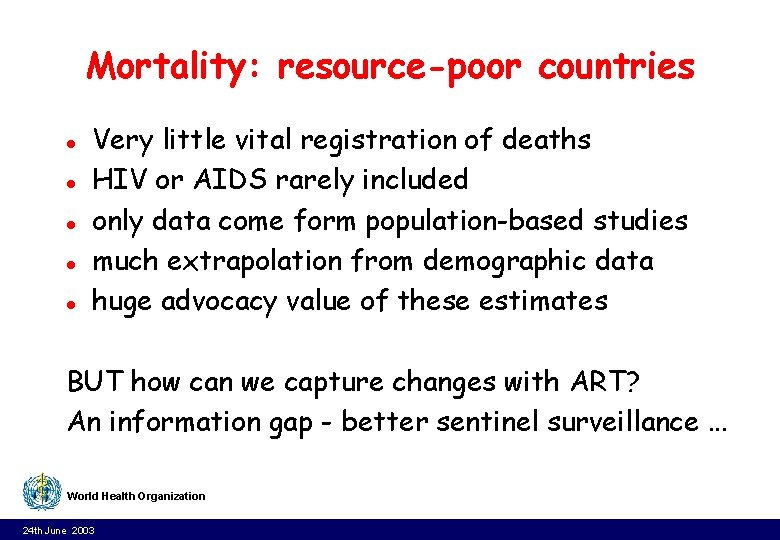
Mortality: resource-poor countries l l l Very little vital registration of deaths HIV or AIDS rarely included only data come form population-based studies much extrapolation from demographic data huge advocacy value of these estimates BUT how can we capture changes with ART? An information gap - better sentinel surveillance. . . World Health Organization 24 th June 2003
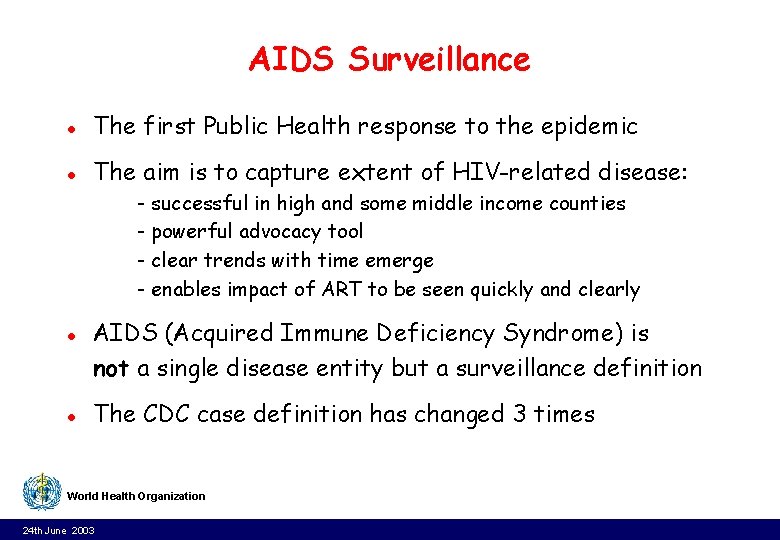
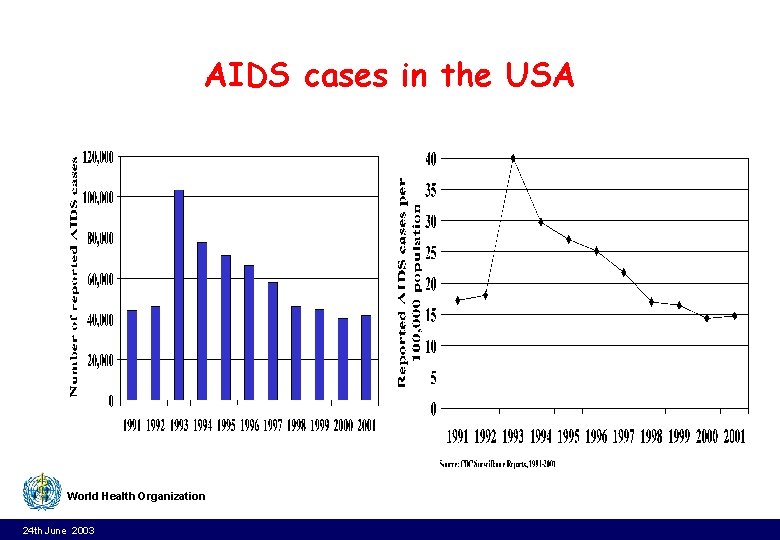
AIDS Surveillance l The first Public Health response to the epidemic l The aim is to capture extent of HIV-related disease: - successful in high and some middle income counties - powerful advocacy tool - clear trends with time emerge - enables impact of ART to be seen quickly and clearly l l AIDS (Acquired Immune Deficiency Syndrome) is not a single disease entity but a surveillance definition The CDC case definition has changed 3 times World Health Organization 24 th June 2003
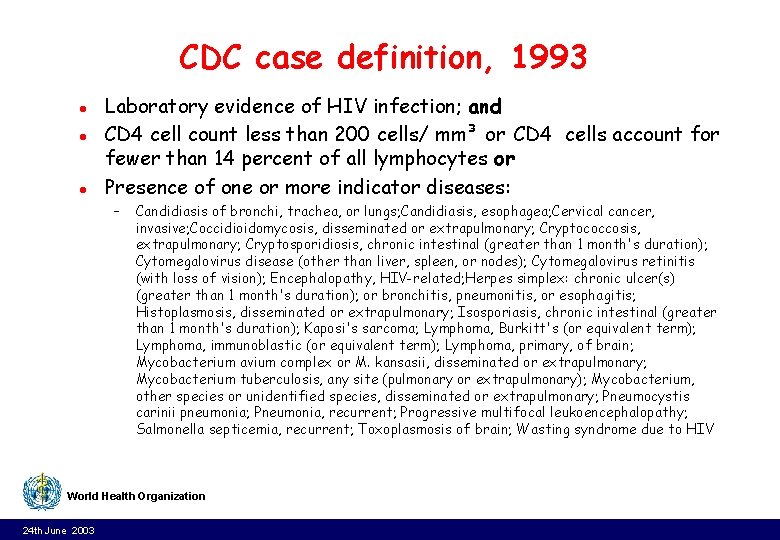
CDC case definition, 1993 l l l Laboratory evidence of HIV infection; and CD 4 cell count less than 200 cells/ mm³ or CD 4 cells account for fewer than 14 percent of all lymphocytes or Presence of one or more indicator diseases: – Candidiasis of bronchi, trachea, or lungs; Candidiasis, esophagea; Cervical cancer, invasive; Coccidioidomycosis, disseminated or extrapulmonary; Cryptococcosis, extrapulmonary; Cryptosporidiosis, chronic intestinal (greater than 1 month's duration); Cytomegalovirus disease (other than liver, spleen, or nodes); Cytomegalovirus retinitis (with loss of vision); Encephalopathy, HIV-related; Herpes simplex: chronic ulcer(s) (greater than 1 month's duration); or bronchitis, pneumonitis, or esophagitis; Histoplasmosis, disseminated or extrapulmonary; Isosporiasis, chronic intestinal (greater than 1 month's duration); Kaposi's sarcoma; Lymphoma, Burkitt's (or equivalent term); Lymphoma, immunoblastic (or equivalent term); Lymphoma, primary, of brain; Mycobacterium avium complex or M. kansasii, disseminated or extrapulmonary; Mycobacterium tuberculosis, any site (pulmonary or extrapulmonary); Mycobacterium, other species or unidentified species, disseminated or extrapulmonary; Pneumocystis carinii pneumonia; Pneumonia, recurrent; Progressive multifocal leukoencephalopathy; Salmonella septicemia, recurrent; Toxoplasmosis of brain; Wasting syndrome due to HIV World Health Organization 24 th June 2003
AIDS cases in the USA World Health Organization 24 th June 2003 9
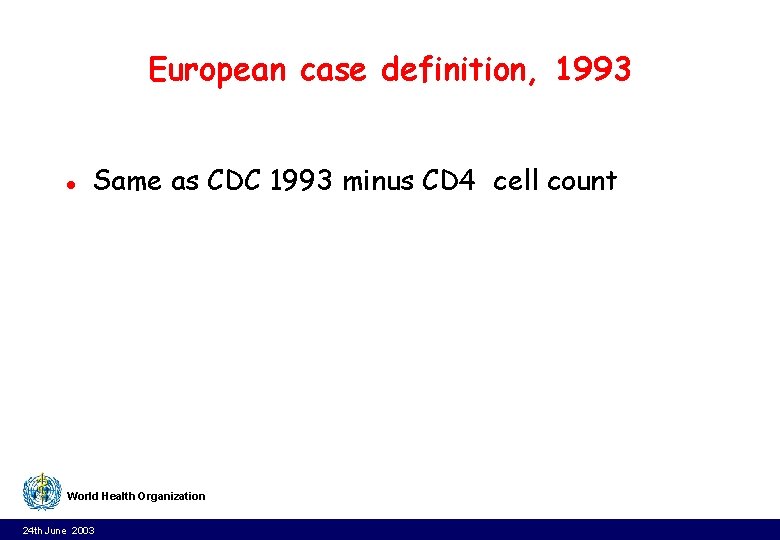
European case definition, 1993 l Same as CDC 1993 minus CD 4 cell count World Health Organization 24 th June 2003
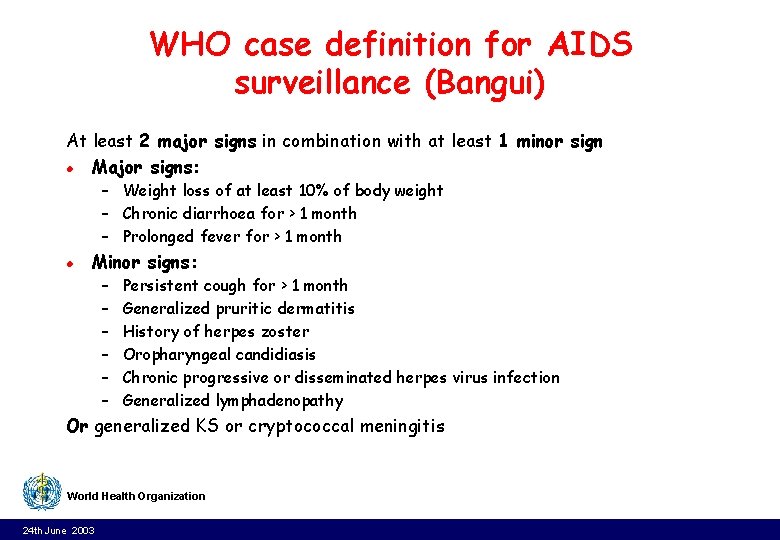
WHO case definition for AIDS surveillance (Bangui) At least 2 major signs in combination with at least 1 minor sign l Major signs: – Weight loss of at least 10% of body weight – Chronic diarrhoea for > 1 month – Prolonged fever for > 1 month l Minor signs: – – – Persistent cough for > 1 month Generalized pruritic dermatitis History of herpes zoster Oropharyngeal candidiasis Chronic progressive or disseminated herpes virus infection Generalized lymphadenopathy Or generalized KS or cryptococcal meningitis World Health Organization 24 th June 2003
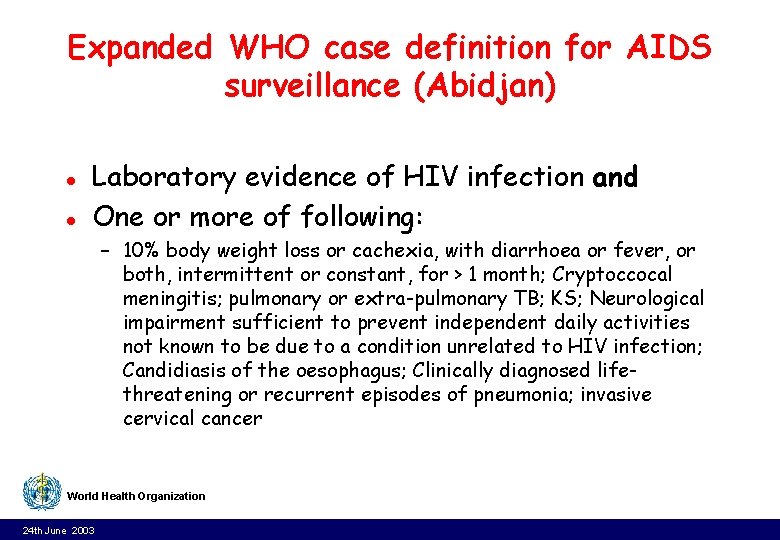
Expanded WHO case definition for AIDS surveillance (Abidjan) l l Laboratory evidence of HIV infection and One or more of following: – 10% body weight loss or cachexia, with diarrhoea or fever, or both, intermittent or constant, for > 1 month; Cryptoccocal meningitis; pulmonary or extra-pulmonary TB; KS; Neurological impairment sufficient to prevent independent daily activities not known to be due to a condition unrelated to HIV infection; Candidiasis of the oesophagus; Clinically diagnosed lifethreatening or recurrent episodes of pneumonia; invasive cervical cancer World Health Organization 24 th June 2003
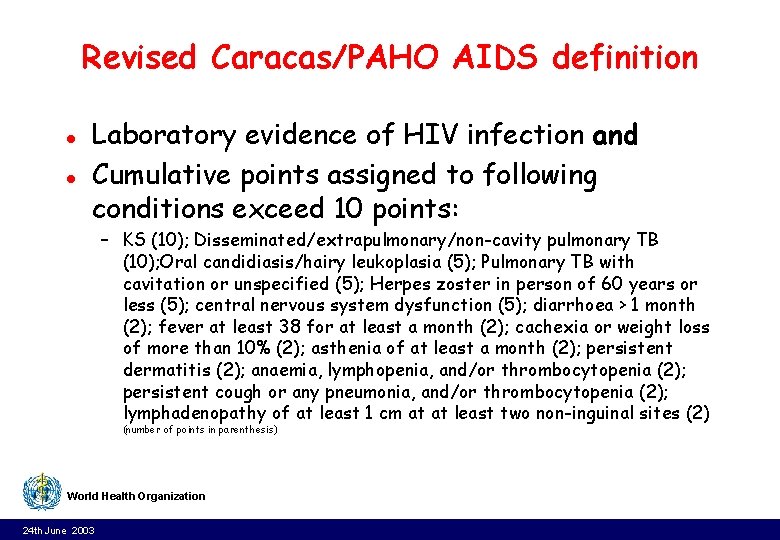
Revised Caracas/PAHO AIDS definition l l Laboratory evidence of HIV infection and Cumulative points assigned to following conditions exceed 10 points: – KS (10); Disseminated/extrapulmonary/non-cavity pulmonary TB (10); Oral candidiasis/hairy leukoplasia (5); Pulmonary TB with cavitation or unspecified (5); Herpes zoster in person of 60 years or less (5); central nervous system dysfunction (5); diarrhoea > 1 month (2); fever at least 38 for at least a month (2); cachexia or weight loss of more than 10% (2); asthenia of at least a month (2); persistent dermatitis (2); anaemia, lymphopenia, and/or thrombocytopenia (2); persistent cough or any pneumonia, and/or thrombocytopenia (2); lymphadenopathy of at least 1 cm at at least two non-inguinal sites (2) (number of points in parenthesis) World Health Organization 24 th June 2003
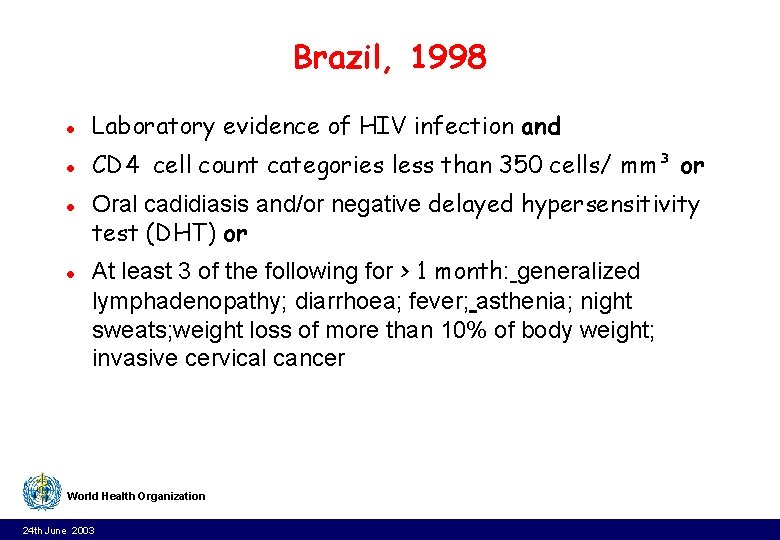
Brazil, 1998 l Laboratory evidence of HIV infection and l CD 4 cell count categories less than 350 cells/ mm³ or l l Oral cadidiasis and/or negative delayed hypersensitivity test (DHT) or At least 3 of the following for > 1 month: generalized lymphadenopathy; diarrhoea; fever; asthenia; night sweats; weight loss of more than 10% of body weight; invasive cervical cancer World Health Organization 24 th June 2003
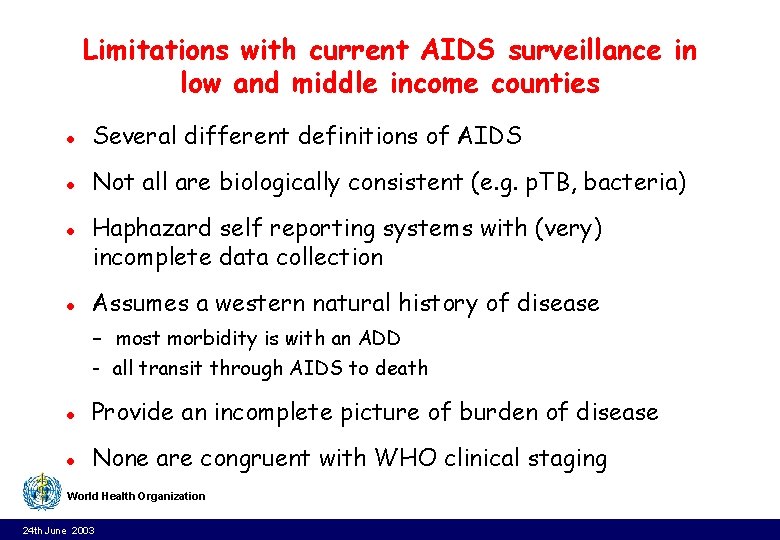
Limitations with current AIDS surveillance in low and middle income counties l Several different definitions of AIDS l Not all are biologically consistent (e. g. p. TB, bacteria) l l Haphazard self reporting systems with (very) incomplete data collection Assumes a western natural history of disease - most morbidity is with an ADD - all transit through AIDS to death l Provide an incomplete picture of burden of disease l None are congruent with WHO clinical staging World Health Organization 24 th June 2003
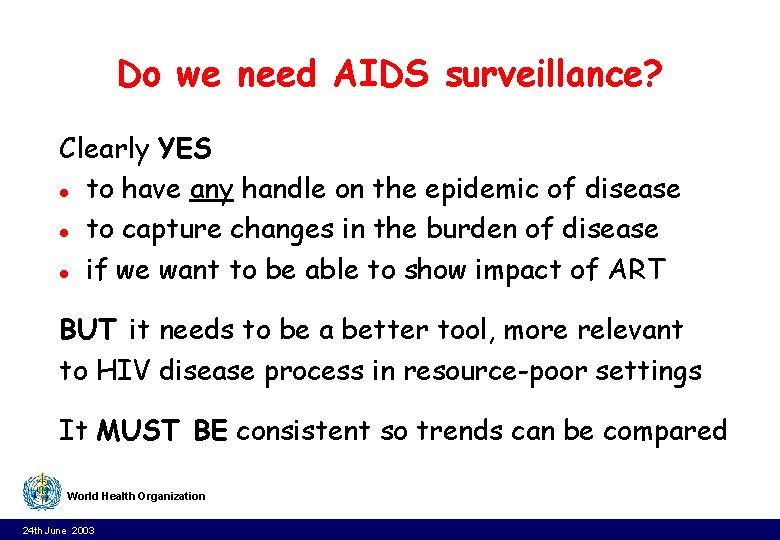
Do we need AIDS surveillance? Clearly YES l to have any handle on the epidemic of disease l to capture changes in the burden of disease l if we want to be able to show impact of ART BUT it needs to be a better tool, more relevant to HIV disease process in resource-poor settings It MUST BE consistent so trends can be compared World Health Organization 24 th June 2003
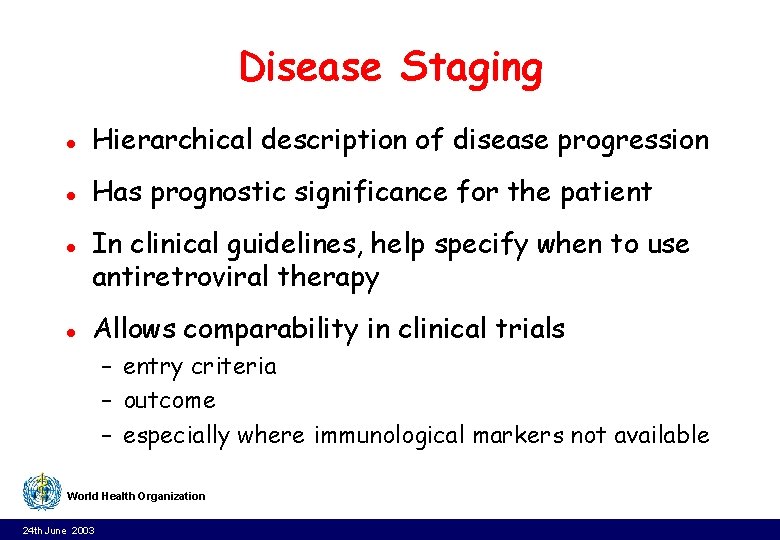
Disease Staging l Hierarchical description of disease progression l Has prognostic significance for the patient l l In clinical guidelines, help specify when to use antiretroviral therapy Allows comparability in clinical trials – entry criteria – outcome – especially where immunological markers not available World Health Organization 24 th June 2003
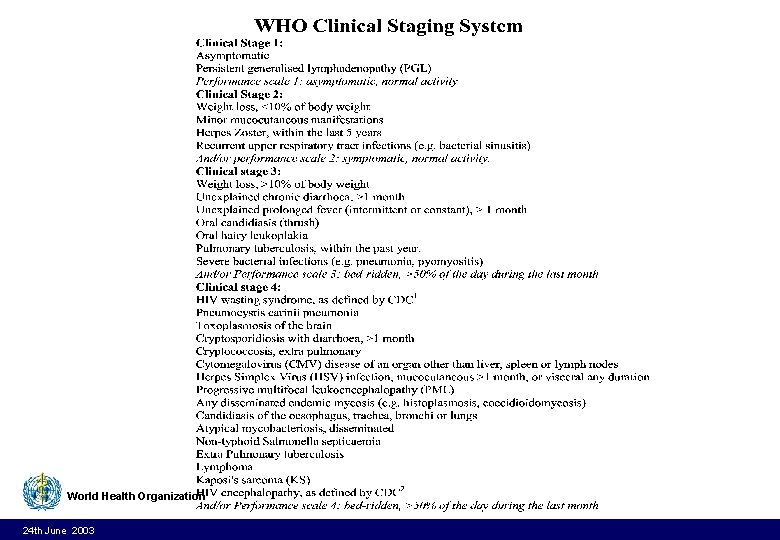
World Health Organization 24 th June 2003 18
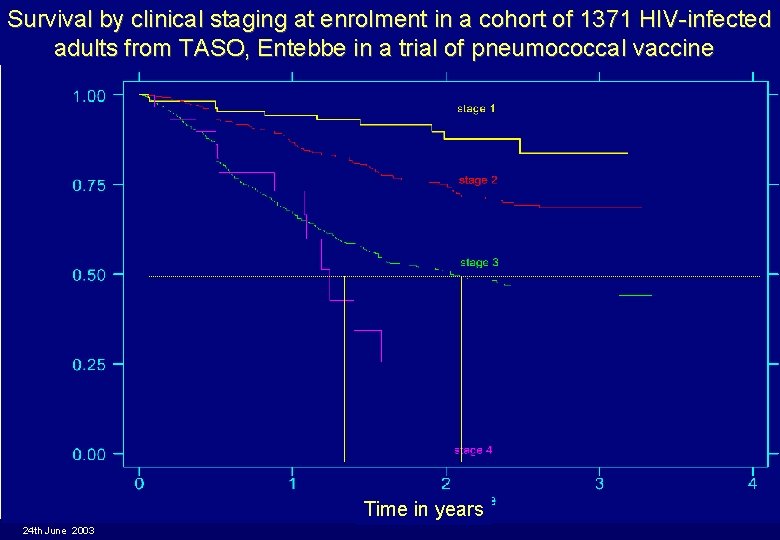
Survival by clinical staging at enrolment in a cohort of 1371 HIV-infected adults from TASO, Entebbe in a trial of pneumococcal vaccine World Health Organization 24 th June 2003 Time in years 19
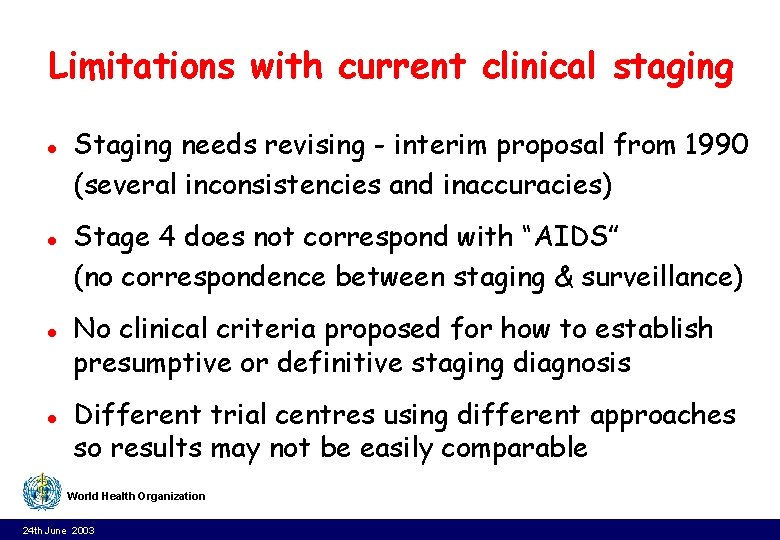
Limitations with current clinical staging l l Staging needs revising - interim proposal from 1990 (several inconsistencies and inaccuracies) Stage 4 does not correspond with “AIDS” (no correspondence between staging & surveillance) No clinical criteria proposed for how to establish presumptive or definitive staging diagnosis Different trial centres using different approaches so results may not be easily comparable World Health Organization 24 th June 2003
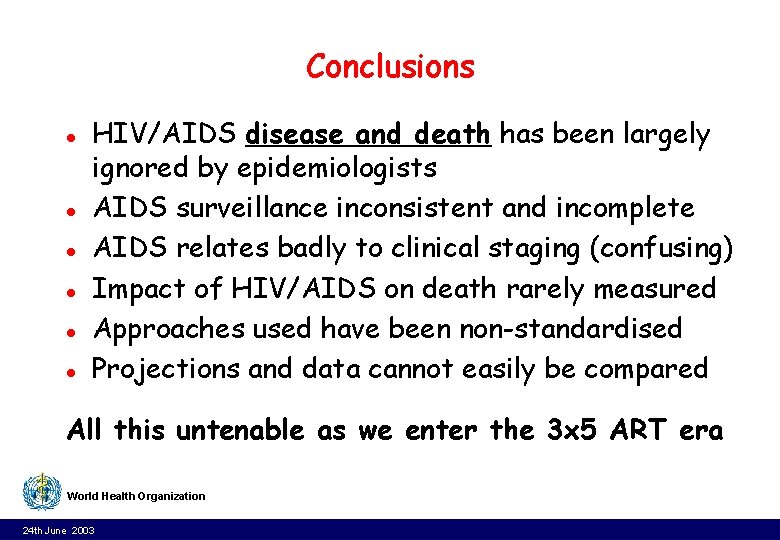
Conclusions l l l HIV/AIDS disease and death has been largely ignored by epidemiologists AIDS surveillance inconsistent and incomplete AIDS relates badly to clinical staging (confusing) Impact of HIV/AIDS on death rarely measured Approaches used have been non-standardised Projections and data cannot easily be compared All this untenable as we enter the 3 x 5 ART era World Health Organization 24 th June 2003
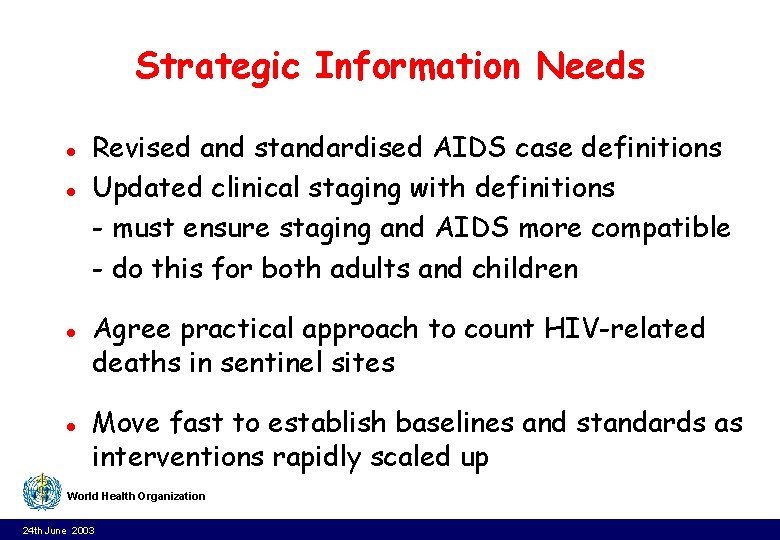
Strategic Information Needs l l Revised and standardised AIDS case definitions Updated clinical staging with definitions - must ensure staging and AIDS more compatible - do this for both adults and children Agree practical approach to count HIV-related deaths in sentinel sites Move fast to establish baselines and standards as interventions rapidly scaled up World Health Organization 24 th June 2003