
Clinical Quality Management CQM in the Ryan White
- Slides: 24
Clinical Quality Management (CQM) in the Ryan White HIV/AIDS Program. Ryan White Part A Administrative Reverse Site Visit Meeting July 30, 2013 CAPT. Tracy Matthews Marlene Matosky U. S. Department of Health and Human Services (HHS) Health Resources and Services Administration (HRSA) HIV/AIDS Bureau (HAB) Clinical Unit
Learning Objectives 1. Understand Ryan White legislative requirements for clinical quality management 2. Identify major components of a clinical quality management program 3. Locate clinical quality management resources
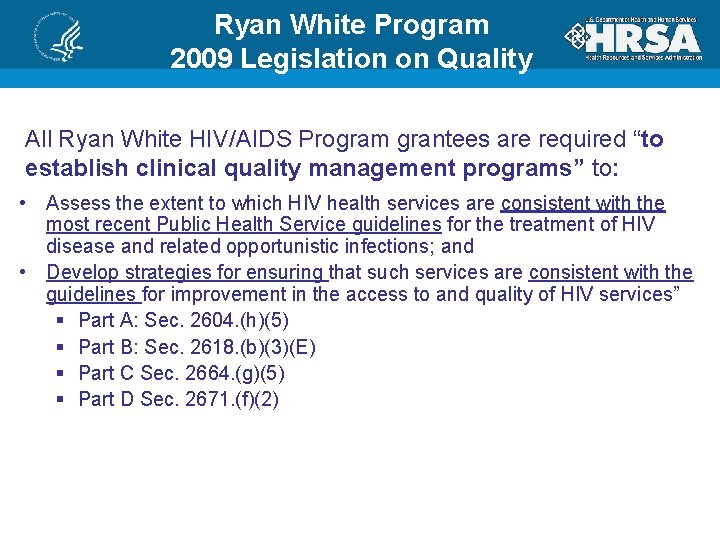
Ryan White Program 2009 Legislation on Quality All Ryan White HIV/AIDS Program grantees are required “to establish clinical quality management programs” to: • Assess the extent to which HIV health services are consistent with the most recent Public Health Service guidelines for the treatment of HIV disease and related opportunistic infections; and • Develop strategies for ensuring that such services are consistent with the guidelines for improvement in the access to and quality of HIV services” § Part A: Sec. 2604. (h)(5) § Part B: Sec. 2618. (b)(3)(E) § Part C Sec. 2664. (g)(5) § Part D Sec. 2671. (f)(2)
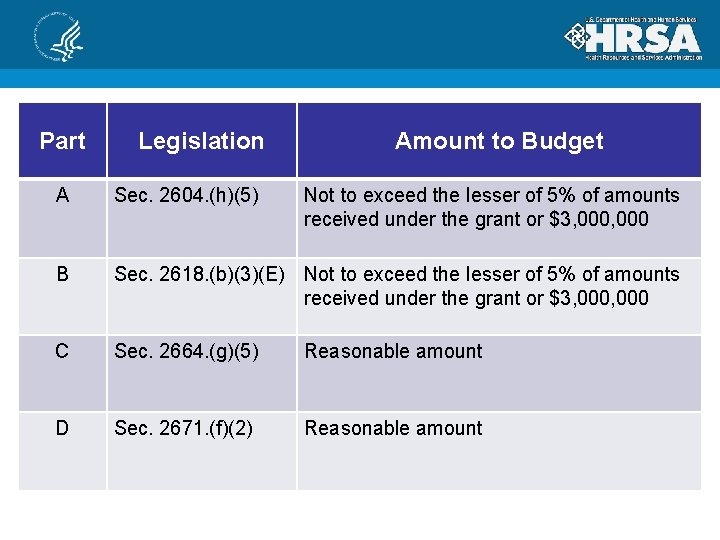
Part Legislation Amount to Budget A Sec. 2604. (h)(5) Not to exceed the lesser of 5% of amounts received under the grant or $3, 000 B Sec. 2618. (b)(3)(E) Not to exceed the lesser of 5% of amounts received under the grant or $3, 000 C Sec. 2664. (g)(5) Reasonable amount D Sec. 2671. (f)(2) Reasonable amount
Program Funding Opportunity Announcement • FOA provides minimum expectations for grantees § Established and implemented a CQM plan § Established processes for ensuring that Primary Medical Care services are provided in accordance with the Department of Health and Human Services (HHS) treatment guidelines and standards of care § Incorporated quality-related expectations into Requests for Proposals (RFP) and contracts • CQM program information as well as client-level health outcomes data should be used for: § Jurisdiction’s planning process § Ongoing assessment of progress toward achieving program goals and objectives § Examination and refinement of services based on outcomes
Program Monitoring Expectations • Section D: Quality Management § Grantee Responsibility § Provider/Subgrantee Responsibility
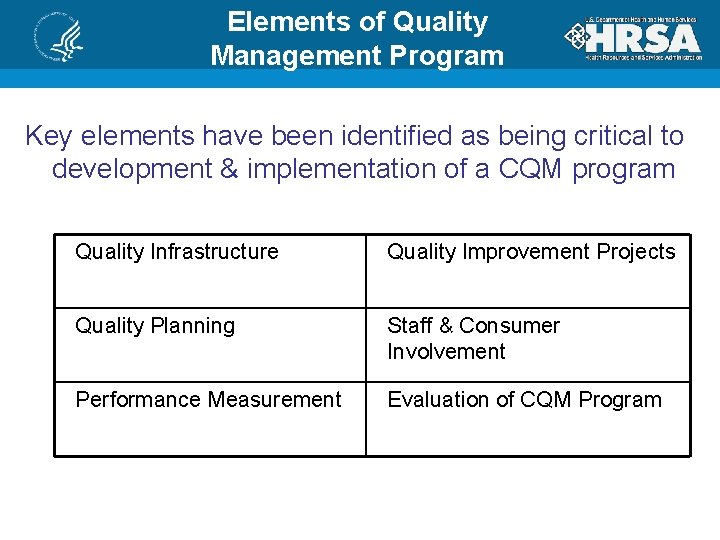
Elements of Quality Management Program Key elements have been identified as being critical to development & implementation of a CQM program Quality Infrastructure Quality Improvement Projects Quality Planning Staff & Consumer Involvement Performance Measurement Evaluation of CQM Program
Key Characteristics of a Quality Management Program 1. A systematic process with identified leadership, accountability, and dedicated resources available to the program 2. Use data and measurable outcomes to determine progress toward relevant, evidenced-based benchmarks 3. Focus on linkages, efficiencies and provider, and client expectation in addressing outcome improvement
Key Characteristics of a Quality Management Program (cont. ) 4. A continuous process that is adaptive to change and that fits within the framework of other programmatic quality assurance and quality improvement activities 5. Ensure that data collected are fed back into the quality improvement process to assure that goals are accomplished and that they are concurrent with improved outcomes
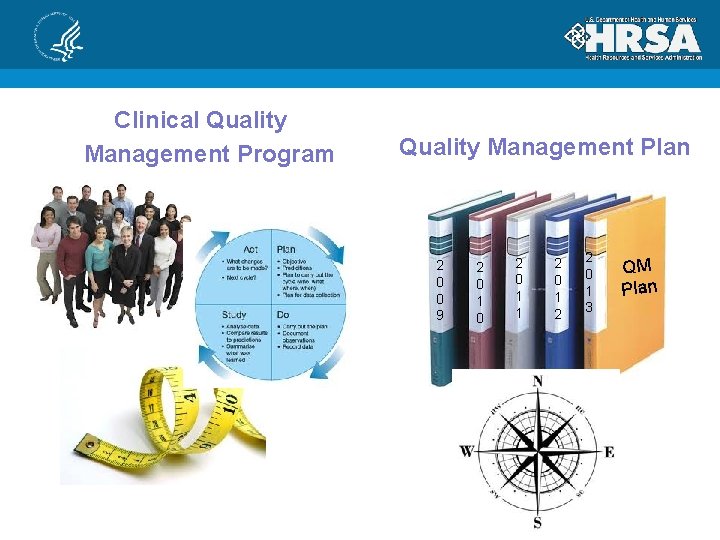
What is the Difference Between a Clinical Quality Management Program and a Quality Management Plan? ‘Clinical quality management program’ encompasses all grantee-specific quality activities, including the formal organizational quality infrastructure, performance measurement, and quality improvement related activities ‘Quality management plan’ is a written document that outlines the grantee-wide clinical quality management program, including a clear indication of accountability, performance measurement strategies and goals, and elaboration of processes for ongoing evaluation
Clinical Quality Management Program Quality Management Plan 2 0 0 9 2 0 1 0 2 0 1 1 2 0 1 2 2 0 1 3 QM Plan
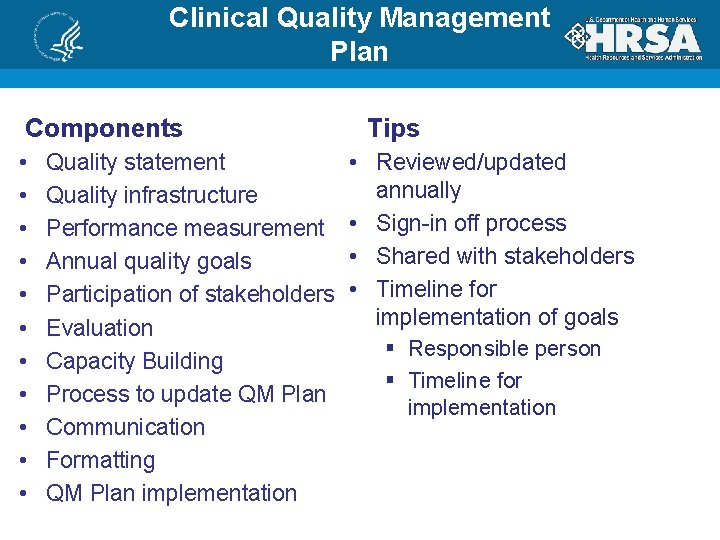
Clinical Quality Management Plan Components • • • Quality statement Quality infrastructure Performance measurement Annual quality goals Participation of stakeholders Evaluation Capacity Building Process to update QM Plan Communication Formatting QM Plan implementation Tips • Reviewed/updated annually • Sign-in off process • Shared with stakeholders • Timeline for implementation of goals § Responsible person § Timeline for implementation
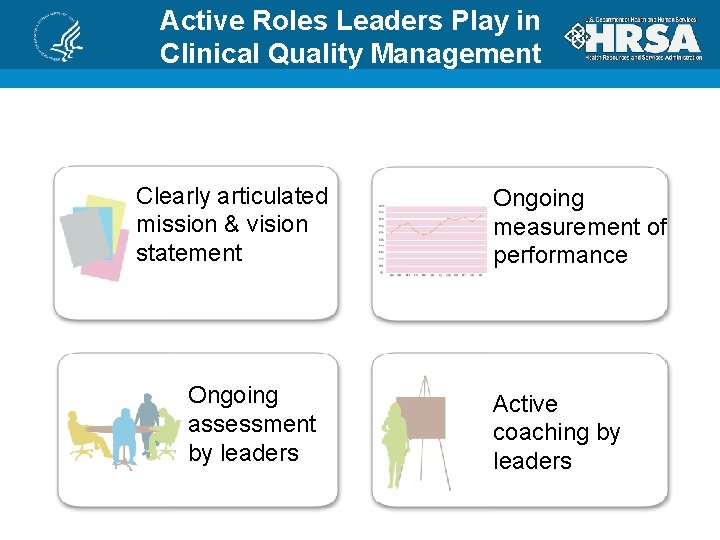
Active Roles Leaders Play in Clinical Quality Management Clearly articulated mission & vision statement Ongoing assessment by leaders Ongoing measurement of performance Active coaching by leaders
Engagement of Stakeholders Staff, providers, consumers and others should be involved in the CQM program. • Engage internal and external stakeholders • Communicate information about quality improvement activities • Provide opportunities for learning about quality 14
Tips for Performance Measurement Include a portfolio of process and outcome measures Representative across all funded services Reporting strategies 15
Performance Measures • 2007: Started developing and releasing measures under the guidance of Dr. Cheever • Currently 50+ measures spanning clinical care, oral health care, ADAP, case management, and systems • 4 measures received National Quality Forum (NQF) endorsement in February 2013 • http: //hab. hrsa. gov/deliverhivaidscare/habperformmeasures. ht ml
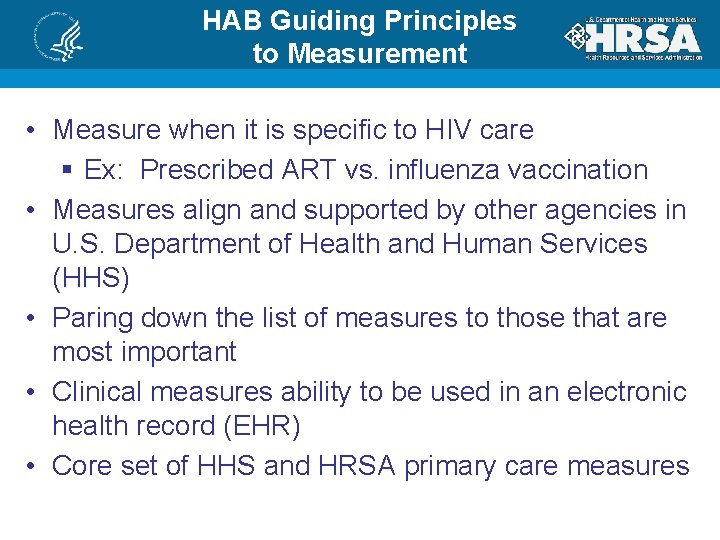
HAB Guiding Principles to Measurement • Measure when it is specific to HIV care § Ex: Prescribed ART vs. influenza vaccination • Measures align and supported by other agencies in U. S. Department of Health and Human Services (HHS) • Paring down the list of measures to those that are most important • Clinical measures ability to be used in an electronic health record (EHR) • Core set of HHS and HRSA primary care measures
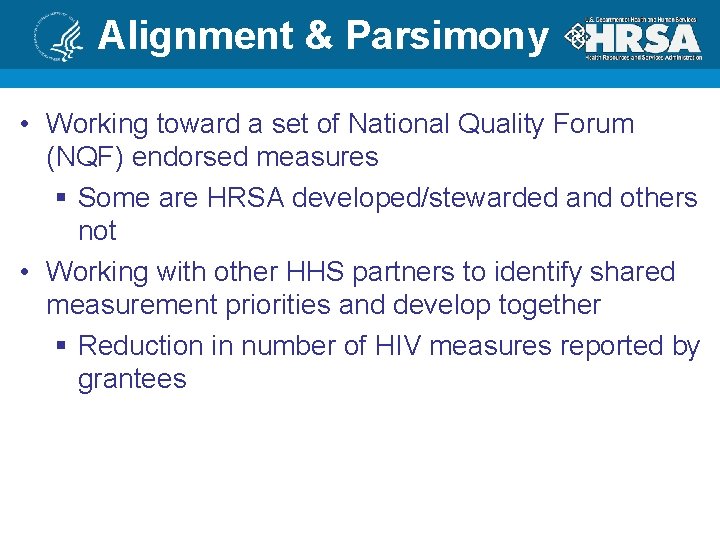
Alignment & Parsimony • Working toward a set of National Quality Forum (NQF) endorsed measures § Some are HRSA developed/stewarded and others not • Working with other HHS partners to identify shared measurement priorities and develop together § Reduction in number of HIV measures reported by grantees
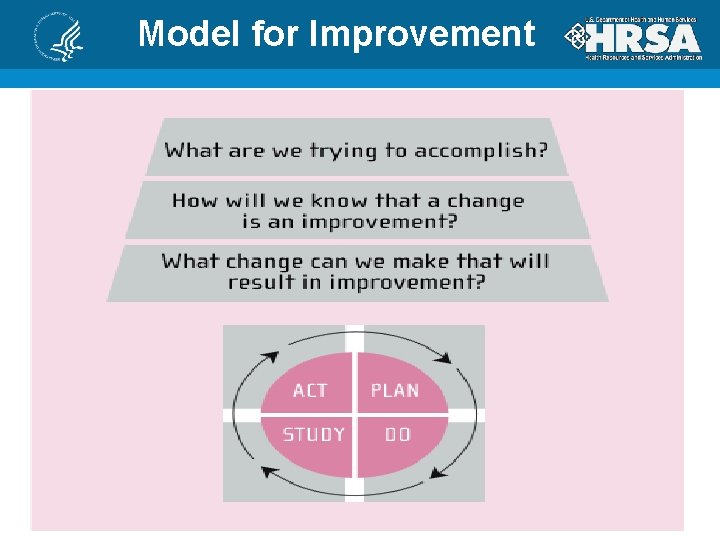
Model for Improvement The PDSA Cycle
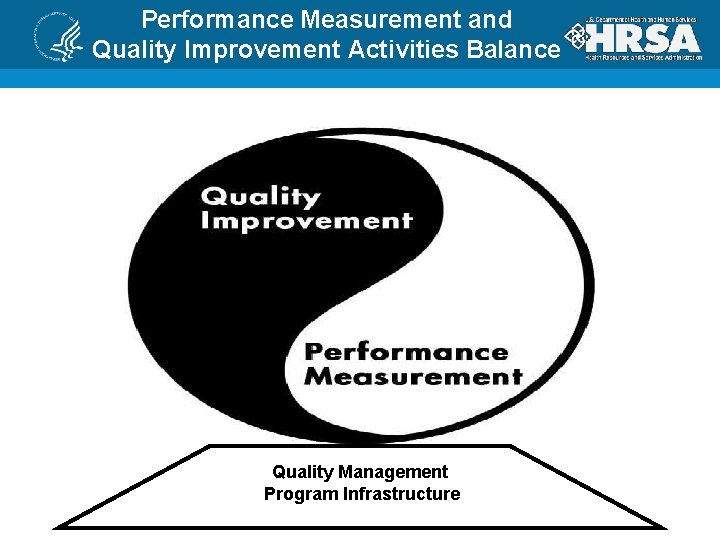
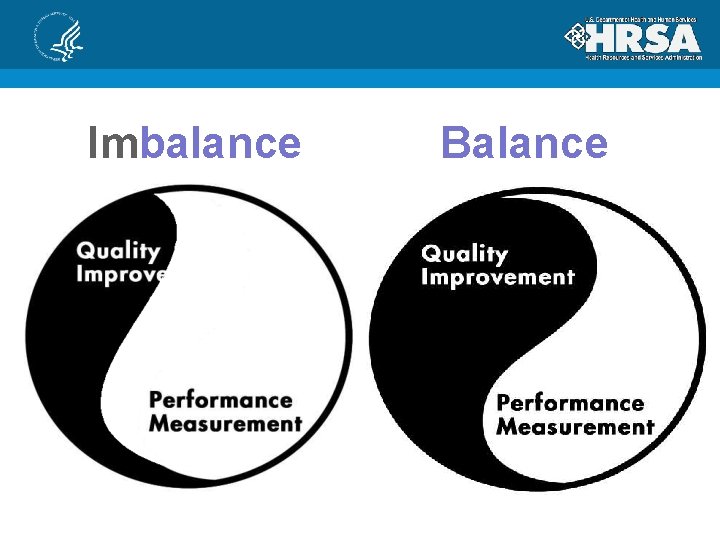
Performance Measurement and Quality Improvement Activities Balance Quality Management Program Infrastructure
Imbalance Balance
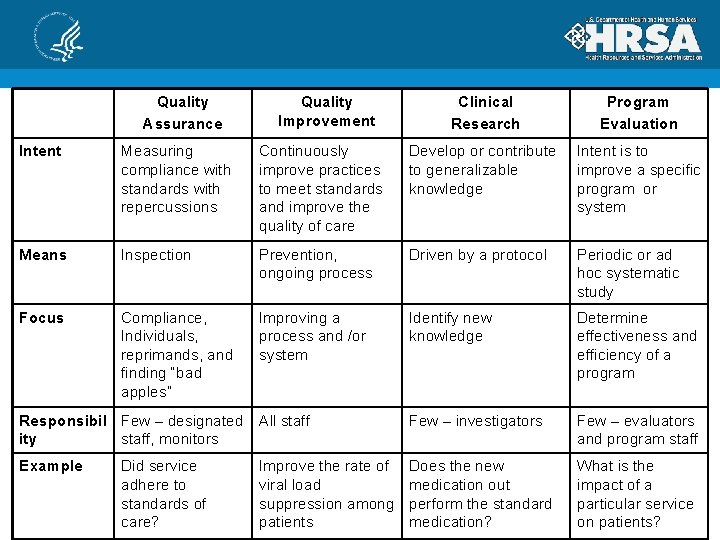
Quality Assurance Quality Improvement Clinical Research Program Evaluation Intent Measuring compliance with standards with repercussions Continuously improve practices to meet standards and improve the quality of care Develop or contribute to generalizable knowledge Intent is to improve a specific program or system Means Inspection Prevention, ongoing process Driven by a protocol Periodic or ad hoc systematic study Focus Compliance, Individuals, reprimands, and finding “bad apples” Improving a process and /or system Identify new knowledge Determine effectiveness and efficiency of a program Responsibil Few – designated ity staff, monitors All staff Few – investigators Few – evaluators and program staff Example Improve the rate of viral load suppression among patients Does the new medication out perform the standard medication? What is the impact of a particular service on patients? Did service adhere to standards of care?
National Quality Center • Cooperative Agreement that provides no-cost, technical assistance to all Ryan White funded grantees: http: //nationalqualitycenter. org • Sharing: Website, various documents/publications, phone consultation, and in+care campaign • Coaching: Intensive on-site consultation § Based on referrals by Project Officers, grantees, or NQC coaches § Technical assistance form available at: http: //nationalqualitycenter. org/index. cfm/5847/37117 • Regional Groups • Training: On-line Tutorials, National TA Conference Calls, Training of Quality Leaders, Training on Coaching Basics, Training of Consumers in Quality, Regional trainings • PENDING: Part A/B organizational assessment • Sign up for the monthly newsletter by sending an email to newsjoin@National. Quality. Center. org
Contact Information Tracy Matthews, MHA, RN 301 -443 -7804 tmatthews@hrsa. gov Marlene Matosky, MPH, RN 301 -443 -0798 mmatosky@hrsa. gov http: //hab. hrsa. gov/