
CLINICAL PRESENTATION AND DIAGNOSIS OF TYPE 2 DIABETES
CLINICAL PRESENTATION AND DIAGNOSIS OF TYPE 2 DIABETES Presentation and Initial Evaluation of Type 2 Diabetes

TYPE 2 DIABETES MELLITUS • Most common form of diabetes • Prevalence increasing rapidly, especially in developing countries • Occurs due to relative insulin deficiency in an individual with insulin resistance • Usually asymptomatic and detected during evaluation for unrelated indications • May present with hyperglycemic symptoms Presentation and Initial Evaluation of Type 2 Diabetes
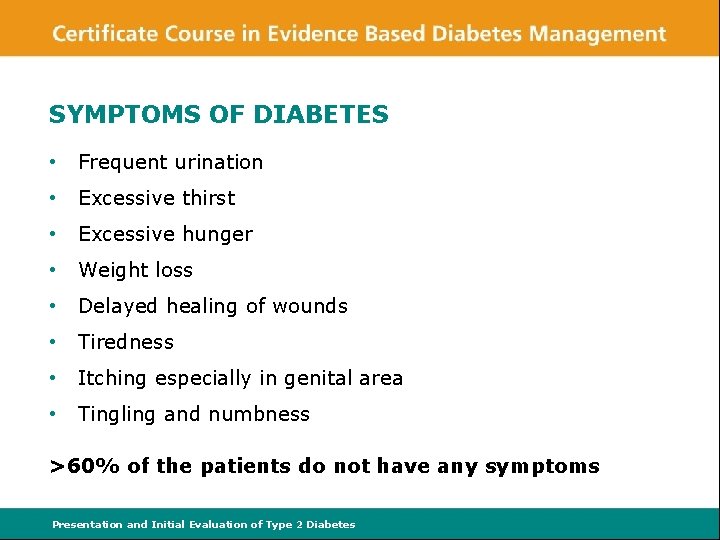
SYMPTOMS OF DIABETES • Frequent urination • Excessive thirst • Excessive hunger • Weight loss • Delayed healing of wounds • Tiredness • Itching especially in genital area • Tingling and numbness >60% of the patients do not have any symptoms Presentation and Initial Evaluation of Type 2 Diabetes
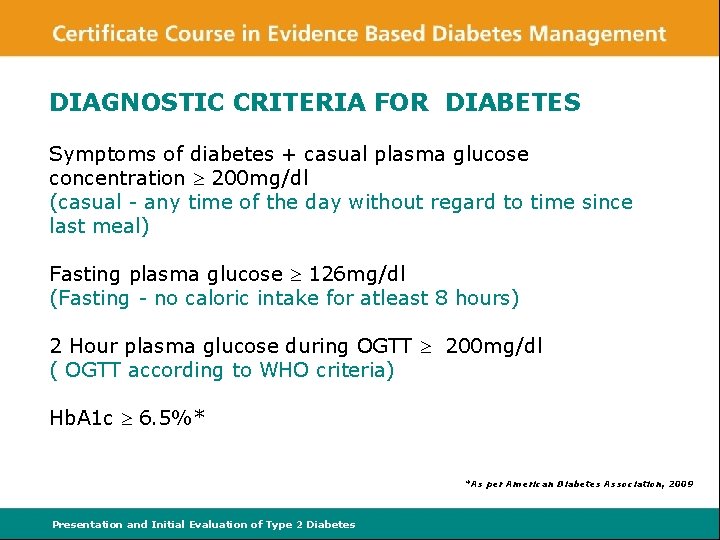
DIAGNOSTIC CRITERIA FOR DIABETES Symptoms of diabetes + casual plasma glucose concentration 200 mg/dl (casual - any time of the day without regard to time since last meal) Fasting plasma glucose 126 mg/dl (Fasting - no caloric intake for atleast 8 hours) 2 Hour plasma glucose during OGTT 200 mg/dl ( OGTT according to WHO criteria) Hb. A 1 c 6. 5%* *As per American Diabetes Association, 2009 Presentation and Initial Evaluation of Type 2 Diabetes
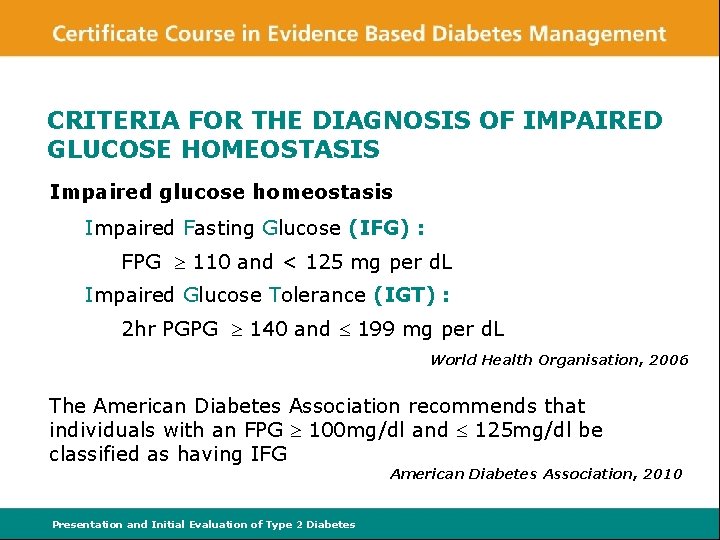
CRITERIA FOR THE DIAGNOSIS OF IMPAIRED GLUCOSE HOMEOSTASIS Impaired glucose homeostasis Impaired Fasting Glucose (IFG) : FPG 110 and < 125 mg per d. L Impaired Glucose Tolerance (IGT) : 2 hr PGPG 140 and 199 mg per d. L World Health Organisation, 2006 The American Diabetes Association recommends that individuals with an FPG 100 mg/dl and 125 mg/dl be classified as having IFG American Diabetes Association, 2010 Presentation and Initial Evaluation of Type 2 Diabetes
SCREENING- FOLLOW UP • If Dx is Diabetes start management • If normal, repeat screening in 3 yrs for normal patients and every year for high risk patients • If IGT or IFG repeat screening in 1 year Presentation and Initial Evaluation of Type 2 Diabetes

Presentation and Initial Evaluation of Type 2 Diabetes

INITIAL EVALUATION OF A DIABETES PATIENT Presentation and Initial Evaluation of Type 2 Diabetes

PHYSICAL EXAMINATION • Height, weight, BMI • Blood pressure measurement, including postural variation if indicated • Thyroid examination • Skin examination for acanthosis nigricans and insulin injection site inspection Contd… Presentation and Initial Evaluation of Type 2 Diabetes

PHYSICAL EXAMINATION Comprehensive foot examination • Inspection • Palpation of dorsalis pedis and posterior tibial pulses • Ankle and knee jerks • Proprioception, vibration and monofilament sensation Dilated retinal examination* Dental examination* *may be referred to appropriate specialist Adapted from American Diabetes Association, 2010 Presentation and Initial Evaluation of Type 2 Diabetes

LAB INVESTIGATIONS IN A PATIENT WITH NEWLY DIAGNOSED TYPE 2 DIABETES • Fasting and postprandial plasma glucose • Hb. A 1 c • Fasting lipid profile • Liver function tests • Urine complete exam, including assessment of microalbuminuria • Serum creatinine, and estimated GFR • TSH in case of dyslipidemia and in women >50 • Ecg, xray chest Adapted from American Diabetes Association, 2010 Presentation and Initial Evaluation of Type 2 Diabetes
TESTS OF GLYCEMIC CONTROL • Plasma glucose • Whole blood glucose (glucometers) • Urine glucose • Glycated hemoglobin (Hb. A 1 c) • Fructosamine Presentation and Initial Evaluation of Type 2 Diabetes } Long term indices

PLASMA GLUCOSE MEASUREMENT Methods A. Oxidation-reduction methods B. Enzymatic methods • Glucose oxidase • Hexokinase Enzymatic methods are preferred nowadays Presentation and Initial Evaluation of Type 2 Diabetes
URINE GLUCOSE TESTING • Using Benedict’s test • Using dipsticks Advantages • Cheap • Convenient • Easily available Until the 1970 s, the only method available to check glycemic control Presentation and Initial Evaluation of Type 2 Diabetes
URINE GLUCOSE TESTING Disadvantages • Semiquantitative- does not differentiate between marginally and profoundly elevated blood sugar levels • Not real-time- only indicates the blood sugar levels since the time of last voiding • Does not differentiate between normo- and hypoglycemia • Not useful in pregnancy (lowered renal threshold) • False-positives in Benedict’s test Hence urine sugar testing is now used only when blood sugar estimation is not available Presentation and Initial Evaluation of Type 2 Diabetes

GLYCATED HEMOGLOBIN (Hb. A 1 c) Presentation and Initial Evaluation of Type 2 Diabetes
![GLYCATION OF PROTEINS If protein is hemoglobin The end product is glycated hemaoglobin [GHb]](http://slidetodoc.com/presentation_image_h/0003794a90353ee254e94b52cfea1c43/image-17.jpg "GLYCATION OF PROTEINS If protein is hemoglobin The end product is glycated hemaoglobin [GHb]")
GLYCATION OF PROTEINS If protein is hemoglobin The end product is glycated hemaoglobin [GHb] Presentation and Initial Evaluation of Type 2 Diabetes
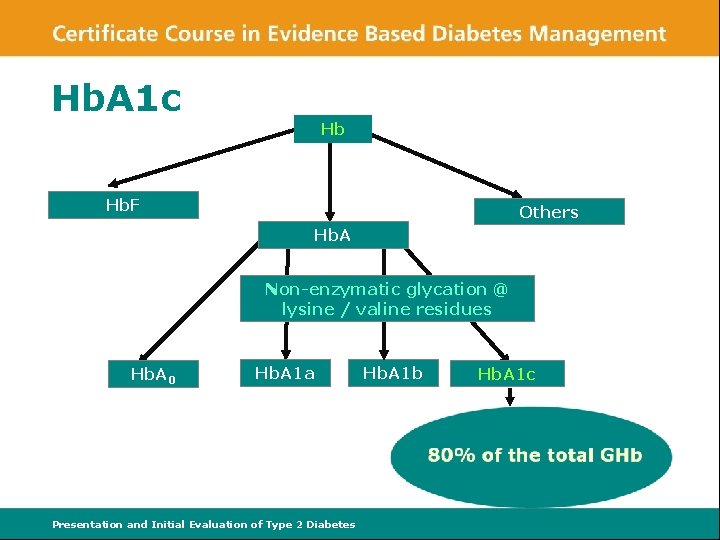
Hb. A 1 c Hb Hb. F Others Hb. A Non-enzymatic glycation @ lysine / valine residues Hb. A 0 Hb. A 1 a Presentation and Initial Evaluation of Type 2 Diabetes Hb. A 1 b Hb. A 1 c
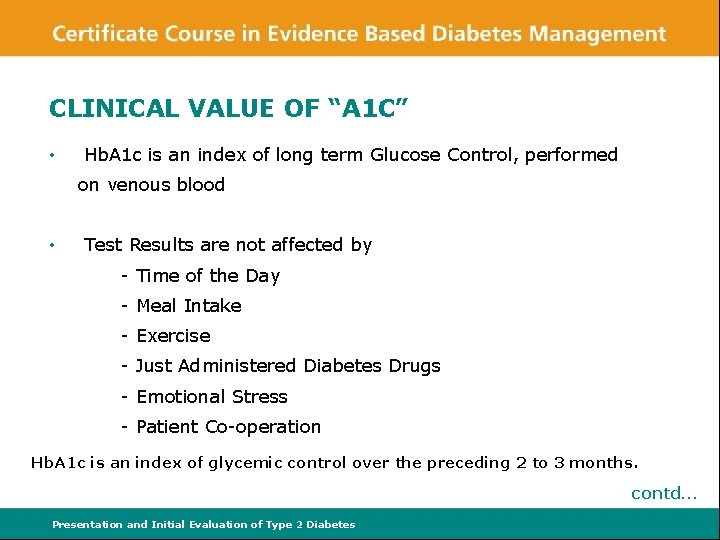
CLINICAL VALUE OF “A 1 C” • Hb. A 1 c is an index of long term Glucose Control, performed on venous blood • Test Results are not affected by - Time of the Day - Meal Intake - Exercise - Just Administered Diabetes Drugs - Emotional Stress - Patient Co-operation Hb. A 1 c is an index of glycemic control over the preceding 2 to 3 months. contd… Presentation and Initial Evaluation of Type 2 Diabetes
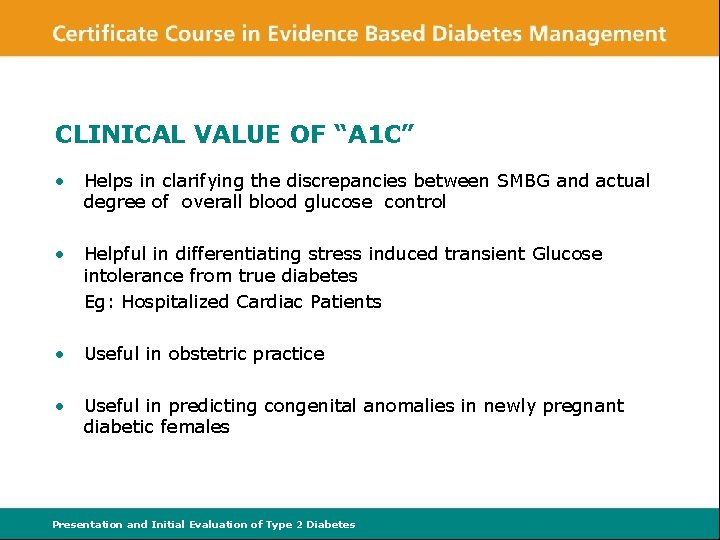
CLINICAL VALUE OF “A 1 C” • Helps in clarifying the discrepancies between SMBG and actual degree of overall blood glucose control • Helpful in differentiating stress induced transient Glucose intolerance from true diabetes Eg: Hospitalized Cardiac Patients • Useful in obstetric practice • Useful in predicting congenital anomalies in newly pregnant diabetic females Presentation and Initial Evaluation of Type 2 Diabetes
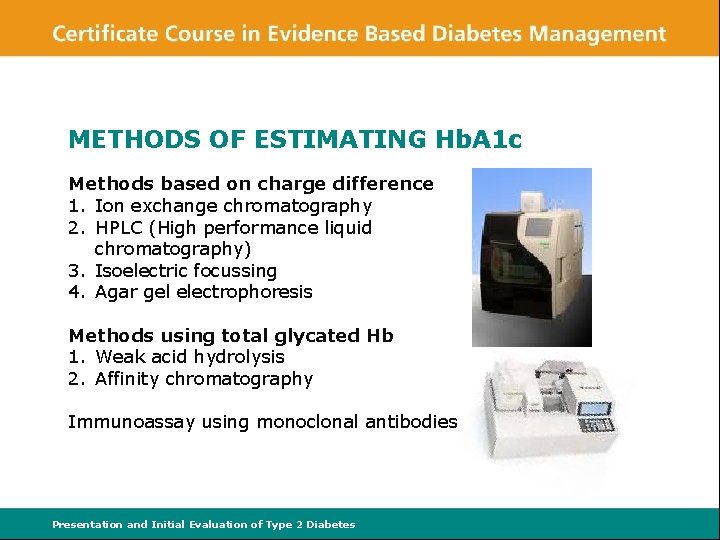
METHODS OF ESTIMATING Hb. A 1 c Methods based on charge difference 1. Ion exchange chromatography 2. HPLC (High performance liquid chromatography) 3. Isoelectric focussing 4. Agar gel electrophoresis Methods using total glycated Hb 1. Weak acid hydrolysis 2. Affinity chromatography Immunoassay using monoclonal antibodies Presentation and Initial Evaluation of Type 2 Diabetes
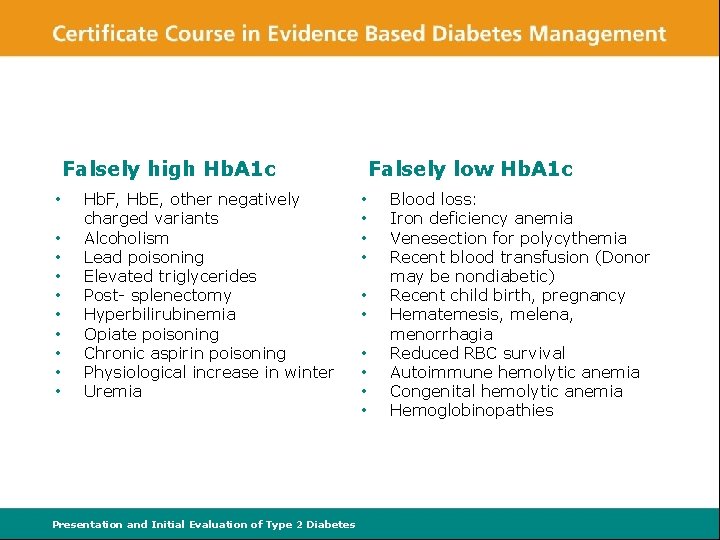
Falsely high Hb. A 1 c • • • Hb. F, Hb. E, other negatively charged variants Alcoholism Lead poisoning Elevated triglycerides Post- splenectomy Hyperbilirubinemia Opiate poisoning Chronic aspirin poisoning Physiological increase in winter Uremia Presentation and Initial Evaluation of Type 2 Diabetes Falsely low Hb. A 1 c • • • Blood loss: Iron deficiency anemia Venesection for polycythemia Recent blood transfusion (Donor may be nondiabetic) Recent child birth, pregnancy Hematemesis, melena, menorrhagia Reduced RBC survival Autoimmune hemolytic anemia Congenital hemolytic anemia Hemoglobinopathies
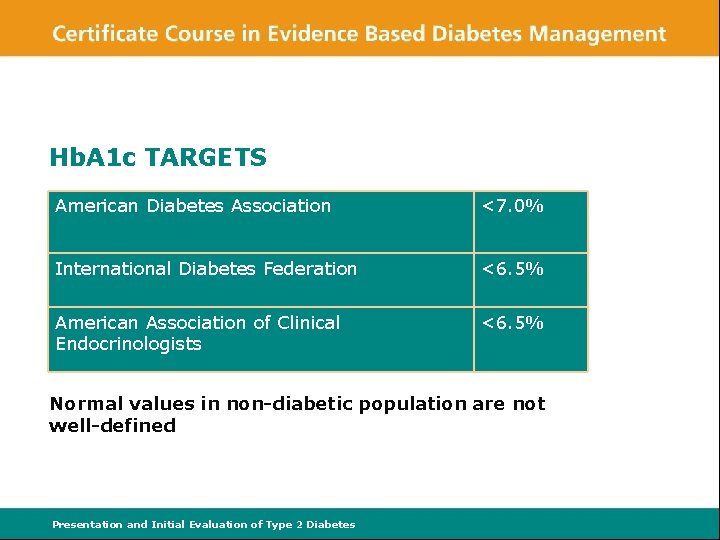
Hb. A 1 c TARGETS American Diabetes Association <7. 0% International Diabetes Federation <6. 5% American Association of Clinical Endocrinologists <6. 5% Normal values in non-diabetic population are not well-defined Presentation and Initial Evaluation of Type 2 Diabetes
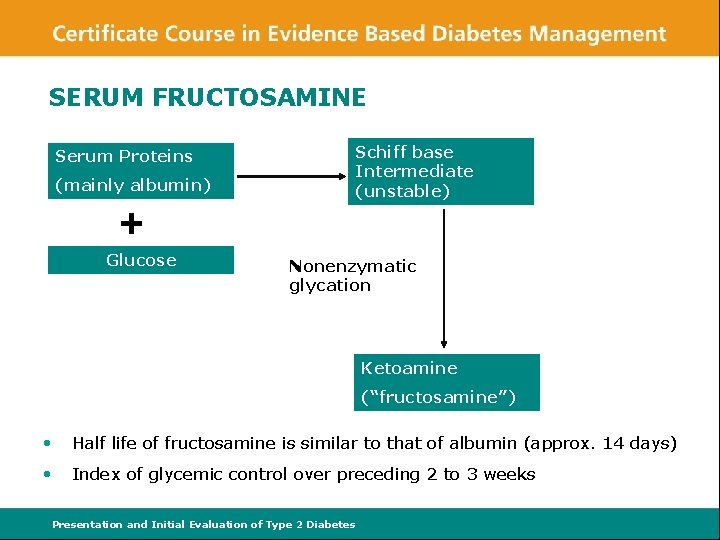
SERUM FRUCTOSAMINE Serum Proteins (mainly albumin) + Glucose Schiff base Intermediate (unstable) Nonenzymatic glycation Ketoamine (“fructosamine”) • Half life of fructosamine is similar to that of albumin (approx. 14 days) • Index of glycemic control over preceding 2 to 3 weeks Presentation and Initial Evaluation of Type 2 Diabetes

CLINICAL UTILITY OF FRUCTOSAMINE Whenever rapid changes in glycemic levels are anticipated and prompt changes in treatment need to be made • Presence of hemoglobin variants • In pregnancy • In certain cases of Type 1 diabetes Main disadvantage is lack of standardisation of the assay and cost Presentation and Initial Evaluation of Type 2 Diabetes
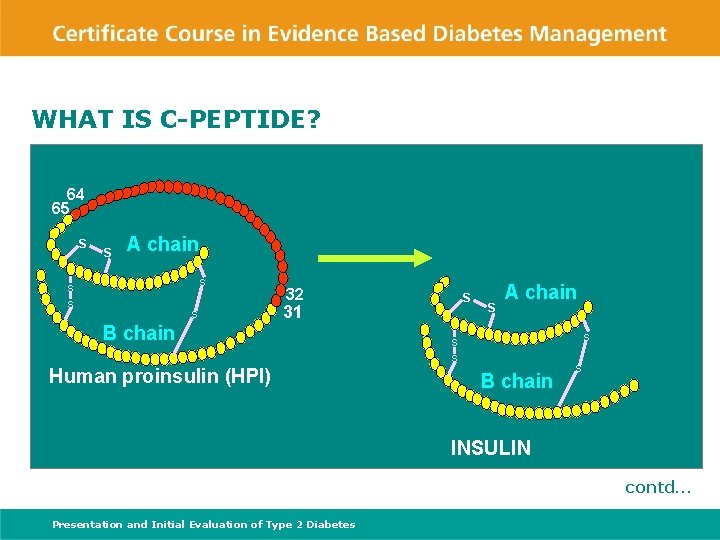
WHAT IS C-PEPTIDE? C-PEPTIDE 64 65 S S A chain S S B chain 32 S 31 S A chain S S S Human proinsulin (HPI) B chain S INSULIN contd… Presentation and Initial Evaluation of Type 2 Diabetes
WHAT IS C-PEPTIDE? • So called because it connects the A and B chain of insulin in the proinsulin molecule • By-product of insulin biosynthesis • For every molecule of insulin in the blood, there is one molecule of C-Peptide – equimolar • C-Peptide : 31 Amino acids (Mol wt 3020 Daltons) Presentation and Initial Evaluation of Type 2 Diabetes
INTERPRETATION OF THE RESULTS Normal values vary from lab to lab • Greater than normal values: Pre-diabetic stage [IGT] Insulinoma • Lower than normal values: Insulin requiring Type 2 diabetes MMDM FCPD MODY • Very low levels: Type 1 diabetes Complete surgical removal of pancreas (Pancreatectomy) Presentation and Initial Evaluation of Type 2 Diabetes
SIGNIFICANCE OF MEASURIUNG C-PEPTIDE • In the differential diagnosis between type 1 and type 2 diabetes • To differentiate Type 2 diabetes and LADA • Help to decide therapy [eg. Sulphonylurea failure] Presentation and Initial Evaluation of Type 2 Diabetes
SCREENING OF MICROALBUMINURIA Test for presence of microalbuminuria annually in • All Type 2 diabetics starting at diagnosis • Type 1 diabetic with DM more than 5 years Methods • Measurement of the albumin to creatinine ratio in a random spot collection • 24 h collection with creatinine, allowing the simultaneous measurement of creatinine • Timed collection Presentation and Initial Evaluation of Type 2 Diabetes
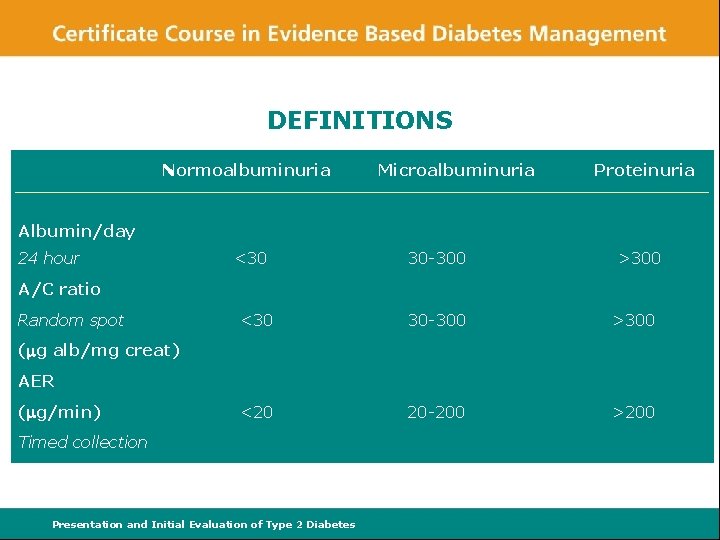
DEFINITIONS Normoalbuminuria Microalbuminuria Proteinuria Albumin/day 24 hour <30 30 -300 >300 A/C ratio Random spot <30 30 -300 >300 <20 20 -200 >200 ( g alb/mg creat) AER ( g/min) Timed collection Presentation and Initial Evaluation of Type 2 Diabetes

Elicitation of Ankle Jerk Vibration sense - Tuning fork Presentation and Initial Evaluation of Type 2 Diabetes

SEMMES WEINSTEIN MONOFILAMENT TEST The Semmes Weinstein Monofilament test is a simple screening test for diagnosing patients at risk of ulcers due to peripheral sensory neuropathy Presentation and Initial Evaluation of Type 2 Diabetes
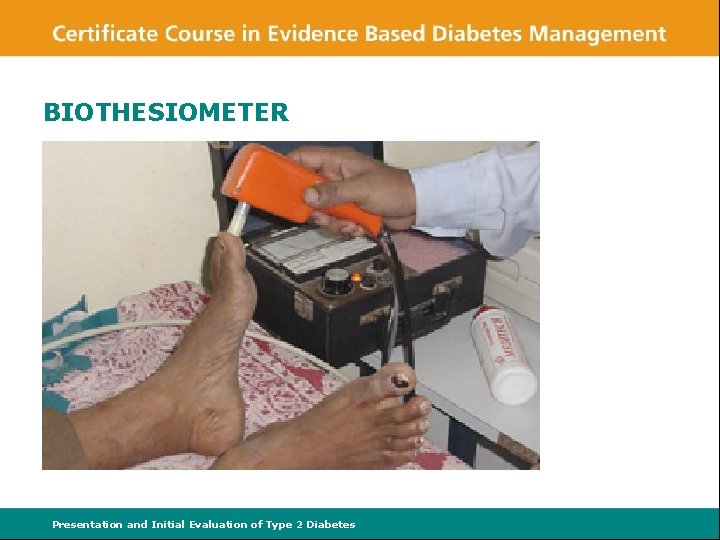
BIOTHESIOMETER Presentation and Initial Evaluation of Type 2 Diabetes
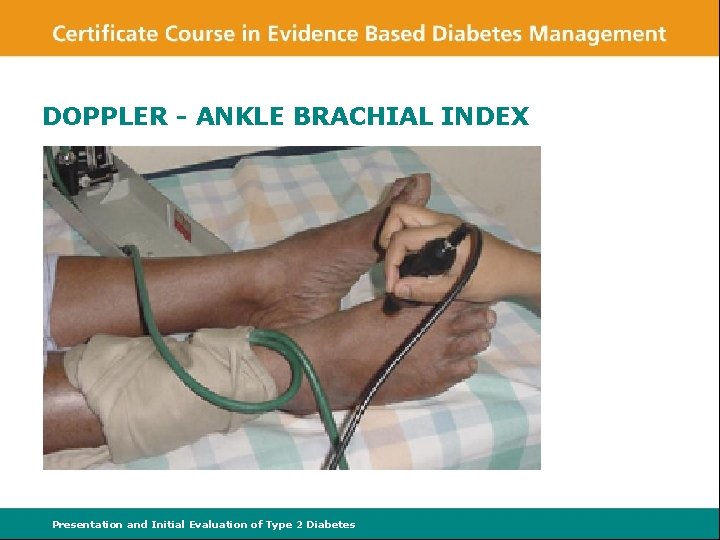
DOPPLER - ANKLE BRACHIAL INDEX Presentation and Initial Evaluation of Type 2 Diabetes
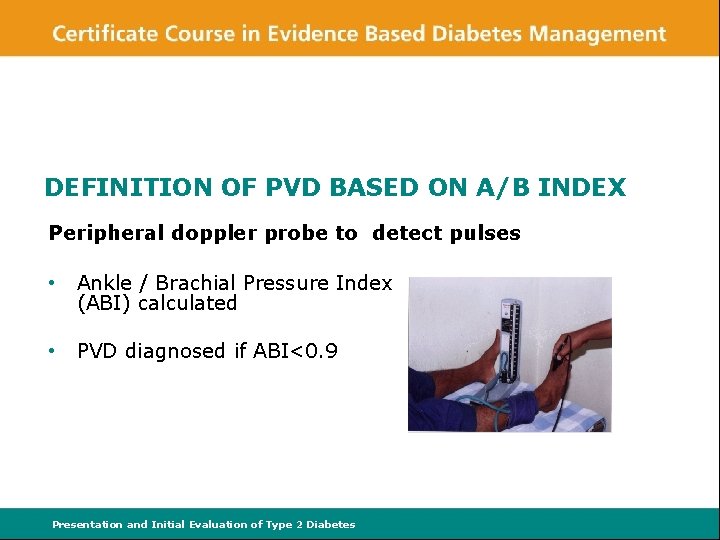
DEFINITION OF PVD BASED ON A/B INDEX Peripheral doppler probe to detect pulses • Ankle / Brachial Pressure Index (ABI) calculated • PVD diagnosed if ABI<0. 9 Presentation and Initial Evaluation of Type 2 Diabetes

FOOT PRESSURE MEASUREMENT Presentation and Initial Evaluation of Type 2 Diabetes

FOOT PRESSURE MEASUREMENT Presentation and Initial Evaluation of Type 2 Diabetes
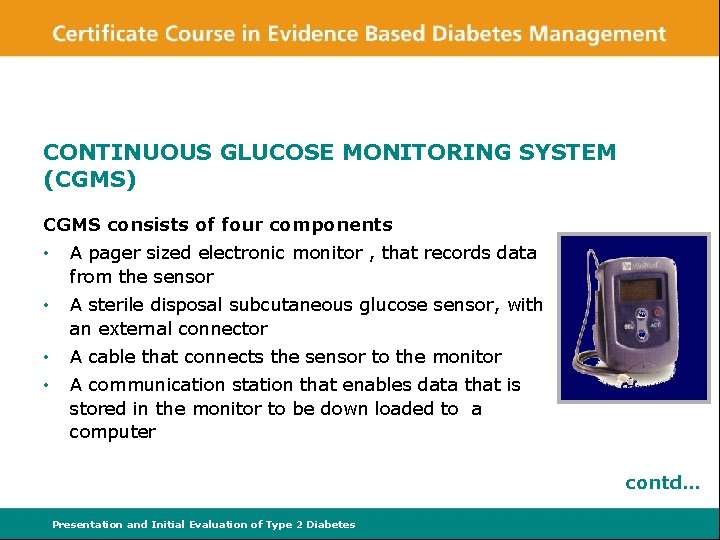
CONTINUOUS GLUCOSE MONITORING SYSTEM (CGMS) CGMS consists of four components • A pager sized electronic monitor , that records data from the sensor • A sterile disposal subcutaneous glucose sensor, with an external connector • A cable that connects the sensor to the monitor • A communication station that enables data that is stored in the monitor to be down loaded to a computer contd… Presentation and Initial Evaluation of Type 2 Diabetes
CONTINUOUS GLUCOSE MONITORING SYSTEM (CGMS) CGMS • • Senses blood sugar every 10 seconds Average of every 5 minutes is recorded Total of 288 readings per day displayed as a graph Works up to 72 hours Presentation and Initial Evaluation of Type 2 Diabetes
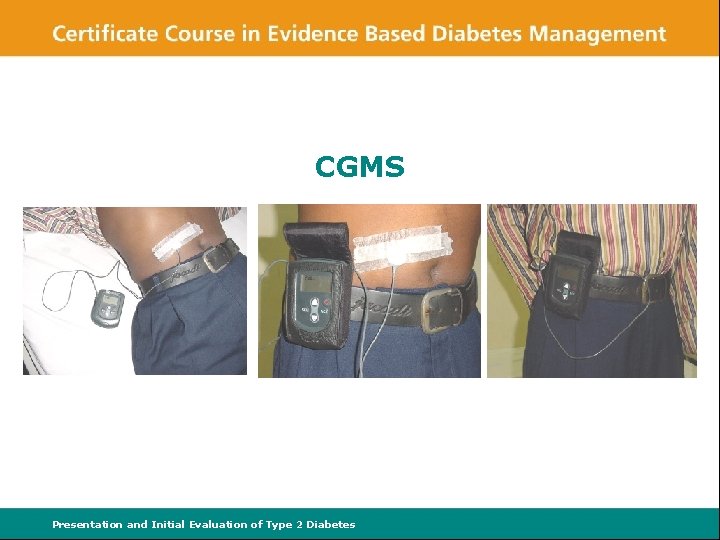
CGMS Presentation and Initial Evaluation of Type 2 Diabetes
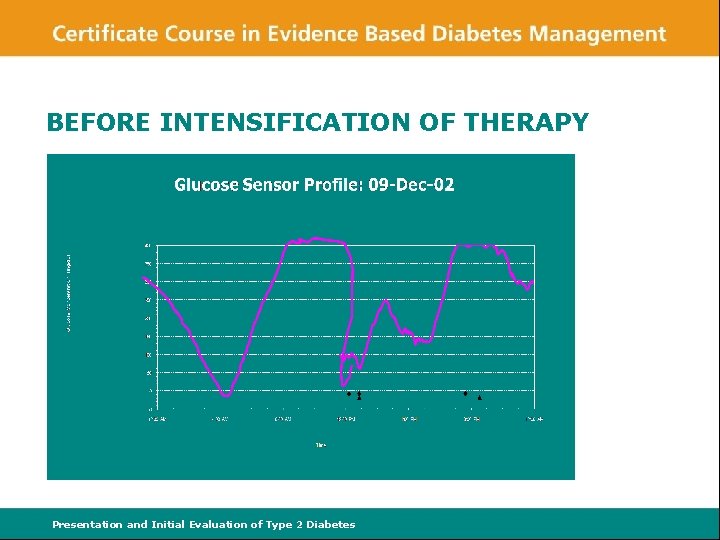
BEFORE INTENSIFICATION OF THERAPY Presentation and Initial Evaluation of Type 2 Diabetes
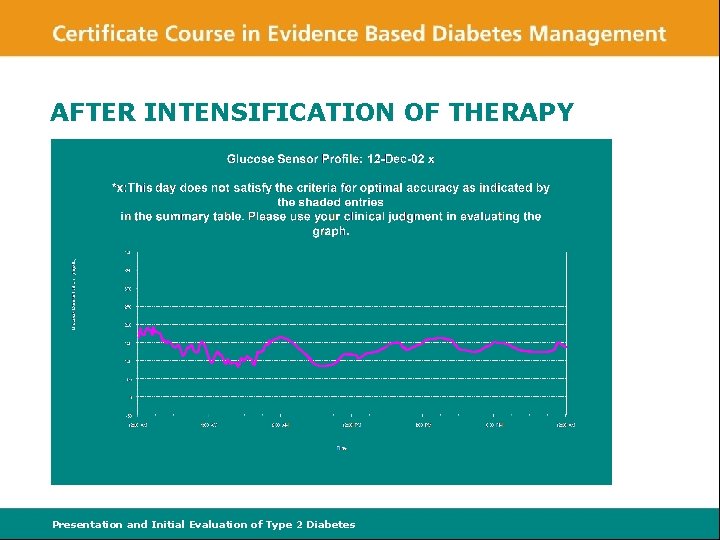
AFTER INTENSIFICATION OF THERAPY Presentation and Initial Evaluation of Type 2 Diabetes
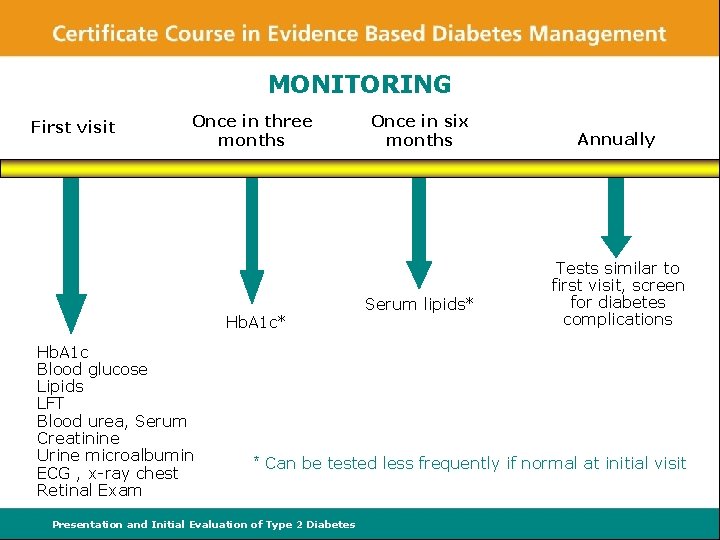
MONITORING First visit Once in three months Hb. A 1 c* Hb. A 1 c Blood glucose Lipids LFT Blood urea, Serum Creatinine Urine microalbumin ECG , x-ray chest Retinal Exam Once in six months Serum lipids* Annually Tests similar to first visit, screen for diabetes complications * Can be tested less frequently if normal at initial visit Presentation and Initial Evaluation of Type 2 Diabetes

Presentation and Initial Evaluation of Type 2 Diabetes

CASE STUDIES Presentation and Initial Evaluation of Type 2 Diabetes
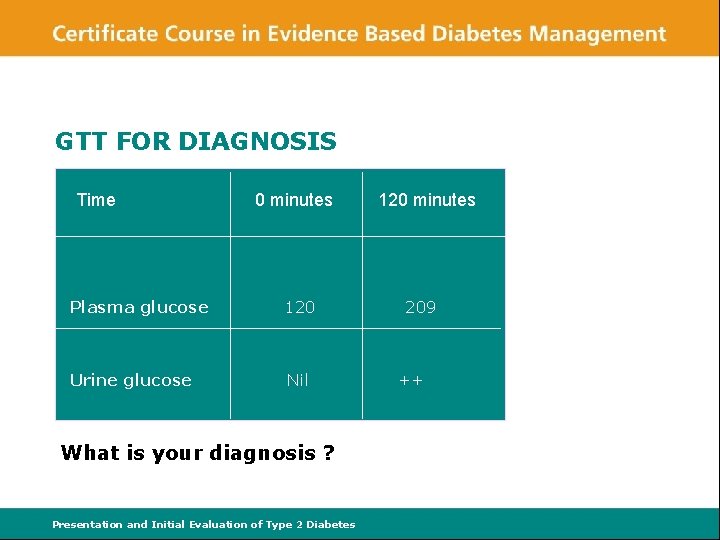
GTT FOR DIAGNOSIS Time 0 minutes Plasma glucose 120 Urine glucose Nil What is your diagnosis ? Presentation and Initial Evaluation of Type 2 Diabetes 120 minutes 209 ++

GTT FOR DIAGNOSIS Time 0 minutes 120 minutes Plasma glucose 82 80 Urine glucose ++ ++ What is your diagnosis ? Presentation and Initial Evaluation of Type 2 Diabetes
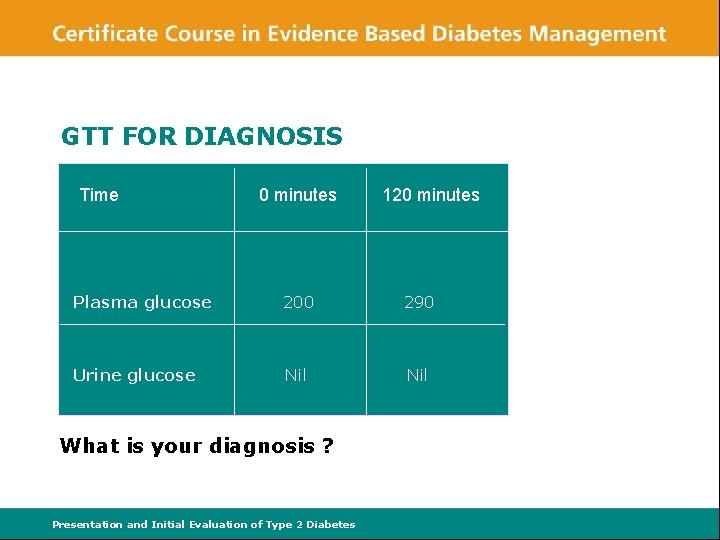
GTT FOR DIAGNOSIS Time 0 minutes 120 minutes Plasma glucose 200 290 Urine glucose Nil What is your diagnosis ? Presentation and Initial Evaluation of Type 2 Diabetes
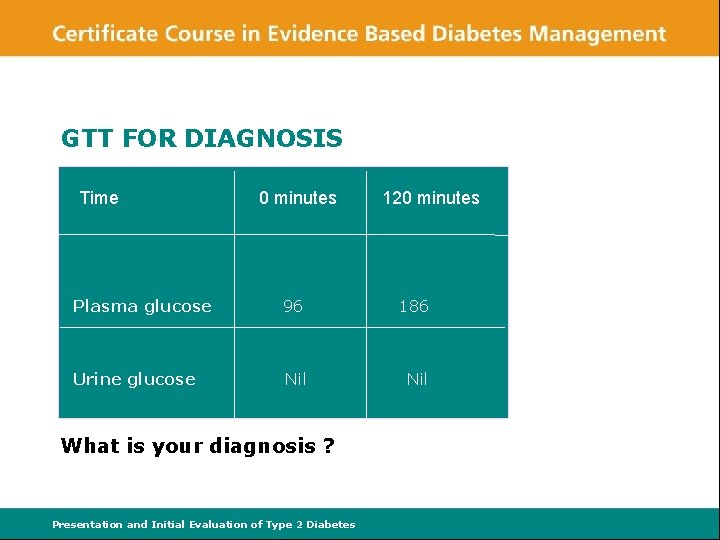
GTT FOR DIAGNOSIS Time 0 minutes 120 minutes Plasma glucose 96 186 Urine glucose Nil What is your diagnosis ? Presentation and Initial Evaluation of Type 2 Diabetes
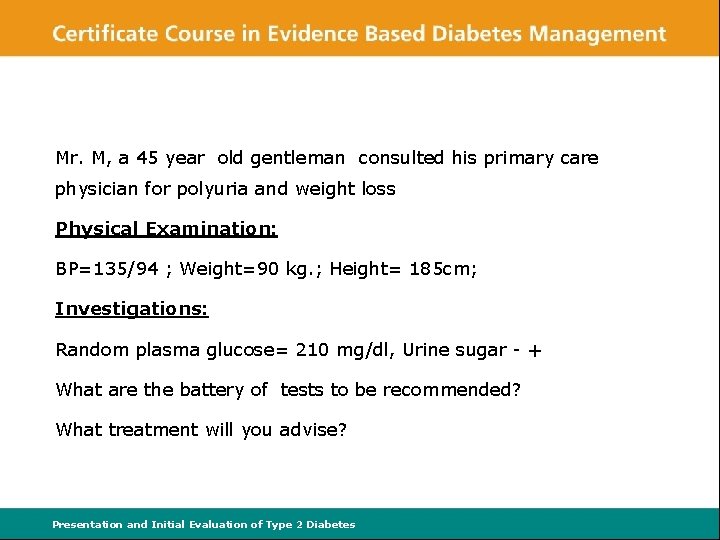
Mr. M, a 45 year old gentleman consulted his primary care physician for polyuria and weight loss Physical Examination: BP=135/94 ; Weight=90 kg. ; Height= 185 cm; Investigations: Random plasma glucose= 210 mg/dl, Urine sugar - + What are the battery of tests to be recommended? What treatment will you advise? Presentation and Initial Evaluation of Type 2 Diabetes

Presentation and Initial Evaluation of Type 2 Diabetes

Primer to Module 4 Presentation and Initial Evaluation of Type 2 Diabetes
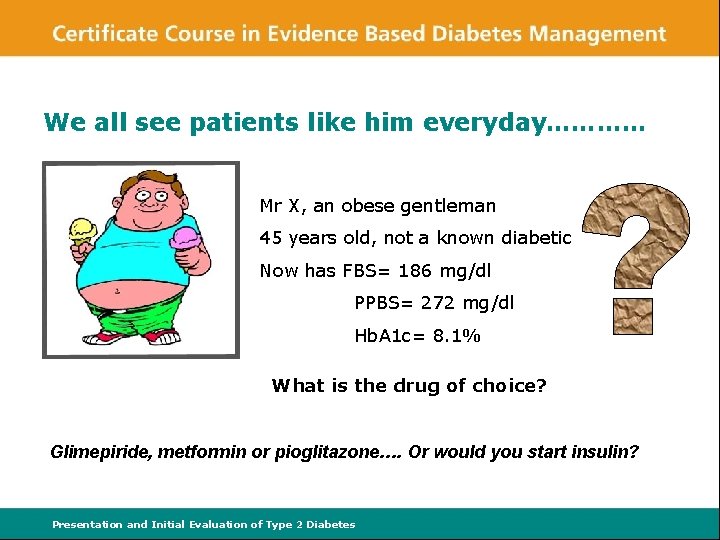
We all see patients like him everyday………… Mr X, an obese gentleman 45 years old, not a known diabetic Now has FBS= 186 mg/dl PPBS= 272 mg/dl Hb. A 1 c= 8. 1% What is the drug of choice? Glimepiride, metformin or pioglitazone…. Or would you start insulin? Presentation and Initial Evaluation of Type 2 Diabetes

Which group of antidiabetic agents was banned in the US in the 1950 s and not allowed back until 1995……. And one member of this class is now the most widely used antidiabetic agent Presentation and Initial Evaluation of Type 2 Diabetes

Why has rosiglitazone been embroiled in controversy? Should we be prescribing this drug? Presentation and Initial Evaluation of Type 2 Diabetes
ALL THIS AND MUCH MORE… AWAIT MODULE 4 Presentation and Initial Evaluation of Type 2 Diabetes
- Slides: 57