
Clinical pharmacy laboratory DM PART 1 Insulin Type
![Clinical pharmacy laboratory DM PART [1] Insulin](https://slidetodoc.com/presentation_image_h2/81baf23e8845c0bbe691518f8c80ba25/image-1.jpg "Clinical pharmacy laboratory DM PART [1] Insulin")
Clinical pharmacy laboratory DM PART [1] Insulin
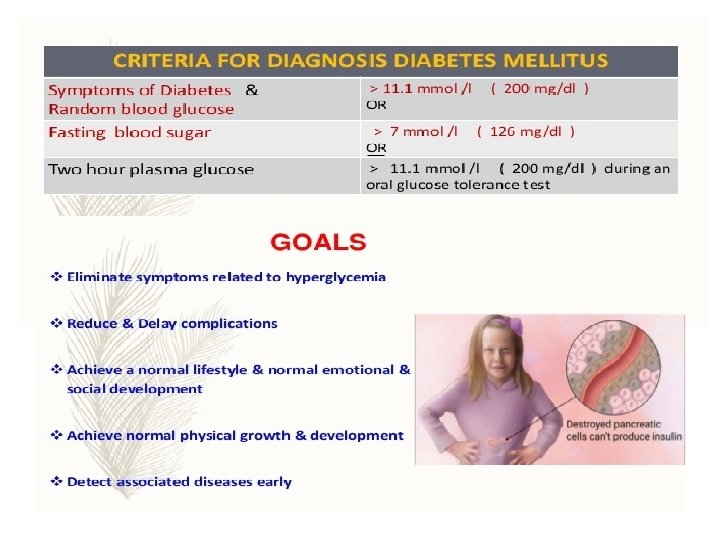
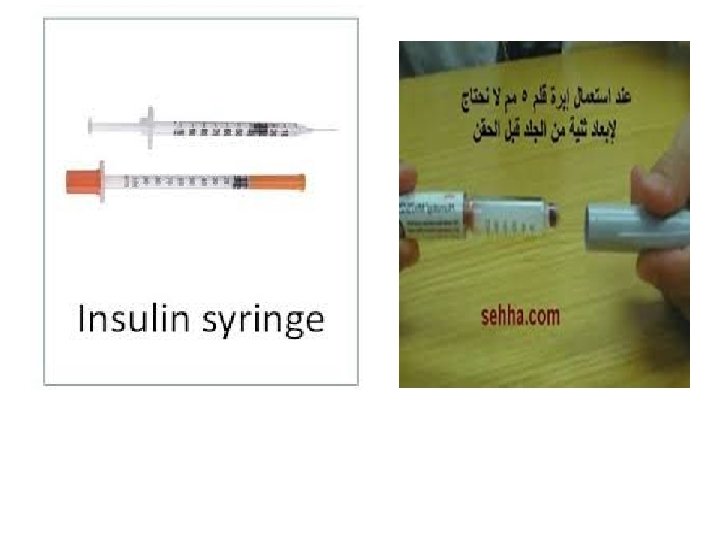
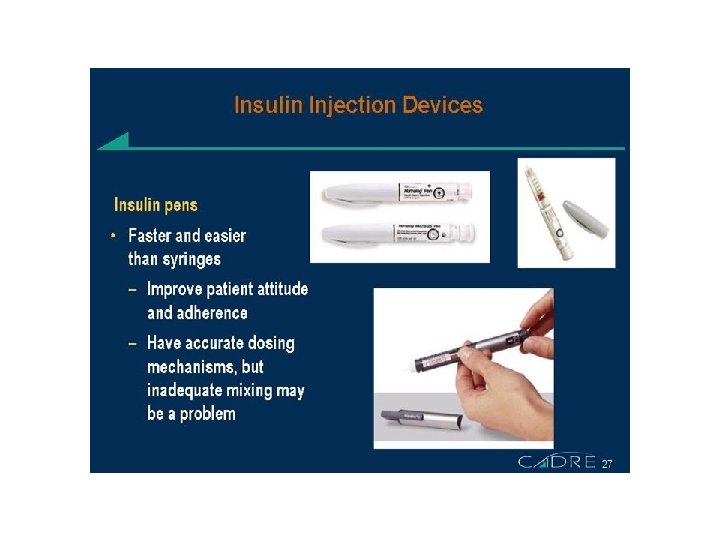
Type I (IDDM): The disease characterized by an absolute deficiency of insulin caused by massive Beta cell destruction, the pancreas fails to respond to glucose. IDDM shows classic symptoms of insulin deficiency (polydipsia, polyphagia, polyuria, and weight loss). Type I diabetics require exogenous insulin and characterized by hyperglycemia and life threatening ketoacidosis. The goal in administration exogenous insulin to control hyperglycemia, avoid ketoacidosis, and to avoid long-term complications. Because insulin is a polypeptide, it is degraded in the GIT if taken orally. It therefore is generally administered by subcutaneous injection, or intravenously for regular insulin in emergency cases, insulin infusion is also contributed.
Insulins Insulin plays a key role in the regulation of carbohydrate, fat, and protein metabolism. It is a polypeptide hormone ofcomplex structure. There are differences in the amino-acid sequence of animal insulins, human insulins and the human insulin analogues. Insulin may be extracted from pork pancreas and purified by crystallisation; it may also be extracted from beef pancreas, but beef insulins are now rarely used. Human sequence insulin may be produced semi synthetically by enzymatic modification of porcine insulin or biosynthetically by recombinant DNAtechnology using bacteria or yeast. All insulin preparations are to a greater or lesser extent immunogenic in man but immunological resistance to insulin action is uncommon. Insulin is inactivated by gastro-intestinal enzymes, and must therefore be given by injection; the subcutaneous route is ideal in most circumstances.
Insulin is needed by 1 -All patients with ketoacidosis 2 -Most patients with rapid onset of symptoms 3 - Substantial loss of weight 4 - Weakness 5 -ketonuria 6 -Afirstdegree relative who has type 1 diabetes. 7 -Insulin is also needed for type 2 diabetes when other methods have failed to achieve good control. 8 -Temporarily in the presence of inter current illness or preoperatively. 9 -Pregnant women with type 2 diabetes may be treated with insulin when diet alone fails.
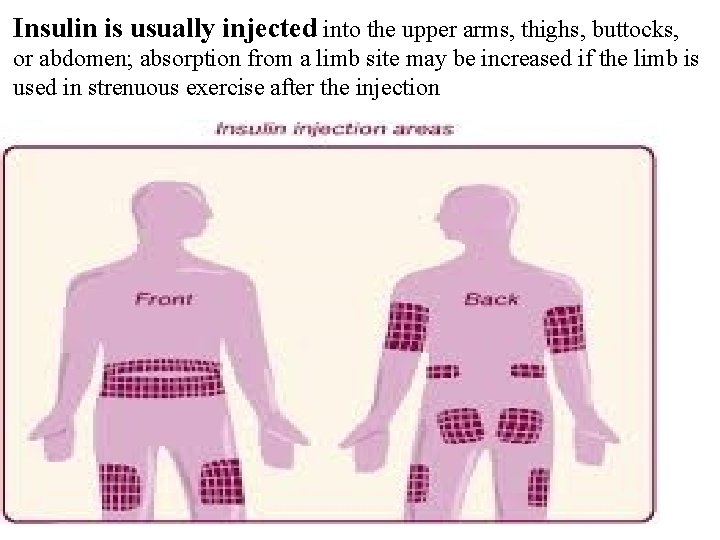
Insulin is usually injected into the upper arms, thighs, buttocks, or abdomen; absorption from a limb site may be increased if the limb is used in strenuous exercise after the injection
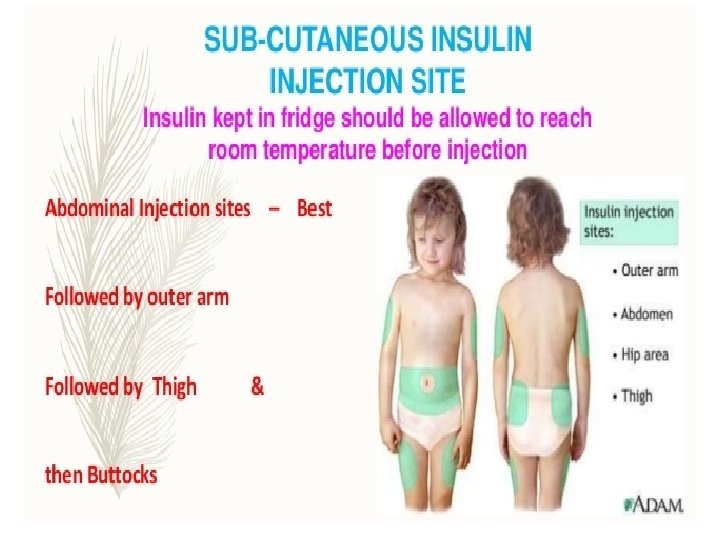
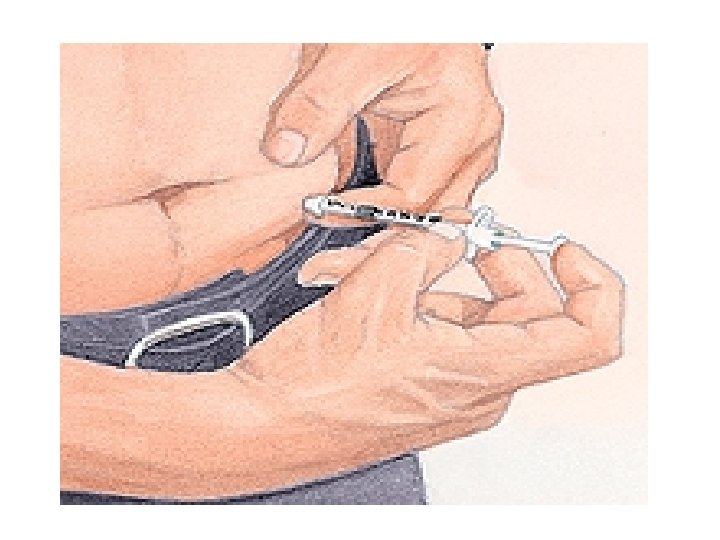
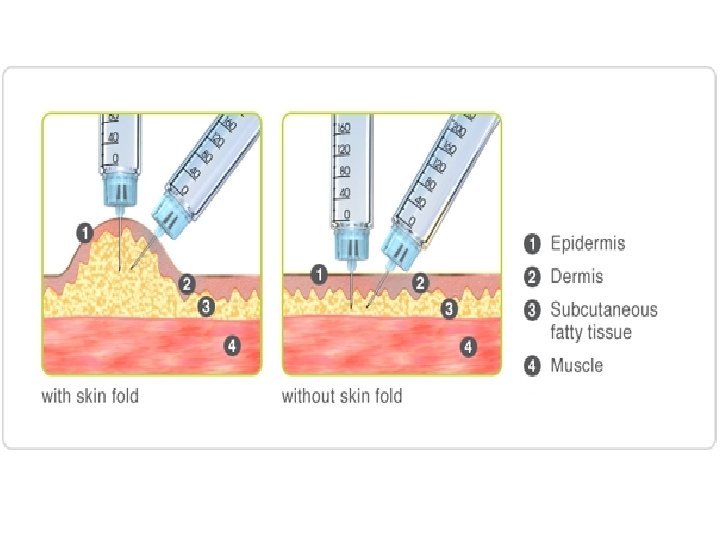
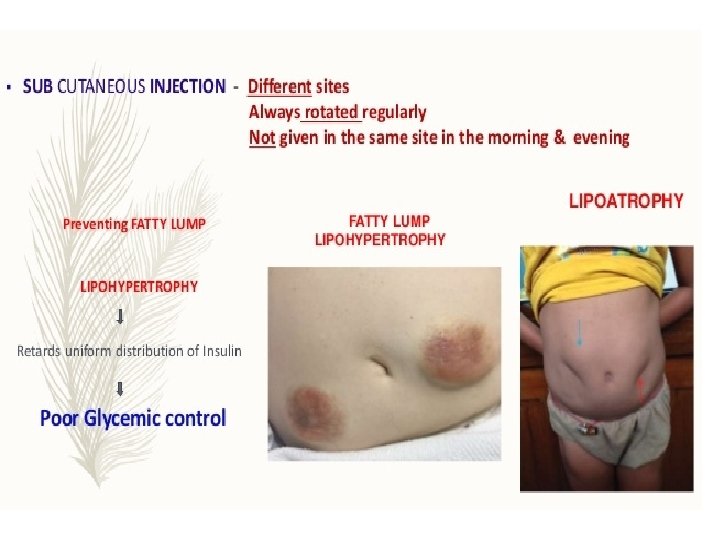
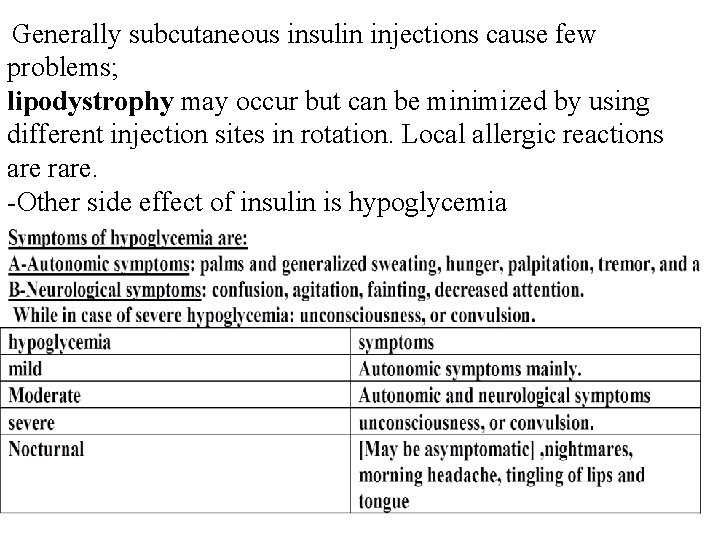
Generally subcutaneous insulin injections cause few problems; lipodystrophy may occur but can be minimized by using different injection sites in rotation. Local allergic reactions are rare. -Other side effect of insulin is hypoglycemia
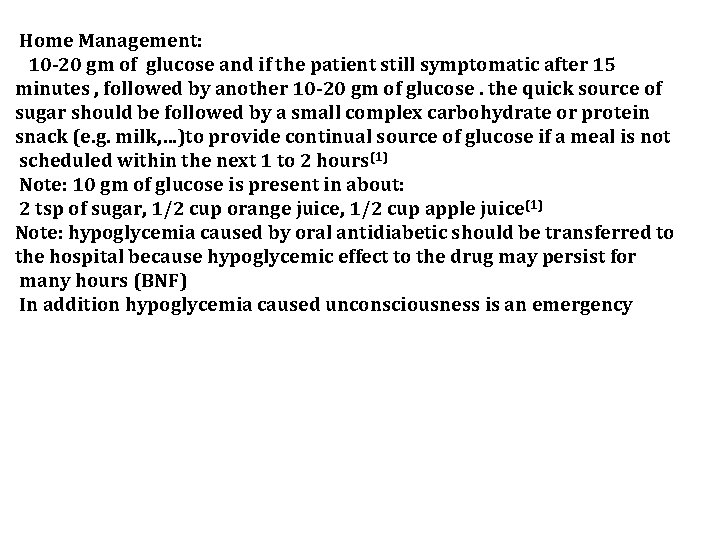
Home Management: 10 -20 gm of glucose and if the patient still symptomatic after 15 minutes , followed by another 10 -20 gm of glucose. the quick source of sugar should be followed by a small complex carbohydrate or protein snack (e. g. milk, …)to provide continual source of glucose if a meal is not scheduled within the next 1 to 2 hours(1) Note: 10 gm of glucose is present in about: 2 tsp of sugar, 1/2 cup orange juice, 1/2 cup apple juice(1) Note: hypoglycemia caused by oral antidiabetic should be transferred to the hospital because hypoglycemic effect to the drug may persist for many hours (BNF) In addition hypoglycemia caused unconsciousness is an emergency
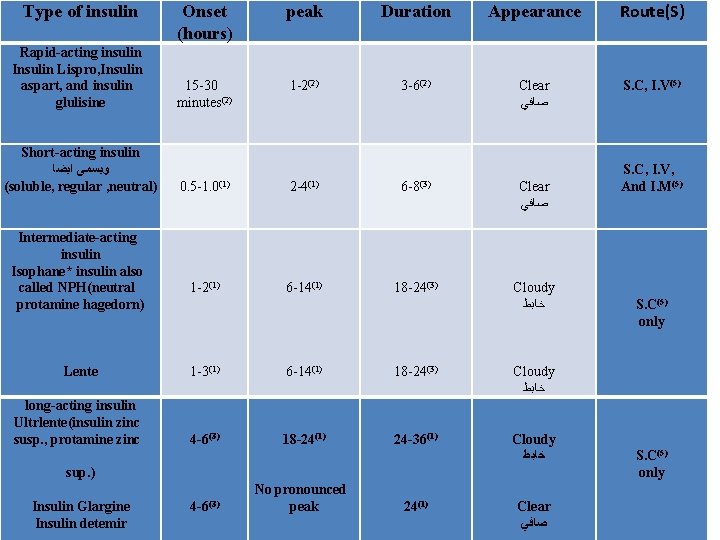
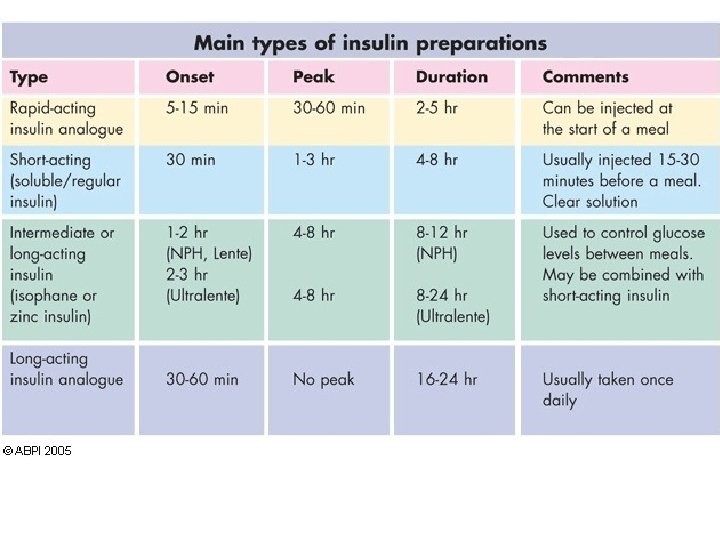
Onset (hours) peak Duration Appearance Route(S) Rapid-acting insulin Insulin Lispro, Insulin aspart, and insulin glulisine 15 -30 minutes(2) 1 -2(2) 3 -6(2) Clear ﺻﺎﻓﻲ S. C, I. V(5) Short-acting insulin ﻭﻳﺴﻤﻰ ﺍﻳﻀﺎ (soluble, regular , neutral) 0. 5 -1. 0(1) 2 -4(1) 6 -8(3) Clear ﺻﺎﻓﻲ 1 -2(1) 6 -14(1) 18 -24(3) Cloudy ﺧﺎﺑﻂ Type of insulin Intermediate-acting insulin Isophane* insulin also called NPH(neutral protamine hagedorn) Lente 1 -3(1) 6 -14(1) 18 -24(3) Cloudy ﺧﺎﺑﻂ long-acting insulin Ultrlente(insulin zinc susp. , protamine zinc 4 -6(3) 18 -24(1) 24 -36(1) Cloudy ﺧﺎﺑﻂ sup. ) Insulin Glargine Insulin detemir 4 -6(3) No pronounced peak 24(1) Clear ﺻﺎﻓﻲ S. C, I. V, And I. M(5) S. C(5) only
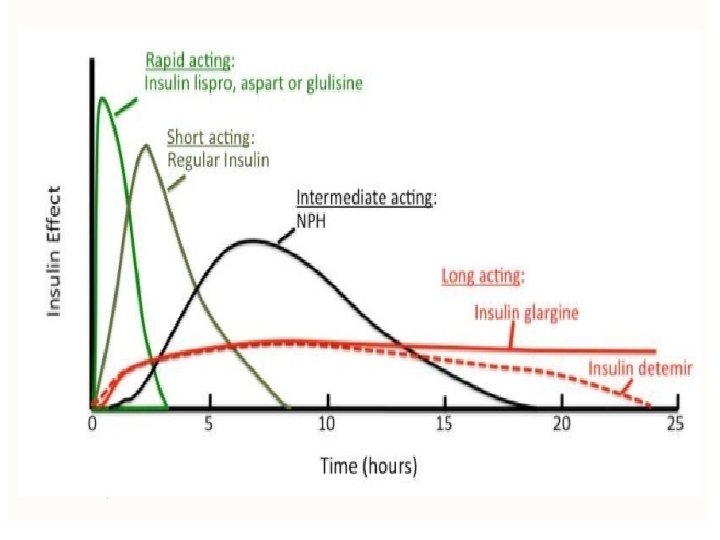
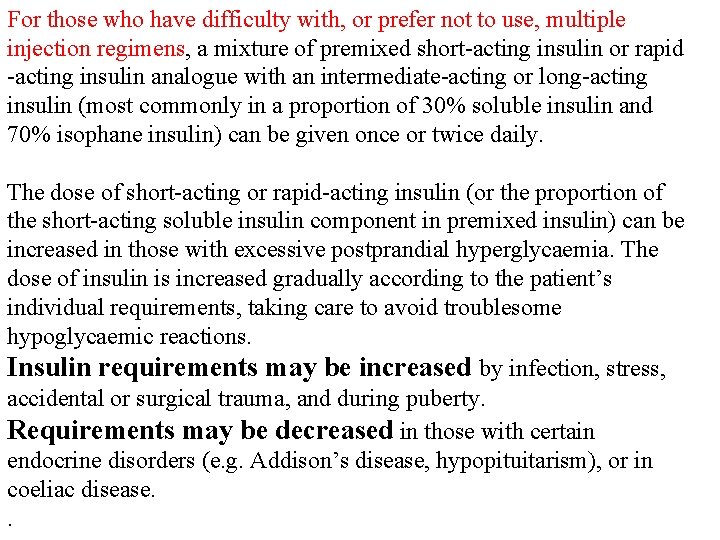
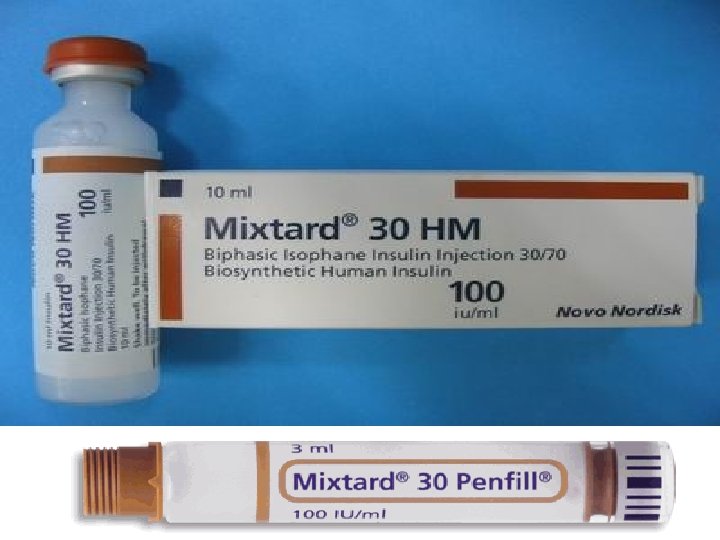
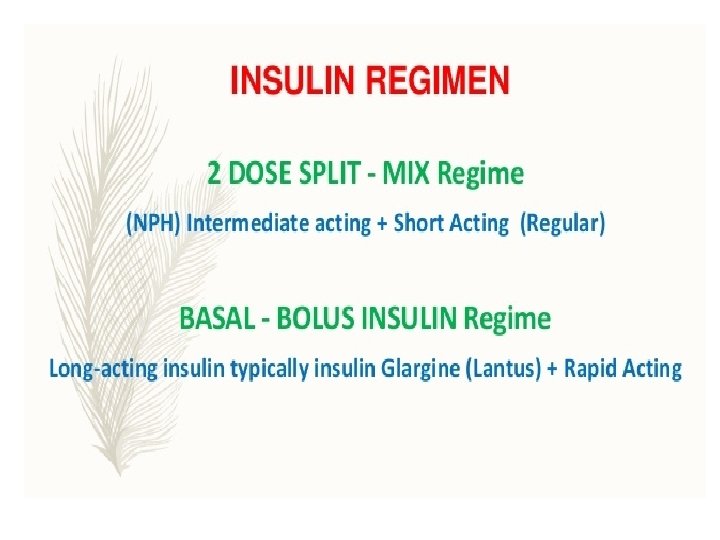
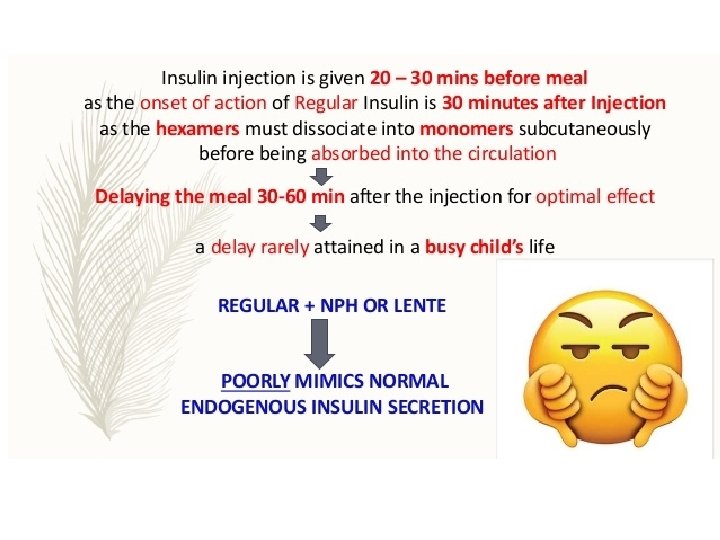
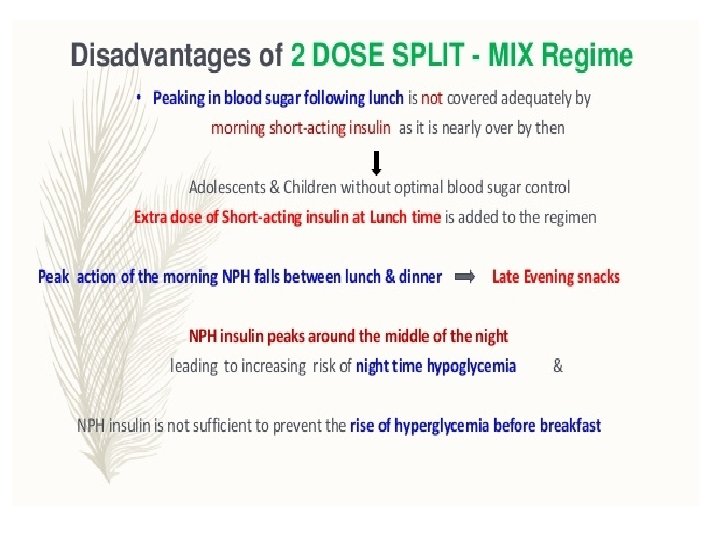
For those who have difficulty with, or prefer not to use, multiple injection regimens, a mixture of premixed short-acting insulin or rapid -acting insulin analogue with an intermediate-acting or long-acting insulin (most commonly in a proportion of 30% soluble insulin and 70% isophane insulin) can be given once or twice daily. The dose of short-acting or rapid-acting insulin (or the proportion of the short-acting soluble insulin component in premixed insulin) can be increased in those with excessive postprandial hyperglycaemia. The dose of insulin is increased gradually according to the patient’s individual requirements, taking care to avoid troublesome hypoglycaemic reactions. Insulin requirements may be increased by infection, stress, accidental or surgical trauma, and during puberty. Requirements may be decreased in those with certain endocrine disorders (e. g. Addison’s disease, hypopituitarism), or in coeliac disease. .
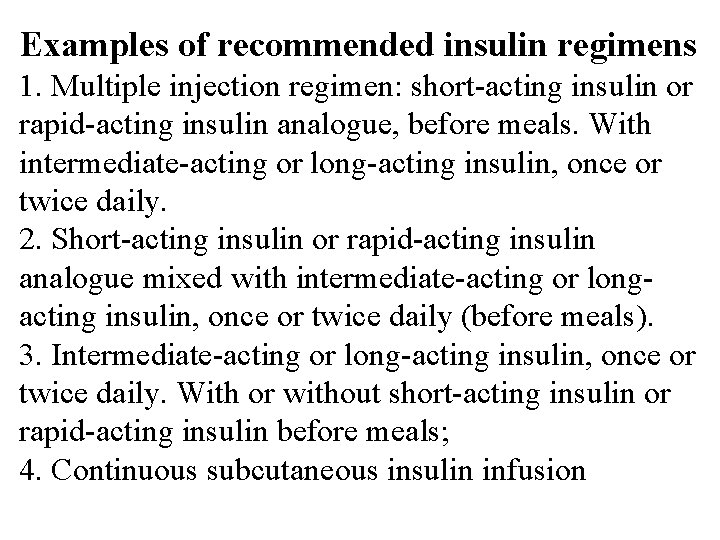
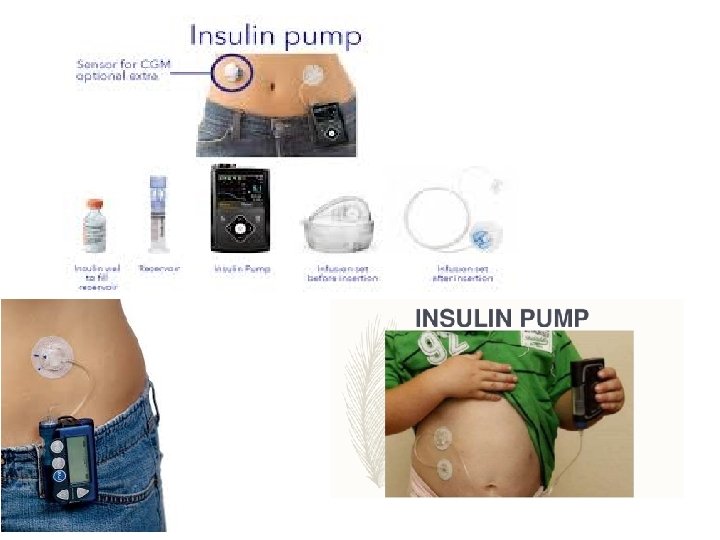
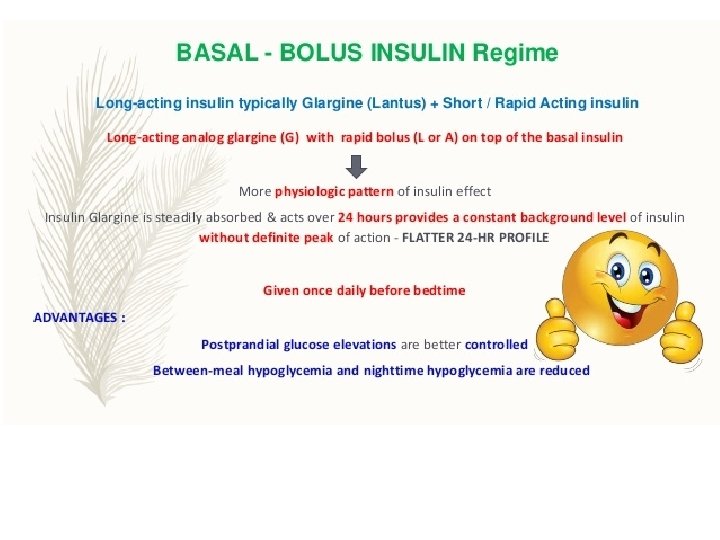
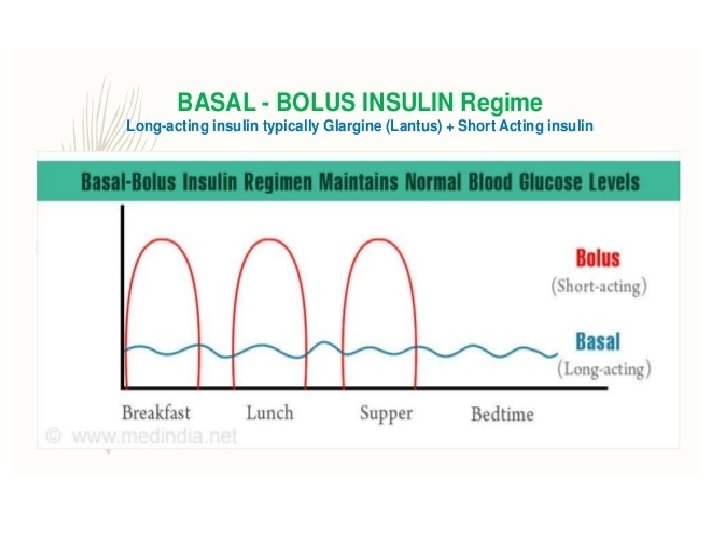
Examples of recommended insulin regimens 1. Multiple injection regimen: short-acting insulin or rapid-acting insulin analogue, before meals. With intermediate-acting or long-acting insulin, once or twice daily. 2. Short-acting insulin or rapid-acting insulin analogue mixed with intermediate-acting or longacting insulin, once or twice daily (before meals). 3. Intermediate-acting or long-acting insulin, once or twice daily. With or without short-acting insulin or rapid-acting insulin before meals; 4. Continuous subcutaneous insulin infusion
Short-acting insulins -Soluble insulin is a short-acting form of insulin. -given 15 to 30 minutes before meals. -Soluble insulin is the most appropriate form of insulin for use in diabetic emergencies e. g. diabetic ketoacidosis and at the time of surgery. It can be given intravenously and intramuscularly, as well as subcutaneously.
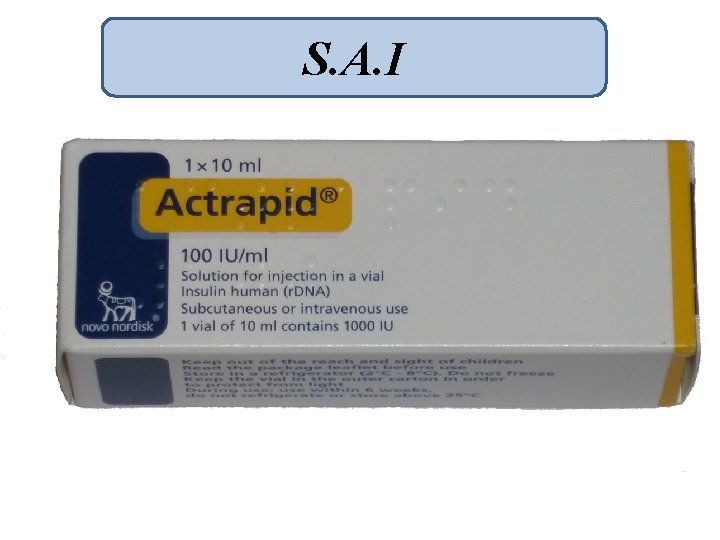
S. A. I
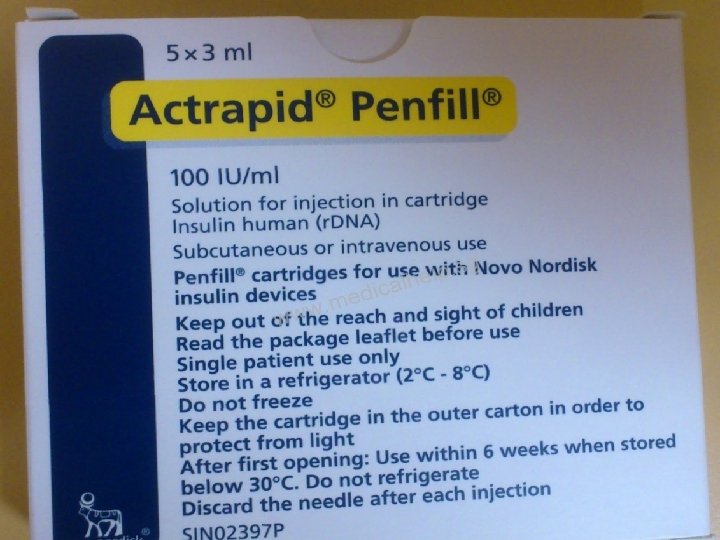
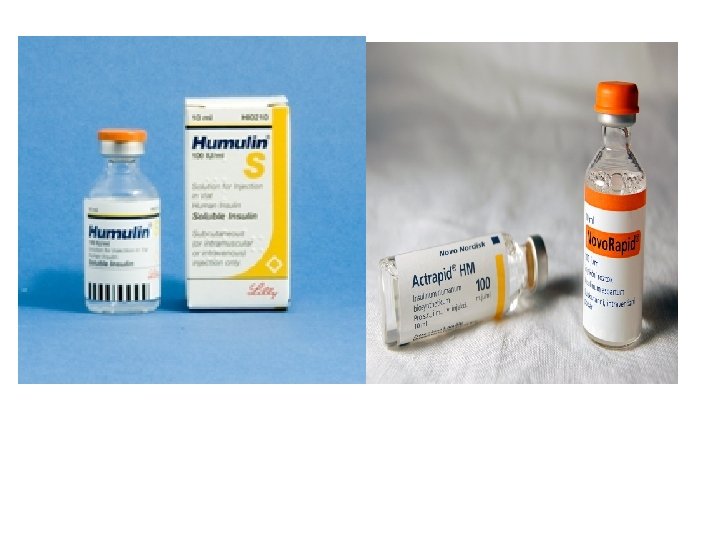
The rapid-acting human insulin analogues Insulin aspart, Insulin glulisine, and Insulin lispro have a faster onset and shorter duration of action than soluble insulin; as a result, compared to soluble insulin, fasting and pre prandial blood glucose concentrations are a little higher, postprandial blood-glucose concentration is a little lower, and hypoglycaemia occurs slightly less frequently. Subcutaneous injection of insulin analogues may be convenient for those who wish to inject shortly before or, when necessary, shortly after a meal. They can also help those susceptible to hypoglycaemia before lunch and those who eat late in the evening and are prone to nocturnal hypoglycaemia.
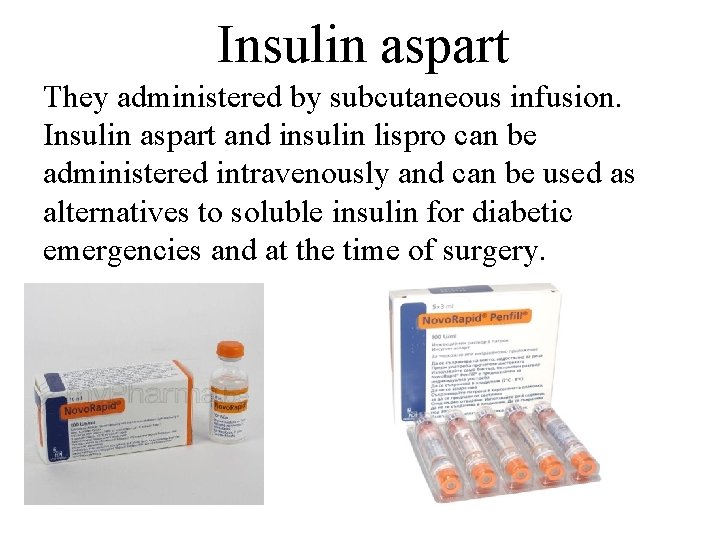
Insulin aspart They administered by subcutaneous infusion. Insulin aspart and insulin lispro can be administered intravenously and can be used as alternatives to soluble insulin for diabetic emergencies and at the time of surgery.
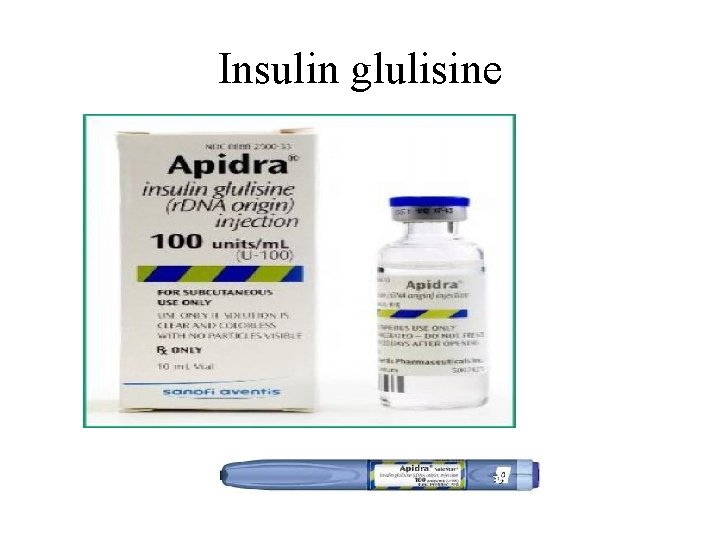
Insulin glulisine
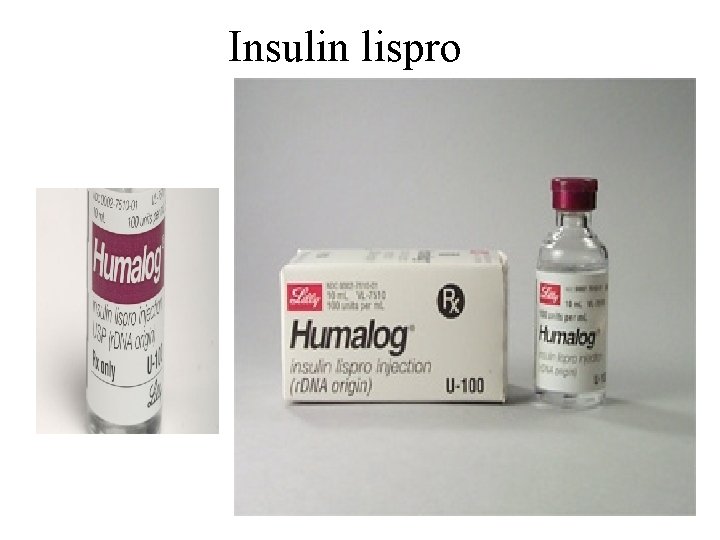
Insulin lispro
![I. A. I[neutral protamin hygydron] NPH Sterile buffered suspension of either porcine or human](http://slidetodoc.com/presentation_image_h2/81baf23e8845c0bbe691518f8c80ba25/image-27.jpg "I. A. I[neutral protamin hygydron] NPH Sterile buffered suspension of either porcine or human")
I. A. I[neutral protamin hygydron] NPH Sterile buffered suspension of either porcine or human insulin complexed with protamine sulfate (or another suitable protamine)
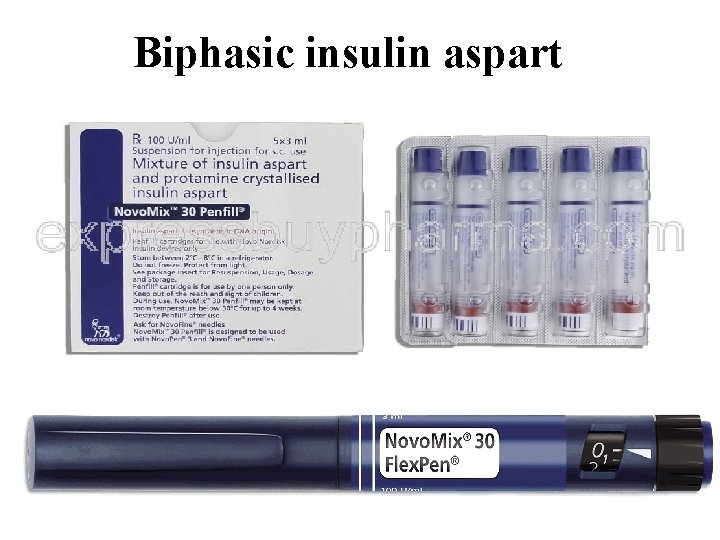
Biphasic insulin aspart
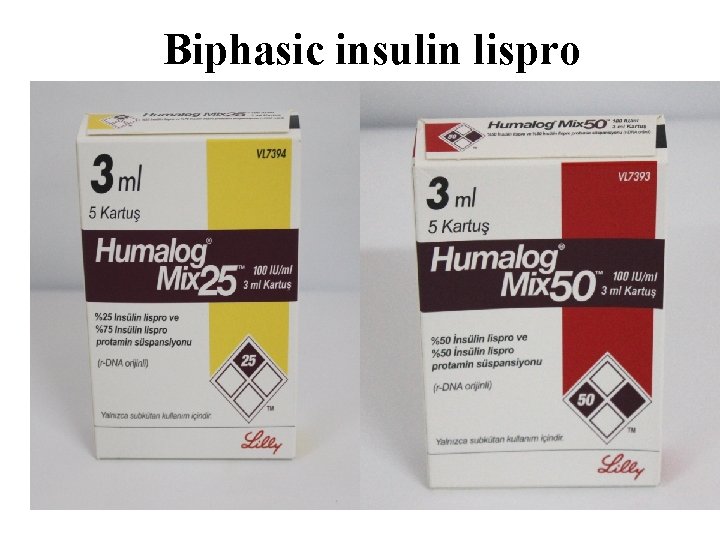
Biphasic insulin lispro
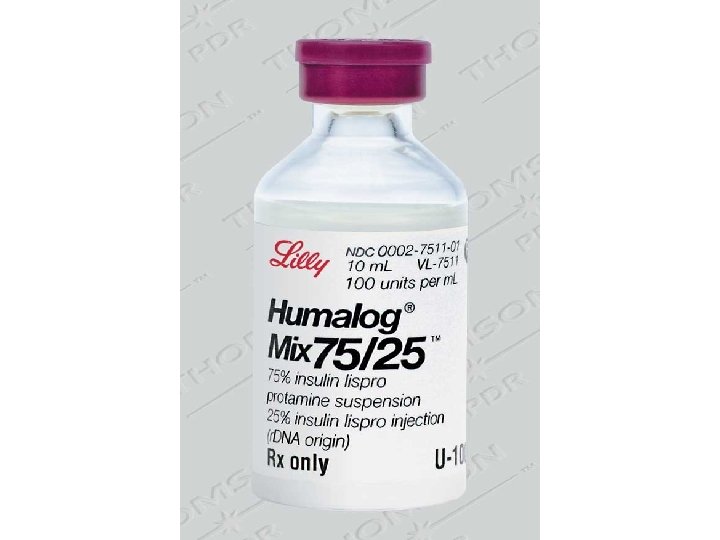
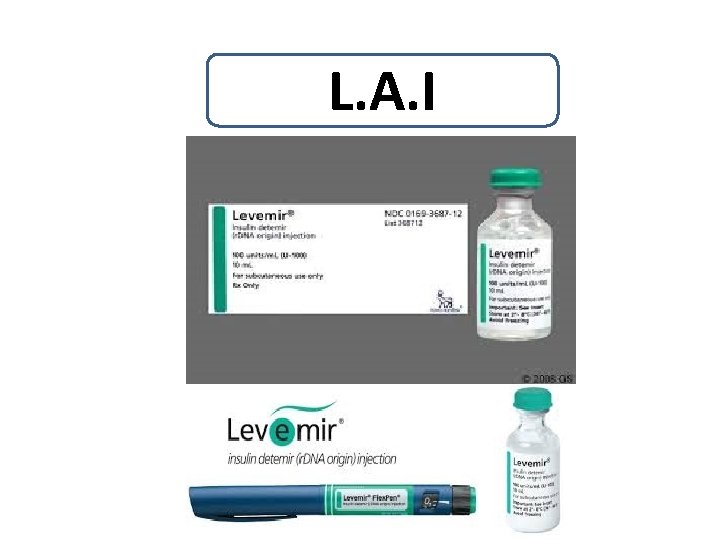
L. A. I
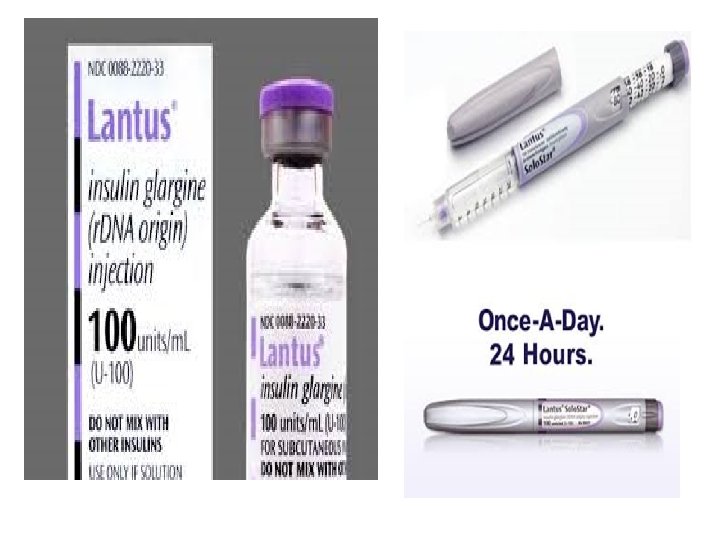
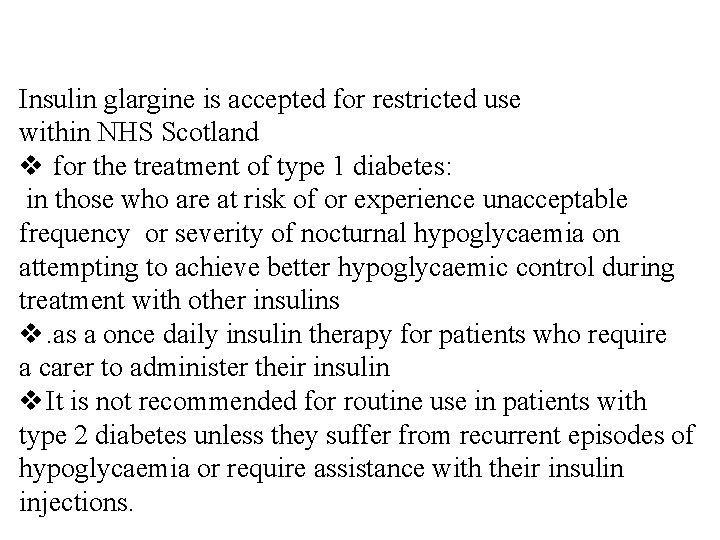
Insulin glargine is accepted for restricted use within NHS Scotland v for the treatment of type 1 diabetes: in those who are at risk of or experience unacceptable frequency or severity of nocturnal hypoglycaemia on attempting to achieve better hypoglycaemic control during treatment with other insulins v. as a once daily insulin therapy for patients who require a carer to administer their insulin v It is not recommended for routine use in patients with type 2 diabetes unless they suffer from recurrent episodes of hypoglycaemia or require assistance with their insulin injections.
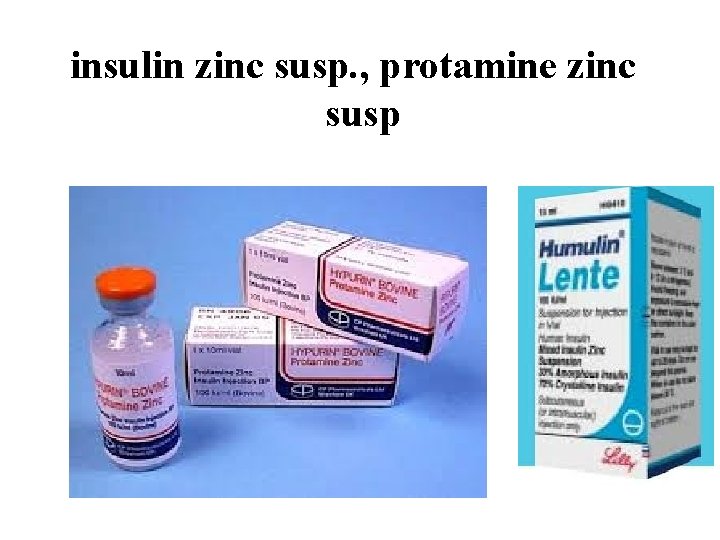
insulin zinc susp. , protamine zinc susp
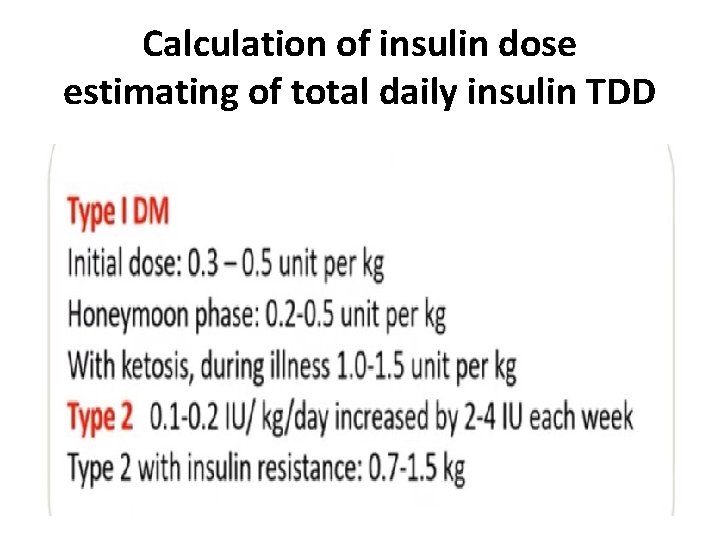
Calculation of insulin dose estimating of total daily insulin TDD
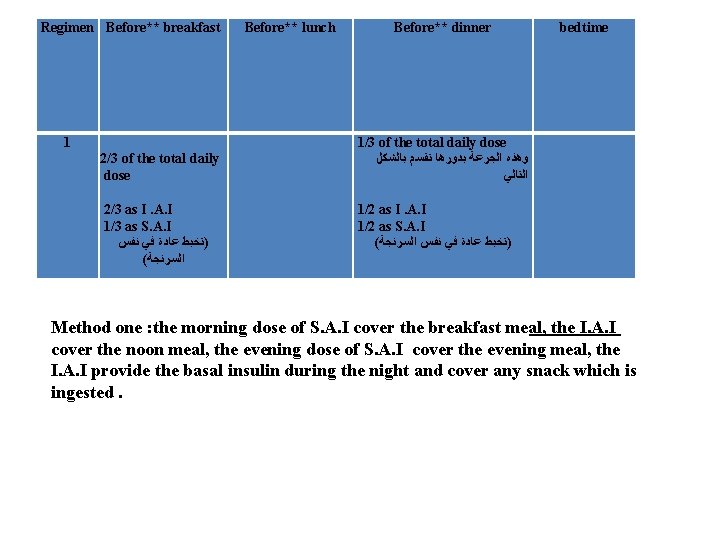
Regimen Before** breakfast 1 2/3 of the total daily dose 2/3 as I. A. I 1/3 as S. A. I )ﺗﺨﺒﻂ ﻋﺎﺩﺓ ﻓﻲ ﻧﻔﺲ ( ﺍﻟﺴﺮﻧﺠﺔ Before** lunch Before** dinner bedtime 1/3 of the total daily dose ﻭﻫﺬﻩ ﺍﻟﺠﺮﻋﺔ ﺑﺪﻭﺭﻫﺎ ﺗﻘﺴﻢ ﺑﺎﻟﺸﻜﻞ ﺍﻟﺘﺎﻟﻲ 1/2 as I. A. I 1/2 as S. A. I ( )ﺗﺨﺒﻂ ﻋﺎﺩﺓ ﻓﻲ ﻧﻔﺲ ﺍﻟﺴﺮﻧﺠﺔ Method one : the morning dose of S. A. I cover the breakfast meal, the I. A. I cover the noon meal, the evening dose of S. A. I cover the evening meal, the I. A. I provide the basal insulin during the night and cover any snack which is ingested.
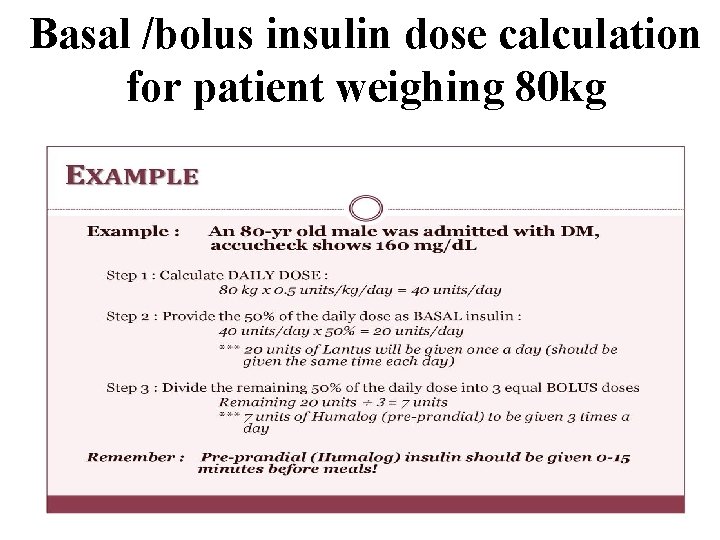
Basal /bolus insulin dose calculation for patient weighing 80 kg
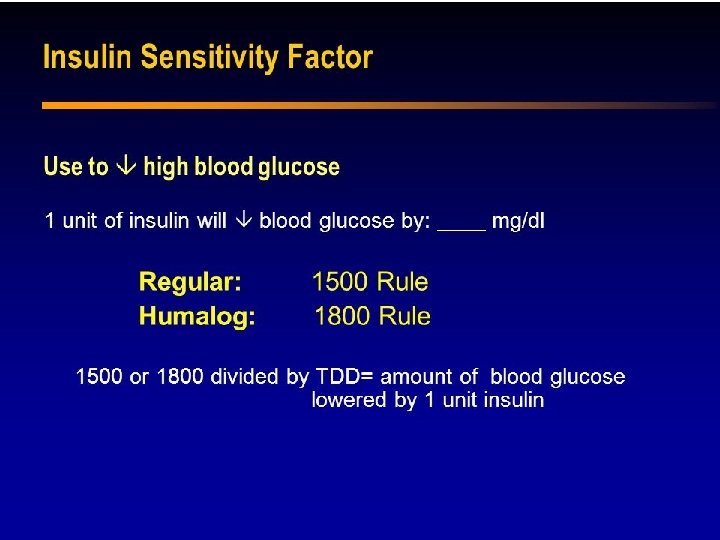
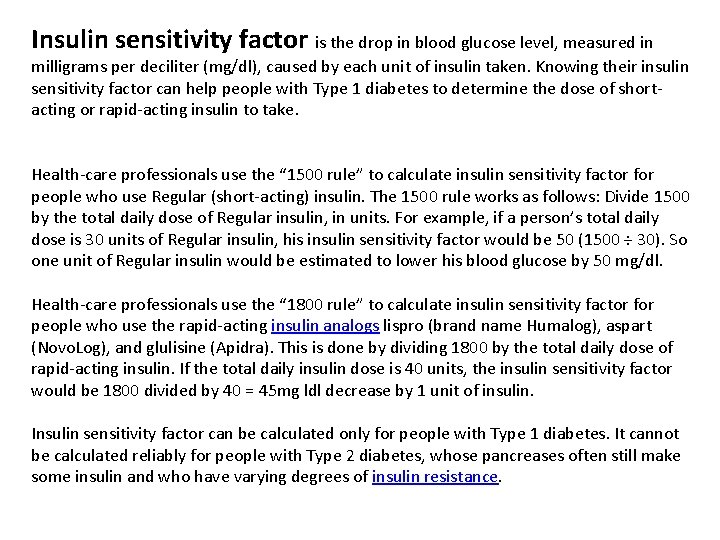
Insulin sensitivity factor is the drop in blood glucose level, measured in milligrams per deciliter (mg/dl), caused by each unit of insulin taken. Knowing their insulin sensitivity factor can help people with Type 1 diabetes to determine the dose of shortacting or rapid-acting insulin to take. Health-care professionals use the “ 1500 rule” to calculate insulin sensitivity factor for people who use Regular (short-acting) insulin. The 1500 rule works as follows: Divide 1500 by the total daily dose of Regular insulin, in units. For example, if a person’s total daily dose is 30 units of Regular insulin, his insulin sensitivity factor would be 50 (1500 ÷ 30). So one unit of Regular insulin would be estimated to lower his blood glucose by 50 mg/dl. Health-care professionals use the “ 1800 rule” to calculate insulin sensitivity factor for people who use the rapid-acting insulin analogs lispro (brand name Humalog), aspart (Novo. Log), and glulisine (Apidra). This is done by dividing 1800 by the total daily dose of rapid-acting insulin. If the total daily insulin dose is 40 units, the insulin sensitivity factor would be 1800 divided by 40 = 45 mg ldl decrease by 1 unit of insulin. Insulin sensitivity factor can be calculated only for people with Type 1 diabetes. It cannot be calculated reliably for people with Type 2 diabetes, whose pancreases often still make some insulin and who have varying degrees of insulin resistance.
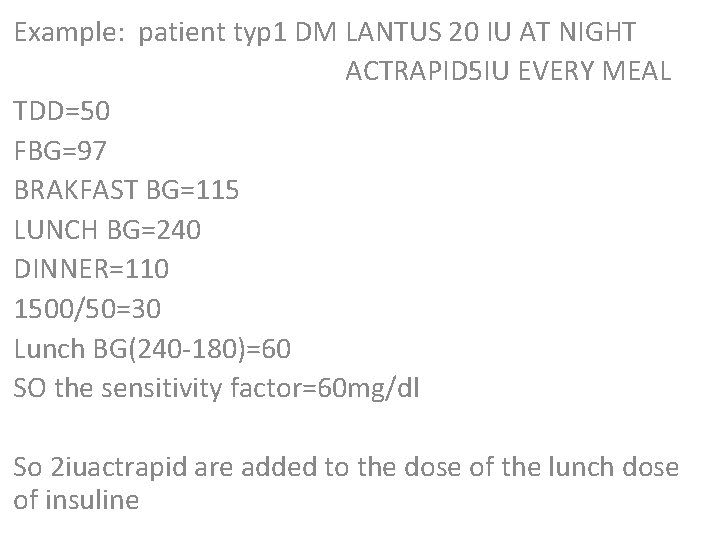
Example: patient typ 1 DM LANTUS 20 IU AT NIGHT ACTRAPID 5 IU EVERY MEAL TDD=50 FBG=97 BRAKFAST BG=115 LUNCH BG=240 DINNER=110 1500/50=30 Lunch BG(240 -180)=60 SO the sensitivity factor=60 mg/dl So 2 iuactrapid are added to the dose of the lunch dose of insuline
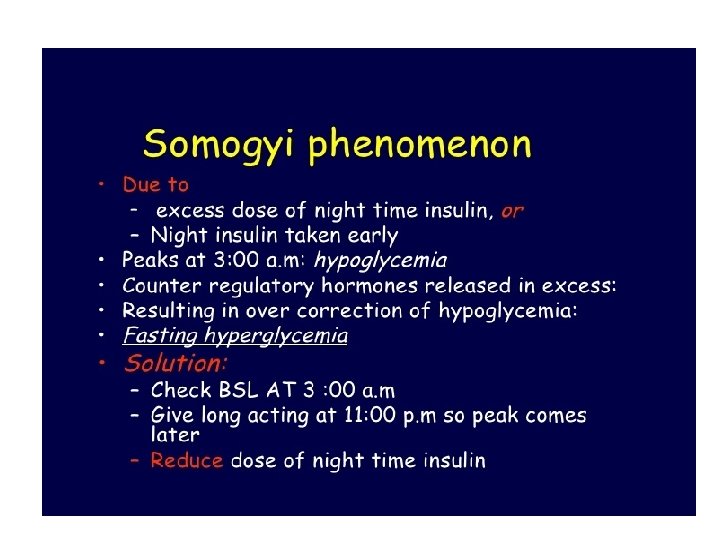
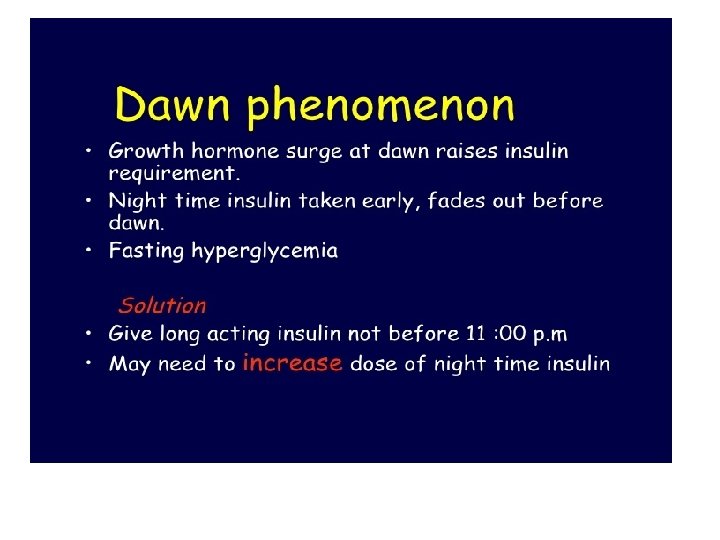
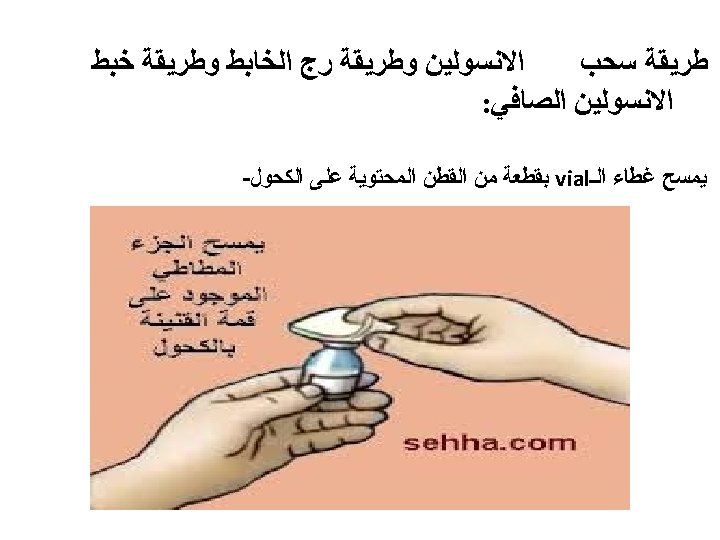
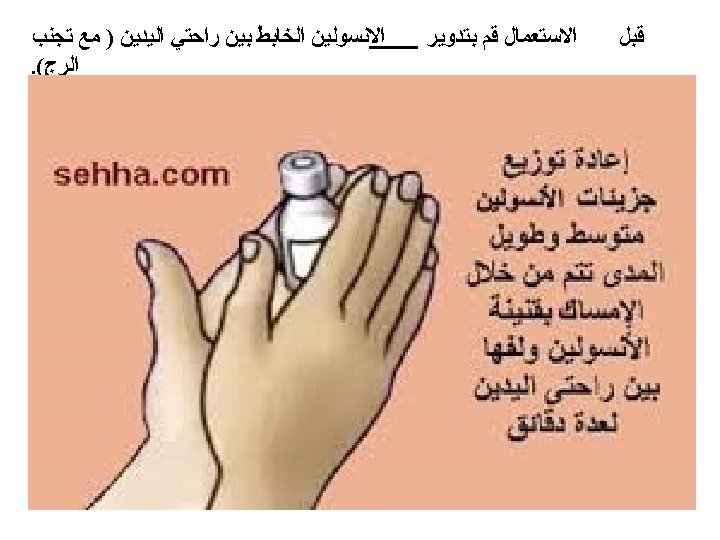
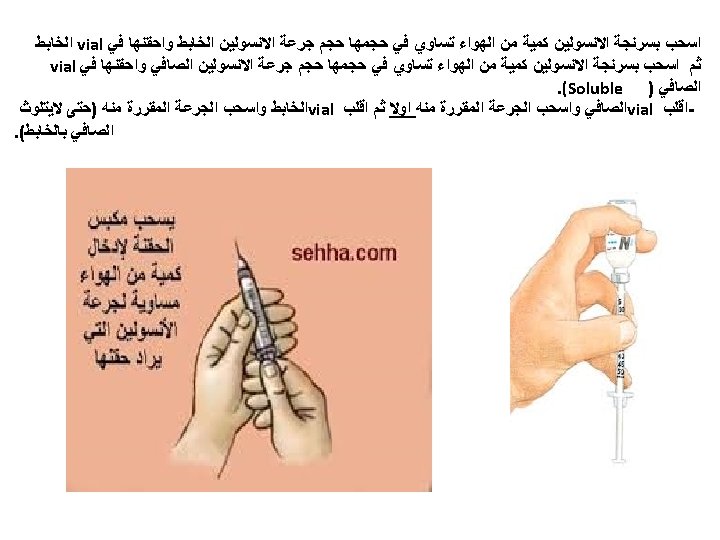
Mixing of insulins: Regular Insulin may be mixed with NPH in any proportion and the resultant mixture is stable for at least 1 month at room temperature without change in the kinetic property of the regular(3). In contrast, the rapid action of regular insulin is significantly blunted when mixed with Lente or Ultrlente insulin. (The excess zinc in Lente preparations binds the regular insulin Converting it to intermediate acting form). When the two insulins are mixed just before the injection, the clinical importance of this effect appear to be minimal (1) *Lente and Ultrlente may be mixed in any proportion at any time and are stable for long time (3).
Storage of insulin: The pharmacists can advice the patient that: A-Any unopened insulins are stored refrigerated (2 -8 C 0) (But not in the freezer) and the expiration date printed on the vials is used for unopened, refrigerated insulins(2) B-Insulin's vial that are currently in use is kept at room temperature (injection of cold insulin is uncomfortable) and can. ﺍ be used for 1 month (1, 3)

Thank you
- Slides: 56