
Clinical pharmacology By Dr MOHAMMED JABBAR AL MANNA
Clinical pharmacology By : Dr. MOHAMMED JABBAR AL MANNA ANS III

Sympathomimetics drugs. The sympathomimetics constitute a very important group of drugs used for cardiovascular, respiratory, and other conditions. They are readily divided into subgroups on the basis of their spectrum of action (α- or β-receptor affinity) or mode of action (direct or indirect). .
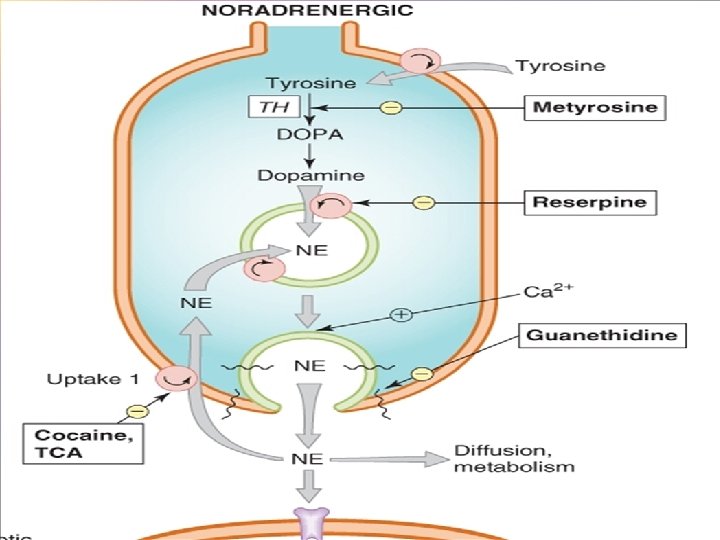
Mode of Action Three types 1)directly activate their adrenoceptors 2) or indirectly to increase the concentration of catecholamine transmitter ( EP , NE , & Dopamine ) in the synapse. e. g Amphetamine and tyramine 3)Another form of indirect action is seen with cocaine and the tricyclic antidepressants; these drugs inhibit reuptake of catecholamines by the norepinephrine transporter and the dopamine transporter in nerve terminals and thus increase the synaptic conc. of released N. T. .

Adrenergic Receptors Adrenoceptors are classified as α or β receptors; both groups are further subdivided into subgroups. Three types of the β -adrenergic receptor, called β 1 , β 2 , and β 3, were identified, followed by two different α adrenergic receptors: α 1 and α 2. Epinephrine (adrenaline ) may be considered a single prototype agonist with effects at all receptor types (α 1, α 2, β 1, β 2, and β 3). Alternatively, separate prototypes, phenylephrine (an α agonist) and isoproterenol (β) may be defined. .
SYMPATHMIMIETICS {adrenergic agents } Pharmacological Action 1)Heart: Direct effects on the heart through β 1 receptors. Adrenaline increases the heart rate, force of myocardial contraction , cardiac output and increased oxygen consumption. 2)Blood vessels: Adrenaline and noradrenaline constrict the blood vessels of skin and mucous membranes. Constriction occur through both α 1 and α 2 receptors. Adrenaline also dilates the blood vessels of the skeletal muscles on account of the presence of β 2 receptors→ Decrease of DBP Note : Noradrenaline had no effect on β 2 receptors.
3)Blood pressure: Adrenaline increases the systolic B. P {vasoconstriction (α 1) } but lowers the diastolic B. P by its peripheral action {vasodilatation (β 2)}. But mean blood pressure rises with increase in pulse pressure. Noradrenaline causes rise in systolic, diastolic and mean blood pressure and does not cause vasodilatation (because of no action on β 2 receptors) and increase in peripheral resistance due to its α 2 action. Pulse pressure : Recent studies suggests that a 10 mm Hg increase in pulse pressure increased the risk of major cardiovascular complications and mortality by nearly
The pulse pressure is proportional to stroke volume, or the amount of blood ejected from the left ventricle during systole That is inversely proportional to the compliance of the aorta. When aorta has the highest compliance in the arterial system due in part to a relatively greater proportion of elastin fibers →→ reducing the pulse pressure. If the aorta becomes rigid in conditions such as atherosclerosis →→pulse pressure would be very high .

While some drugs for hypertension have the side effect of increasing resting pulse pressure irreversibly, other antihypertensive drugs, such as ACE Inhibitors (captopril , enalapril , lisnopril), have been shown to lower pulse pressure. .
4) GIT: Adrenaline causes relaxation of smooth muscles of GIT and reduce its motility. Relaxation of smooth muscles of GIT can be brought about by both alpha and beta stimulants. 5) Respiratory system: The presence of β 2 receptors in bronchial smooth muscle causes relaxation → bronchodilation ( acute asthmatic attack). Among catecholamines, adrenaline and isoprenaline are potent bronchodilators due to its β 2 action but noradrenaline {Why ? ? }. 6)Eye: -Mydriasis occur due to contraction of radial muscles of iris. (through α –recep)…. . phenylephrine eye drop -Conjunctival ischemia {white conjunctival sac} due to constriction of conjunctival blood vessels.
7) Other smooth muscles : a. Urinary bladder: Detrusor muscle is relaxed (β) and trigone sphincter is constricted (alpha) and both the actions tend to inhibit micturition. b. Adrenaline inhibits insulin release by its α-receptor action whereas it stimulates glycogenolysis by its β receptor stimulant action. {↑blood glucose}. c. Adrenaline causes lacrimation and salivary glands are stimulated. HW: Effects of adrenaline on mumps. ?
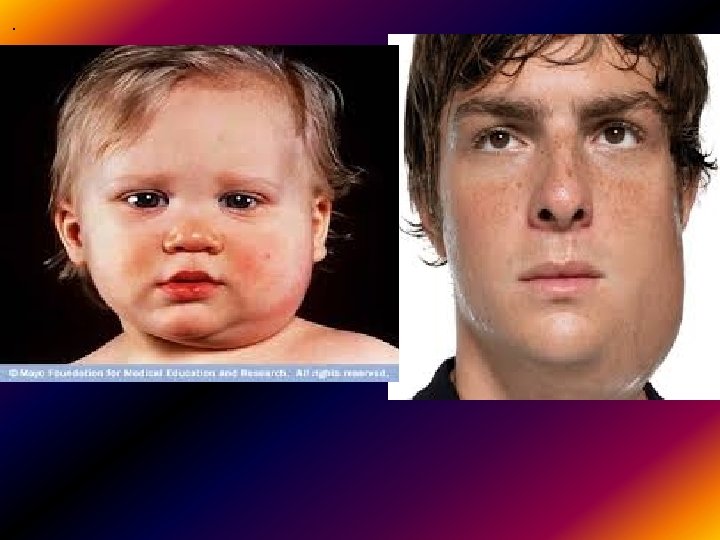
Mumps Viral infection with initial signs and symptoms often include fever, muscle pain, headache, and feeling tired. This is then usually followed by painful swelling of one or both parotid salivary glands. Symptoms typically occur 16 to 18 days after exposure and resolve after seven to ten days. Symptoms in adults are often more severe than in children. Rx There is no available cure for mumps and treatment is supportive. Symptoms may be relieved by the application of intermittent ice or heat to the affected area and by acetaminophen or ibuprofen for pain relief. Warm saltwater gargles, soft foods, and extra fluids may also help relieve symptoms.
9) Action on CNS: Catecholamines do not produce any marked CNS effects because they do not cross blood brain barrier. However, adrenaline may produce restlessness, apprehension (anxiety ), excitement and tremors on intravenous or intracarotid injection. Pharmacokinetics Catecholamines are absorbed from the intestines, but are rapidly degraded in gut and liver by enzymes MAO and COMT. Thus they are inactive on oral administration. .
Adverse Effects of catecholamine: Restlessness, anxiety, tremor, headache. Both adrenaline and noradrenaline cause sudden increase in blood pressure, precipitating sub-arachnoid hemorrhage and occasionally hemiplegia, and ventricular arrhythmias. May produce anginal pain in patients with ischemic heart disease. Contraindications a. In patients with hyperthyroidism. Why? b. Hypertension. c. During anesthesia with halothane and cyclopropane. d. angina pectoris. .
Therapeutic Uses 1)Allergic reaction: Adrenaline is drug of choice in the treatment of various acute allergic disorders by acting as a physiological antagonist of histamine. It is used in bronchial asthma, acute angioneurotic edema, acute hypersensitivity reaction to drugs and in the treatment of anaphylactic shock. 2) Cardiac uses: Adrenaline may be used to stimulate the heart in cardiac arrest. Adrenaline can also be used in Stokes-Adam syndrome, which is a cardiac arrest occurring at the transition of partial to complete heart block.
3)Miscellaneous uses: a. Phenylephrine is used in fundus examination as mydriatic agent. c. Anorectic drugs can help the obese people {Sibutramine}. c. Isoxsuprine (uterine relaxant) has been used in threatened abortion and dysmenorrhoea. . .
DOPAMINE { preferred in acute renal failure in renal doses} It is an immediate metabolic precursor of noradrenaline. It activates D 1 receptors in several vascular beds, which causes vasodilatation. It acts on dopaminergic and other adrenergic receptors (α & β 1). Pharmacological Actions of Dopamine. a. Blood vessels: D 1 receptors promote vasodilatation of renal, splanchnic, coronary and cerebral arteries. b. Heart: Dopamine increase the heart rate and cardiac output. c. CNS : dopamine agonists ( L- Dopa ) are used in Parkinson disease ; while dopamine antagonists (chlorpromazine ) are used in schizophrenia. .
DOBUTAMINE{ preferred in cardiac uses} It is a derivative of dopamine and has relatively β 1 -selective action It increases the force of myocardial contraction and cardiac output without significant change in heart rate, blood pressure and peripheral resistance. ; so it is preferred in case of heart failure. .
Ephedrine It act indirectly and directly on α and β receptors. It increases blood pressure both by peripheral vasoconstriction and by increasing the cardiac output. Uses: 1) treatment of chronic and moderate type of bronchial asthma. 2) Treatment of nasal decongestant. 3) as a mydriatic without cycloplegia. 4) useful in preventing ventricular asystole in Stokes Adams syndrome. 5)treatment of obesity {↓↓ appetite }. 6) used in narcolepsy. Note : FDA withdrawal this drug in 2004 ; why?
PSEUDOEPHEDRINE Pseudoephedrine appears to have less pressor activity and weaker central nervous system effects than ephedrine. It has agonist activity at both β 1 and β 2 adrenoceptors, leading to increased cardiac output and relaxation of bronchial smooth muscle. It is one component of Actifed® tab and syrup that used for in common cold and sinusitis. Adverse effects include excessive tiredness, nervousness, tremors, headache, palpitation, anorexia , and convulsions. . .
Obesity is a state of excess adipose tissue mass Methods used for determine and evaluate the obesity : 1)Body mass index (BMI): BMI = W. T/(Height (m))2 . Results Less than 18. 5 → underweight. 18. 5 - 25 → normal weight. 25 - 30 → over weight. 30 -35 → mild or type I obesity. 35 -40 → moderate or type II obesity. Greater than 40 → severe or type III obesity. .
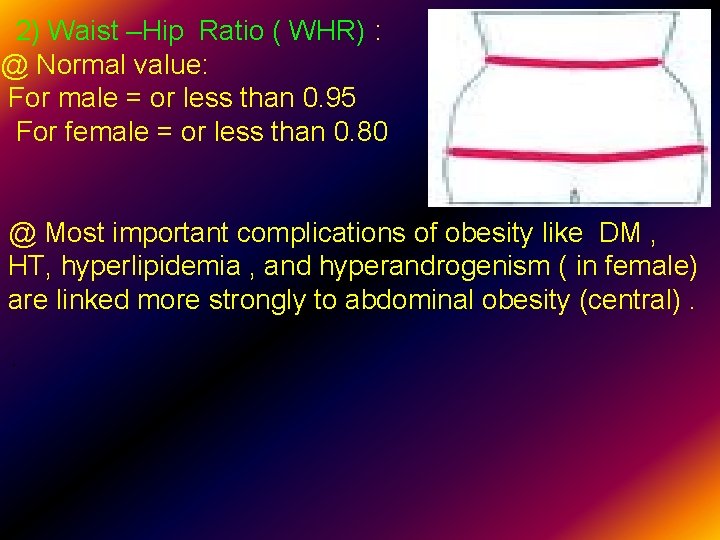
2) Waist –Hip Ratio ( WHR) : @ Normal value: For male = or less than 0. 95 For female = or less than 0. 80 @ Most important complications of obesity like DM , HT, hyperlipidemia , and hyperandrogenism ( in female) are linked more strongly to abdominal obesity (central). .
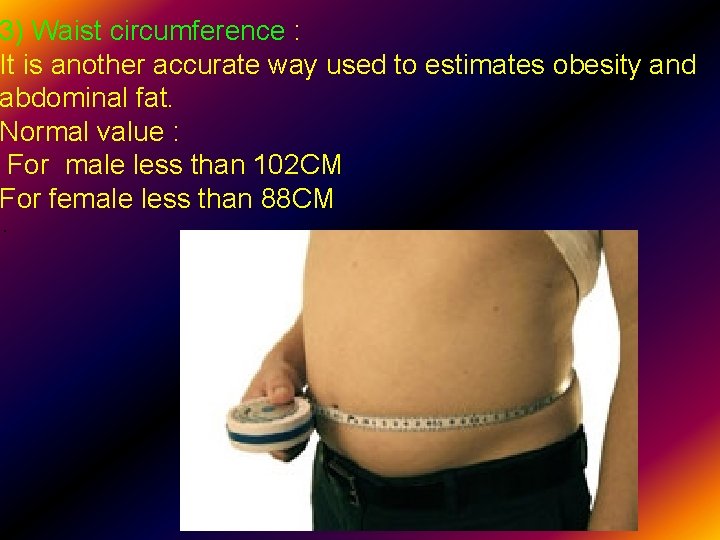
3) Waist circumference : It is another accurate way used to estimates obesity and abdominal fat. Normal value : For male less than 102 CM For female less than 88 CM .
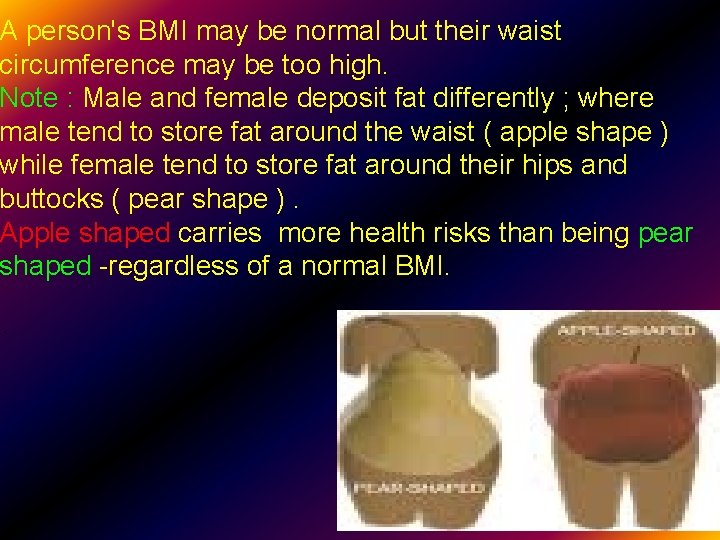
A person's BMI may be normal but their waist circumference may be too high. Note : Male and female deposit fat differently ; where male tend to store fat around the waist ( apple shape ) while female tend to store fat around their hips and buttocks ( pear shape ). Apple shaped carries more health risks than being pear shaped -regardless of a normal BMI. .
OXYMETAZOLINE {Nasordin ; Otrivin } nasal and eye drop It is a directly acting sympathomimetic amine used in symptomatic relief in nasal congestion. Local vasoconstriction is normally achieved within 5 minute of intranasal administration. It is used: 1. As a nasal decongestant in allergic rhinitis. 2. As a nasal decongestant in sinusitis, in otitis media where there is evidence of obstruction of the eustachian tube especially in subacute serous otitis media. 3. As an ocular decongestant in allergic conjunctivitis. 4. To ‘whiten’ an inflamed (red) eye caused by a local irritant such as dust or following the removal of a foreign body.
Prolonged use of nasal drops of decongestants can produce atrophic rhinitis and anosmia. Q/ The topical intranasal uses of sympathomimetics should not exceed 7 -10 days; why? How can management this side effect? .
THERAPEUTIC USES IN DENTISTRY Vasoconstrictors are widely used in conjunction with local anesthetic solutions. The vasoconstrictor most commonly used in dentistry is epinephrine ( 1: 80, 000 + 2% lidocaine). Vasoconstrictors serve several useful purposes when used with local anesthetic solutions. First, they prolong the duration of local anesthesia several fold. Second systemic toxicity of the local anesthetic may be minimized by reducing the peak blood concentration of the anesthetic agent. Third, when anesthetic solutions are given by infiltration, vasoconstrictors tend to reduce blood loss associated with surgical procedures.
A related question often faced by the dentist is whether to administer a vasoconstrictor-containing local anesthetic solution to a patient with cardiovascular disease. A traditional opinion held that vasoconstrictors contained in dental anesthetic cartridges produced little, if any, clinically significant systemic effects. The validity of this statement depends on the level of stress on the patient and the amount, rate, and manner in which the epinephrine-containing solution is injected. .
More recent reports support this recommendation. An alternative is available; effective local anesthetic preparations without vasoconstrictor agents (e. g. , 3% mepivacaine) have been shown to provide clinically effective local anesthesia. HW: How u can manage a patient received high dose , false site or rapid IV of adrenaline? . .
Adrenergic antagonists
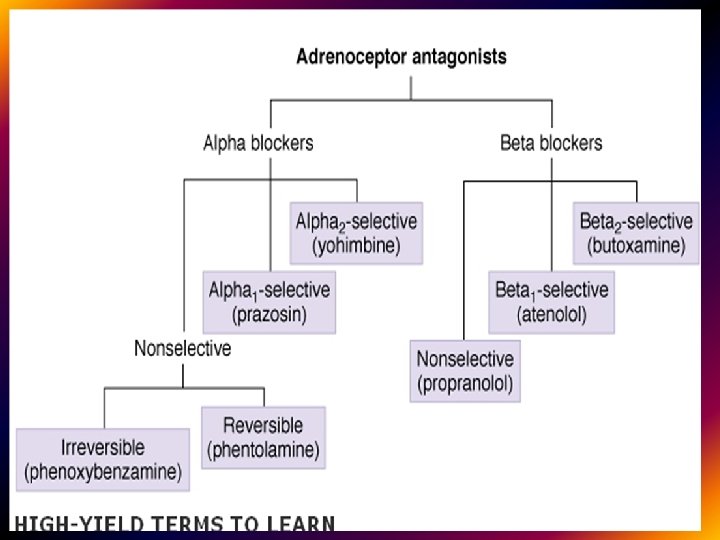
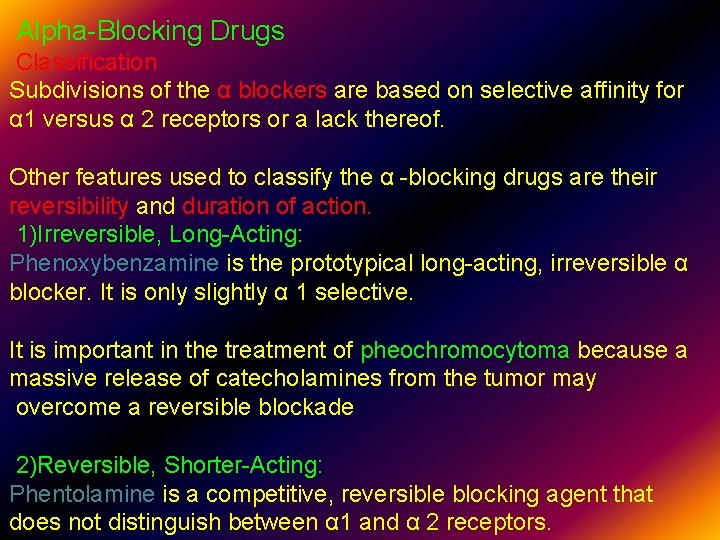
Alpha-Blocking Drugs Classification Subdivisions of the α blockers are based on selective affinity for α 1 versus α 2 receptors or a lack thereof. Other features used to classify the α -blocking drugs are their reversibility and duration of action. 1)Irreversible, Long-Acting: Phenoxybenzamine is the prototypical long-acting, irreversible α blocker. It is only slightly α 1 selective. It is important in the treatment of pheochromocytoma because a massive release of catecholamines from the tumor may overcome a reversible blockade 2)Reversible, Shorter-Acting: Phentolamine is a competitive, reversible blocking agent that does not distinguish between α 1 and α 2 receptors.
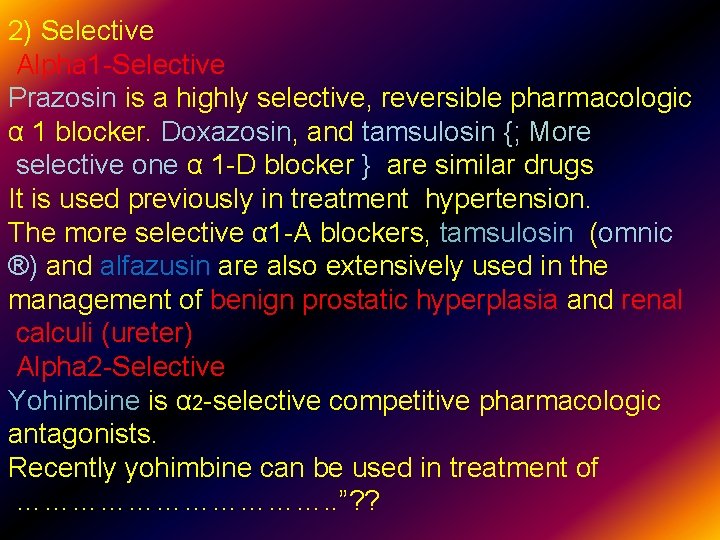
2) Selective Alpha 1 -Selective Prazosin is a highly selective, reversible pharmacologic α 1 blocker. Doxazosin, and tamsulosin {; More selective one α 1 -D blocker } are similar drugs It is used previously in treatment hypertension. The more selective α 1 -A blockers, tamsulosin (omnic ®) and alfazusin are also extensively used in the management of benign prostatic hyperplasia and renal calculi (ureter) Alpha 2 -Selective Yohimbine is α 2 -selective competitive pharmacologic antagonists. Recently yohimbine can be used in treatment of ………………. . ”? ?
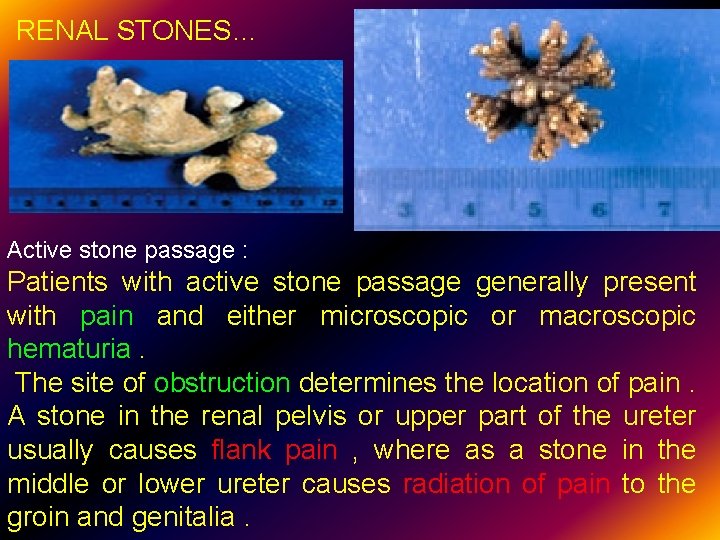
RENAL STONES…. Active stone passage : Patients with active stone passage generally present with pain and either microscopic or macroscopic hematuria. The site of obstruction determines the location of pain. A stone in the renal pelvis or upper part of the ureter usually causes flank pain , where as a stone in the middle or lower ureter causes radiation of pain to the groin and genitalia.
Obstruction at the terminal ureter usually results in signs and symptoms that mimic those of cystitis (F , U, D ) as well as pain in the lower abdomen. Tamsulosin (Omnic®)has been found to increase and hasten stone expulsion rates, decrease acute attacks by acting as a spasmolytic and reduces mean days to stone expulsion This medicine may increases the rate of stone passage by about 30%.
Benign prostatic hyperplasia (BPH )is an increase in size of the prostate with voiding dysfunction. Rx The two main medications for management of BPH are 1) alpha blockers. Alpha blockers are the most common choice for initial therapy. Alpha blockers used for BPH include doxazosin, alfazusin, tamsulosin. 2)The 5α-reductase inhibitors finasteride (prostacare®) This medicine inhibits 5 a-reductase, which in turn inhibits production of DHT, a hormone responsible for enlarging the prostate. Effects of finasteride may take longer time {6 mo. } to appear than alpha blockers, but they persist for many
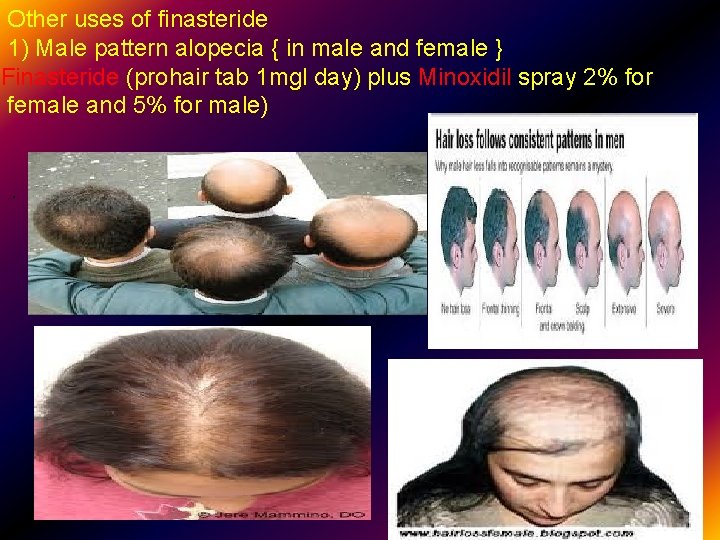
Other uses of finasteride 1) Male pattern alopecia { in male and female } Finasteride (prohair tab 1 mgl day) plus Minoxidil spray 2% for female and 5% for male) .
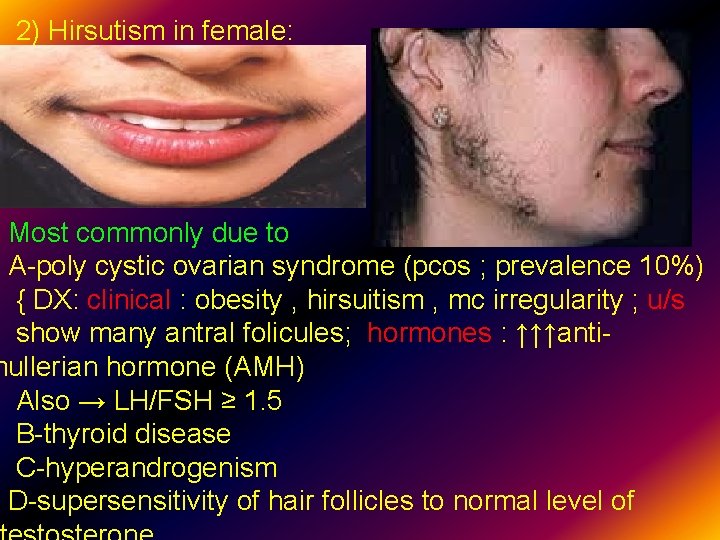
2) Hirsutism in female: Most commonly due to A-poly cystic ovarian syndrome (pcos ; prevalence 10%) { DX: clinical : obesity , hirsuitism , mc irregularity ; u/s show many antral folicules; hormones : ↑↑↑antimullerian hormone (AMH) Also → LH/FSH ≥ 1. 5 B-thyroid disease C-hyperandrogenism D-supersensitivity of hair follicles to normal level of
Beta-Blocking Drugs Classification: All of the β blockers used clinically are competitive pharmacologic antagonists. Propranolol {Inderal 10 -40 mg ®} is the prototype. Drugs in this group are usually classified into subgroups on the basis of β 1 selectivity, partial agonist activity, local anesthetic action, and lipid solubility. .
Receptor Selectivity Beta 1 -receptor selectivity (β 1 block > β 2 block) is a property of acebutolol, atenolol (Tenormin ®), esmolol, and metoprolol (Betaloc ®). This property may be an advantage when treating patients with asthma. Nadolol, propranolol, and timolol are typical nonselective β blockers. Labetalol and carvedilol have combined β- and α -blocking actions {low incidence to decrease blood flow → low incidence of cold extremities}. Note : The selectivity is dose-related, i. e. , it tends
Partial Agonist Activity (eg, pindolol, labetalol and acebutolol ) Partial agonists inhibit the activation of β receptors in the presence of high catecholamine concentrations {e. g. in case of palpitation } but moderately activate the receptors {agonist} in the absence of endogenous agonists. Partial agonist activity ("intrinsic sympathomimetic activity") may be an advantage in treating patients with asthma because these drugs are less likely to cause bronchospasm. They also preferred in hyperlipidemia because these group decreases VLDL and increases HDL. Also partial agonist has less incidence to cause bradycardia. Why? ; they preferred in hypertension associated with bradycardia?
Local Anesthetic Activity (Propranolol , metoprolol} Local anesthetic activity ("membrane-stabilizing activity") is a disadvantage when β blockers are used topically in the eye because it decreases protective reflexes and increases the risk of corneal ulceration. Local anesthetic effects are absent from timolol and several other β-blockers that are useful in glaucoma. .
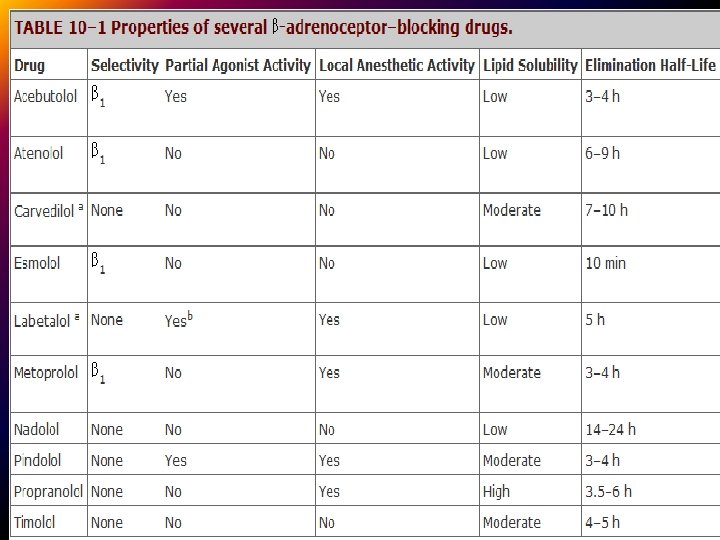
Pharmacokinetics Most of the systemic agents have been developed for chronic oral use. Esmolol is a short-acting ester β blocker that is used only parenterally. Nadolol is the longest-acting β blocker. Acebutolol, atenolol, and nadolol are less lipidsoluble than other β blockers and probably enter the central nervous system (CNS) to a lesser extent. Q/Water soluble beta blockers can be detoxify by hemodialysis, why? .
Effects and Clinical Uses A. Effects on the Cardiovascular System @The negative inotropic and chronotropic effects @ slowed Atrioventricular conduction with an increased PR interval (can ppt AV block in susceptible patients with bradycardia) The cardiovascular applications of β blockers—especially in hypertension, angina, and arrhythmias Also treatment of chronic (not acute) heart failure has become an important application of β blockers. Some, but not all, β-blockers can reduce morbidity and mortality when used properly in heart failure. Labetalol, carvedilol, and metoprolol appear to be beneficial in this application. .
B. Effects on the Respiratory Tract (disadvantage) Blockade of the β 2 receptors in bronchial smooth muscle may lead to an increase in airway resistance, particularly in patients with asthma. Beta 1 - blockers such as metoprolol or atenolol may have some advantage over nonselective β antagonists when blockade of β 1 receptors in the heart is desired and β 2 -receptor blockade is undesirable. C. Effects on the Eye Several β-blocking agents reduce intraocular pressure, especially in glaucomatous eyes. The mechanism usually reported is decreased aqueous humor production.
D. Metabolic Actions ß blockers influence carbohydrate and lipid metabolism. Catecholamines increase glycogenolysis and glucose availability in hypoglycemia: this response is reduced by ß adrenergic receptor antagonists. ®Beta- receptor blocking agents may mask symptoms of hypoglycemia such as tremors, sweating , tachycardia and blood pressure changes. In addition, the nonselective beta-blockers may inhibit catecholamine-mediated glycogenolysis, thereby potentiating hypoglycemia. Therapy with beta-blockers should be administered cautiously in patients with diabetes or predisposed to spontaneous hypoglycemia. .
Homework : We have two type of sweating gland : apocrine and eccrine ; identify their distribution and which type of these glands is affected by beta-blockers ? .
The chronic use of β-adrenoceptor antagonists has been associated with increased plasma concentrations of VLDL and decreased concentrations of HDL cholesterol. Both of these changes are potentially unfavorable in terms of risk of cardiovascular disease. These changes tend to occur with both selective and nonselective β-blockers, though they are perhaps less likely to occur with β-blockers possessing intrinsic sympathomimetic activity (partial agonists). . .
Clinical applications of β blockers 1)Hypertension : Atenolol, nebivolol and metoprolol. Mechanism: Reduced cardiac output , reduced rennin secretion 2)Angina pectoris : Propranolol, metoprolol , others Mechanism: Reduced cardiac rate and force 3)Arrhythmia prophylaxis after myocardial infarction: metoprolol Mechanism : Reduced automaticity of all cardiac pacemakers 4)Supraventricular tachycardia : Propranolol, metoprolol , esmolol, Slowed or blocked atrioventricular conduction velocity 5) Glaucoma : Timolol (topical) Reduced secretion of aqueous humor 6)Heart failure: Carvedilol, labetetol, metoprolol Decreased mortality, mechanism poorly understood.
7)Hypertrophic cardiomyopathy: Propranolol Slowed rate of cardiac contraction. @Hypertrophic cardiomyopathy (HCM) is best known as a leading cause of sudden cardiac death in young athletes. HCM is frequently asymptomatic until sudden cardiac death, and for this reason some suggest routinely screening certain populations for this disease. .
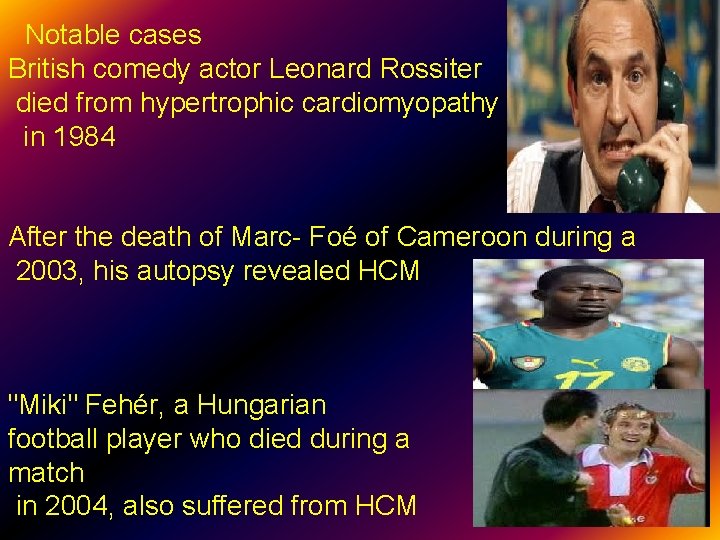
Notable cases British comedy actor Leonard Rossiter died from hypertrophic cardiomyopathy in 1984 After the death of Marc- Foé of Cameroon during a 2003, his autopsy revealed HCM "Miki" Fehér, a Hungarian football player who died during a match in 2004, also suffered from HCM
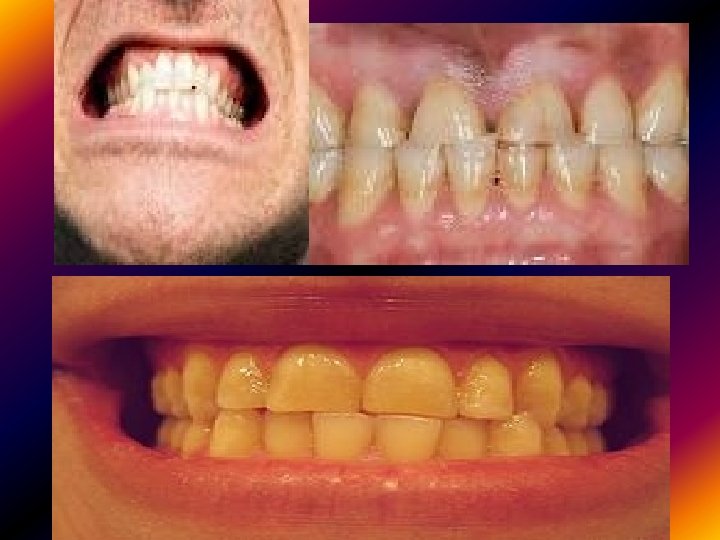
8) Treatment of bruxism Bruxism, which is characterized as the unnecessary grinding or clenching of teeth, is a problem that affects 8% to 21% of the U. S. population. Symptoms such as moderate to severe headache, muscle pain, temporomandibular joint dysfunction, and permanent tooth damage may persist if bruxism is left untreated. Propranolol can be prescribed for these patient even with normal tension patient.
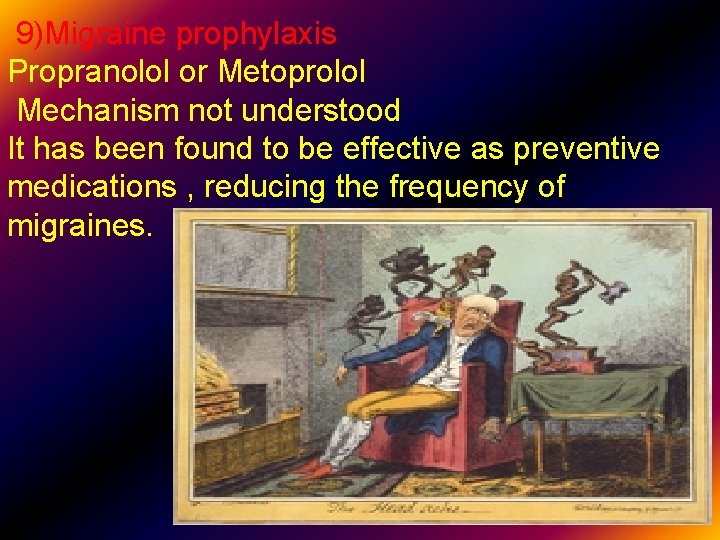
9)Migraine prophylaxis Propranolol or Metoprolol Mechanism not understood It has been found to be effective as preventive medications , reducing the frequency of migraines. .
Diagnosis : The mnemonic POUNDing (Pulsating, duration of 4– 72 h. Ours, Unilateral, Nausea, Disabling) can help diagnose migraine. . Also migraine may be associated with 1)photophobia and/or phonophobia. 2)Sensory hallucination 3)Visual hallucination 4)De -javue .

10)Familial tremor, other types of tremor, "stage fright" Propranolol 11)Thyroid storm, thyrotoxicosis : Propranolol, esmolol Reduced cardiac rate and arrhythmogenesis; reduced conversion of T 4 to T 3 .
Adverse Effects of ß receptor antagonists 1)Cardiovascular congestive heart failure (due to negative chronotropic/inotropic effects) 2)Bradycardia 3) Angina : Abrupt discontinuation may cause angina and increases the risk of sudden death 4) Cold extremities: These are presumably due to a loss of β-receptor-mediated vasodilatation in cutaneous vessels. 5)Pulmonary : bronchoconstriction due to blockade of ß 2 adrenergic receptors Non selective ß adrenergic antagonist contraindicated in asthma .
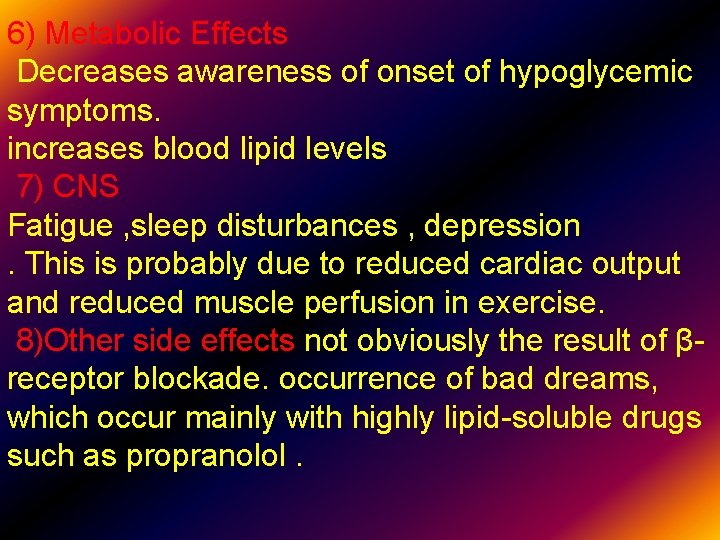
6) Metabolic Effects Decreases awareness of onset of hypoglycemic symptoms. increases blood lipid levels 7) CNS Fatigue , sleep disturbances , depression . This is probably due to reduced cardiac output and reduced muscle perfusion in exercise. 8)Other side effects not obviously the result of βreceptor blockade. occurrence of bad dreams, which occur mainly with highly lipid-soluble drugs such as propranolol.

Toxicity Major adverse effects of alpha adrenergic blockade: -Hypotension -Orthostatic hypotension -Reflex tachycardia .
- Slides: 62