
Clinical Microsystem Awareness and Transformational Development MicroMesoMacro Framework
- Slides: 2
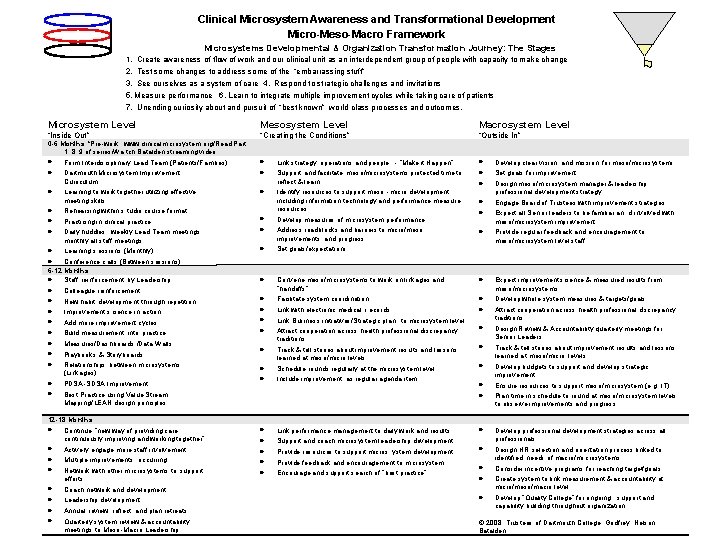
Clinical Microsystem Awareness and Transformational Development Micro-Meso-Macro Framework Microsystems Developmental & Organization Transformation Journey: The Stages 1. Create awareness of flow of work and our clinical unit as an interdependent group of people with capacity to make change 2. Test some changes to address some of the “embarrassing stuff” 3. See ourselves as a system of care 4. Respond to strategic challenges and invitations 5. Measure performance 6. Learn to integrate multiple improvement cycles while taking care of patients 7. Unending curiosity about and pursuit of “best known” world class processes and outcomes. Microsystem Level Mesosystem Level Macrosystem Level “Inside Out” “Creating the Conditions” “Outside In” · · Link strategy, operations and people - “Make it Happen” · · Identify resources to support meso -micro development including information technology and performance measure resources 0 -6 Months *Pre-work: www. clinicalmicrosystem. org/Read Part 1, 8, 9 of series/Wa tch Batalden streaming video · · Form Interdisciplinary Lead Team (Patients/Families) · Learning to work together utilizing effective meeting skills · · · Dartmouth Microsystem Improvement Curriculum Rehearsing within s tudio course format Practicing in clinical practice Daily huddles , weekly Lead Team meetings, monthly all staff meetings Learning s essions (Monthly) Conference c alls (Between sessions) 6 -12 Months · Staff reinforcement by Leadership · · · · · Colleague reinforcement New habit developme nt through repetition Improvement s cience in action Add more improvement cycles Build measurement into practice Measures/Dashboards /Data Walls Playbooks & Storyboards Relationships between microsystems (Linkages) PDSA -SDSA Improvement · · · · Develop measures of microsystem performance Continue “new way of providing care, continuously improving and working together” Active ly engage more staff involvement Multiple improvements occurring Network with other m icrosystems to support efforts Coach network and development Leadership development Annual review, reflect, and plan retreats Quarterly system review & accountability meetings to Meso -Macro Leadership · · · · Address roadblocks and barriers to micro/meso improvements and progress Set goals/expectations · Convene meso/microsystems to work on linkages and “handoffs” · Facilitate system coordination Link with electronic medical r ecords Link Business initiatives/Strategic plan to microsystem level Attract cooperation across health professional discrepancy traditions Track & tell stories about improvement results and lessons learned at meso/micro levels Schedule rounds regularly at the microsystem level Include improvement as regular agenda item Best Practice using Value Stream Mapping/ LEAN design principles 12 -18 Months · · · Support and facilitate meso/microsystems protected time to reflect & learn Link performance management to daily work and results Support and coach microsystem leadership development Provide resources to support micros ystem development Provide feedback and encouragement to microsystem Encourage and support search of “best practice” · · · Develop clear vision and mission for meso/microsystems Set goals for improvement Design meso/microsystem manager & leadership professional development strategy Engage Board of Trustees with improvement strategies Expect all Senior leaders to be familiar an d involved with meso/microsystem improvement Provide regular feedback and encouragement to meso/microsystem level staff Expect improvement science & measured results from meso/microsyste ms Develop whole system measures & targets/goals Attract cooperation across health professional discrepancy traditions Design Review & Accountability quarterly meetings for Senior Leaders Track & tell stories about improvement results and lessons learned a t meso/micro levels Develop budgets to support and develop strategic improvement Ensure resources to support meso/microsystem (e. g. IT) Plan time in schedule to round at meso/microsystem levels to observe improvements and progress Develop professional development strategies across all professionals Design HR selection and orientation process linked to identified needs of macro/mi crosystems Consider incentive programs for reaching target/goals Create system to link measurement & accountability at micro/meso/macro level Develop “Quality College” for ongoing support and capability building throughout organization © 2008, Trustees of Dartmouth College, Godfrey, Nelson, Batalden