
CLINICAL METHODS IN DIAGNOSIS OF POAG OPTIC DISC

- Slides: 26
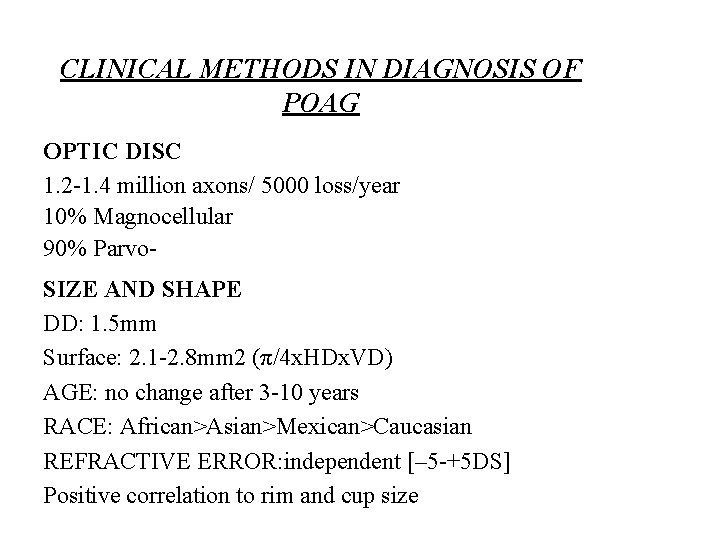
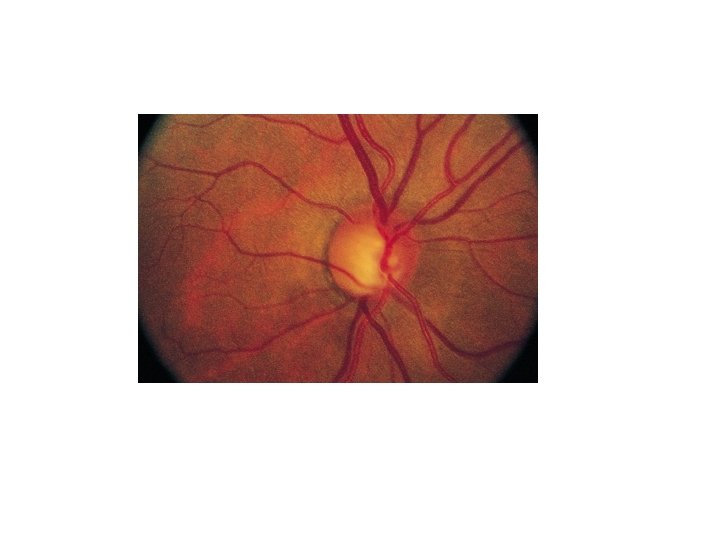
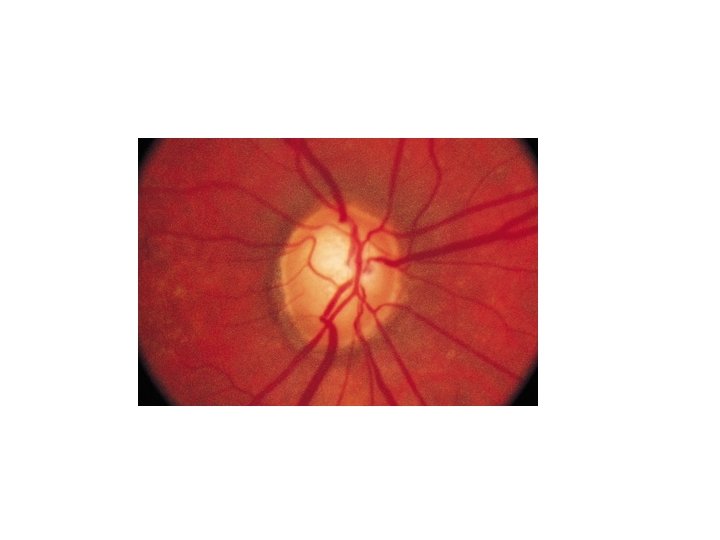
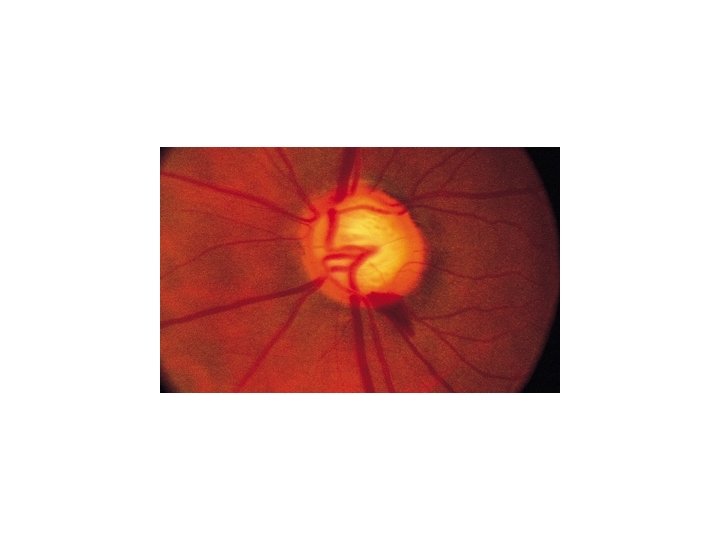
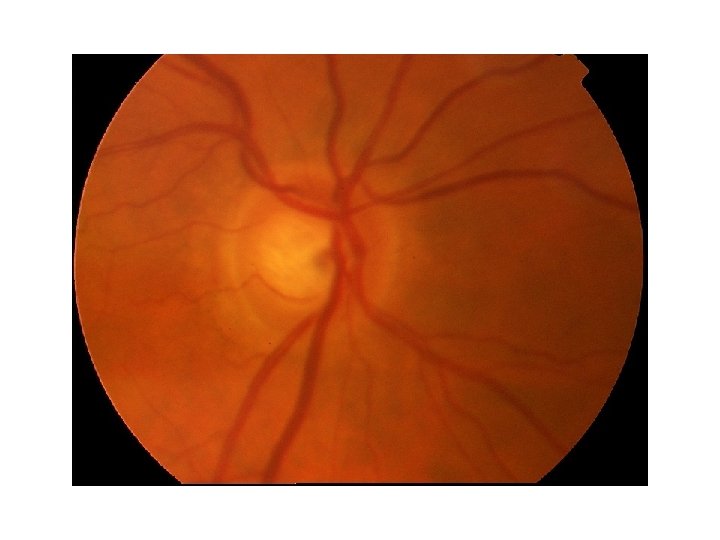
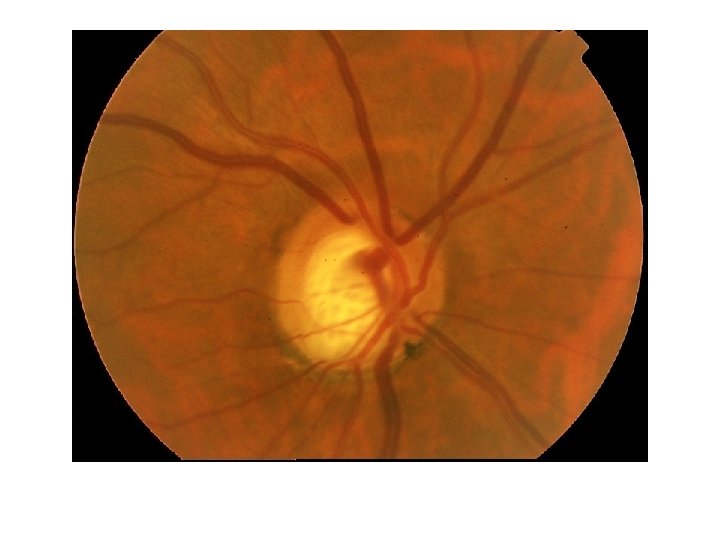
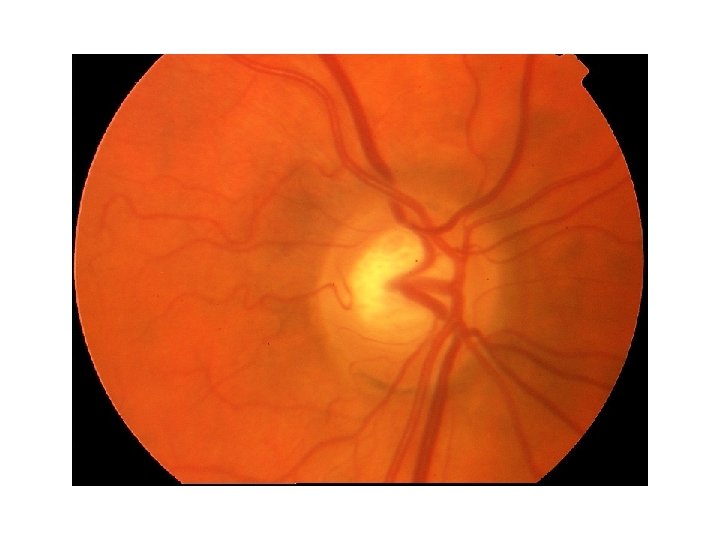
CLINICAL METHODS IN DIAGNOSIS OF POAG OPTIC DISC 1. 2 -1. 4 million axons/ 5000 loss/year 10% Magnocellular 90% Parvo. SIZE AND SHAPE DD: 1. 5 mm Surface: 2. 1 -2. 8 mm 2 (π/4 x. HDx. VD) AGE: no change after 3 -10 years RACE: African>Asian>Mexican>Caucasian REFRACTIVE ERROR: independent [– 5 -+5 DS] Positive correlation to rim and cup size
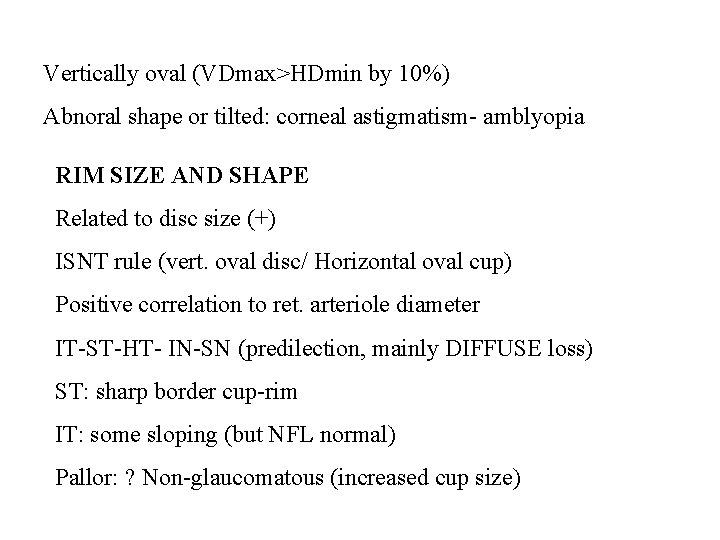
Vertically oval (VDmax>HDmin by 10%) Abnoral shape or tilted: corneal astigmatism- amblyopia RIM SIZE AND SHAPE Related to disc size (+) ISNT rule (vert. oval disc/ Horizontal oval cup) Positive correlation to ret. arteriole diameter IT-ST-HT- IN-SN (predilection, mainly DIFFUSE loss) ST: sharp border cup-rim IT: some sloping (but NFL normal) Pallor: ? Non-glaucomatous (increased cup size)
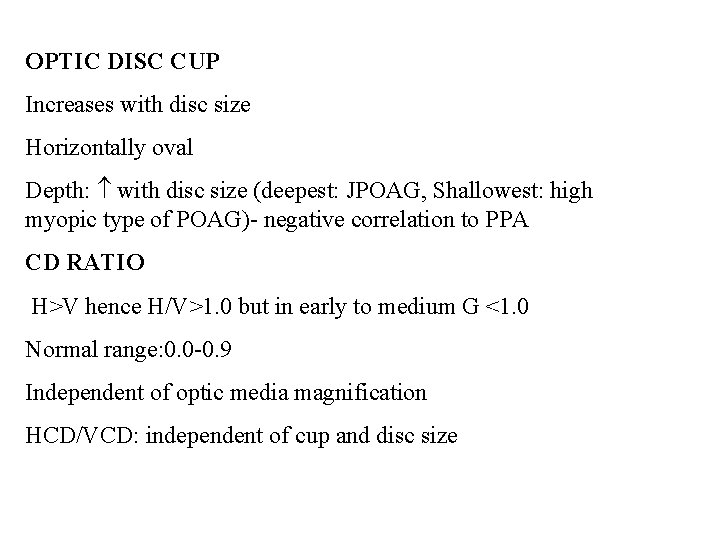
OPTIC DISC CUP Increases with disc size Horizontally oval Depth: with disc size (deepest: JPOAG, Shallowest: high myopic type of POAG)- negative correlation to PPA CD RATIO H>V hence H/V>1. 0 but in early to medium G <1. 0 Normal range: 0. 0 -0. 9 Independent of optic media magnification HCD/VCD: independent of cup and disc size
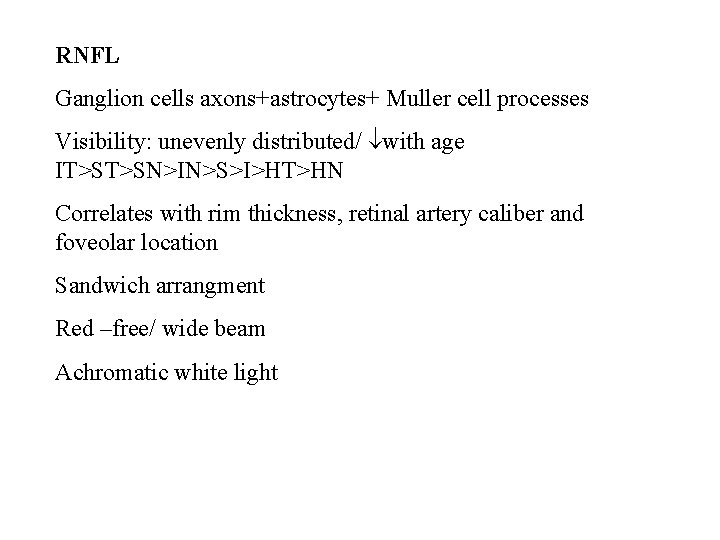
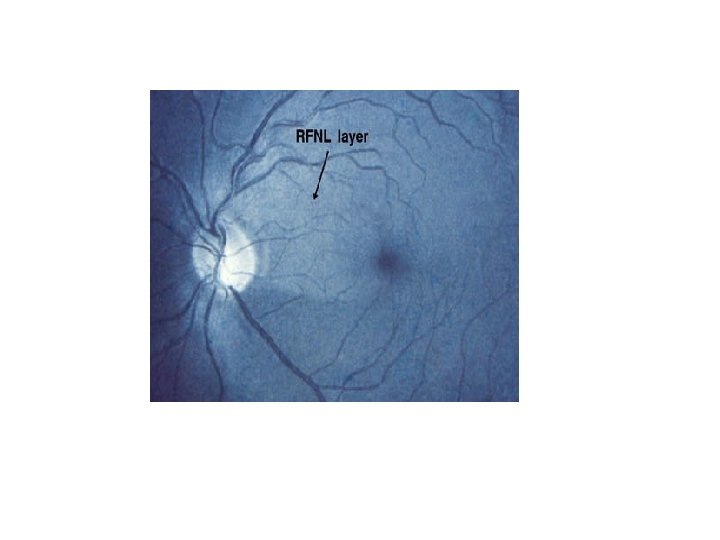
RNFL Ganglion cells axons+astrocytes+ Muller cell processes Visibility: unevenly distributed/ with age IT>ST>SN>IN>S>I>HT>HN Correlates with rim thickness, retinal artery caliber and foveolar location Sandwich arrangment Red –free/ wide beam Achromatic white light
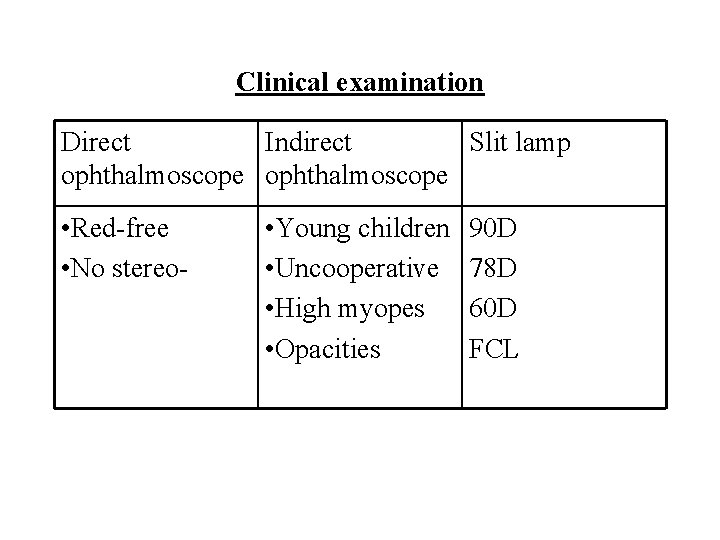
Clinical examination Direct Indirect Slit lamp ophthalmoscope • Red-free • No stereo- • Young children • Uncooperative • High myopes • Opacities 90 D 78 D 60 D FCL
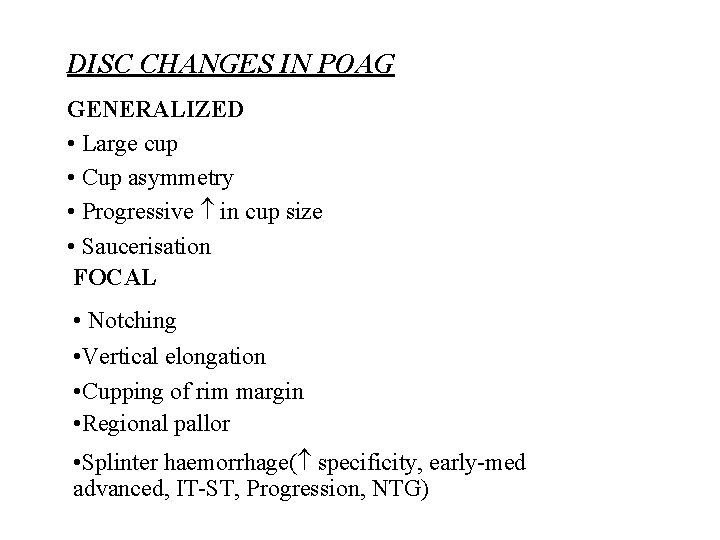
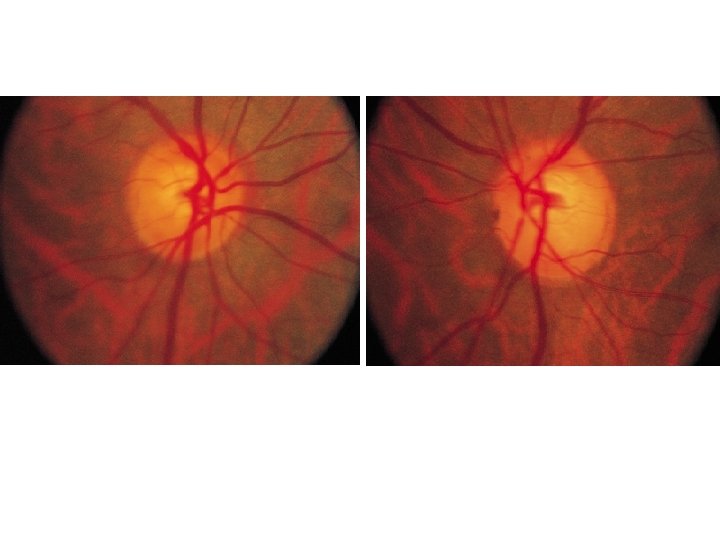
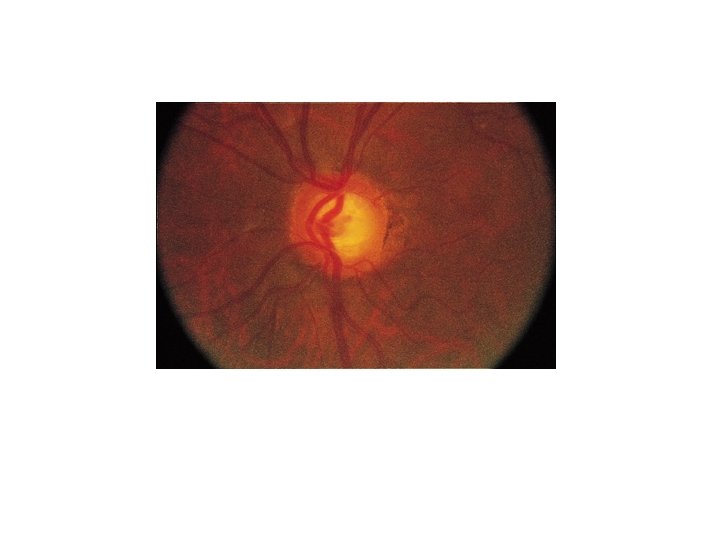
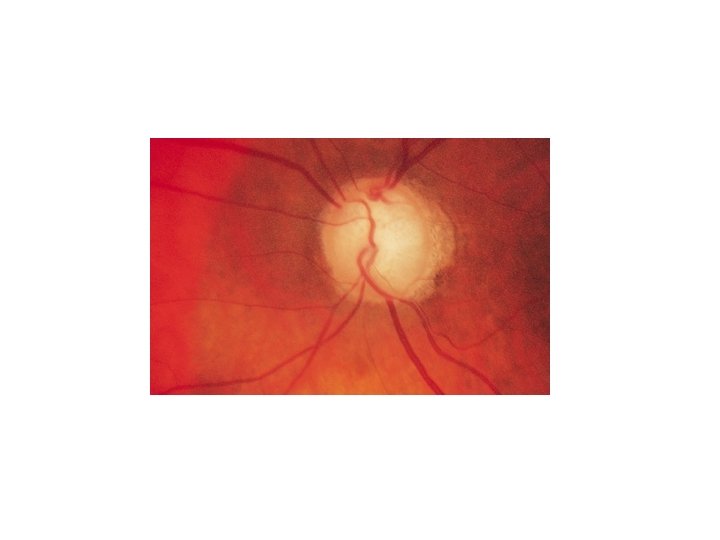
DISC CHANGES IN POAG GENERALIZED • Large cup • Cup asymmetry • Progressive in cup size • Saucerisation FOCAL • Notching • Vertical elongation • Cupping of rim margin • Regional pallor • Splinter haemorrhage( specificity, early-med advanced, IT-ST, Progression, NTG)
LESS SPECIFIC • Exposed lamina cribrosa • Nasal displacement • Baring of circumlinear vessels/ constriction of arterioles • PP crescent (spatial correlation with NRR loss) • Shunt vessels of optic disc (advanced stage) RNFL CHANGES • Focal defects wedge shaped (disc border-broad base to temporal raphe) 20%, always pathologic but not pathognomonic v: from early to medium advanced G and very advanced Associated with notching, haem, PPA in that sector/NTG 50% loss of thickness: visible • Diffuse (commoner, more difficult to see) Sequence of sectors regarding RNFL visibility Retinal vessels( clearer- sharper)
RECORDING OF FINDINGS 1. CD ratio: poor description 2. NRR: colour, contour, width 3. Diagram 4. PHOTO (stereo+ magnification)
AQUEOUS HUMOUR DYNAMICS GOLDMAN EQUATION: IOP= (F/C)+P PRODUCTION Rate: 2 -3 μl/min (1% turnover/min) Pigmented+non-pigmented cells • Active transport (70%) • Ultrafiltration (20%) • Osmosis (10%) OUTFLOW 0. 22 -0. 28 μl/min /mm. Hg • Trabecular (90%) • Uveoscleral (10%) EPISCLERAL VENOUS PRESSURE 10 mm. Hg
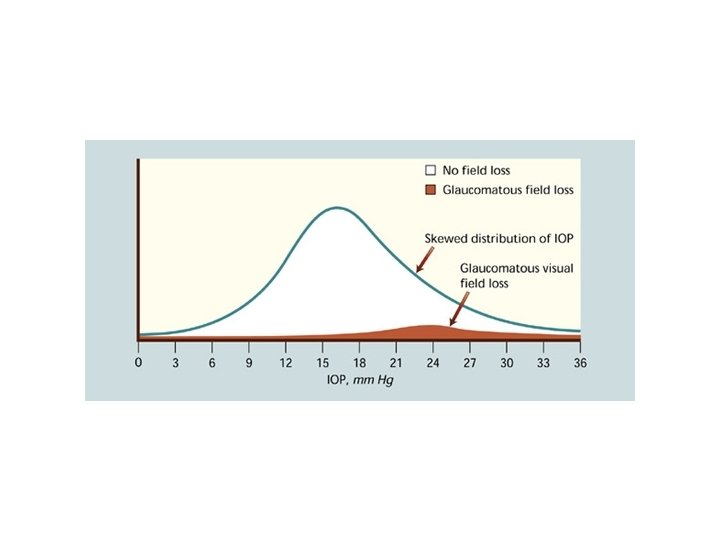
IOP Mean 16 mm. Hg SD: 3 mm. Hg (10 -22 mm. Hg) Non Gaussian distribution, skew to R (>40 y) • Diurnal variation/ Seasonal (W>S) • Heart beat/ respiration • Exercise/ Posture • Fluid intake • Medication (systemic, topical, alcohol, caffeine, cannabis)) • Age • F>M after 40 y • Genetically influenced
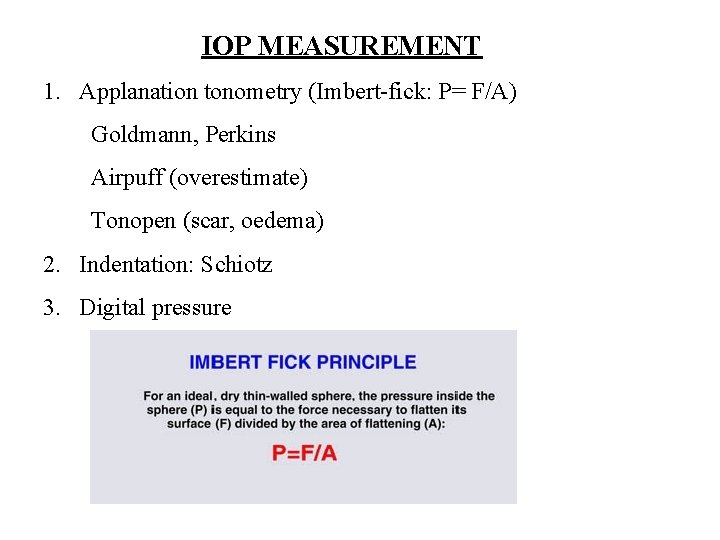
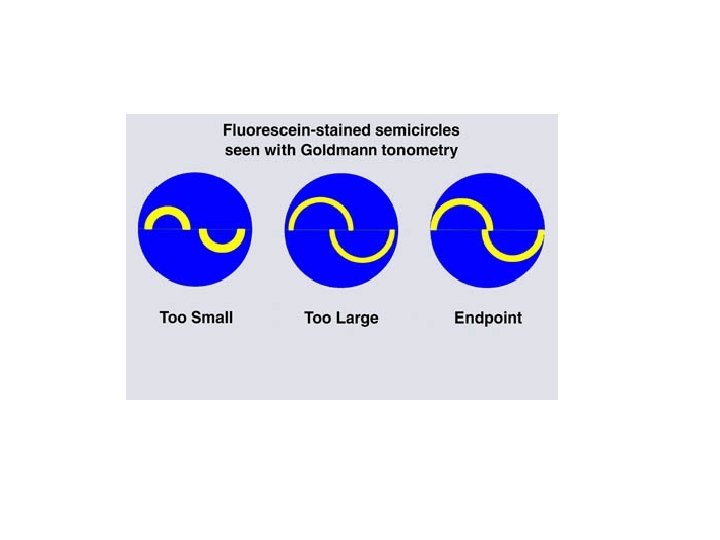
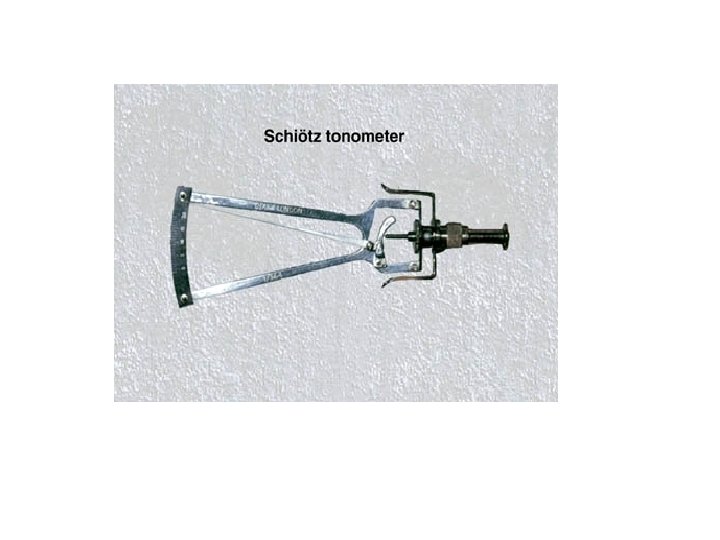
IOP MEASUREMENT 1. Applanation tonometry (Imbert-fick: P= F/A) Goldmann, Perkins Airpuff (overestimate) Tonopen (scar, oedema) 2. Indentation: Schiotz 3. Digital pressure
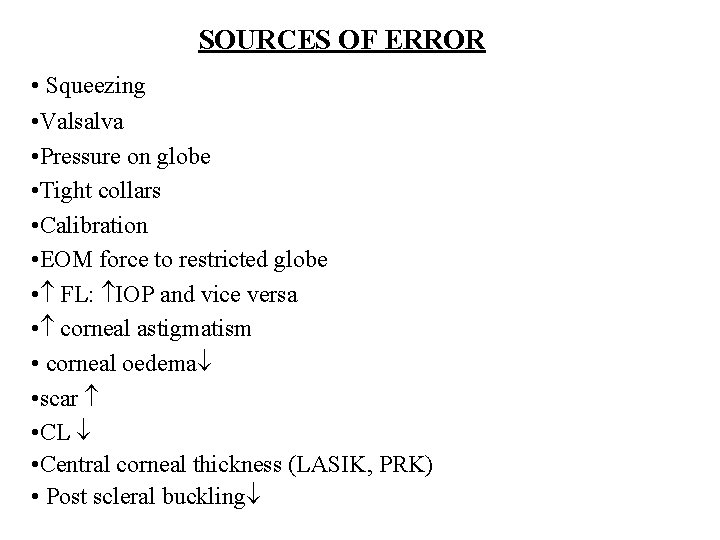
SOURCES OF ERROR • Squeezing • Valsalva • Pressure on globe • Tight collars • Calibration • EOM force to restricted globe • FL: IOP and vice versa • corneal astigmatism • corneal oedema • scar • CL • Central corneal thickness (LASIK, PRK) • Post scleral buckling