
CLINICAL LECTURE MBBS 2017 Batch Dr Ruhi Khan
CLINICAL LECTURE (MBBS 2017 Batch) Dr. Ruhi Khan Assistant Professor Department of Medicine
A 32 years old male , presented in medicine OPD with chief complains of fever, weakness, weight loss, by occupation he is a truck driver. He is a drug abuser. History of present illness : • Patient presented with several weeks of generalized weakness and fatigue. • He noted a significant weight loss since 2 months. • He also complains of low grade fever since 2 months.
Physical examination: • General : Lean & Thin • Pallor was seen. • Vital signs: BP 110/70 mmhg, temperature : 100. 2 F, HR-96 bpm, RR-18 breaths per minutes. • Chest : B/L clear on auscultation • P/a: bowel sounds presents , soft, no distension , mild hepatomegaly was seen. • Weight : 49 kg
Occupational history: • Education: 5 th pass • Worked as a truck driver Marital history: • Marital status : unmarried, • Sexual history: sexually active , heterosexual Past medical history: • Drug abuser history (+) • No history of TB, Blood transfusion, , contaminated needle prick , DM, HTN
Family medical history: No history of TB, HIV, DM, HTN, Family members : Father, mother, brother ( all are healthy ) Hospital course: After evaluation and based on patient’s history, physical examinations, he was investigated for HIV, and other routine tests. He was found HIV-1 reactive
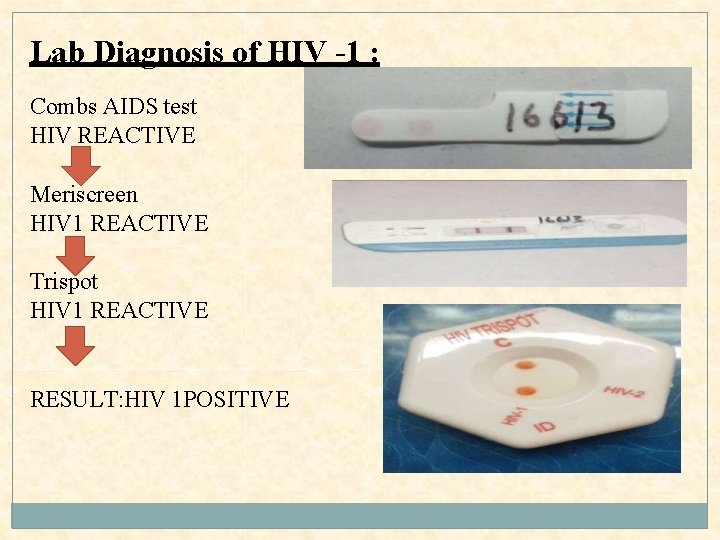
Lab Diagnosis of HIV -1 : Combs AIDS test HIV REACTIVE Meriscreen HIV 1 REACTIVE Trispot HIV 1 REACTIVE RESULT: HIV 1 POSITIVE
On the basis of above results he was referred to ART centre, where counseling, CD 4 count test were done and first line ART started Treatment: ART was started as per NACO guideline. Regimen I(a) –for hiv 1 infection with Hb<9 gm/dl and not on concomitant ATT Tenofovir+lamivudine + Nevirapine
Human Acquired Immunodeficiency Immune Deficiency Virus Syndrome 2
Everybody is at risk of getting HIV. However certain Persons have high risk. 3
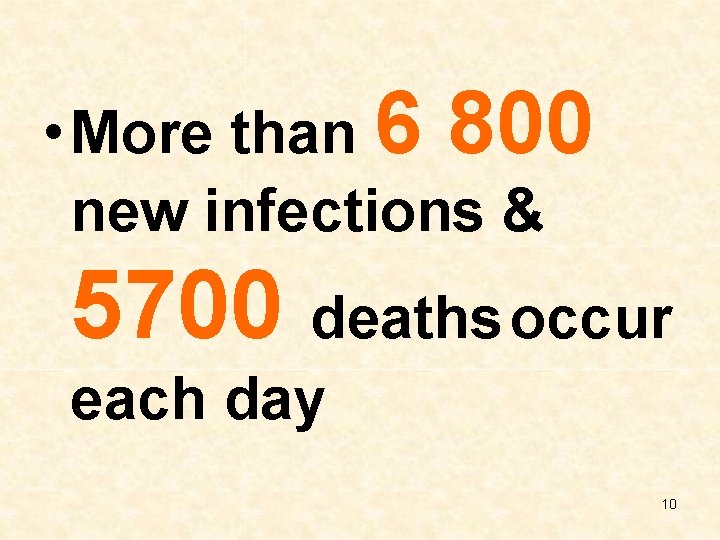
• More than 6 800 new infections & 5700 deaths occur each day 10
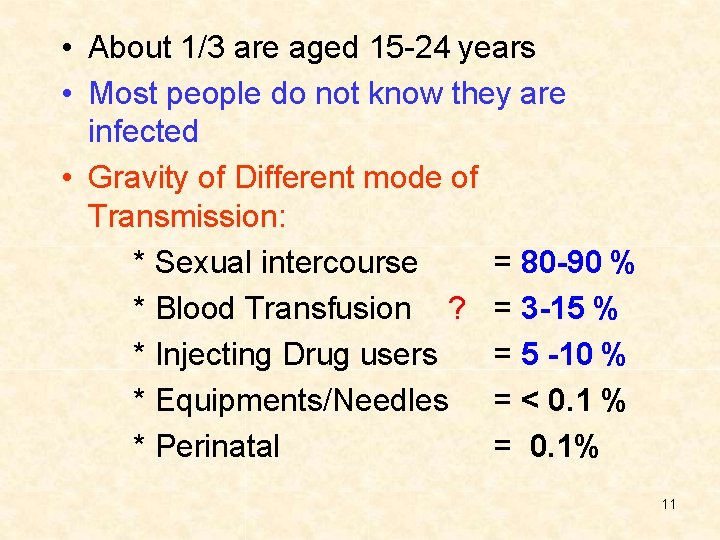
• About 1/3 are aged 15 -24 years • Most people do not know they are infected • Gravity of Different mode of Transmission: = 80 -90 % * Sexual intercourse * Blood Transfusion ? = 3 -15 % = 5 -10 % * Injecting Drug users * Equipments/Needles = < 0. 1 % = 0. 1% * Perinatal 11
Natural history & Pathophysiology of HIV/AIDS 12
Human Immunodeficiency Virus • Acquired Immunodeficiency syndrome first described in 1981 • HIV-1 isolated in 1984, and HIV-2 in 1986 • Belong to the lentivirus subfamily of the retroviridae • Enveloped RNA virus, 120 nm in diameter 13
Types and sub-types of HIV • HIV-1: Sub-type: A to J (based on genetic Material), very common, rate of replication very high • HIV-2: Less common 14
• WBC: N/E/B/L/M (WBC Engulf antigen) Lymphocytes: produced & mature in stem cells in bone marrow, regulate immune system, kill cells that bear specific target antigen. -B: produce antibodies against the pathogen and are dependent on T-cells for the information of pathogen. produced in stem cells in bone marrow and travel to mature in thymus gland. -T: T=helper (CD 4): recognize virus and stimulate B-cell to actively fight infection. T=Suppressor (CD 8): Suppress T & B cell after control of infection. T= Cytotoxic (killer): recognize virus infected cells and Kill them directly. 15
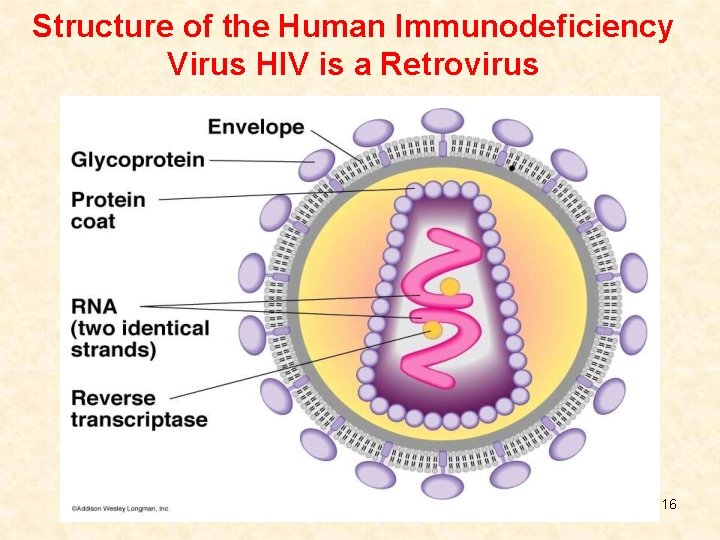
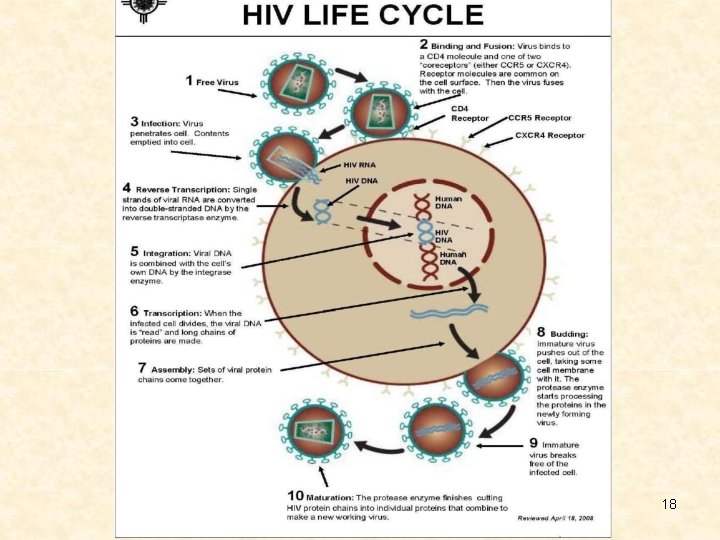
Structure of the Human Immunodeficiency Virus HIV is a Retrovirus 16
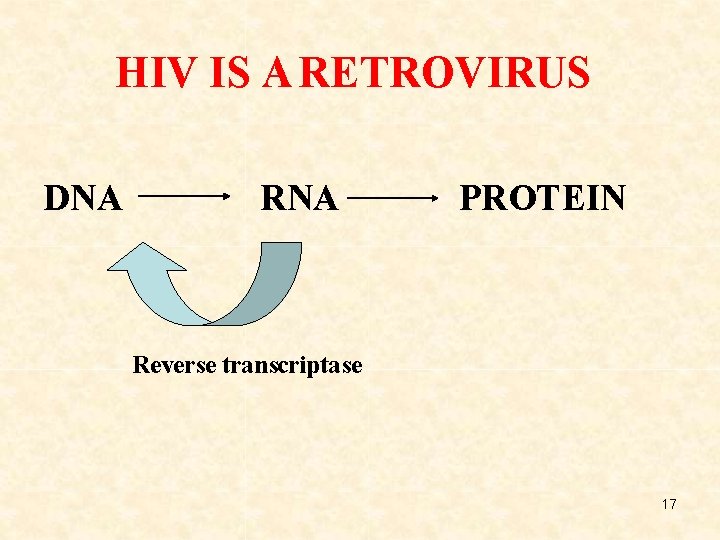
HIV IS A RETROVIRUS DNA RNA PROTEIN Reverse transcriptase 17
18
• Window Period: about 2 months, entry of HIV in body to till not found in test, transfer rate very high, is also called Healthy carrier stage. • Up to 10 million individual virus produce daily Major S/S (index of suspicion) • • Weight loss more than 10% Fever > One months Diarrhoea > One months Others: Cough, Skin problems 19
Seroconversion Illness • Flu-like syndrome: fever, fatigue, myalgia, weight loss • Neurological: Headache, aseptic meningoencephalitis, facial palsy • GI: nausea and vomiting, mucocutaneous ulceration, thrush, pharyngitis, diarrhea • Dermatological: rash, urticaria • Lymphadenopathy 20
Seroconversion Illness • Laboratory Findings • Profound reduction in CD 4+ and CD 8+ • HIV antigen can be detected • Antibodies to HIV may not yet be detected • Management • Symptomatic 21
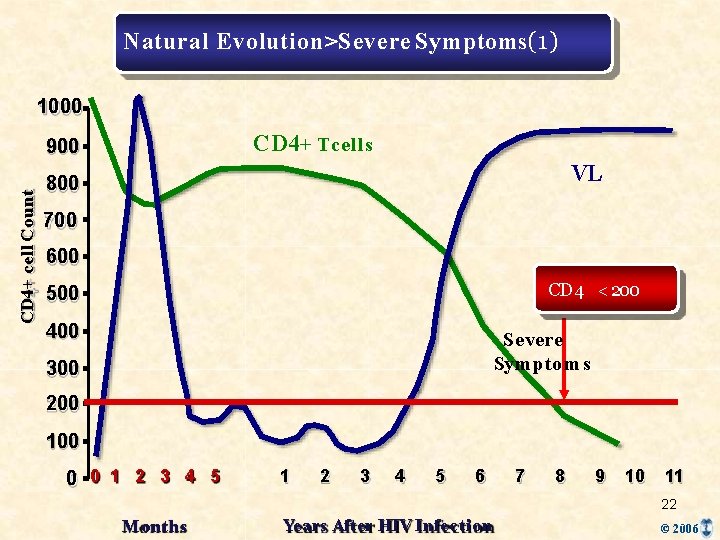
Natural Evolution>Severe Symptoms(1) 1000 CD 4+ T cells CD 4+ cell Count 900 VL 800 700 600 CD 4 < 200 500 400 Severe Symptoms 300 200 100 0 0 1 2 3 4 5 6 7 8 9 10 11 22 Months Years After HIV Infection 6 © 2006
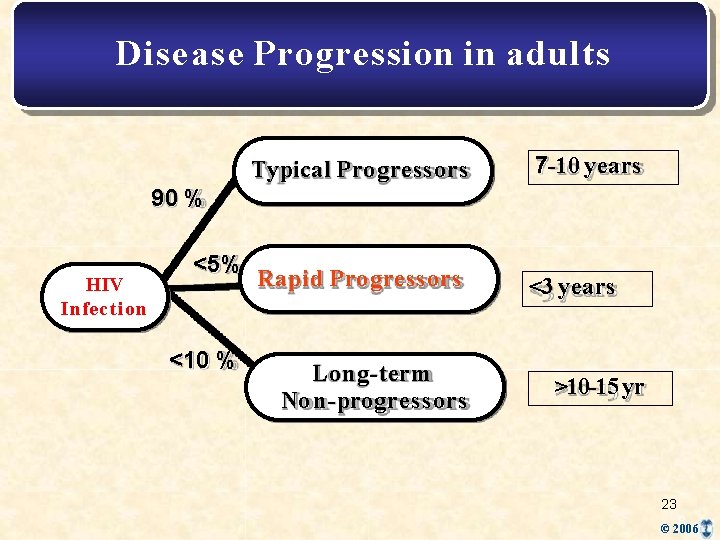
Disease Progression in adults Typical Progressors 7 -10 years Rapid Progressors <3 years 90 % HIV Infection <5% <10 % Long-term Non-progressors >10 -15 yr 23 8 © 2006
WHO Clinical Staging of HIV Clinical stage 1 Clinical stage 2 Clinical stage 3 Clinical stage 4 24
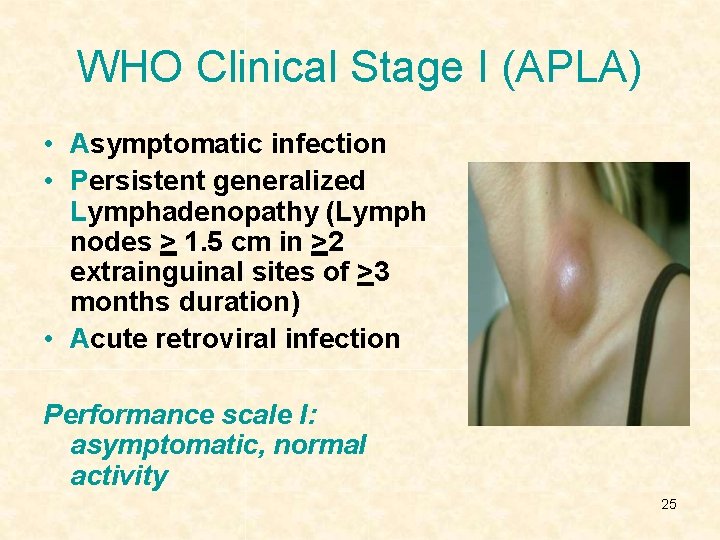
WHO Clinical Stage I (APLA) • Asymptomatic infection • Persistent generalized Lymphadenopathy (Lymph nodes > 1. 5 cm in >2 extrainguinal sites of >3 months duration) • Acute retroviral infection Performance scale I: asymptomatic, normal activity 25
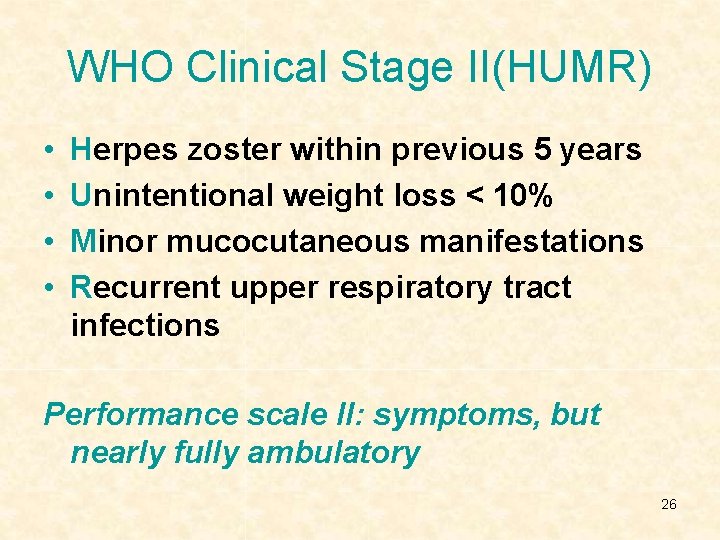
WHO Clinical Stage II(HUMR) • • Herpes zoster within previous 5 years Unintentional weight loss < 10% Minor mucocutaneous manifestations Recurrent upper respiratory tract infections Performance scale II: symptoms, but nearly fully ambulatory 26
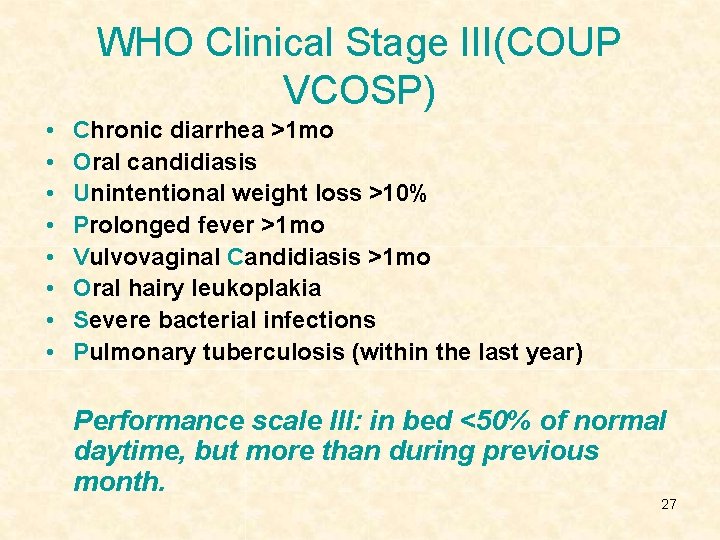
WHO Clinical Stage III(COUP VCOSP) • • Chronic diarrhea >1 mo Oral candidiasis Unintentional weight loss >10% Prolonged fever >1 mo Vulvovaginal Candidiasis >1 mo Oral hairy leukoplakia Severe bacterial infections Pulmonary tuberculosis (within the last year) Performance scale III: in bed <50% of normal daytime, but more than during previous month. 27
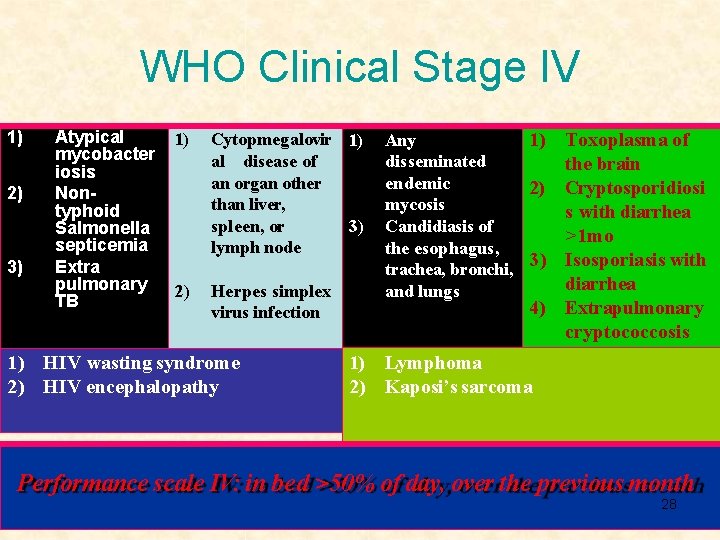
WHO Clinical Stage IV 1) 2) 3) Atypical mycobacter iosis Nontyphoid Salmonella septicemia Extra pulmonary TB 1) Cytopmegalovir 1) al disease of an organ other than liver, spleen, or 3) lymph node 2) Herpes simplex virus infection 1) HIV wasting syndrome 2) HIV encephalopathy Any 1) disseminated endemic 2) mycosis Candidiasis of the esophagus, 3) trachea, bronchi, and lungs Toxoplasma of the brain Cryptosporidiosi s with diarrhea >1 mo Isosporiasis with diarrhea 4) Extrapulmonary cryptococcosis 1) Lymphoma 2) Kaposi’s sarcoma Performance scale IV: in bed >50% of day, over the previous month 28
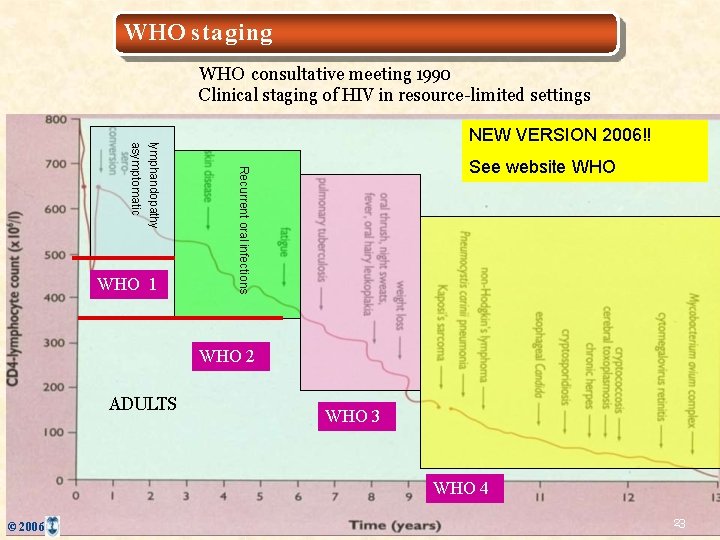
WHO staging WHO consultative meeting 1990 Clinical staging of HIV in resource-limited settings See website WHO Recurrent oral infections lymphandopathy asymptomatic WHO 1 NEW VERSION 2006!! WHO 2 ADULTS WHO 3 WHO 4 © 2006 29 23
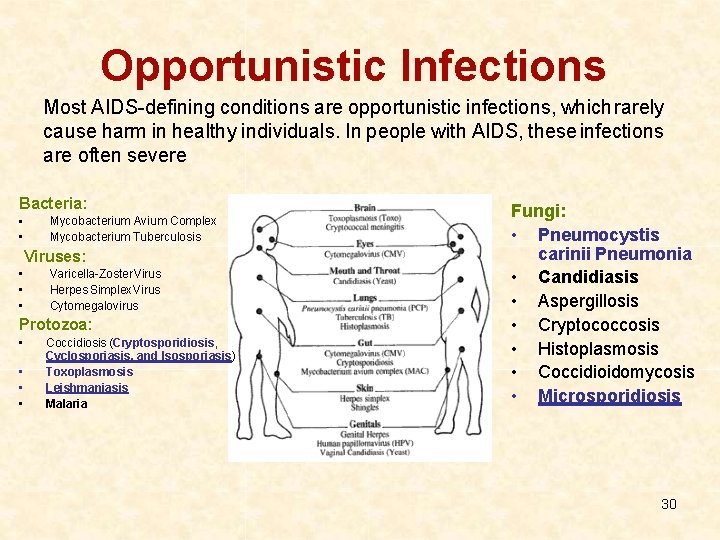
Opportunistic Infections Most AIDS-defining conditions are opportunistic infections, which rarely cause harm in healthy individuals. In people with AIDS, these infections are often severe Bacteria: • • Mycobacterium Avium Complex Mycobacterium Tuberculosis Viruses: • • • Varicella-Zoster Virus Herpes Simplex Virus Cytomegalovirus Protozoa: • • Coccidiosis (Cryptosporidiosis, Cyclosporiasis, and Isosporiasis) Toxoplasmosis Leishmaniasis Malaria Fungi: • Pneumocystis carinii Pneumonia • Candidiasis • Aspergillosis • Cryptococcosis • Histoplasmosis • Coccidioidomycosis • Microsporidiosis 30
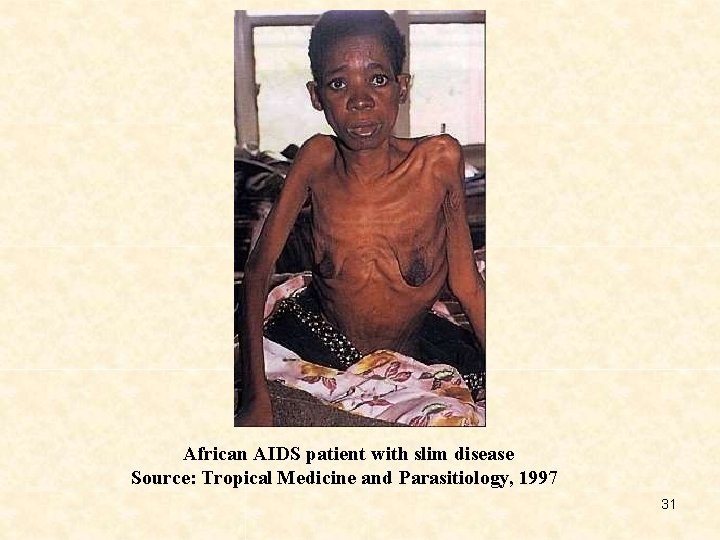
African AIDS patient with slim disease Source: Tropical Medicine and Parasitiology, 1997 31
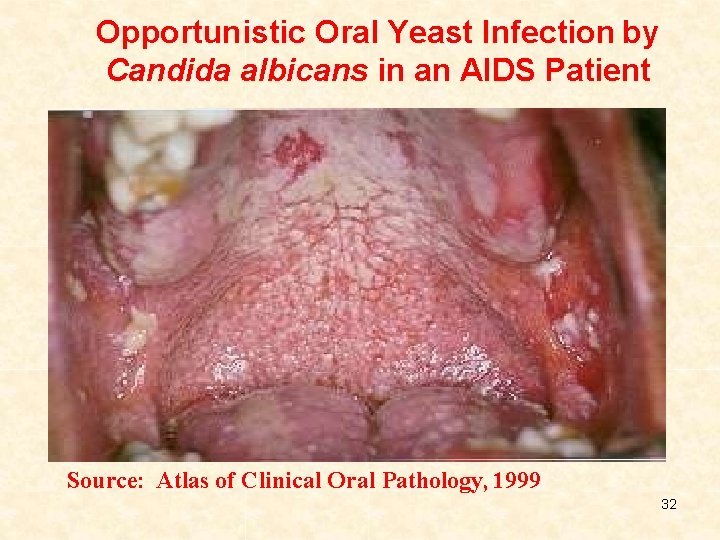
Opportunistic Oral Yeast Infection by Candida albicans in an AIDS Patient Source: Atlas of Clinical Oral Pathology, 1999 32
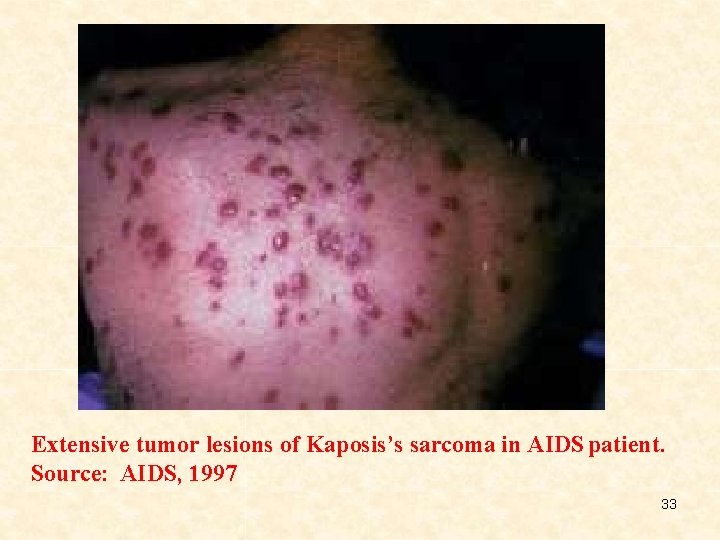
Extensive tumor lesions of Kaposis’s sarcoma in AIDS patient. Source: AIDS, 1997 33
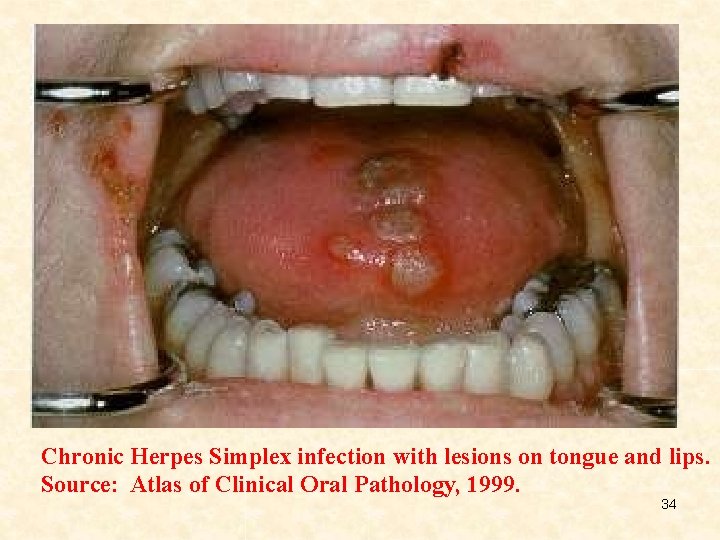
Chronic Herpes Simplex infection with lesions on tongue and lips. Source: Atlas of Clinical Oral Pathology, 1999. 34
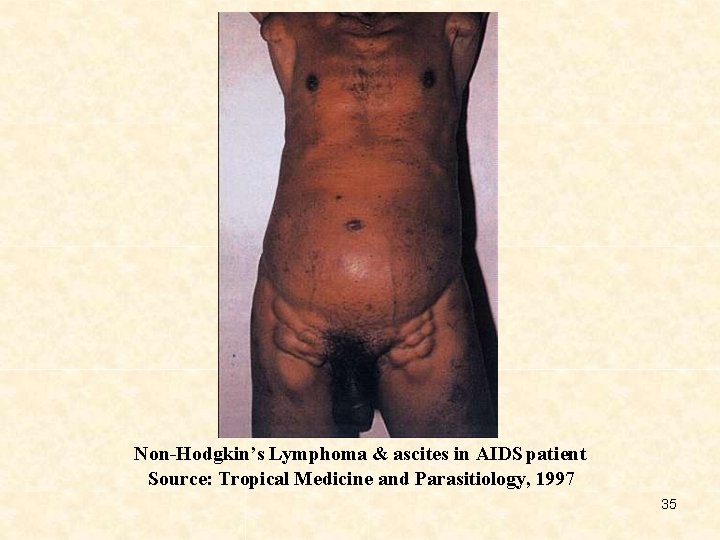
Non-Hodgkin’s Lymphoma & ascites in AIDS patient Source: Tropical Medicine and Parasitiology, 1997 35
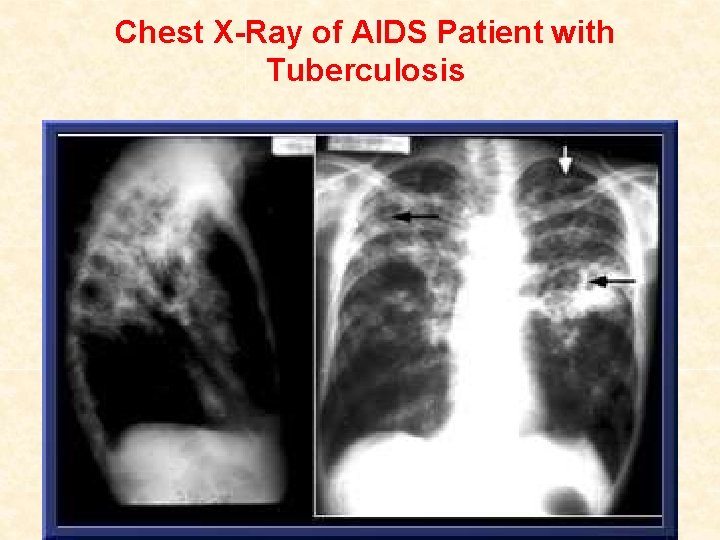
Chest X-Ray of AIDS Patient with Tuberculosis 36
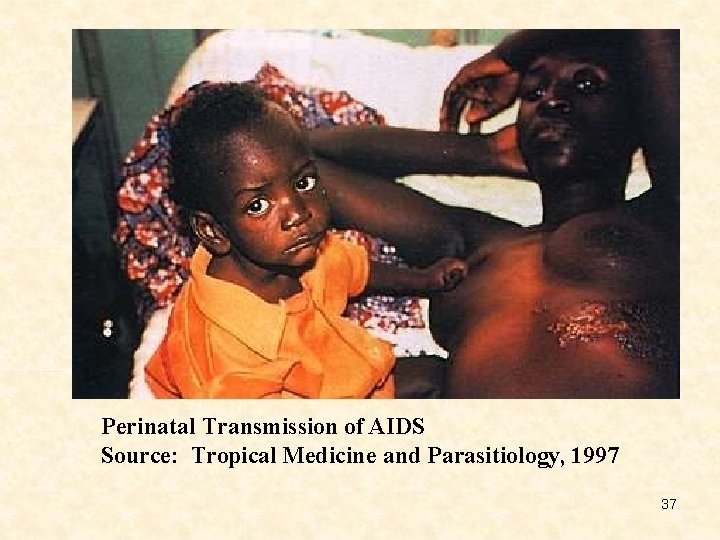
Perinatal Transmission of AIDS Source: Tropical Medicine and Parasitiology, 1997 37
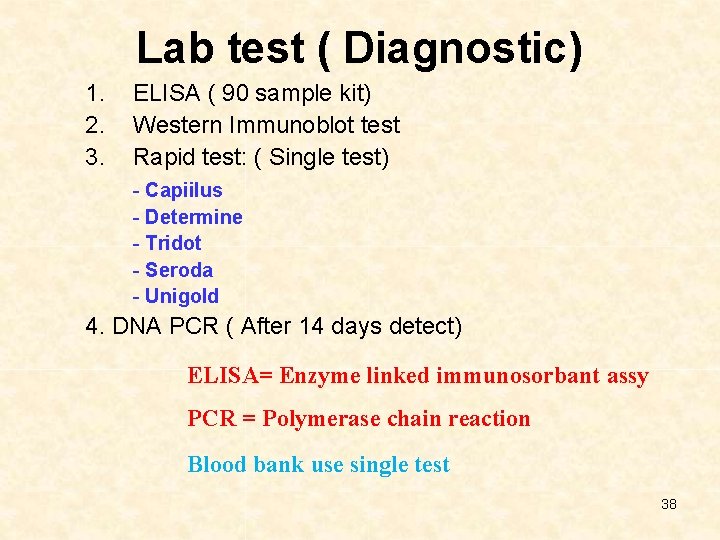
Lab test ( Diagnostic) 1. 2. 3. ELISA ( 90 sample kit) Western Immunoblot test Rapid test: ( Single test) - Capiilus - Determine - Tridot - Seroda - Unigold 4. DNA PCR ( After 14 days detect) ELISA= Enzyme linked immunosorbant assy PCR = Polymerase chain reaction Blood bank use single test 38
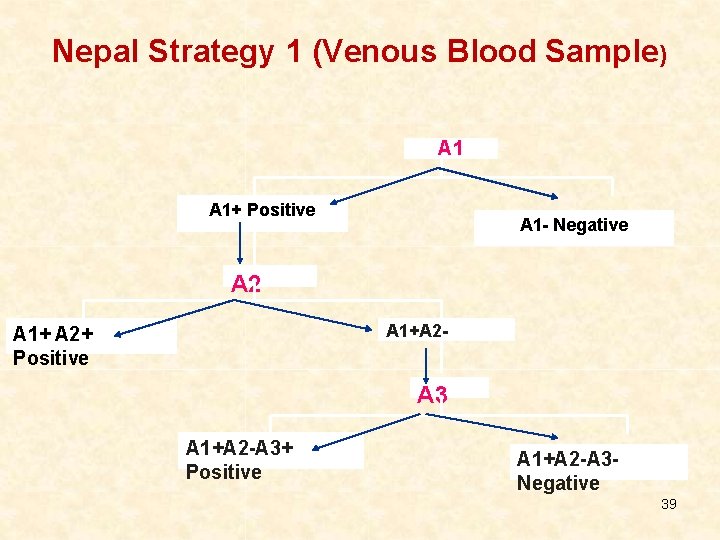
Nepal Strategy 1 (Venous Blood Sample) A 1+ Positive A 1 - Negative A 2 A 1+A 2 - A 1+ A 2+ Positive A 3 A 1+A 2 -A 3+ Positive A 1+A 2 -A 3 Negative 39
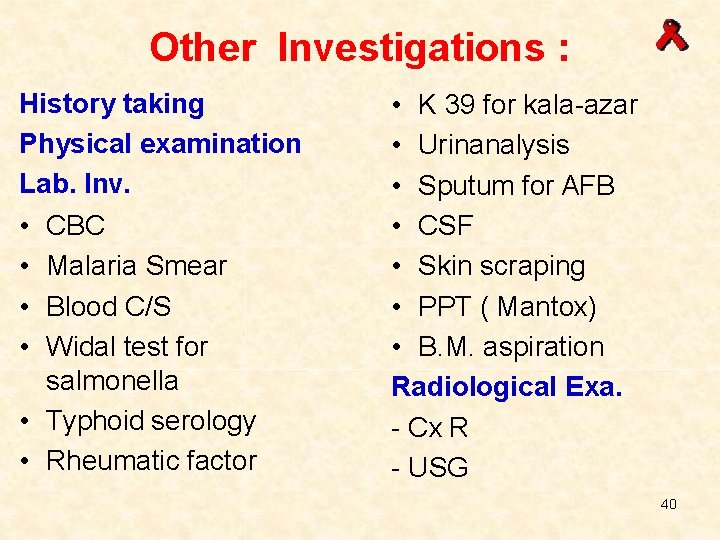
Other Investigations : History taking Physical examination Lab. Inv. • CBC • Malaria Smear • Blood C/S • Widal test for salmonella • Typhoid serology • Rheumatic factor • K 39 for kala-azar • Urinanalysis • Sputum for AFB • CSF • Skin scraping • PPT ( Mantox) • B. M. aspiration Radiological Exa. - Cx R - USG 40
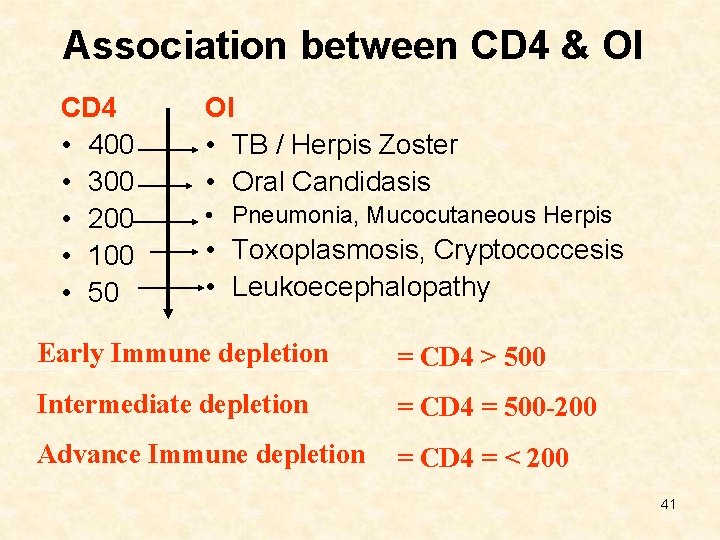
Association between CD 4 & OI CD 4 • 400 • 300 • 200 • 100 • 50 OI • TB / Herpis Zoster • Oral Candidasis • Pneumonia, Mucocutaneous Herpis • Toxoplasmosis, Cryptococcesis • Leukoecephalopathy Early Immune depletion = CD 4 > 500 Intermediate depletion = CD 4 = 500 -200 Advance Immune depletion = CD 4 = < 200 41
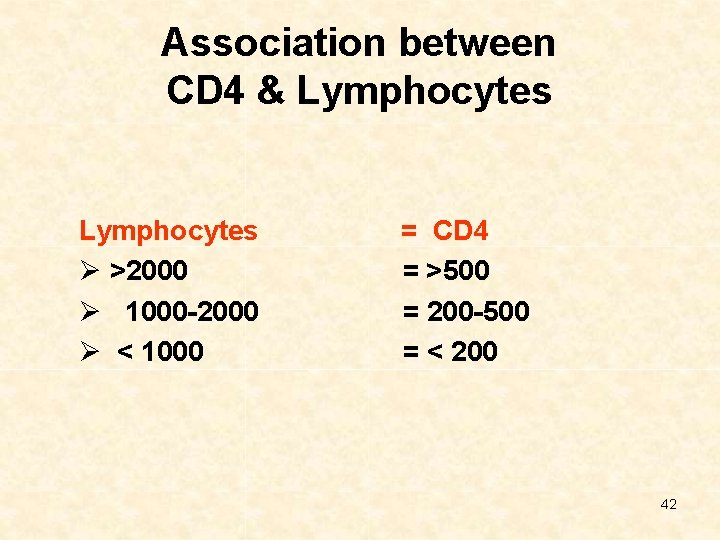
Association between CD 4 & Lymphocytes >2000 1000 -2000 < 1000 = CD 4 = >500 = 200 -500 = < 200 42
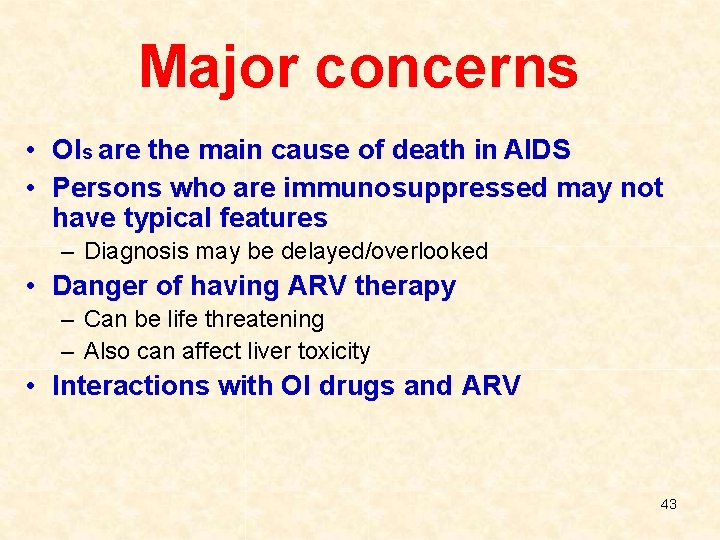
Major concerns • OIs are the main cause of death in AIDS • Persons who are immunosuppressed may not have typical features – Diagnosis may be delayed/overlooked • Danger of having ARV therapy – Can be life threatening – Also can affect liver toxicity • Interactions with OI drugs and ARV 43
ART-Therapy 44
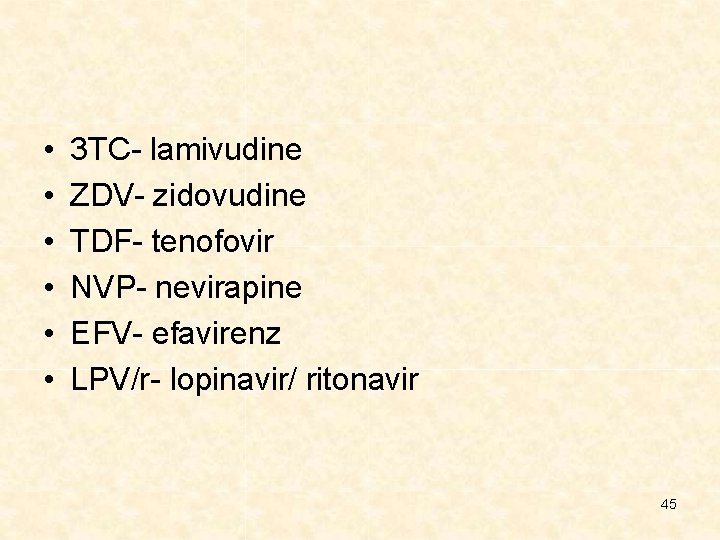
• • • 3 TC- lamivudine ZDV- zidovudine TDF- tenofovir NVP- nevirapine EFV- efavirenz LPV/r- lopinavir/ ritonavir 45
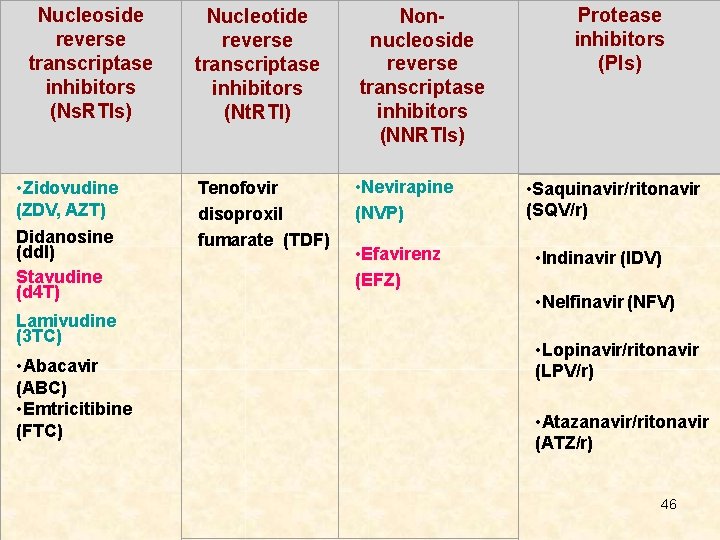
Nucleoside reverse transcriptase inhibitors (Ns. RTIs) • Zidovudine (ZDV, AZT) Didanosine (dd. I) Stavudine (d 4 T) Lamivudine (3 TC) • Abacavir (ABC) • Emtricitibine (FTC) Nucleotide reverse transcriptase inhibitors (Nt. RTI) Nonnucleoside reverse transcriptase inhibitors (NNRTIs) Tenofovir disoproxil fumarate (TDF) • Nevirapine (NVP) • Efavirenz (EFZ) Protease inhibitors (PIs) • Saquinavir/ritonavir (SQV/r) • Indinavir (IDV) • Nelfinavir (NFV) • Lopinavir/ritonavir (LPV/r) • Atazanavir/ritonavir (ATZ/r) 46
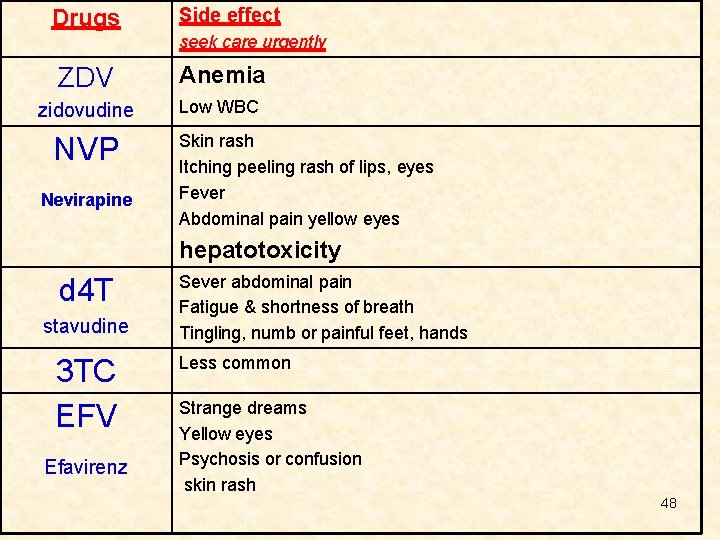
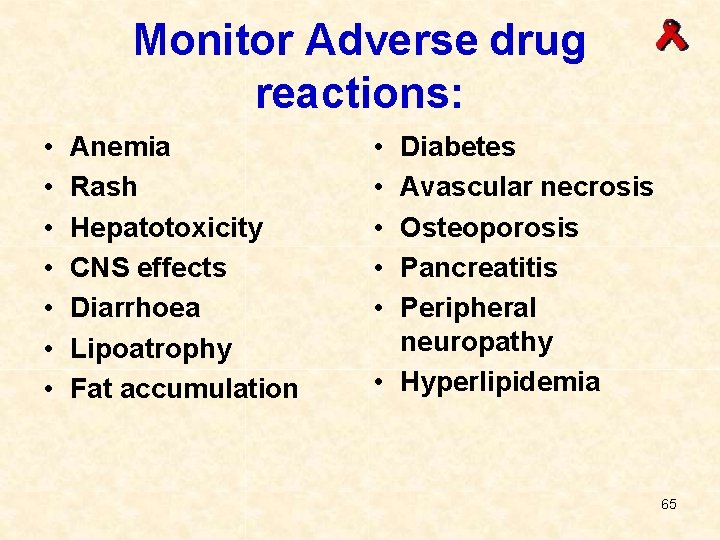
Drugs Side effect seek care urgently ZDV Anemia zidovudine Low WBC NVP Nevirapine Skin rash Itching peeling rash of lips, eyes Fever Abdominal pain yellow eyes hepatotoxicity d 4 T stavudine 3 TC EFV Efavirenz Sever abdominal pain Fatigue & shortness of breath Tingling, numb or painful feet, hands Less common Strange dreams Yellow eyes Psychosis or confusion skin rash 48

Details of ART 49
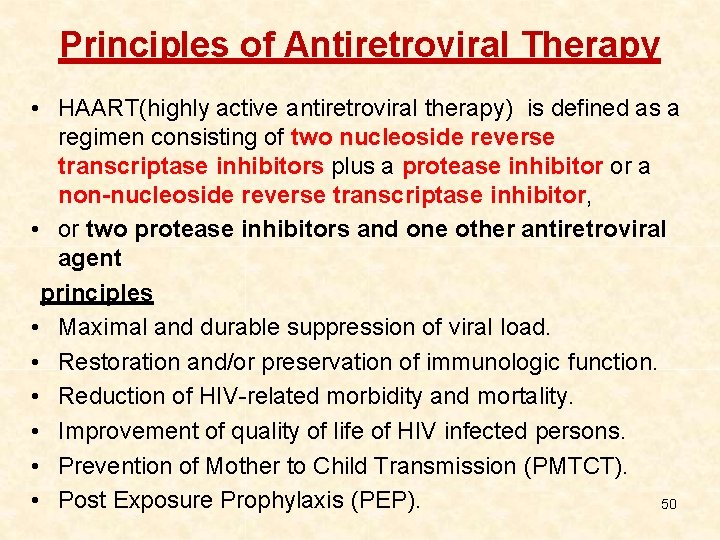
Principles of Antiretroviral Therapy • HAART(highly active antiretroviral therapy) is defined as a regimen consisting of two nucleoside reverse transcriptase inhibitors plus a protease inhibitor or a non-nucleoside reverse transcriptase inhibitor, • or two protease inhibitors and one other antiretroviral agent principles • Maximal and durable suppression of viral load. • Restoration and/or preservation of immunologic function. • Reduction of HIV-related morbidity and mortality. • Improvement of quality of life of HIV infected persons. • Prevention of Mother to Child Transmission (PMTCT). • Post Exposure Prophylaxis (PEP). 50
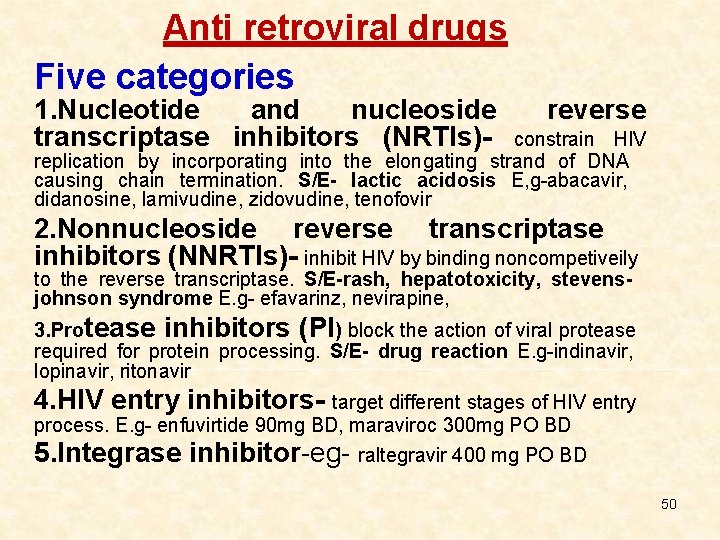
Anti retroviral drugs Five categories 1. Nucleotide and nucleoside transcriptase inhibitors (NRTIs)- reverse constrain HIV replication by incorporating into the elongating strand of DNA causing chain termination. S/E- lactic acidosis E, g-abacavir, didanosine, lamivudine, zidovudine, tenofovir 2. Nonnucleoside reverse transcriptase inhibitors (NNRTIs)- inhibit HIV by binding noncompetiveily to the reverse transcriptase. S/E-rash, hepatotoxicity, stevensjohnson syndrome E. g- efavarinz, nevirapine, 3. Protease inhibitors (PI) block the action of viral protease required for protein processing. S/E- drug reaction E. g-indinavir, lopinavir, ritonavir 4. HIV entry inhibitors- target different stages of HIV entry process. E. g- enfuvirtide 90 mg BD, maraviroc 300 mg PO BD 5. Integrase inhibitor-eg- raltegravir 400 mg PO BD 50
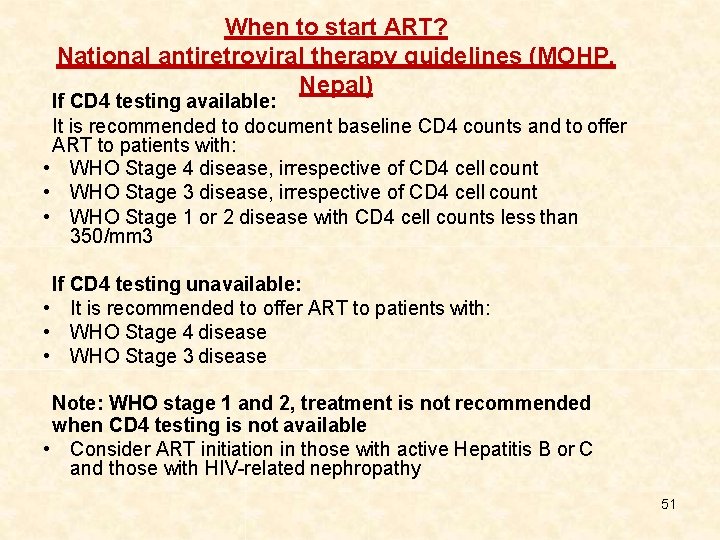
When to start ART? National antiretroviral therapy guidelines (MOHP, Nepal) If CD 4 testing available: It is recommended to document baseline CD 4 counts and to offer ART to patients with: • WHO Stage 4 disease, irrespective of CD 4 cell count • WHO Stage 3 disease, irrespective of CD 4 cell count • WHO Stage 1 or 2 disease with CD 4 cell counts less than 350/mm 3 If CD 4 testing unavailable: • It is recommended to offer ART to patients with: • WHO Stage 4 disease • WHO Stage 3 disease Note: WHO stage 1 and 2, treatment is not recommended when CD 4 testing is not available • Consider ART initiation in those with active Hepatitis B or C and those with HIV-related nephropathy 51
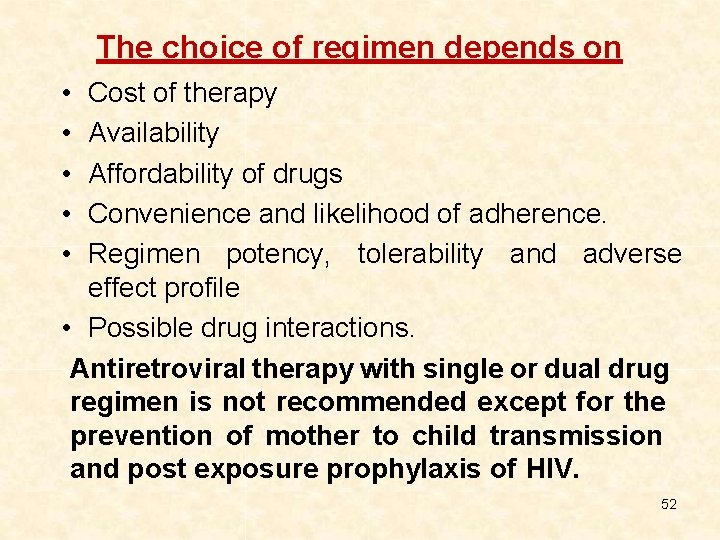
The choice of regimen depends on • • • Cost of therapy Availability Affordability of drugs Convenience and likelihood of adherence. Regimen potency, tolerability and adverse effect profile • Possible drug interactions. Antiretroviral therapy with single or dual drug regimen is not recommended except for the prevention of mother to child transmission and post exposure prophylaxis of HIV. 52
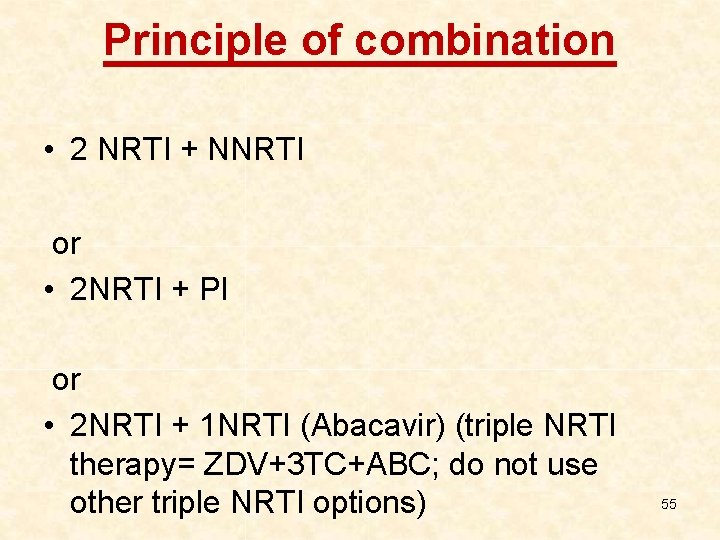
Principle of combination • 2 NRTI + NNRTI or • 2 NRTI + PI or • 2 NRTI + 1 NRTI (Abacavir) (triple NRTI therapy= ZDV+3 TC+ABC; do not use other triple NRTI options) 55
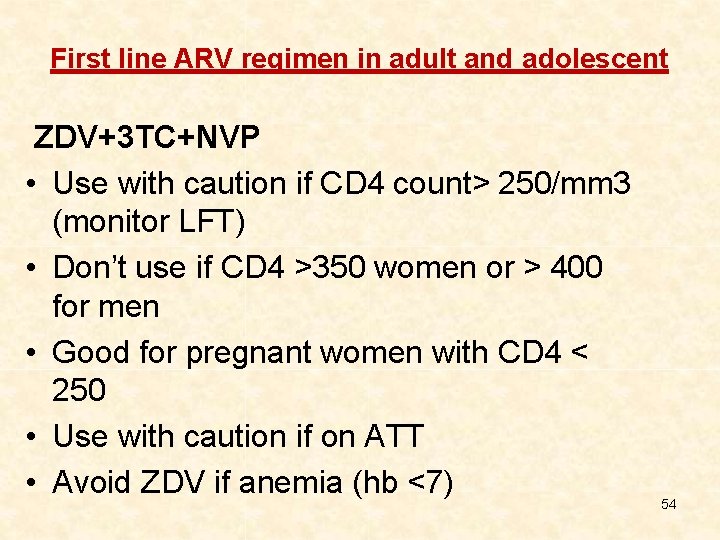
First line ARV regimen in adult and adolescent ZDV+3 TC+NVP • Use with caution if CD 4 count> 250/mm 3 (monitor LFT) • Don’t use if CD 4 >350 women or > 400 for men • Good for pregnant women with CD 4 < 250 • Use with caution if on ATT • Avoid ZDV if anemia (hb <7) 54
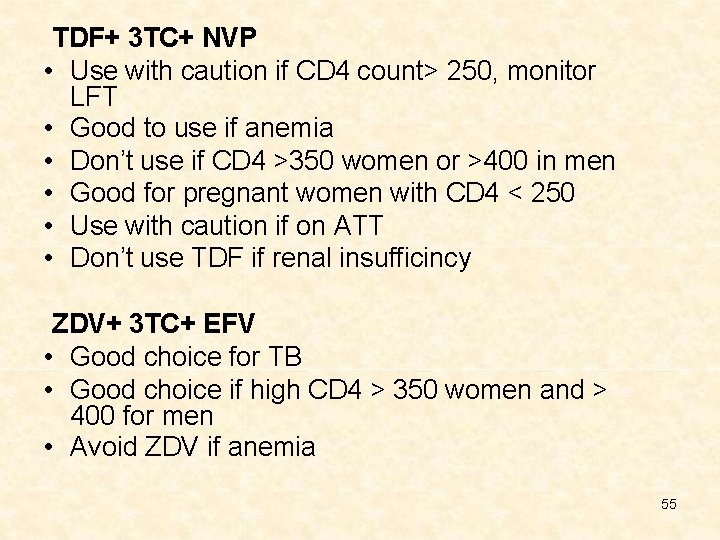
TDF+ 3 TC+ NVP • Use with caution if CD 4 count> 250, monitor LFT • Good to use if anemia • Don’t use if CD 4 >350 women or >400 in men • Good for pregnant women with CD 4 < 250 • Use with caution if on ATT • Don’t use TDF if renal insufficincy ZDV+ 3 TC+ EFV • Good choice for TB • Good choice if high CD 4 > 350 women and > 400 for men • Avoid ZDV if anemia 55
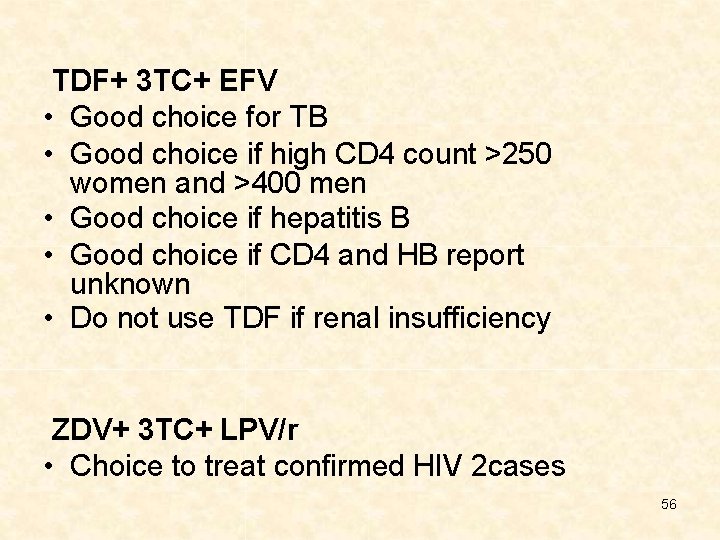
TDF+ 3 TC+ EFV • Good choice for TB • Good choice if high CD 4 count >250 women and >400 men • Good choice if hepatitis B • Good choice if CD 4 and HB report unknown • Do not use TDF if renal insufficiency ZDV+ 3 TC+ LPV/r • Choice to treat confirmed HIV 2 cases 56
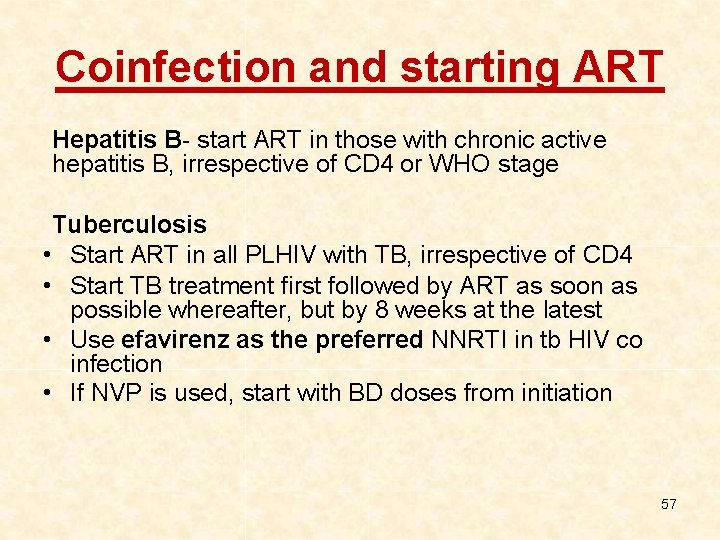
Coinfection and starting ART Hepatitis B- start ART in those with chronic active hepatitis B, irrespective of CD 4 or WHO stage Tuberculosis • Start ART in all PLHIV with TB, irrespective of CD 4 • Start TB treatment first followed by ART as soon as possible whereafter, but by 8 weeks at the latest • Use efavirenz as the preferred NNRTI in tb HIV co infection • If NVP is used, start with BD doses from initiation 57
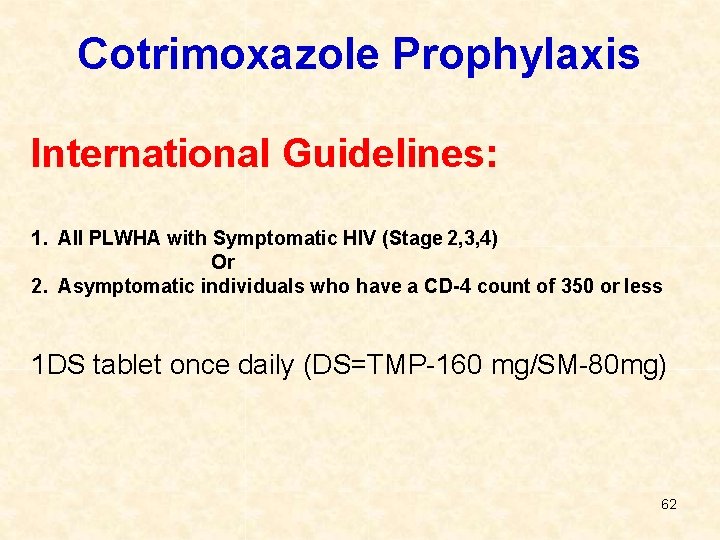
Cotrimoxazole Prophylaxis in Adults • against Tb, Pnuemocyctis xeroviri and mycobacterium avium should be given to: • HIV infected adults with CD 4 count <350 cells/mm 3 • All adults who have had an episode of PCP • All adults with symptomatic HIV disease or Clinical stage 2, 3 or 4 The regimen is: • 1 DS tablet (160 TMP(trimethoprim)/800 SMX(sulfamethox azole) every day OR • 2 SS tablets (80 TMP/ 400 SMX) every day 58
Medicines for superinfections • Fungal infections- fluconazole, cotrimazole 59
Antiretroviral treatment failure in adults and adolescent Clinical feature- new or recurrent WHO stage 4 condition CD 4 cell failure • Persistent CD 4 count < 100 cells/mm 3 • Fall of CD 4 count to pretherapy baseline • 50% fall from on- treatment peak CD 4 value Virological failure- persistent plasma viral load > 5000 copies/ ml or less than 10 fold reduction of viral load 4 - 6 weeks after starting a new ART regimen, failure to reach an undetectable viral load after 6 months of treatment, detection of virus after initial complete suppression of viral load Certain WHO clinical stage 3 conditions like pulmonary TB, severe bacterial infections may be indications of treatment failure 60
Recommended second line regimen in adult and adolescent • For failure on • ZDV+ d 4 T+ 3 TC + NVP or EFV • Change to • TDF+ 3 TC+ LPV/r • Failure on • TDF+ 3 TC + NVP or EFV • Change to • ZDV+ 3 TC +LPV/r 61
Cotrimoxazole Prophylaxis International Guidelines: 1. All PLWHA with Symptomatic HIV (Stage 2, 3, 4) Or 2. Asymptomatic individuals who have a CD-4 count of 350 or less 1 DS tablet once daily (DS=TMP-160 mg/SM-80 mg) 62
Limitations of ART • ART does not CURE HIV infection • With currently available medications, the virus can never be completely eradicated, so the person should take the drugs forever, even if symptoms have disappeared. 63
ART : Therapy • Reduce viral load: halt disease • Prevent & reduce resistant variant • Achieve immune reconstitution ( > CD-4) • Prolong & improve quality of life. 64
Monitor Adverse drug reactions: • • Anemia Rash Hepatotoxicity CNS effects Diarrhoea Lipoatrophy Fat accumulation • • • Diabetes Avascular necrosis Osteoporosis Pancreatitis Peripheral neuropathy • Hyperlipidemia 65
Do not start ART if: • • • The patent is not motivated. Without intensive counseling. If t/t cannot be continued. Patient has poor renal/ hepatic function Patient is asymptomatic and there is no CD 4 data. • During an acute opportunistic infection. including TB, first treat acute infections. 66
• • • Universal precautions pertain to the following body fluids (CDC, 1988): Blood Semen Vaginal Secretions Cerebrospinal Fluid Synovial Fluid Pleural Fluid Peritoneal Fluid Pericardial Fluid Amniotic Fluid Body Tissues 67
Universal precautions do not apply to the following body fluids unless they contain visible blood (CDC, 1988): • • Feces Nasal Secretions Sputum Sweat Tears Urine Vomitus Saliva Always use barriers to prevent skin and mucous membrane exposure to blood and body fluids. 68
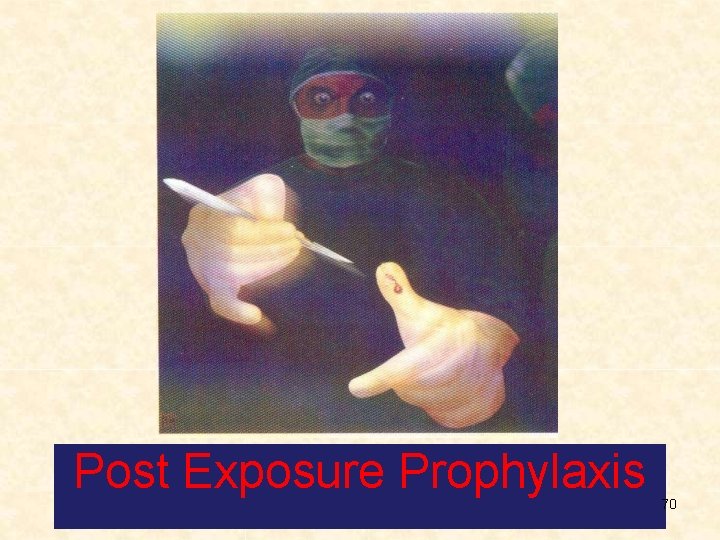
Post exposure prophylaxis • Candidates: – Health care workers with needle prick injury – Condom breakage – Victims of rape – Relapses in IV drug users • First dose to be taken as soon as possible (within hours). 69
PEP Post Exposure Prophylaxis 70
Principles of PEP Management: • • • Exposure Site Management: Exposure Reporting: Evaluation of transmission Risk: Counselling: Consideration of PEP: Follow up: 6 W, 12 W, 6 M Area of Uncertainty: 99. 7% occupational injury involving percutaneous exposure to HIV do not transmit infection. 71
83
Stigma and Psychosocial aspects Related to HIV/AIDS 73
People with HIV are stigmatized for Many Reasons: • HIV is a slow incurable disease, resulting in illness and death. • HIV is considered a death sentences. • People afraid of getting it/transmission • Often associated with moral violation: sex • Blame certain groups for spreading : CSWs, IDUs • Stigma prevents speaking about it. • Stigma prevent from Seeking care 74
Comprehensive Care of PLWHA • • • HIV counseling including prevention for positive services Clinical assessment and staging Clotrimoxazole prophylaxis: prevent OI Diagnosis of TB OI diagnosis and treatment Nutrition monitoring and support Pre-ART care and ART adherence counselling Referral for VCT Supports: NGOs, PMTCT, FP, STI, CHBC etc 75
Ongoing Monitoring and follow up • Once ART is started, follow up schedule should be as follows: • First month: two visits (every 2 weeks) • Second + Third month: every month • Fourth month onwards: one visit every three months • More frequent visits will be scheduled, if the patient develops symptoms or experiences difficulties in adhering to the 165 medications
Laboratory Monitoring: first year. Month 6 2 nd week • CBC and Liver Function tests (ALT if on NVP) Month 1 • CBC • LFT if on NVP • Other necessary investigation if and as required Month 2 • CBC • LFT if on NVP • Other necessary investigation if and as required Month 3 • CBC • LFT if on NVP • Other necessary investigation if and as required • • • CBC, platelets LFTs CD 4 Cell Count Month 9 • CBC and LFT Month-12 • CBC • LFT • CD 4 Cell count • Other tests as needed 77
Subsequent Years: Quarterly • CBC Every 6 months • CD 4 Cell count • LFT • Other tests as needed • If viral load testing becomes readily available, ideal testing schedule would be if virologic failure is suspected and every 6 months after starting ART. • Pregnant women on ART or ARV prophylaxis near term (36 weeks) who are considering an elective caesarean section should be offered viral load testing, if possible. 78
- Slides: 78