
Clinical Examination of the Ear Nose and Throat


- Slides: 30
Clinical Examination of the Ear, Nose and Throat Dave Pothier St Mary’s 2003
Important things to remember • ABC is ALWAYS necessary • See patient as a whole • Look at patient from the time they enter the room • Systemic problems give valuable clues • Look for health ‘props’
Practice is vital ENT examination/equipment is not intuitive
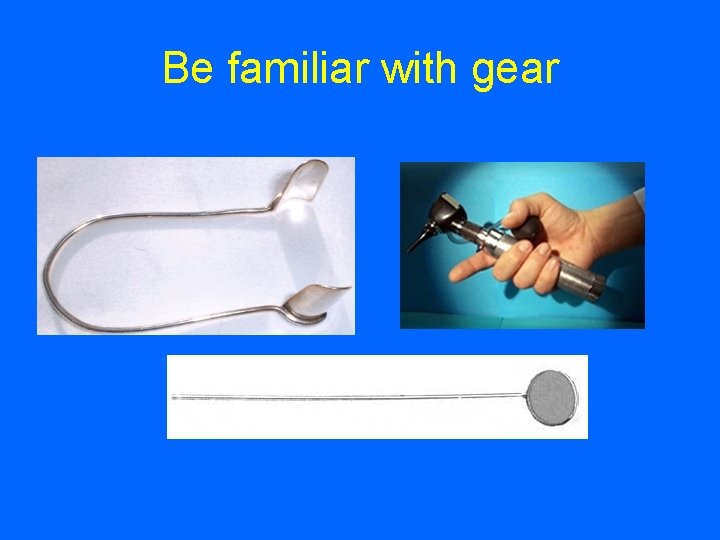
Be familiar with gear
THE EAR
Position • • Good light Headlight / reflected light from headmirror Side on to patient Inspect, Palpate, Use otoscope NB look behind ear
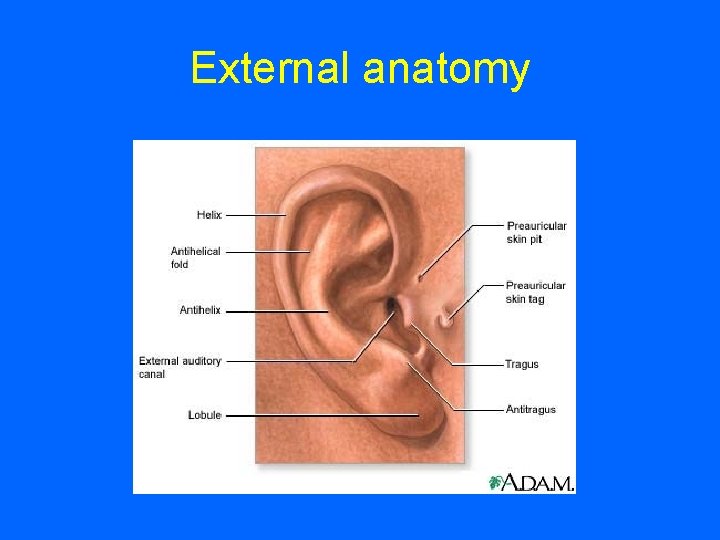
External anatomy
Palpate • Feel pinna • Feel lymph nodes • Palpate neck
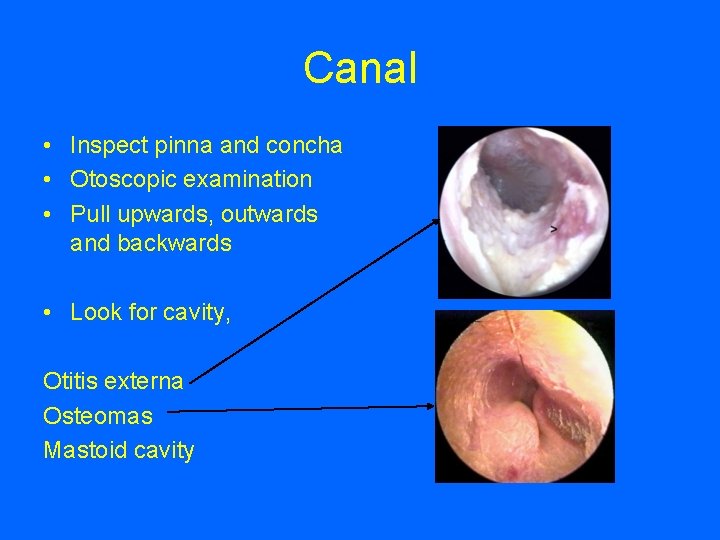
Canal • Inspect pinna and concha • Otoscopic examination • Pull upwards, outwards and backwards • Look for cavity, Otitis externa Osteomas Mastoid cavity
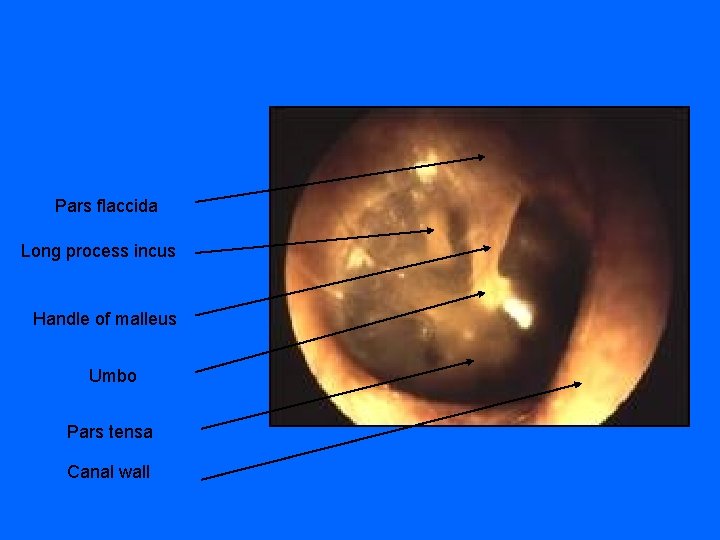
TM • Assess all quadrants • Look for malleus, incus • Record abnormalities
Pars flaccida Long process incus Handle of malleus Umbo Pars tensa Canal wall
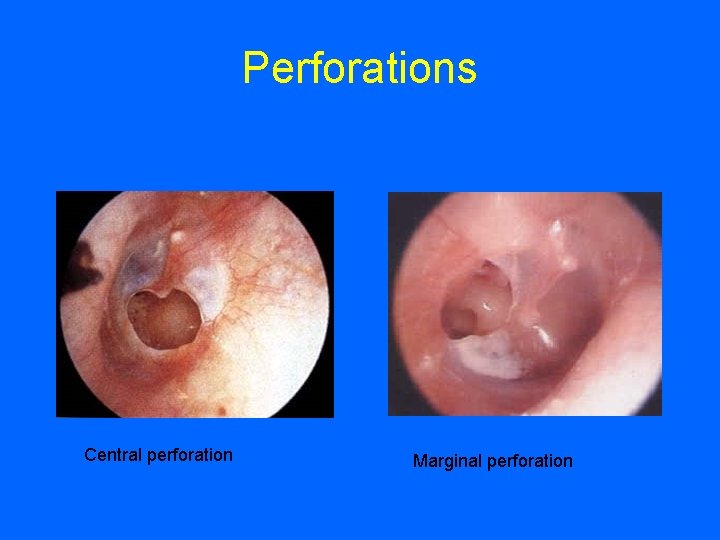
Perforations Central perforation Marginal perforation
Don’t forget • Tuning fork tests • Simple free field tests • Look at audiological investigations
THE NOSE
Inspection • Good light • Look at skin and scars • Assess shape • Look at vestibules by lifting tip
Palpation/inspection • Occlude each nostril in turn and assess air entry • Look at misting of tongue depressor
Anterior rhinoscopy • Use thuddicums speculum hold it properly!
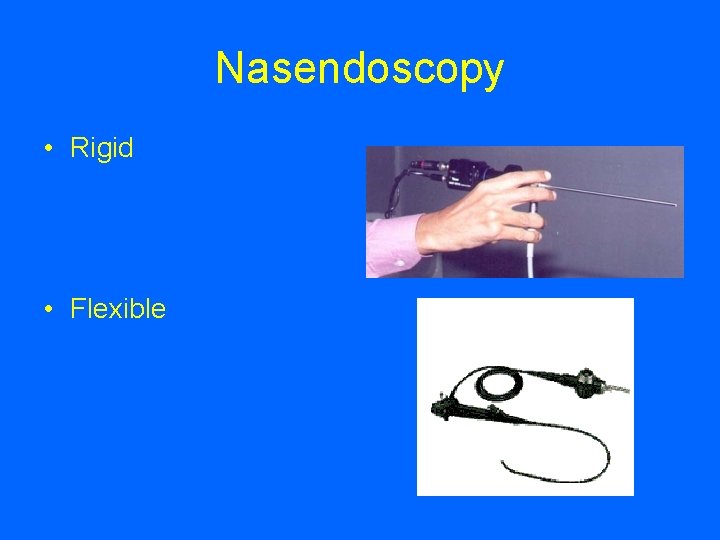
Nasendoscopy • Rigid • Flexible
Don’t forget • Also examine neck and oral cavity • Check postnasal space • Ear disease may suggest pathology
THE THROAT
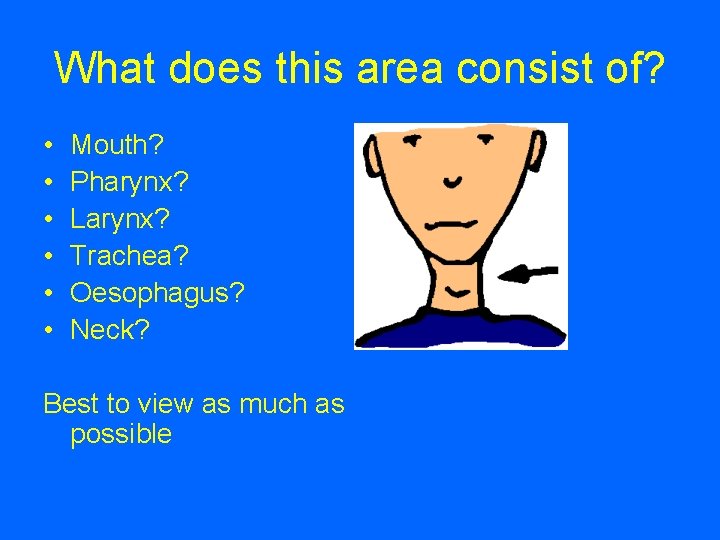
What does this area consist of? • • • Mouth? Pharynx? Larynx? Trachea? Oesophagus? Neck? Best to view as much as possible
Oral cavity • • Open wide! Two tongue depressors Examine every mucosal surface Protrude tongue Look at salivary orifices Bimanual palpation Percuss teeth
Larynx • Indirect / direct laryngoscopy To be learned in OPD
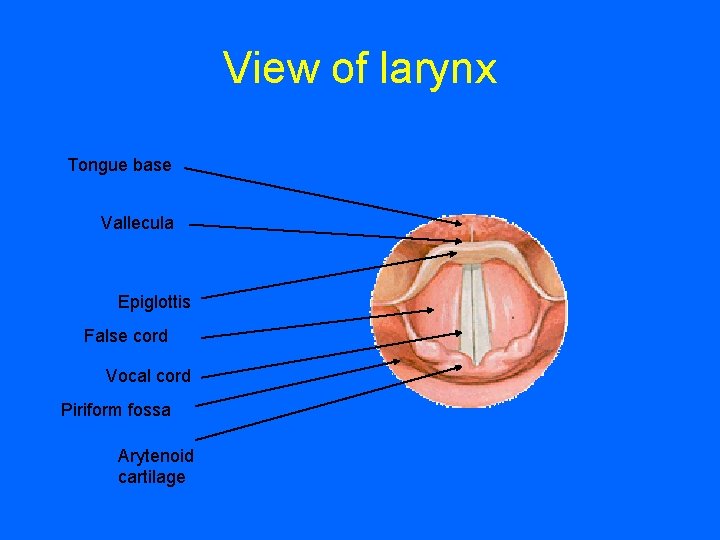
View of larynx Tongue base Vallecula Epiglottis False cord Vocal cord Piriform fossa Arytenoid cartilage
Neck • Inspect • Palpate • Auscultate
Inspection • • Scars Lumps Sinuses Asymmetry Stoma Ask patient to swallow and protrude tongue Ask patient to breathe deeply Ask patient to count to ten
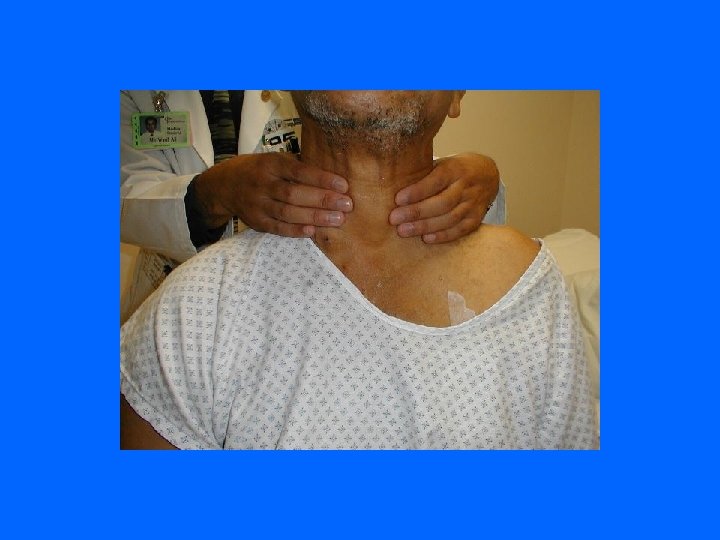
Palpation • • Adequate exposure Systematic Develop system From in front then mainly from behind Submandibular area, both triangles Supraclavicular area
Auscultation • Listen for bruit Thyroid and carotid
Summary • See patient as a whole – don’t focus in on one part of the body too soon • Be systematic • Adequate exposure • Be familiar with toys • Suggest further assessments