
Clinical Evaluation of Female Lower Urinary Tract Symptoms





- Slides: 24
Clinical Evaluation of Female Lower Urinary Tract Symptoms (F – LUTS) Dr Ismaiel Abu Mahfouz
Changing life style
Qo. L
Denial
Impact on quality of Life (Qo. L)
Female - LUTS • Causes • Terminology • Clinical assessment • Investigations
F- LUTS Causes
Causes of Female LUTS • Urinary tract infection • Renal stones • Various types of urinary incontinence • Urethral stricture • Urological cancer
Types of urinary incontinence • Urodynamic Stress Incontinence (USI) • Detrusor Overactivity Incontinence (DOI) • Mixed Urodynamic Incontinence (MUI) • Overflow incontinence • Urogenital fistulae • Congenital (ectopic ureter) • Urethral diverticulum • UTI • Medications • Functional (e. g. immobility)
F-LUTS Terminology
Storage symptoms • • • Urinary incontinence The complaint of any involuntary leakage of urine Urgency Sudden compelling desire to pass urine, which is difficult to defer Increased daytime frequency The complaint by the patient that he/she voids too often by day Nocturia The complaint that the patient has to wake up at night one or more times to void Nocturnal enuresis The complaint of loss of urine occurring during sleep
Storage symptoms • Urge urinary incontinence (UUI) Involuntary leakage accompanied by or immediately preceded by urgency • Stress urinary incontinence (SUI) Observation of involuntary leakage from the urethra, synchronous with exertion / effort, sneezing or coughing • Mixed urinary incontinence (MUI) Involuntary leakage associated with urgency and also with exertion, effort, sneezing or coughing
Storage symptoms • Continuous urinary incontinence Complaint of continuous leakage day and night • Other types of incontinence o Incontinence intercourse o Postural incontinence
Overactive Bladder (OAB) Urgency, with or without urge incontinence, usually with frequency and nocturia Also known as: • Overactive bladder syndrome • Urgency-frequency syndrome
Voiding symptoms • • Slow stream Perception of reduced urine flow, usually compared to previous performance or in comparison to others Intermittent stream (intermittency) Describes urine flow which stops and starts, on one or more occasions, during micturition Hesitancy Difficulty in initiating micturition resulting in a delay in the onset of voiding after the individual is ready to pass urine Straining to void Describes the muscular effort used to initiate, maintain or improve the urinary stream
Post-micturition symptoms Experienced immediately after micturition • Feeling of incomplete emptying Self-explanatory term for a feeling experienced by the individual after passing urine • Post-micturition dribble Describes the involuntary loss of urine immediately after finishing passing urine, usually after rising from the toilet
F- LUTS Clinical assessment
Clinical evaluation
History • Details of the presenting symptoms • Symptoms: characterized and quantified • When more than one symptom is present, which is the most bothersome • Bladder diary • For incontinence, a pad test
Past medical history • Known neurologic diseases MS, spinal cord injury, lumbar disk prolapse, CVA Parkinson’s • If no history of neurologic diseases, ask about: Double vision, muscular weakness, paralysis or poor coordination, tremor, numbness • History of vaginal surgery • Abdomino-perineal resection, radical hysterectomy • Radiotherapy Small capacity, low compliance, radiation cystitis
Medication history Medications may cause LUTS • Alpha-adrenergic agonists: Urethral obstruction and urinary retention • Alpha adrenergic antagonists: SUI • Tricyclic anti-depressants: Bladder outlet obstruction • Narcotic analgesics and anti-histamines: Impaired detrusor contractility that can urinary retention • Parasympathomimetics ( bethanechol ): Involuntary detrusor contractions, bladder pain
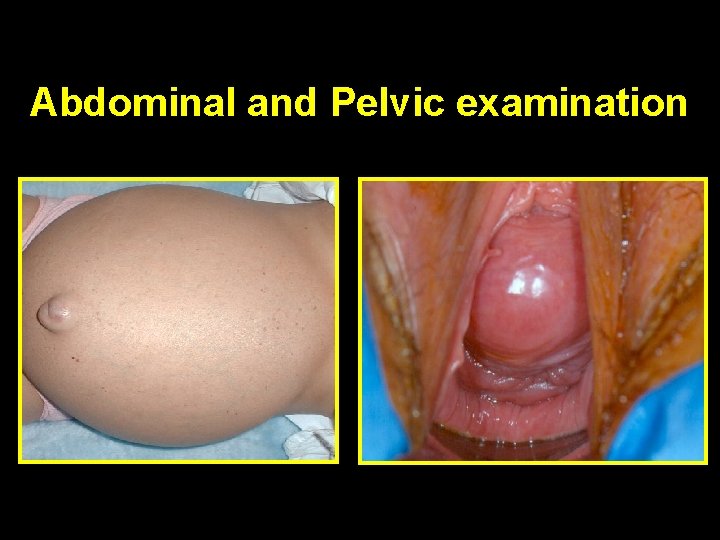
Abdominal and Pelvic examination
Physical examination Detecting anatomic and neurologic abnormalities that contribute to LUTS Neurological examination: • Gait, abnormal speech, facial asymmetry…… Abdomen • Masses, hernias, distended bladder Sacral innervation (S 2, S 3, S 4) • Anal sphincter tone, genital sensation
Physical examination Vaginal examination • Atrophy • Urethral caruncle • Urethral mucosal prolapse • POP