
Clinical errors their causes and frequency in hospitals

- Slides: 15
Clinical errors - their causes and frequency in hospitals Prof Johanna Westbrook Prof Enrico Coiera Funded by: HCF Health & Medical Research Foundation
Problem High rates of medical errors and adverse events 16% of admissions in Aust experience an adverse event 51% of these were judged to be preventable Cost in additional bed-days alone of these errors is estimated at 5% of the health budget. (Quality in Australian Health Care Study, Wilson et al. , 1995)
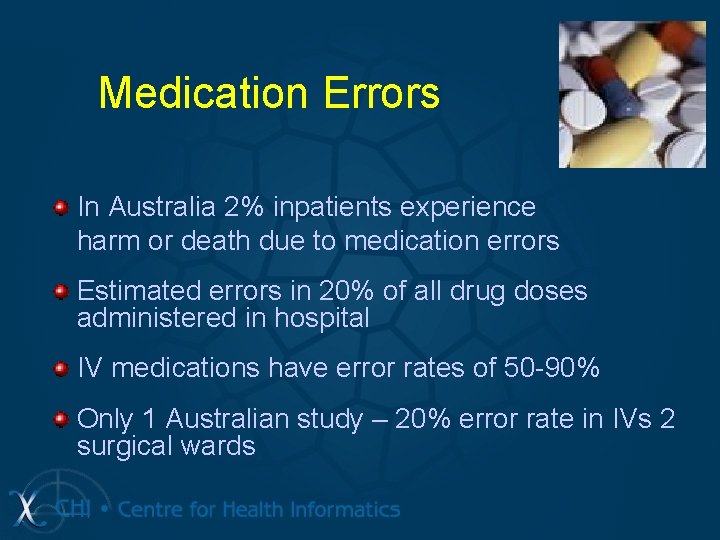
Medication Errors In Australia 2% inpatients experience harm or death due to medication errors Estimated errors in 20% of all drug doses administered in hospital IV medications have error rates of 50 -90% Only 1 Australian study – 20% error rate in IVs 2 surgical wards
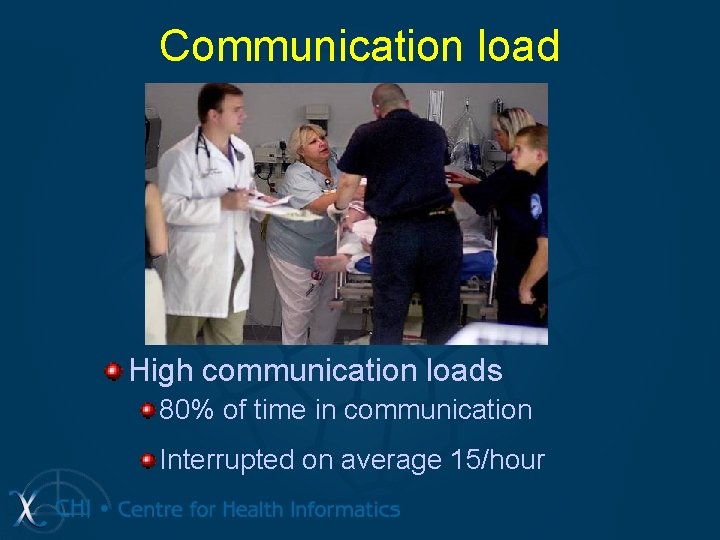
Communication load High communication loads 80% of time in communication Interrupted on average 15/hour
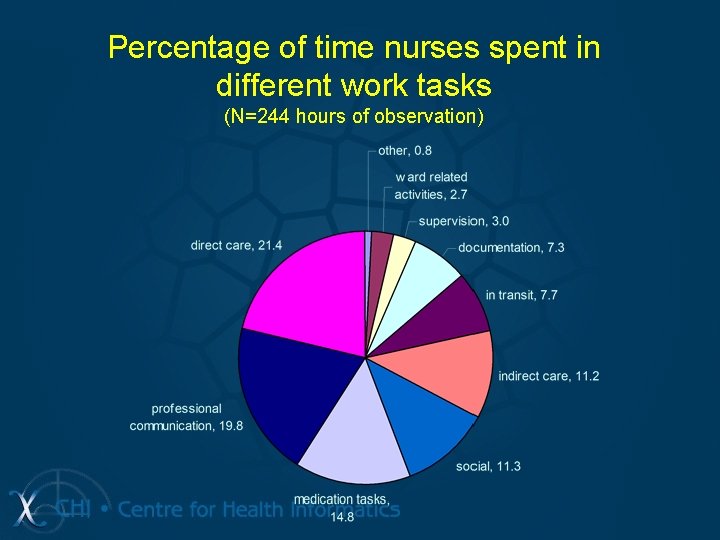
Percentage of time nurses spent in different work tasks (N=244 hours of observation)
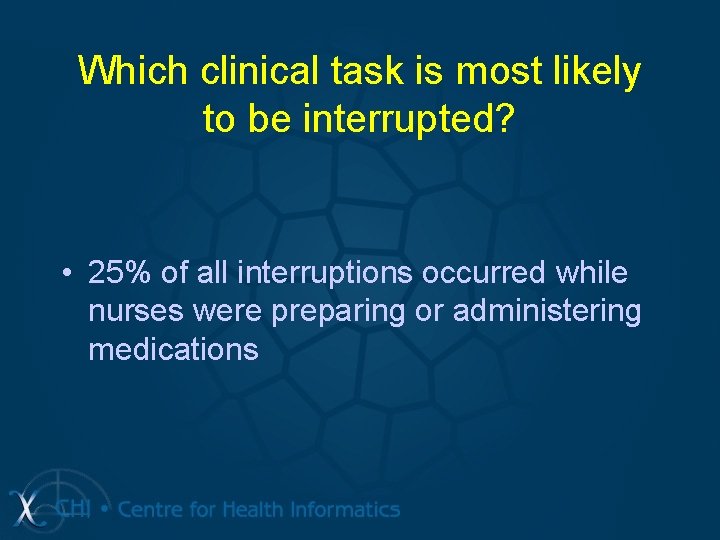
Which clinical task is most likely to be interrupted? • 25% of all interruptions occurred while nurses were preparing or administering medications
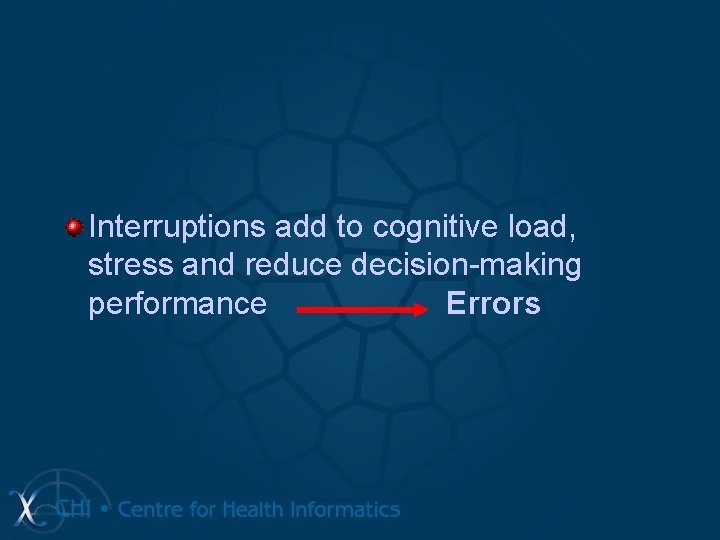
Interruptions add to cognitive load, stress and reduce decision-making performance Errors
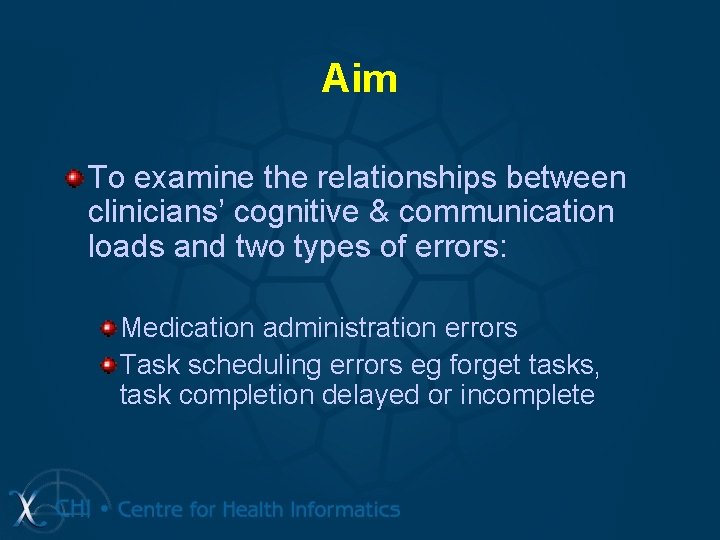
Aim To examine the relationships between clinicians’ cognitive & communication loads and two types of errors: Medication administration errors Task scheduling errors eg forget tasks, task completion delayed or incomplete
Hypotheses Being interrupted while preparing or administering a drug increases the likelihood of a medication error Interruptions & multi-tasking in high stress clinical environments increase task scheduling errors (ie tasks are left incomplete, delayed or forgotten) Clinical experience may compensate for the effects of a high communication load
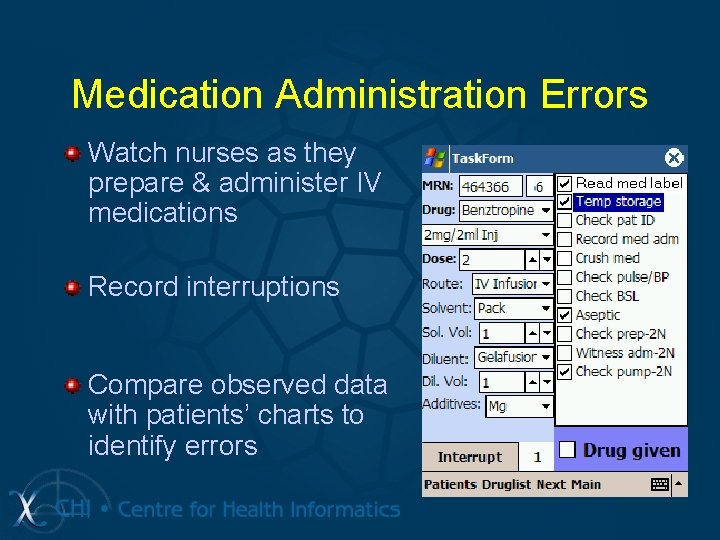
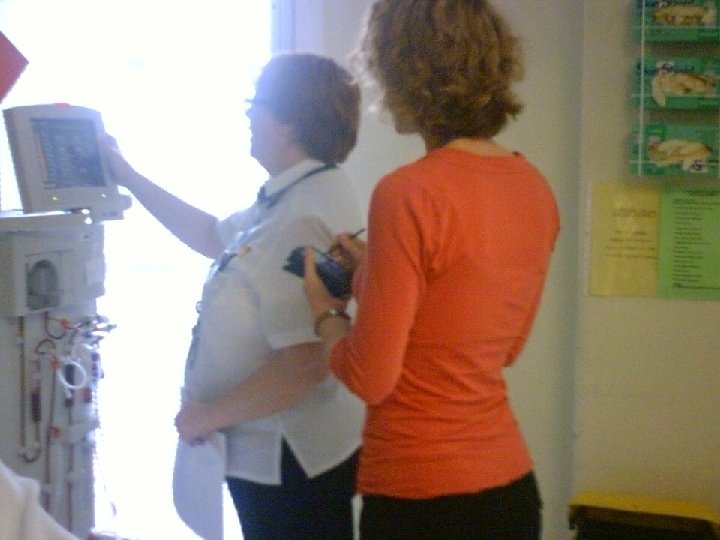
Medication Administration Errors Watch nurses as they prepare & administer IV medications Record interruptions Compare observed data with patients’ charts to identify errors
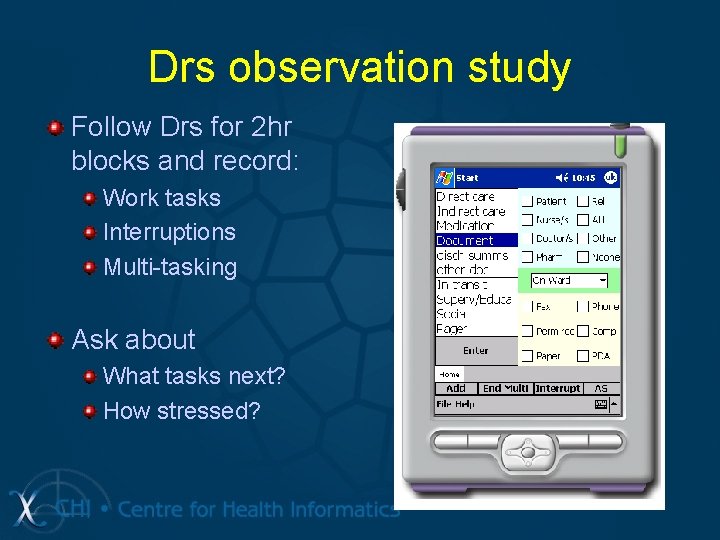
Drs observation study Follow Drs for 2 hr blocks and record: Work tasks Interruptions Multi-tasking Ask about What tasks next? How stressed?
Outcomes Rates & type of IV medication administration errors Determine relationship between interruptions and medication errors By error type and nurse experience Measure association of cognitive and communication load and task scheduling errors Eg Average time taken to return to interrupted tasks Recovery from interruptions by clinician experience
Importance Baseline data to test any interventions designed to reduce medication errors New data about clinicians’ communication loads and errors, first step in designing effective interventions to support clinicians’ work. Establishing links between researchers & health insurance industry